A foliage town that became a fast-growing suburb
Apopka is known as the Indoor Foliage Capital of the World for its greenhouse nurseries, but its population grew by about a third between 2010 and 2020 (Wikipedia). The housing reflects that growth. In Census estimates for 2020–2024, the median Apopka home was built in 2002, 54.5% of homes date from 2000 or later and only 10.9% predate 1980. The city had 58,232 residents and a median home value of $394,900 (Census ACS via Census Reporter).
| Measure | Apopka | Orange County |
|---|---|---|
| Median year built | 2002 | 1994 |
| Built 2000 or later | 54.5% | 40.0% |
| Built before 1980 | 10.9% | 26.1% |
| Single-family detached | 81.3% | 54.1% |
| Heat with utility gas | 2.7% | 5.1% |
Detached houses from the 2000s and 2010s are where factory-built fireplaces in framed chases, and in many cases gas or electric units, are most likely. Plenty of newer homes have no fireplace at all. Nearly all of them have a dryer, which is why dryer vents lead the list here. These are inferences from build dates and housing type, not counts.
Dryer ducts in larger, newer homes
Bigger floor plans move the laundry room away from outside walls, onto the second floor or into the middle of the house. The duct then runs farther, turns more often and sometimes ends on the roof. Florida’s residential code limits a dryer exhaust duct to 35 feet of developed length, reduced for every fitting, and requires a label near the dryer connection when a longer equivalent length is allowed. It also requires a backdraft damper and bans screens at the outlet (FBC-Residential M1502).
| Feature | Wall termination | Roof termination |
|---|---|---|
| Typical layout | Laundry on an exterior wall or near the garage | Upstairs or interior laundry, duct through the attic |
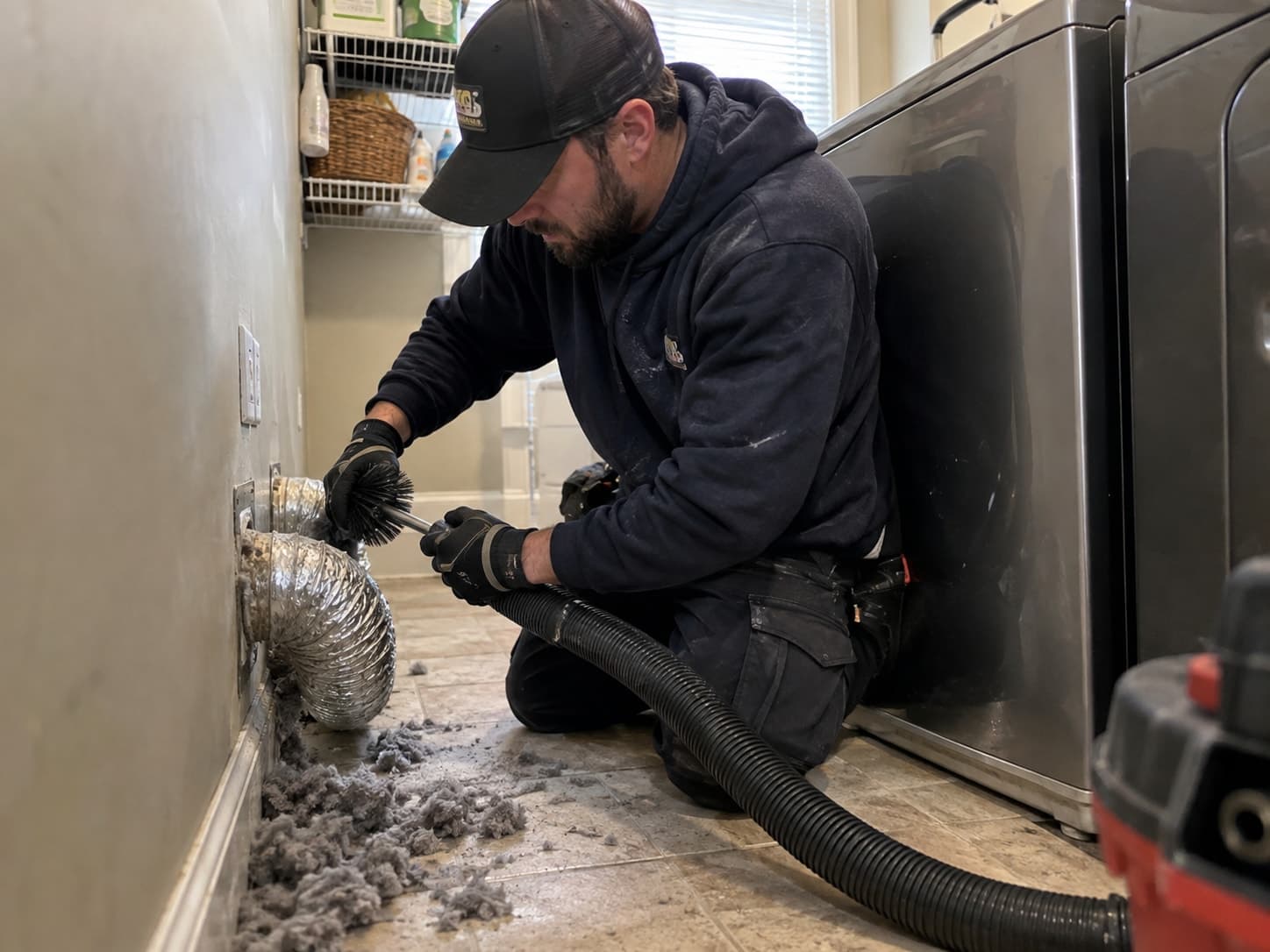
| Where lint collects | The hood and the first few feet of duct | Elbows, attic runs and the roof cap |
| Early warning | Lint on the siding below the hood | Longer drying times; a hot laundry room |
| Cleaning access | From inside and at the hood | From inside and at the roof cap |
| Service | Dryer vent cleaning in Apopka | Roof vent cleaning |
Typical layout
- Wall termination
- Laundry on an exterior wall or near the garage
- Roof termination
- Upstairs or interior laundry, duct through the attic
Where lint collects
- Wall termination
- The hood and the first few feet of duct
- Roof termination
- Elbows, attic runs and the roof cap
Early warning
- Wall termination
- Lint on the siding below the hood
- Roof termination
- Longer drying times; a hot laundry room
Cleaning access
- Wall termination
- From inside and at the hood
- Roof termination
- From inside and at the roof cap
Service
- Wall termination
- Dryer vent cleaning in Apopka
- Roof termination
- Roof vent cleaning
A dryer that’s only a few years old can still run slowly if the duct is restricted. Our guide on how often to clean a dryer vent covers the signs to watch for, and dryer vent repair handles crushed hoses and disconnected attic joints.
Young chimneys still age
A maintenance rhythm for a newer Apopka fireplace
Find the rating plate
It identifies the maker and model, which decides which replacement parts are allowed. Keep a photo of it.
Look at the chase from the yard
Rust streaks on the siding or stucco below the top of the chase point to the chase cover.
Inspect before the first real use
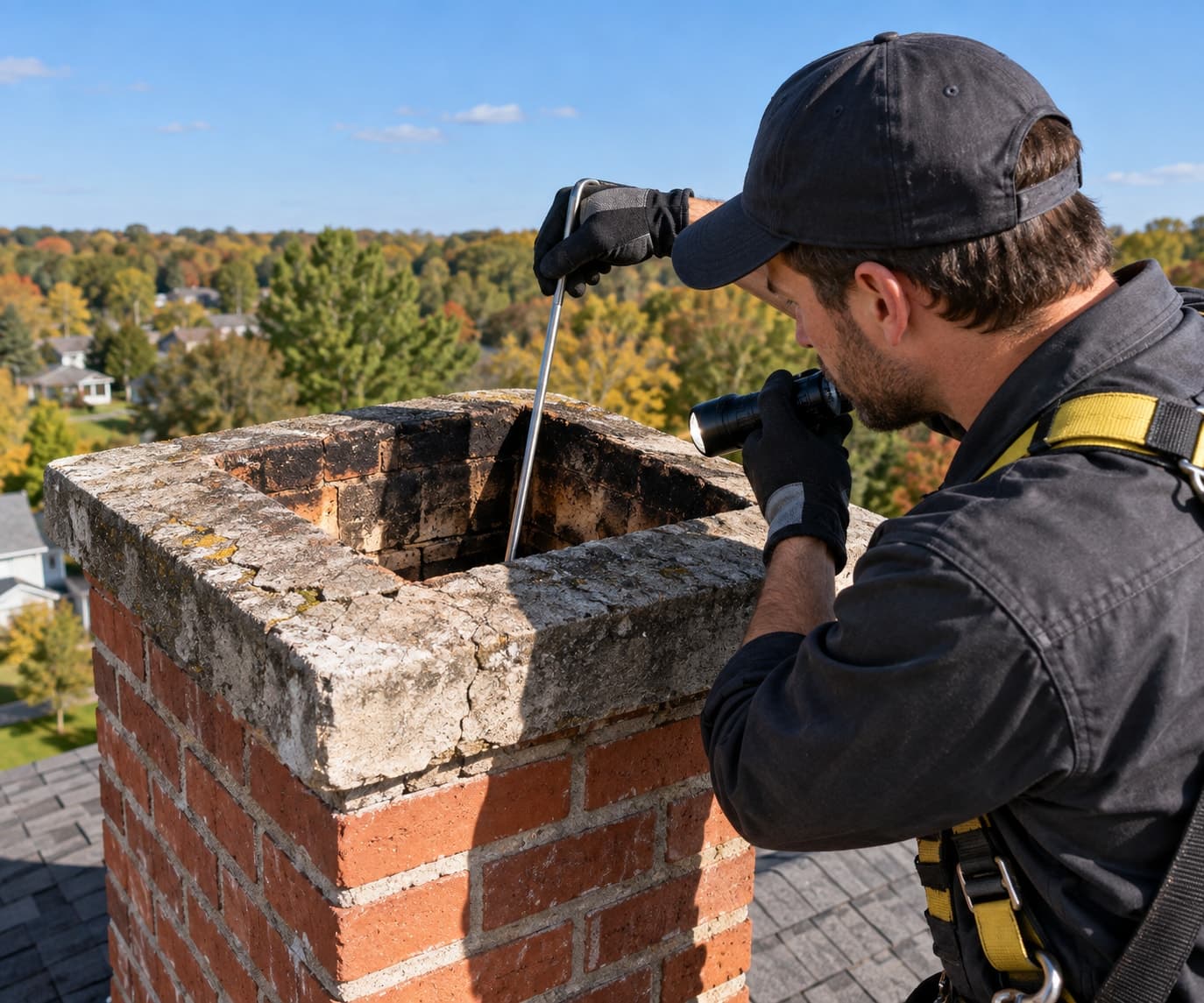
An annual fireplace and chimney inspection checks panels, damper, flue and cap, whether or not you’ve had a fire yet.
Fix the top first
If the cover holds water or has rusted, replacing the chase cover stops water before it reaches the flue and framing.
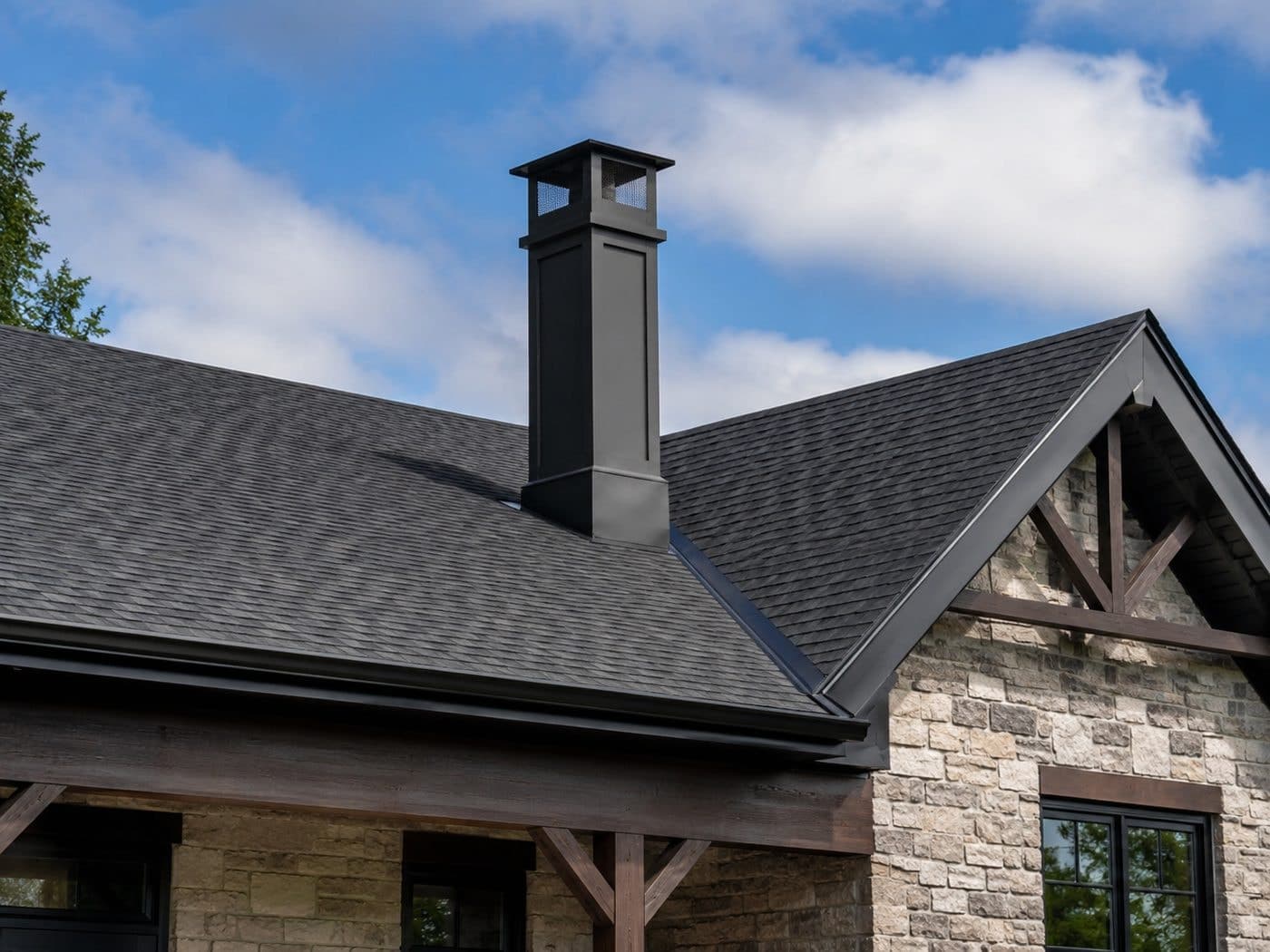
A chase cover doesn’t have to be old to cause trouble. A flat cover without slope or a cross-break lets water sit on top, and standing water finds seams and the flue opening. If water has already reached the metal flue, storm collar or chase framing, factory-built chimney repair covers those parts.
Gas fireplaces and propane
Only 2.7% of Apopka households heat mainly with utility gas, below the Orange County share. That measures heating, not fireplaces, but it means a gas fireplace in an Apopka home could well run on propane rather than natural gas. Know which fuel yours uses. Gas-line work is a separate job from appliance service, and we carry that out too, and a gas smell means leave the house and call from outside.
The older town
About one in nine Apopka homes predates 1980, and five buildings in the city are on the National Register of Historic Places, including the 1886 Waite-Davis House and the 1918 Seaboard Air Line Railway depot (Wikipedia). Older houses near downtown are the ones most likely to have site-built brick chimneys, where the crown, mortar and clay flue tiles are the parts to check. Those fall under repairing an older Apopka chimney.
Apopka’s chimney and vent services in one place
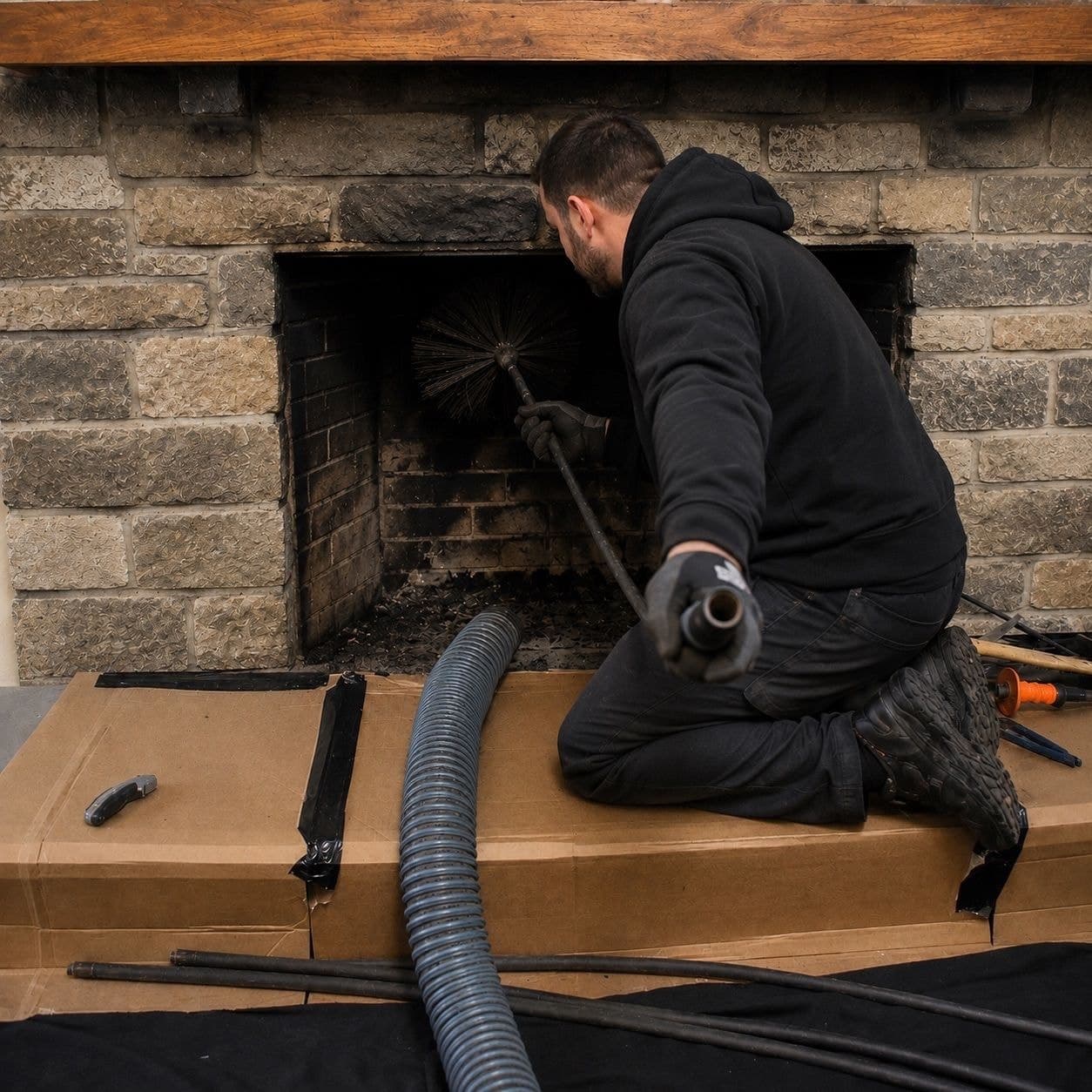
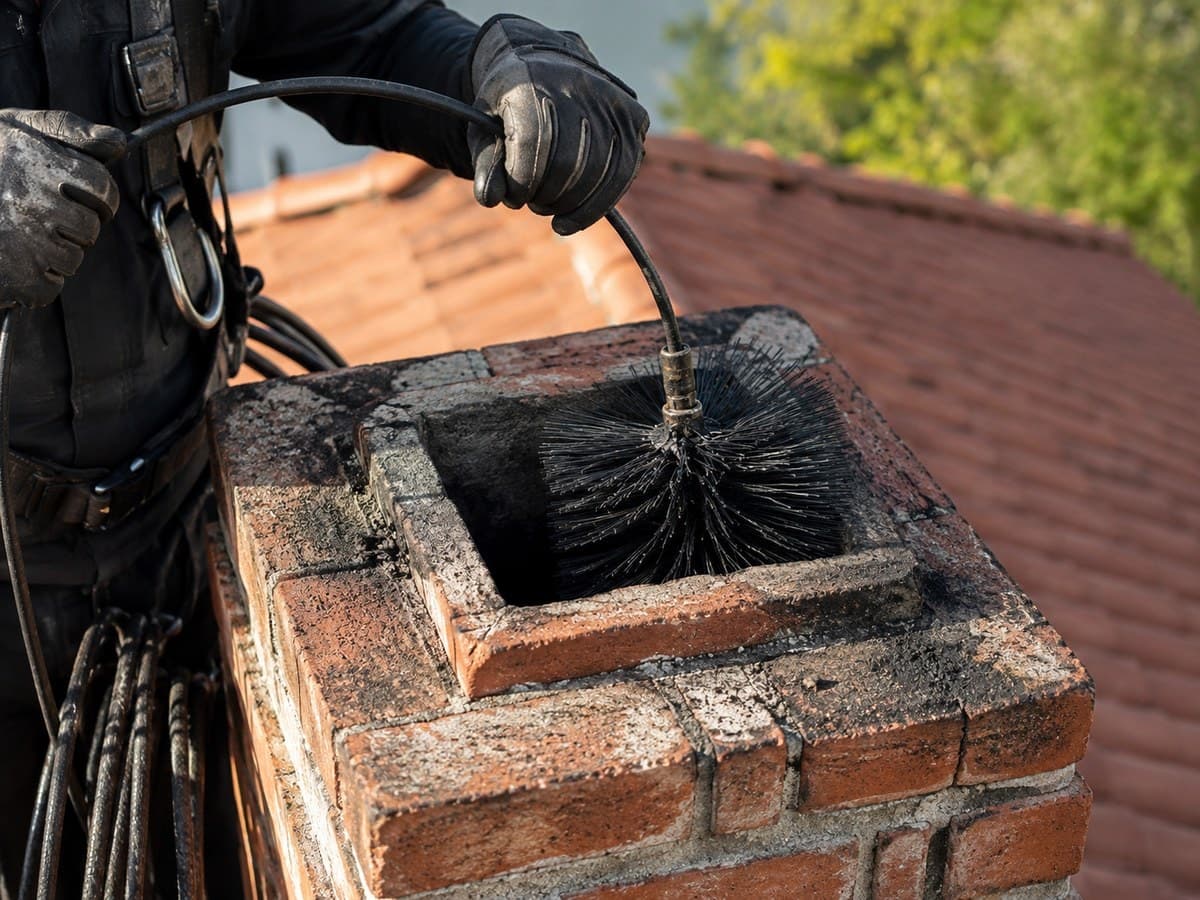
Whether the house is in a newer subdivision such as Errol Estates or Rock Springs Ridge or on an older street near downtown, the same core services apply. Each has an Apopka page with the details. For a fireplace that gets a few fires a year, chimney sweeping in Apopka keeps soot and debris in check, and a deeper chimney cleaning handles nests, odors or heavy buildup. Water that shows up after storms points to leak diagnosis and repair, whether it’s entering through a chase cover or a brick crown. A cracked firebox, warped panels or a damper that won’t close is fireplace repair work for Apopka homes.
References (4)
Facts and figures on this page come from these references.