On this page
In Central Florida, fireplace smells are usually worst in summer, when nobody is using the fireplace. Warm, humid air and a closed-up, air-conditioned house make any residue in the chimney easier to smell. A spray or a bowl of baking soda can dull it for a day. Lasting odor removal means finding what is producing the smell and removing it, and the fix is often not a cleaning at all.
What the smell usually means
Matching the odor to the likely source
01Smoky, tar-like or asphalt smell
- What you may notice
- Strongest on humid days or when the AC or an exhaust fan runs; worse after the fireplace has sat unused.
- How it’s confirmed
- Inspection of the flue for creosote; a check of whether air is being pulled down the chimney.
02Musty, damp-basement smell
- What you may notice
- Appears after heavy rain; sometimes with stains near the firebox or a rusty damper.
- How it’s confirmed
- Water entry traced at the cap, crown, flashing and masonry.
03Rotting or animal smell
- What you may notice
- Sudden onset, sometimes with flies near the firebox or noises earlier in the season.
- How it’s confirmed
- A light up the flue to find nests, droppings or a dead animal on the smoke shelf or damper.
04Smell only when doors or windows are closed
- What you may notice
- The fireplace “breathes” into the room when kitchen or bath fans run.
- How it’s confirmed
- A simple pressure test: whether air flows down the flue with fans on and the damper open.
Gas smell is different
A rotten-egg or sulfur smell near a gas fireplace is a possible gas leak, not a chimney odor. Leave the house without switching anything on or off, and call your gas utility or 911 from outside. See what to do if a gas fireplace smells like gas.
How we remove chimney odors
Find the source
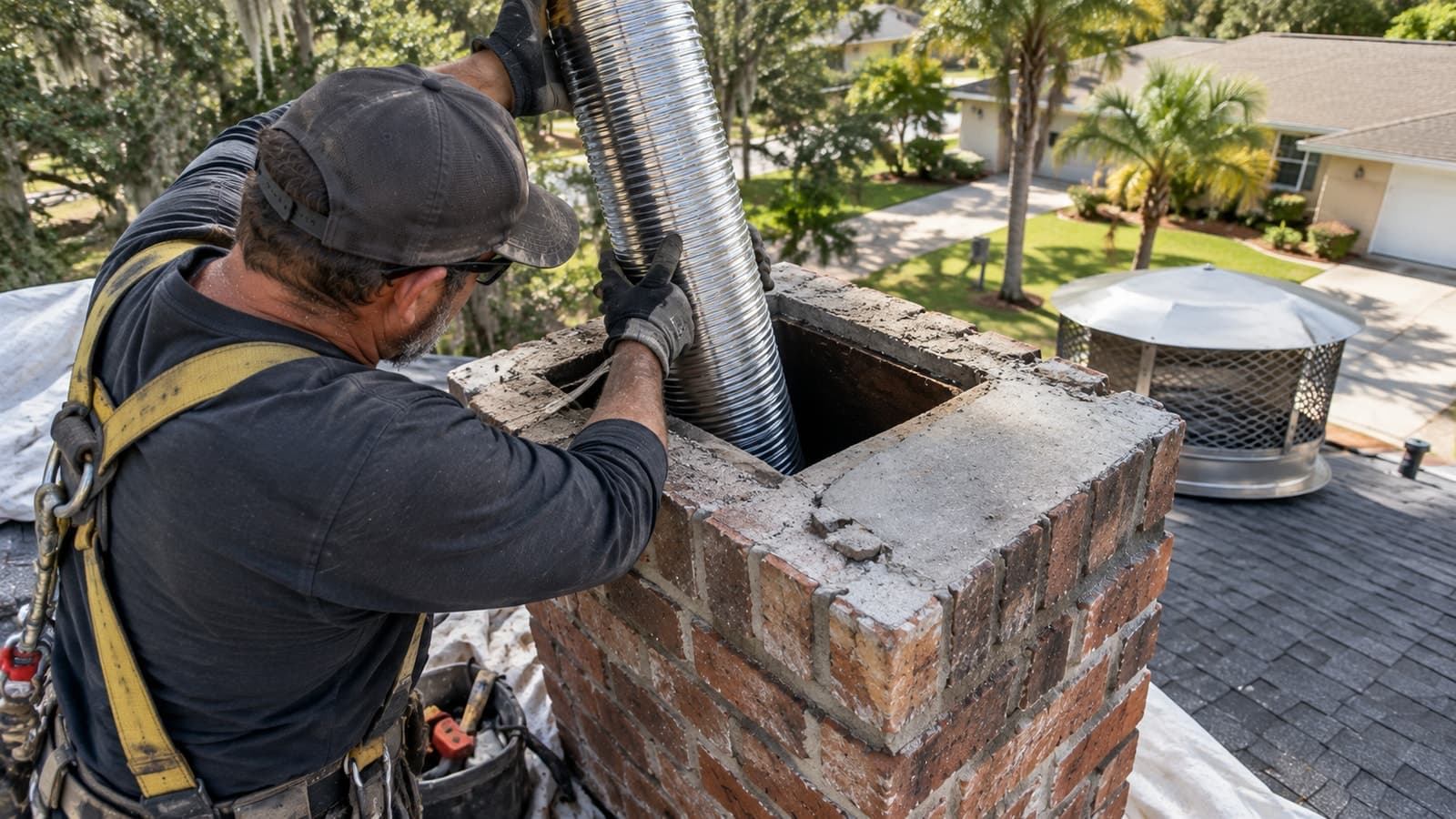
An inspection of the flue, smoke chamber and damper, plus a look at the cap, crown and flashing from the roof when needed.
Clean out the residue
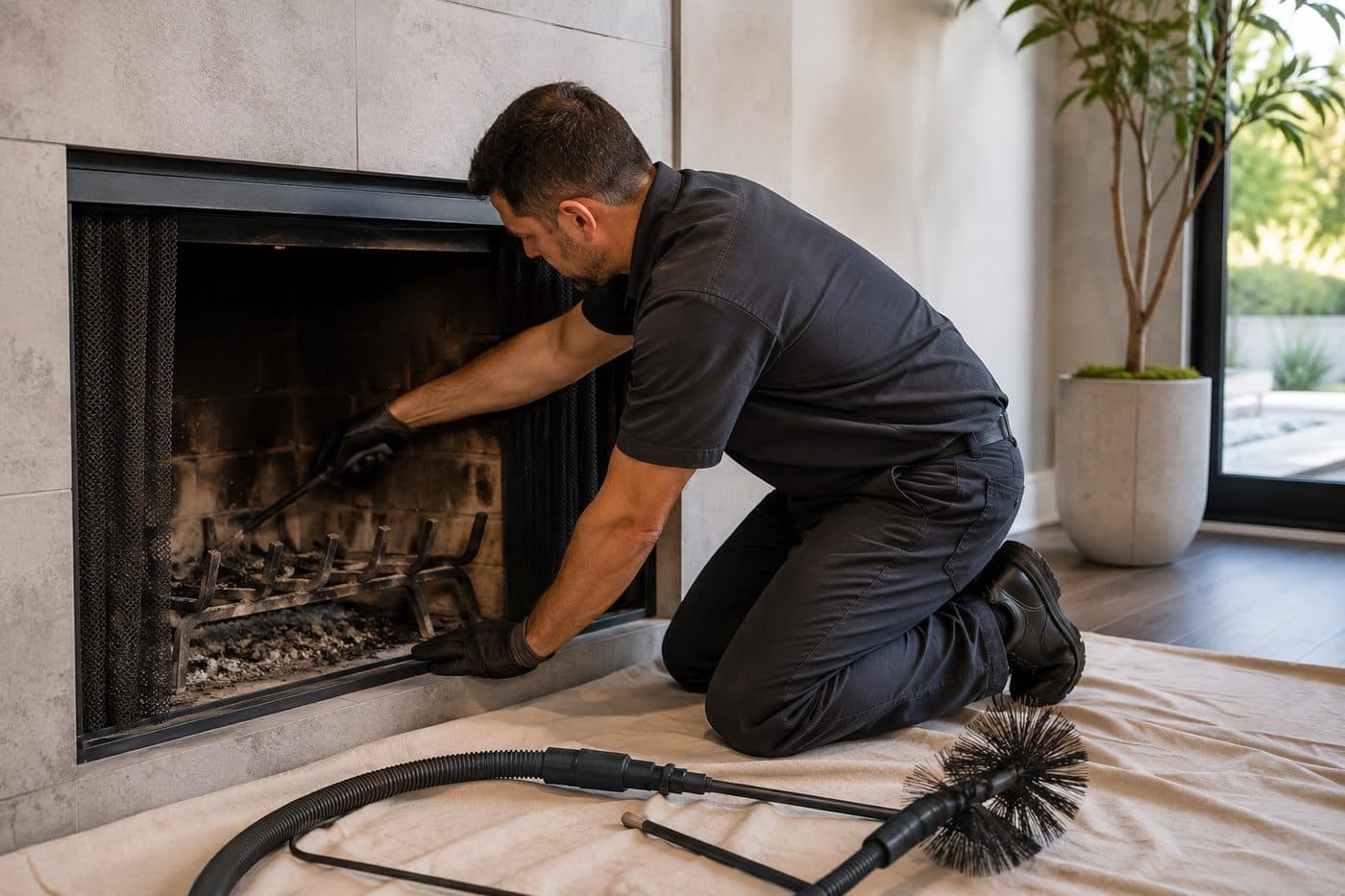
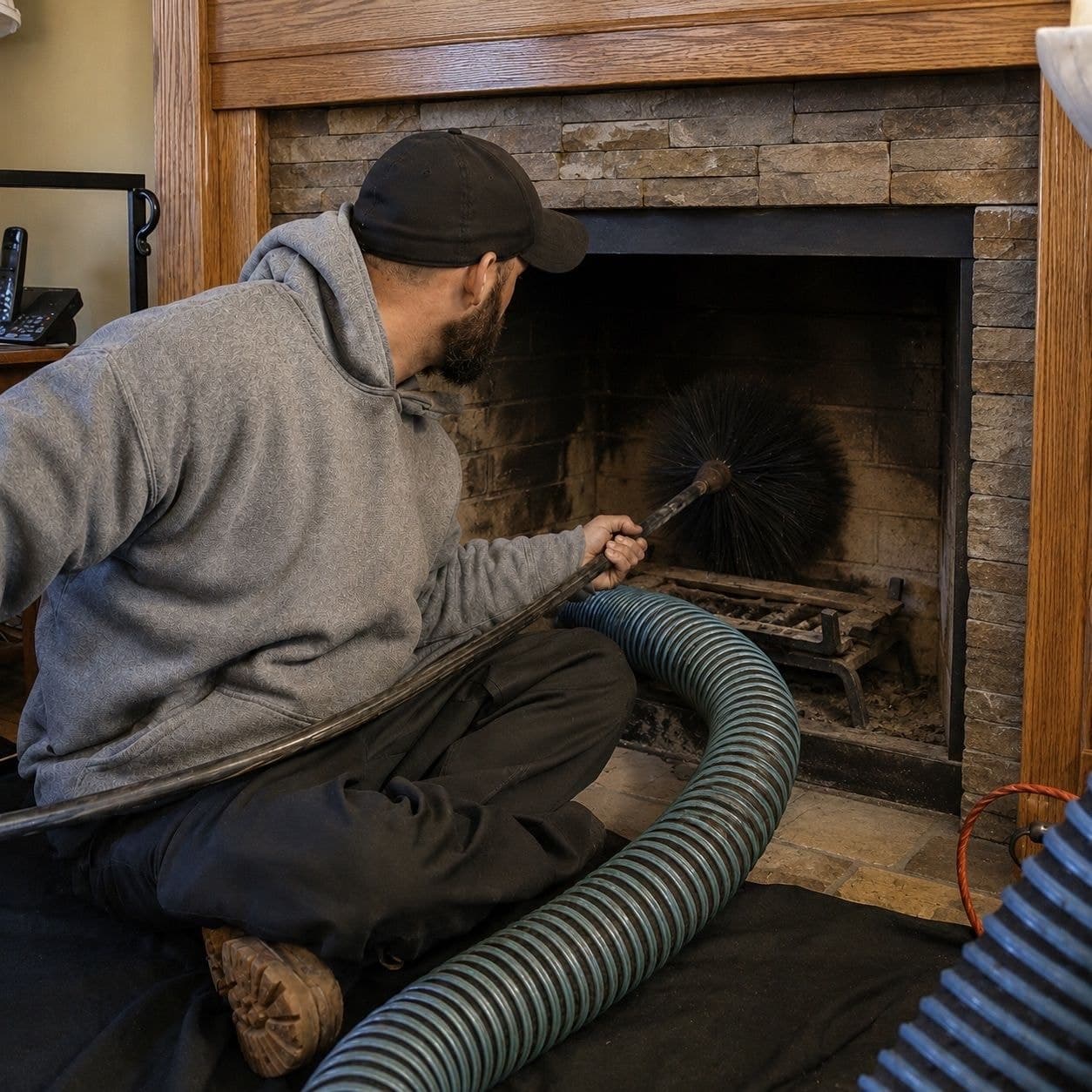
Creosote and soot are removed from the flue and smoke chamber; nests, droppings and debris are cleared from the smoke shelf.
Deal with moisture
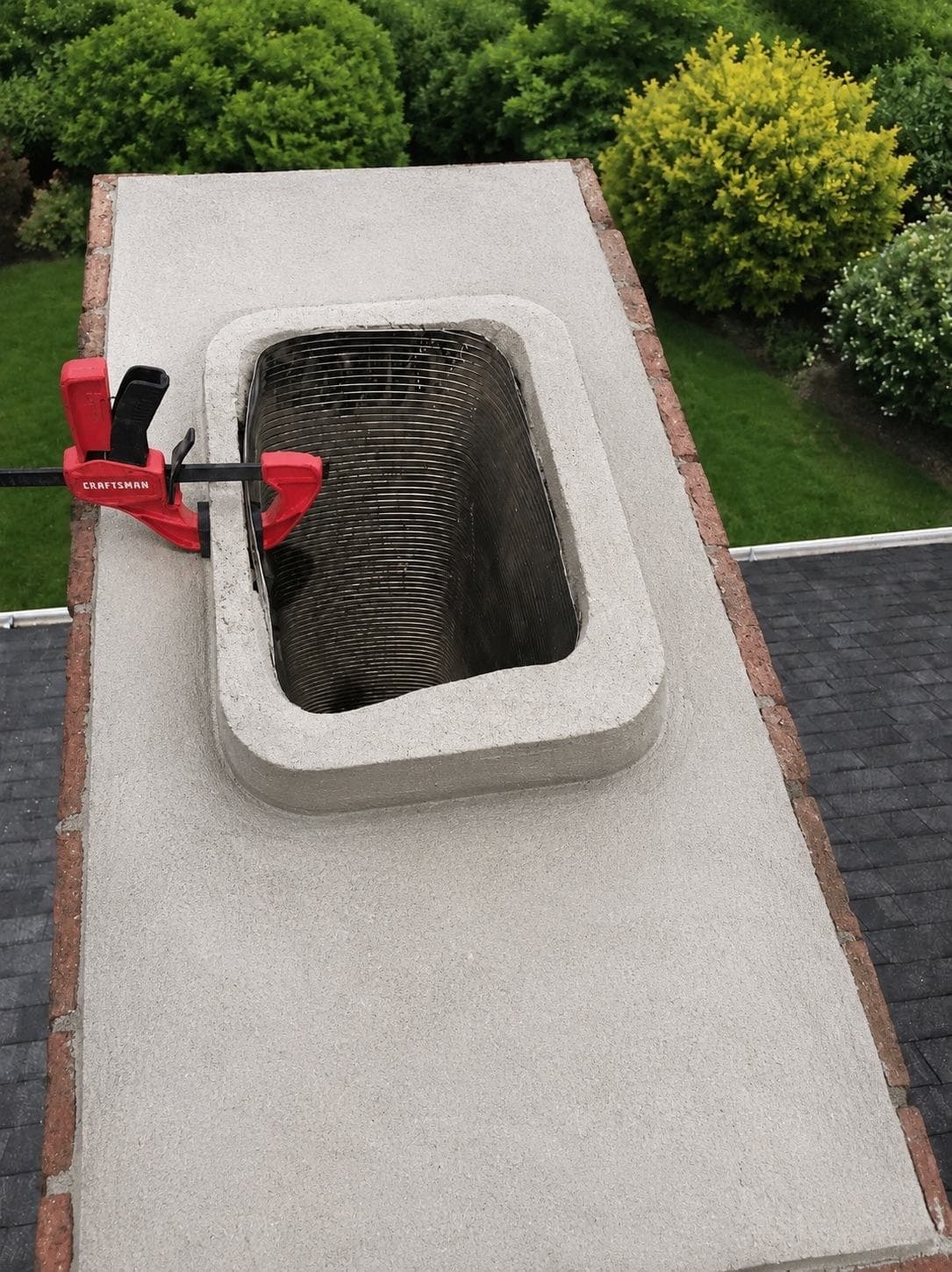
Leaks are traced and repaired, a missing or damaged cap is replaced, and masonry can be treated with a vapor-permeable water repellent.
Stop the downdraft
Where the house pulls air down the chimney, a tight-sealing damper or glass doors help, and so does balancing fans and returns.
Treat what remains
A chimney deodorizer designed for flues can neutralize lingering odor after the cause is removed, never instead of removing it.
Why Central Florida homes pull air down the chimney
Modern homes are tight, and exhaust fans, clothes dryers and some AC returns all remove air from the house. When the house needs air, the easiest path in is often the chimney. Outside air coming down the flue carries the smell of whatever is in it straight into the living room. A worn-out throat damper that no longer seals makes this worse.
- Top-sealing dampers close the flue at the top with a gasket, which keeps humid air and odors out much better than an old cast-iron throat damper. They’re covered under chimney damper repair.
- Glass doors add a seal at the front of the fireplace. See fireplace door installation.
- A properly fitted cap keeps rain from soaking the creosote that causes most of the smell. See chimney cap replacement.
When the fix isn’t cleaning
| Cause | What stops the smell |
|---|---|
| Throat damper that no longer seals | Damper repair or a top-sealing damper |
| Missing or damaged cap letting rain soak the flue | A new chimney cap |
| Water entering at the crown, flashing or chase cover | Finding and fixing the leak |
| Nest, droppings or a dead animal on the smoke shelf | Animal and nest removal plus a screen |
| Heavy or glazed deposits the flue can’t shed | Deep flue cleaning or removing glazed creosote |
Rain, humidity and musty odors
Orlando averages about 51.5 inches of rain a year (CurrentResults, NCEI normals), and wet-season storms drive water into any weak spot on a chimney. Wet masonry, a wet smoke chamber and damp creosote all produce the musty smell people describe as a basement odor. Fixing the leak is what ends that smell for good.
Sealing the flue is half the fix
Cleaning removes the deposits that produce the smell. What stops it returning is closing the path the smell travels on, and in most Orlando homes that path is an open or leaking damper combined with a house running slightly negative under air conditioning.
A traditional throat damper seals metal on metal and leaks even when it is in good order. A top-sealing damper closes onto a gasket at the top of the flue, which stops humid outside air entering the chimney at all — covered under damper repair and top-sealing dampers.
What is checked when odour keeps coming back
- Deposits in the flue, smoke shelf and firebox, which are the smell's source
- The ash dump and ashpit, where damp ash holds odour for years
- Whether the damper actually seals, rather than merely closes
- A missing or damaged cap letting rain into the flue
- Water entering at the crown, flashing or chase, which keeps the flue damp
- Whether the air handler, range hood or dryer is pulling air down the chimney
The last one surprises people. If the smell is worst when the air conditioning runs, the chimney is being used as a make-up air inlet, and no amount of cleaning will change that on its own.
Odour work is available across Greater Orlando and Central Florida, with free estimates. It is one of the few jobs where the second visit matters: if the smell returns after cleaning, that tells us something specific about which of the causes above is the real one.
References (2)
Facts and figures on this page come from these references.