Match the smell to the likely source
“Burning” covers several different smells. Before anything else, think about what it smelled like, when it started and where in the room it was strongest. That narrows the list quickly.
| What you smell | When it happens | Usually points to | Next step |
|---|---|---|---|
| Oily or hot-dust smell | First few loads on a new dryer, or the first cycle after months unused | Assembly oils and dust burning off the heater | Ventilate the room; it should fade within a few cycles |
| Scorched lint, like a hot iron on cotton | During normal cycles, getting stronger over weeks; dryer runs hot | Lint in the vent, the lint-trap housing or around the drum | Stop using it; clean the screen; have the vent checked |
| Burning rubber | Often with squealing, thumping or a drum that turns slowly | Drive belt, drum rollers or idler pulley | Appliance repair technician |
| Hot plastic or electrical | With humming, a tripped breaker or the dryer stopping mid-cycle | Motor, wiring, terminal block or power cord | Unplug it and leave it off; appliance technician or electrician |
| Melting wax, crayon or plastic | Right after a particular load went in | Something left in a pocket, or a foam or rubber item | Let it cool, then check the drum and the clothes |
| Rotten eggs (gas dryers) | Any time | Possible gas leak | Leave the home; call the gas utility or 911 from outside |
Possible causes, most likely first
Where a dryer burning smell usually comes from
01Lint packed in the vent duct
- What you may notice
- Scorched smell during cycles, loads taking longer than they used to, the top of the dryer hot to the touch, weak air at the outside hood.
- How it’s confirmed
- Airflow is read at the termination with the dryer on a no-heat setting, the duct is cleaned end to end, and the reading is repeated to confirm the restriction is gone.
02Overheating from a crushed, stuck or disconnected vent
- What you may notice
- Smell started after the dryer was moved; flattened hose behind it; outside flap barely opens; a “check vent” warning that keeps coming back.
- How it’s confirmed
- The dryer is pulled out, the transition hose and connections are inspected, and the flap and damper are checked for free movement.
03Lint packed under a roof cap
- What you may notice
- Vent exits through the roof, lint visible on the shingles or tile around the cap, smell worse on long cycles.
- How it’s confirmed
- The cap is opened and cleared from the roof and the damper is checked, along with the duct below it.
04Lint in the lint-trap housing or around the drum
- What you may notice
- Smell even though the outside vent seems clear; lint visible in the slot where the screen sits; lint on the floor under the dryer; a torn or loose screen.
- How it’s confirmed
- The housing below the screen is vacuumed. Lint inside the cabinet near the heater, motor or drum seal needs the dryer opened, which is appliance-repair work.
05New-dryer burn-off
- What you may notice
- Faint oily or dusty smell in the first few uses of a new dryer, fading each time.
- How it’s confirmed
- No repair needed. GE, for example, describes this odor as normal and suggests running the empty dryer for about 20 minutes. A smell that is strong or doesn’t fade is not burn-off.
06A foreign object
- What you may notice
- Smell tied to one load; marks on the drum; melted residue on clothes. Lip balm, crayons, pens, lighters and foam-backed rugs are common culprits.
- How it’s confirmed
- Once the dryer has cooled, the drum, the clothes and the lint screen slot are checked by hand and with a flashlight.
07Belt, rollers, motor or heating element
- What you may notice
- Rubber or electrical smell, new noises, the drum not turning, no heat, a tripped breaker.
- How it’s confirmed
- An appliance repair technician tests and replaces dryer parts. If the heating element or thermal fuse failed from overheating, the vent should be checked as well, or the new part may go the same way.
The fire data shows why lint and mechanical faults both matter. The NFPA’s Home Dryer Fires report (national estimates, 2014–2018) found failure to clean behind 32 percent of home dryer fires and dust, fiber or lint as the first item ignited in 27 percent, while mechanical failures accounted for 27 percent and electrical failures for 16 percent. The U.S. Fire Administration’s report, which counts fires reported to NFIRS in 2008–2010, lists failure to clean as the leading factor at 34 percent. The two studies use different scopes and years, but they agree that a smell of hot lint is not something to run through.
Dryer vent system, from dryer to termination
- 1Lint screen. Catches most lint inside the dryer. What gets past it collects in the duct.
- 2Transition duct. Short connector from the dryer to the wall. Easily crushed behind the machine.
- 3Duct run. Smooth 4-inch metal duct through walls, floors or the attic.
- 4Elbows. Every bend adds resistance and counts against the allowed duct length.
- 5Roof cap. Roof termination, common on two-story homes. Hard to see and to clean.
- 6Wall hood. Side-wall termination. Must open freely and has no screen.
- 7Backdraft damper. Flap that opens under airflow and closes to keep out air, rain and pests.
What you can safely do right now
Stop, cool and stay nearby
Turn the dryer off, unplug it or switch off the breaker if that’s safe to reach, and leave the door shut while it cools. Stay home for a while afterward and check the laundry room now and then. Don’t start another load and leave.
Note where the smell is strongest
At the door of the dryer, at the back, at the outside hood, or in the room in general? A smell at the back or near the cord points to the machine or its connection. A smell of hot lint at the outside hood points to the vent.
Clean the lint screen and look into its slot
With the dryer cool and unplugged, pull the screen, clean it and check it for tears or a loose frame. Shine a flashlight into the slot it sits in. If you see lint there, a vacuum crevice tool will reach the first few inches. Don’t unscrew panels.
Check the drum and the load
Look for melted residue, a stray pen or lip balm, or scorch marks on the clothes. Items with foam, rubber or plastic backing shouldn’t go in the dryer at all, as the USFA’s safety list points out.
Look at the hose and the outside hood, without running the dryer
From the side, check whether the hose behind the dryer is flattened or pulled off. Outside, look for lint caked around the hood or a flap that is stuck shut. If the vent is on the roof, look from the ground only.
Gas dryers: leave the connection alone
Don’t slide a gas dryer out or take it apart to hunt for the smell. Pulling on it can strain the gas connector, and a blocked or disconnected vent on a gas dryer can also send carbon monoxide indoors. Keep CO alarms working and leave gas connections to a gas professional.
Red flags: keep the dryer off
Don’t run it again until it’s been checked if
- You saw smoke, sparks or a glow, even briefly
- The smell hasn’t faded an hour after the dryer was switched off
- The breaker tripped or the dryer shut itself off mid-cycle
- Clothes came out scorched, discolored or too hot to hold
- The cord, plug or outlet is warm, discolored or smells of hot plastic
- Lint in the screen or at the outside hood looks brown or singed
- A new dryer still smells strongly after several loads
- Any rotten-egg smell near a gas dryer
Once it’s been repaired, keep an easy habit from the USFA’s list: don’t leave a dryer running when you go out or go to bed. For the bigger picture on how lint turns into a fire, read our guide to dryer vent fire risk.
Is it the vent or the dryer?
| Feature | Points to the vent | Points to the dryer itself |
|---|---|---|
| Type of smell | Hot lint, scorched cotton | Rubber, hot plastic, electrical |
| Heat | Dryer runs very hot and clothes stay damp | Little or no heat, or heat that cuts in and out |
| Other clues | Weak air or lint at the outside hood, long drying times | Squealing, grinding, humming, drum not turning, tripped breaker |
| Who to call | Dryer vent cleaning or repair | Appliance repair (or an electrician for the outlet) |
Type of smell
- Points to the vent
- Hot lint, scorched cotton
- Points to the dryer itself
- Rubber, hot plastic, electrical
Heat
- Points to the vent
- Dryer runs very hot and clothes stay damp
- Points to the dryer itself
- Little or no heat, or heat that cuts in and out
Other clues
- Points to the vent
- Weak air or lint at the outside hood, long drying times
- Points to the dryer itself
- Squealing, grinding, humming, drum not turning, tripped breaker
Who to call
- Points to the vent
- Dryer vent cleaning or repair
- Points to the dryer itself
- Appliance repair (or an electrician for the outlet)
The two often go together: an overheating dryer can blow its thermal fuse or damage the element because the vent was choked. Our article on telling a vent problem from a dryer problem goes through more symptoms, and if slow drying came before the smell, see why loads take so long to dry.
What a professional check involves
Talk through the smell
What it smelled like, when it started, how long the dryer ran and whether the dryer is gas or electric. If the pattern points to a motor or electrical fault, the dryer isn’t run at all.
Airflow reading on no heat
Where it’s safe to run the dryer briefly on an air-only setting, exhaust velocity is read at the termination so there is a baseline.
Transition, outlet and termination
The dryer is pulled out (electric models; gas dryers only as far as the connector safely allows), the hose and the dryer’s exhaust outlet are inspected and cleared, and the outside or roof cap is opened and its damper checked.
Clean the full run and re-test
The duct is brushed and vacuumed end to end, then airflow is read again. A big improvement confirms the vent was restricted. A reading that stays low points to a crushed or disconnected section that needs repair or replacement of the duct.
Hand off what isn’t the vent
If the vent is clear and the smell remains, the cause is inside the machine, and an appliance repair technician is the right next call. You’ll know the exhaust side has been ruled out.
If you want the exhaust system looked over without committing to a cleaning first, a dryer vent inspection covers the hose, the run and the termination.
Services for a dryer that smells hot
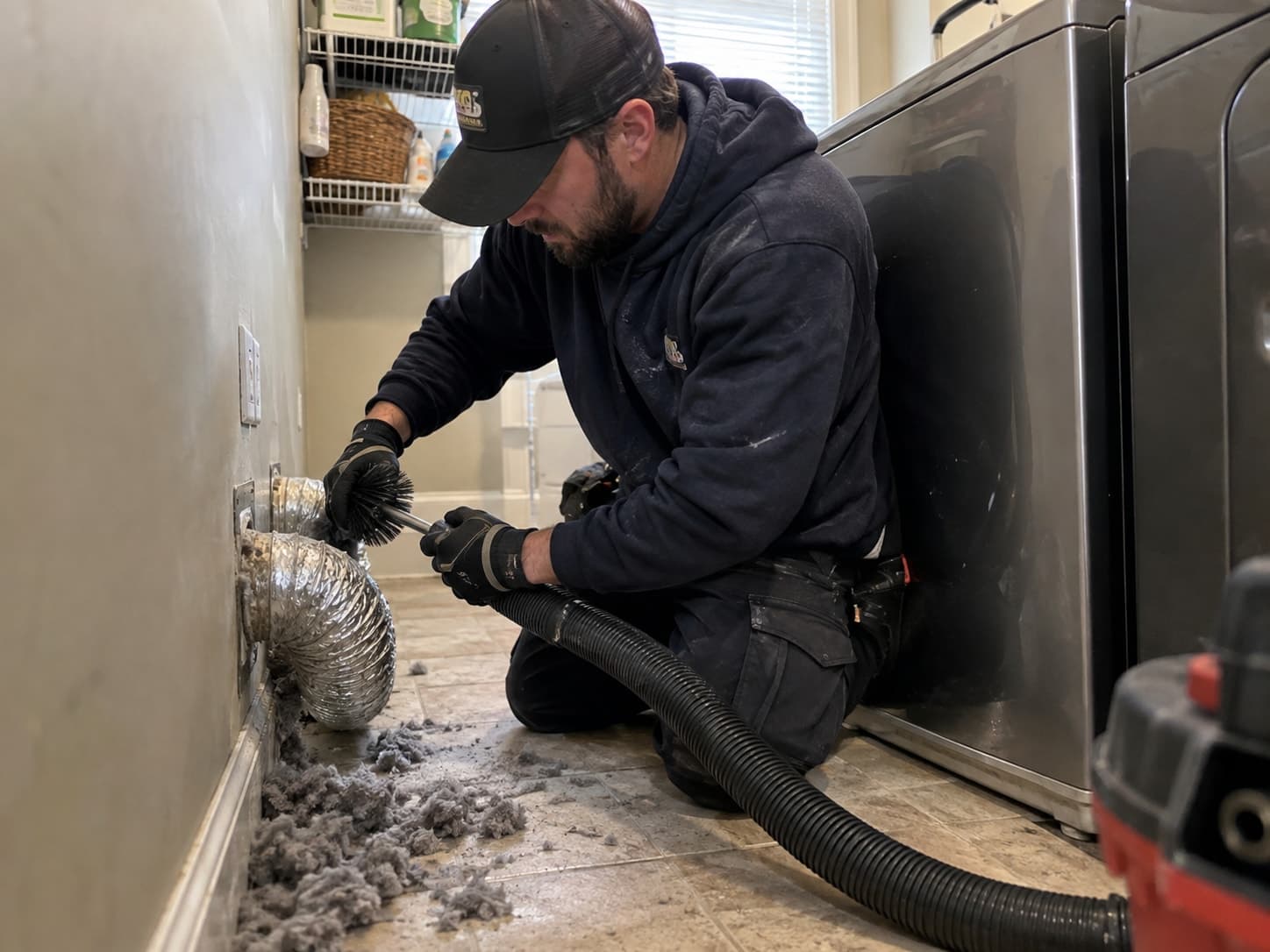
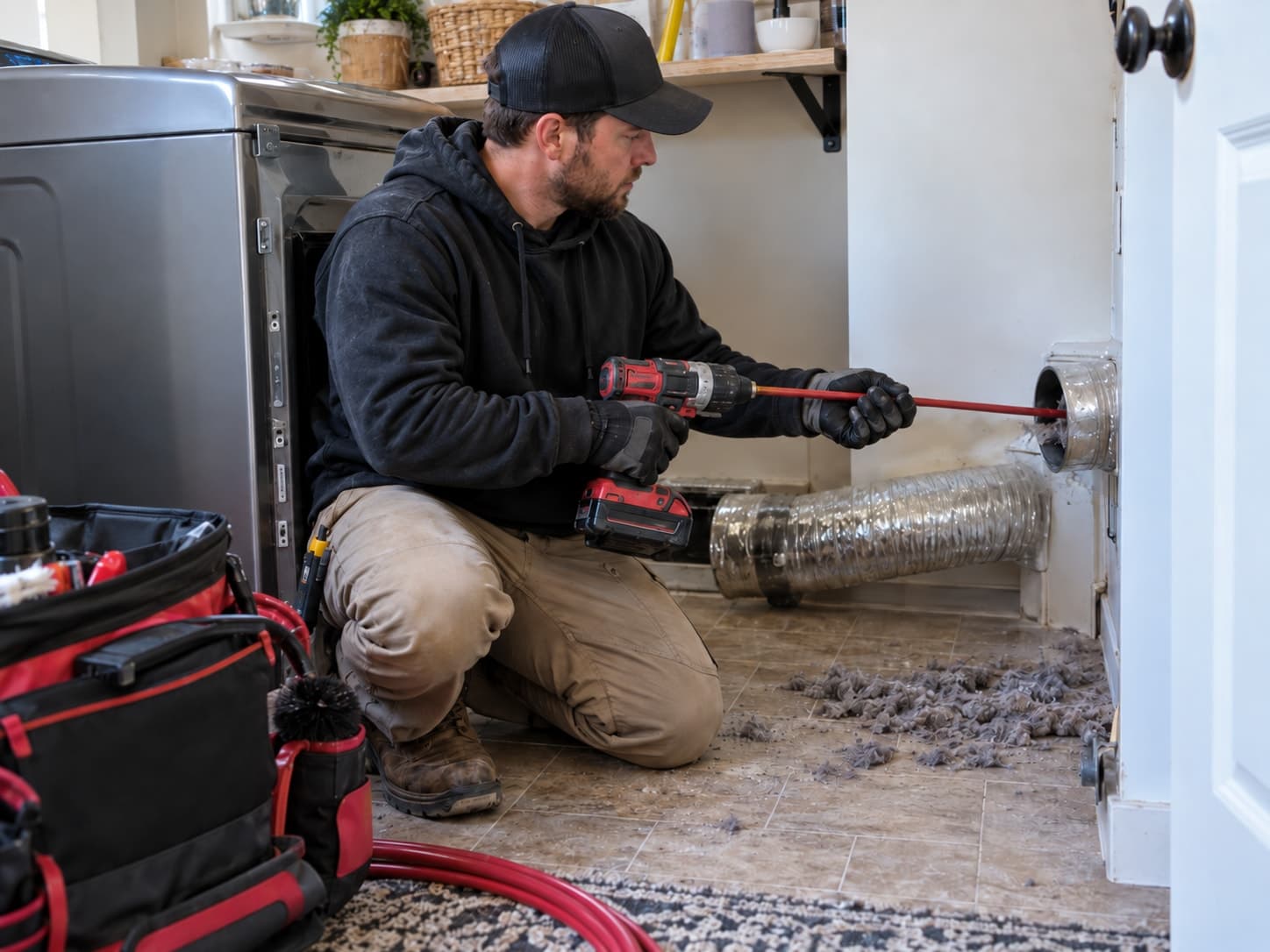
- Clear the lint from the whole run Duct cleaned from the dryer to the cap, with airflow read before and after.
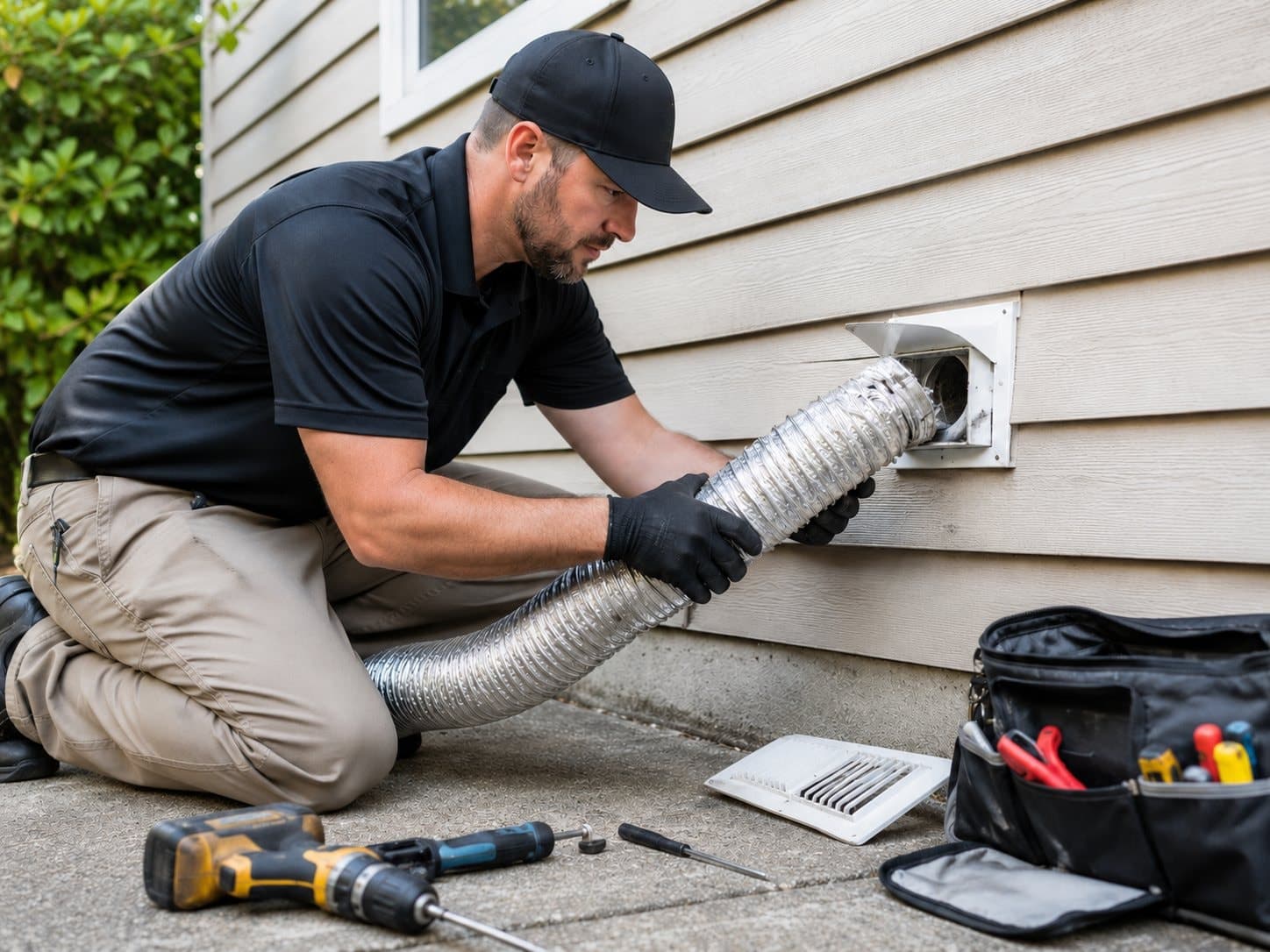
- Have the vent checked first Hose, joints, run and termination looked over when you’re not sure what’s wrong.
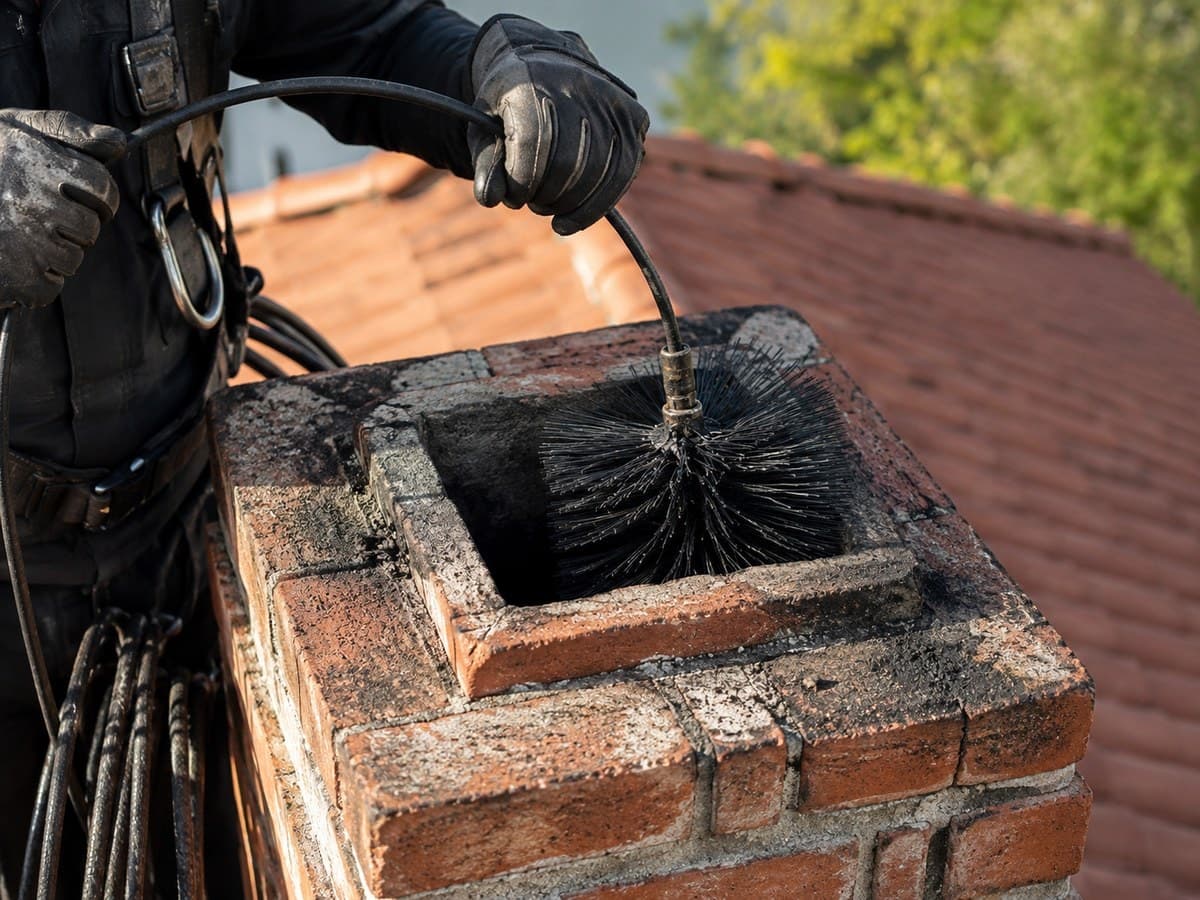
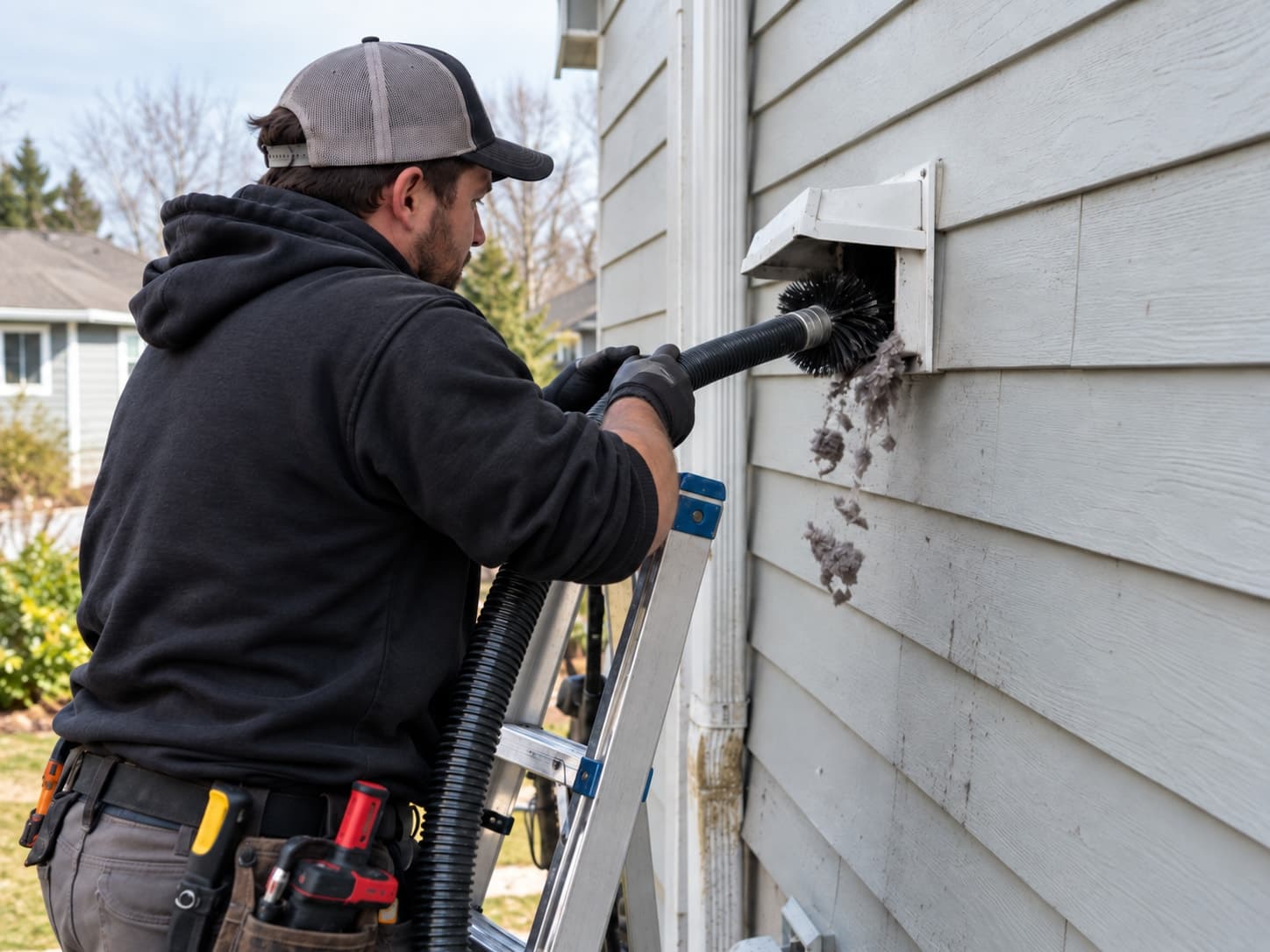
- Vent that exits the roof Lint cleared from under the roof cap and the damper checked.
After the smell: which service
| Source | Where it’s fixed |
|---|---|
| Lint in the duct or at the exit | dryer vent cleaning |
| Lint packed deep in the duct or escaping into the house | heavy lint removal |
| Crushed or disconnected duct overheating the dryer | dryer vent repair |
| Smell from inside the cabinet, motor or wiring | an appliance technician, not a vent service |
Stop the dryer first; the diagnosis comes after. Local: dryer duct cleaning in Sanford or vent cleaning for Oviedo homes.
References (3)
Facts and figures on this page come from these references.