On this page
- Crown, cap, chimney wash: what people mean
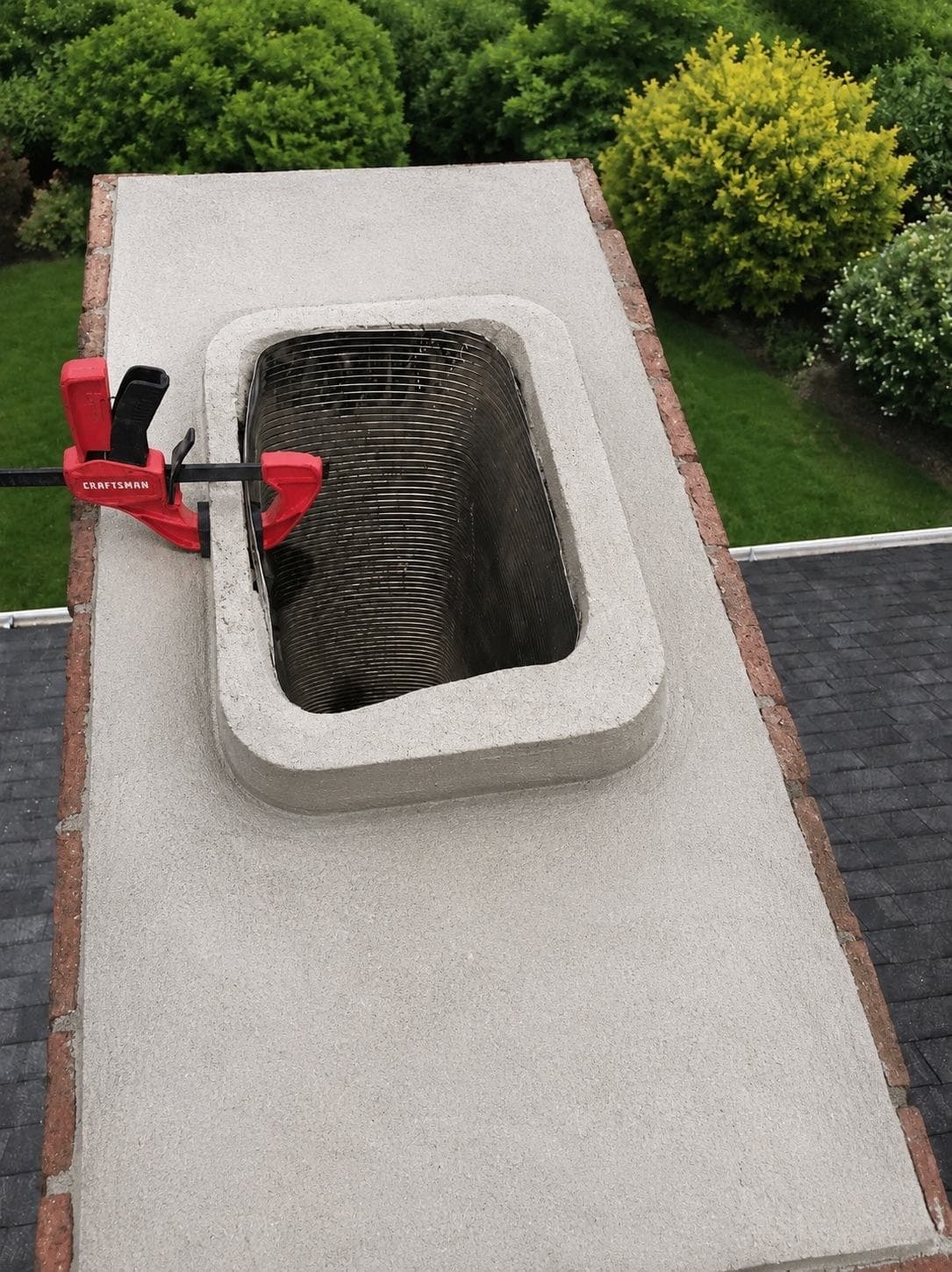
- What a well-built crown has
- Why chimney crowns crack
- Signs your crown needs attention
- Crown sealing or crown replacement?
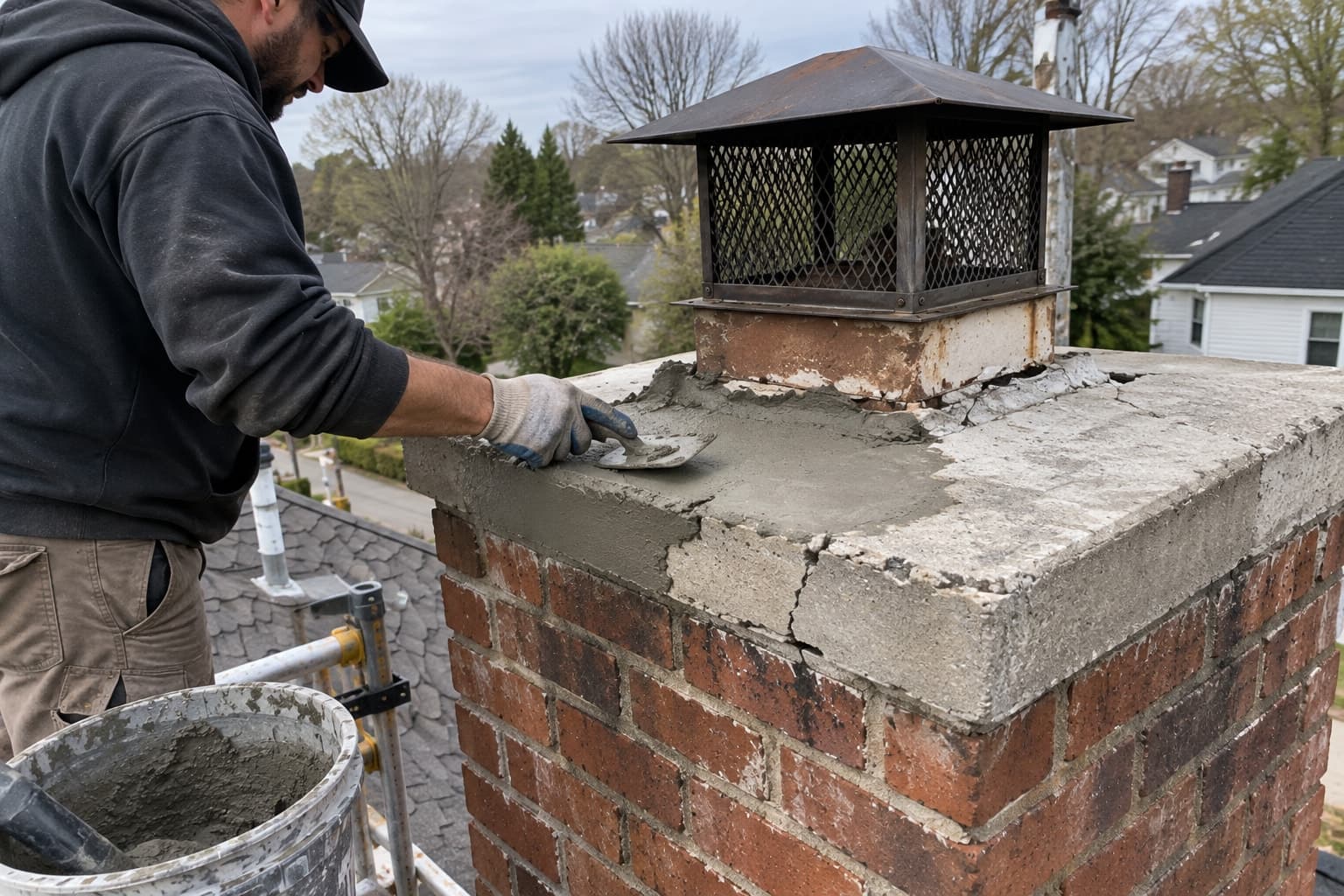
- How a crown is replaced
- Crowns on older and historic chimneys
- Where the crown fits in a leak
- What affects the cost of crown repair
- Crown work and the rest of the top
Short answer: a crown with a few hairline cracks and a sound, sloped slab can usually be cleaned and sealed with a flexible crown coating. A crown that is broken through, loose, flat, or built with no overhang is replaced, because a coating can’t change its shape. Either way, the joint between the crown and the flue tile gets attention, since that’s where many crowns start to fail.
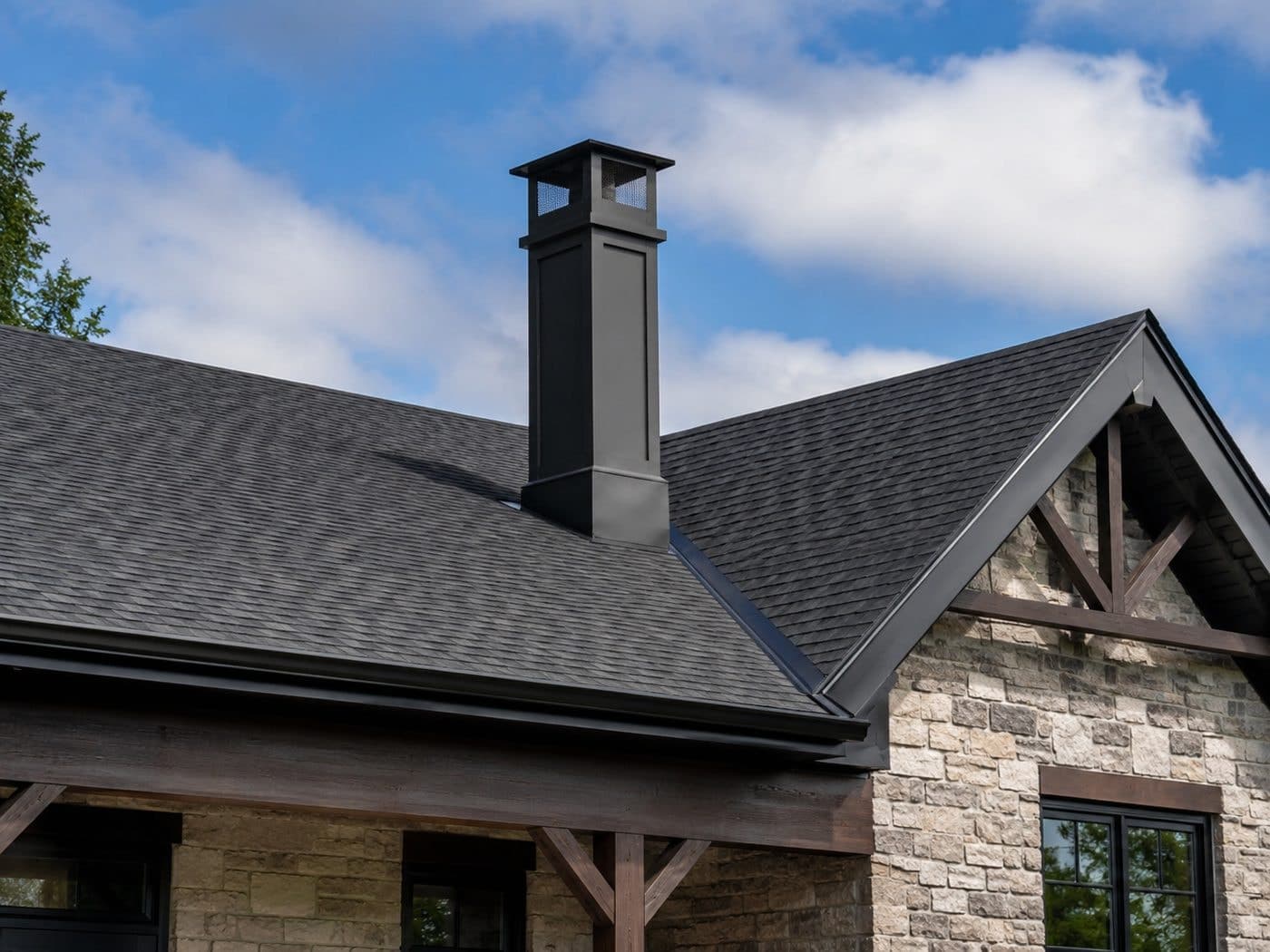
Crowns exist only on masonry chimneys (brick, block or stone). If your chimney is a framed box with siding or stucco and a metal pipe at the top, it has a sheet-metal lid instead, and the page on replacing a rusted chase cover is the one you want.
Masonry chimney and fireplace, cutaway
- 1Chimney cap. Metal lid with mesh sides over the flue opening. Keeps rain, debris and animals out.
- 2Crown. The concrete or mortar top of the masonry, sloped to shed water away from the flue.
- 3Flue liner. Clay tile or metal lining that carries smoke up and protects the masonry from heat.
- 4Flashing. Metal that seals the joint between the chimney and the roof.
- 5Brick & mortar. The chimney structure. Mortar joints and brick faces absorb water when they wear.
- 6Smoke chamber. The sloped transition that funnels smoke from the firebox into the flue.
- 7Damper. Metal plate at the throat (or a sealing lid on top) that closes the flue when not in use.
- 8Firebox. Where the fire burns. Firebrick laid in heat-resistant mortar.
- 9Hearth. Non-combustible floor extension in front of the fireplace opening.
Crown, cap, chimney wash: what people mean
Part of the confusion around crown repair is vocabulary. The Florida Building Code itself calls this part a “cap”: FBC Residential R1003.9.1 requires masonry chimneys to have “a concrete, metal or stone cap” with a drip edge. Most people in the trade call that slab the crown and reserve “cap” for the metal hood over the flue. Here is how the terms usually line up.
| Term | What it is | Where you find it |
|---|---|---|
| Crown (formed or cast) | A concrete slab with slope, an overhang past the brick and a drip edge underneath | Masonry chimneys; the preferred way to finish the top |
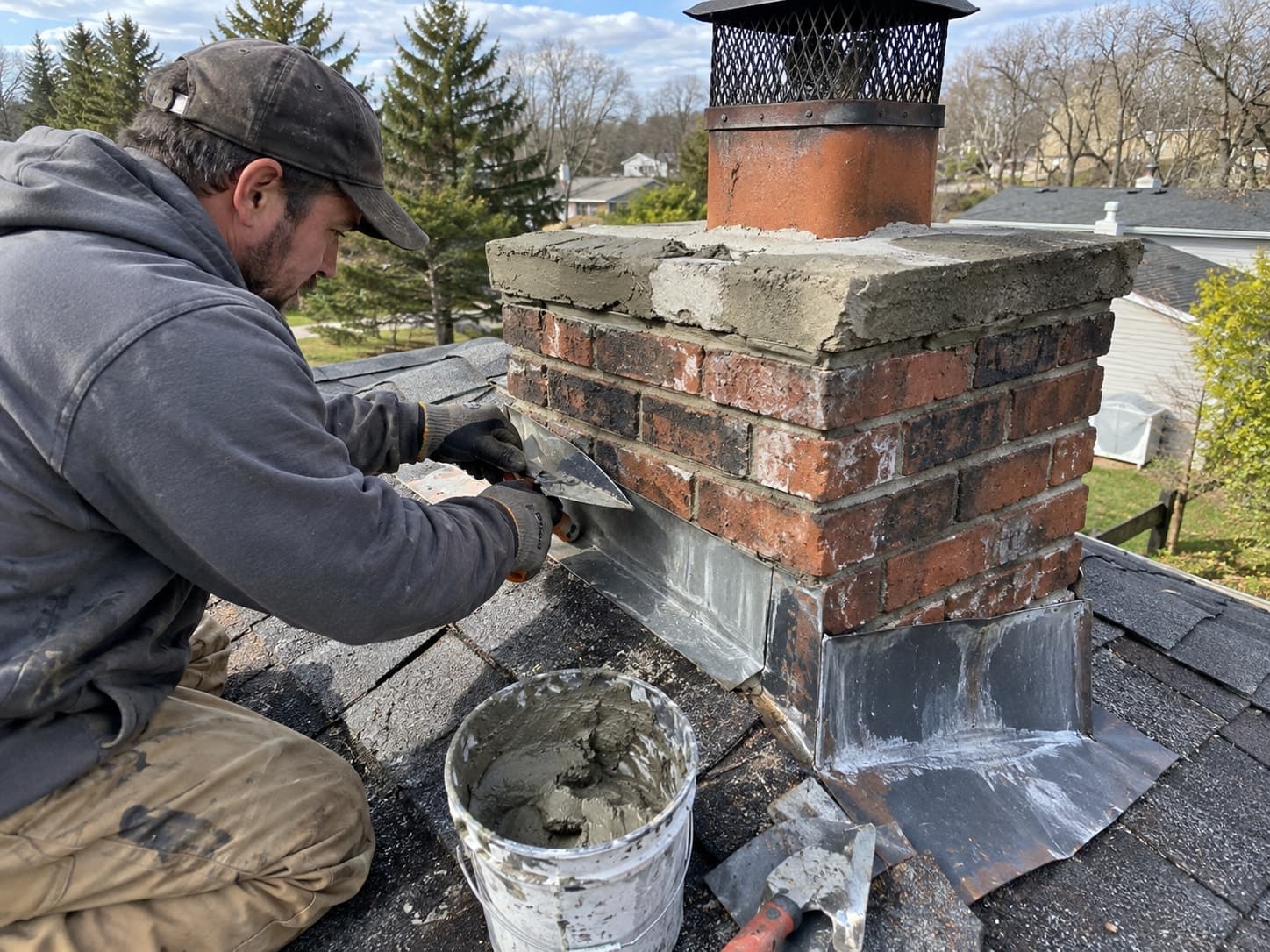
| Mortar wash (mortar cap) | A layer of mortar troweled over the top course and sloped by hand, usually flush with the brick faces | Many older masonry chimneys; often the original top |
| Chimney cap | A metal lid, often with mesh sides, over the flue opening or the whole top | Masonry and factory-built chimneys |
| Chase cover | A sheet-metal pan closing the top of a framed chase | Factory-built chimneys only |
The cap and the crown work as a pair. A properly fitted chimney cap keeps rain out of the flue, and a full-width multi-flue cap also shelters the crown from direct rain. It doesn’t replace a sound crown, though: the slab still has to shed whatever water reaches it.
What a well-built crown has
The code language is short. R1003.9.1 asks for a cap (crown) of concrete, metal or stone, a drip edge, a caulked bond break around any flue liners in accordance with ASTM C1283, and a top that is “sloped to shed water.” In practice, that translates into five details we look for on every crown:
Details that decide whether a crown lasts
- Slope from the flue tile down to the outer edge, so rain runs off rather than sitting on the slab
- Overhang past the brick faces on every side, so water falls clear of the masonry instead of running down it
- Drip edge: a groove or kerf under the overhang that breaks the water’s path back toward the brick
- Bond break between crown and flue tile, sealed with a flexible sealant, so the tile can expand with heat without cracking the slab
- Enough thickness and a proper mix that the slab resists shrinkage cracking; a thin skim of mortar tends to crack early
| Feature | Mortar wash (troweled on) | Formed crown |
|---|---|---|
| Edge | Usually flush with the brick, so water runs down the chimney face | Projects past the brick with a drip edge underneath |
| At the flue tile | Mortar packed tight against the tile, no room for movement | Bond break with flexible sealant around the tile |
| Material | Masonry mortar, often thin at the edges | Concrete or crown mix, formed to a consistent thickness |
| Typical failure | Shrinkage cracks, pieces breaking off at the edges, cracks radiating from flue corners | Usually longer-lived; failures tend to be at the sealant joint or from impact |
| Can it be coated? | Only if sound; coating won’t add overhang or slope | Yes, when cracks are fine and the slab is solid |
Edge
- Mortar wash (troweled on)
- Usually flush with the brick, so water runs down the chimney face
- Formed crown
- Projects past the brick with a drip edge underneath
At the flue tile
- Mortar wash (troweled on)
- Mortar packed tight against the tile, no room for movement
- Formed crown
- Bond break with flexible sealant around the tile
Material
- Mortar wash (troweled on)
- Masonry mortar, often thin at the edges
- Formed crown
- Concrete or crown mix, formed to a consistent thickness
Typical failure
- Mortar wash (troweled on)
- Shrinkage cracks, pieces breaking off at the edges, cracks radiating from flue corners
- Formed crown
- Usually longer-lived; failures tend to be at the sealant joint or from impact
Can it be coated?
- Mortar wash (troweled on)
- Only if sound; coating won’t add overhang or slope
- Formed crown
- Yes, when cracks are fine and the slab is solid
Why chimney crowns crack
Freeze-thaw is the textbook cause of crown damage in colder states, and it rarely applies here. On Central Florida chimneys, cracks more often come from how the crown was built and from heat.
- No bond break at the flue. Clay flue tile heats and expands when the fireplace is used, and the top of the chimney swings between hot sun and sudden rain. If the crown is locked to the tile, that movement cracks the slab, often in diagonal lines from the tile’s corners.
- Shrinkage in a thin mortar wash. Mortar troweled on thinly and left to dry fast tends to craze and crack, especially at the feathered edges.
- Flat or back-sloped tops. Water that sits on the slab keeps soaking into existing hairline cracks and widens them over time.
- Loose masonry underneath. If the top brick courses have lost their mortar, the crown loses its support and breaks along the weak line.
- Impact. Falling limbs and storm debris can chip or break a crown outright.
Signs your crown needs attention
What to notice from the ground, the attic or the fireplace
- Visible cracks across the top when you look from a second-story window or a photo taken with a zoom lens
- Pieces of concrete or mortar on the roof, in the gutter or on the smoke shelf
- A gap opening between the crown and the flue tile
- White, chalky staining on the top courses of brick, described on our page about white deposits on chimney brick
- Water or rust in the firebox after rain, the pattern covered in water coming through the chimney
- Moss, algae or plants growing on the top of the chimney, a sign water is sitting there
Crown sealing or crown replacement?
Elastomeric crown coatings are flexible, brush-applied products made for chimney crowns. On a crown that is structurally sound, they bridge fine cracks and slow the water getting into the slab. They are not a structural repair. Here is how the choice usually falls.
| Crown condition | Crown coating reasonable? | Replace the crown? |
|---|---|---|
| Hairline cracks, slab solid, sloped, sheds water | Yes: clean, fill fine cracks, coat per the manufacturer | No |
| Sealant joint at the flue tile dried out or open | Yes: cut out and reseal with a flexible sealant | No, if the slab is sound |
| Wider cracks through the slab, or sections that move | No: coating won’t bond pieces together | Yes |
| Chunks missing, edges breaking off | No | Yes |
| Flat or sloping toward the flue; water ponds | No: coating can’t add slope | Yes |
| Flush with the brick, no overhang or drip edge, walls staining below | Short-term only | Yes, to add overhang and drip edge |
| Top brick courses loose under the crown | No | Yes, after the masonry below is repaired |
Roof cement is not a crown repair
Black roofing cement smeared over a cracked crown traps water in the slab, cracks again as it ages, and has to be scraped off before a coating will bond. If a crown has been tarred over, expect that removal to be part of the job.
How a crown is replaced
Take off the cap and check the flue
The chimney cap comes off so the flue tile and the top of the liner can be seen. A cracked or loose top tile is dealt with before the new crown locks it in place.
Remove the old crown
The failed slab or mortar wash is broken out down to sound masonry, keeping debris out of the flue and off the roof.
Check the top courses
The exposed brick is checked for loose units and open joints. If they’re soft or moving, they’re reset or rebuilt first. When the damage runs well down the stack, the job becomes a partial chimney rebuild.
Form the overhang and drip edge
Forms are set so the new crown projects past the brick on all sides, with a drip groove under the edge.
Bond break at the flue
A separating material goes around the flue tile so the crown isn’t bonded to it; the joint is later sealed with a flexible sealant.
Place and slope the crown
The crown mix is placed and finished with a steady slope from the flue down to the edges, then left to cure before the forms come off.
Reinstall or upgrade the cap
The cap goes back on, or is replaced if it no longer fits the flue or the new crown. A full-width cap can be a good addition on a chimney with several flues.
Crowns on older and historic chimneys
Many mid-century and earlier brick chimneys were finished with a mortar wash rather than a formed crown, and several have been patched more than once. Replacing that wash with a proper crown changes the look of the chimney top slightly, because the new slab overhangs the brick. On a house in a local historic district, exterior changes may need approval before work starts, so it is worth asking the local historic preservation office whether crown work on your chimney falls under that review.
Where the crown fits in a leak
A cracked crown is one of several ways water gets into a brick chimney, and it often isn’t the only one. Water running off a crown with no overhang soaks the brick faces below; a missing cap lets rain straight down the flue; step flashing at the roof line fails on its own schedule. That’s why a crown repair is best scoped as part of a full chimney leak diagnosis when there’s active water inside, and why flashing at the roof line gets checked on the same visit. Once the crown and joints are sound, a breathable masonry water repellent can reduce how much rain the brick absorbs. Our guide on how storms drive water into chimneys explains why a crown that copes with a light shower can still leak in a downpour.
What affects the cost of crown repair
Crown work is priced after the top of the chimney has been seen, because sealing and re-forming are very different jobs. The main factors are below.
- Coating a sound crown versus removing and re-forming it
- Chimney size and the number of flues passing through the crown
- Condition of the top brick courses and the flue tile
- Whether old roof cement or coatings have to be removed first
- Roof pitch, height and roof covering, which affect access
- Cap replacement or a new multi-flue cap
Crown work and the rest of the top
Crown repair means being at the top of the chimney with access set up, which is the expensive part of the job. It is worth dealing with everything up there on the same trip rather than paying for the access twice.
In practice that means the cap, the flashing line and the top courses of masonry get assessed while we are there: a chimney cap that is missing or rusted, flashing that has lifted, and joints that need repointing. A crown repaired under a missing cap is a crown that will be taking water again within a season.
Estimates are free and cover the whole top of the chimney rather than only the item you called about, so you can decide what to do now and what to leave.
References (1)
Facts and figures on this page come from these references.