On this page
- What the code requires at the termination
- Types of exterior dryer vent covers
- Signs the cover needs replacing
- Birds, rodents and lizards in the dryer vent
- Choosing a pest-resistant cover without a screen
- Wall hood or roof cap: how replacement differs
- Wall terminations: installation details that matter
- What affects the cost of a cover replacement
- Pest-resistant covers
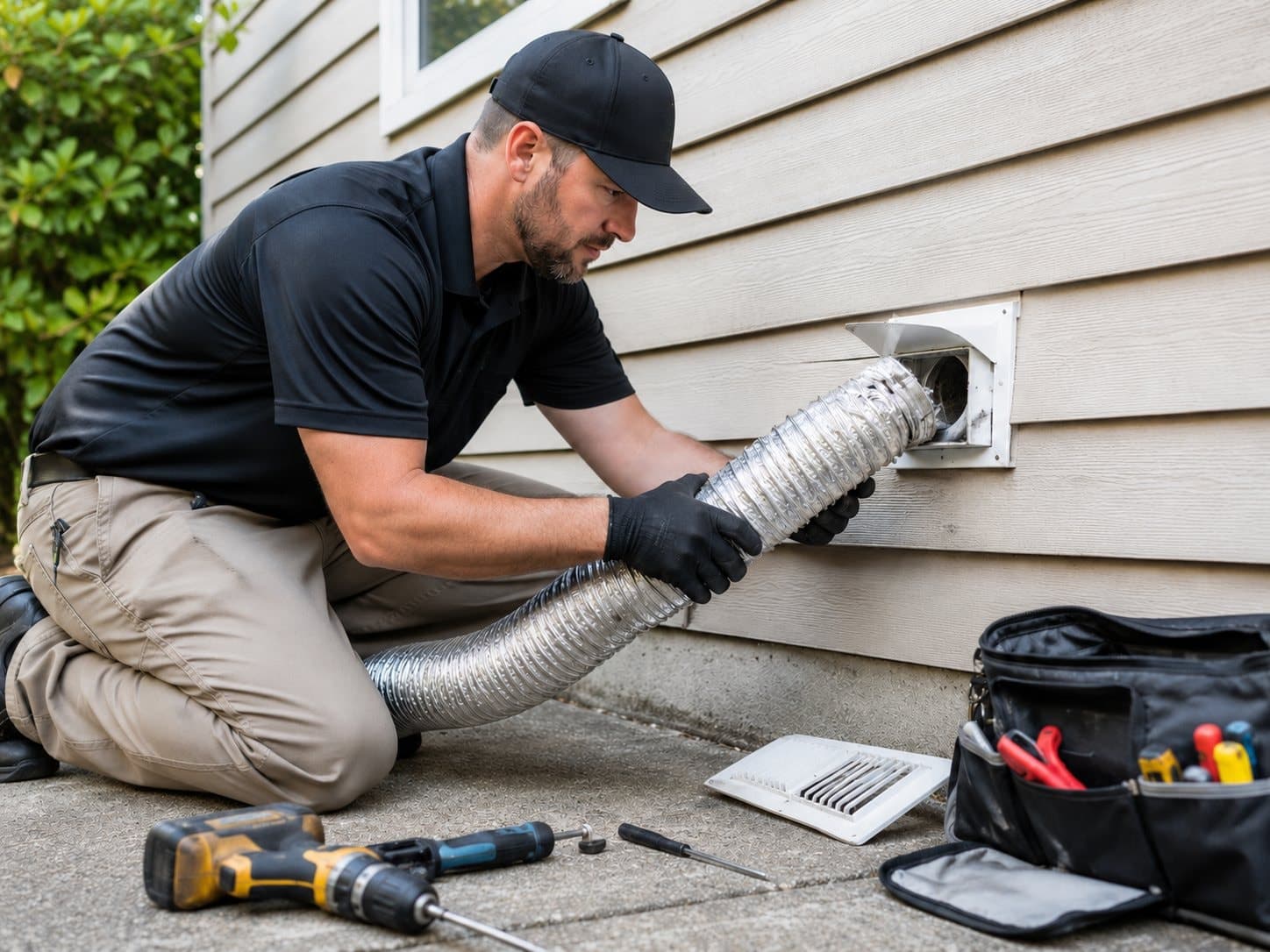
Every load of laundry passes through the exterior dryer vent cover on its way out, and so does every bit of lint that got past the lint screen. The cover has two jobs that pull in opposite directions: it has to open wide and easily when the dryer runs, and it has to close tightly when the dryer stops so that rain, wind, insects and animals stay out. When it does only one of those well, you get either a restricted vent or an open door into the wall.
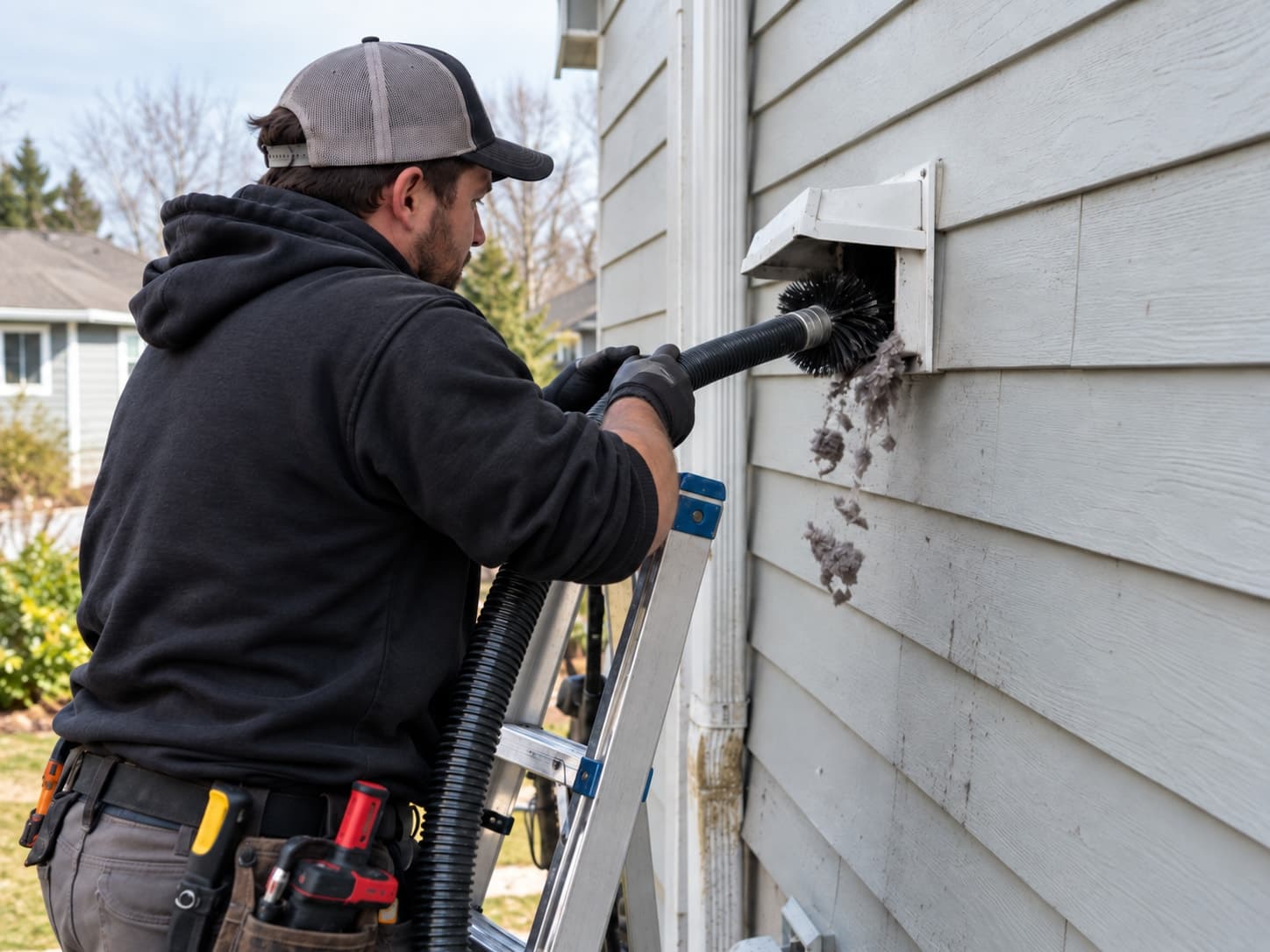
This page is about the termination itself: the hood, cap or cover where the duct leaves the house. Cleaning the duct behind it is covered under dryer vent cleaning, and caps that sit on the roof have their own page on cleaning and servicing roof-mounted dryer vents.
What the code requires at the termination
Florida’s residential code sets four rules for the point where a dryer duct ends (FBC-R 2023, Sections M1502.3 and M1502.3.1). They decide which replacement covers are acceptable:
- The duct ends on the outside of the building, not in the attic, a soffit or a crawl space
- The termination has a backdraft damper that closes when the dryer is off
- No screen is installed at the termination
- The passageway is undiminished and gives an open area of at least 12.5 square inches
The location is set by the dryer manufacturer’s installation instructions. Where those don’t specify one, the code requires the termination to be at least 3 feet in any direction from openings into the building, and it specifically includes openings in ventilated soffits. A replacement cover normally goes in the existing opening, but a cover right beside a window, a door or a vented soffit is worth discussing before it is simply swapped. The Florida dryer vent code guide puts these rules in context with the rest of section M1502.
Types of exterior dryer vent covers
Dryer vent system, from dryer to termination
- 1Lint screen. Catches most lint inside the dryer. What gets past it collects in the duct.
- 2Transition duct. Short connector from the dryer to the wall. Easily crushed behind the machine.
- 3Duct run. Smooth 4-inch metal duct through walls, floors or the attic.
- 4Elbows. Every bend adds resistance and counts against the allowed duct length.
- 5Roof cap. Roof termination, common on two-story homes. Hard to see and to clean.
- 6Wall hood. Side-wall termination. Must open freely and has no screen.
- 7Backdraft damper. Flap that opens under airflow and closes to keep out air, rain and pests.
| Style | How it works | Typical problem |
|---|---|---|
| Louvered cover | Three or four light slats lift with airflow and drop shut | Slats gum up with lint or paint and stay partly closed; broken slats leave gaps |
| Single-flap hood | One hinged flap under a hood swings open with exhaust | Flap sticks, cracks in the sun, or hangs open after a hinge breaks |
| Spring-loaded or weighted damper | A damper inside the collar is held closed until exhaust pushes it open | Springs weaken or lint builds up around the damper; some designs need more pressure to open |
| Low-profile cover | A shallow hood that sits close to the wall, often behind landscaping or in a walkway | Undersized openings, easily crushed, can be hard to clean |
| Roof cap | A hood on a roof jack with a flap or damper underneath | Lint collects under the hood; flaps seize; some caps sold for bath fans have grilles |
| Guard or cage over a cover | A metal cage fitted over an existing hood | Acceptable only if it doesn’t act as a screen; mesh-style guards trap lint |
Signs the cover needs replacing
What you can see from outside, and what it usually means
01Flap stuck shut or barely moving
- What you may notice
- With the dryer running, the flap or louvers lift only slightly or not at all; lint collects around the edges.
- How it’s confirmed
- The flap is freed and cleaned, then checked with the dryer running. If it still drags, or the hinge is worn, the cover is replaced.
02Flap stuck open
- What you may notice
- The flap hangs open with the dryer off, or you can see into the duct. Insects, lizards or nesting material appear inside.
- How it’s confirmed
- The hinge and damper are checked for breakage or warping. A cover that can’t close is replaced, and any debris in the first section of duct is removed.
03Broken or missing louvers
- What you may notice
- Cracked or missing slats, brittle sun-faded plastic, uneven gaps between slats.
- How it’s confirmed
- Louvered covers are not practical to repair slat by slat; the whole cover is replaced with a sturdier design.
04Mesh screen or pest guard
- What you may notice
- A wire or plastic mesh over the opening, often grey with lint on the inside face.
- How it’s confirmed
- The screen is removed, the lint behind it cleared, and a damper-type cover fitted instead.
05Rusted, crushed or painted-shut cover
- What you may notice
- Rust streaks below the vent, a flattened hood, or a flap painted to the frame during exterior painting.
- How it’s confirmed
- The cover is checked for open area and damper movement; one that has been crushed or painted shut is normally replaced rather than freed.
06Loose cover or open gaps around it
- What you may notice
- The hood moves when touched; cracked sealant or open gaps between the flange and the stucco or siding.
- How it’s confirmed
- The attachment and seal are checked. Water can follow a poorly sealed hood into the wall, so the flange is resealed or the cover replaced.
A vent that fills with lint again within months often has a termination problem rather than a duct problem. The guide to why a dryer vent keeps clogging covers the other possible reasons, and weak or absent exhaust at the wall is explained step by step on the page about a dryer vent with little or no airflow. If the only symptom is the flap itself, start with why an outside dryer vent flap won’t open or close.
Birds, rodents and lizards in the dryer vent
A dryer vent is a warm, dry, sheltered opening, and a cover that doesn’t close is an invitation. The U.S. Fire Administration lists nests of small birds and other animals among the causes of blocked dryer exhaust. In Central Florida, small lizards and insects slipping past a flap that no longer seats properly are a common nuisance as well.
Bird nest in the dryer vent
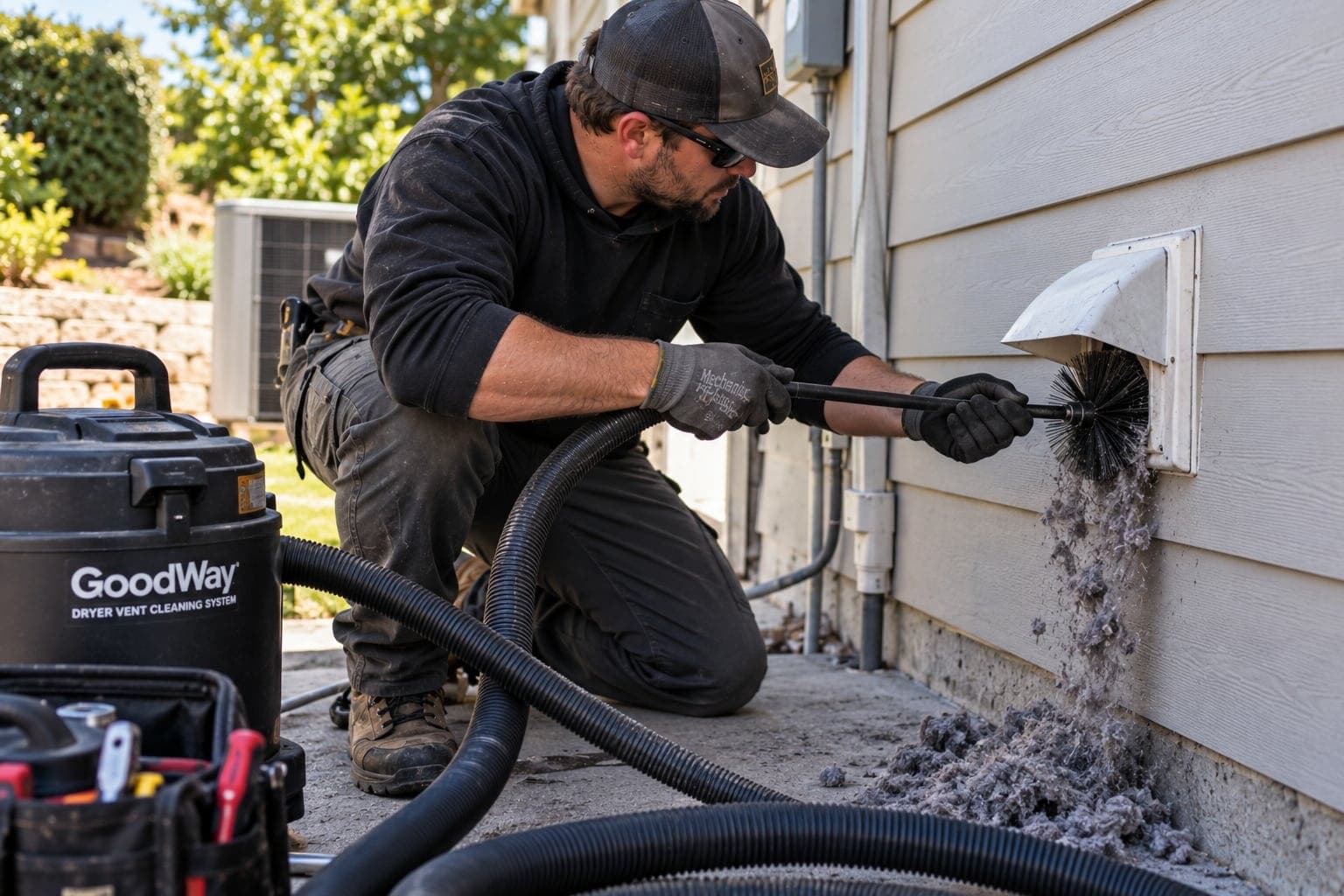
Nesting material packed into the first few feet of duct is a serious blockage: it stops airflow, and dry grass and twigs sit right where hot, lint-laden exhaust passes. Timing matters, though. Many native birds and their active nests are protected under the federal Migratory Bird Treaty Act, so a nest with eggs or chicks shouldn’t be pulled out. Stop using the dryer until the nest is empty, then have the nest and the lint behind it removed and the cover replaced so the birds can’t return.
Rodents and lizards
Rodents chew and nest in lint; lizards and insects usually just wander in through a flap that hangs open. Nests, droppings and debris are removed from the termination and the first section of duct, and the cover is replaced with one that closes fully. Live-animal removal and trapping aren’t part of this service. If an animal is still inside the vent or the wall, that is a job for a licensed wildlife professional, and the vent is cleared and closed off once the animal is gone.
Why mesh is the wrong fix
A screen over a dryer vent looks like the obvious answer to birds, but it is prohibited at the termination under Florida’s residential code for a good reason: it catches the same fine lint the dryer’s lint screen misses, on every load. Within weeks it can be matted over, and a matted screen restricts airflow and holds lint right where the exhaust leaves the house. Pest resistance comes from a damper that closes firmly on its own, not from a barrier the exhaust has to push through.
Choosing a pest-resistant cover without a screen
- A damper that seats fully when the dryer stops. Weighted and spring-assisted dampers close positively rather than resting slightly open.
- Metal rather than thin plastic where the cover faces full sun, since plastic flaps and louvers crack and warp over time.
- A hood that shields the damper from wind-driven rain and makes it harder for birds to perch and push at the flap.
- A full-size passageway of at least the 12.5 square inches the code requires, with no internal grille.
- A cover that can be opened or removed for cleaning, so lint behind the damper can be reached without taking the cover off the wall.
Some covers that are advertised as “pest guards” are really a cage or grille with small openings. Look at the gap sizes: anything fine enough to stop a lizard is fine enough to trap lint. A damper-style design stops animals when the dryer is off and gets out of the way when it is on.
Wall hood or roof cap: how replacement differs
| Feature | Wall termination | Roof termination |
|---|---|---|
| Access | From the ground or a ladder at the wall | From the roof, subject to pitch, roofing and weather |
| Seal | Flange sealed to stucco, block or siding | Cap set on a roof jack with flashing lapped into the roofing |
| Common faults | Painted or stuck flaps, broken louvers, crushed hoods behind shrubs | Lint matted under the hood, seized flaps, bath-fan caps with grilles |
| Typical scope | Cover swapped and the first section of duct checked | Cap replaced together with roof vent service and a check of the flashing |
Access
- Wall termination
- From the ground or a ladder at the wall
- Roof termination
- From the roof, subject to pitch, roofing and weather
Seal
- Wall termination
- Flange sealed to stucco, block or siding
- Roof termination
- Cap set on a roof jack with flashing lapped into the roofing
Common faults
- Wall termination
- Painted or stuck flaps, broken louvers, crushed hoods behind shrubs
- Roof termination
- Lint matted under the hood, seized flaps, bath-fan caps with grilles
Typical scope
- Wall termination
- Cover swapped and the first section of duct checked
- Roof termination
- Cap replaced together with roof vent service and a check of the flashing
The guide to dryer vent cover types compares louvered, flap, damper and roof styles in more detail.
Wall terminations: installation details that matter
Check the duct behind the cover
The old cover is removed and the first section of duct is checked. The duct should connect to the cover’s collar with the insert end pointing in the direction of airflow and no screws protruding into the airstream.
Match the collar and the opening
The new cover’s collar has to fit the 4-inch duct without reducing it. A hood that squeezes the duct at the wall defeats the point of replacing it.
Seal the flange to the wall
On stucco the flange is sealed to the wall surface; on lap siding the cover may need a mounting block so it sits flat. The top edge is sealed so rain runs over the hood, not behind it.
Test it running
With the dryer on, the damper should open fully; with it off, it should close by itself. Airflow at the outlet is read to confirm the new cover isn’t a restriction.
Low-profile and tight-clearance covers
Where the vent exits behind a shrub, beside an air conditioning unit or next to a walkway, a low-profile hood can keep the cover out of the way. The trade-off is that some slim designs have a smaller opening than a standard hood. A low-profile cover still has to give the full open area the code requires, and it needs clearance in front of it so the damper can swing open and the exhaust has somewhere to go.
Roof caps
Roof terminations fail in the same ways, but lint builds up under the hood where no one sees it, and some caps sold for bath fans include a grille that doesn’t belong on a dryer vent. Replacing a roof cap involves work at the roof jack and flashing, which is why it is handled together with roof dryer vent service rather than as a simple swap.
What affects the cost of a cover replacement
- Wall or roof termination, and the height and roof type for roof caps
- The cover style and material chosen
- Stucco, block or siding, and whether a mounting block is needed
- Whether the duct behind the cover needs cleaning or a new section
- Nest or debris removal in the first section of duct
- Access: landscaping, fences, second-story walls
A cover replacement is often done on the same visit as a cleaning.
Pest-resistant covers
A dryer vent hood is a warm, sheltered, lint-lined opening into a house, which makes it attractive to exactly the things you do not want in a wall cavity. Birds nesting in a vent hood is a routine Central Florida call in spring.
The tension is that mesh keeps birds out and also catches lint, which is why a fine screen over a dryer vent is a bad idea — it blocks within weeks and creates the fire risk it was meant to avoid. The right answer is a hood with a properly weighted damper flap that closes fully when the dryer is off, or a purpose-made guard with wide enough spacing to exclude birds without catching lint.
Where a nest is already in there, the timing rules for protected species apply in the same way they do on a chimney — see chimney animal screens and proofing for how that works.
References (3)
Facts and figures on this page come from these references.