On this page
- The parts above the firebox
- What the code expects of a smoke chamber
- Corbelled vs parged smoke chambers
- Why inspectors flag the smoke chamber
- Repair options
- The smoke chamber and a smoky fireplace
- How a smoke chamber repair works
- What affects the cost of smoke chamber repair
- What parging fixes, and what it does not
Stand in front of a masonry fireplace and look up past the open damper, and the space you can’t quite see is the smoke chamber. It starts at the throat above the firebox and narrows upward until it meets the bottom of the flue liner. Its job is to gather smoke from a wide fireplace opening and feed it smoothly into a much smaller flue.
Because it sits out of sight, the smoke chamber is often the last part of a fireplace anyone thinks about, until an inspection report mentions it. This page explains what the smoke chamber does, why it gets flagged, and how it is repaired. It applies to masonry fireplaces; factory-built fireplaces have a metal smoke shelf and baffle built into the unit, and problems there are handled as fireplace repair on listed units.
Masonry chimney and fireplace, cutaway
- 1Chimney cap. Metal lid with mesh sides over the flue opening. Keeps rain, debris and animals out.
- 2Crown. The concrete or mortar top of the masonry, sloped to shed water away from the flue.
- 3Flue liner. Clay tile or metal lining that carries smoke up and protects the masonry from heat.
- 4Flashing. Metal that seals the joint between the chimney and the roof.
- 5Brick & mortar. The chimney structure. Mortar joints and brick faces absorb water when they wear.
- 6Smoke chamber. The sloped transition that funnels smoke from the firebox into the flue.
- 7Damper. Metal plate at the throat (or a sealing lid on top) that closes the flue when not in use.
- 8Firebox. Where the fire burns. Firebrick laid in heat-resistant mortar.
- 9Hearth. Non-combustible floor extension in front of the fireplace opening.
The parts above the firebox
- Throat: the narrow opening just above the firebox where the damper sits.
- Damper: the metal plate that opens and closes the throat. See repairing or replacing a fireplace damper.
- Smoke shelf: the flat or slightly curved ledge behind the damper, at the bottom of the smoke chamber. It catches rain and debris coming down the flue and helps turn back down-drafts.
- Smoke chamber: the tapered chamber from the smoke shelf up to the flue, usually pyramid-shaped.
- Flue liner: the tile or metal passage that starts at the top of the smoke chamber and runs to the top of the chimney.
What the code expects of a smoke chamber
The Florida Building Code, Residential sets specific requirements for masonry smoke chambers (FBC-R R1001.8 and R1001.8.1):
- The inside surface is parged smooth with refractory mortar conforming to ASTM C199
- Walls are at least 8 inches of solid masonry, or 6 inches where the chamber is lined with firebrick or vitrified clay
- Corbelled walls step in no more than 30 degrees from vertical
- Sloped, rolled or prefabricated-lined walls lean no more than 45 degrees from vertical
Many older fireplaces were built with bare corbelled brick, or their parging has failed over time. That gap between how the chamber was built and what current standards expect is why it shows up on inspection reports.
Corbelled vs parged smoke chambers
A corbelled smoke chamber is built by stepping each course of brick inward a little until the walls meet the flue. Left bare, those steps form a rough, staircase-like surface full of ledges and mortar joints. A parged smoke chamber has the same brick behind it, but the inside is covered with a smooth layer of refractory mortar.
| Feature | Rough or corbelled, unparged | Parged or coated smooth |
|---|---|---|
| Airflow | Ledges create turbulence that slows the draft | Smoke moves up with less resistance |
| Creosote | Collects on every step and in open joints | Fewer places for deposits to build; easier to sweep |
| Heat protection | Open or eroded joints can let heat and gases through the masonry | A continuous refractory layer seals joints and cracks |
| Cleaning | Brushes catch on ledges; deposits stay behind | Brushes and vacuums clear it more completely |
Airflow
- Rough or corbelled, unparged
- Ledges create turbulence that slows the draft
- Parged or coated smooth
- Smoke moves up with less resistance
Creosote
- Rough or corbelled, unparged
- Collects on every step and in open joints
- Parged or coated smooth
- Fewer places for deposits to build; easier to sweep
Heat protection
- Rough or corbelled, unparged
- Open or eroded joints can let heat and gases through the masonry
- Parged or coated smooth
- A continuous refractory layer seals joints and cracks
Cleaning
- Rough or corbelled, unparged
- Brushes catch on ledges; deposits stay behind
- Parged or coated smooth
- Brushes and vacuums clear it more completely
Why inspectors flag the smoke chamber
During a full chimney inspection, the smoke chamber is one of the areas examined closely because it’s invisible from the room. These are the findings that typically lead to a repair recommendation:
Common smoke chamber findings
01Unparged, corbelled brick
- What you may notice
- Nothing visible from the room; fires may draft sluggishly or smoke at the start.
- How it’s confirmed
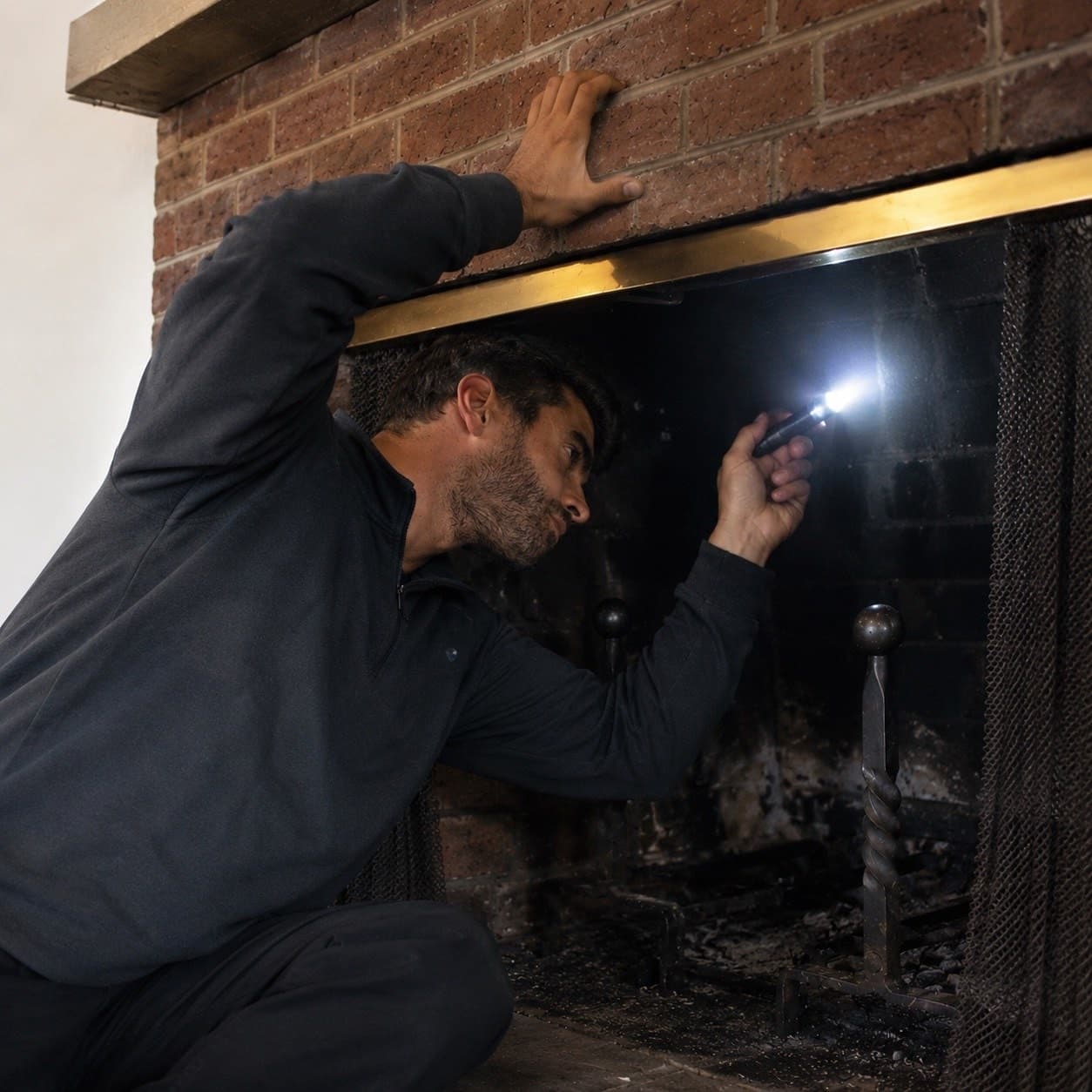
- A light from the firebox shows stepped courses and bare mortar joints.
02Cracked or missing parging
- What you may notice
- Flakes of mortar on the smoke shelf or damper.
- How it’s confirmed
- Inspection shows loose, hollow or missing sections of the old surface.
03Cracks and open joints
- What you may notice
- Smoke staining on the face of the fireplace or a smoky smell beside the chimney.
- How it’s confirmed
- Inspection shows cracks through the chamber walls or gaps between courses.
04Gap at the base of the liner
- What you may notice
- Usually no outward sign.
- How it’s confirmed
- A close look where the chamber meets the first flue tile, checking for a sealed transition.
05Heavy creosote or water damage
- What you may notice
- Creosote flakes on the shelf, rust on the damper, or a musty smell.
- How it’s confirmed
- Inspection of the chamber and of the crown, cap and flashing for the water source.
Buyers often first hear about the smoke chamber from a real estate chimney inspection, because a general home inspection in Florida isn’t required to evaluate chimney interiors. If a report recommends parging or coating the smoke chamber, it helps to understand what that involves before you negotiate.
Repair options
| Method | What it involves | Best for |
|---|---|---|
| Parging with refractory mortar | The chamber is cleaned, then refractory mortar is troweled on by hand to fill the steps, joints and cracks and leave a smooth surface | Corbelled or rough chambers and most cracking, where the brick behind is sound |
| Smoke chamber coating system | A heat-rated refractory or ceramic-based product, designed for smoke chambers, is applied to the prepared surface to a set thickness, following its own instructions | Sealing and smoothing a chamber, including hard-to-reach areas, where the product’s listing fits the fireplace |
| Rebuilding sections | Loose or failed brick is taken out and relaid before parging | Chambers with displaced, crumbling or missing masonry |
Whatever the method, preparation matters most. Creosote and loose material have to come off first, because parging over deposits leaves a weak surface that will flake off. If the chamber is heavily coated, that cleaning may be part of removing hardened creosote before repair.
Parging isn’t the same as the flue liner
The smoke chamber and the flue liner are separate parts. Parging the chamber doesn’t repair cracked flue tiles above it, and relining the flue doesn’t smooth the chamber below. When both are damaged, both are addressed, and the connection between them has to be sealed.
The smoke chamber and a smoky fireplace
A rough or badly shaped smoke chamber is one of several reasons a fireplace smokes into the room. It isn’t the most common: a damper not fully open, a blocked flue or negative pressure in the house are more usual culprits. The page on a fireplace that smokes into the room walks through those in order. When the chamber is the cause, smoothing it can improve the draft, but it can’t correct a flue that is simply too small for the fireplace opening.
How a smoke chamber repair works
Inspect
The chamber, smoke shelf, damper and the base of the flue are examined with a light to see the construction and the damage.
Protect and clean
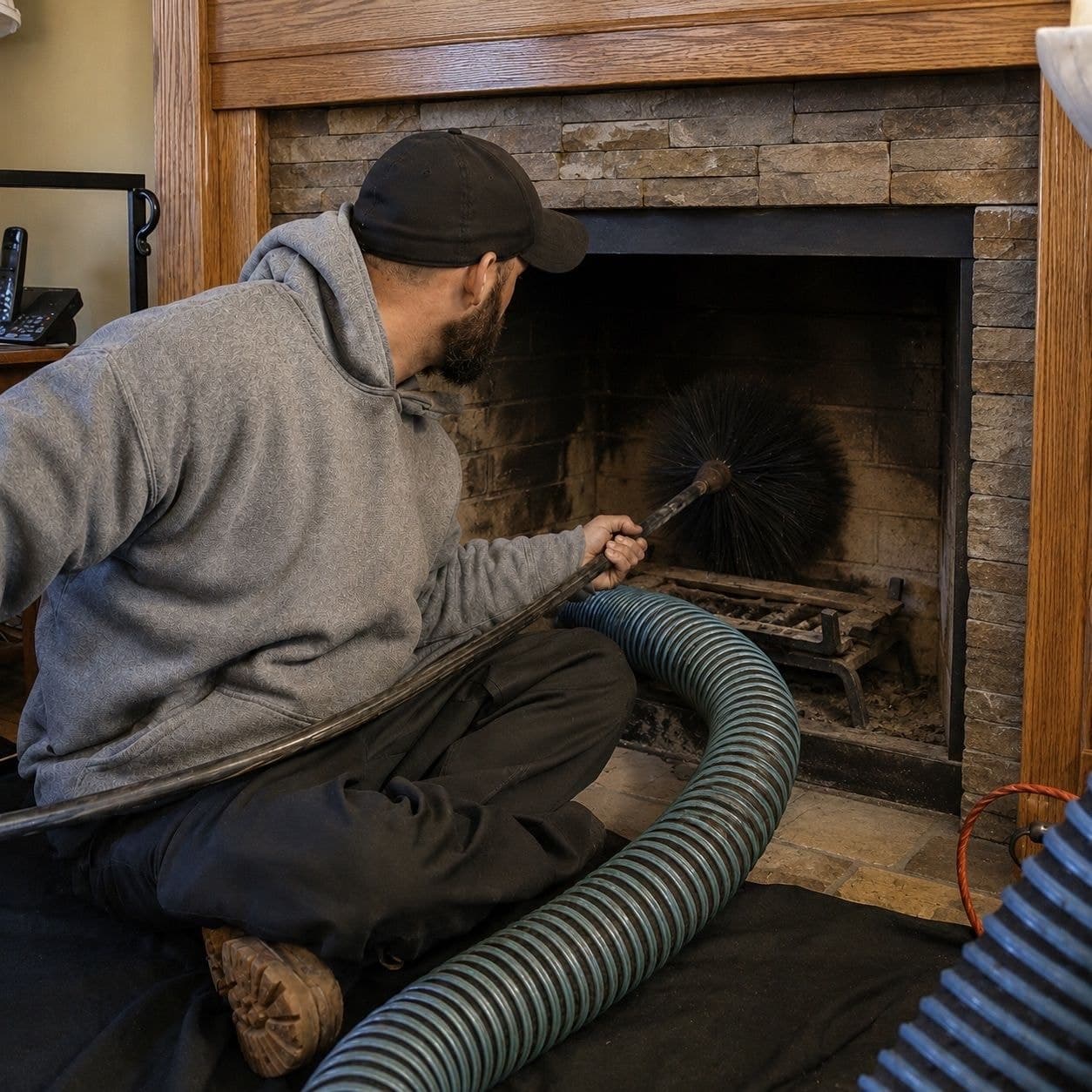
The room is protected, the damper area is opened up as needed, and creosote, soot and loose material are removed from the chamber.
Repair the masonry
Loose brick or failed sections are relaid where needed, so the parging has a sound base.
Parge or coat
Refractory mortar or a smoke chamber coating is applied to fill ledges and cracks and leave a continuous smooth surface.
Cure and check
The material cures as its instructions require before the next fire, and the finished surface and the damper are checked.
A damaged firebox below the chamber is a separate repair, covered under firebox and firebrick repair.
What affects the cost of smoke chamber repair
For smoke chambers, the main factors are:
- Size and height of the smoke chamber
- Corbelled versus sloped construction, and how rough the surface is
- Hand parging versus a coating system
- How much creosote has to be removed first
- Loose or missing brick that needs rebuilding
- Access through the damper, which sometimes has to be removed
What parging fixes, and what it does not
Smoothing the smoke chamber genuinely improves draft, and on a fireplace with a rough corbelled chamber it can be the whole answer. It is worth being clear about where it stops, though, because it gets sold as a cure for smoking fireplaces that have a different cause entirely.
| Cause | Does parging fix it? |
|---|---|
| Rough, stepped corbelling breaking up airflow | Yes — this is exactly what it is for |
| Gaps and missing mortar in the chamber | Yes, and it also closes a fire-safety gap |
| A damper that will not fully open | No — damper repair |
| A blocked flue | No — blockage removal |
| Firebox opening too large for the flue | No — the opening has to be reduced |
| House under negative pressure from the air handler | No — that is make-up air, not masonry |
| Chimney too short for its roofline | No — height or a wind-directional cap |
Which of those you actually have is what a draft diagnosis establishes, and it is worth doing before committing to masonry work. Smoking fireplace and draft correction runs through the causes in the order they get checked.
Smoke chamber work is available across Greater Orlando and Central Florida, with free estimates that follow a diagnosis rather than an assumption.
References (2)
Facts and figures on this page come from these references.