On this page
A chimney is a single open pipe from the fireplace to the sky, and anything that lodges in it narrows or closes that pipe. In a region where many fireplaces sit unused from spring to winter, the flue has months to collect nesting material, leaves and wind-blown debris before anyone notices. Usually the first sign is the first fire of the season filling the room with smoke.
Blockage removal is a targeted job, separate from routine cleaning. A regular chimney sweep removes soot and light creosote along the whole flue; this service is about locating a specific obstruction, getting it out safely and legally, and finding out how it got there.
Symptoms of a blocked flue
What a blockage looks like from the room
01Smoke comes into the room
- What you may notice
- Smoke rolls out of the opening as soon as the fire catches, even with the damper fully open.
- How it’s confirmed
- Damper confirmed open, then a draft test at the opening and a look up the flue with a light.
02Debris falling into the firebox
- What you may notice
- Twigs, leaves, straw, feathers or reddish tile fragments on the damper or grate.
- How it’s confirmed
- A flashlight from below and a look from the top to find where the material is coming from and how much remains.
03Noises in the chimney
- What you may notice
- Chirping, scratching or fluttering, often in spring and summer.
- How it’s confirmed
- Identify what is up there before anything is touched; protected species set the timing.
04A strong or unusual odor
- What you may notice
- A musty, rotting or animal smell, worse on humid days or with the AC running.
- How it’s confirmed
- A light up the flue for nests, droppings or a dead animal; a check of the cap and top of the flue.
05Carbon monoxide alarm sounding
- What you may notice
- An alarm while a fire is burning or shortly after.
- How it’s confirmed
- Treat as an emergency first (see below); the flue is inspected only after the house is safe.
A blocked flue can send carbon monoxide into the house
Any fire makes carbon monoxide, and the flue is what carries it away. If a CO alarm sounds or anyone has headaches, dizziness, nausea or confusion while the fireplace is in use, put the fire out only if it is safe to do so, get everyone outside, and call 911. The CPSC recommends a yearly professional inspection of fireplaces, chimneys, flues and vents as part of preventing CO poisoning (CPSC).
Why a partial blockage matters
A flue doesn’t have to be fully closed to cause trouble. Draft depends on warm gases rising through a clear, correctly sized opening, so a nest or a pile of debris on the smoke shelf that closes off part of the flue slows everything down. Smoke spills at the opening, fires burn cooler and smokier, and carbon monoxide from an open fire or a vented appliance has a harder time leaving the house.
What blocks chimneys
| Blockage | Where it tends to lodge | Usually traced to |
|---|---|---|
| Bird nests and nesting material | Smoke shelf, damper, or partway up the flue | A missing, damaged or wrong-size cap |
| Leaves, twigs, palm debris | On the damper and smoke shelf | No cap, or a cap with torn mesh |
| Animal nests or a dead animal | Smoke shelf or damper area; sometimes inside the chase | An open flue top or gaps in a chase cover or siding |
| Fallen flue tile or brick | Offsets, the smoke shelf, or wedged across the flue | Deteriorated liner, water damage, a storm or lightning |
| Heavy creosote | Along the flue walls, narrowing the opening | Smoldering fires, damp wood, a cool or oversized flue |
| Collapsed cap mesh or storm debris | At the top of the flue | Rust, wind damage or impact |
Fallen tile deserves a special mention. Pieces of clay liner in the firebox mean the liner has broken somewhere above, and clearing the debris doesn’t fix that. The flue needs a full inspection, and possibly flue liner repair, before it goes back into use. Blockages made of hardened creosote are handled as heavy creosote cleaning rather than simple debris removal.
Nests, birds and bats: when removal is legal
Nest removal is the most common blockage job, and it is also the one with legal limits. Two rules shape the timing:
- Chimney swifts are protected under the federal Migratory Bird Treaty Act. Harming the birds or disturbing their eggs or active nests is illegal (USFWS). They arrive in spring and leave by early fall, and FWC advises scheduling chimney cleaning after the nesting season (FWC). An active swift nest stays until the young have left; after that, the nest and debris can be removed and the flue capped.
- Bats in Florida have a maternity season from April 16 to August 14. Exclusion is only allowed from August 15 to April 15, using approved exclusion methods (FWC).
If birds are nesting, the damper stays closed, no fire is lit, and removal is scheduled for after the young have gone. The page on birds nesting in a chimney explains what to do in the meantime.
We don’t trap or remove live animals
A live raccoon, squirrel, opossum or snake is a job for a nuisance wildlife trapper (FWC doesn’t license trappers, but keeps a voluntary directory), who can remove the animal under FWC’s rules (FWC). Once the animal is out, the nest, debris and droppings are cleared and the entry point is closed. Don’t light a fire to drive an animal out; it can trap it, and nesting material burns.
Blockage clearing or animal removal?
This service deals with what’s left in the flue: nests, nesting material, leaves, debris and fallen tile. If something is still alive up there, the order changes. A live mammal is removed first by a nuisance wildlife trapper, and protected birds and bats set the calendar. That sequence is covered on chimney animal and nest removal. Once the flue is empty, clearing and capping work the same way.
How a blocked chimney is cleared
Find it
The firebox, damper and smoke shelf are checked with a light, then the flue is examined to locate the blockage and see what it is. Where access allows, the top of the chimney is checked too.
Confirm it can be removed
Active swift nests and bats in maternity season wait. Live animals are referred to a nuisance wildlife trapper first.
Clear it
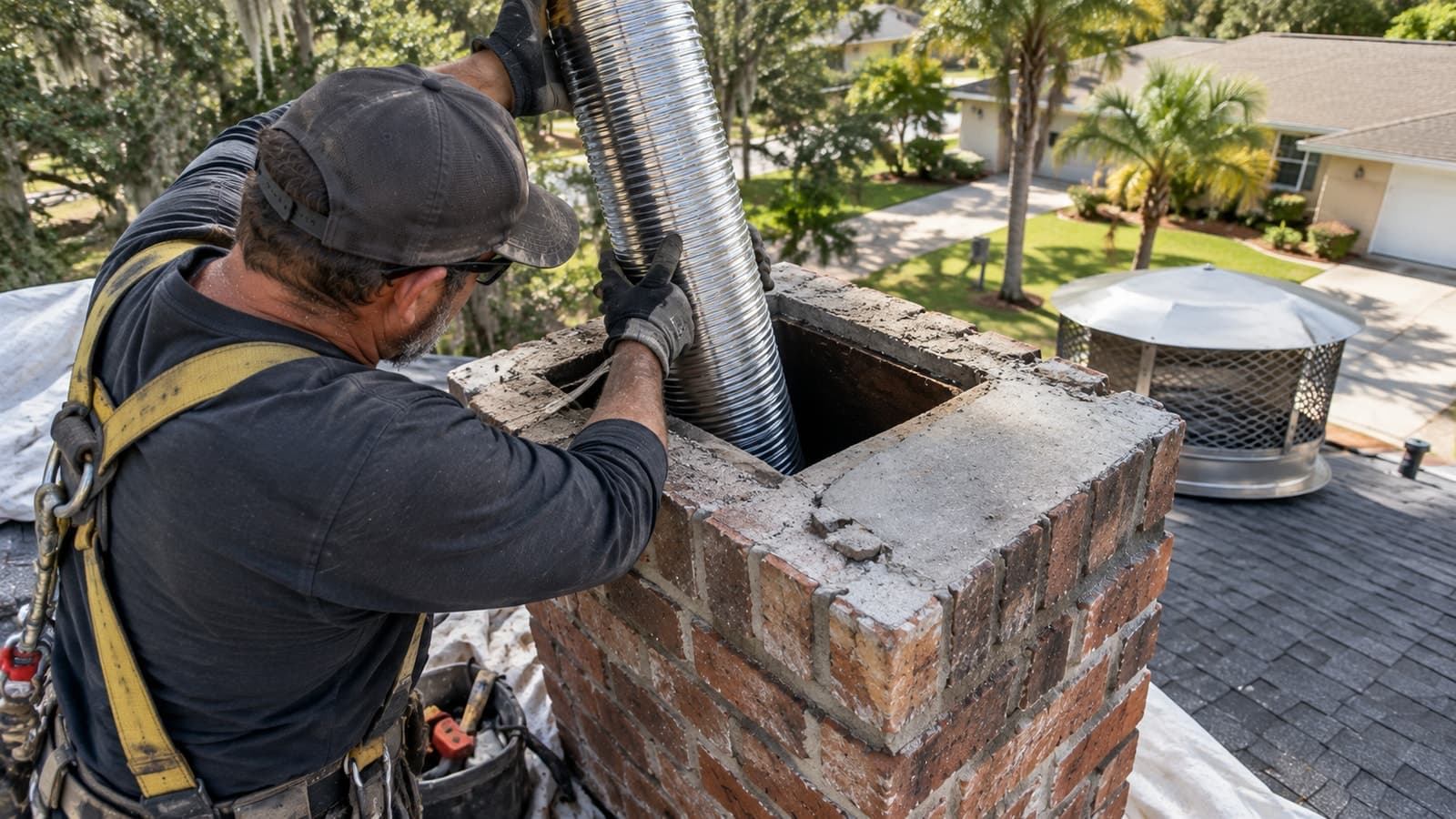
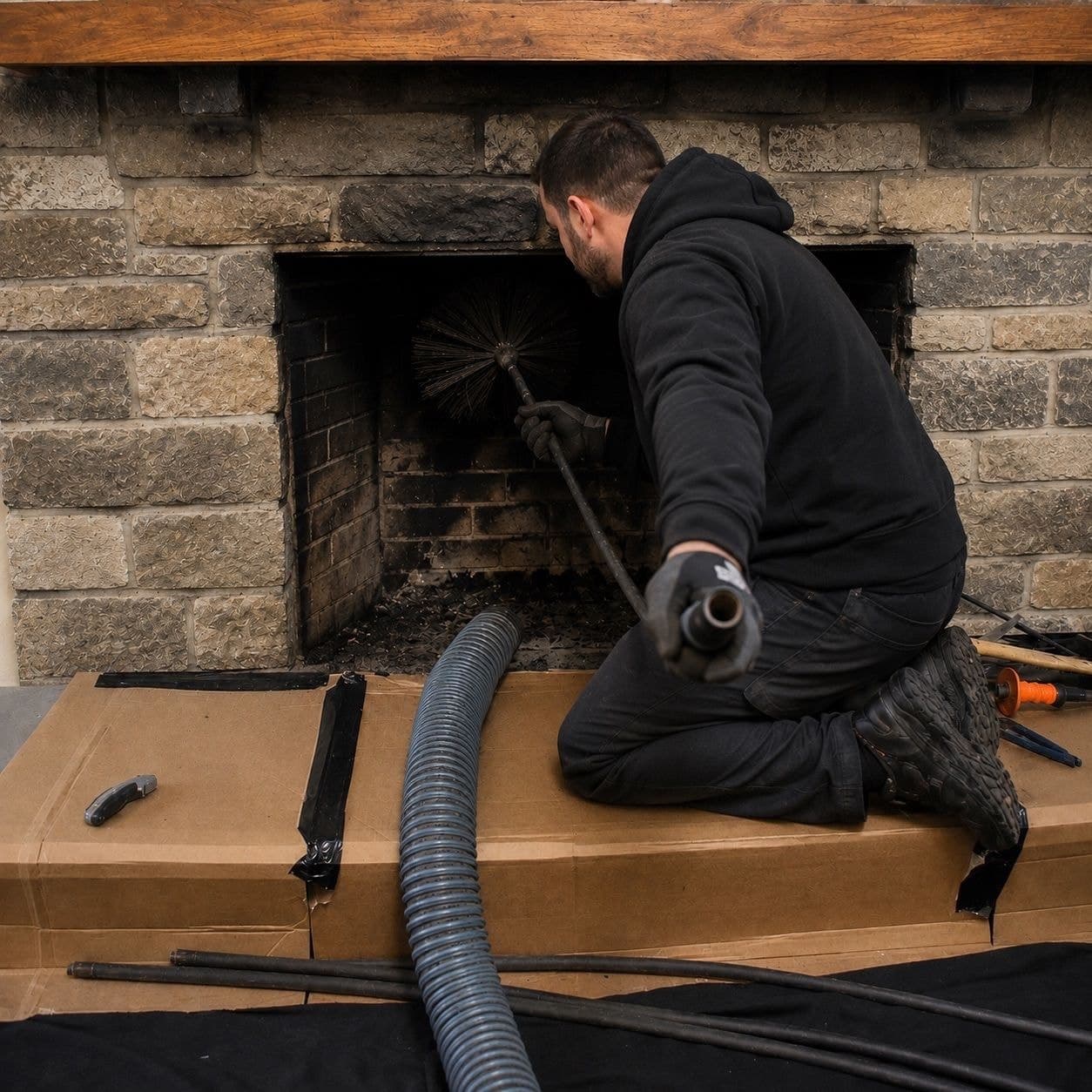
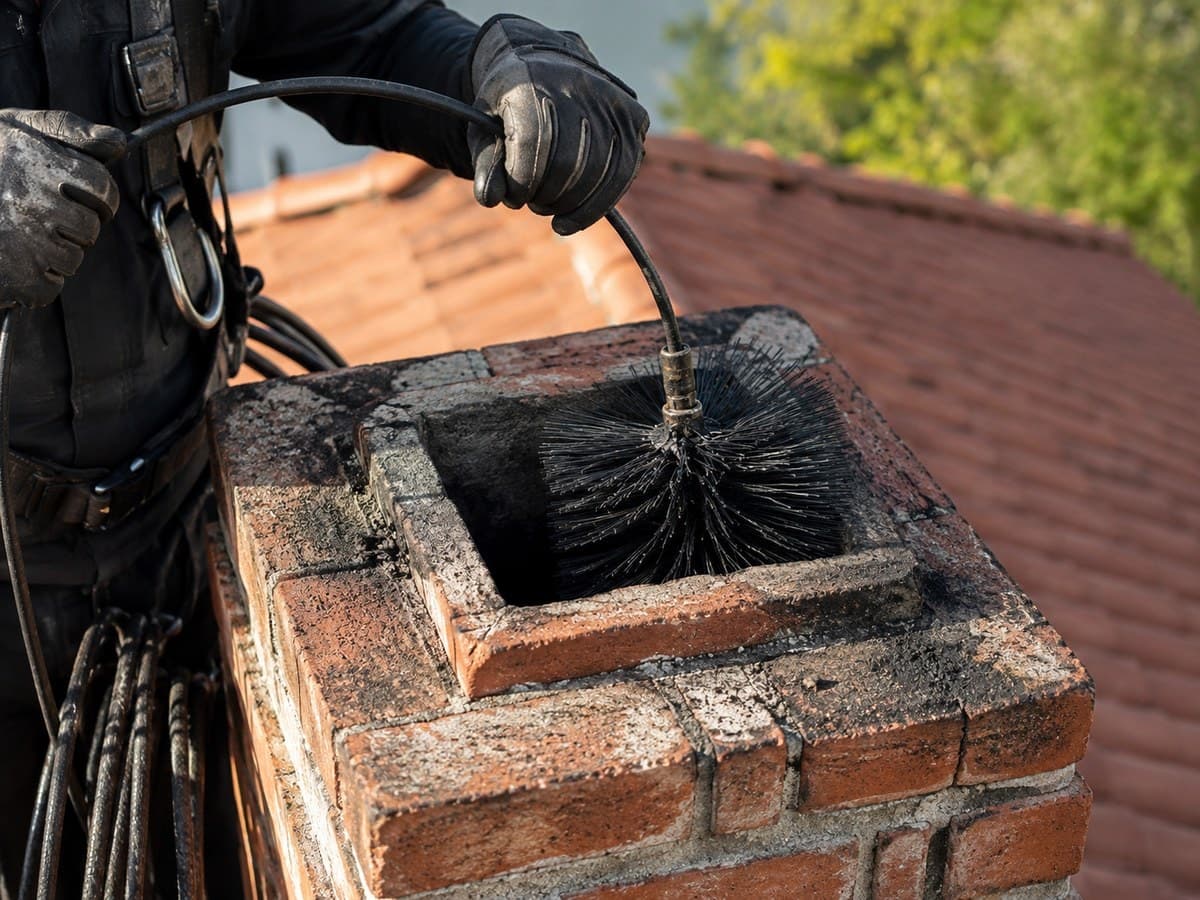
Debris is pulled from below, pushed or brushed from above, or both, with the room protected and a vacuum running. Fallen tile is removed and its source located.
Draft and smoke test
With the flue open, a small smoke source at the opening shows whether the chimney is pulling smoke up again, the practical proof that the blockage is gone.
Close the entry point
A cap is fitted or repaired, or a chase cover or siding gap is noted for repair, so the same thing doesn’t move back in.
Keeping it clear: caps and chase covers
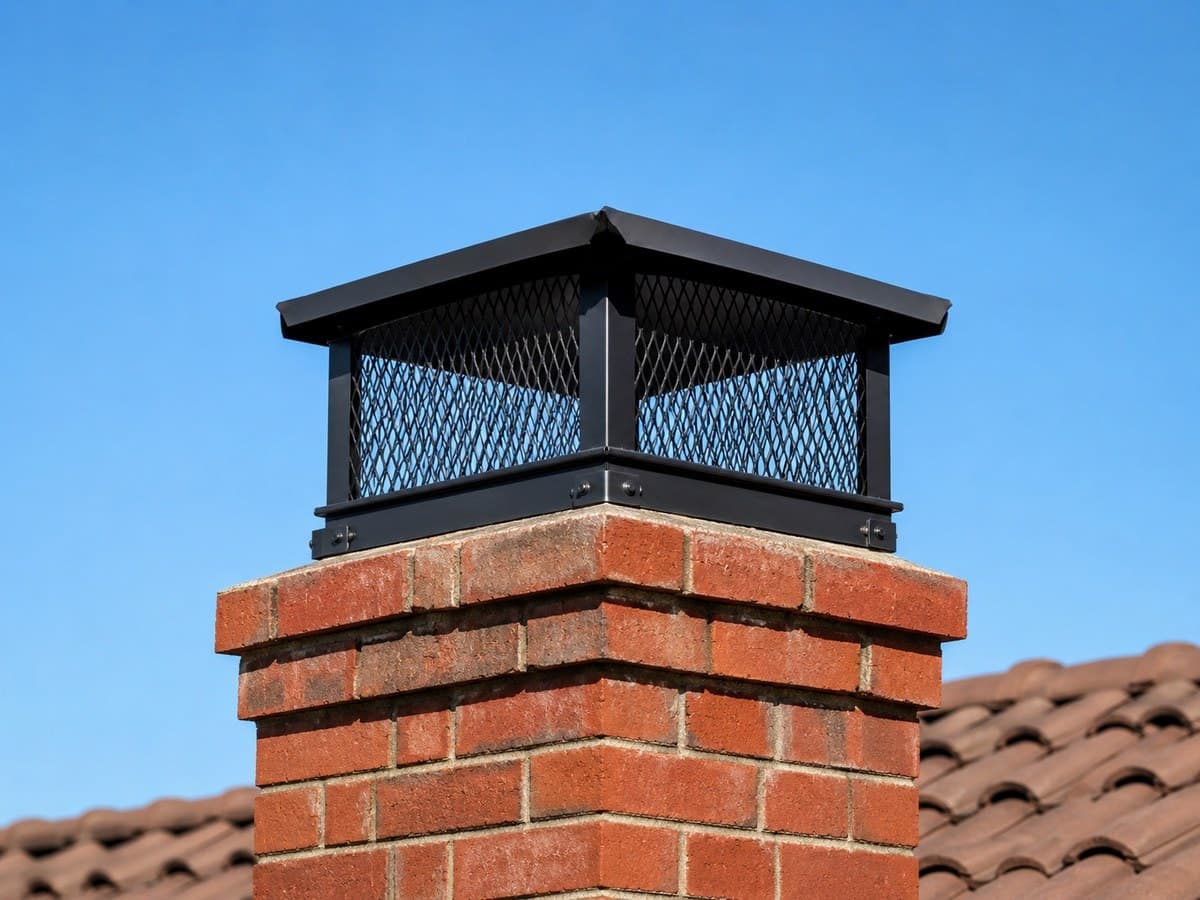
Almost every nest and leaf blockage starts at an open flue top. A properly sized, securely fastened chimney cap with a mesh guard keeps birds, animals and most debris out of a masonry chimney. On a factory-built chimney, the termination cap has to be the one listed for that system, and the chase cover and siding around it need to be tight, because animals often get into the chase rather than the pipe.
Simple habits that prevent blockages
- Look at the top of the chimney after every major storm; caps blow off and mesh tears
- Keep the damper closed when the fireplace isn’t in use
- Before the first fire of the season, shine a light up past the damper
- Trim branches that overhang the chimney
- Schedule the yearly inspection outside nesting season where possible
If you’re not sure what’s up there, or the flue hasn’t been looked at in years, a chimney and fireplace inspection looks at the whole system, not only the blockage.
What affects the cost of blockage removal
- What the blockage is, and how far up the flue it sits
- Whether it can be reached from below, above or both
- Chimney height and roof access
- Amount of debris, droppings or nesting material to remove
- Whether a cap, chase cover or other entry-point repair is needed
- Findings such as broken liner tile that lead to separate repairs
The scope is confirmed once the flue has been looked at, because what is in it and how it is reached decide the method.
When a blockage is urgent
Most blockages are an inconvenience discovered when a fire will not draw. A few are not, and the difference is whether anything is currently burning or venting into the flue.
| Situation | Urgency |
|---|---|
| Smoke entering the room while a fire is lit | Stop using it now. Urgent — the flue is not clearing |
| A gas appliance vents into the blocked flue | Urgent. Shut the appliance off and do not use it |
| A fire will not light, nothing is burning | Not urgent. Book it and do not light a fire |
| Debris visible past the damper, fireplace unused | Not urgent, but keep the damper closed |
| Scratching or flapping sounds in the flue | Time-sensitive for the animal rather than for you |
| A fallen flue tile found during a sweep | Not urgent, but the liner needs assessing before use |
Where it is urgent, our page on same-day and overnight call-outs covers what happens next. Calls are answered 24 hours Sunday through Friday and we are closed Saturday.
Where a camera is needed to find out what the obstruction is and how far up it sits, that is covered under camera inspection. It matters most when a blockage keeps coming back, because a partial collapse looks identical to debris from below.
Blockage clearing is available across Orlando, Winter Park, Apopka, Kissimmee, Oviedo and the rest of the Central Florida service area, with free estimates and same-day slots where the schedule allows.
References (5)
Facts and figures on this page come from these references.