CO alarm sounding? Get out first
A blocked flue can push carbon monoxide into the home, especially from gas logs or a gas appliance that vents into the chimney. If a CO alarm sounds or anyone has headaches, dizziness or nausea, get everyone into fresh air and call 911. Don’t go back in until responders say it is safe.
Signs of a blocked flue
| What you notice | What it suggests |
|---|---|
| Smoke fills the room within minutes, even with the damper wide open | The flue outlet is partly or fully blocked |
| You can’t see any daylight looking up a straight flue | Something is lodged in the flue (some flues have offsets, so compare with how it used to look) |
| Twigs, leaves, grass or feathers on the damper or smoke shelf | A nest above |
| Chirping, scratching or a musty animal smell | Birds or animals using the chimney |
| Clay or brick pieces on the smoke shelf | Liner or masonry falling into the flue |
| Spark screen on the cap black and solid from the ground | Soot or creosote clogging the cap |
| Gas logs or insert produce soot or a smell | Exhaust not venting properly; turn it off |
What blocks chimneys
01Bird nests
- What you may notice
- Nesting material on the damper, chirping in spring and summer.
- How it’s confirmed
- Identifying the species first: chimney swifts are protected, and their nests are removed only after they leave. See birds in the chimney.
02Animals and their nests
- What you may notice
- Scratching, a strong musty smell, droppings on the damper.
- How it’s confirmed
- Confirming no animals are still inside before anything is removed; see a raccoon, squirrel or other animal in the flue.
03Leaves and storm debris
- What you may notice
- Blockage after a storm; no cap on the chimney.
- How it’s confirmed
- Checking from the top and bottom and clearing the flue.
04Fallen tile or masonry
- What you may notice
- Clay or brick fragments, rough edges visible up the flue.
- How it’s confirmed
- A flue inspection after clearing, since whatever fell came from somewhere. See a damaged chimney liner.
05Heavy creosote or a clogged cap screen
- What you may notice
- Thick black deposits, a sooty cap screen, sluggish fires.
- How it’s confirmed
- Sweeping and checking the screen; see creosote buildup.
Safe checks you can do
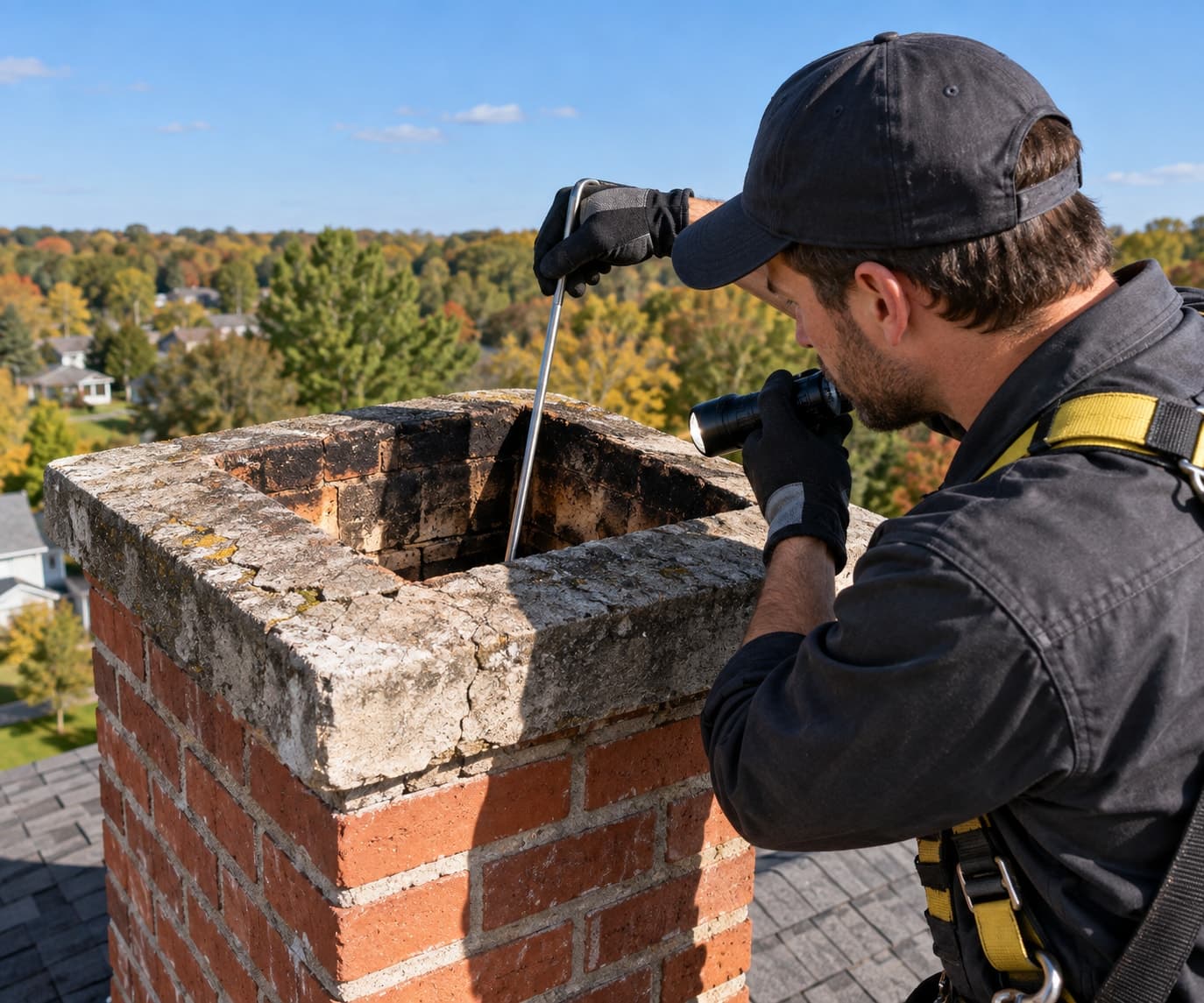
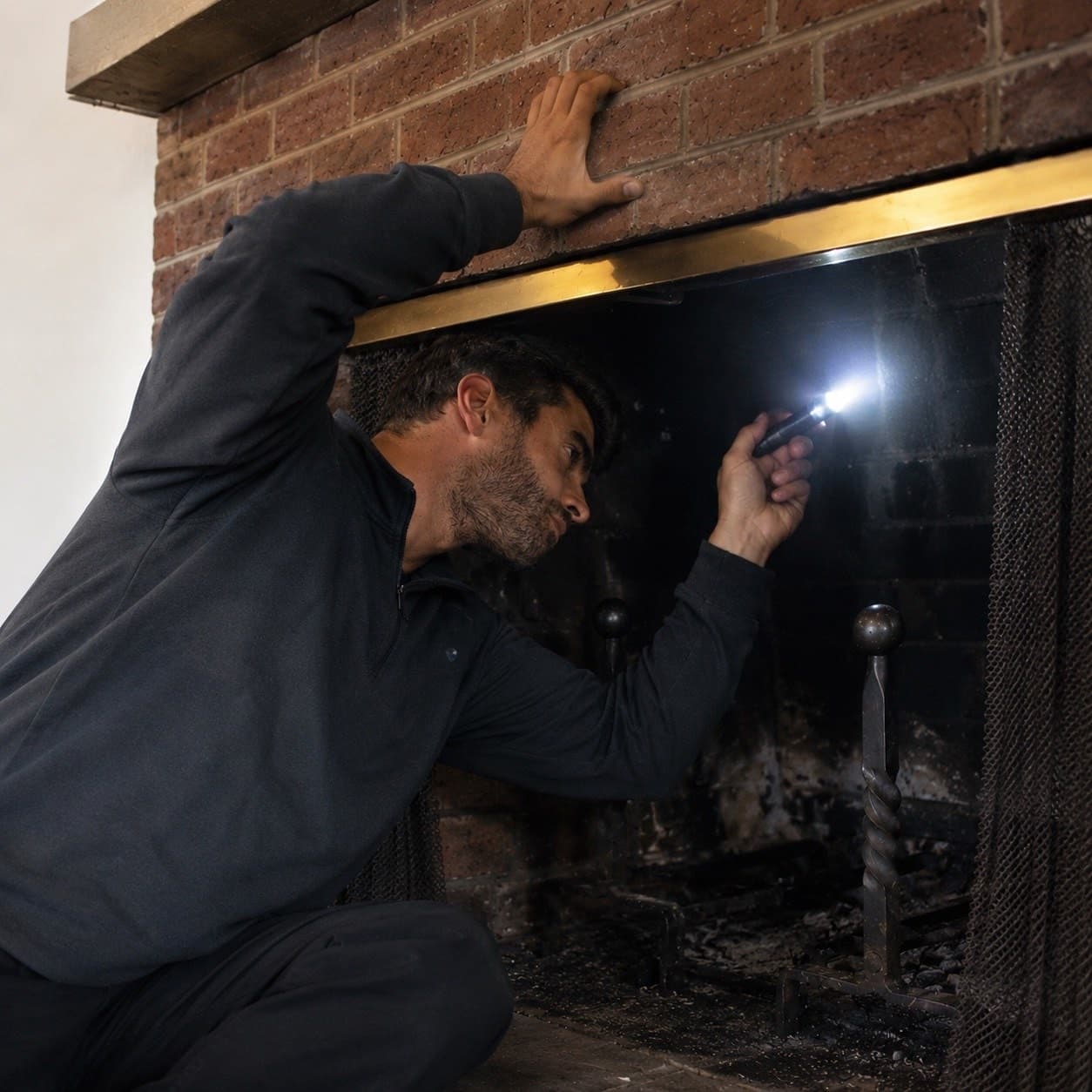
- With the fireplace cold, put on safety glasses, open the damper and look up with a strong flashlight. Stand to the side in case debris falls.
- Check the smoke shelf behind the damper for nesting material, leaves or tile pieces.
- From the yard, use binoculars to see whether the cap is in place and whether the screen looks clogged.
- Listen at the fireplace in the early morning and evening for chirping or scratching.
- Test your smoke and carbon monoxide alarms.
Don’t try to burn it out or poke it loose
Lighting a fire under a nest can ignite it and start a chimney fire, and it can trap and kill animals, some of which are protected. Poking a pole up the flue can dislodge liner tiles or push the blockage tighter. Leave the fireplace unused until the flue has been cleared.
Red flags
- A CO alarm, or symptoms such as headache or nausea when the fireplace or a gas appliance is running.
- Smoke coming out of places other than the chimney top, such as the attic or around the chimney outside.
- A roaring or rushing sound during a fire, which can be a chimney fire. Get out and call 911.
- Live animals in the flue: don’t close them in or smoke them out.
What clearing a blockage involves
Identify what’s in there
From the top and bottom, so animals or protected birds are handled correctly.
Clear the flue
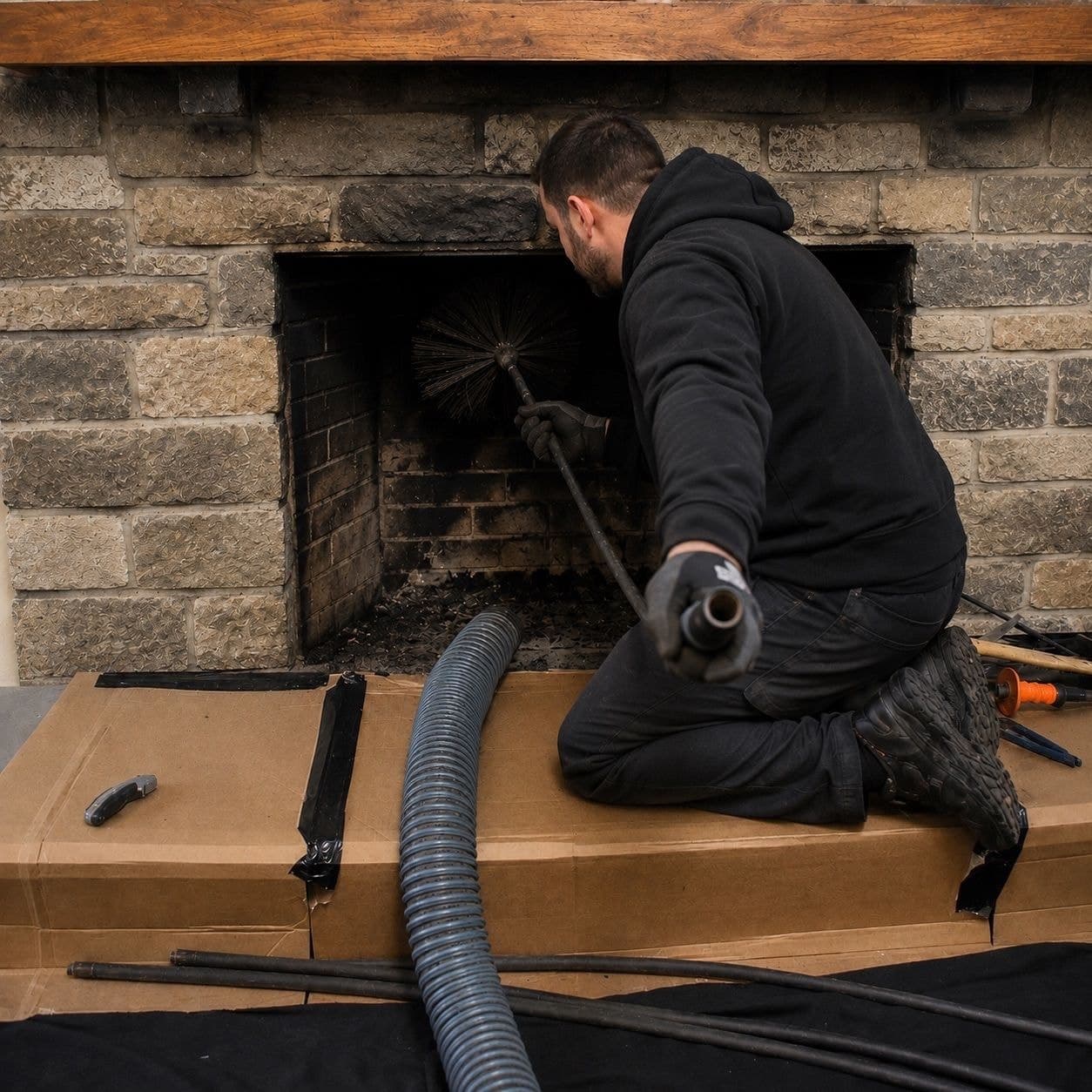
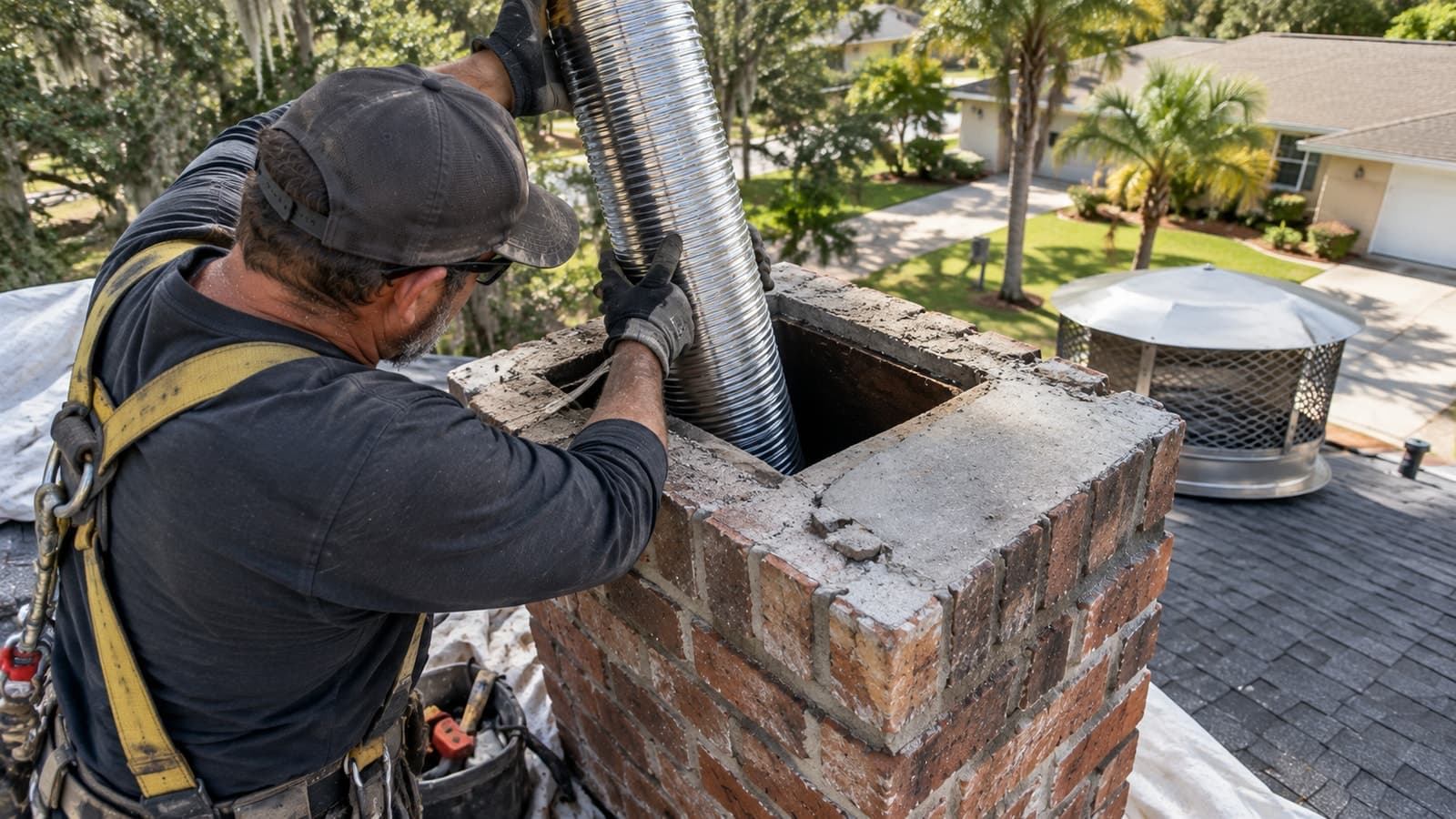
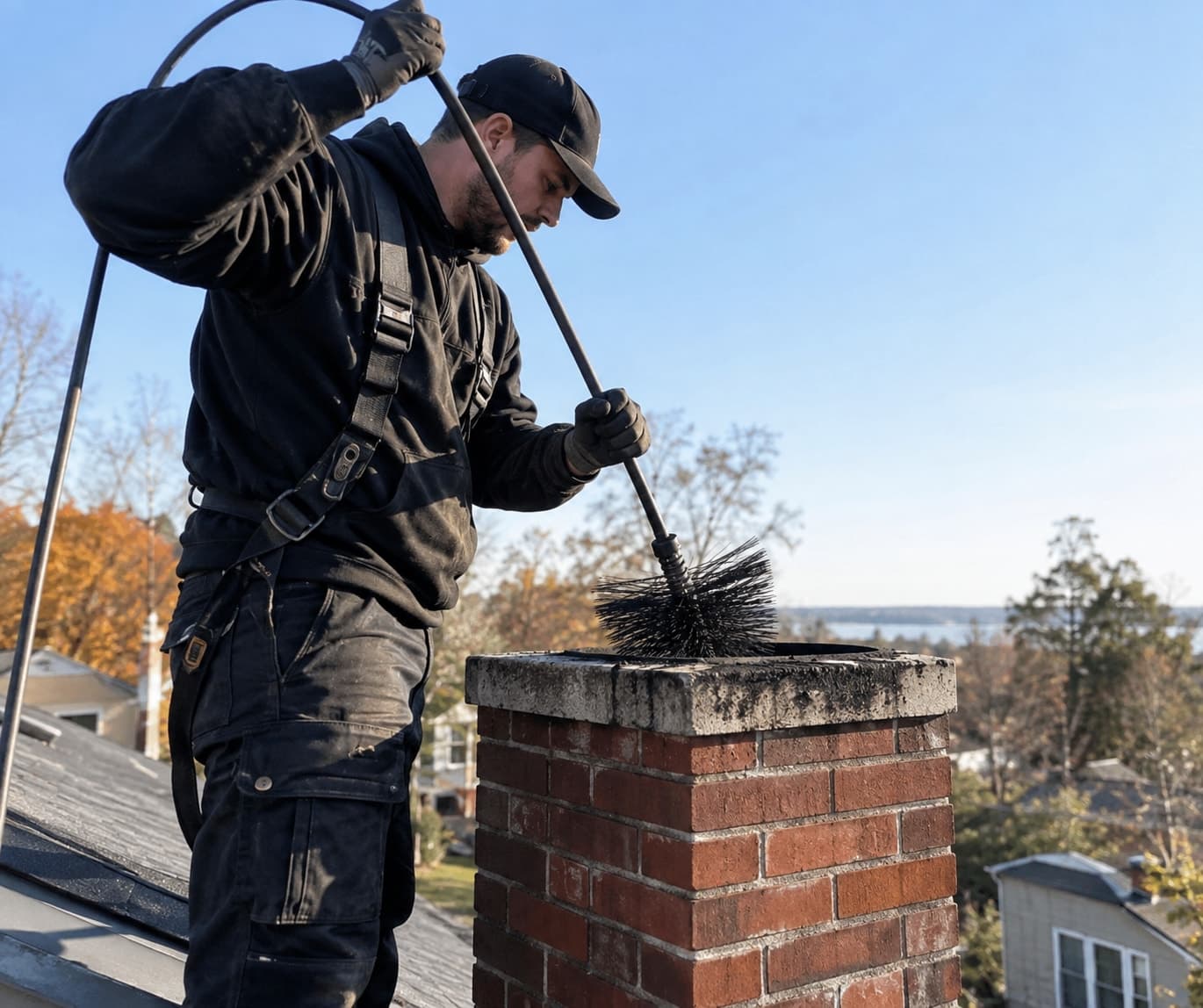
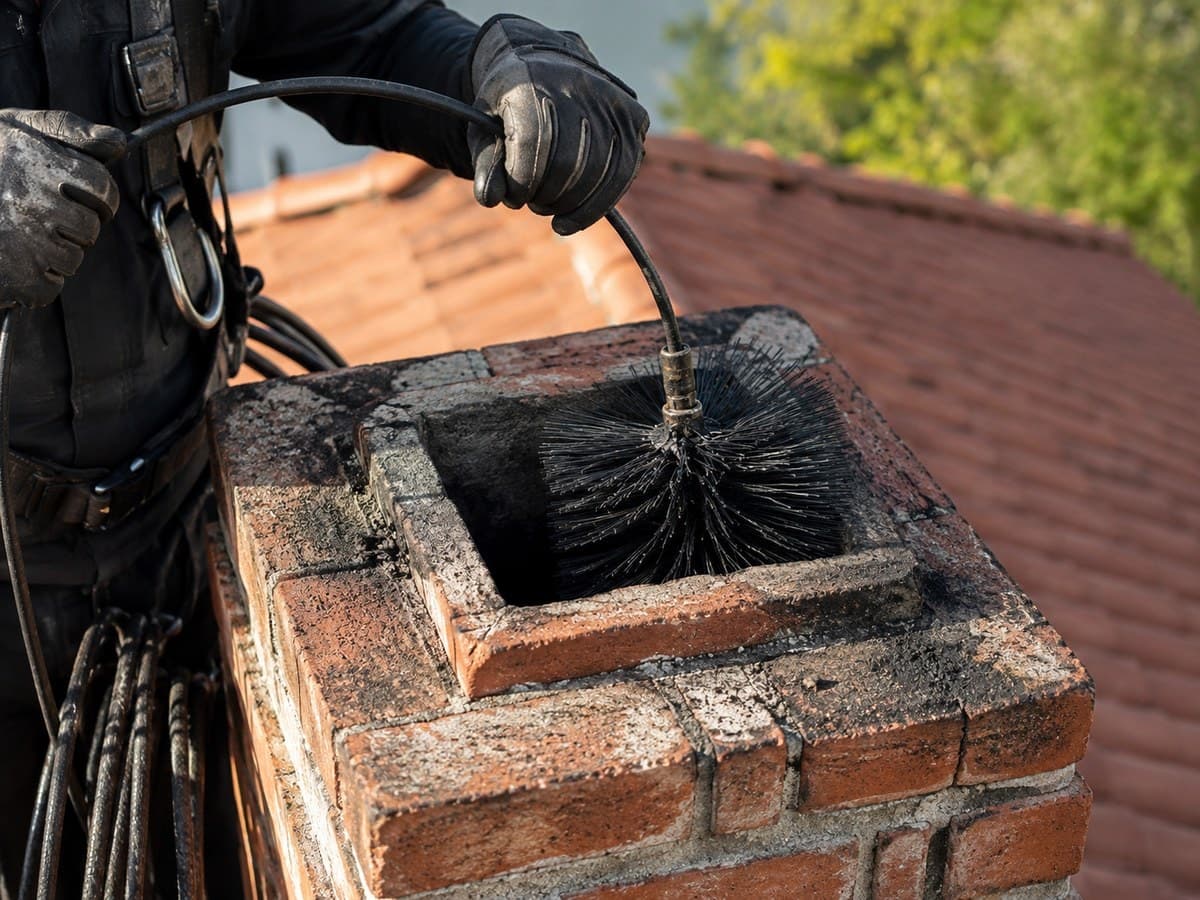
The blockage is removed from above or below, and the flue is swept of the debris it left.
Check for damage
The liner and damper are checked, because nests and debris often sit on top of something else that has failed.
Close it off
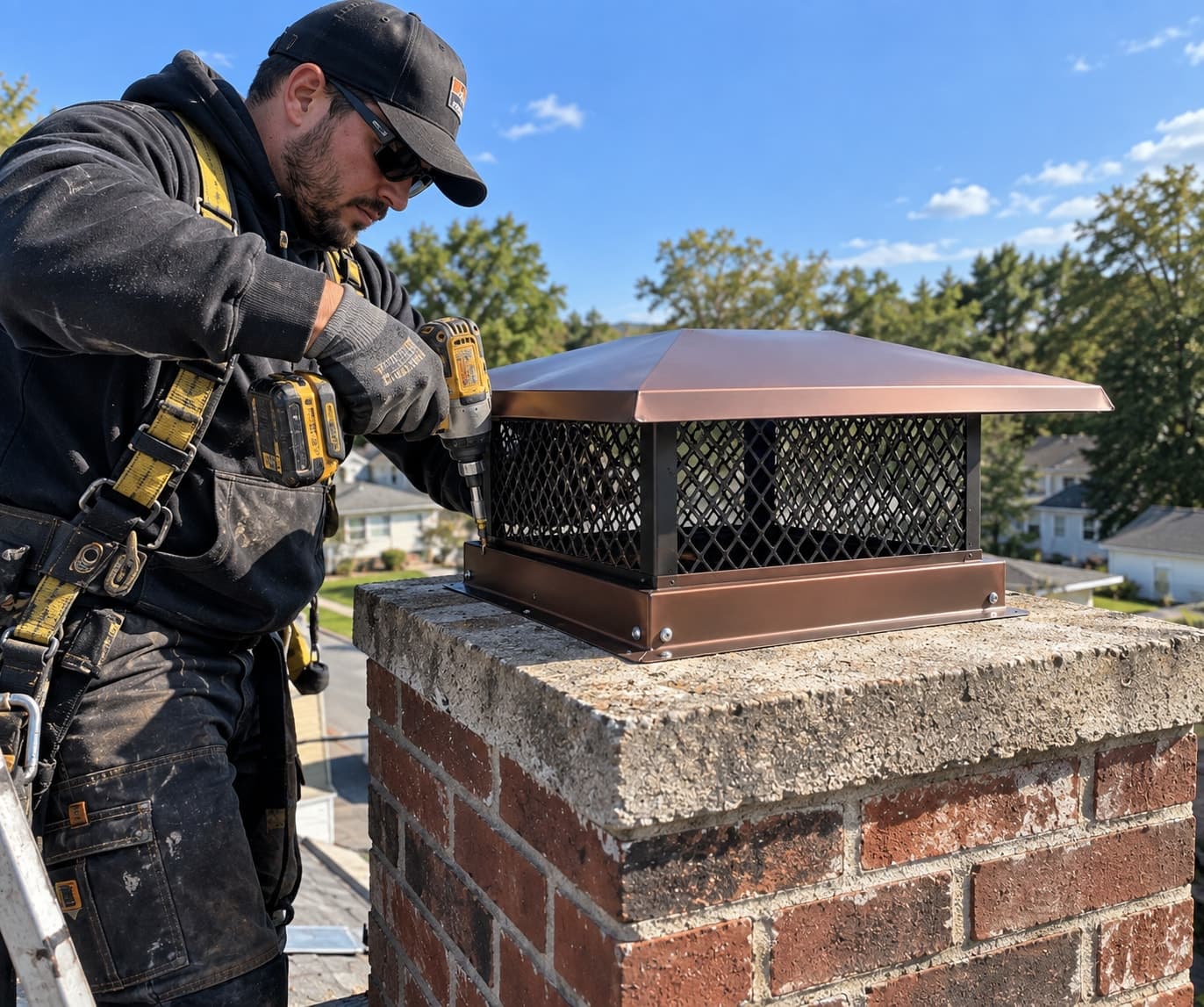
A properly sized cap with a screen is fitted if the chimney had none, which is how most blockages are prevented. See chimney cap installation.
Clearing it, and keeping it clear
| What’s blocking it | Where it’s fixed |
|---|---|
| Nests, leaves or fallen debris | chimney blockage removal |
| Heavy soot or creosote | a chimney sweep or creosote removal |
| Fallen flue tile or brick | a chimney inspection and liner repair |
| No cap, so debris keeps getting in | a chimney cap |
A blocked flue can send carbon monoxide into the house; fireplace carbon monoxide covers the warning signs. Local: chimney cleaning in Ocoee or chimney sweeping around Orlando.
References (2)
Facts and figures on this page come from these references.