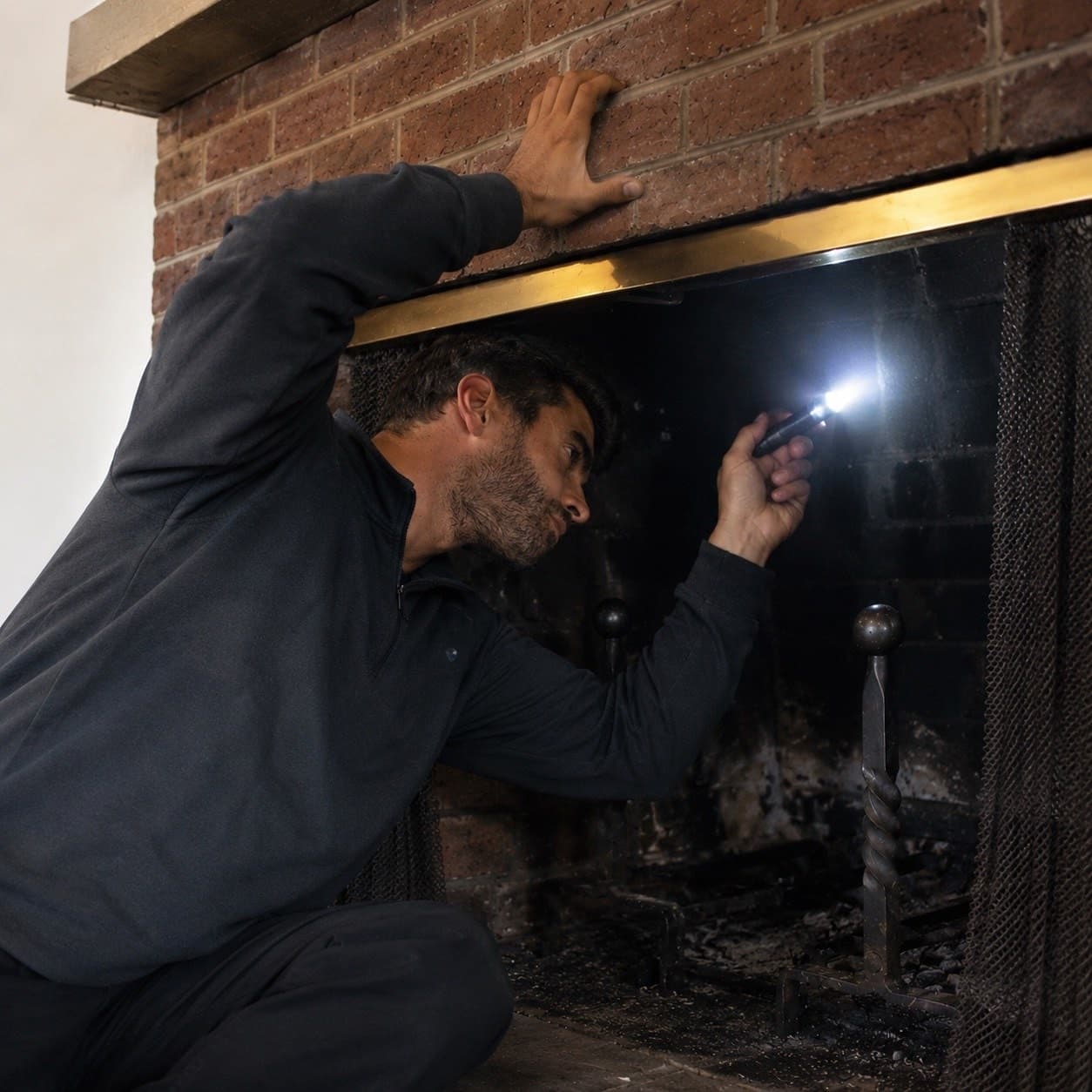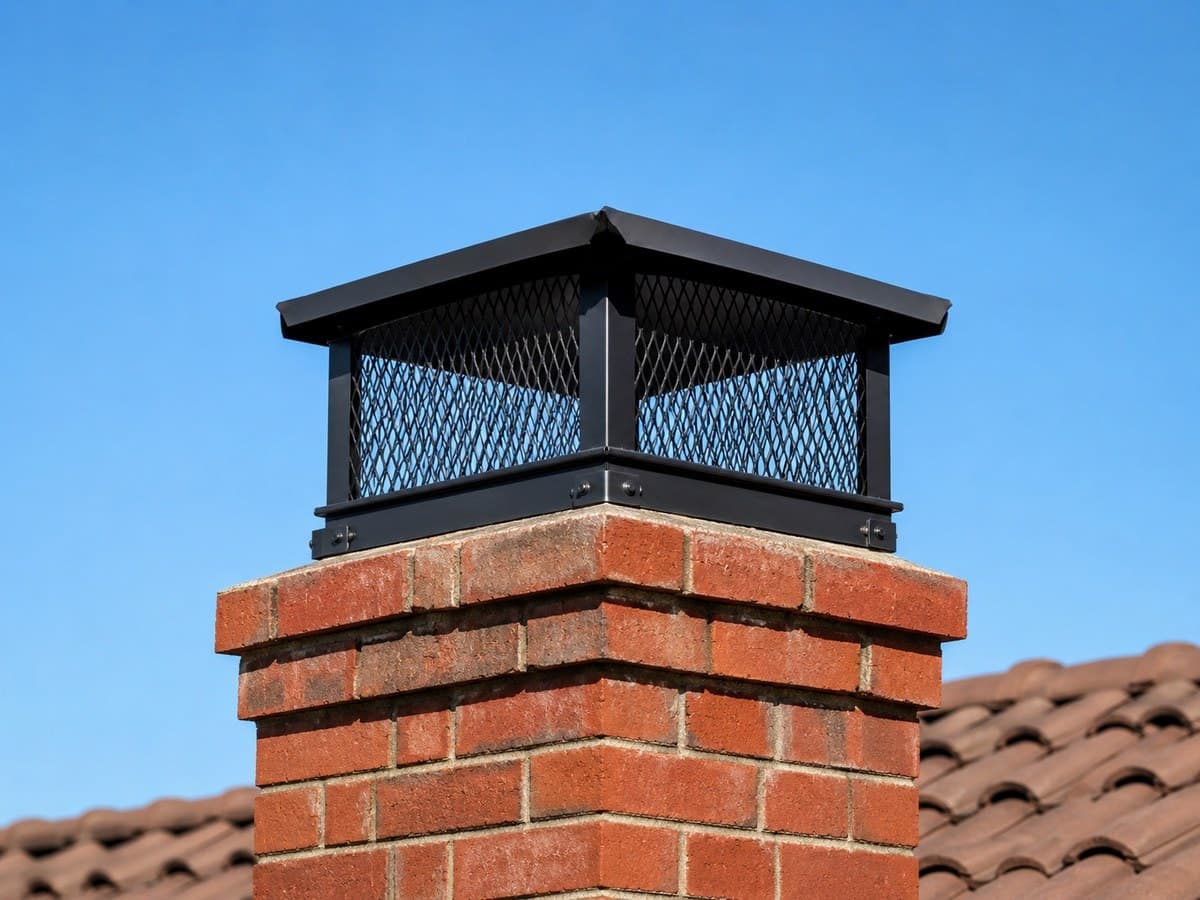
What happens when the cap is gone
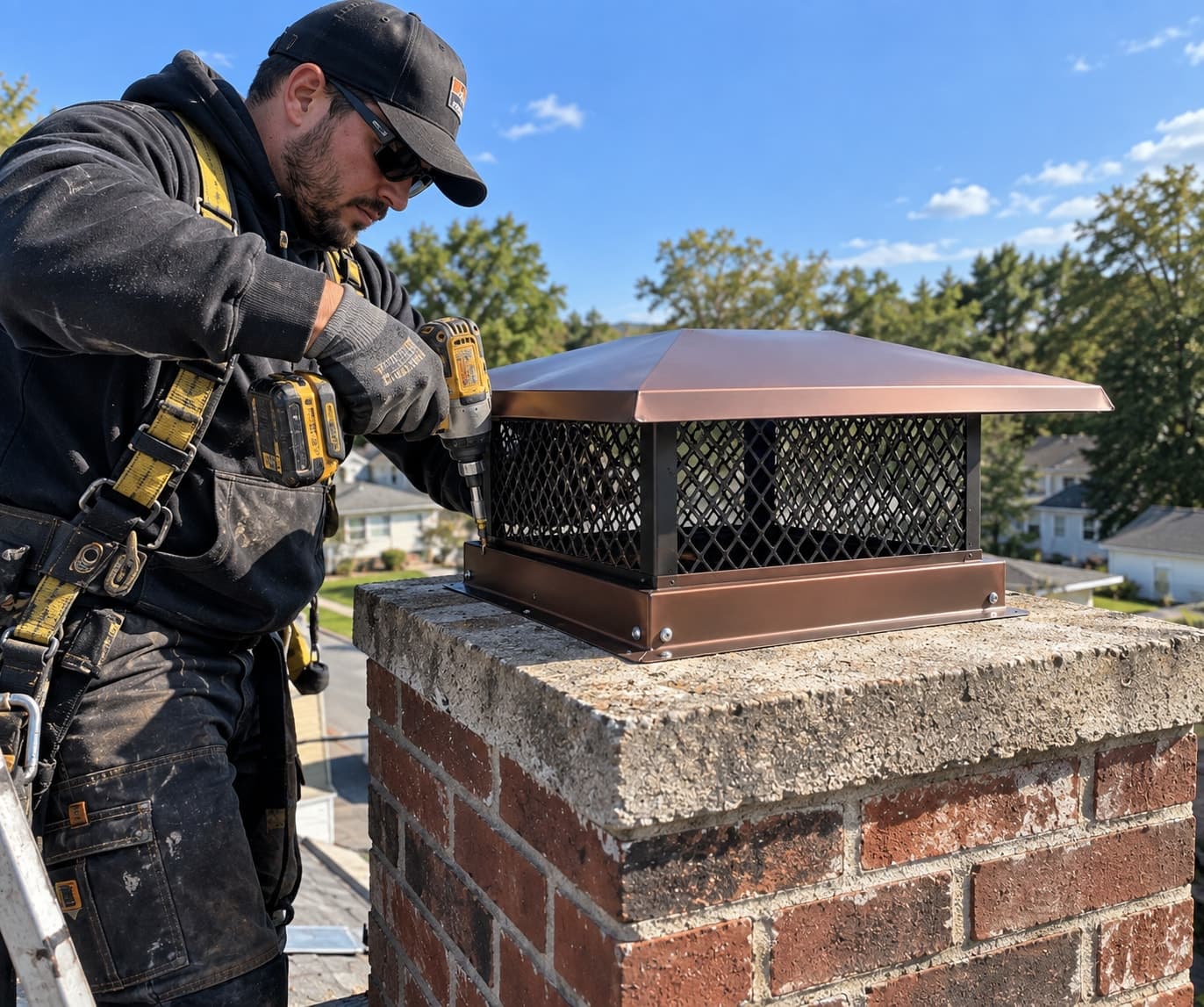
An open flue is a vertical pipe into the house. Rain lands directly on the damper, rusting it until it sticks, and soaks the smoke shelf and firebox. Birds and animals use it as a nest site, and debris that falls in can block the flue. Wind can also blow down an uncapped chimney and push odors into the room. For a quick picture of what the cap covers, compare it with the crown in chimney cap vs chase cover.
Masonry chimney and fireplace, cutaway
- 1Chimney cap. Metal lid with mesh sides over the flue opening. Keeps rain, debris and animals out.
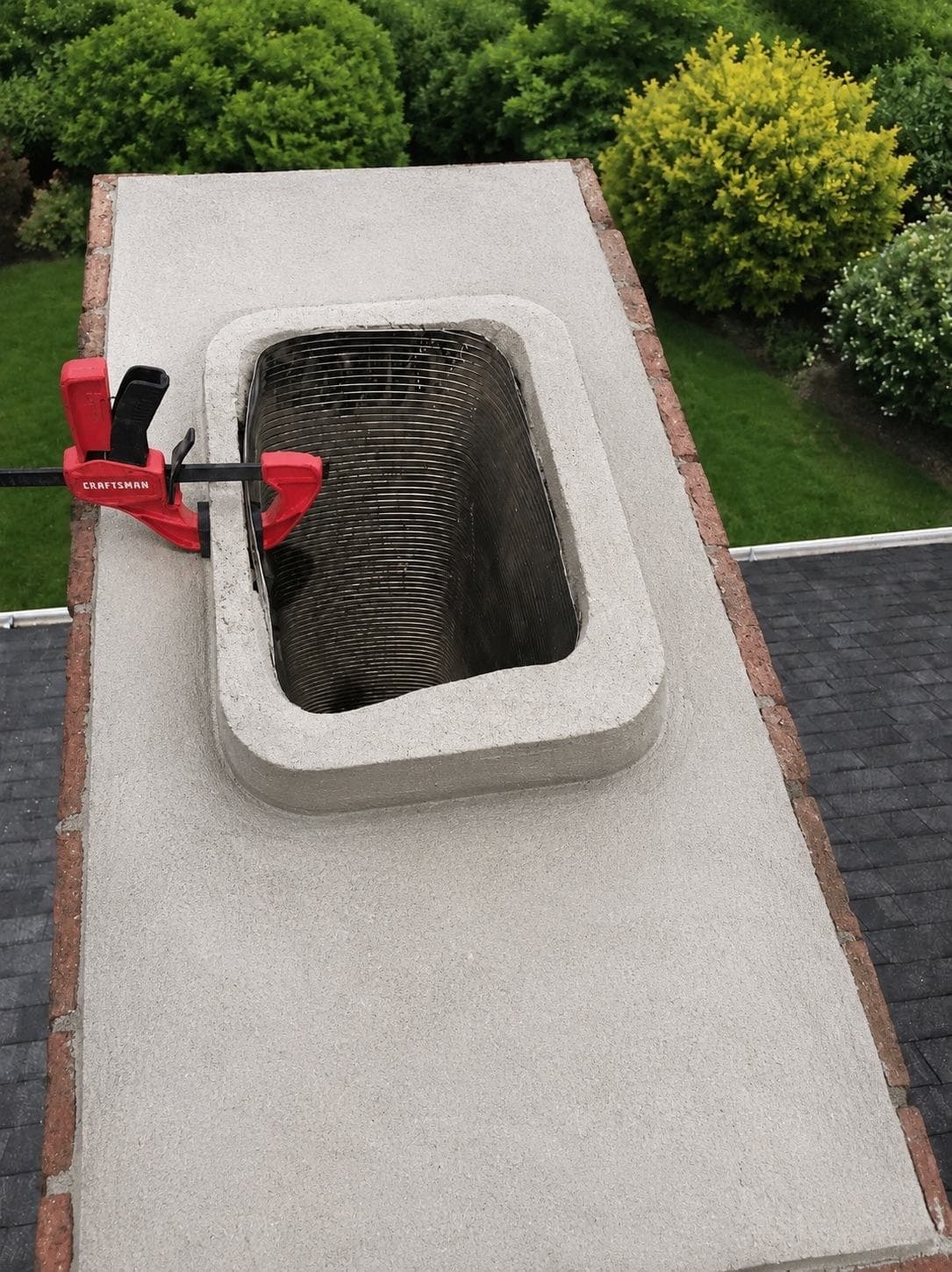
- 2Crown. The concrete or mortar top of the masonry, sloped to shed water away from the flue.
- 3Flue liner. Clay tile or metal lining that carries smoke up and protects the masonry from heat.
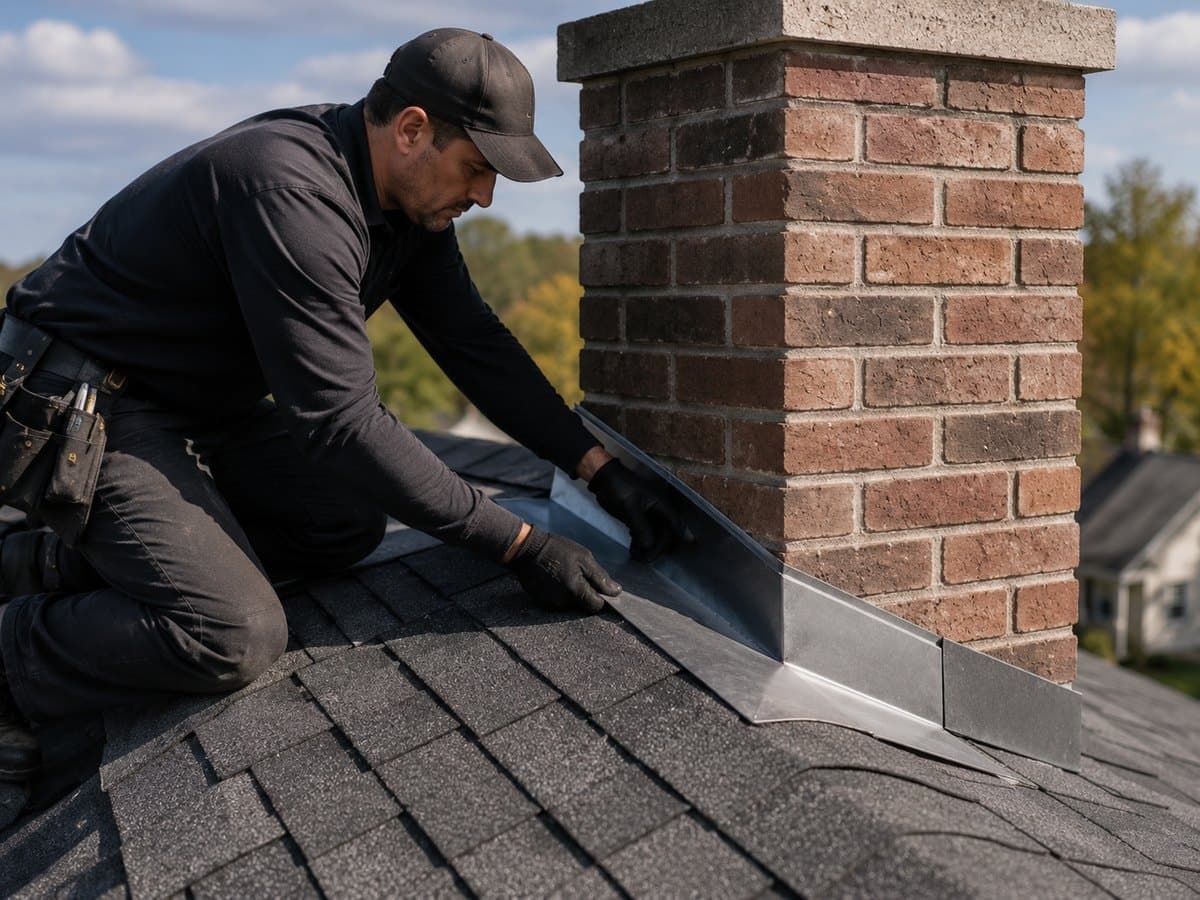
- 4Flashing. Metal that seals the joint between the chimney and the roof.
- 5Brick & mortar. The chimney structure. Mortar joints and brick faces absorb water when they wear.
- 6Smoke chamber. The sloped transition that funnels smoke from the firebox into the flue.
- 7Damper. Metal plate at the throat (or a sealing lid on top) that closes the flue when not in use.
- 8Firebox. Where the fire burns. Firebrick laid in heat-resistant mortar.
- 9Hearth. Non-combustible floor extension in front of the fireplace opening.
Match what you see to the next step
| What you see | What it usually means | Next step |
|---|---|---|
| No cap at all, or the cap in the yard | Blown off in wind, or the fasteners rusted through | Keep the fireplace unused and the damper closed; arrange a replacement |
| Cap tilted or lifted on one side | Loose clamp or screws; storm damage | Have it reset or replaced before the next storm |
| Rust streaks, holes or a sagging lid | Galvanized steel near the end of its life | Replace with stainless or copper |
| Screen packed with black soot | Creosote or soot building up on the mesh | Clean it and the flue; check how the fireplace is being burned |
| Mesh torn or pushed open | Animals forcing their way in | Check for nests before replacing the cap |
| Rattling in wind | Loose cap or loose storm collar | Secure it; see chimney noises |
Why caps fail
01Wind and storms
- What you may notice
- Cap missing or displaced after a named storm or a strong thunderstorm.
- How it’s confirmed
- Checking the flue top, crown and flashing at the same time, since storm damage rarely stops at the cap.
02Corroded galvanized cap
- What you may notice
- Orange rust, flaking, rust stains running down the crown or chase.
- How it’s confirmed
- Checking the lid, legs, mesh and fasteners for rust-through.
03Wrong size or poorly fastened cap
- What you may notice
- Cap sits loosely on the flue tile, or was held on with adhesive alone.
- How it’s confirmed
- Measuring the flue and checking how the cap is attached.
04Soot-clogged spark screen
- What you may notice
- Smoky fires, a screen that looks black and solid from the ground, black streaks on the crown below.
- How it’s confirmed
- Cleaning the screen and checking the flue for the same buildup; see creosote buildup.
05Animals
- What you may notice
- Bent mesh, scratching or chirping in the flue.
- How it’s confirmed
- Confirming the flue is clear of animals and nests before a new cap closes it off.
Factory-built chimneys: use the listed cap
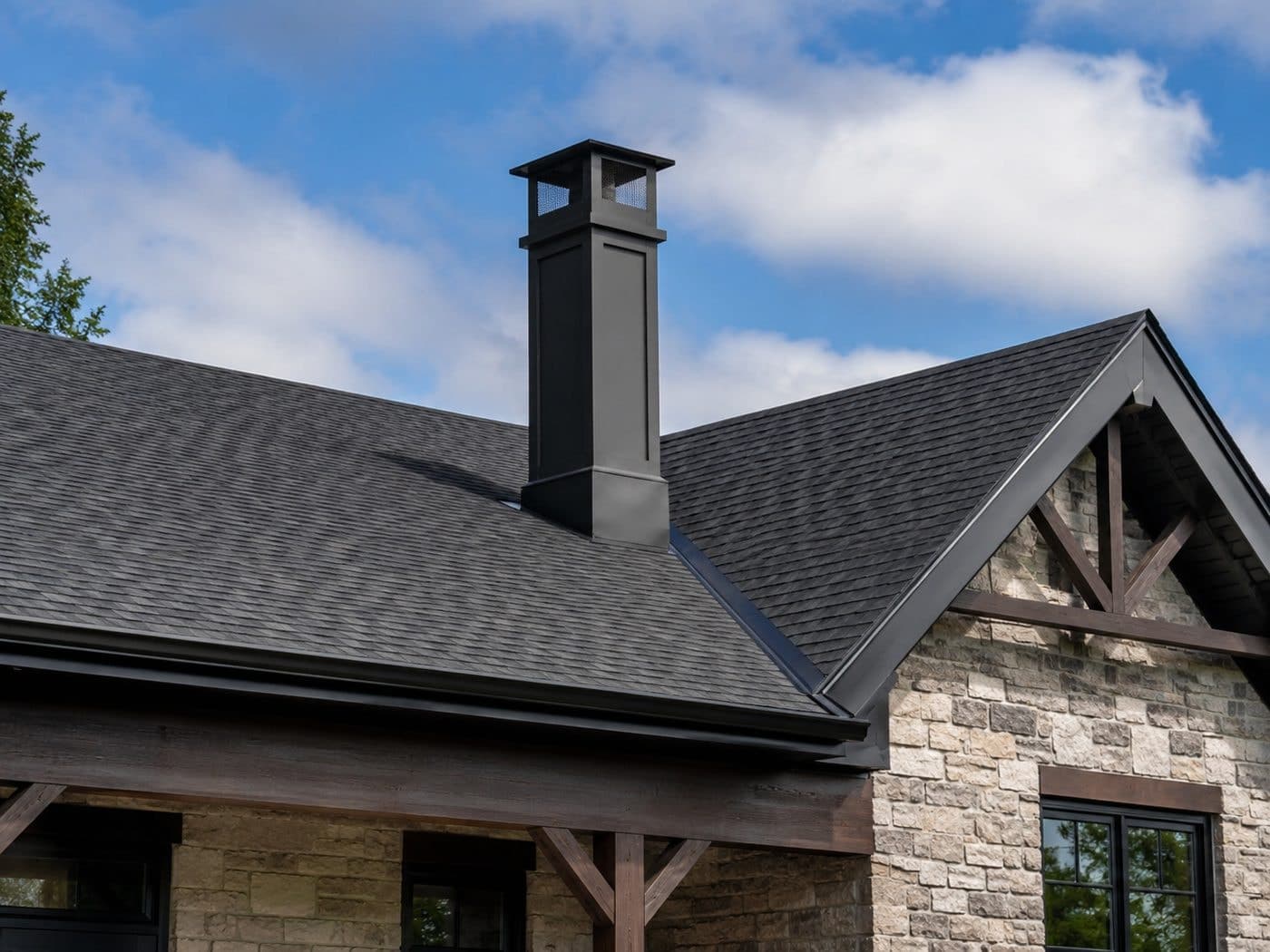
If your fireplace is a metal unit with a metal flue inside a framed chase, the round cap at the top is a termination cap that was tested as part of the chimney system. Swapping in a generic masonry-style cap can change how the chimney drafts and cools. Replacement caps are matched to the manufacturer and model, which is printed on the label inside the fireplace. Rust on these caps is covered in more detail in rust on a chimney chase.
What to do until it’s fixed
- Don’t use the fireplace. Without a cap there is no spark screen, and the flue may already be partly blocked.
- Close the damper, and close glass doors if you have them, to keep rain and animals out of the room.
- Put a towel or tray in the firebox to catch water, and note how much comes in during a storm.
- If the cap is in the yard, keep it: the size and type help match the replacement.
- Listen for scratching or chirping over the next few days; animals move in quickly.
- Stay off the roof. Caps are fastened at the top of the chimney, often well above the roof line.
Red flags
- Animal sounds in the flue after the cap came off: see what to do about wildlife in the chimney.
- Pieces of crown or flue tile along with the cap, which point to wider storm damage.
- Water in the firebox, rust flakes, or a damper that has started to stick.
- A gas appliance venting through the chimney, where a blocked flue can push exhaust back into the home. Turn it off and have the flue checked.
What a cap replacement visit involves
Check the flue first
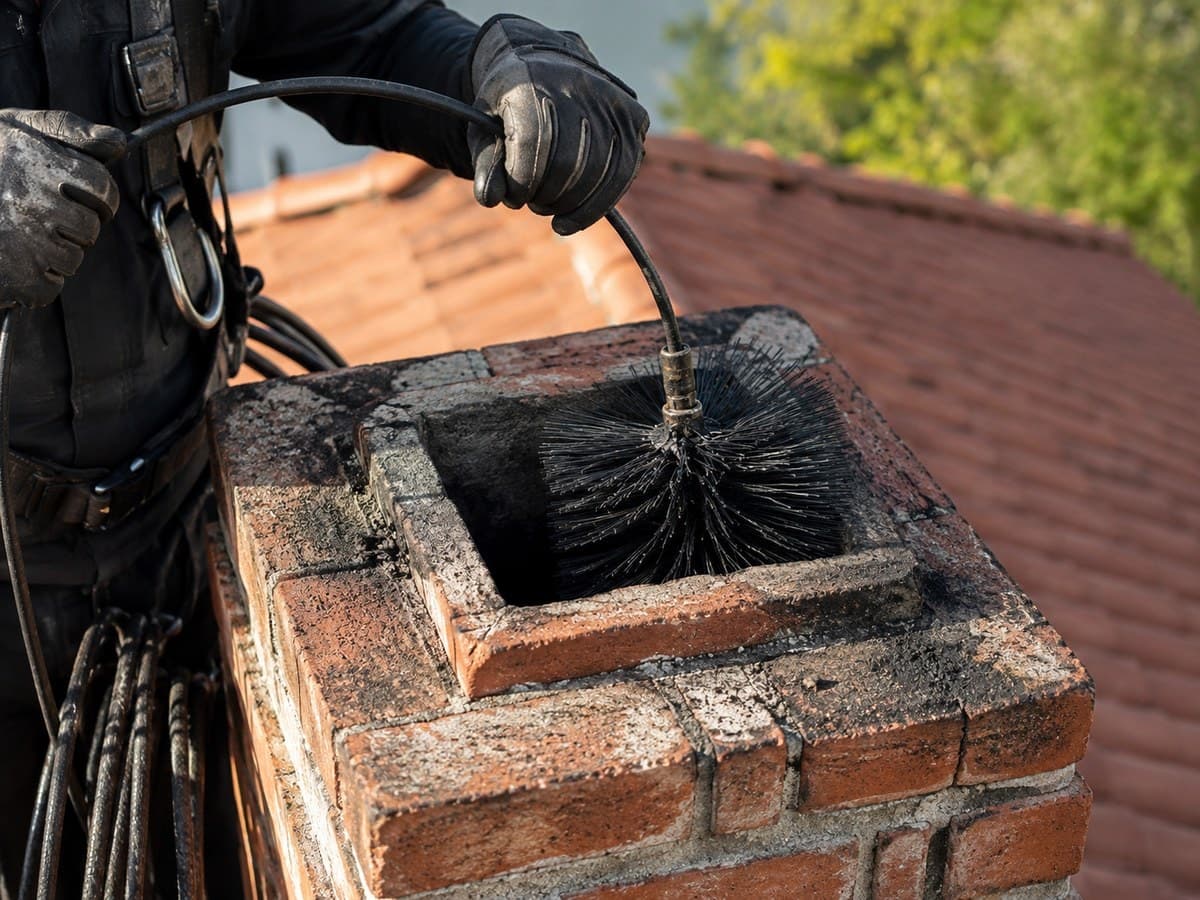
The flue is checked for nests and debris before anything closes the top.
Measure
The flue tile or crown is measured, or the model of a factory-built chimney is confirmed.
Check what’s under it
The crown, flue tile and flashing are checked while someone is up there.
Fit and fasten
A cap sized for the flue, in stainless or copper for Florida weather, is fastened so it won’t lift in the next storm.
Replacing or adding a cap
| What’s wrong with the cap | Where it’s fixed |
|---|---|
| Rusted, bent or undersized cap | chimney cap replacement |
| No cap at all | a new stainless cap |
| Screen torn or animals getting in | an animal screen |
| Cap lost in a hurricane with other damage | a storm damage chimney inspection |
On a framed chimney, the cap sits on the chase cover, and a rusted cover usually needs replacing at the same time; chimney cap vs chase cover explains the difference. Locally, sweep and cap checks in Kissimmee or chimney repair around Orlando.