Where the stain is tells you most
| Where | Most likely | Does it matter? |
|---|---|---|
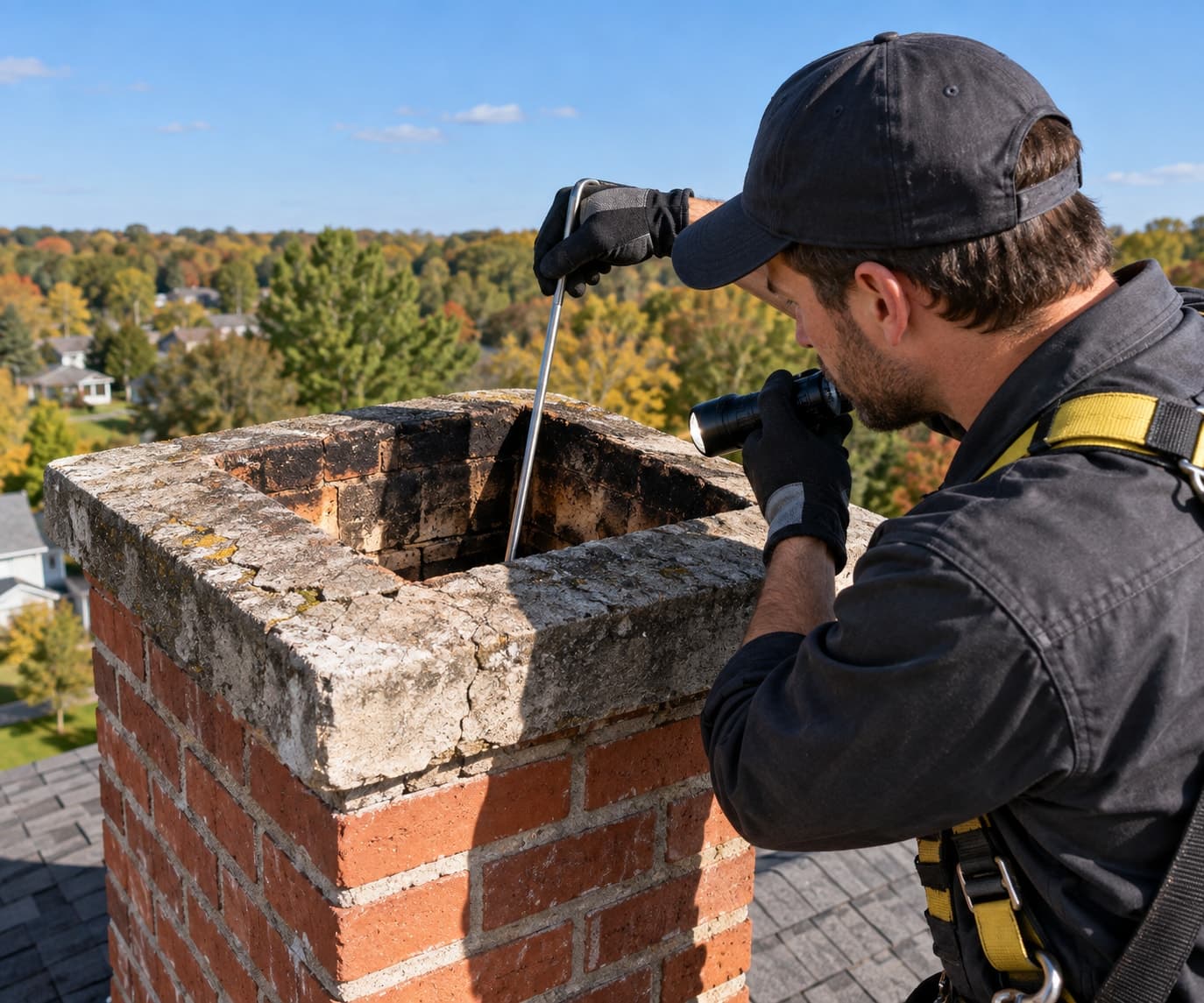
| Around the top of the flue and cap | Soot from normal wood burning | Light: normal. Heavy or dripping: sweep and inspect |
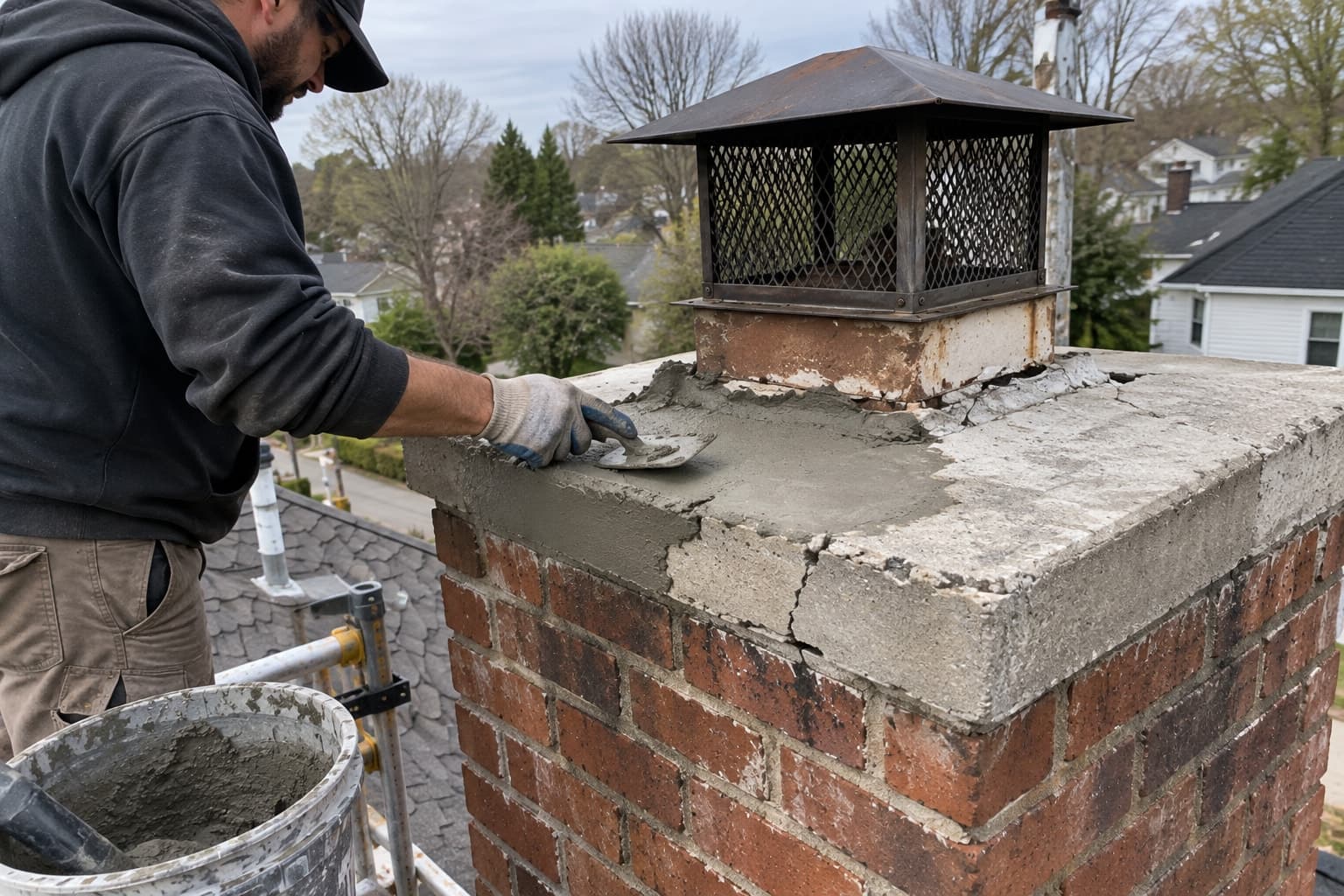
| Black streaks running down from the crown | Creosote or soot washed down by rain, sometimes through a cracked crown | Yes: water and creosote are getting past the top |
| Blotchy dark patches on shaded brick or stucco | Mildew, algae or mold growth | Mostly cosmetic, but shows the surface stays damp |
| Dark streaks on the roof below the chimney | Roof algae, often mistaken for chimney soot | Roof maintenance, not a chimney issue |
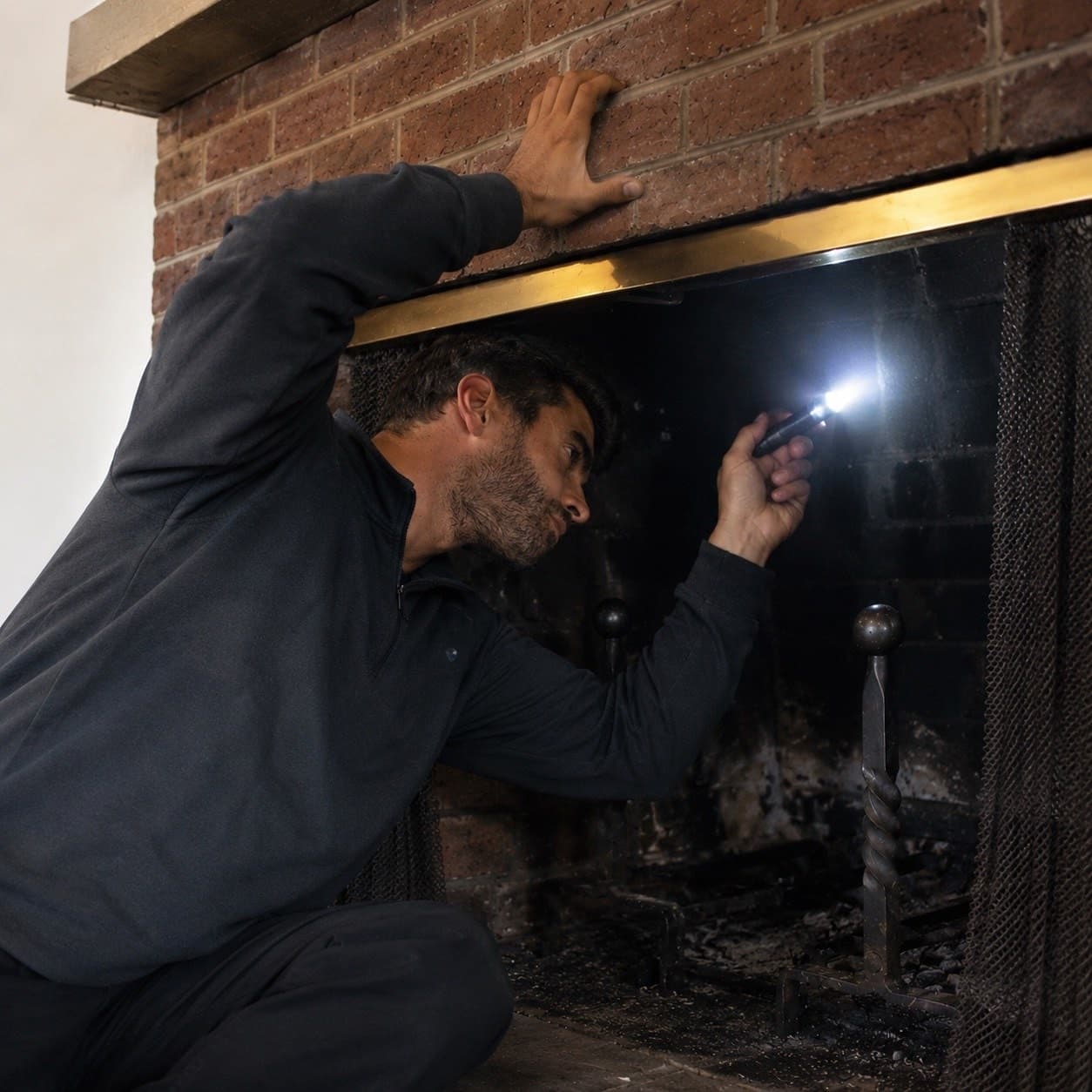
| Soot on the wall above the fireplace opening | Smoke spilling out of the firebox | Yes: a draft problem |
| Soot on the glass, logs or wall around a gas fireplace | Incomplete combustion | Yes: turn it off until checked |
Outside: soot vs mildew
Soot is dry, sits close to the flue outlet and wipes off as a fine black powder on a rag. Mildew and algae are patchy, often greenish-black, grow on the parts that stay damp longest (north sides, shaded sides, below overhanging trees) and come back after cleaning. In Orlando’s humid climate, a light stucco or painted chase can darken within a year or two of being painted. The Brick Industry Association’s note on stains describes both kinds of staining and how brick is cleaned without damage.
What is behind black staining outside
01Soot deposit at the flue outlet
- What you may notice
- Black ring around the cap or top tile; worse after the burning season.
- How it’s confirmed
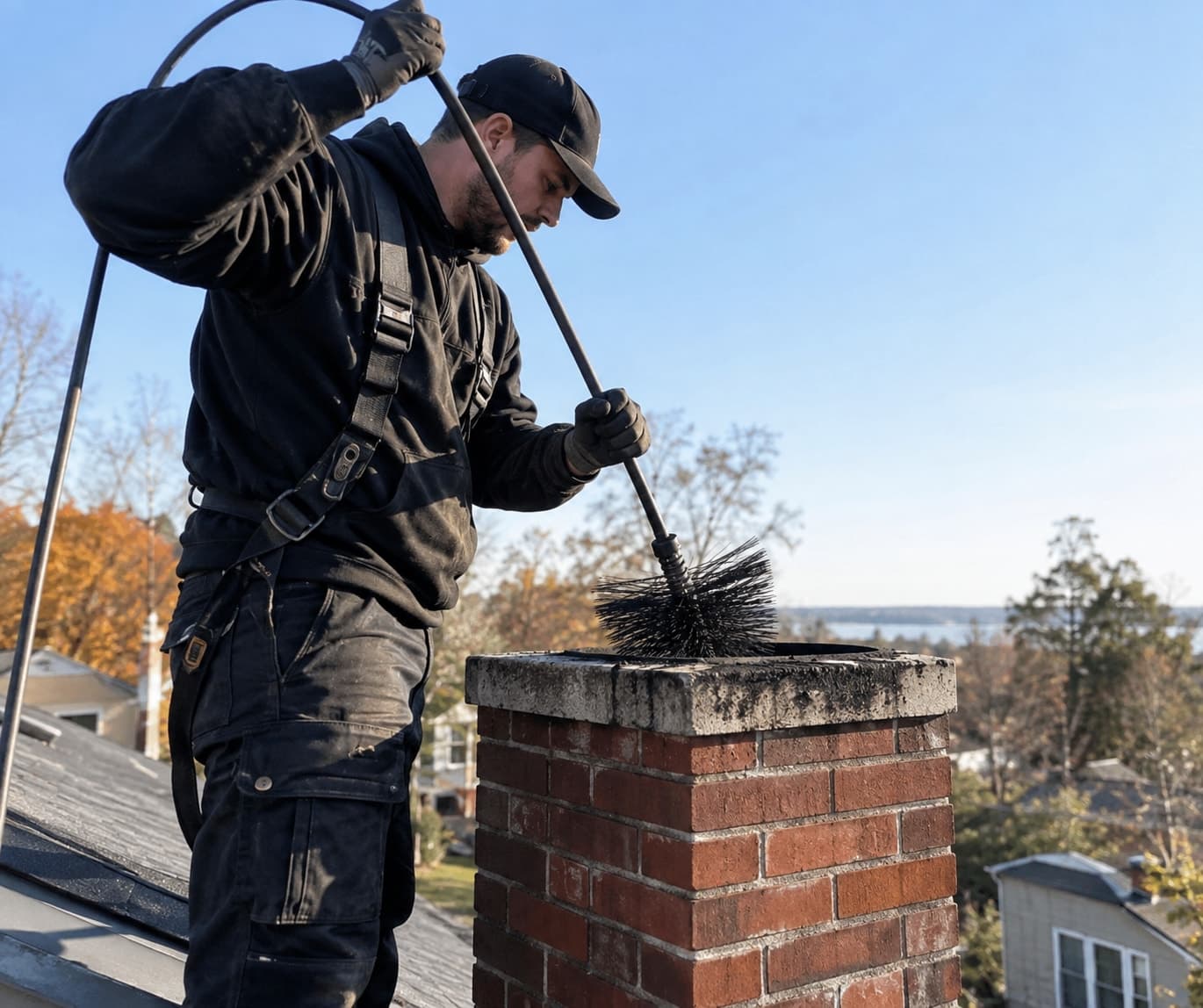
- Checking the flue and cap for creosote at the same time; heavy outlet soot usually means heavy flue buildup. See creosote buildup.
02Creosote washing out over the crown
- What you may notice
- Tar-like black streaks running down the brick from the top; brown staining on the crown.
- How it’s confirmed
- Checking the crown for cracks and the cap for missing or damaged parts.
03Mildew or algae on masonry or stucco
- What you may notice
- Dark, blotchy growth on shaded faces, sometimes with green tints.
- How it’s confirmed
- Confirming by location and texture; checking whether the surface is damp from a water problem higher up.
Inside: soot above the fireplace
Black staining on the brick or wall just above the firebox opening means smoke has been rolling out of the top of the opening, usually when the fire is lit or when doors are opened. It is a draft problem, not a cleaning problem. The usual causes are a damper that isn’t fully open, a cold flue, an opening that is too large for the flue, or a house pulling air down the chimney. Our guide to a fireplace smoking into the room works through them. On gas fireplaces, soot anywhere is a combustion problem covered in a yellow flame or soot on the glass.
Masonry chimney and fireplace, cutaway
- 1Chimney cap. Metal lid with mesh sides over the flue opening. Keeps rain, debris and animals out.
- 2Crown. The concrete or mortar top of the masonry, sloped to shed water away from the flue.
- 3Flue liner. Clay tile or metal lining that carries smoke up and protects the masonry from heat.
- 4Flashing. Metal that seals the joint between the chimney and the roof.
- 5Brick & mortar. The chimney structure. Mortar joints and brick faces absorb water when they wear.
- 6Smoke chamber. The sloped transition that funnels smoke from the firebox into the flue.
- 7Damper. Metal plate at the throat (or a sealing lid on top) that closes the flue when not in use.
- 8Firebox. Where the fire burns. Firebrick laid in heat-resistant mortar.
- 9Hearth. Non-combustible floor extension in front of the fireplace opening.
Safe checks and cleaning
- Wipe a small area with a dry rag. Soot comes off as black powder; mildew smears or leaves a greenish tint.
- Note which sides of the chimney are stained. Stains only on shaded sides point to mildew.
- For mildew on brick or stucco, use a cleaner labeled for that surface, test in a hidden spot and rinse gently. Avoid high-pressure washing, which damages mortar and stucco and drives water in.
- For soot above the fireplace, use a dry soot sponge first; water tends to spread soot deeper into brick.
- Photograph the stains before cleaning so the pattern can be checked later.
Red flags
- Shiny, tar-like black deposits dripping from the chimney top.
- Soot on the wall or ceiling around a gas fireplace. Turn it off, and make sure your CO alarms work.
- Fresh soot above the opening together with a smoky smell in other rooms.
- Black streaks together with water in the firebox, which point to a cracked crown or missing cap.
What a professional check involves
Identify the stain
Soot, creosote, mildew and roof algae are sorted out by location and texture.
Check the flue
If soot or creosote is involved, the flue is inspected for buildup and the cap for clogging.
Check draft and combustion
For stains inside, the damper, smoke chamber and draft are checked; gas units are referred for combustion service.
Fix the cause, then clean
Stains come back if the reason isn’t addressed, whether that is a crown, a draft issue or a damp surface.
What each black stain leads to
| Which stain it is | Where it’s fixed |
|---|---|
| Soot above the fireplace opening | a draft check under chimney inspection, then a sweep if deposits are heavy |
| Soot streaks at the chimney top | sweeping the flue and a cap check |
| Rough smoke chamber pushing smoke out | smoke chamber repair |
| Dark mildew or algae on stucco or brick | moisture control; crown and crown repair if water collects |
Soot above the opening is the same problem as a fireplace that smokes into the room. Mildew is a surface issue unless it points to water staying in the masonry; see Florida humidity, chimneys and fireplaces. Local: chimney sweeping in Altamonte Springs.
References (2)
Facts and figures on this page come from these references.