On this page
- When a chimney needs rebuilding rather than repair
- Partial vs full chimney rebuild
- Leaning chimneys and chimneys pulling away from the house
- Rebuild, repair or remove?
- What happens to the crown, flashing and cap
- How a partial rebuild is done
- Permits and historic homes
- Storm-damaged chimney tops
- Factory-built chimneys: rebuilding the chase
- What affects the cost of a chimney rebuild
- Partial rebuild, full rebuild or repair?
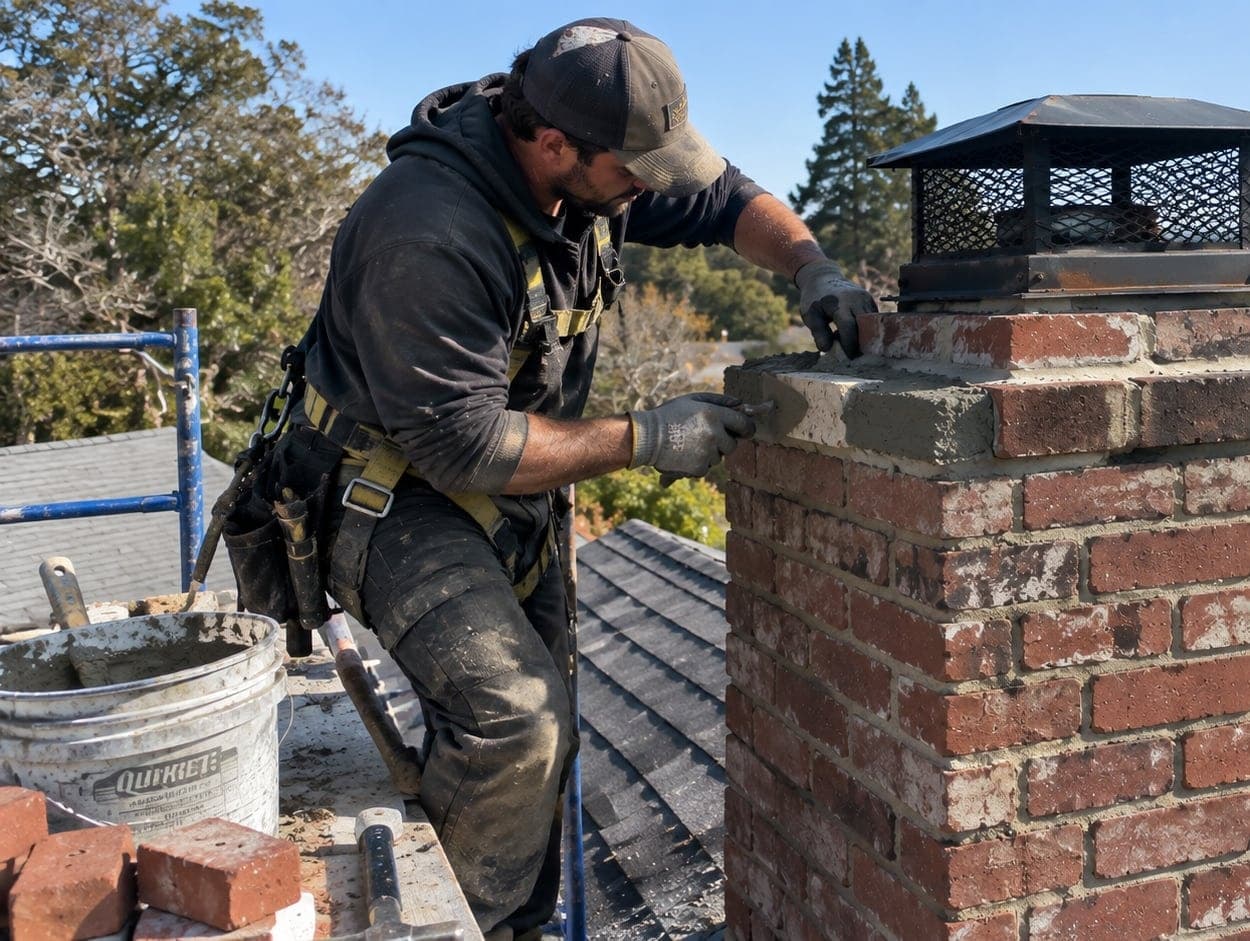
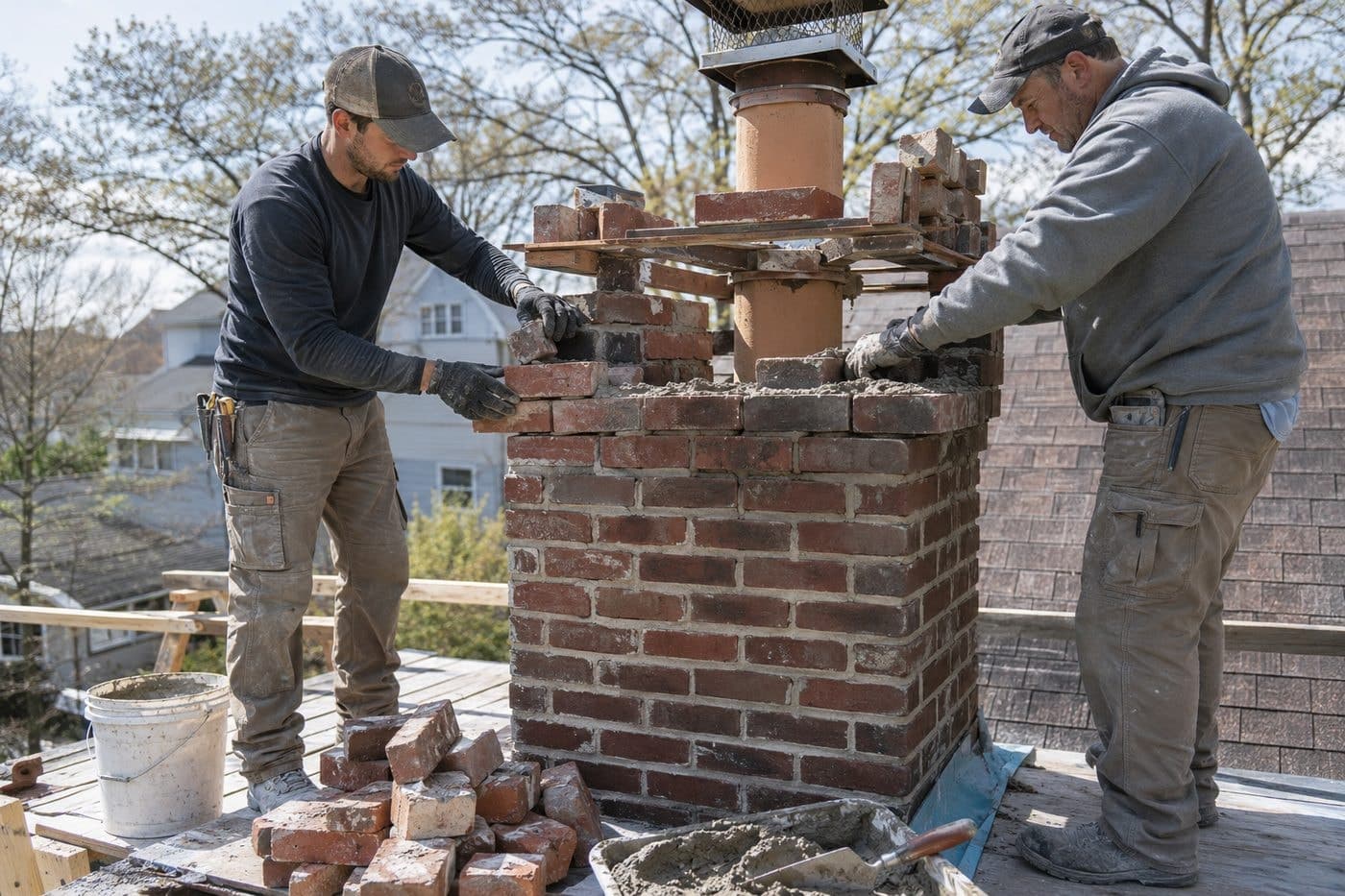
Short answer: a chimney rebuild means dismantling the damaged part of a masonry chimney, brick by brick, down to masonry that is solid and plumb, then relaying it with new mortar, a new crown and reworked flashing. Most rebuilds are partial, limited to the section above the roof line where weather exposure is worst. A full rebuild from the ground is less common and usually tied to structural movement at the base.
Loose bricks at the top are a falling hazard
If bricks at the top of your chimney move, have fallen, or the chimney top has visibly shifted after a storm, keep people and vehicles clear of the area below it and don’t use the fireplace until it has been assessed. Damaged masonry can also crack or displace the flue tiles inside.
When a chimney needs rebuilding rather than repair
Signs that point toward a rebuild
- Bricks at the top move by hand, or several have already fallen
- Mortar is missing so deep into the joints that repointing would leave little to bond to
- Widespread spalling across many bricks in the same section
- The chimney leans, twists or has a visible bow above the roof
- Cracks through the brick that run across several courses
- A storm, falling tree or lightning has broken or displaced the top
- The crown has failed and the courses under it have come apart
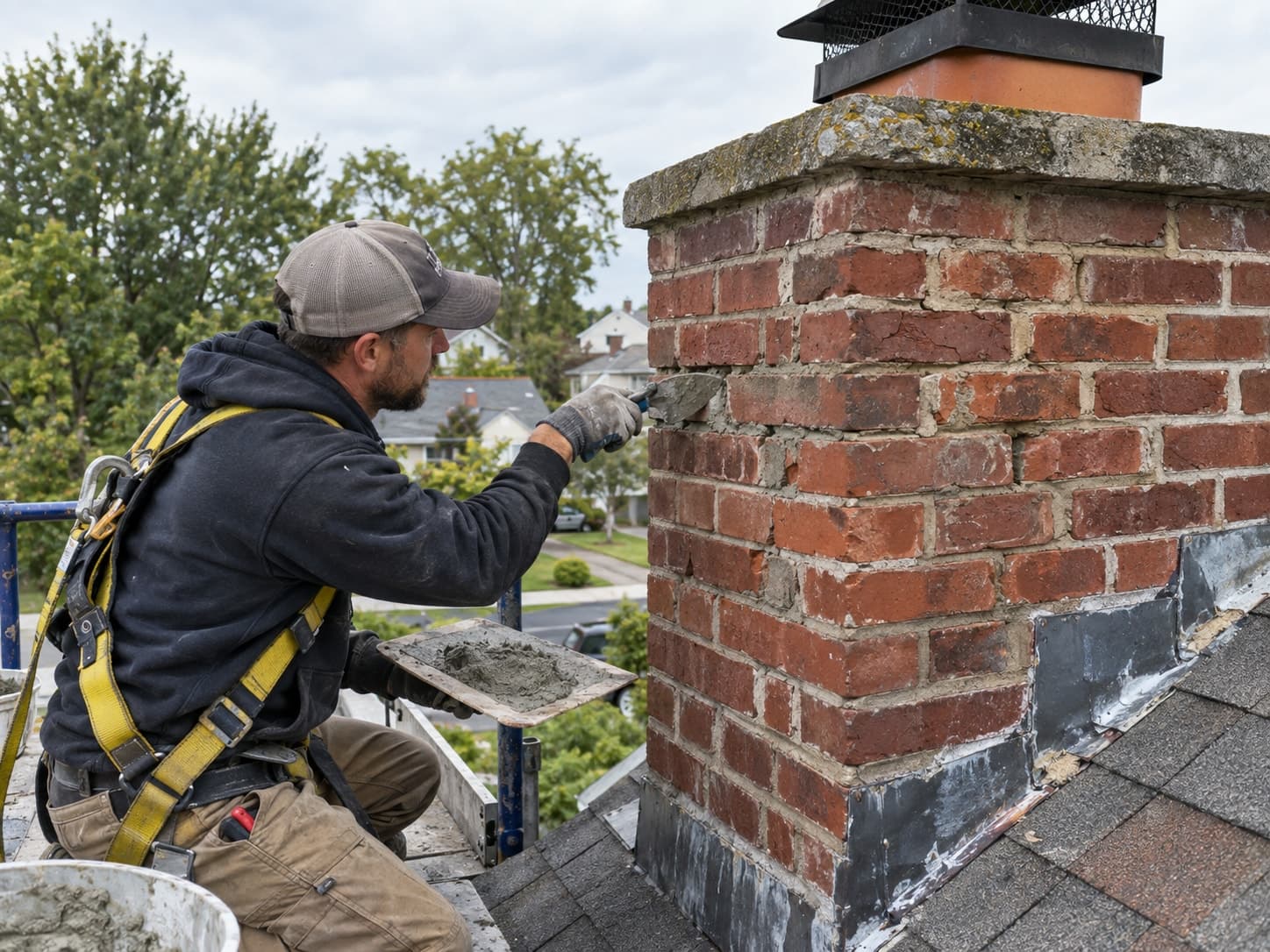
If the brick is basically sound and the problems are limited to joints and a few units, repointing and brick replacement is the smaller, less invasive fix. The line between the two isn’t always obvious from the ground; it usually becomes clear once the top is inspected up close and the loose area is mapped.
Partial vs full chimney rebuild
| Feature | Partial rebuild (above the roof line) | Full rebuild |
|---|---|---|
| Scope | Top courses down to sound masonry, usually above the roof | Most or all of the chimney, often including the base |
| Typical causes | Weathering, failed crown, storm damage, eroded joints at the top | Settlement or failure of the base, severe lean, widespread structural cracking |
| Roof involvement | Flashing and roofing around the chimney are reworked | Larger roof opening; roofer usually involved |
| Fireplace and flue | Flue tiles in the rebuilt section replaced or reset | Firebox, smoke chamber and liner may all be part of the scope |
| Who assesses it | A chimney mason | A chimney mason, often with a structural engineer |
Scope
- Partial rebuild (above the roof line)
- Top courses down to sound masonry, usually above the roof
- Full rebuild
- Most or all of the chimney, often including the base
Typical causes
- Partial rebuild (above the roof line)
- Weathering, failed crown, storm damage, eroded joints at the top
- Full rebuild
- Settlement or failure of the base, severe lean, widespread structural cracking
Roof involvement
- Partial rebuild (above the roof line)
- Flashing and roofing around the chimney are reworked
- Full rebuild
- Larger roof opening; roofer usually involved
Fireplace and flue
- Partial rebuild (above the roof line)
- Flue tiles in the rebuilt section replaced or reset
- Full rebuild
- Firebox, smoke chamber and liner may all be part of the scope
Who assesses it
- Partial rebuild (above the roof line)
- A chimney mason
- Full rebuild
- A chimney mason, often with a structural engineer
Leaning chimneys and chimneys pulling away from the house
A lean needs one question answered before anything else: where does the movement start? If only the part above the roof has tipped, from years of water or a storm, a partial rebuild can correct it. If the whole stack is pulling away from the wall, or there are cracks at the base, the movement is coming from the footing or foundation, and rebuilding the top alone won’t stop it. That calls for a structural assessment, often by an engineer, before any masonry scope is set. The page on a chimney that is leaning or separating explains how to tell the two apart and what to check in the meantime.
Rebuild, repair or remove?
Some homeowners with a chimney they no longer use ask whether taking it down is simpler. It’s a legitimate option to discuss, but it’s a different kind of project from a rebuild, and not one we perform.
| Item | Repair | Rebuild | Removal |
|---|---|---|---|
| Best fit | Sound chimney with local joint or brick damage | Damaged top or structural issues, and you want to keep the chimney | A chimney you no longer use and don’t want to maintain |
| What it involves | Repointing, brick replacement, crown work | Dismantling and relaying masonry, new crown, cap and flashing | Taking the chimney down, closing the roof and often the wall, and making the fireplace permanently unusable or removing it |
| Who usually does it | Chimney mason | Chimney mason, with a roofer as needed | Usually a roofer or general contractor, sometimes with a structural engineer |
| Keeps a working fireplace? | Yes | Yes | No |
| Permits and approvals | Sometimes, depending on scope and location | Often; confirm with the building department | Often; confirm with the building department |
What happens to the crown, flashing and cap
A rebuild touches every part at the top of the chimney, so each one is redone rather than patched around.
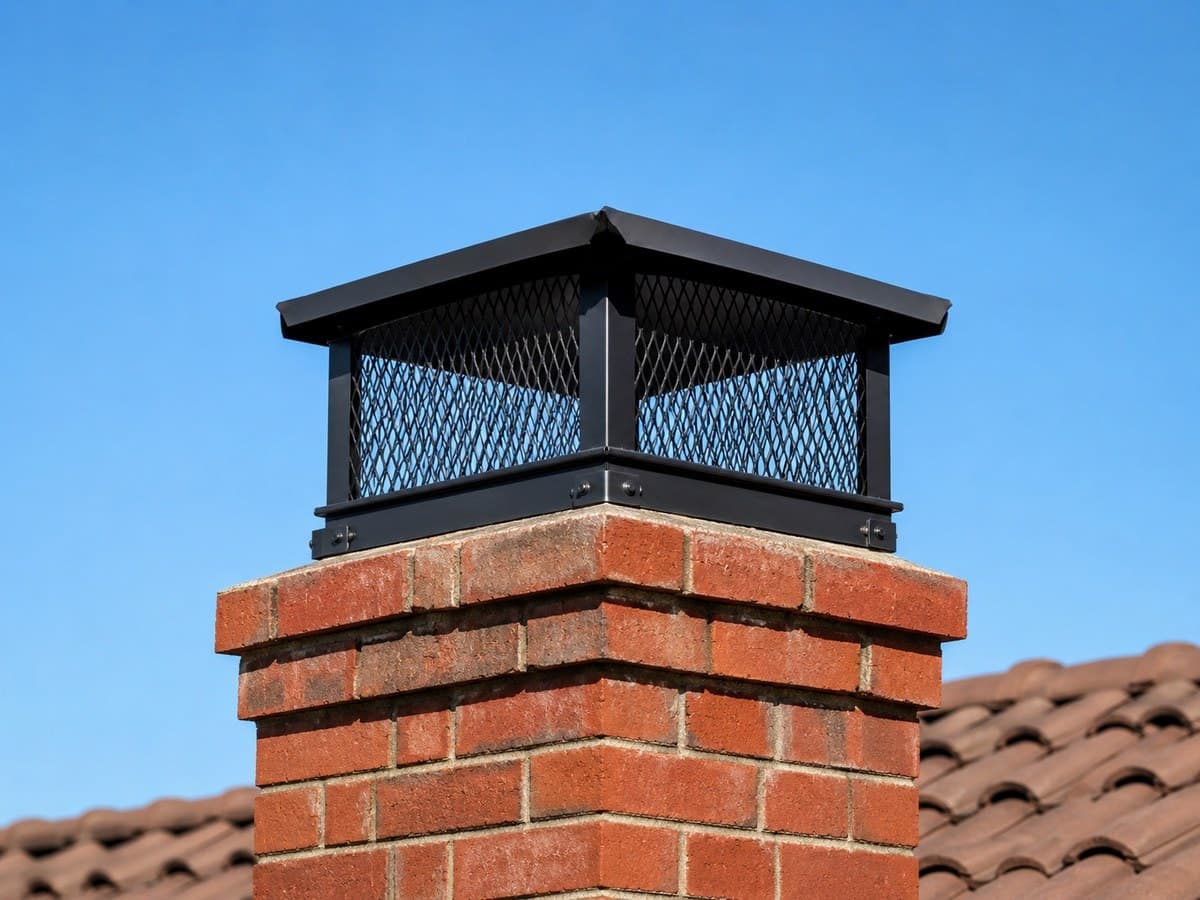
- Cap: removed before the work and reinstalled or replaced to fit the finished flue. A rebuild is a sensible time to size a cap correctly for the flues present.
- Crown: the old crown comes off with the damaged masonry. A new one is formed with slope, an overhang, a drip edge and a bond break at the flue tile; the crown repair page describes those details.
- Flashing: when the rebuild goes down to or below the roof line, new counterflashing is let into the new mortar joints, and the step flashing and cricket are reworked with the roofing. See flashing where the chimney meets the roof for how the layers fit together.
- Flue liner: tiles in the rebuilt section are checked and replaced as needed, and the liner is inspected further down before the fireplace goes back into use.
- Height: the finished chimney still has to meet termination height rules. The Florida Building Code requires a chimney to extend at least 2 feet higher than any part of the building within 10 feet, and at least 3 feet above where it passes through the roof (FBC Residential R1003.9).
How a partial rebuild is done
Assess and map the damage
The top is inspected up close to find where sound, plumb masonry begins, and the flue is checked. If there is any sign of movement at the base, a structural assessment comes first.
Check permits and approvals
Permit requirements for masonry work above the roof and any historic district review are confirmed before work starts.
Protect the roof and the house
Roofing around the chimney is protected, the flue is covered, and debris is lowered rather than dropped.
Dismantle to sound masonry
Brick is taken down course by course. Sound old brick can sometimes be cleaned and reused, which helps the rebuilt section match.
Relay the brick and flue
The chimney is rebuilt plumb with compatible mortar, flue tiles are set as the courses go up, and counterflashing reglets are formed in the new joints.
Crown, cap and flashing
A new crown is formed, the cap is fitted, and the flashing is completed with the roofing so the rebuilt chimney is watertight at every level.
Permits and historic homes
Rebuilding part of a chimney is structural masonry work, and a building permit may be required. Requirements can differ from one city or county to the next, so confirm with the local building department for your address before work is scheduled. In a local historic district, work that changes a chimney’s exterior appearance may also need design review; in Orlando’s historic districts, exterior modifications require a Certificate of Appropriateness (City of Orlando). Reusing the original brick or sourcing a close match helps a rebuilt chimney fit a historic house.
Storm-damaged chimney tops
High winds, falling limbs and lightning can crack or displace the top of a masonry chimney in a way that isn’t obvious from the ground. After a storm, a post-storm chimney inspection checks what changed at the top, including the cap, crown, masonry and flashing. Knowing what the storm actually did, and what was already worn before it, also helps when you talk to your insurer.
Factory-built chimneys: rebuilding the chase
A factory-built chimney has no brick to rebuild. Its equivalent is rebuilding the framed chase: replacing rotted framing and sheathing, re-cladding the siding or stucco, and fitting a new chase cover, while the metal flue itself is repaired or replaced only with parts that match the manufacturer’s listing. That work is covered on the prefab chimney and chase repair page.
What affects the cost of a chimney rebuild
Rebuilds are priced after the extent of the damage is known. These are the factors that drive the scope.
- How many courses come down, and whether the rebuild goes below the roof line
- Chimney width and the number of flues
- Reusing original brick versus sourcing matching brick
- New crown, cap and flue tiles
- Flashing, cricket and roofing work around the chimney
- Structural assessment, permits and any historic review
- Roof pitch, height and access
Partial rebuild, full rebuild or repair?
Rebuilding is the most expensive thing that can happen to a chimney, so it is worth knowing where the line sits. Most chimneys that look alarming from the ground need repointing and a crown rather than a rebuild.
| What is wrong | Usual answer |
|---|---|
| Mortar joints eroded, bricks sound | Tuckpointing |
| Individual spalled or crumbling bricks | Masonry repair |
| Cracked or crumbling crown, structure sound | Crown repair |
| Deterioration confined above the roofline | Partial rebuild from the roofline up |
| Chimney leaning, or movement at the base | Structural assessment first, then a full rebuild if it is confirmed |
| Flue damaged but masonry sound | Relining rather than rebuilding |
The partial rebuild — taking the stack down to the roofline and rebuilding above it — is by far the most common here, because that is the section exposed to weather on all four sides. The guide to chimney repair versus rebuild covers how the decision is made.
Rebuild work happens across Orlando, College Park, Winter Park, Maitland, Apopka and the rest of the communities we serve. Estimates are free and follow an assessment, because nobody can price a rebuild from a photograph.
References (2)
Facts and figures on this page come from these references.