Why Orlando fireplaces smell worse in summer
Orlando’s average relative humidity is about 74%, and it runs near 89% in the early morning (Current Results, NCEI normals). Add a wet season from June through September and a chimney spends much of the year sitting in damp air, with little or no fire to dry it out.
Chimney companies widely report that creosote and damp masonry give off more odor in hot, humid weather, and that the smell is pushed into the house when indoor air pressure is lower than outside (Valley Chimney is one example). That is industry experience rather than laboratory data, but it matches what homeowners describe: a fireplace that is odor-free in January and smells like an ashtray in August.
Possible causes, most likely first
What the smell usually points to
01Creosote and soot reacting with humidity
- What you may notice
- Smoky, campfire or asphalt smell, strongest on muggy days or after rain. Often a wood-burning fireplace that hasn’t been swept in a while.
- How it’s confirmed
- Inspection of the smoke chamber and flue for creosote deposits and how thick and what type they are.
02Negative house pressure
- What you may notice
- The smell appears when the kitchen or bathroom fans, the dryer or the AC air handler are running, or when doors are closed. You may feel cool air falling out of the fireplace.
- How it’s confirmed
- Watching air movement at the fireplace opening with fans on and off, and checking how well the damper seals.
03Moisture or an active leak
- What you may notice
- Musty or sour smell, stains, rust on the damper or firebox, odor worst a day or two after storms.
- How it’s confirmed
- Checking the cap, chase cover or crown and flashing for water entry, and looking for water trails inside.
04Animals, nests or droppings
- What you may notice
- Rotten, ammonia or sharp smell, chirping or scratching, twigs or droppings on the smoke shelf. A dead animal needs to be removed; masking the smell doesn’t solve it.
- How it’s confirmed
- Light inspection of the flue and smoke shelf, and a check of the cap or screen for gaps.
05Leaves and debris
- What you may notice
- Earthy, rotting smell after storms, debris falling onto the damper or grate.
- How it’s confirmed
- Visual check of the damper area and flue; debris is removed during a sweep.
06Mold in a wet chase
- What you may notice
- Persistent musty smell around a factory-built fireplace, sometimes with stains or soft drywall on the chase wall.
- How it’s confirmed
- Looking for the water source first, then assessing framing and insulation inside the chase.
Animal cases need care in Florida. Chimney swifts are protected under the federal Migratory Bird Treaty Act, so an active nest can’t be disturbed until the young have left (USFWS). Bats have a maternity season from April 16 to August 14, and exclusion is only legal from August 15 to April 15 (FWC).
Safe checks you can do today
- Close the damper fully, if you have one, and see whether the smell eases within a day.
- Turn off kitchen and bath exhaust fans and note whether the odor fades. If it does, air pressure is part of the problem.
- Crack a nearby window slightly while fans run. Giving the house another source of air often stops the fireplace acting as the intake.
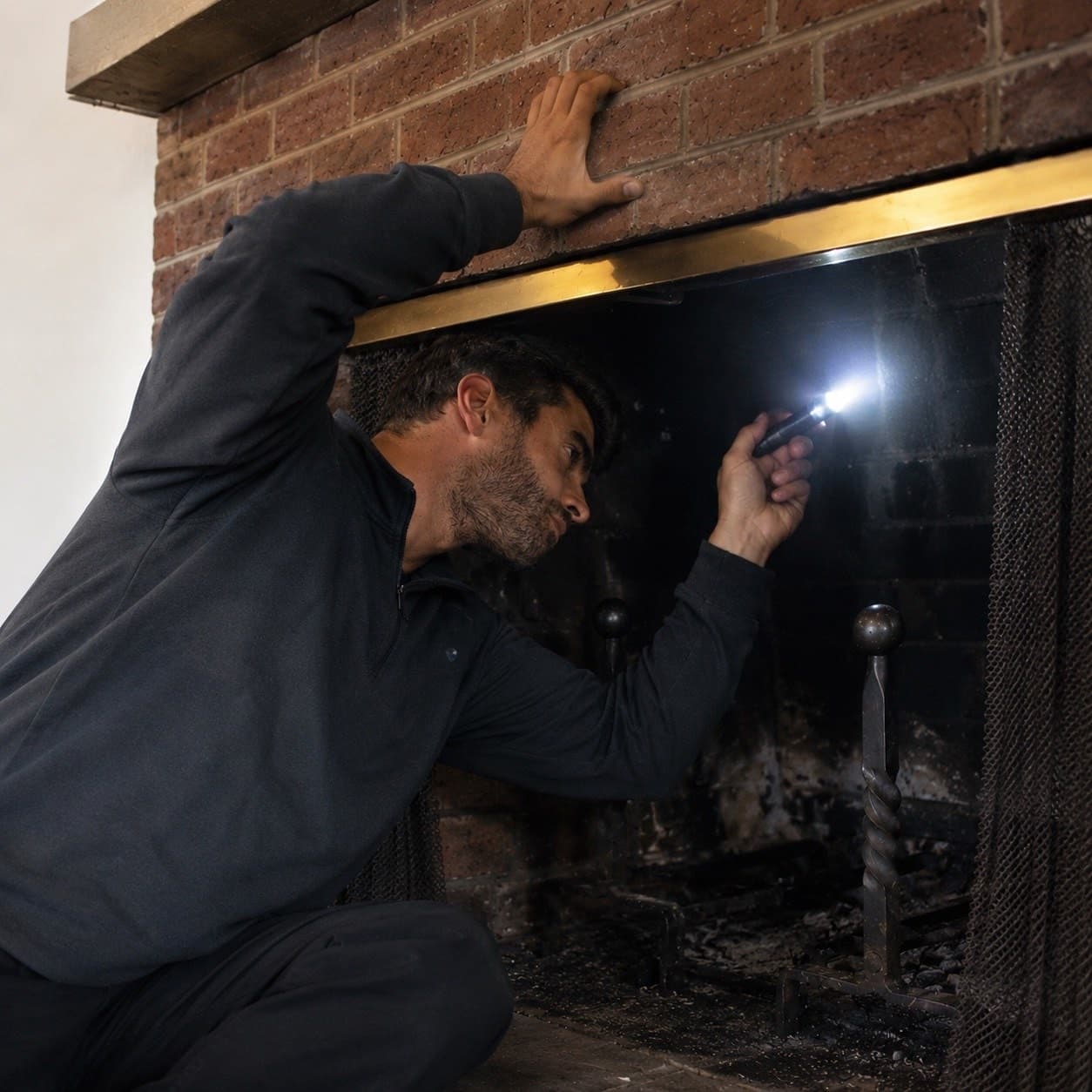
- Shine a flashlight onto the damper and smoke shelf from the firebox. Look for debris, droppings, water or rust, without reaching past the damper.
- From the ground, check whether a cap is visible on top of the chimney.
- Note the pattern: after rain, on humid days, when the AC runs, or constantly.
Baking soda, charcoal or a bowl of vinegar in the firebox can take the edge off for a few days. They don’t remove the source, so treat them as a stopgap.
Red flags that need attention now
Don’t light a fire to “burn off” the smell
If the odor comes with a heavy creosote smell, falling black flakes, animal activity, or water and rust in the firebox, don’t use the fireplace until the flue has been inspected. A fire can ignite creosote deposits, and a blocked flue can push smoke into the room.
- A rotten or ammonia smell with sounds in the flue: an animal may be inside. Don’t light a fire or try to smoke it out.
- A musty smell with stains, soft drywall or visible mold near the chimney: the water source needs to be found before the mold comes back.
- A gas fireplace that smells like rotten eggs is a different problem. Follow the steps on our page about a gas fireplace that smells like gas.
What professional diagnosis involves
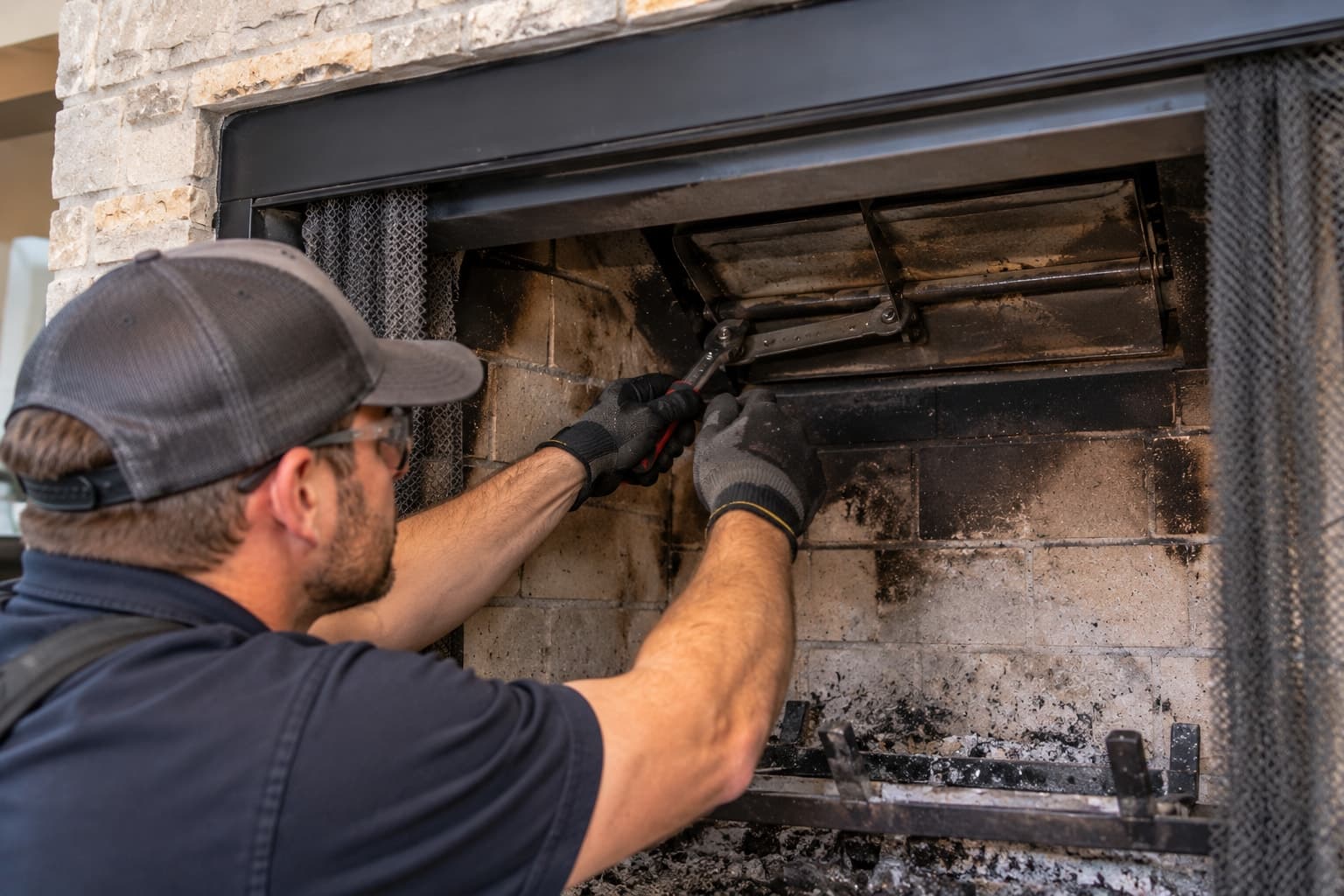
We inspect the firebox, damper, smoke chamber and flue with a light, and look at the cap and the top of the chimney. We note deposits, debris, nests, water trails and gaps. We also look at how air moves at the fireplace opening with exhaust fans running, because an odor source and an air path are usually both involved.
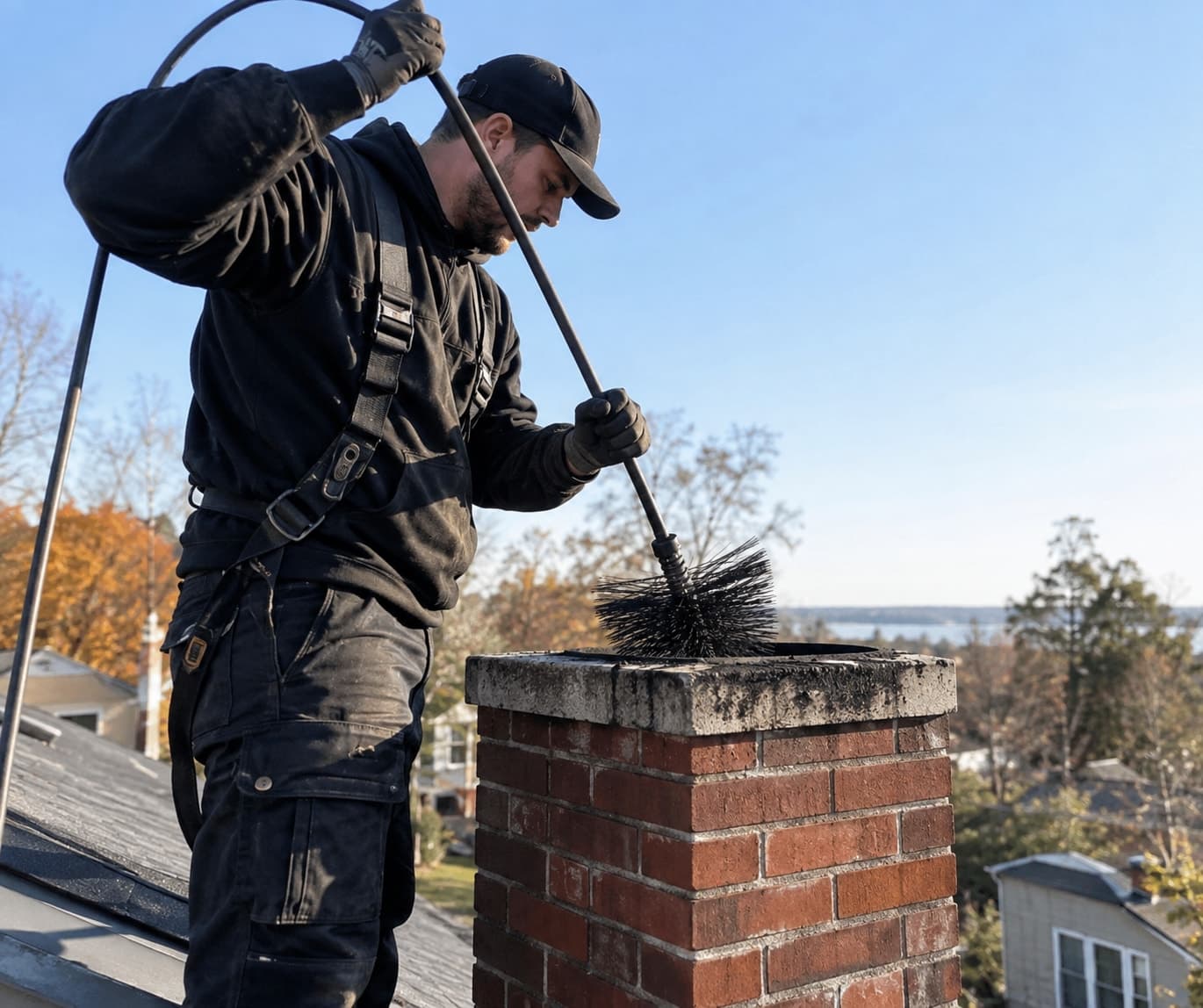
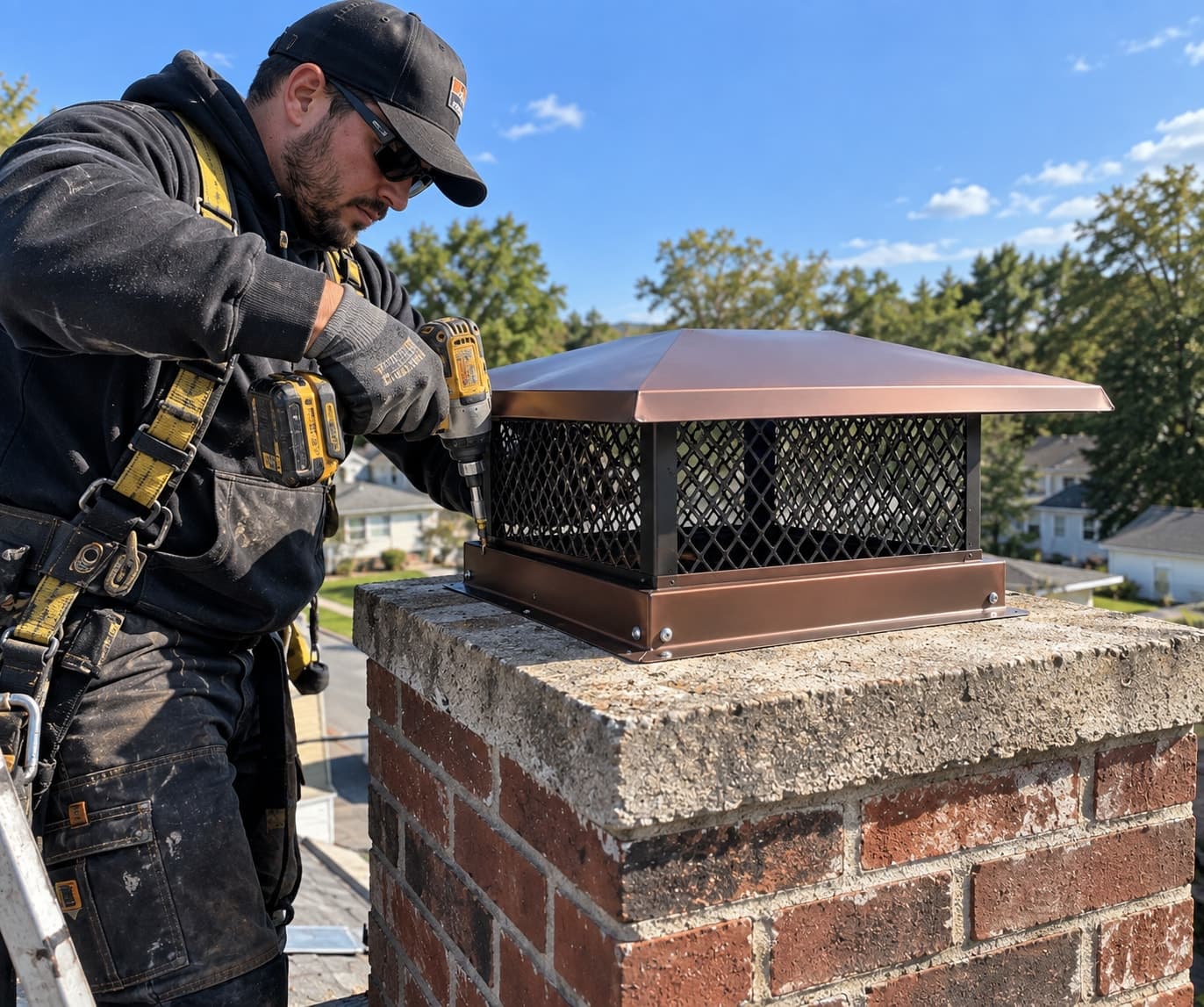
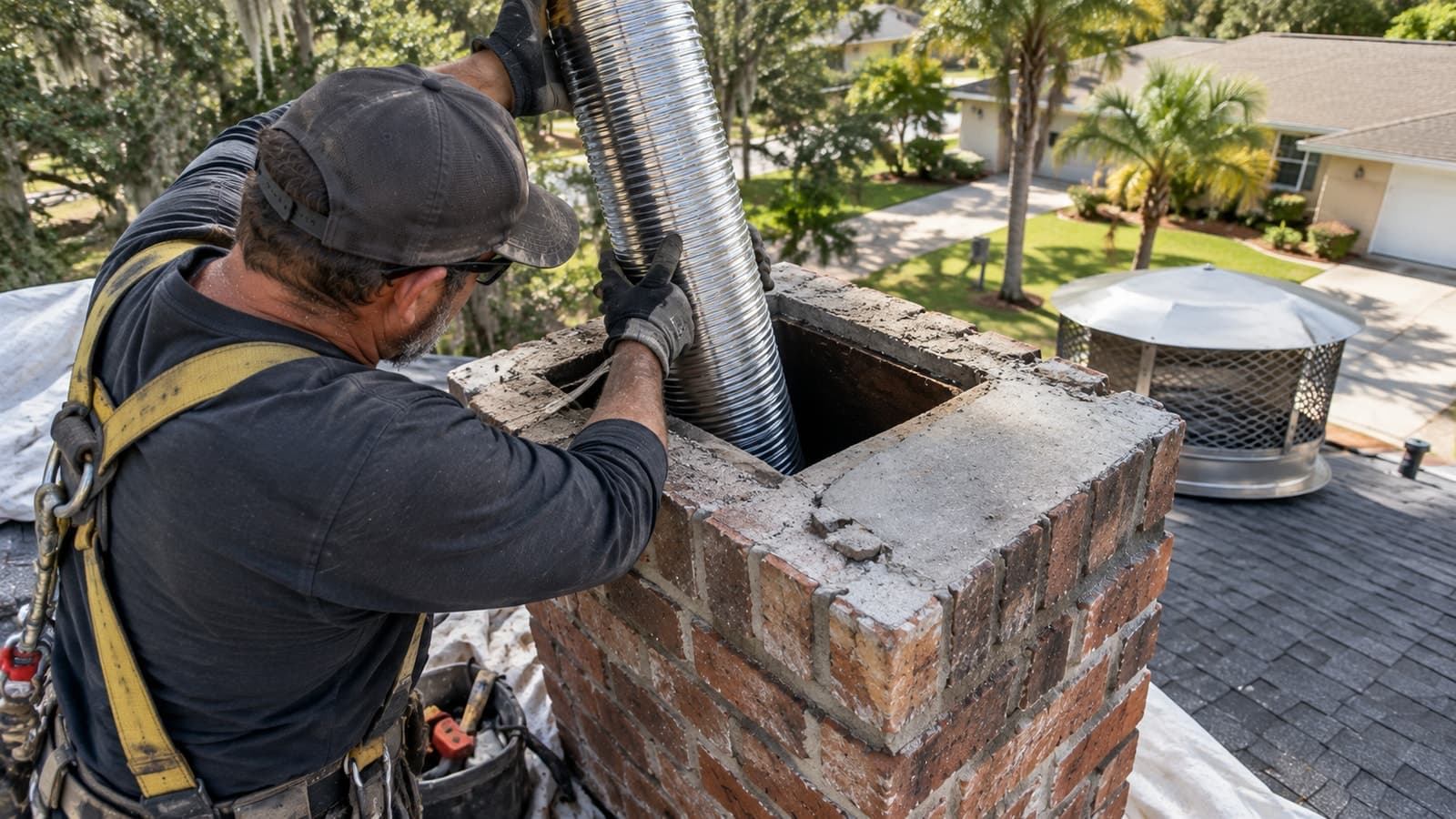
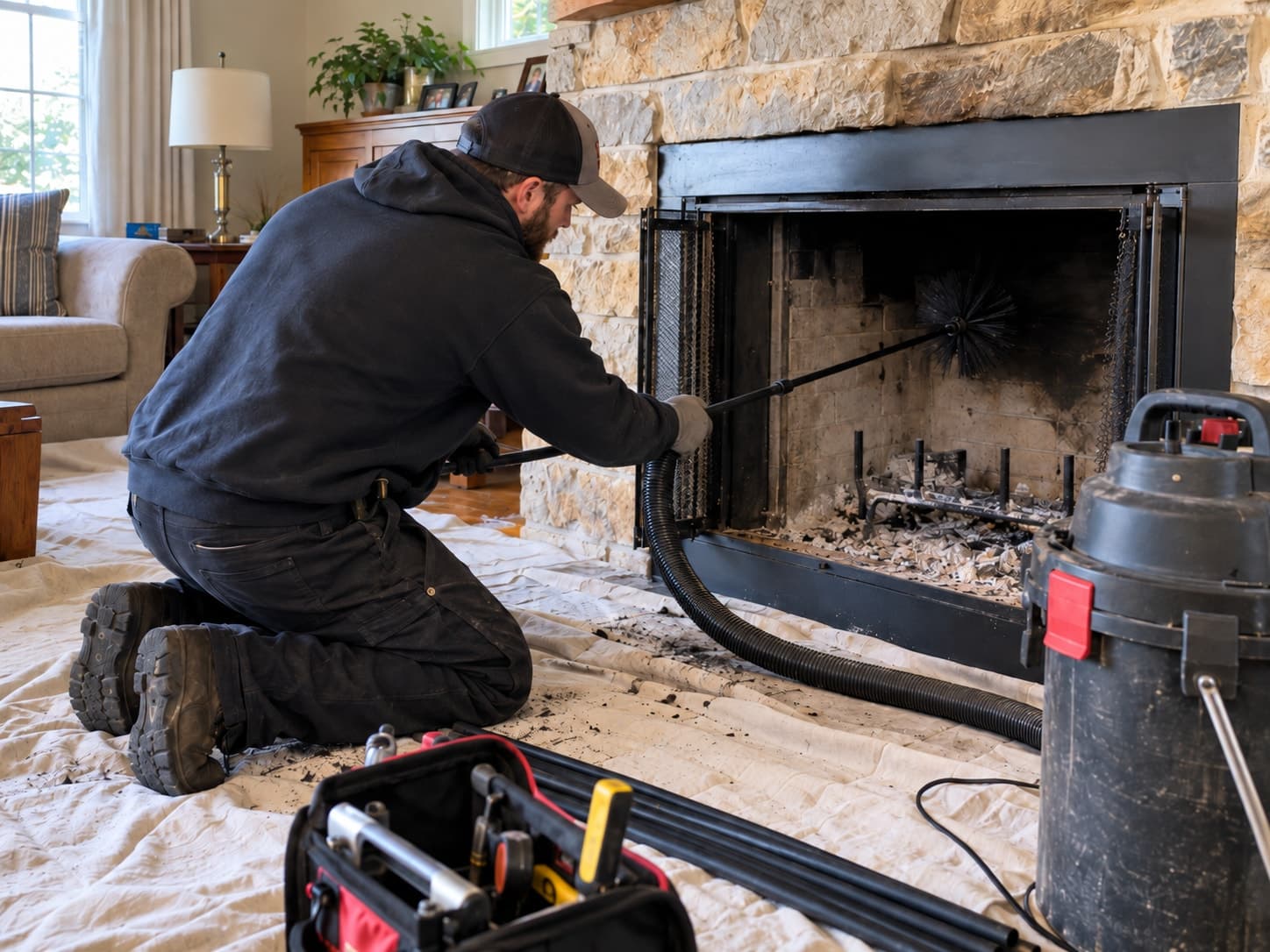
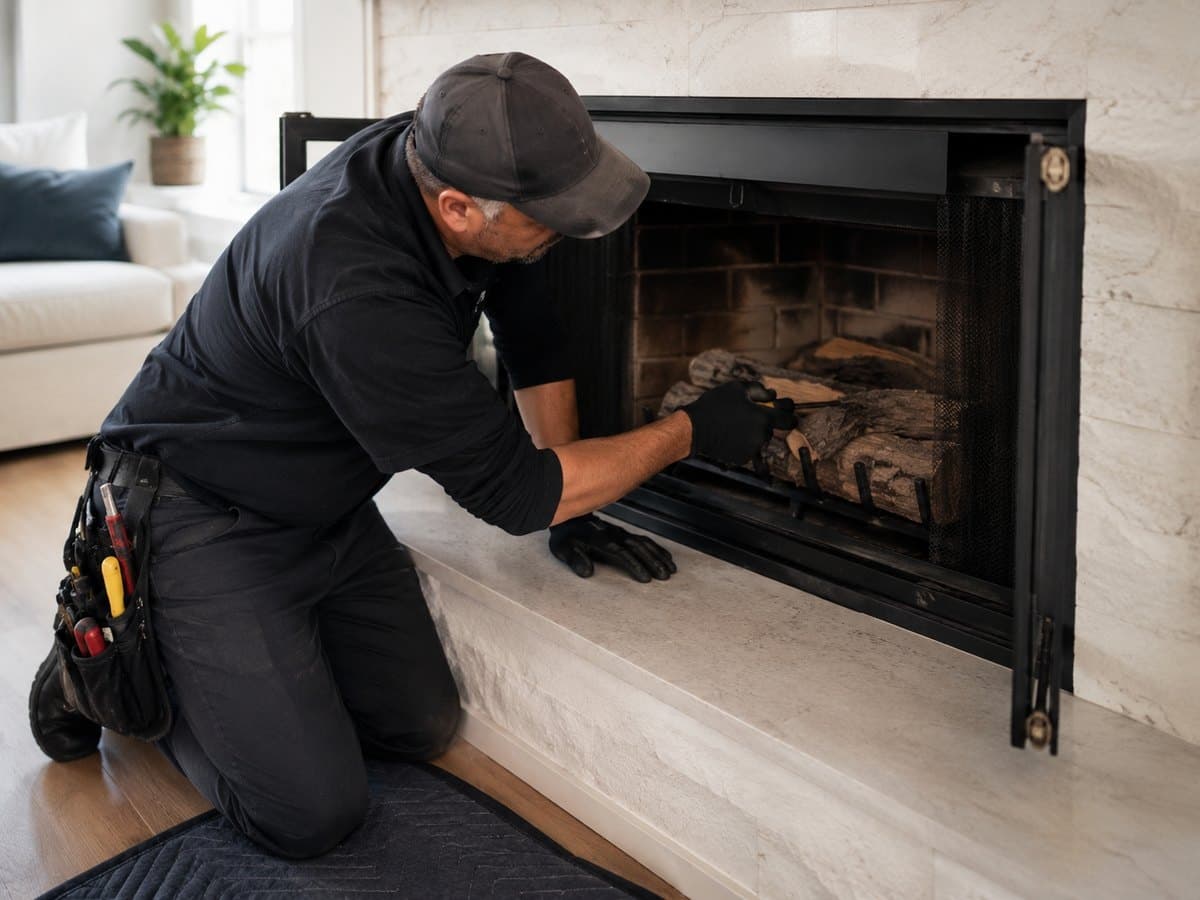
Fixes then target both halves. A chimney sweep and cleaning removes creosote, soot and debris. A properly sized cap keeps rain, leaves and animals out. Leaks at the cover, crown or flashing get repaired so the flue can dry. For the air side, a top-sealing damper closes the flue at the top where a worn throat damper leaks, and glass doors add a second seal at the front. See our inspection details for what that visit covers.
| What’s behind the smell | What removes the source | What stops the air flow |
|---|---|---|
| Creosote and soot | Sweep the flue and smoke chamber | Tighter damper seal; glass doors |
| Negative house pressure | Nothing to remove; the air path is the problem | Top-sealing damper; glass doors; less exhaust fan use |
| Moisture or leak | Repair the cap, cover, crown or flashing letting water in | Keep the damper closed while it dries |
| Nests, animals, debris | Removal (timed around swift and bat rules) | A properly fitted cap |
| Mold in a wet chase | Fix the leak, then address damaged framing or insulation | Seal the chase so it stays dry |
Most homes need one item from each column. Sweeping without fixing the air path often means the smell creeps back the next humid spell, while a new damper on a dirty flue only hides the source until the damper is opened.
Which service clears the smell
| Source of the odor | Where it’s fixed |
|---|---|
| Soot and creosote deposits | a chimney sweep or creosote removal |
| Water getting into the flue | chimney leak repair |
| Air pulled down an open flue | damper repair |
| Lingering odor after the cause is fixed | chimney odor removal |
Air-freshening sprays and baking soda only hide it for a day. Florida humidity, chimneys and fireplaces explains why the smell peaks in summer. Local: chimney sweeping in Winter Park or chimney cleaning in Oviedo.
References (5)
Facts and figures on this page come from these references.