Why gas smells like rotten eggs
Natural gas and propane have no smell of their own. Suppliers add an odorant, a mercaptan, so a leak can be noticed; Florida City Gas and Peoples Gas both describe it as the reason gas smells like rotten eggs, and propane suppliers add ethyl mercaptan for the same purpose (Ferrellgas).
That means the rotten-egg smell is the warning itself. It doesn’t tell you how much gas is escaping or where, so don’t try to judge it by strength or hunt for the source. Leave, call from outside, and let the utility or fire department find it.
Carbon monoxide has no smell
The odors on this page are not carbon monoxide. CO is invisible and odorless, so a fireplace can produce it without any smell at all. Only a working CO alarm will warn you. If a CO alarm sounds, get everyone outside into fresh air and call 911.
Normal and abnormal smells
Which smell do you have?
01Rotten eggs or sulfur
- What you may notice
- Any time, with the fireplace on or off. Stronger near the unit, the valve access panel or the gas line.
- How it’s confirmed
- Treat as a leak: leave and call the utility or 911 from outside. Afterwards, a qualified gas technician leak-tests the fittings, valve and connector with proper instruments before the unit is used.
02First-use burn-off
- What you may notice
- Paint, oil or chemical smell in the first hours of use on a new fireplace, new logs or new media. Fades with each use.
- How it’s confirmed
- Normal curing; the manual usually tells you how long to run the unit and to ventilate the room. If it persists well beyond that, have it checked.
03Dust after the off-season
- What you may notice
- Dusty or slightly burnt smell for the first few minutes after months unused, then clears.
- How it’s confirmed
- Dust, lint and pet hair on the burner, logs and heat exchanger. An annual cleaning before the cool season reduces it.
04Burning plastic or electrical smell
- What you may notice
- Sharp, acrid smell, sometimes from the lower grille where the blower, wiring and controls are.
- How it’s confirmed
- Turn the fireplace off. A technician checks the blower, wiring, receiver and any components too close to heat.
05Musty or damp
- What you may notice
- Smell with the unit off, often after heavy rain or on humid days.
- How it’s confirmed
- Water entering through the vent termination or chase. The venting and chimney top are checked for leaks.
06Exhaust, soot or a stuffy, eye-stinging feeling
- What you may notice
- Soot on the glass or surround, yellow flames, headaches or nausea while the unit runs, especially with a vent-free unit.
- How it’s confirmed
- Turn it off and ventilate. Combustion, burner setup, log placement and venting are checked; CO alarms should be tested.
When the smell happens is a clue
A smell with the fireplace off points away from combustion: gas escaping at the valve, connector or pilot, or dampness in the vent or chase. A smell only in the first minutes after starting is usually burn-off or dust. A smell that builds while the unit runs for a long time suggests a combustion or venting problem, a blower or wiring issue, or a vent-free unit working beyond its limits. Whatever the timing, a rotten-egg smell always goes straight to the safety steps above.
Vent-free units and carbon monoxide
A vented or direct-vent fireplace sends its combustion products outside through a pipe or chimney. A vent-free (ventless) unit burns inside the room and releases its combustion products, including water vapor, into the living space. Vent-free units are built with an oxygen depletion sensor designed to shut them off if oxygen in the room drops, and they are meant to be run within the limits in their manual, such as room size and run time.
Odors, stuffiness, headaches or condensation on windows while a vent-free unit runs are signs to turn it off and have it checked. We don’t recommend trying to adjust the burner or logs yourself; small changes in log position can change how cleanly any gas fireplace burns. Our page on ventless gas fireplaces covers these units in more depth.
Put CO alarms where they count
The U.S. Consumer Product Safety Commission recommends CO alarms on every level of the home and outside sleeping areas, battery-operated or with battery backup. For new Florida homes and additions with a fireplace or other fuel-burning feature, state law requires a CO alarm within 10 feet of each room used for sleeping (F.S. 553.885). If your home has a gas fireplace and no CO alarm, add one whatever the age of the house.
What you can safely do
- For a rotten-egg smell: leave, call from outside, and wait for the utility or responders. Nothing else.
- For a burn-off or dust smell: open a window and run the unit per the manual; the smell should fade.
- For burning plastic or an electrical smell: turn the fireplace off at the switch or remote and leave it off.
- Test your CO alarms and replace batteries on the schedule the alarm maker recommends.
- Note when the smell happens (unit off, starting up, running) and where it seems strongest; this helps the technician.
Never check for a gas leak with a match, lighter or flame, and don’t tighten fittings, remove panels or shut valves inside the unit. Leak testing and repairs belong to a gas fireplace technician, and gas-line work is a separate job from appliance service, and we carry that out too; propane systems are handled by an LP gas licensee.
What a technician checks
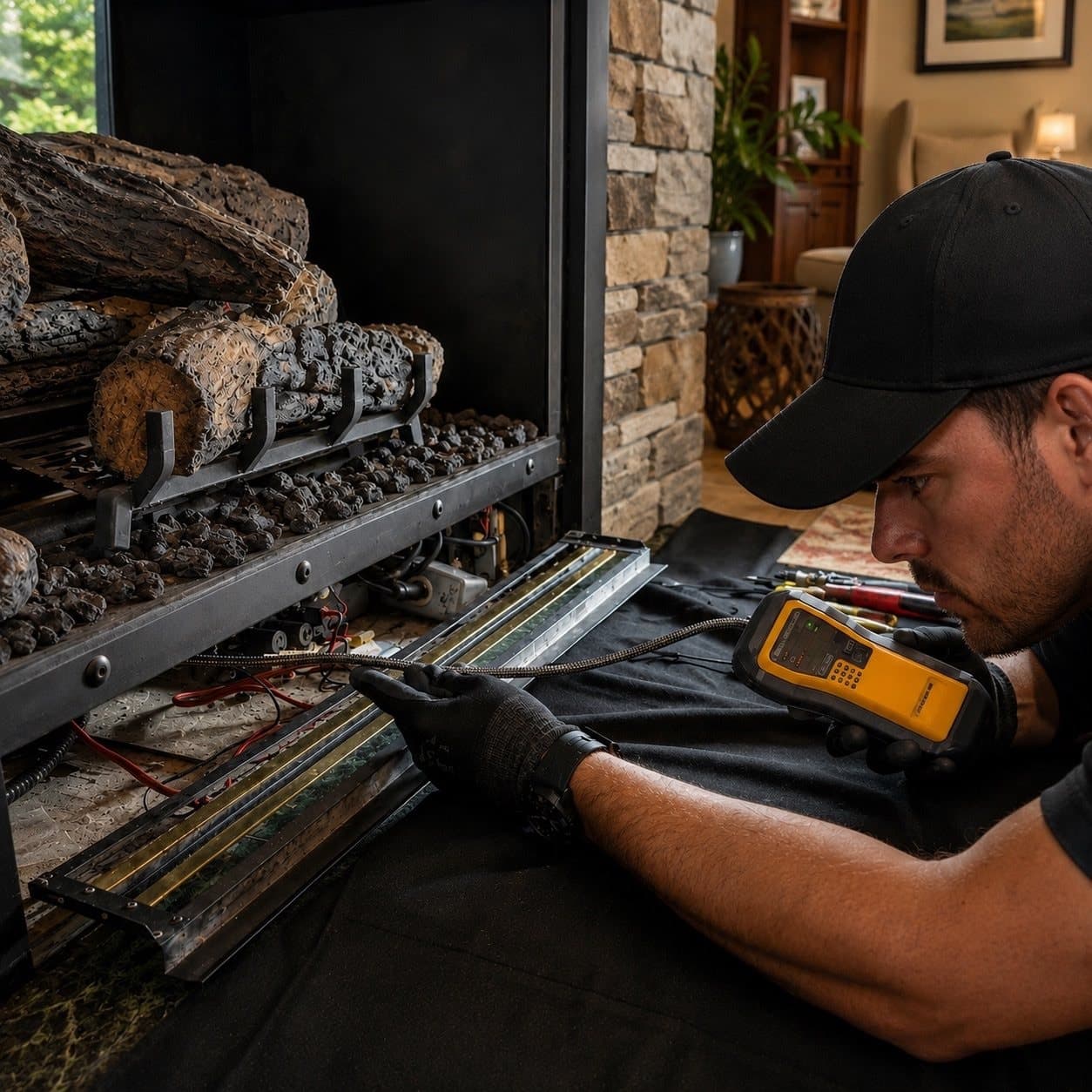
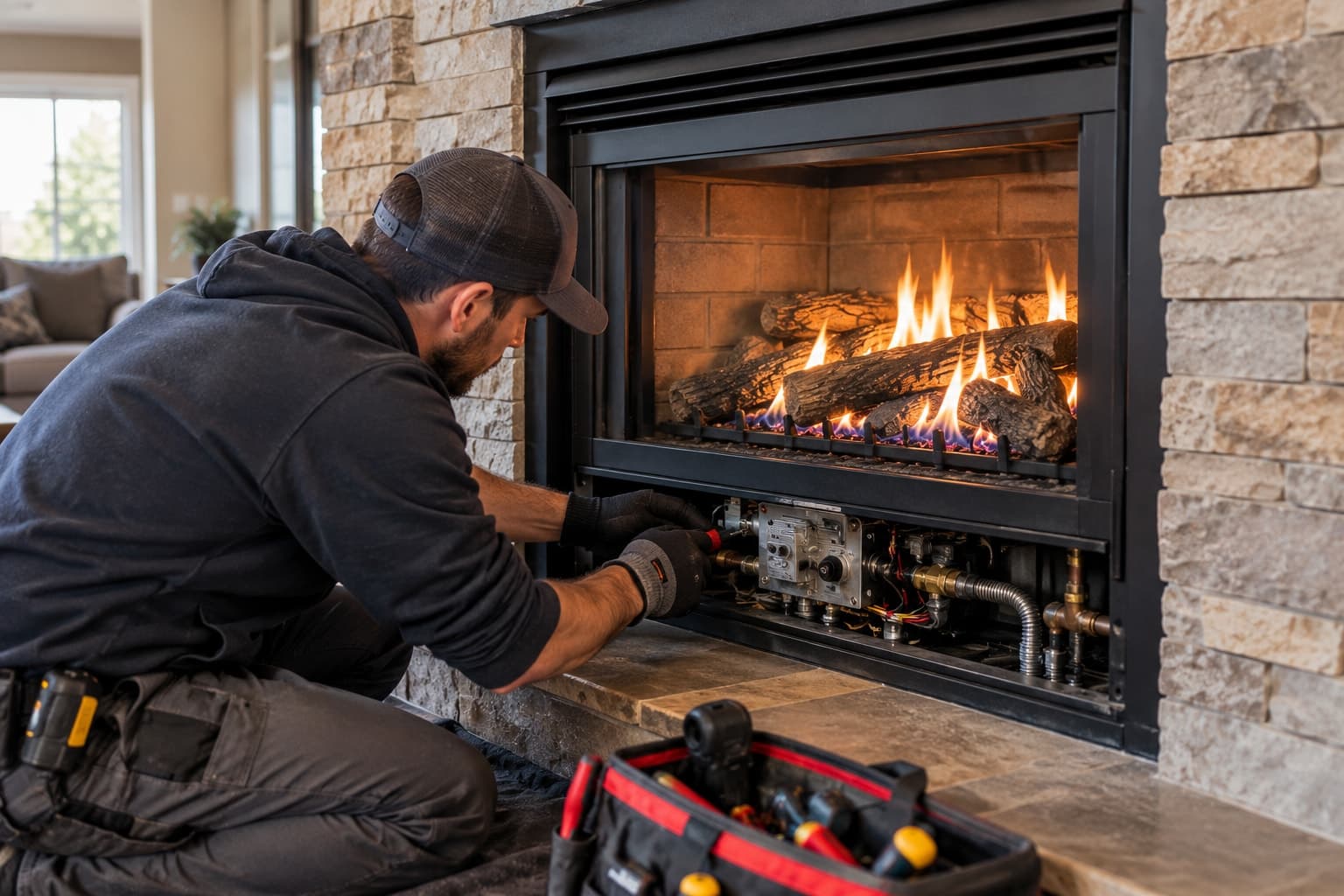
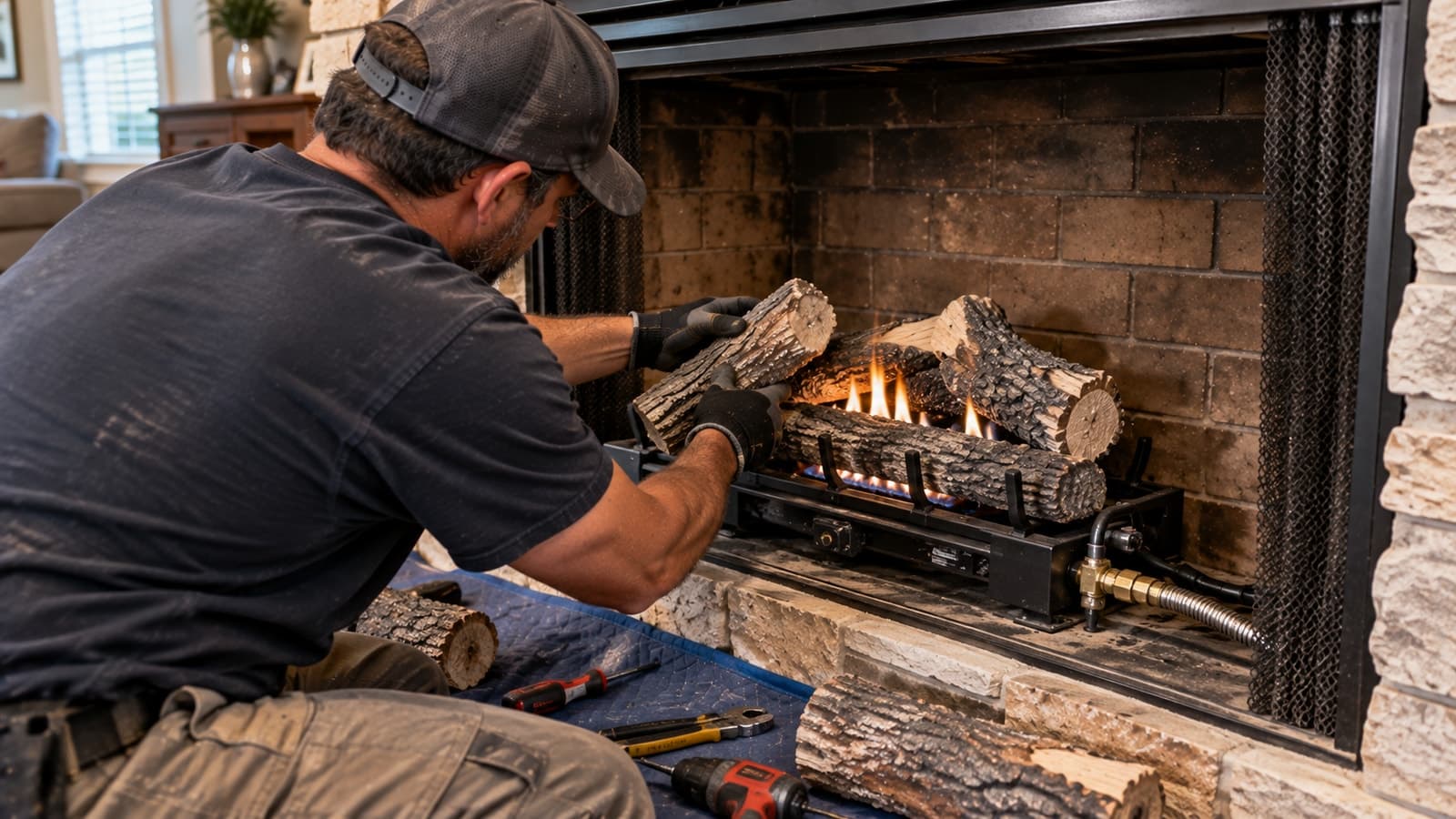
After any suspected leak has been cleared by the utility, a qualified gas technician checks the connector, fittings and valve with instruments, not a flame. They look at the burner, pilot and log or media placement, check the flame appearance, and look at the glass seal and vent path. On vent-free units the oxygen depletion sensor and pilot are part of that check. You receive the findings before any repair is made.
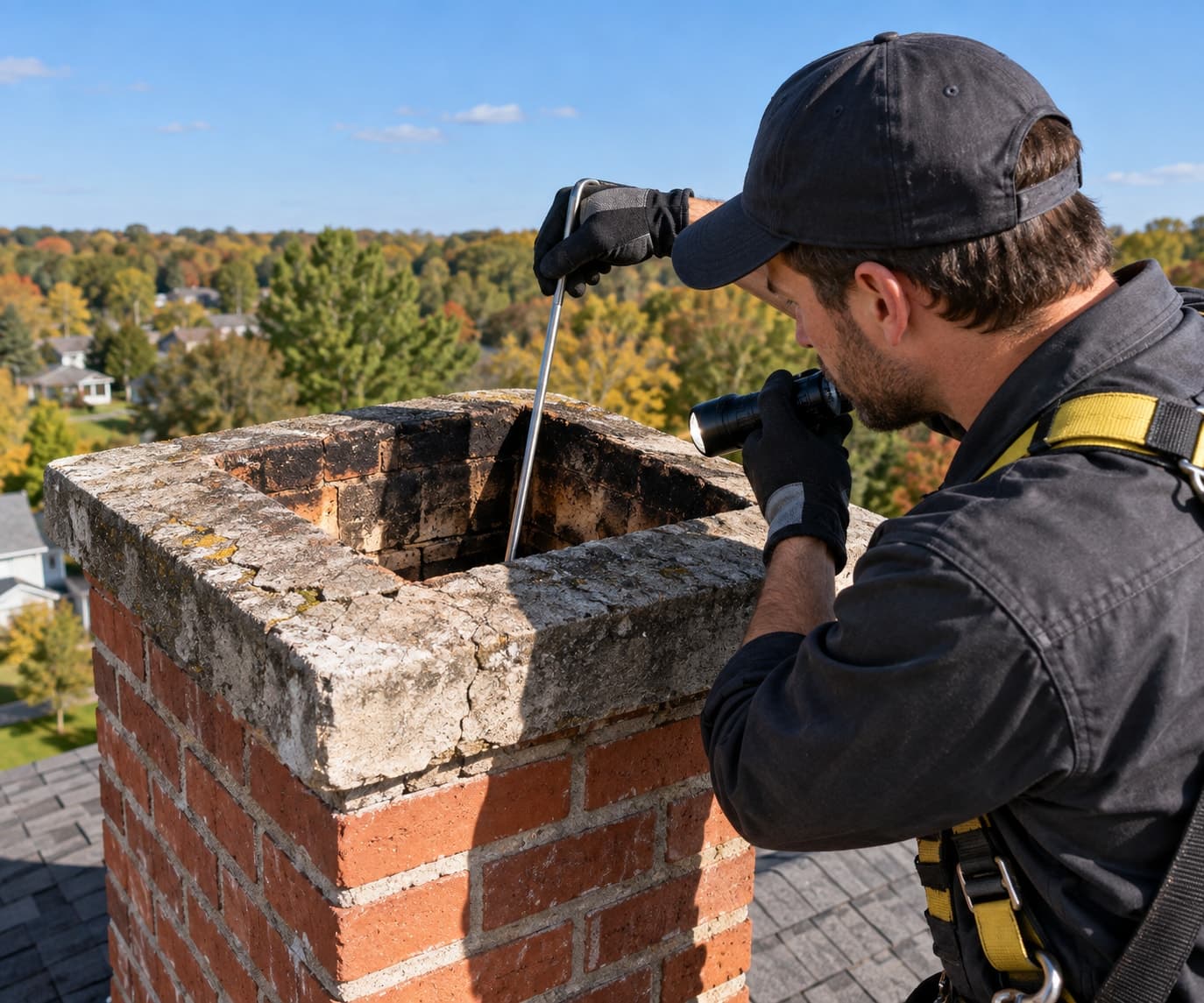
Routine smells and the yearly clean-and-check fall under gas fireplace service; failed parts, leaks at the unit and burning smells fall under gas fireplace repair. If the smell is musty or appears after storms, a chimney and vent inspection looks at the termination and chase.
After the smell: which service
| What caused it | Where it’s fixed |
|---|---|
| Leak at a fitting, connector or valve (after the utility has cleared it) | gas fireplace repair |
| Burning dust or new-unit smell that won’t fade | a gas fireplace service visit |
| Exhaust smell from a blocked or damaged vent | a vent and chimney inspection |
A rotten-egg smell is an emergency first and a repair second. For carbon monoxide warning signs, see fireplace carbon monoxide. A burning or exhaust smell with soot on the glass points to soot and incomplete combustion instead.
References (7)
Facts and figures on this page come from these references.