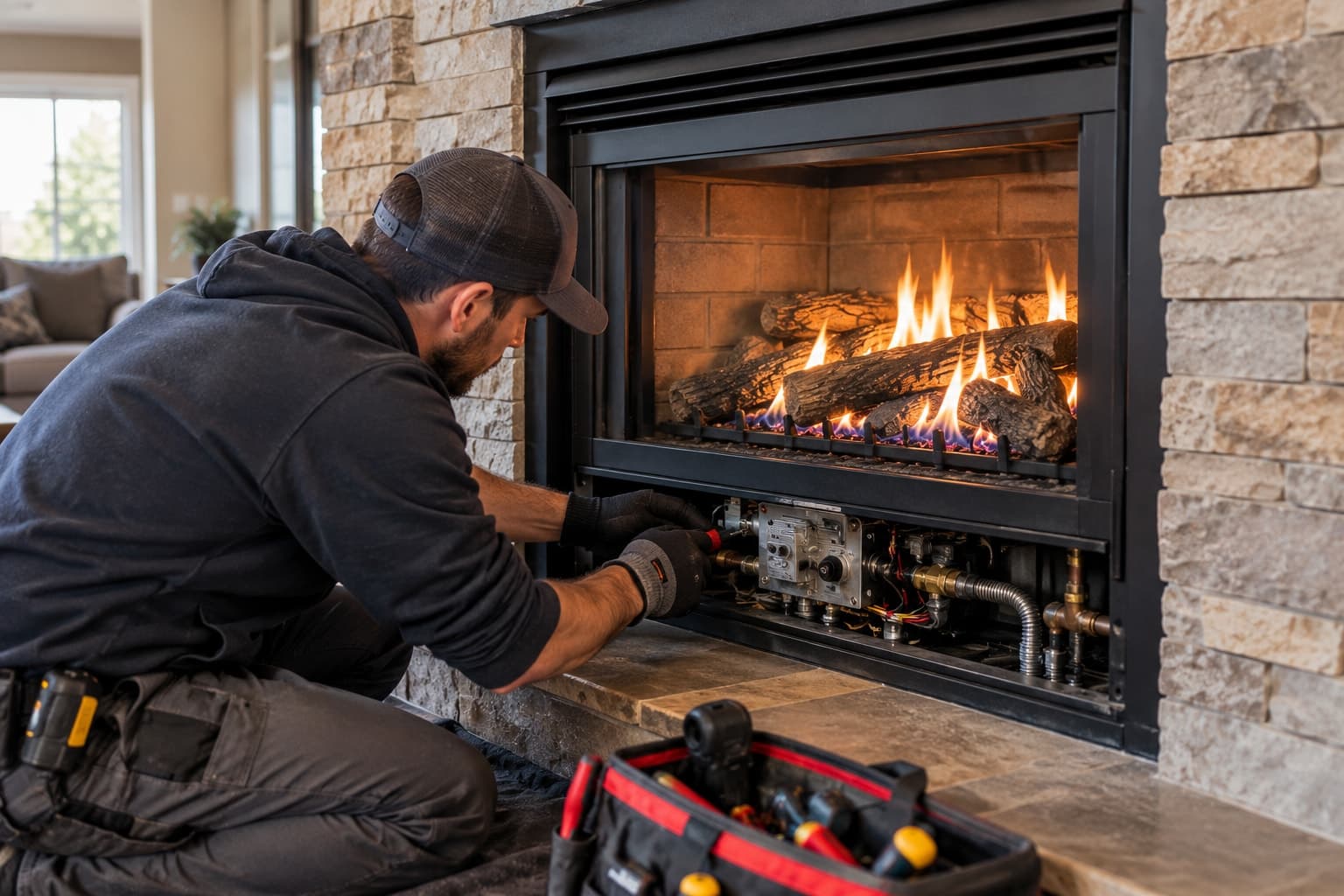
Normal yellow vs a combustion problem
| Feature | Probably normal | Needs service |
|---|---|---|
| Flame color | Yellow-orange tips over blue bases, same as when new | Dark orange, dull or tall, lazy flames that changed over time |
| Soot | None | Black film on glass, logs, hood or the wall above |
| Flame shape | Steady, dancing within the log set | Lifting off the burner, rolling out of the opening, or impinging on logs |
| Smell | Slight smell on first light of the season | Persistent exhaust or burning smell |
Flame color
- Probably normal
- Yellow-orange tips over blue bases, same as when new
- Needs service
- Dark orange, dull or tall, lazy flames that changed over time
Soot
- Probably normal
- None
- Needs service
- Black film on glass, logs, hood or the wall above
Flame shape
- Probably normal
- Steady, dancing within the log set
- Needs service
- Lifting off the burner, rolling out of the opening, or impinging on logs
Smell
- Probably normal
- Slight smell on first light of the season
- Needs service
- Persistent exhaust or burning smell
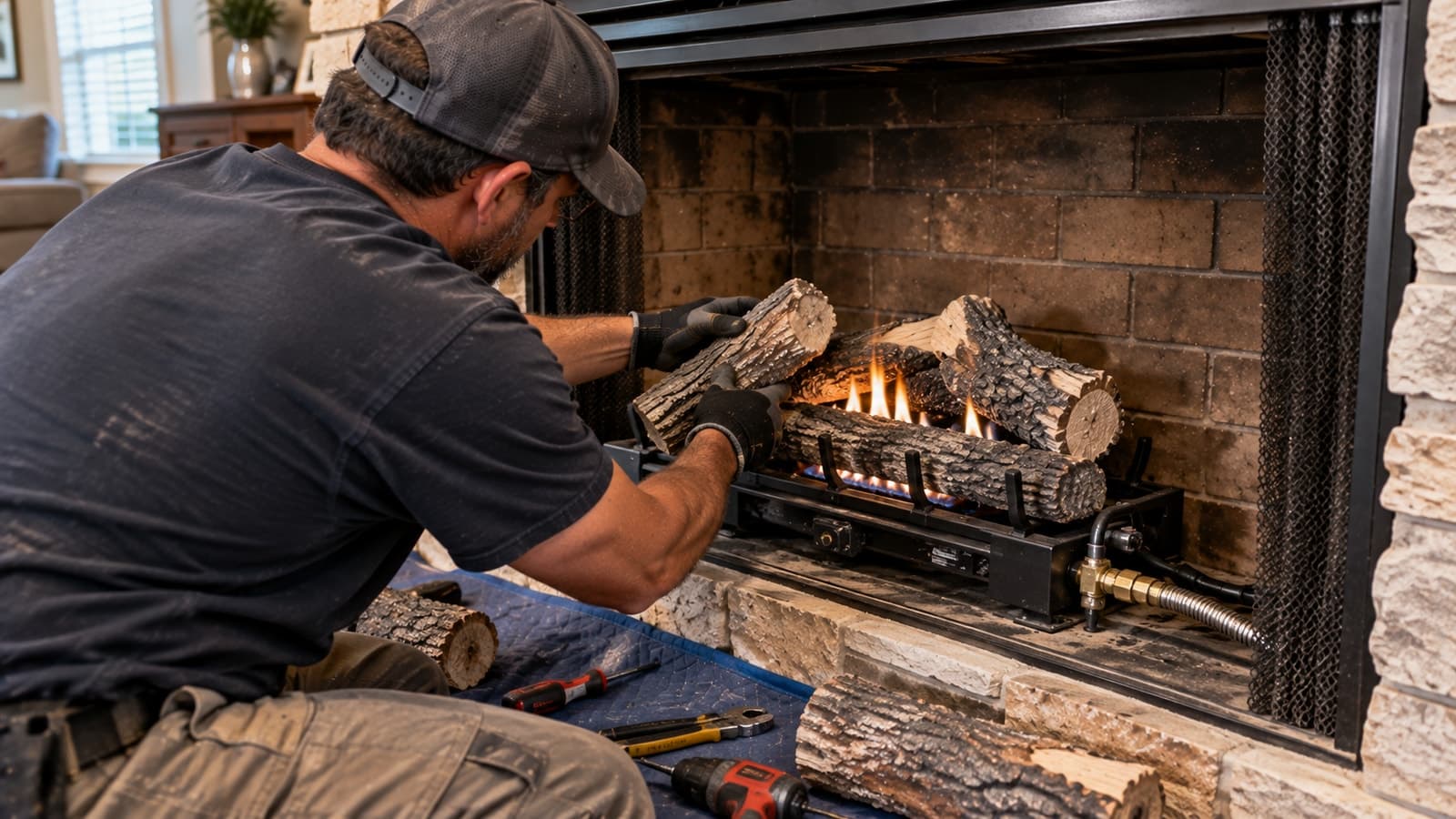
Look at the photos in your owner’s manual or on the manufacturer’s site: they show what the flame is supposed to look like. If yours now looks different, and especially if there is soot, something has changed.
Possible causes
01Logs, embers or rocks out of position
- What you may notice
- Soot started after cleaning, moving or rearranging the logs; flames hit the underside of logs.
- How it’s confirmed
- Setting logs, glowing embers and media back to the exact diagram in the manual. Flames striking a log make soot.
02Blocked air shutter or burner ports
- What you may notice
- Soot builds up after an idle season; flame looks lazy and orange.
- How it’s confirmed
- Cleaning the air shutter, burner ports and pilot hood. Spiders and dust are common after months unused.
03Wrong fuel setup
- What you may notice
- Problems since a propane conversion or a new gas supply.
- How it’s confirmed
- Confirming the orifices and valve are set for the fuel on the rating plate and checking pressures.
04Venting problem
- What you may notice
- Soot plus exhaust smell, shutoffs, or a damaged termination cap outside.
- How it’s confirmed
- Checking the vent or chimney for blockage, disconnection and damage. See a blocked chimney.
05Glass seal or gasket failure (direct-vent)
- What you may notice
- Soot along one edge of the glass; glass loose or cracked.
- How it’s confirmed
- Checking the gasket and glass seating. See cracked fireplace glass.
06Damper closed on gas logs
- What you may notice
- Soot on the fireplace face and smoke smell with gas logs in a wood-burning fireplace.
- How it’s confirmed
- Confirming the damper is open or clamped open as the log instructions require.
What homeowners can safely do
- Turn the fireplace off and let it cool.
- Test your carbon monoxide alarms. The CPSC recommends them on every level and outside sleeping areas.
- Take photos of the flame (if you saw it) and of the soot pattern for the technician.
- If you recently moved or cleaned the logs, compare their position with the diagram in the manual, but leave it off until it has been checked.
- Don’t scrub soot off the glass and relight. The soot will come back and the underlying problem stays.
- For a gas-log set in a wood-burning fireplace, confirm the damper is open.
Red flags
- A CO alarm, or headaches, dizziness or nausea when the fireplace runs.
- Flames rolling out of the fireplace opening.
- Soot on the wall or ceiling above the fireplace.
- A vent-free unit producing soot. Stop using it.
- A gas smell. Leave the home and call from outside.
What a technician checks
Flame and logs
The flame is compared with the manufacturer’s pattern and the logs are set to the diagram.
Burner and pilot
Air shutter, burner ports, orifice and pilot are cleaned and checked.
Fuel and pressure
The fuel type and pressures are checked against the rating plate.
Venting and seal
The vent or chimney, termination and glass gasket are inspected before the unit goes back into use.
Which service stops the soot
| Cause confirmed | Where it’s fixed |
|---|---|
| Logs out of position, dirty burner or air shutter | a gas fireplace service visit |
| Wrong orifice, valve or pressure problem | gas fireplace repair |
| Blocked or damaged vent | a vent and chimney inspection |
| Failed glass gasket | fireplace glass replacement |
Cleaning the glass without fixing the cause brings the soot back; routine care is covered in gas fireplace maintenance. A white haze is a different, usually harmless film: see cloudy gas fireplace glass.
References (2)
Facts and figures on this page come from these references.