Smell gas? Leave first, troubleshoot never
A rotten-egg smell near a gas fireplace means gas may be escaping. Get everyone out, don’t switch anything on or off, and call the gas utility or 911 once you are outside. If a carbon monoxide alarm sounds, get into fresh air and call 911. Nothing else on this page applies until that is resolved.
First, which kind of fireplace do you have?
Fireplace troubleshooting depends on the type. A masonry fireplace has a brick firebox built into a brick chimney. A factory-built (prefab) wood fireplace is a metal box, usually lined with refractory panels, connected to a metal flue inside a framed chase. A gas fireplace may be a sealed direct-vent unit with a glass front, gas logs set into a wood-burning firebox, or a vent-free unit. Gas controls and wood-burning parts fail in very different ways, so the table below marks which is which.
Fireplace not working? Match the symptom
| What you notice | Most likely component | First safe check | Read more |
|---|---|---|---|
| Smoke rolls into the room, or the fire won’t draw | Damper not fully open, a cold or restricted flue, or the house pulling air down the chimney | Confirm the damper is all the way open; crack a nearby window before lighting; try a smaller fire | Why smoke comes into the room |
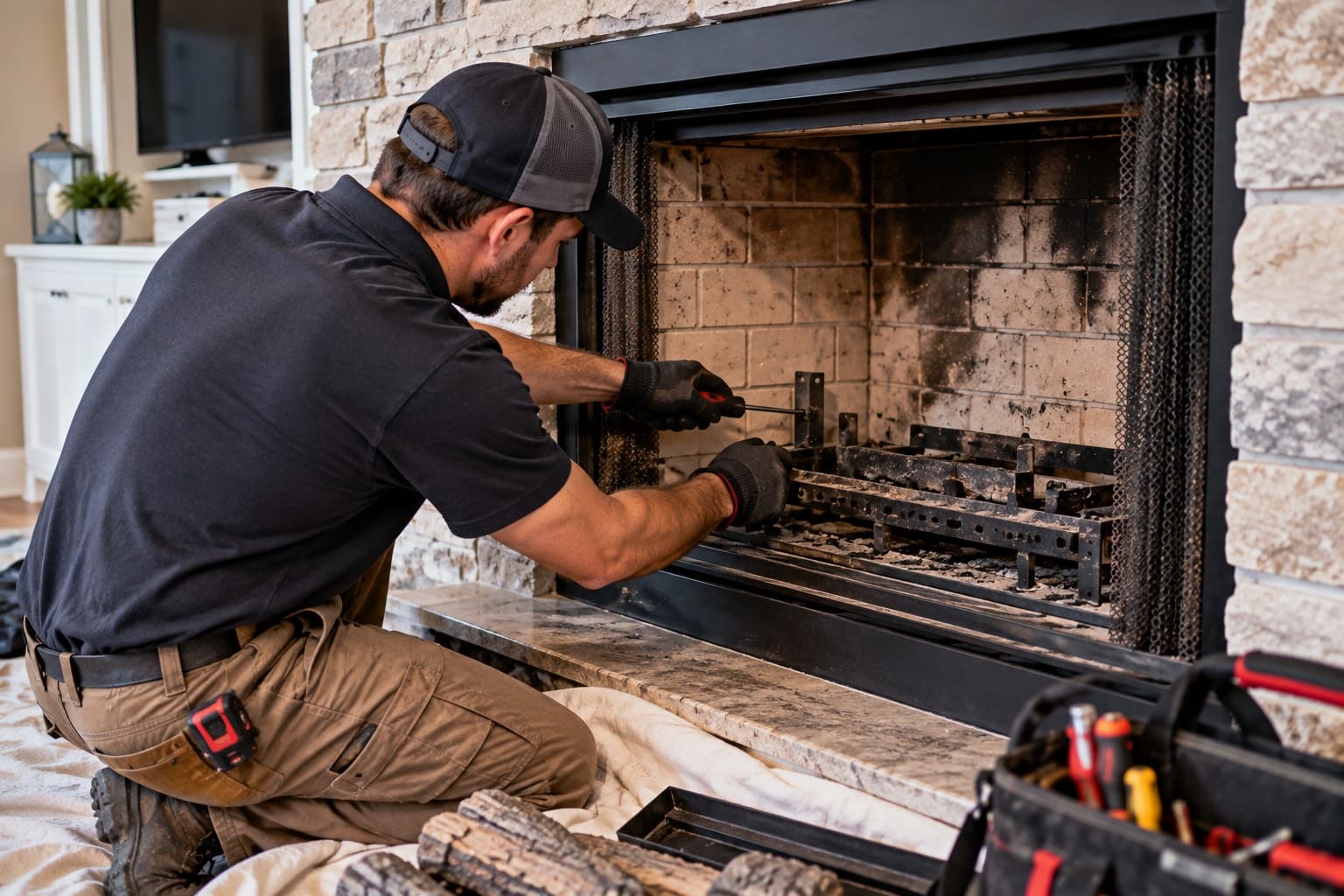
| Cracks, gaps or missing pieces in the firebox lining | Firebrick and mortar joints (masonry) or refractory panels (factory-built) | With the fireplace cold, look for gaps deep enough to show metal, framing or the back of the chimney | Assessing a cracked firebox |
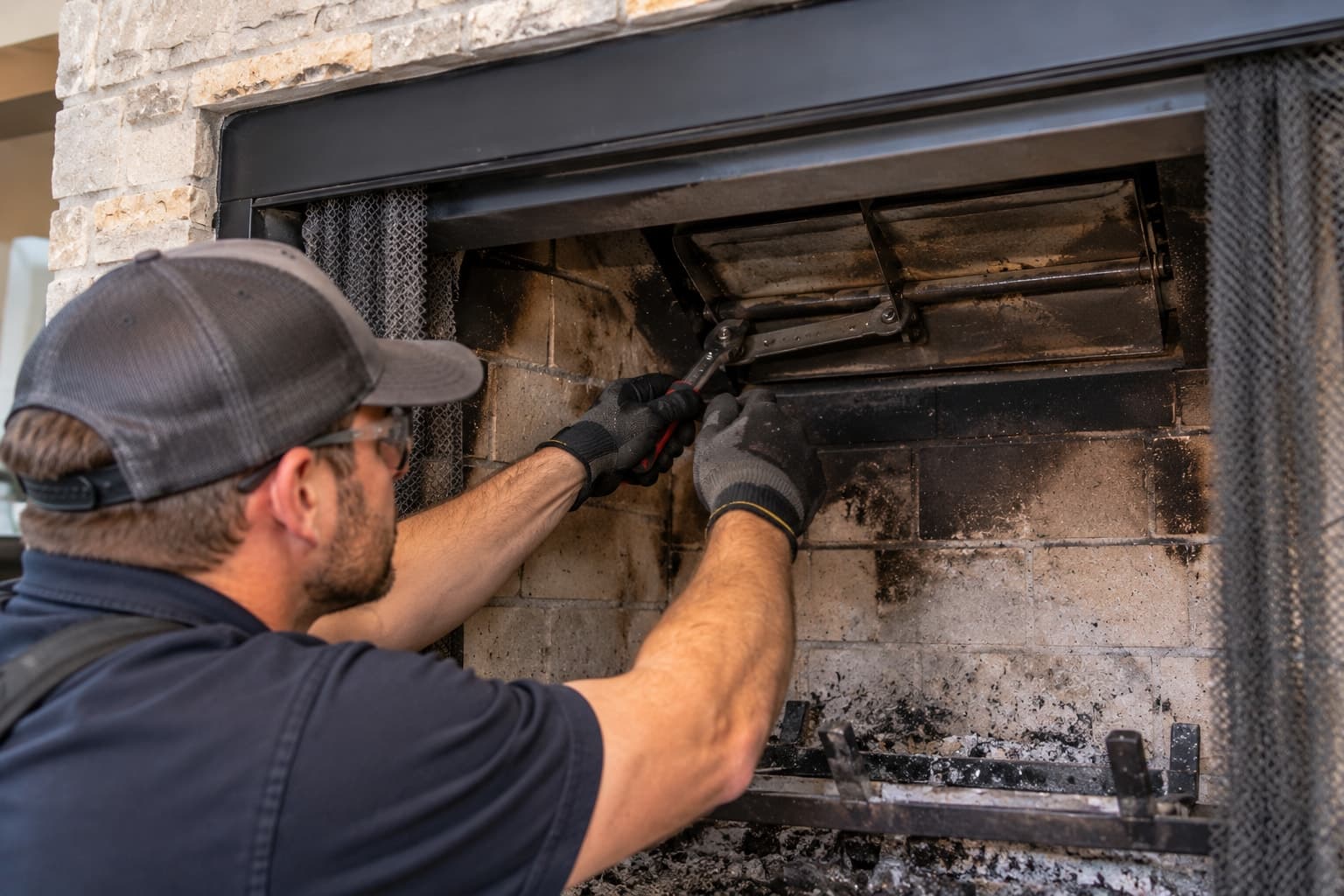
| Damper won’t open, won’t close or the handle spins | Rusted or warped damper plate, broken linkage | Don’t force it; look up with a flashlight for rust flakes or a displaced plate | Freeing a stuck damper |
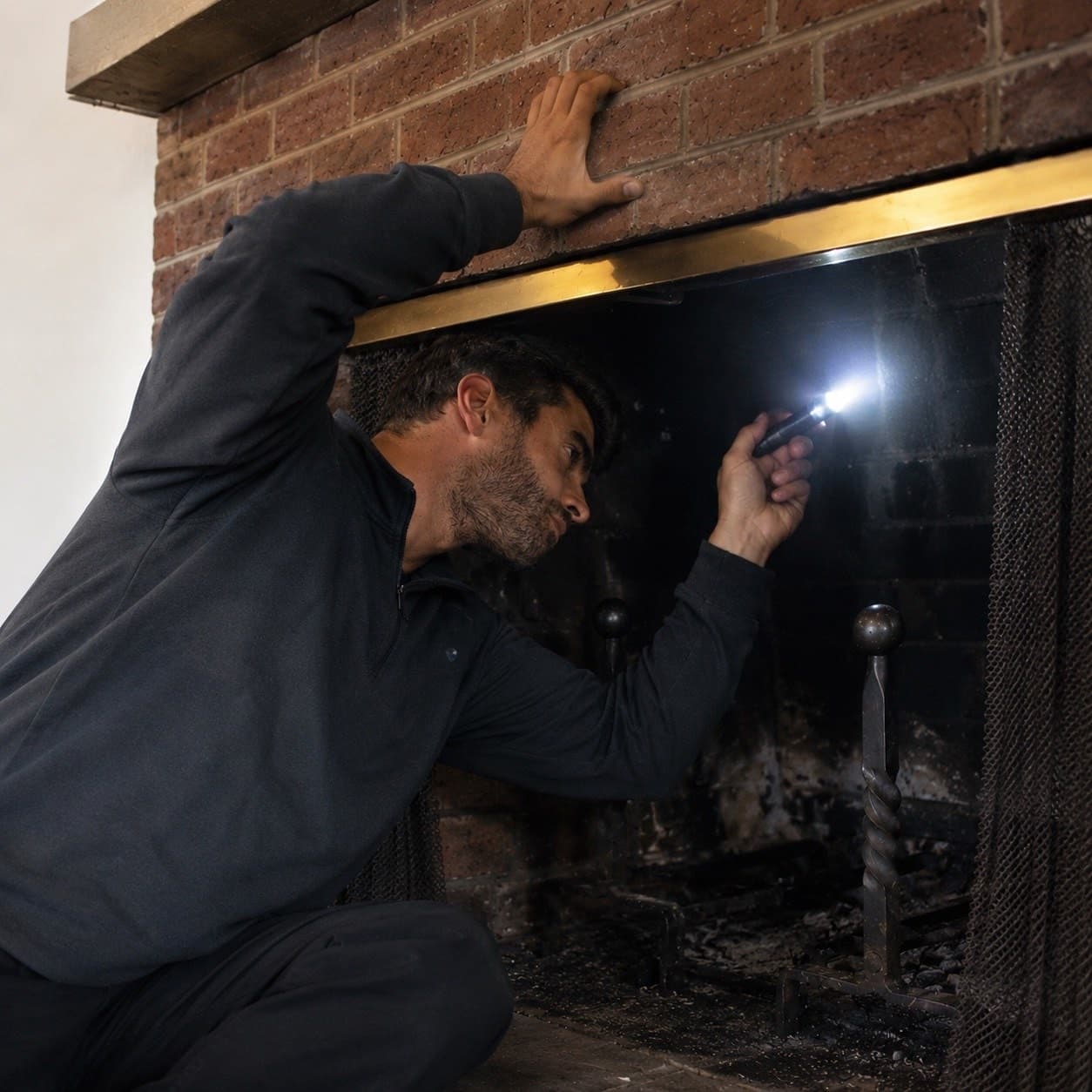
| Not sure it’s safe: new house, years unused, or after a storm | The whole system, from firebox to cap | Look up the flue with a flashlight for daylight, debris or nests; test the smoke and CO alarms | Is my fireplace safe to use? |
| Cracked glass on the fireplace doors or on a gas fireplace front | Door glass, or the sealed glass panel of a gas unit | Turn it off and let it cool; don’t tape or seal the crack | Using a fireplace with cracked glass |
| Glass doors sag, bind or won’t latch | Hinges, latches, mounting or a heat-warped frame | With the fireplace cold, see whether the whole frame shifts when you pull a door | Doors that won’t close |
| Rust, holes or warped metal inside a factory-built fireplace | The metal firebox, usually fed by water from the chase top | Look for daylight or bare metal behind the panels; note the model on the label | Repair or replace a rusted prefab unit |
| Air, humidity or odors coming out of the fireplace when it isn’t lit | An open, leaky or missing damper | Hold a tissue at the opening with the damper closed; leave any gas-log damper clamp in place | Stopping air through an unused fireplace |
| Electric fireplace dead, not heating or shutting itself off | Power, settings, overheat protection or controls | Check the outlet and breaker, the heat setting and the vents; unplug it if it smells hot | When an electric fireplace stops working |
| Gas: won’t light, shuts off, soot, low flame, noises or a gas smell | Gas supply, ignition, burner or venting | Gas smell: leave and call from outside. Otherwise check remote batteries and settings only | Gas fireplace problems by symptom |
Stop using it now, or can it wait?
| Urgency | Signs | What to do meanwhile |
|---|---|---|
| Leave and call from outside | Rotten-egg gas smell; CO alarm sounding; smoke or heat coming from a wall or ceiling near the fireplace | Get everyone out. Call the gas utility or 911 from outside. Don’t go back in until responders say it is safe. |
| Turn it off until checked | Smoke that pours in and won’t clear; cracks that expose metal or framing; a damper stuck shut; pieces of mortar or panel on the hearth; a gas pilot that won’t stay lit after one proper relight; black soot on gas-fireplace glass | Let it cool, close glass doors, and don’t relight or force parts. Note what happened and when. |
| Book an appointment | Fine surface crazing on firebrick; a damper that sticks but still opens fully; a puff of smoke only when lighting a cold flue; a gas unit that simply won’t start after the summer with no odor | Use it only if it behaves normally, or leave it off until the visit. The fireplace will be easier to assess cold. |
How fireplace problems connect
Wood-burning fireplace problems mostly come down to two things: airflow and water. A damper that only opens halfway, a flue narrowed by debris, or a tight, AC-cooled house can all starve the fire of draft, and the smoke goes the only way it can, into the room. Water arriving from the top of the chimney rusts the damper until it sticks and soaks firebrick or refractory panels so they crack faster under heat. If you are seeing rust along with a fireplace problem, the source is probably one of the chimney problems that start at the top, and repairing the firebox without stopping the water only buys time.
Gas fireplace problems follow a chain instead: gas supply, then pilot or igniter, then the flame sensor (thermocouple or thermopile), then the valve and burner. Most no-start problems stop at an early link: dead batteries, a closed valve, a pilot that went out during an outage or after months of disuse. Anything beyond the batteries, the switch and the manufacturer’s relight procedure belongs to a gas fireplace technician: valves, pilot assemblies and burners are covered by gas fireplace repair, and gas-line work is a separate job from appliance service, and we carry that out too. The chimney or vent the fireplace uses still needs to be clear and intact.
Factory-built fireplace and chimney chase, cutaway
- 1Termination cap. The listed cap on top of the metal chimney pipe.
- 2Storm collar. Sealed band around the pipe that sheds water onto the chase cover.
- 3Chase cover. Sheet-metal top of the framed chase. Should slope, with a raised collar and drip edge.
- 4Chase. The wood-framed box, finished in siding or stucco, that encloses the chimney pipe.
- 5Chimney pipe. Listed metal flue sections made for this specific fireplace model.
- 6Fireplace unit. The factory-built metal firebox, tested and listed as one system with its chimney.
- 7Refractory panels. Molded liner panels lining the unit's firebox. Replaced only with listed parts.
Masonry vs factory-built: why the fix differs
| Feature | Masonry fireplace | Factory-built fireplace |
|---|---|---|
| Firebox lining | Firebrick set in heat-resistant mortar | Refractory panels held in a metal box |
| Damper | Cast-iron throat damper above the firebox, or a top-sealing damper at the flue | Built into the unit; parts come from the manufacturer |
| Cracks mean | Surface crazing is common; open joints and loose bricks need firebrick and joint repair | Judged against the manufacturer’s limits; worn panels get refractory panel replacement |
| Replacement parts | Built on site from masonry materials | Must be listed for that model; the model tag on the unit matters |
| When repair stops making sense | Rarely; most masonry fireboxes can be rebuilt | Rusted-through boxes or discontinued parts may mean replacing the prefab unit |
Firebox lining
- Masonry fireplace
- Firebrick set in heat-resistant mortar
- Factory-built fireplace
- Refractory panels held in a metal box
Damper
- Masonry fireplace
- Cast-iron throat damper above the firebox, or a top-sealing damper at the flue
- Factory-built fireplace
- Built into the unit; parts come from the manufacturer
Cracks mean
- Masonry fireplace
- Surface crazing is common; open joints and loose bricks need firebrick and joint repair
- Factory-built fireplace
- Judged against the manufacturer’s limits; worn panels get refractory panel replacement
Replacement parts
- Masonry fireplace
- Built on site from masonry materials
- Factory-built fireplace
- Must be listed for that model; the model tag on the unit matters
When repair stops making sense
- Masonry fireplace
- Rarely; most masonry fireboxes can be rebuilt
- Factory-built fireplace
- Rusted-through boxes or discontinued parts may mean replacing the prefab unit
If a factory-built unit is showing its age, our guide on how many years a prefab fireplace usually lasts explains what wears out first. Smoke problems that remain after the damper and flue are cleared sometimes trace to the rough masonry above the damper, which smoke chamber repair addresses on brick fireplaces. When several symptoms show up at once, a fireplace repair assessment or a full inspection is quicker than chasing them one by one.
Whatever kind you have, a working carbon monoxide alarm is the backstop: the CPSC recommends CO alarms on every level of the home and outside sleeping areas.
Symptom guide, service or local page?
The guides above explain what a symptom means; the repair sits on a service page: fireplace repair for wood-burning and factory-built units, firebox repair for cracked firebrick, gas fireplace repair and electric fireplace repair for those appliances. Local pages cover the same fireplace work city by city, for example fireplace repair around Orlando, Lake Mary fireplace service or fixing fireplaces in Clermont.
References (3)
Facts and figures on this page come from these references.