Why there’s no single number
A factory-built fireplace is listed to UL 127, the safety standard for factory-built fireplaces (Intertek overview). That listing tells you the design passed fire-safety testing. It is not a service-life rating, and no code or standard assigns these units a number of years.
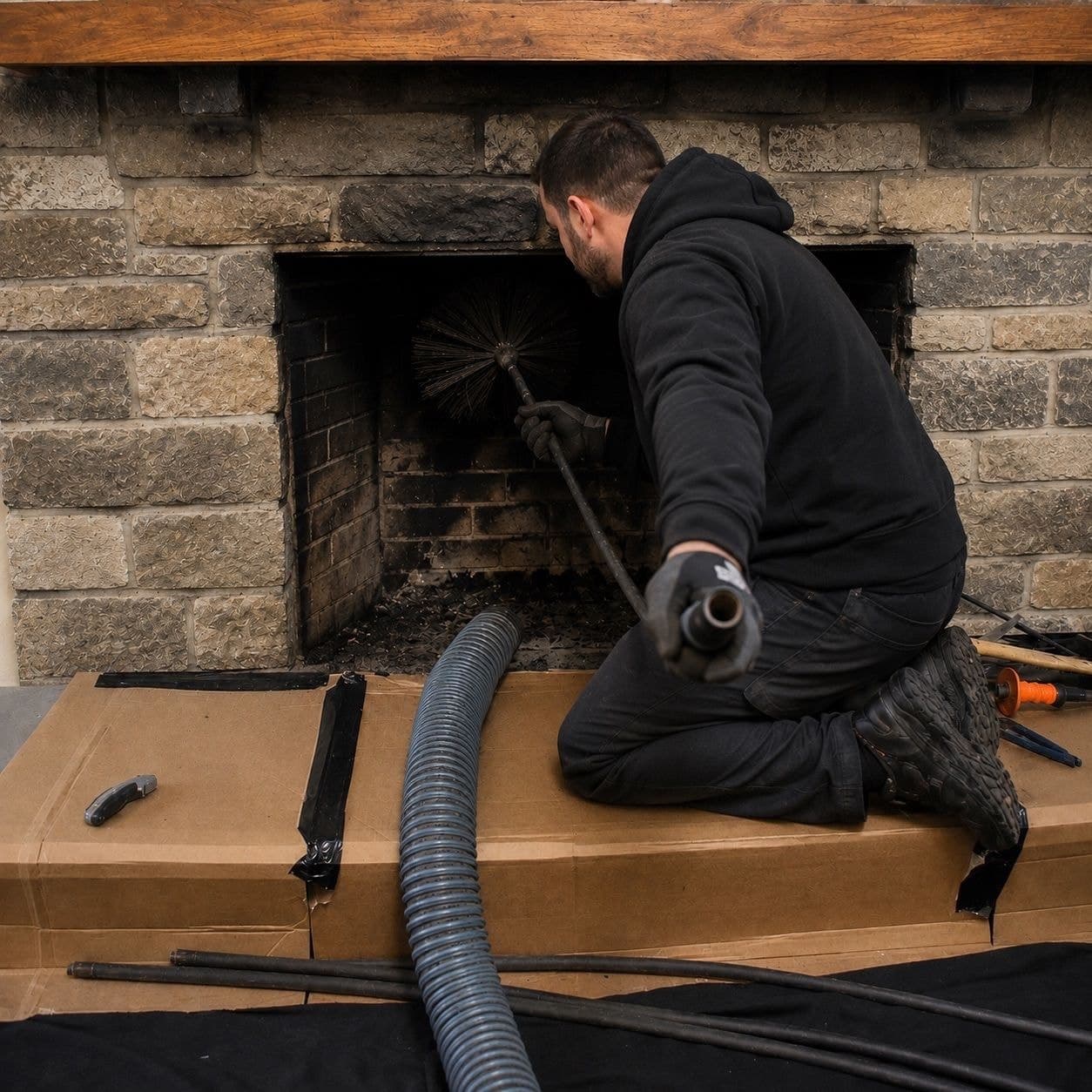
The figures you see online come from chimney companies. Several put a typical lifespan at roughly 20 to 30 years (ChimneyTek; Swede Sweep). Treat that as an industry rule of thumb, not a tested figure. One of those same sources reports seeing systems that needed replacing after about 15 years and well-kept systems still working past 40. The spread is the point: two identical units can age very differently.
The useful question
Instead of “how old is it?”, ask three things: Is the metal firebox sound? Are the panels and flue intact? Can listed parts for this model still be bought? Those answers decide whether the fireplace has years left.
What shortens a prefab fireplace’s life
| Cause | What it does to the unit | What prevents it |
|---|---|---|
| Water coming down the chimney | Rusts the firebox top, damper and smoke shelf; stains and weakens refractory panels; corrodes chimney sections from the inside | A sound, sloped chase cover, a sealed storm collar and the correct termination cap |
| Overfiring | Very large or very hot fires can warp the firebox, crack panels and distort chimney sections | Moderate fires sized to the firebox, as the owner’s manual describes |
| Burning the wrong fuel | Trash, treated or painted wood, pallets and large quantities of paper burn hot and unevenly and leave corrosive residue | Dry, seasoned firewood only |
| Ignoring cracked panels | Once a panel is broken through, heat reaches the metal box directly | Replacing panels with the manufacturer’s parts before the next fire |
| Non-listed accessories | Oversized grates, unapproved doors or blocked louvers change how the unit handles heat | Using only accessories the manual lists for the model |
| A chimney fire | Can distort or separate metal chimney sections and damage the unit | Inspection and cleaning when deposits build up; an inspection after any suspected chimney fire |
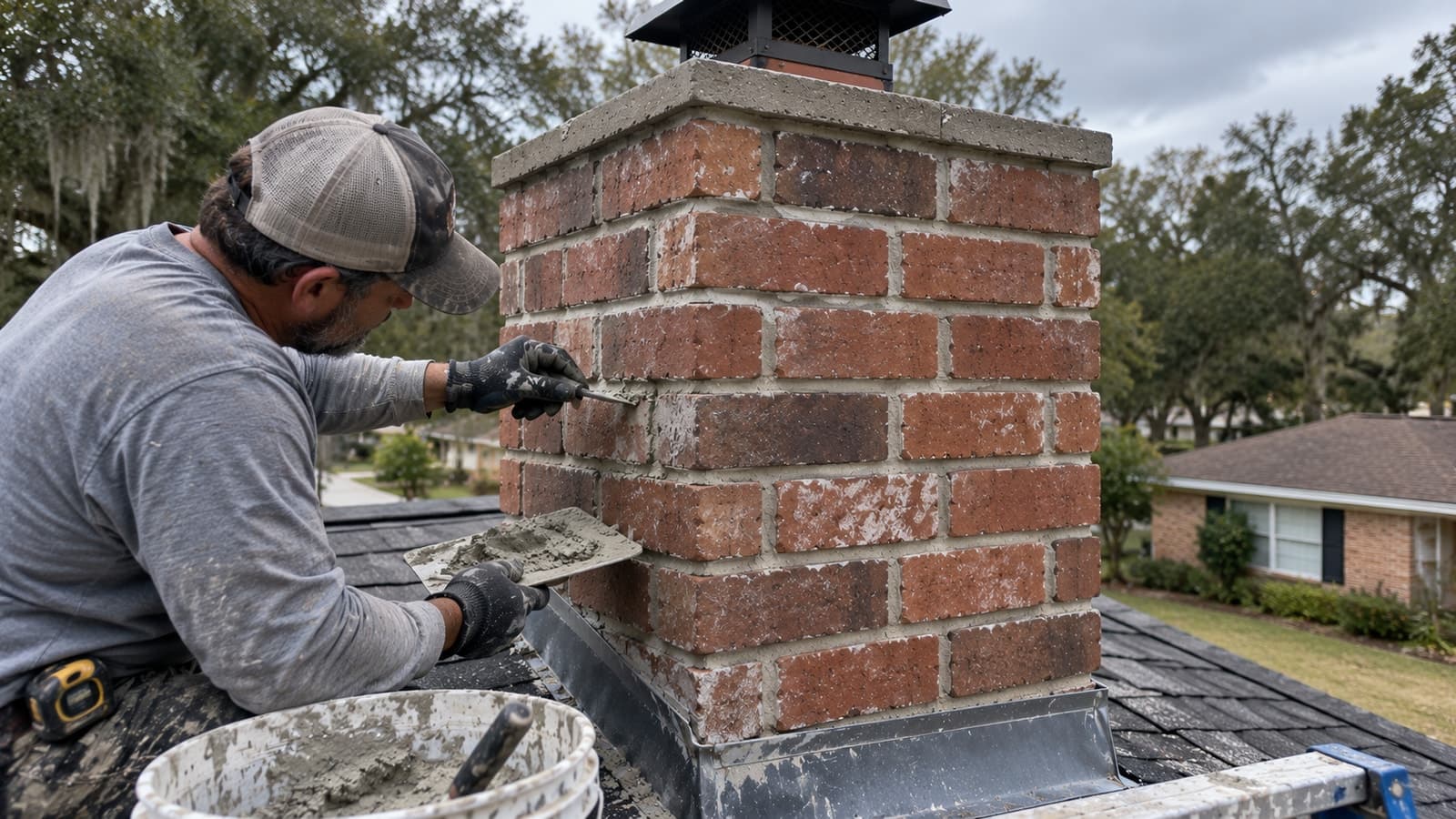
In Central Florida, the first row matters most. Most units here see few fires a year, so heat wear is modest. Water does not take the year off. A rusted chase cover or a storm collar that lost its sealant can drip into the chimney through several rainy seasons before anyone notices, and that slow corrosion can end a unit’s life years early. The top of the chase is covered in detail on the chase cover replacement page.
What extends it
Habits that add years
- Fix any water entry at the chase top as soon as it shows up: rust streaks, stains or water in the firebox
- Keep the owner’s manual and a photo of the rating plate with your house records
- Burn small to moderate fires of dry hardwood; never use the fireplace as an incinerator
- Replace cracked panels, damaged grates or doors only with parts listed for your model
- Keep the louvers clear, and don’t add aftermarket blowers or doors unless the manufacturer lists them
- Have the system inspected once a year, as NFPA 211 calls for, even if you rarely burn
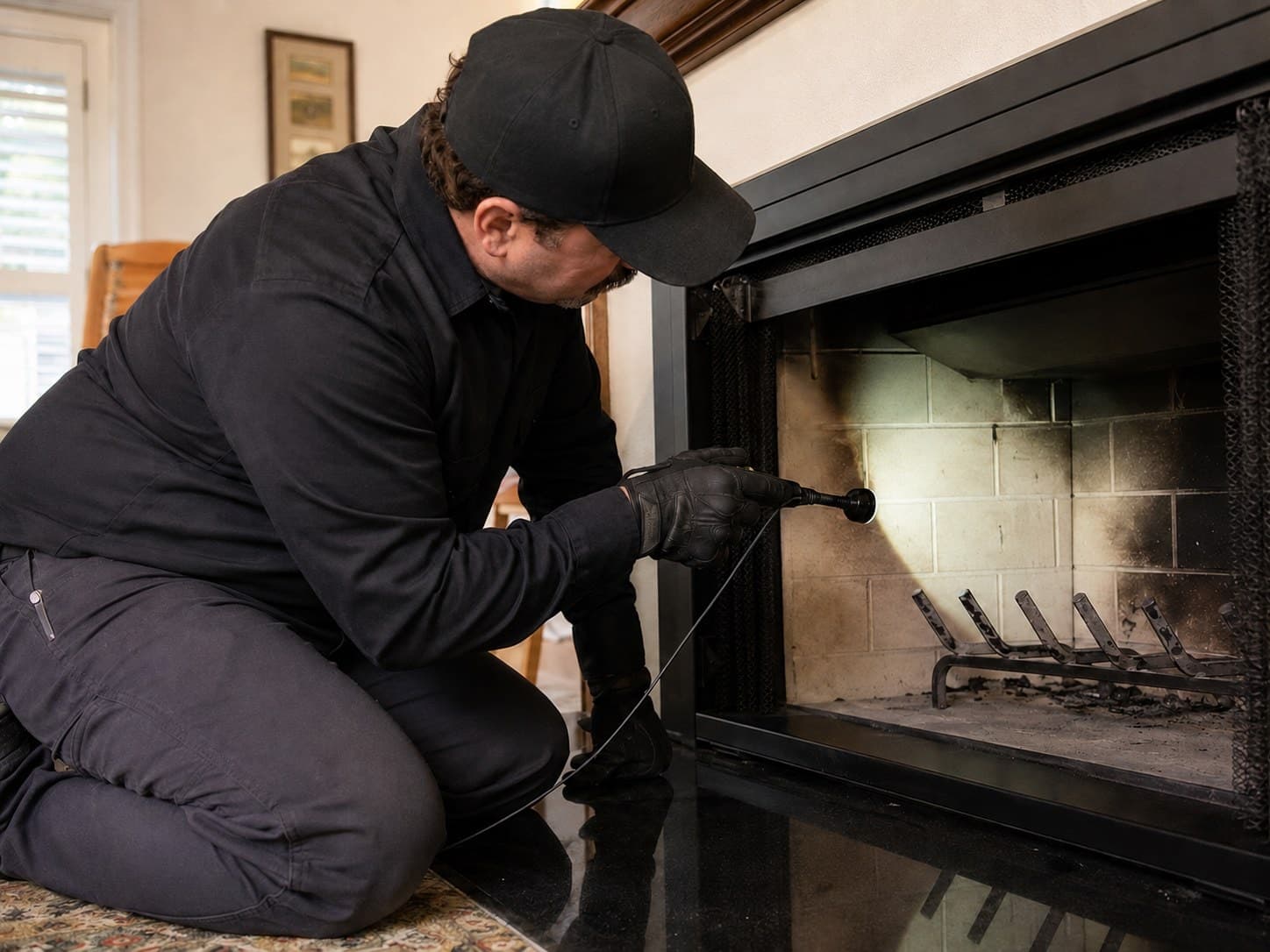
The annual inspection comes from NFPA 211, which calls for chimneys, fireplaces and vents to be inspected at least once a year (Chimneys.com summary of NFPA 211). For a prefab unit, that yearly look is where a failing panel or a wet chase gets caught while it is still a repair.
What about the warranty?
Warranty terms differ by manufacturer, by model and often by component, and they usually depend on the unit having been installed and used as the instructions describe. There is no standard term to quote. If your fireplace came with the house, find the model on the rating plate and read the manufacturer’s current warranty document, or ask the manufacturer directly whether coverage applies to a later owner. Don’t assume a problem is covered, and don’t assume it isn’t.
Signs a prefab fireplace is near the end
What you might notice, and what it usually means
01Rust holes or flaking metal in the firebox
- What you may notice
- Orange scale on the firebox floor or top, pinholes, metal that flexes when pressed
- How it’s confirmed
- Panels and metal box examined with a light; the chase top checked for the water source
02Refractory panels broken through or crumbling
- What you may notice
- Missing chunks, cracks you can see metal through, panels leaning out of their retainers
- How it’s confirmed
- Panels checked against the manufacturer’s crack limits and parts availability for the model
03Warped firebox or chimney sections
- What you may notice
- Bowed walls, a damper that no longer seats, gaps at joints visible above the damper
- How it’s confirmed
- A look along the chimney pipe and a check of its joints and the smoke shelf
04Heat marks near the framing or surround
- What you may notice
- Discolored drywall, trim or mantel near the opening; a hot wall after a fire
- How it’s confirmed
- Clearances and the unit’s outer casing checked against the installation manual
05No readable label and no manual
- What you may notice
- Plate missing, painted over or burned off
- How it’s confirmed
- Attempt to identify the model from the unit’s shape and chimney markings; not always possible
Stop using it until it’s checked
Don’t light a fire if you can see bare metal through a panel, rust holes in the firebox, separated chimney sections or scorch marks near the surround. These are the conditions where a factory-built unit stops keeping heat away from the wood around it. Our guide to whether a fireplace is safe to use walks through the checks.
Can an old prefab fireplace be repaired?
Often, yes. Panels, grates, damper parts, doors, termination caps and chimney sections are all replaceable, provided the parts are ones the unit’s listing allows. The catch is availability. Fireplace brands have been bought, merged and discontinued over the decades, and while some successor companies still supply parts for older models, others don’t. A model whose panels or chimney sections are no longer made can’t be returned to its listed condition, however good the rest of it looks.
Be cautious with “universal” panels or pipe sold as fitting many brands. Unless the manufacturer of your unit approves them, they create an untested combination, which is exactly what a listing is meant to prevent.
Repair or replace: a decision table
| Question | If yes | If no |
|---|---|---|
| Can the unit be identified (plate, manual or records)? | Continue down the list | Parts and clearances can’t be confirmed; replacement is usually the safe path |
| Is the metal firebox free of rust-through and warping? | Continue | Replacement; the box itself can’t be patched |
| Are listed parts for the damaged components still available? | Continue | Replacement, unless the damaged part is non-critical and can be left out of service |
| Is the chimney pipe intact along its length? | Continue | Chimney sections need replacing; if they’re unavailable, the system is replaced |
| Has the water source (chase cover, storm collar, cap) been fixed or can it be? | Repair is reasonable | Fix the water first, or any repair or new unit will face the same problem |
If every answer is yes, a repair usually makes sense; fireplace repair covers what that involves. If the table points to replacement, the prefab fireplace replacement page covers the options: a new listed wood-burning unit, an electric unit, or a listed gas appliance, with gas-line work is a separate job from appliance service, and we carry that out too.
If you think your fireplace is near the end
Stop burning
Leave the damper closed and don’t light it until the condition is known.
Photograph the plate and the firebox
A clear photo of the label, the panels and any rust makes every conversation faster.
Look at the chase top from the ground
Rust streaks below the cover or a sagging cover point to the water source.
Get the system inspected
Ask for the condition of the firebox, panels and chimney pipe, and a straight answer on parts availability for your model.
Decide with the full picture
Compare repair and replacement only once the water source and parts question are answered.
Most of the wear on these units starts at the top, which is why chase cover materials and refractory panels are worth reading next. If the firebox is already rusting, a rusted prefab fireplace covers what can be saved. Prefab units are common in newer subdivisions; fireplace repair around Kissimmee and fireplace repair in Winter Garden describe those homes.
References (5)
Facts and figures on this page come from these references.
- 1Intertek: UL 127 Factory-Built Fireplaces
- 2ChimneyTek: Lifespan of a factory-built fireplace (industry estimate)
- 3Swede Sweep: FAQs about prefab fireplaces (industry estimate)
- 4Chimneys.com: NFPA 211 and your chimney
- 5NFPA 211: Standard for Chimneys, Fireplaces, Vents, and Solid Fuel-Burning Appliances