On this page
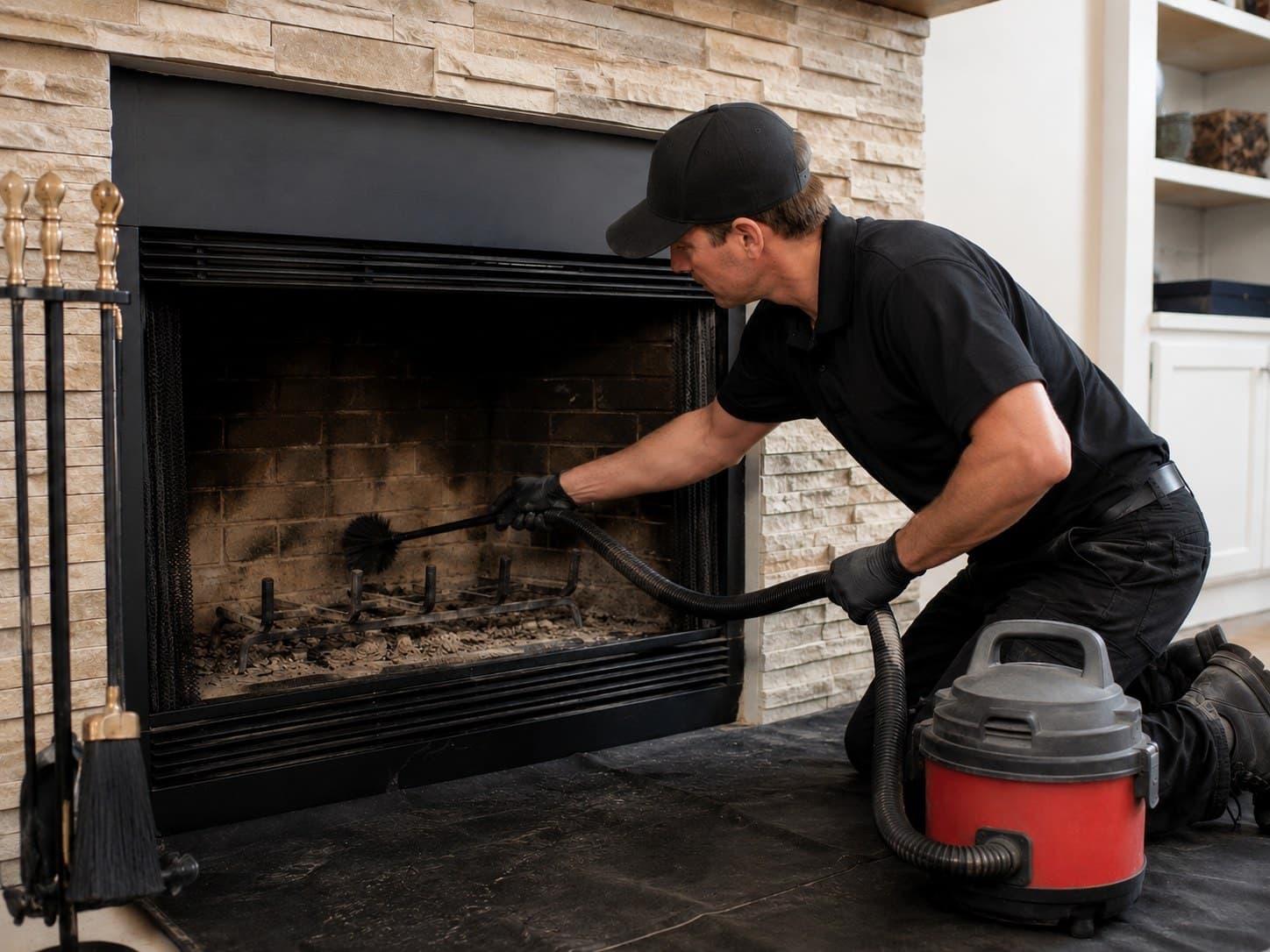
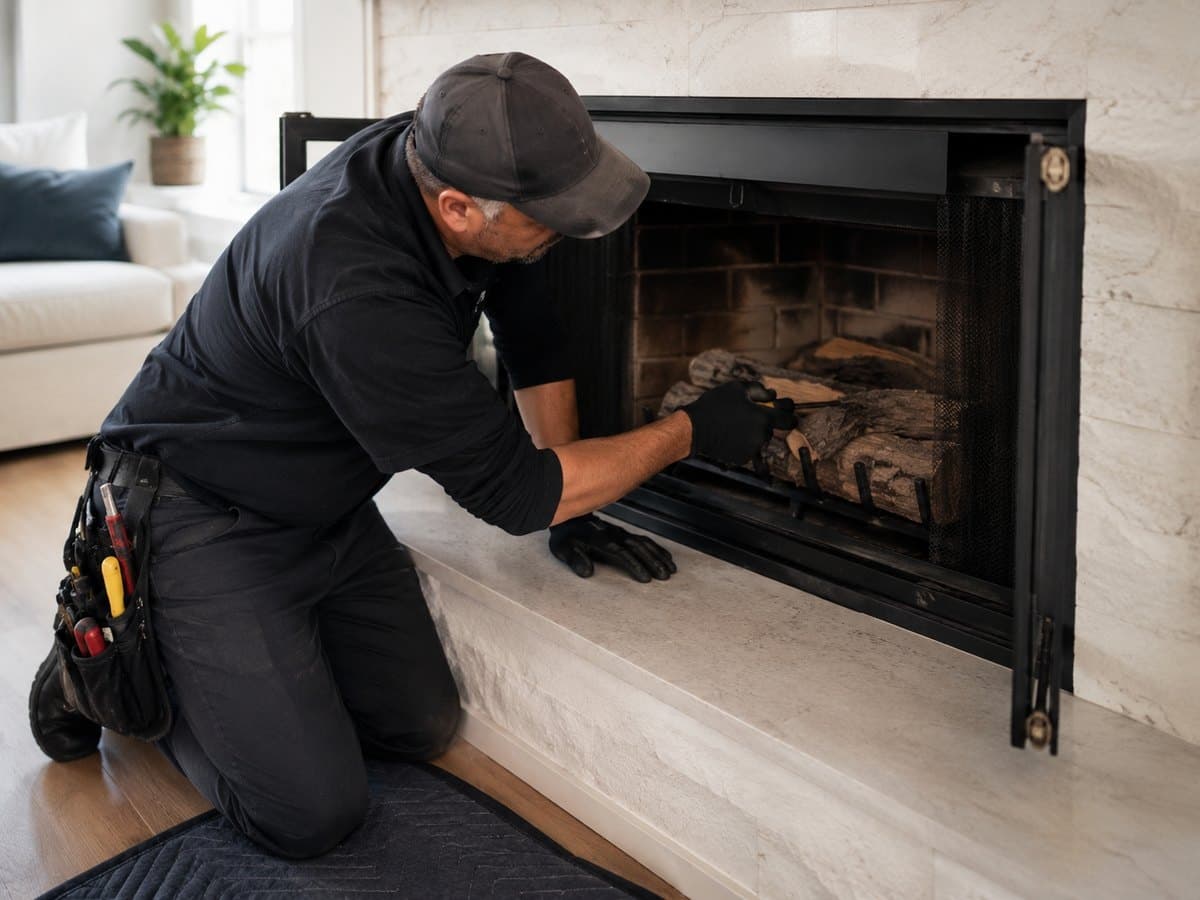
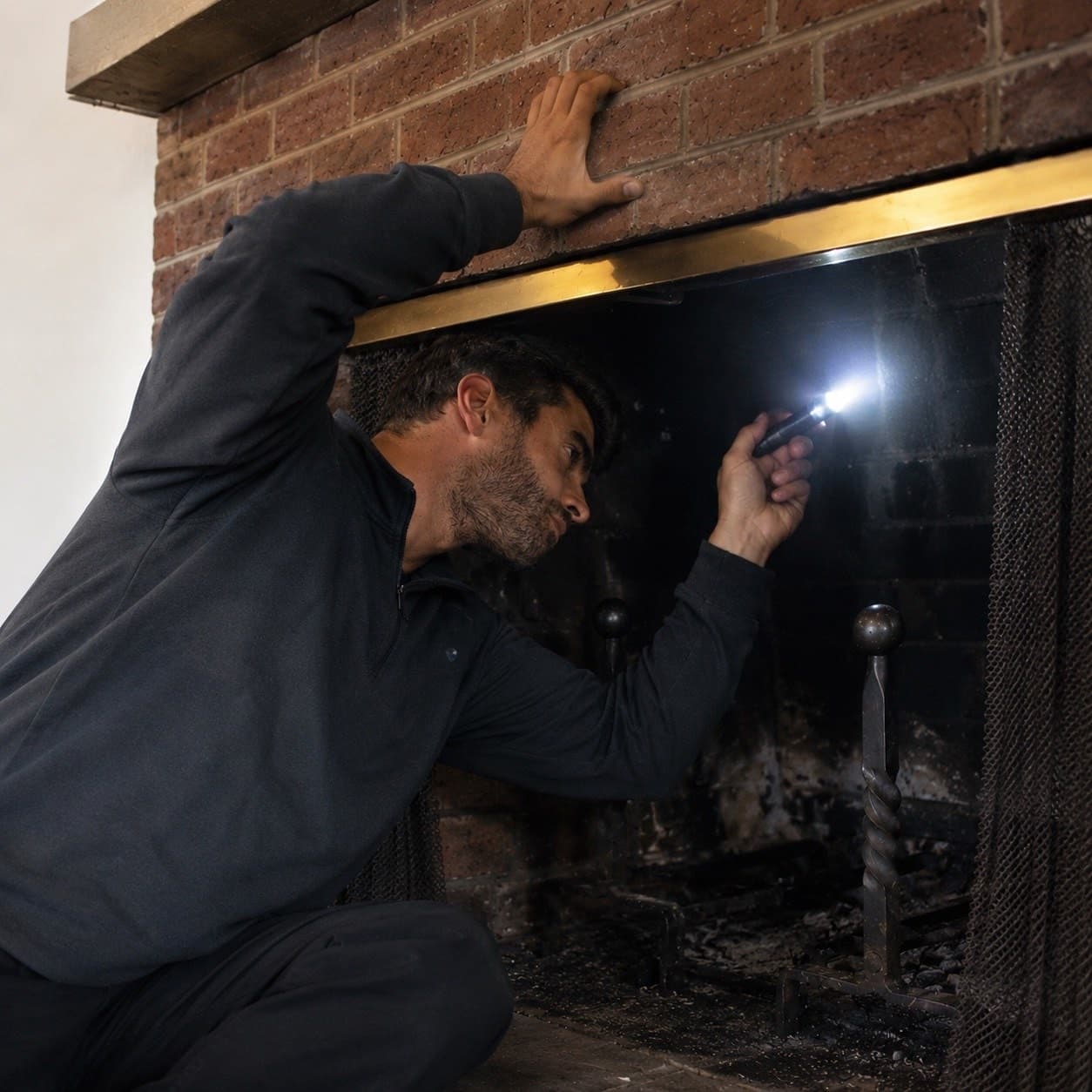
Many Central Florida fireplaces sit unused for years at a time, then get lit on the first cold night or when a new owner moves in. That’s exactly when an inspection matters. Cracks, rust, water damage and missing parts don’t announce themselves until there’s a fire in the box.
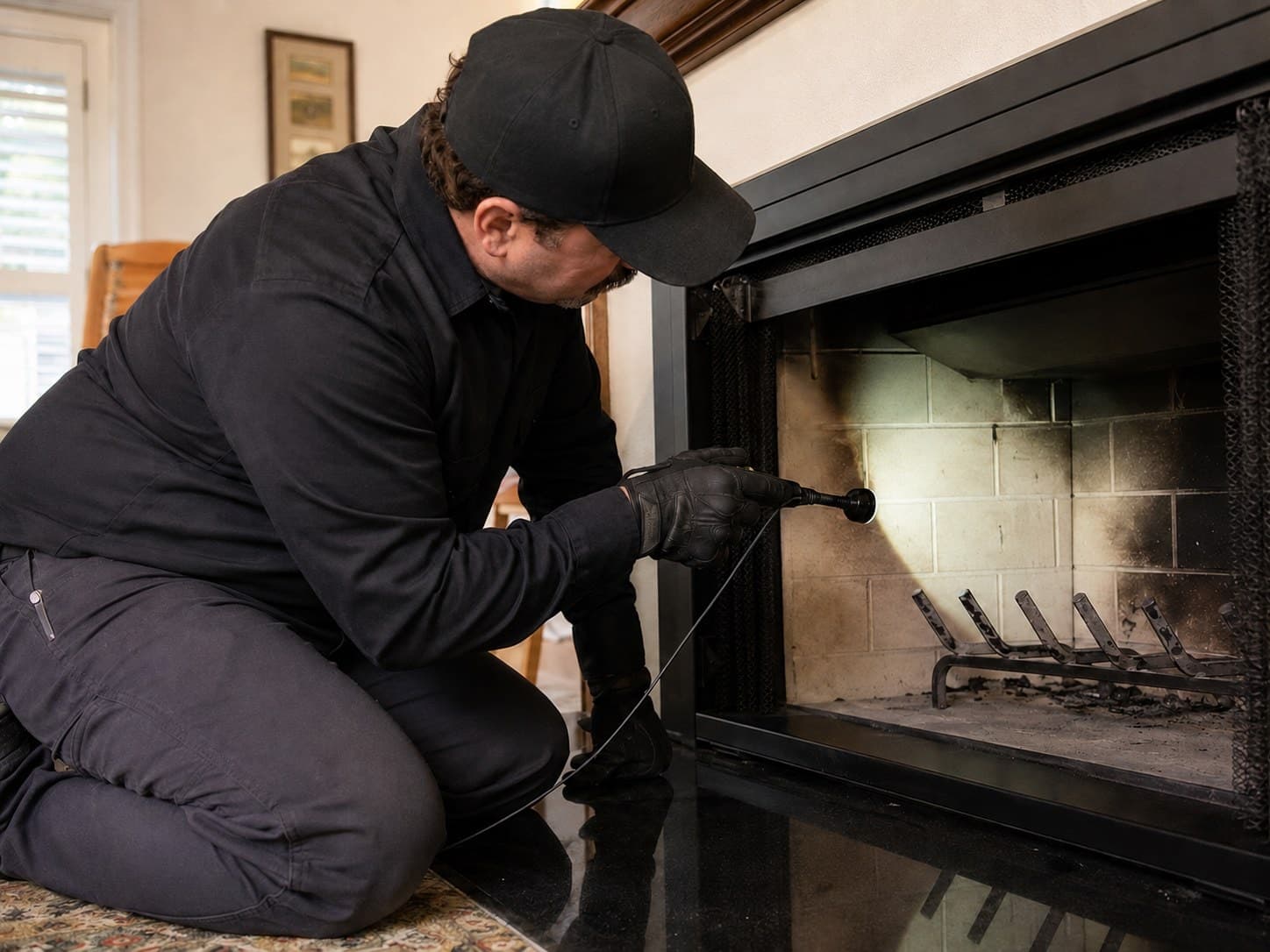
A fireplace inspection is part of our wider chimney inspection, which follows the NFPA 211 inspection levels and covers the whole venting system. This page focuses on what we check in and around the fireplace itself.
Fireplace inspection or full chimney inspection?
| Feature | Fireplace inspection | Full chimney inspection |
|---|---|---|
| Focus | Firebox, panels, damper, smoke chamber, hearth, doors, clearances, labels | The whole system: fireplace, flue, liner, crown or chase cover, cap, flashing |
| Good for | Before first use, before a mantel or hearth remodel, a cracked panel or firebox | Yearly checks, leaks, a new insert or relining, after a chimney fire |
| Full-length flue check | Only if something points to the flue | Part of a Level 2 |
Focus
- Fireplace inspection
- Firebox, panels, damper, smoke chamber, hearth, doors, clearances, labels
- Full chimney inspection
- The whole system: fireplace, flue, liner, crown or chase cover, cap, flashing
Good for
- Fireplace inspection
- Before first use, before a mantel or hearth remodel, a cracked panel or firebox
- Full chimney inspection
- Yearly checks, leaks, a new insert or relining, after a chimney fire
Full-length flue check
- Fireplace inspection
- Only if something points to the flue
- Full chimney inspection
- Part of a Level 2
What we check
| Component | Masonry fireplace | Factory-built or gas |
|---|---|---|
| Firebox | Firebrick and mortar joints for cracks, gaps and missing pieces | Refractory panels for cracks; metal firebox for rust and warping |
| Damper | Opens, closes and seals; plate and frame not rusted through | Damper operates as designed; linkage intact |
| Smoke chamber | Parging smooth and intact, no gaps to framing | Not applicable; internal chimney connection checked instead |
| Hearth extension | Size and condition against code minimums | Hearth protection as specified on the unit’s label |
| Clearances | Combustible trim and mantel distances | Clearances and required components on the listing label |
| Doors and screen | Glass, frame and screen condition | Only listed doors for that unit; gaskets and latches |
| Gas components | Gas logs, valve and connection if present | Burner, pilot, glass seal and vent termination |
Hearth size is easy to get wrong in a remodel. The Florida Building Code requires a masonry fireplace hearth extension of at least 16 inches in front and 8 inches beyond each side of openings under 6 square feet, and 20 and 12 inches for larger openings (FBC Residential, Chapter 10). New flooring or a new mantel can quietly break those rules.
Signs a fireplace should be checked now
- Cracks you can fit a coin into, loose firebrick, or cracks in the firebox that look new
- Refractory panels with missing pieces, or bare metal showing in a prefab firebox
- Rust on the firebox floor, the grate area or the damper; see a rusted prefab fireplace
- Black staining on the wall or mantel above the opening, a sign smoke has been escaping
- A damper that won’t move or won’t close
- Cracked door glass or doors that no longer latch
Factory-built fireplaces need their label
A factory-built fireplace is tested and listed as a complete system, typically to UL 127 for wood-burning units (Intertek). The label on the unit shows the model, required clearances and approved parts. We check that what’s installed matches: the right refractory panels, the right doors, the right chimney pipe and cap. A missing label or mismatched parts are worth knowing before you light a fire. The manual for the model also sets the limits for things homeowners worry about most, such as how wide a crack in a refractory panel can be before the panel has to be replaced, and whether an outside air kit, grate or screen curtain is required. Units near the end of their life are covered under prefab fireplace replacement.
When to book a fireplace inspection
- Before using a fireplace for the first time in a new-to-you home
- Once a year, as NFPA 211 recommends for chimneys, fireplaces and vents (NFPA 211)
- After a chimney fire, lightning strike or hurricane
- Before a remodel that changes the mantel, surround, hearth or flooring
- When buying or selling; the inspection built around a home sale covers the fireplace too
- For hotels, clubhouses and associations with several fireplaces; see commercial chimney services
What you get
You get a plain-language summary: what is in good shape, what needs repair before the next fire, and what can wait. Where repairs are needed, the related pages explain the options, from firebrick and joint repairs and smoke chamber parging to chimney damper repair.
Wood, gas and electric are checked differently
“Fireplace inspection” covers three quite different appliances. What gets looked at depends entirely on what is burning, or whether anything is.
| Appliance | Main focus | Typical findings |
|---|---|---|
| Open wood-burning | Firebrick, mortar joints, damper, throat, hearth extension and clearances | Cracked firebrick, failed joints, a damper that will not seal, a hearth that is too shallow |
| Factory-built wood | Refractory panels, the metal shell, firestop, door and screen, and the rating plate | Cracked panels, rust, missing screens, a plate nobody can find |
| Gas insert or built-in | Burner, pilot, glass and gasket, venting and the appliance's own condition | Soot on glass, a drifting pilot, a perished gasket, a blocked termination |
| Gas log set in an open firebox | Log position, burner ports, damper lock and the flue above | Logs moved out of the maker's layout, which is the usual cause of sooting |
| Electric | Element, blower, flame-effect motor and the circuit feeding it | Heat but no flame effect, or flame effect but no heat |
Where the appliance is gas and the question is really about how it is running rather than whether it is safe, an annual gas fireplace service is the better booking — it is a service visit rather than an assessment.
Annual checks and who asks for them
NFPA 211 calls for chimneys, fireplaces and vents to be inspected at least once a year, and to be cleaned or repaired where that inspection shows the need. In practice a yearly fireplace check gets booked by four groups of people.
- Homeowners before the first cold front. Autumn, so that anything found can be fixed before the week everyone wants a fire.
- Landlords and property managers. Establishing whether a fireplace can be offered to a tenant at all, which is worth settling before the lease says it can.
- Short-term rental operators. Guests will try to light it. A documented annual check is the sensible answer to that, and it is covered under commercial and rental property service.
- Buyers and sellers. Though a transaction usually needs the fuller scope on the real estate chimney inspection page.
Inspections are available across Greater Orlando and Central Florida, and estimates are free. If the fireplace has a symptom right now rather than being due a check, the symptom pages under common problems will get you to the right service faster.
References (3)
Facts and figures on this page come from these references.