On this page
Burning wood sends small embers up the flue with the smoke. Most burn out on the way, but some leave the chimney still glowing. A spark arrestor catches them. Central Florida’s driest stretch runs from late winter into spring, which is also when most fires get lit, and many chimneys sit a few feet from shingle roofs and overhanging trees. A correctly sized screen catches the embers without choking the draft.
What the code asks of a spark arrestor
The Florida Building Code, Residential (Chapter 10, following the International Residential Code) sets out what an installed spark arrestor on a masonry chimney must do (FBC Residential, Chapter 10):
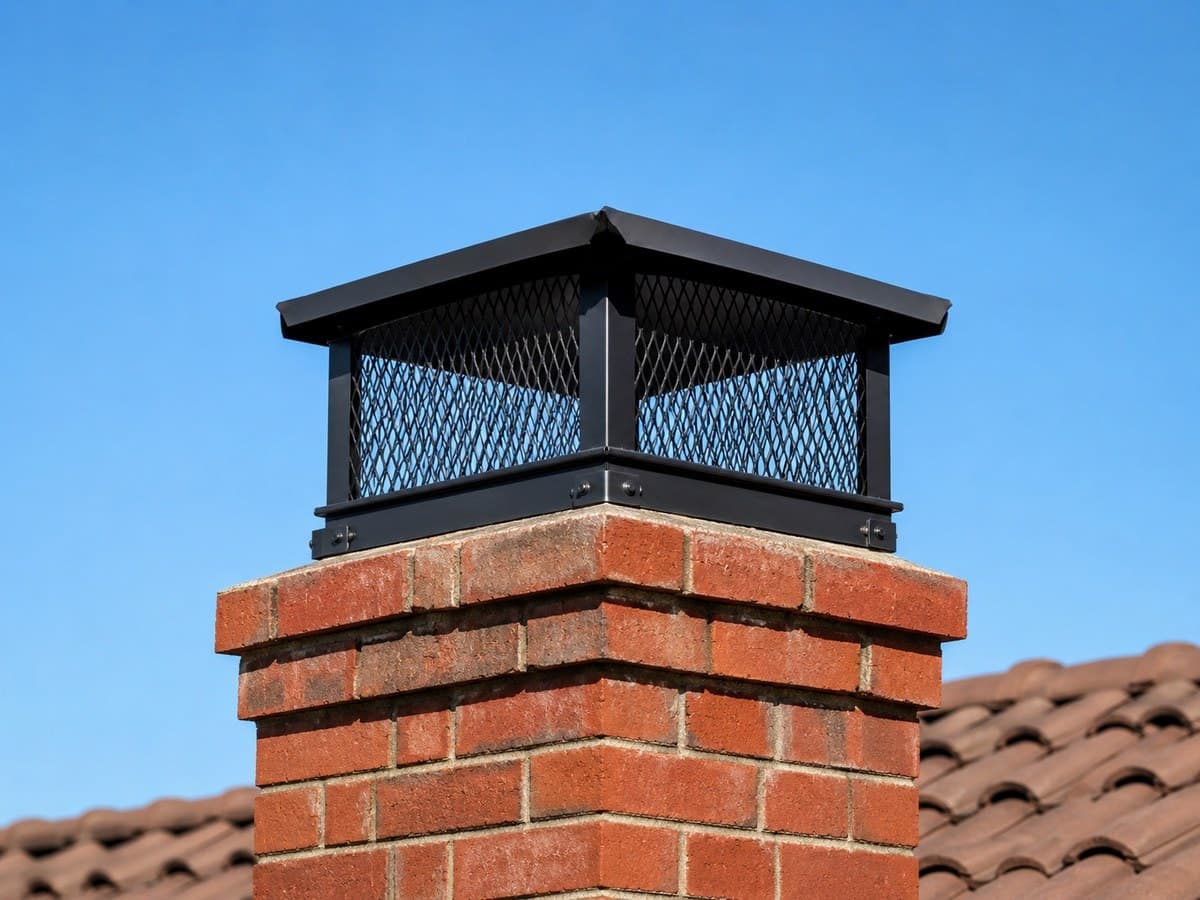
- Its net free area must be at least four times the net free area of the flue outlet it serves, so it doesn’t choke the draft
- The screen must resist heat and corrosion at least as well as 19-gauge galvanized or 24-gauge stainless steel
- Openings must stop spheres larger than ½ inch but pass spheres smaller than ⅜ inch, fine enough to catch embers without clogging instantly
- It must be accessible for cleaning, with a screen or cap that can be removed to clean the flue
Many off-the-shelf screens use mesh that is finer than this, which catches embers but clogs with soot and creosote. A clogged arrestor slows the draft and can send smoke back into the room.
Arrestor, cap or both?
A spark arrestor and a chimney cap overlap but aren’t the same thing. Many caps include mesh that works as an arrestor, but a cap’s job is mainly keeping rain out, and not every cap’s mesh meets the arrestor limits. A stand-alone arrestor screen catches embers but does nothing about rain. Which one fits depends on the flue, the roof and whether you burn wood at all.
| Setup | Best for | Notes |
|---|---|---|
| Cap with built-in arrestor mesh | Most wood-burning masonry chimneys | One unit keeps out rain, animals and sparks; see chimney cap installation |
| Stand-alone arrestor screen | Flues where a hood isn’t wanted or won’t fit | Still stops sparks and animals; doesn’t keep rain out |
| Listed termination cap | Factory-built chimneys | Spark screening is part of the listed cap; it’s replaced with the correct model, not modified |
Installation and upkeep
Measure the flue
Outlet size and tile height set the arrestor size and required open area.
Choose the mesh
Stainless mesh within the code’s opening range, so it catches embers but resists clogging.
Install removable
The arrestor fastens securely but can come off, so the flue can be cleaned from the top.
Clean with the flue
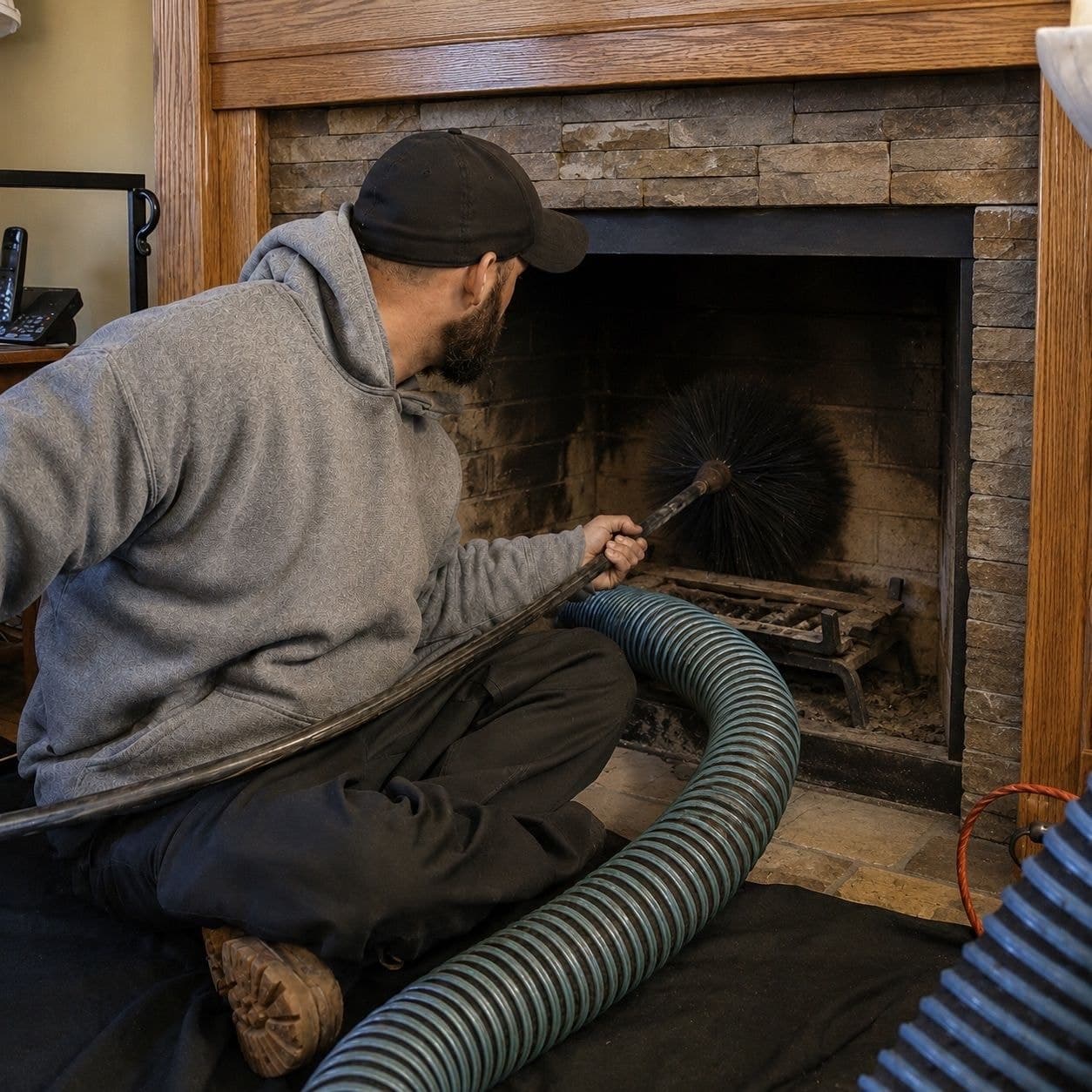
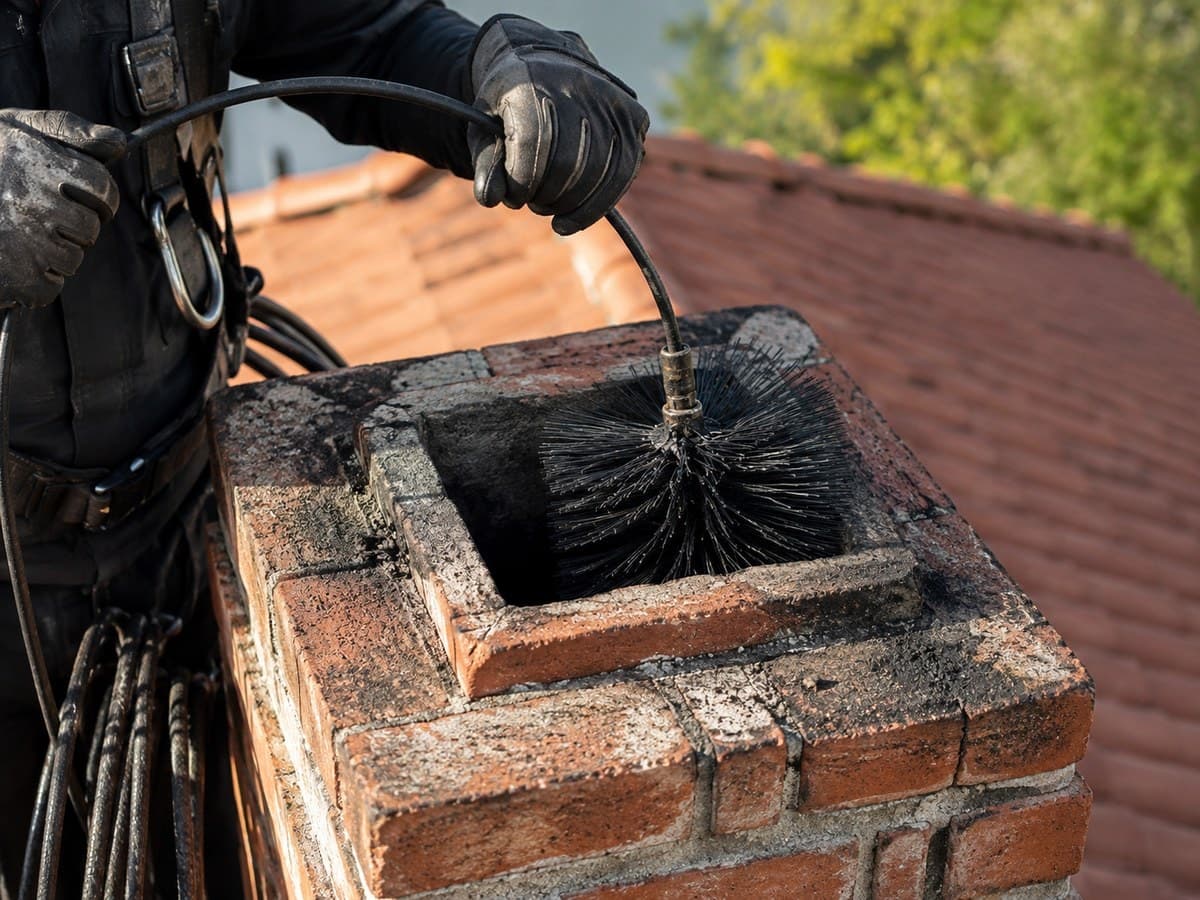
During each chimney cleaning, the mesh is brushed clear of soot and creosote.
Burn dry, seasoned wood
Wet or green wood produces more creosote, which clogs arrestor mesh and lines the flue. Dry hardwood burns cleaner and keeps the screen open longer.
What a spark arrestor actually does
A spark arrestor is a mesh screen across the top of the flue that stops burning fragments leaving the chimney. On a wood fire, small pieces of ember get carried up on the draft and can still be alight when they reach the top.
Where they land is the point. A shingle roof, dry leaves in a gutter, pine straw mulch or a neighbouring roof are all plausible landing sites, and Central Florida spends part of most years dry enough for that to matter.
| Purpose | Does a spark arrestor do it? |
|---|---|
| Stop embers leaving the flue | Yes — this is its job |
| Keep rain out of the flue | No — that needs a cap lid over the top |
| Keep birds and animals out | Yes, as a side effect, provided the mesh is the right size |
| Stop downdraft | No — that is a cap or damper question |
| Help a chimney draw | No, and a clogged screen makes draft worse |
Mesh size is the whole decision
Too coarse and embers pass straight through and animals get in. Too fine and the screen blinds over with soot, which chokes the draft and pushes smoke back into the room. Getting it wrong in the fine direction is how a screen turns into a blockage.
Wood-burning flues need the screen checked as part of an annual sweep, because soot accumulates on the mesh faster than anywhere else in the system. A screen that has not been looked at in several seasons is a genuine cause of a fireplace that has slowly got harder to light — see smoking fireplace and draft correction.
Cap, screen or both?
This is the part that confuses people, largely because the products overlap. Three separate jobs, frequently done by one component.
Which component you actually need
01The flue is completely open at the top
- What you may notice
- Nothing over it at all; you can see straight down it from the roof.
- How it’s confirmed
- A standard chimney cap with mesh sides does all three jobs at once: lid against rain, mesh against embers and animals.
02There is a lid but no mesh
- What you may notice
- A flat or peaked cover on legs, open at the sides.
- How it’s confirmed
- Rain is handled but embers and animals are not. A screen is added, or the cap is swapped for one with mesh sides.
03There is mesh but no lid
- What you may notice
- A screen across the flue with nothing above it.
- How it’s confirmed
- Embers are handled and rain is not. A capped replacement solves both.
04Animals are the actual problem
- What you may notice
- Scratching or nesting in the flue rather than any concern about embers.
- How it’s confirmed
- The same screening job, but the timing matters: an active nest cannot legally be cleared during nesting season.
05The screen has clogged with soot
- What you may notice
- A fire that has become gradually harder to light and now smokes.
- How it’s confirmed
- Cleaned as part of a sweep, and the mesh size reviewed if it keeps happening.
In practice the answer for most Orlando homes is a single stainless cap with mesh sides, which is cheaper than buying the functions separately. Where the chimney already has a cap you like, a screen can usually be added to it.
Spark arrestor and screen work is available across Orlando, Winter Park, Apopka, Clermont, Kissimmee and the rest of the Central Florida service area. Estimates are free, and because it is work at the top of the chimney the crown, cap and flashing get assessed on the same trip.
References (2)
Facts and figures on this page come from these references.