Start with one question: is the dryer hot?
Put your hand on the drum or the clothes a few minutes into a normal heat cycle. The answer splits the possible causes in two.
| Feature | Hot dryer, damp clothes | Cool or barely warm dryer |
|---|---|---|
| What it points to | Heat is being made but the moist air can’t leave: an airflow problem | Heat isn’t being made: a problem inside the dryer |
| Usual suspects | Clogged vent duct, crushed transition hose, stuck outside flap, blinded lint screen | Heating element or gas igniter, thermal fuse, thermostats, or power supply |
| Who fixes it | Dryer vent cleaning or repair | An appliance repair technician |
What it points to
- Hot dryer, damp clothes
- Heat is being made but the moist air can’t leave: an airflow problem
- Cool or barely warm dryer
- Heat isn’t being made: a problem inside the dryer
Usual suspects
- Hot dryer, damp clothes
- Clogged vent duct, crushed transition hose, stuck outside flap, blinded lint screen
- Cool or barely warm dryer
- Heating element or gas igniter, thermal fuse, thermostats, or power supply
Who fixes it
- Hot dryer, damp clothes
- Dryer vent cleaning or repair
- Cool or barely warm dryer
- An appliance repair technician
Possible causes
01Lint buildup in the vent duct
- What you may notice
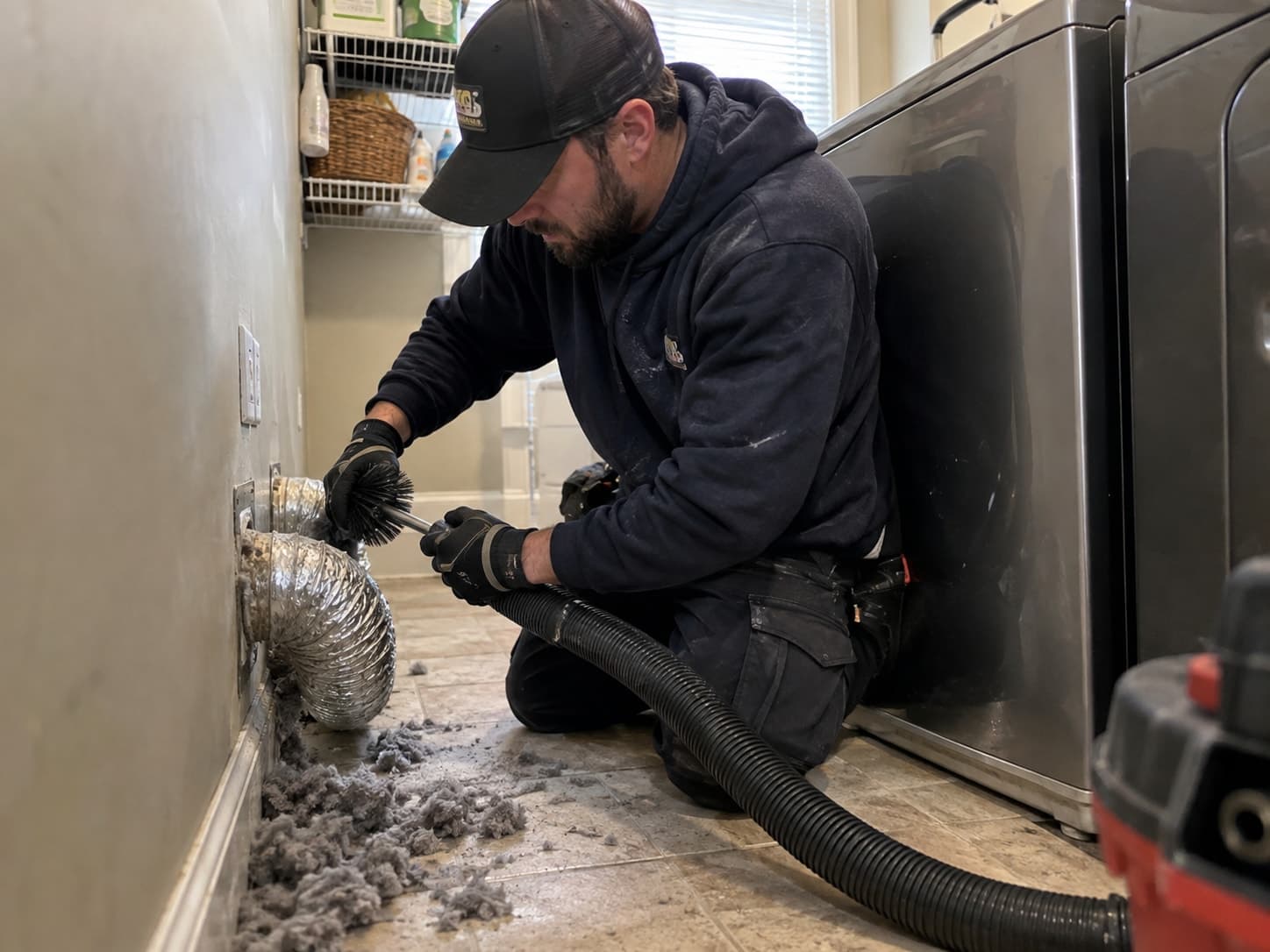
- Drying times crept up over months; the dryer and the laundry room run hot; weak airflow at the outside cap.
- How it’s confirmed
- Airflow is measured at the termination, the duct is cleaned, and airflow is measured again to confirm the change.
02Crushed or kinked transition hose
- What you may notice
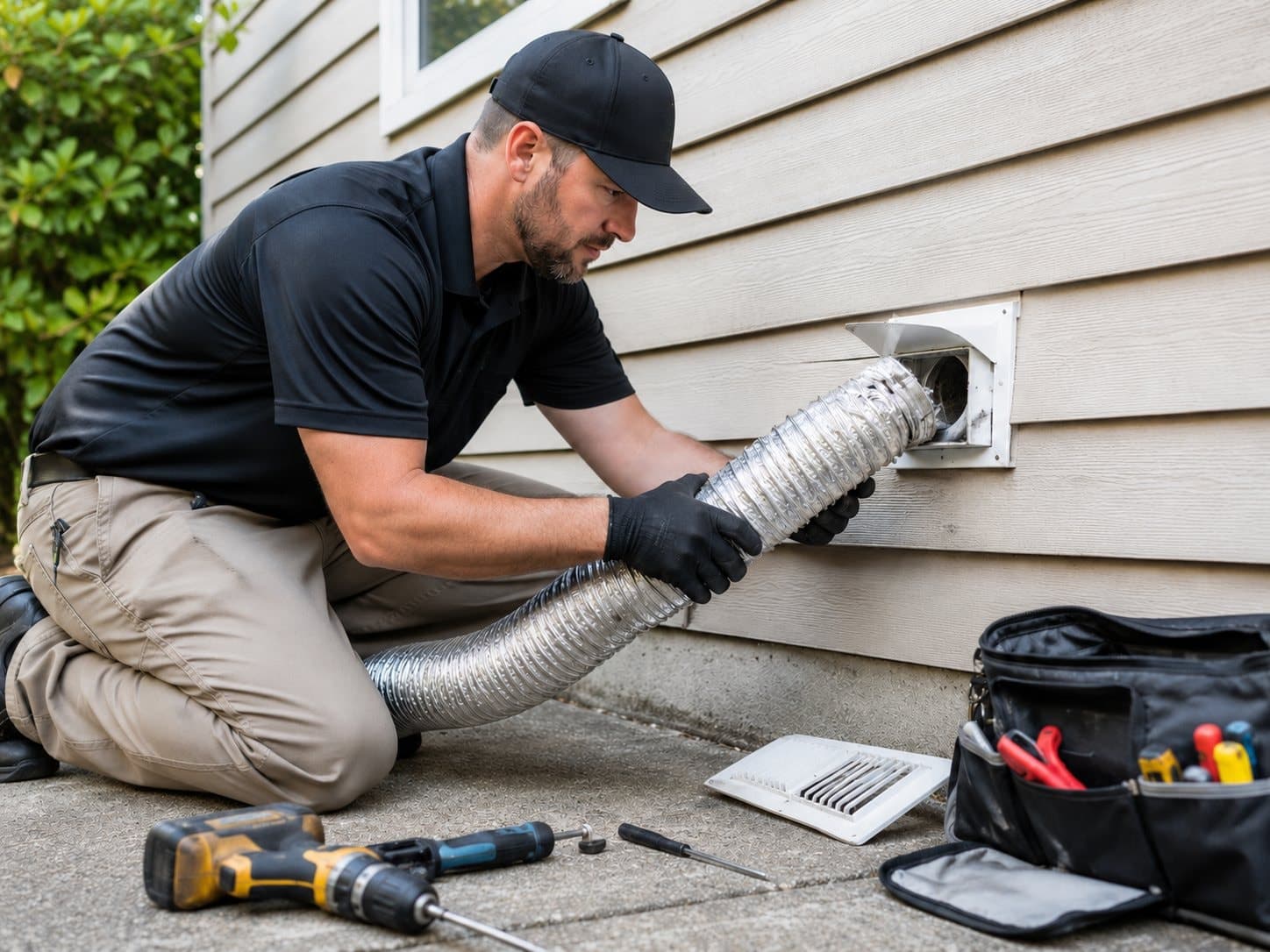
- Problem started after the dryer was moved or pushed back; foil or vinyl hose behind the dryer.
- How it’s confirmed
- The dryer is pulled out and the hose inspected along its length; airflow is compared with the dryer in and out of position.
03Outside flap or roof cap not opening
- What you may notice
- Flap barely moves with the dryer running; lint caked on the cap; screen or mesh over the opening; nesting material.
- How it’s confirmed
- The termination is opened, cleared and checked for a working damper and no screen.
04Disconnected duct in the attic or wall
- What you may notice
- Lint in the attic, musty laundry room, very weak airflow outside even though the reachable duct is clean.
- How it’s confirmed
- The run is traced in the attic or at access points and the separated joint found.
05Heating element, igniter, thermal fuse or thermostat
- What you may notice
- Drum stays cool or only lukewarm; dryer tumbles normally; problem started suddenly.
- How it’s confirmed
- An appliance technician tests the dryer’s heating and safety components. A blown thermal fuse is often a symptom of overheating from a restricted vent, so the vent should be checked too.
06Overloading or a blinded lint screen
- What you may notice
- Big loads come out damp while small ones are fine; the lint screen looks clean but water beads on it.
- How it’s confirmed
- You can check this yourself (see below).
The U.S. Fire Administration notes that when heavy items like jeans or towels take a long time to dry, or clothes feel hotter than usual at the end of the cycle, a clogged dryer vent is a likely cause.
Safe checks you can do yourself
Clean and wash the lint screen
Pull the lint screen and clean it. Then run water over it. If water pools on top instead of passing through, a film from dryer sheets or fabric softener has sealed the mesh. Scrub it gently with warm soapy water and a soft brush, rinse, and let it dry completely before putting it back.
Check the outside flap with the dryer running
Run the dryer on a no-heat or air-fluff setting and go outside to the vent cap. The flap should open clearly and you should feel a strong, steady stream of air. A flap that barely lifts, or no airflow at all, points to a restriction or a disconnection (no airflow from the dryer vent walks through the causes). Clear any lint you can reach by hand from the outside of the cap. If the vent is on the roof, check from the ground only.
Look at the hose behind the dryer
Without disconnecting anything, look behind the dryer with a flashlight. Is the hose flattened against the wall, kinked, or pulled off the dryer outlet? Is it white vinyl or thin foil? Pulling an electric dryer forward a few inches can relieve a crushed hose; take care not to stretch the power cord.
Try a smaller load
Dry half a load of towels. If it dries in one normal cycle while a full load doesn’t, overloading is at least part of the problem.
Gas dryers: look, don’t take apart
Don’t disconnect, move far, or disassemble a gas dryer. Its gas connector can be damaged by pulling, and gas-line work is a separate job from appliance service, and we carry that out too. If you smell gas at any point, leave the home and call the gas utility or 911 from outside.
The “check vent” light
Many newer dryers have a sensor that estimates how restricted the exhaust is and shows a warning such as “check vent” or an airflow indicator. Brands use different names and thresholds, so your owner’s manual is the authority on what yours means. In general, the warning is telling you that the dryer is working against resistance somewhere between the dryer and the outside.
Don’t just clear the code and keep going. Clean the lint screen, check the hose and the outside flap as described above, and run the dryer again. If the warning comes back, the restriction is probably in the duct or at the termination, and the vent needs to be cleaned or inspected. A warning that stays on after a professional cleaning usually points to a run that is too long, crushed or disconnected; see why a dryer vent keeps clogging.
A burning smell or a very hot dryer
A slow dryer that also smells scorched, or runs too hot to touch, has moved from an efficiency problem to a safety one: lint is highly combustible. The causes and what to do right away are covered in why a dryer smells like burning.
Stop using the dryer if you notice
A burning or scorched smell during a cycle; a dryer top or sides too hot to keep your hand on; clothes that come out hot enough to be uncomfortable; the dryer shutting itself off mid-cycle; or smoke. Turn it off, let it cool, and don’t run it again until the vent and the dryer have been checked. If there is smoke or fire, get out and call 911.
What a professional diagnosis involves
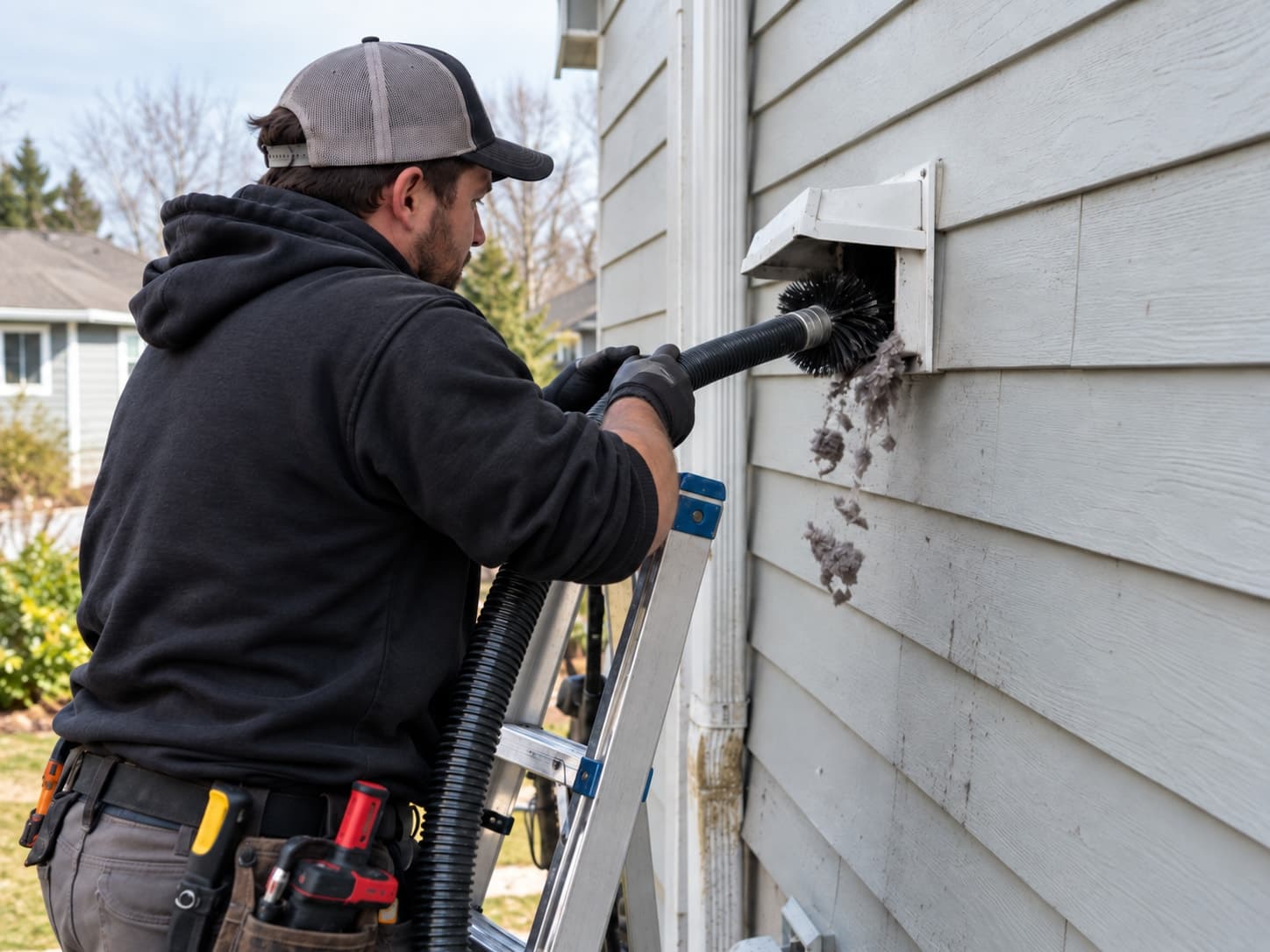
A proper diagnosis separates the vent from the dryer instead of guessing. We start with an airflow reading at the outside termination with the dryer on a no-heat setting, then pull the dryer out and inspect the transition hose, the dryer’s exhaust outlet and the connection. The duct is cleaned from end to end, the termination is opened and its damper checked, and airflow is measured again.
If the reading improves strongly and drying times return to normal, lint was the cause. If airflow is still weak after cleaning, the problem is in the duct itself, and the repair options are explained before any work is scheduled. If airflow is good but the dryer still won’t heat, the vent has been ruled out and an appliance repair technician is the right next call. Homes that vent through the roof, or where the laundry room is far from an outside wall, are more likely to have long runs that clog faster.
Services that fix this
- Dryer vent cleaning Full duct cleaning with airflow measured before and after, transition hose and damper checked.
- Roof dryer vent cleaning For dryers that vent through the roof, where lint piles up under the cap.
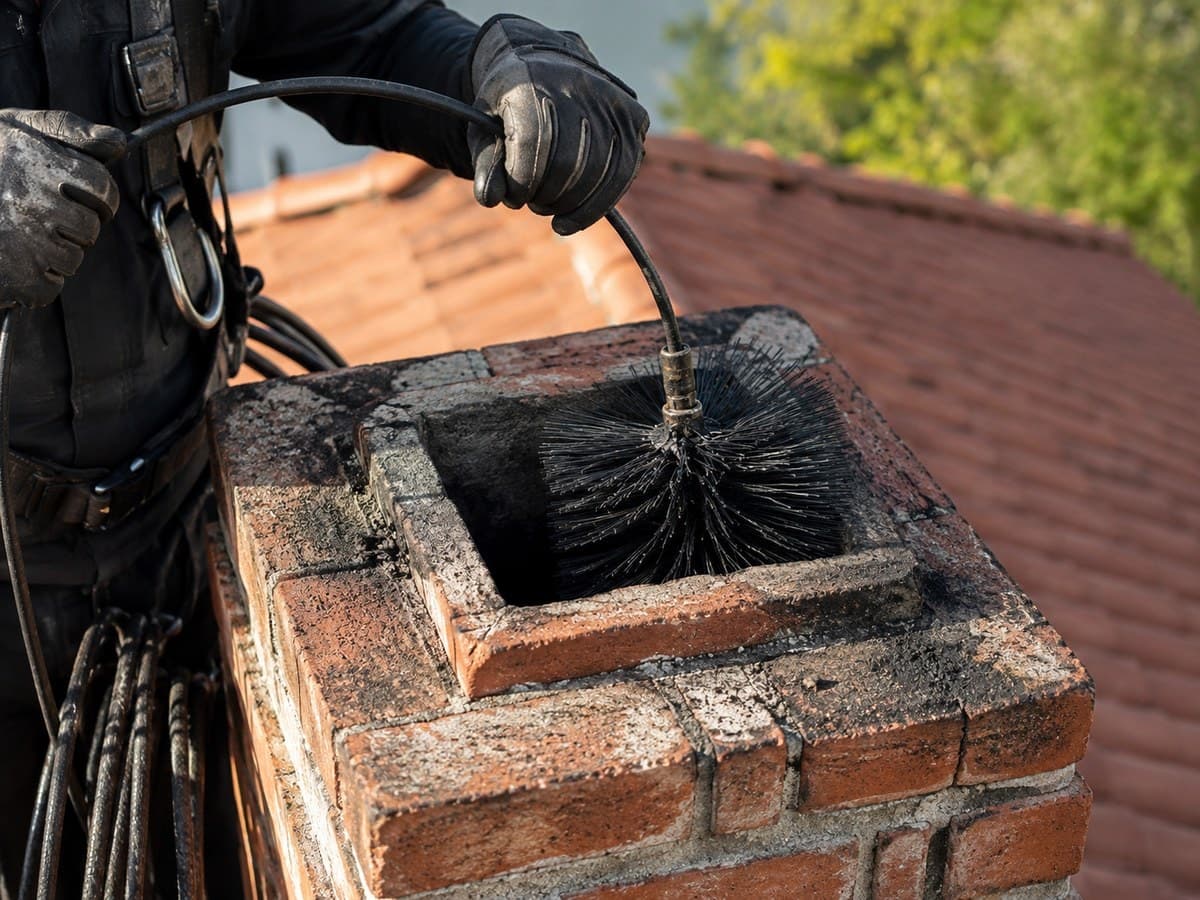
- Dryer vent repair and rerouting Crushed or disconnected ducts, non-compliant hose, bad caps and runs that are too long.
Which service fixes slow drying
| What’s restricting the air | Where it’s fixed |
|---|---|
| Lint along the duct and at the exit | dryer vent cleaning |
| Lint packed at a roof cap | roof dryer vent cleaning |
| Crushed hose or a joint that has come apart | dryer vent repair |
| Run too long, or you want it measured against the code | a dryer vent inspection |
If airflow is strong at the outside exit and loads are still damp, the dryer itself is the suspect; see telling a vent problem from a dryer problem. Local cleaning visits: Orlando dryer duct cleaning, and nearby cities have their own pages, such as lint and airflow work in Winter Park.
References (3)
Facts and figures on this page come from these references.