29 questions
Chimney, Fireplace & Dryer Vent FAQ
Short answers to what Orlando-area homeowners ask about chimney cleaning and inspections, leaks and repairs, wood and gas fireplaces and dryer vents, with links to the detailed pages.
- Free Estimates
- Same-Day Service
- 24-Hour Service Sunday–Friday
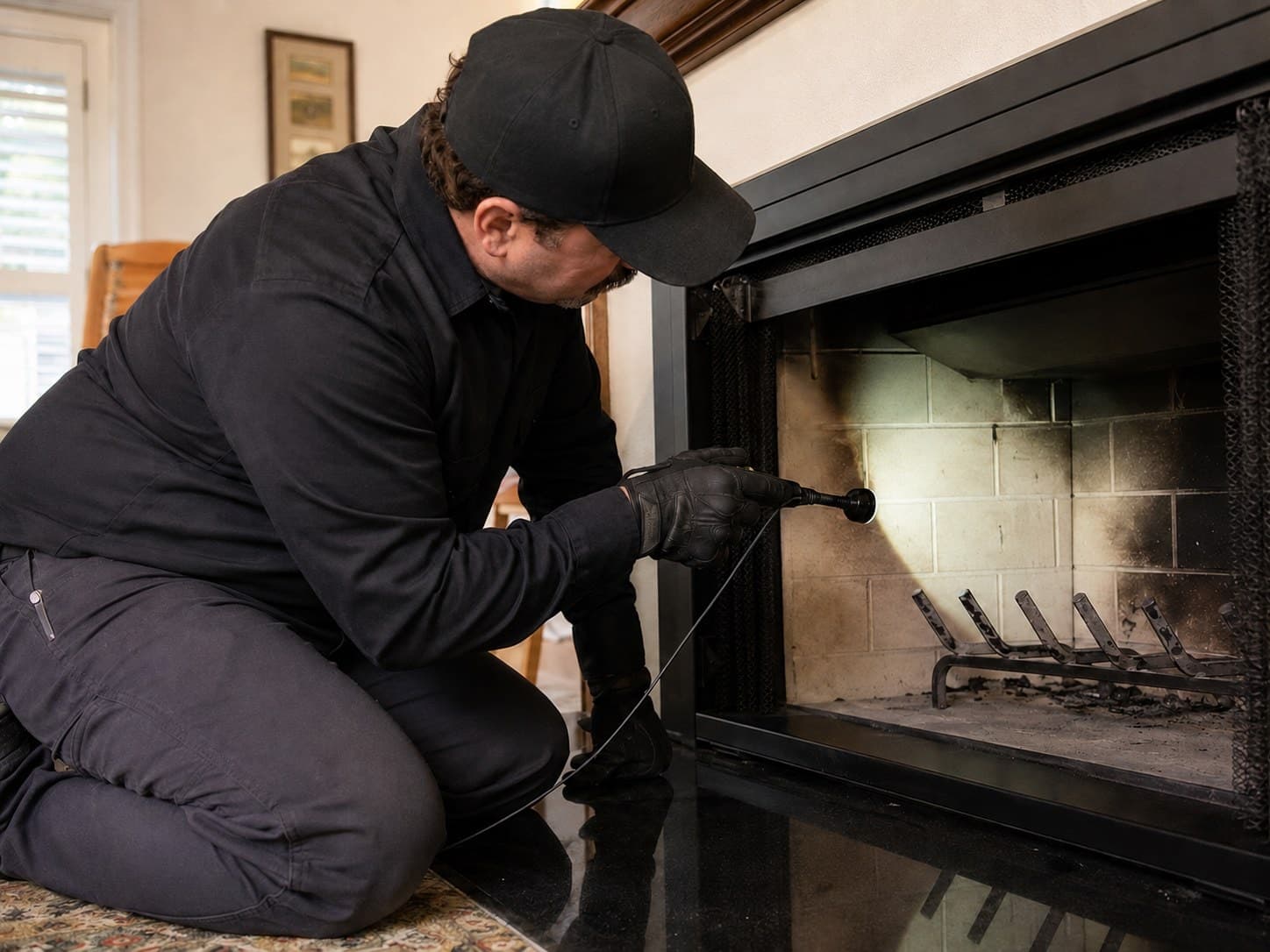
- Camera Inspection
Chimney Cleaning
Chimney sweep & cleaningIs a chimney sweep the same thing as a chimney inspection?
No. Sweeping removes soot, creosote and debris; an inspection evaluates the condition of the chimney and venting. They’re often done on the same visit, and the inspection tells you whether cleaning or repair is actually needed. See chimney inspection.
How can I tell my chimney needs cleaning if I only light a few fires a year?
Look for a tar or campfire smell on humid days, black flakes on the damper or firebox floor, smoke rolling into the room, or debris and nesting material falling into the firebox. The industry rule of thumb is to sweep when soot or creosote reaches about 1/8 inch. An inspection answers the question for certain. See creosote buildup.
What does a chimney cleaning remove besides soot?
Creosote, leaves and windblown debris, nests and nesting material, animal remains, fallen mortar or flue tile pieces, and ash in the smoke chamber. In Florida, where many fireplaces sit unused for months, debris and nests are often a bigger share of what comes out than soot. See chimney blockage removal.
Are wood stoves and fireplace inserts cleaned the same way as an open fireplace?
Not quite. Inserts and stoves vent through a liner or connector pipe, so the insert may need to be pulled forward or the liner swept from the roof, and the baffle and firebox inside the unit are cleaned too. See fireplace insert cleaning and wood stove cleaning.
Chimney Inspection
Chimney & fireplace inspectionWhich inspection level do I need when buying a home?
NFPA 211 guidance calls for a Level 2 inspection when a property is sold or transferred. A general home inspection in Florida isn’t required to look inside the flue. See real-estate chimney inspections.
Does a Florida 4-point insurance inspection look at my chimney?
A 4-point inspection covers the roof, electrical, plumbing and HVAC systems, not the chimney itself. Read more in our 4-point guide, and ask your insurer what they require.
When should a chimney be inspected outside the yearly check?
After a hurricane or severe storm, after a suspected chimney fire, before using a fireplace in a home that’s new to you, before switching to an insert or gas logs, and before or during a reroof. Each of these can change the condition of the flue or the roof connection. See storm damage chimney inspection and the reroofing guide.
Chimney Repair
Chimney repairWhich chimney repairs are most common on Central Florida homes?
Mostly water-related ones: chase covers and caps, flashing, cracked crowns, and siding or stucco on framed chases. Freeze-thaw damage, the main cause of brick failure up north, is rare here, so masonry work tends to be concentrated in older neighborhoods with brick chimneys. See chimney repair.
How is it decided whether a chimney is repaired or rebuilt?
By how much of the structure is sound. Loose mortar joints, a cracked crown or a few spalled bricks are repaired; a leaning stack, widespread loose brick or a failed chimney above the roof line may need a partial rebuild. The repair vs rebuild guide explains the thresholds, and chimney rebuild covers the work.
Are factory-built chimneys repaired with the same parts as brick ones?
No. A factory-built system is a listed assembly, so repairs use parts made or approved for that model: the termination cap, storm collar, metal chimney pipe and chase cover. Mixing in generic parts can void the listing. See prefab chimney repair.
Chimney Leaks
Chimney leak repairCan a new chimney cap fix a leak?
Only when rain entering the open flue is the cause. Many leaks come from the chase cover, flashing, crown or siding instead, so the entry point should be confirmed first. See chimney leak repair.
Why is there rust running down the side of my chimney?
On factory-built chimneys, rust streaks usually come from a corroding metal chase cover. Once it holds water, it can leak into the chase. See chase cover replacement.
Should I call a roofer or a chimney company for a leak around the chimney?
It depends on where the water enters. Flashing and roofing overlap at the roof line; issues above that point, such as the chase cover, cap, crown or chase siding, are chimney work. A diagnosis should tell you which trade you need.
Should I stop using the fireplace while the chimney is leaking?
Yes, until it’s been looked at. Water rusts dampers and metal fireboxes, cracks refractory panels, and soaks creosote, which then smells and can hide damage to the liner. A leak in a framed chase can also rot the wood around a factory-built flue. See water coming through the chimney.
Fireplace
Fireplace repairWhat’s the difference between fireplace repair and chimney repair?
Fireplace repair covers the parts you can see from the room: the firebox, firebrick or refractory panels, damper, smoke chamber, doors, glass and hearth. Chimney repair covers everything above: the flue and liner, crown, cap, chase, chase cover and flashing. See repairs inside the fireplace and the parts of a chimney guide.
Can cracked panels in a factory-built fireplace be replaced?
Often, if replacement panels listed for that model are still available and the rest of the unit is sound. When the model is discontinued or the firebox is damaged, replacing the unit may be the safer option. See prefab fireplace replacement.
Can a wood-burning fireplace be switched to gas?
Usually, with a gas insert or a vented log set sized for the firebox, provided the fireplace and flue are in good condition. A factory-built wood unit must be listed for the gas appliance going into it. new gas piping is separate, permitted work we also carry out. See fireplace insert installation and gas vs wood.
Do electric fireplaces ever need service?
Occasionally. They have no flue to sweep, but heaters, flame motors, bulbs or LEDs, thermal cut-offs and remotes can fail, and built-in units need their clearances and circuit checked. See electric fireplace repair.
Gas Fireplace
Gas fireplace repairI smell gas near the fireplace. What’s the first thing to do?
Leave the home right away without using switches or phones inside, and call your gas utility or 911 from outside. Don’t use the fireplace until a qualified gas technician has checked it. See why a gas fireplace smells like gas.
What does an annual gas fireplace service include?
A check of the burner, pilot assembly, thermocouple or thermopile, valve and controls; cleaning of the logs or media, glass and firebox; a look at the gasket and vent termination; and a check that the flame pattern and color are right. See what the yearly gas visit covers and the gas fireplace maintenance guide.
My gas fireplace won’t light, clicks, or shuts off. Where do I start?
Start with the symptom: won’t light, pilot won’t stay lit, turns off by itself or remote not working. Each explains the safe checks, such as batteries and the gas valve, before anything needs a technician.
Does a gas fireplace need a chimney sweep?
Rarely a full sweep, since gas burns cleanly, but the venting still needs checking. Direct-vent and B-vent pipes can be blocked by nests or debris, and a gas log set in a masonry fireplace uses the chimney flue, which should be inspected like any other.
Dryer Vent
Dryer vent cleaningHow often should a dryer vent be cleaned?
It depends on how much laundry the household does and how long the vent run is. Longer runs, roof terminations and heavy use need more frequent attention. Slow drying and a hot laundry room are signs it’s time. See dryer vent cleaning.
Why does a roof-vented dryer need the roof cap cleaned too?
Sometimes the duct can be cleaned from the laundry room, but lint tends to pack into the roof cap’s hood and damper flap, which can only be cleared from above. That’s why roof-terminated vents on two-story homes and townhomes clog more often. See roof dryer vent cleaning.
Is a bird guard allowed on a Florida dryer vent?
Not as a screen. The Florida residential code doesn’t allow screens at dryer exhaust terminations because they trap lint. The right fix for birds is a termination with a working backdraft damper. See dryer vent cover replacement.
Do you clean dryer vents in townhomes, condos and vacation rentals?
Yes, where the vent serves the unit and access is allowed. In shared buildings the duct or roof termination may belong to the association, so it helps to check who is responsible first. Rentals with heavy laundry loads have their own vacation rental dryer vent cleaning page.
Orlando & Service Areas
All service areasWhich parts of Greater Orlando do you cover?
The 36 incorporated cities of Orange, Seminole, Osceola and Lake counties, plus Lake Nona, Dr. Phillips, Hunters Creek and Celebration. Send your ZIP code with a request if you’re unsure. See service areas.
Why do Orlando-area chimneys have different problems than chimneys up north?
Less burning and almost no freeze-thaw, but far more rain, humidity and storms. Creosote builds slowly, while leaks, rusted chase covers, musty odors and nests are more common. Many homes also have factory-built fireplaces rather than brick. See how Florida humidity affects a chimney.
When is the best time of year to book chimney or dryer vent service in Central Florida?
Late summer to early fall for chimney sweeps and inspections, before the first cold fronts. Leak repairs are best done before or early in the June–November hurricane season. Dryer vents clog year-round, so book those whenever drying slows down.
Next step
Still have a question?
Send it with the estimate form and we’ll answer it directly.
- 1Tell us the symptom
- 2We inspect and explain
- 3You approve the plan first