Why the chimney belongs in your reroof plan
Many Florida homeowners replace a roof on a schedule set by storms, age or insurance requirements rather than by the chimney. But the chimney is the largest opening in most roofs, and its flashing is part of the roof’s weatherproofing. When the old roof covering comes off, every layer at that joint is exposed. That makes a reroof the cheapest, cleanest moment to correct problems at the chimney that would otherwise mean cutting into new shingles or lifting new tile later.
The reverse also happens. A new roof goes on, the old leak continues, and it turns out the water was coming in through a cracked crown or a rusted chase cover higher up. The roof gets blamed, the roofer comes back, and nobody looked at the chimney. A little coordination avoids both outcomes.
Step 1: Have the chimney inspected before the roofers arrive
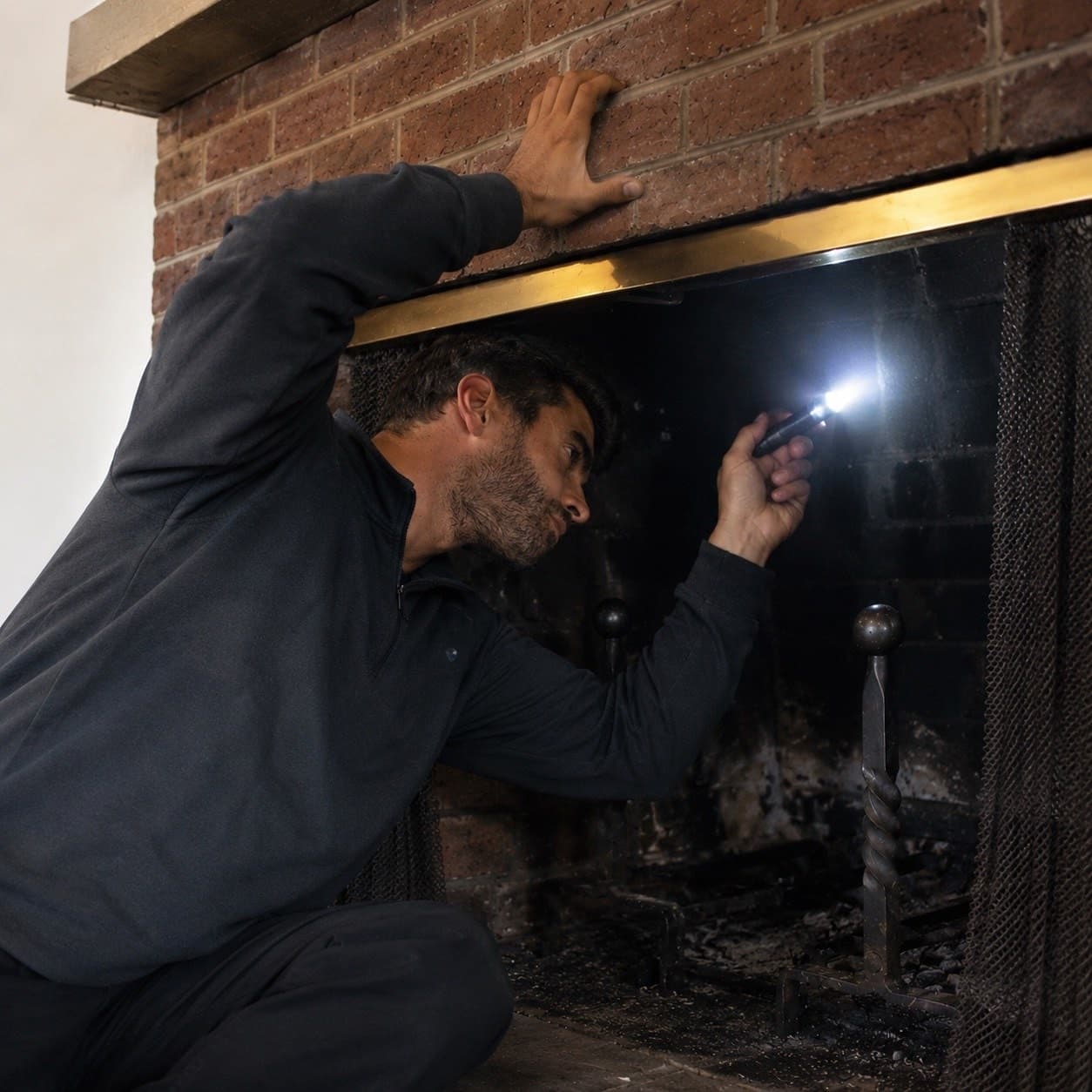
Book a chimney inspection a few weeks before the roof date, so there is time to plan repairs around the roof schedule. The goal is to separate what must happen while the roof is open from what can wait.
What to have checked before a reroof
- Condition of the existing step and counter flashing, and whether the counter flashing is set into the masonry
- Whether a cricket exists behind the chimney, and whether one is needed
- The crown on a brick chimney: cracks, slope and the seal around the flue
- On a framed chase: the chase cover, storm collar, and the siding or stucco at the roof line
- Mortar joints and brick at and just above the roof line
- Signs of past leaks in the attic around the chimney: stains, soft sheathing, rot
- The cap: present, secure and in reasonable shape
Flashing: new roof, new flashing
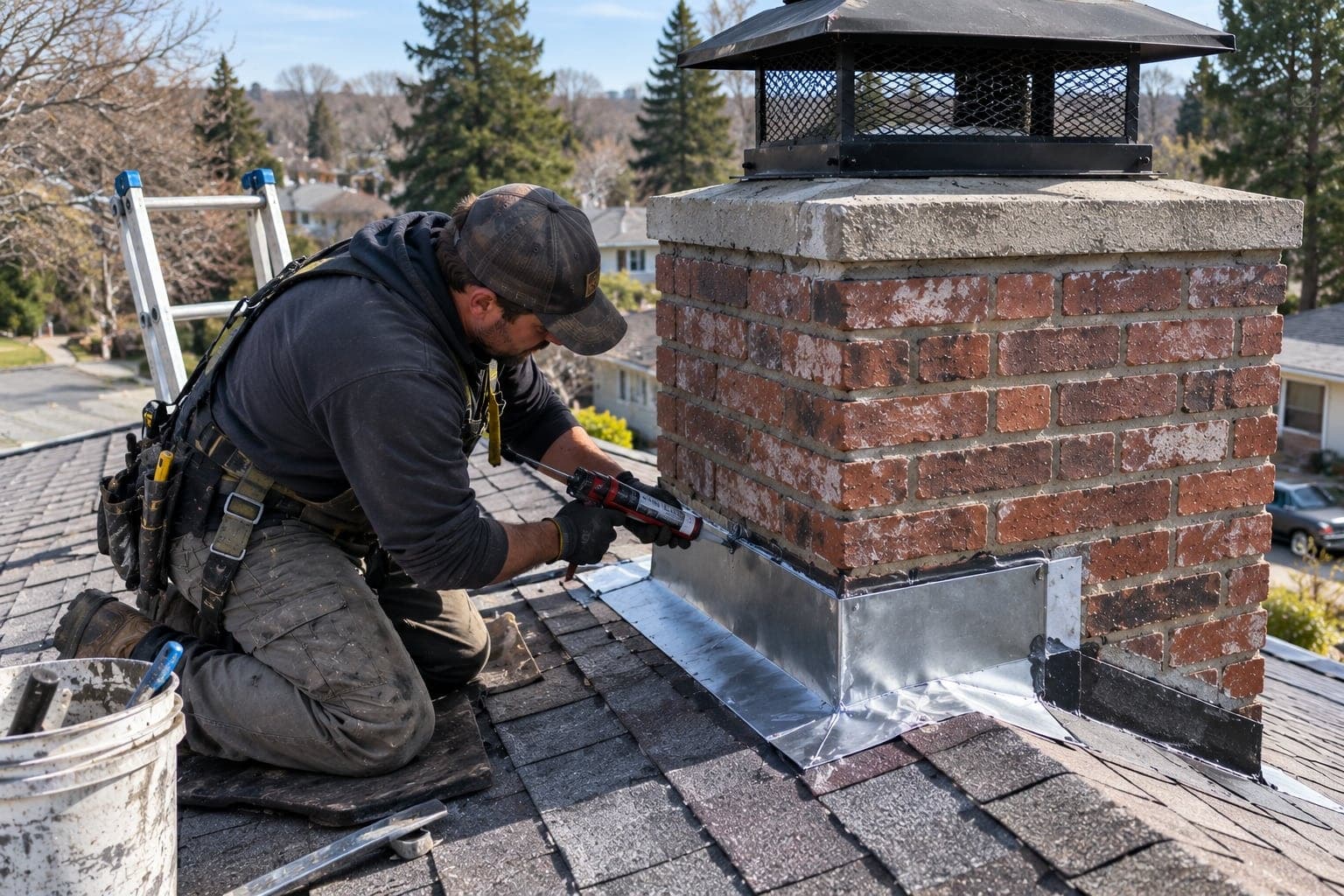
Where a roof meets a masonry chimney, water is kept out by two layers. Step flashing is woven into the roof covering along the sides, one piece per course. Counter flashing is attached to the chimney and laps down over the step flashing, usually set into a cut in a mortar joint. Together they let the roof and chimney move separately without opening a gap.
Florida’s reroofing rules say flashings are to be reconstructed in accordance with approved manufacturer’s installation instructions (Florida Building Code, Existing Building, reroofing). In practice, step flashing is normally replaced along with the roof covering. Counter flashing may be reused if it is sound and properly set into the masonry, or replaced if it is rusted, loose or was only glued to the face of the brick. That decision is best made with the chimney inspection in hand, before the roofing contract is signed, so the scope is clear. Counter flashing and the masonry work to seat it are covered under chimney flashing repair.
The cricket
A cricket (or saddle) is a small peaked section built on the uphill side of a chimney to split the water flowing down the roof and send it around the chimney instead of letting it pile up against the brick. The Florida residential code requires one on the ridge side of any chimney more than 30 inches wide, measured perpendicular to the slope, covered in sheet metal or the same material as the roof (FBC-Residential R903.2.2 via UpCodes). Many older chimneys were built without one. A reroof is the natural time to add it, and the roofer usually builds it as part of the roof.
Masonry chimney and fireplace, cutaway
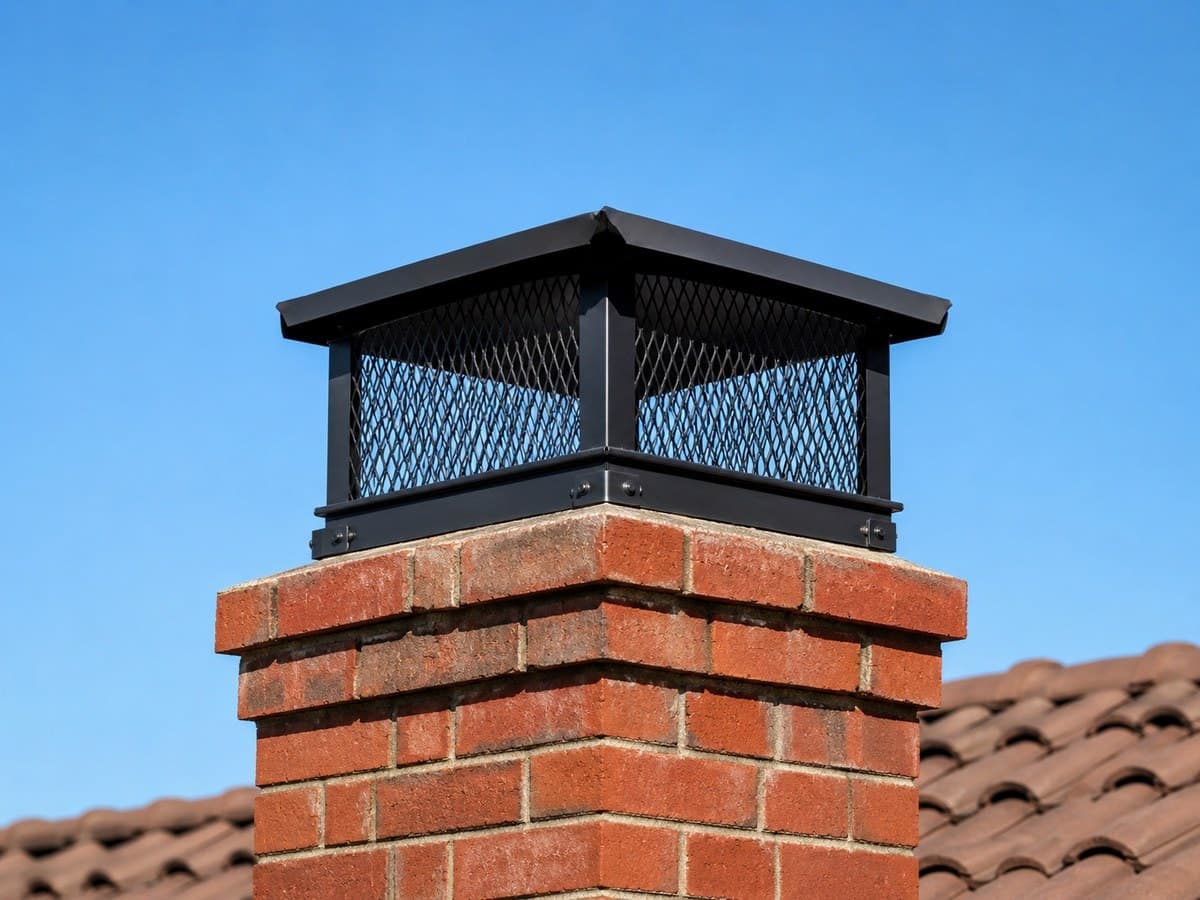
- 1Chimney cap. Metal lid with mesh sides over the flue opening. Keeps rain, debris and animals out.
- 2Crown. The concrete or mortar top of the masonry, sloped to shed water away from the flue.
- 3Flue liner. Clay tile or metal lining that carries smoke up and protects the masonry from heat.
- 4Flashing. Metal that seals the joint between the chimney and the roof.
- 5Brick & mortar. The chimney structure. Mortar joints and brick faces absorb water when they wear.
- 6Smoke chamber. The sloped transition that funnels smoke from the firebox into the flue.
- 7Damper. Metal plate at the throat (or a sealing lid on top) that closes the flue when not in use.
- 8Firebox. Where the fire burns. Firebrick laid in heat-resistant mortar.
- 9Hearth. Non-combustible floor extension in front of the fireplace opening.
Tile roofs need extra care
Clay and concrete tile roofs are common in Central Florida, and they complicate the chimney joint. Tile sits above the underlayment on battens or foam, its profile is curved, and it can’t be woven with step flashing the way shingles can. The waterproofing at a chimney on a tile roof depends mostly on the underlayment and the flashing beneath and around the tile, which is then cut and fitted to the chimney. Details vary with the tile system and the manufacturer’s instructions, so ask your roofer to explain how the chimney will be flashed on your specific roof.
Two practical points for tile roofs. First, chimney work after the tile is down means lifting or walking on tile, which risks cracking it, so anything that needs roof access is better done during the reroof. Second, tile is heavy and brittle, so equipment and materials for chimney work need to be staged with the roofer, not dragged across a finished roof.
Timing chimney work with the reroof
A sensible order of work
Weeks before: inspect and plan
Chimney inspection, then a joint conversation (or at least a shared list) between you, the roofer and the chimney company about who does which part and when.
Before tear-off: work from the top down
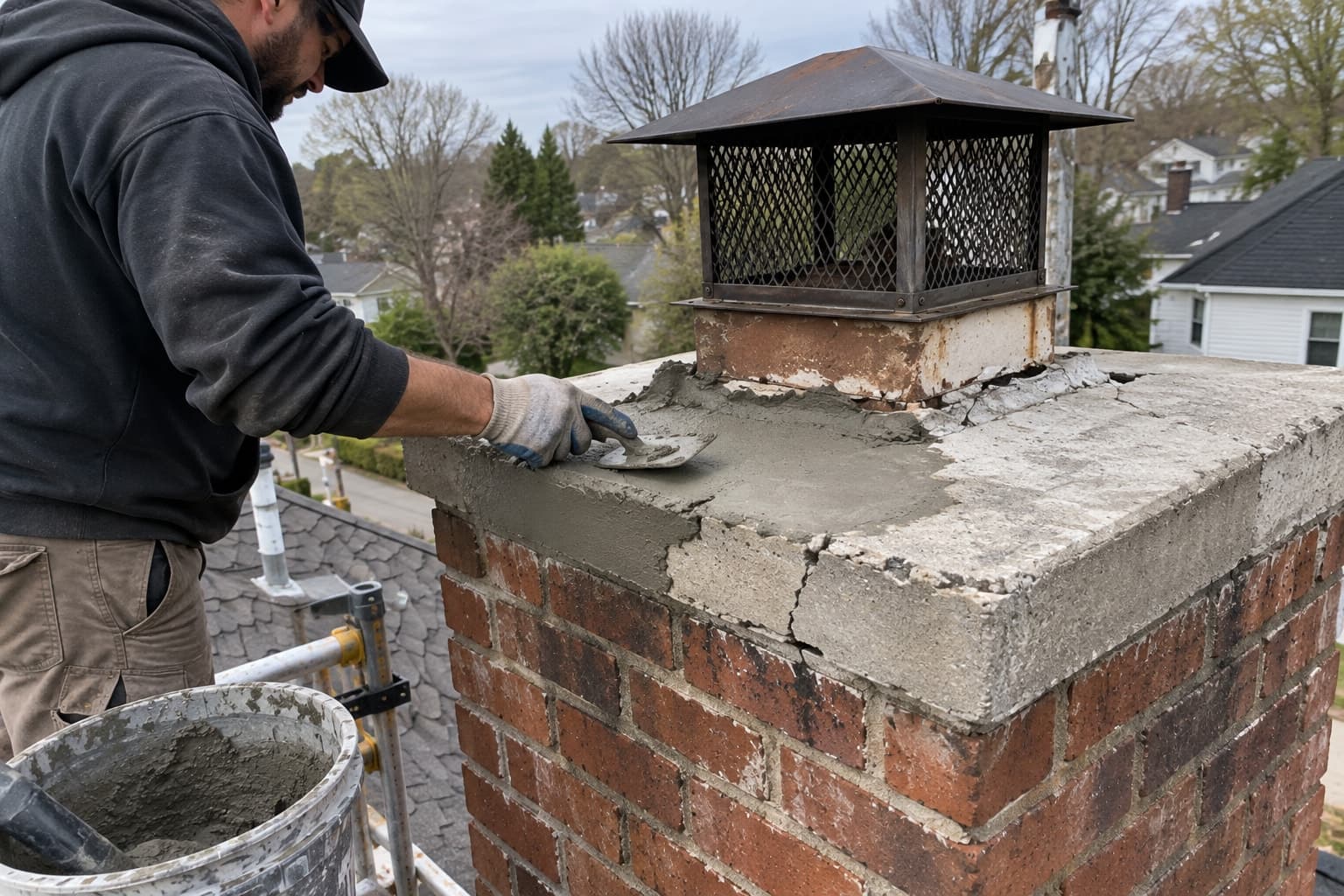
Crown repair or replacement, a new cap, and a new chase cover or storm collar on a factory-built chimney. Water and debris from this work then land on the old roof, not the new one.
During tear-off: repair what’s exposed
Rotted sheathing or framing at the chimney, damaged chase siding at the roof line, and mortar joints where counter flashing will be seated.
During roofing: flashing and cricket
Underlayment, step flashing and cricket go in with the roof. Counter flashing is fitted or refitted to lap over the new step flashing.
After: check the finished joint
Ask for photos of the flashing before it was covered. Then watch the first heavy storms and look in the attic around the chimney afterwards.
On a factory-built chimney, the chase cover is the part most likely to need replacing anyway. If it is galvanized and showing rust, replacing it with a sloped stainless chase cover before the new roof goes on avoids rust runoff staining new shingles or tile, and avoids a later crew working over the finished roof. On a brick chimney, a cracked crown is the equivalent job: have the crown fixed before tear-off, so mortar debris falls on the old roof.
Who does what: roofer or chimney company
| Item | Usually the roofer | Usually the chimney company | Notes |
|---|---|---|---|
| Roof covering and underlayment around the chimney | Yes | No | Part of the roof system and the roofing permit |
| Step flashing | Yes | Sometimes | Woven into the roof covering as it is installed |
| Cricket / saddle | Yes | Sometimes | Framed and covered as part of the roof |
| Counter flashing set into masonry | Sometimes | Often | Needs a cut in the mortar joint and masonry work |
| Crown, cap and flue top | No | Yes | Should be done before the new roof goes on |
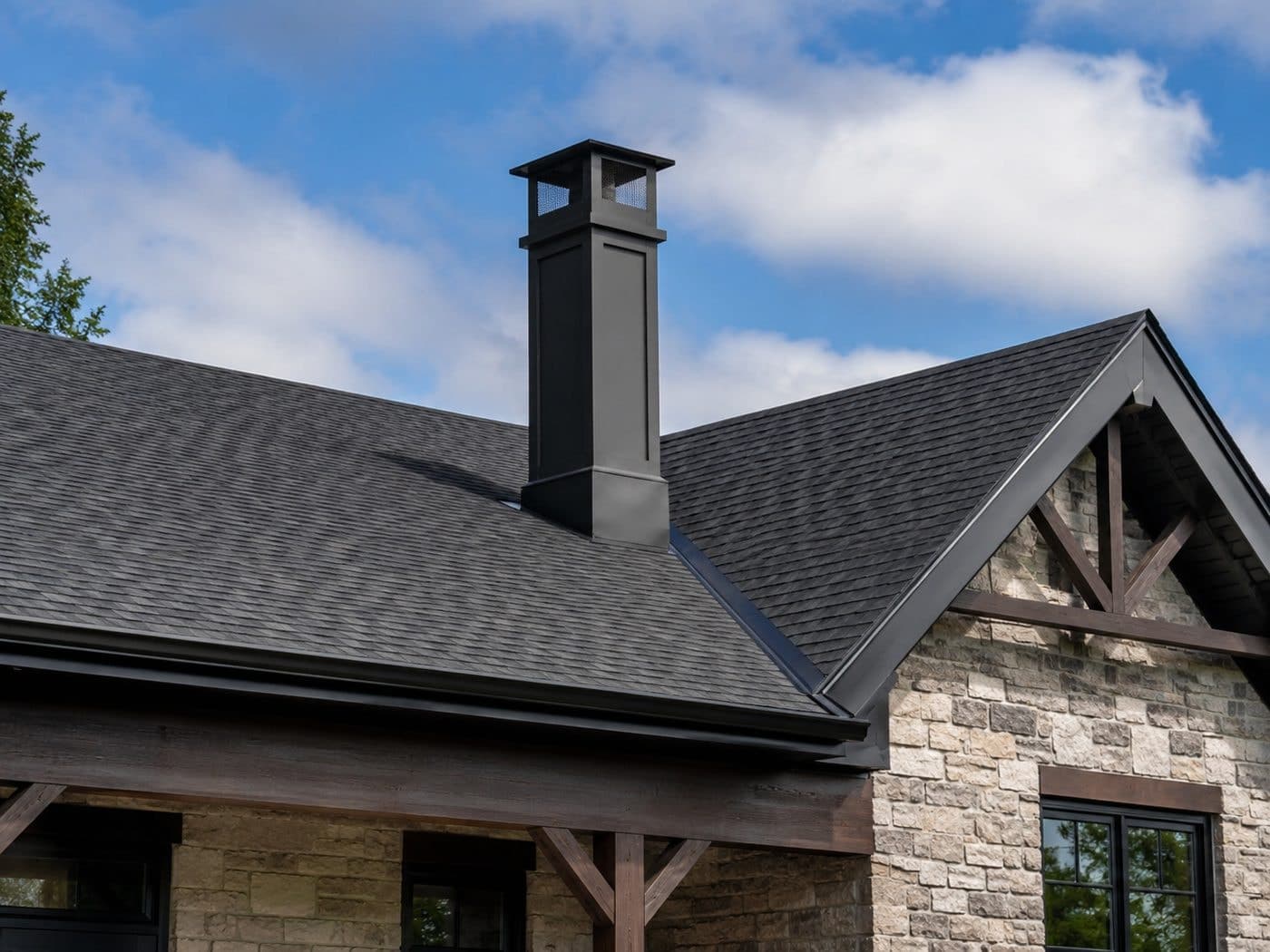
| Chase cover and storm collar | Rarely | Yes | Custom-fit sheet metal on the top of the chase |
| Chase siding, trim and framing | Sometimes | Often | At the roof line both trades may be involved |
| Brick and mortar repair | No | Yes | Including joints where counter flashing is seated |
The division isn’t fixed. Some roofers do all the flashing themselves; some prefer the chimney side handled separately. What matters is that every item on the list has a named owner before work starts, so nothing falls between the two contracts.
Permits are the roofer’s side
In Florida, a reroof generally requires a building permit, and it is typically obtained by the licensed roofing contractor doing the work. Requirements vary by jurisdiction, so confirm with your roofer and your local building department what the permit covers and whether any chimney work needs to be included.
What about removing the chimney?
Some owners with a fireplace they never use consider taking the chimney down to below the roof line during a reroof, so the roof can be continuous. It is an option people weigh, and a reroof is the natural time to decide. It is not a service we offer. If you are considering it, the questions to settle before the roofer starts are: whether the fireplace below will ever be used again, how the flue and any remaining structure will be capped and sealed, what the change means for the roof structure and permit, and, for a factory-built fireplace, how the unit and its chase will be handled. A licensed contractor and your building department are the right people to answer those.
If you keep the chimney, the reroof is the time to make sure its top, sides and roof joint are ready for the next storm season. Our guide to why chimneys leak in heavy Florida rain explains which of those parts fail in which kind of weather, and water stains around a chimney covers what to do if a stain appears after the new roof is on.
If you are still deciding between trades, chimney flashing explained describes each piece and the crown guide covers the top of a brick chimney. Where a new roof has already gone on and water still appears, a leaking chimney flashing walks through the checks. Brick chimneys in older towns often need masonry work at the same time; chimney repair in Mount Dora is one local example.
References (3)
Facts and figures on this page come from these references.