On this page
- What “waterproofing” really means for brick
- Breathable repellent vs film-forming sealer
- When a chimney is a good candidate
- When not to seal a chimney
- Stucco, stone and framed chimneys
- How a chimney is waterproofed
- How long chimney waterproofing lasts
- What affects the cost of chimney waterproofing
- Waterproofing is the last step, not the first
Short answer: chimney waterproofing means applying a clear, penetrating water repellent to the outside of a masonry chimney. The right products soak into the brick and mortar and line the pores so liquid water beads off, but water vapor can still escape. It reduces how much rain the masonry absorbs. It does not seal cracks, replace missing mortar, or fix a crown, flashing or chase cover.
Waterproofing won’t stop an active leak on its own
If water is already showing up inside, the cause is almost always a specific defect: a cracked crown, open joints, failed flashing, a missing cap or, on a framed chimney, a rusted chase cover. The Brick Industry Association notes that penetrating repellents seldom stop water through cracks wider than about 0.02 inch (0.5 mm) and can’t make up for failed caps, copings or unfilled mortar joints (BIA Technical Note 6A). Start with a chimney leak diagnosis and use waterproofing as the finishing step.
What “waterproofing” really means for brick
Brick, mortar and stone are porous. A chimney stands above the roof with every face exposed to wind-driven rain, and it also collects water running off the crown. BIA’s guidance singles out chimneys and parapets for exactly that reason: they can deteriorate early because of severe exposure, and a clear repellent can sometimes help reduce water-related problems on them.
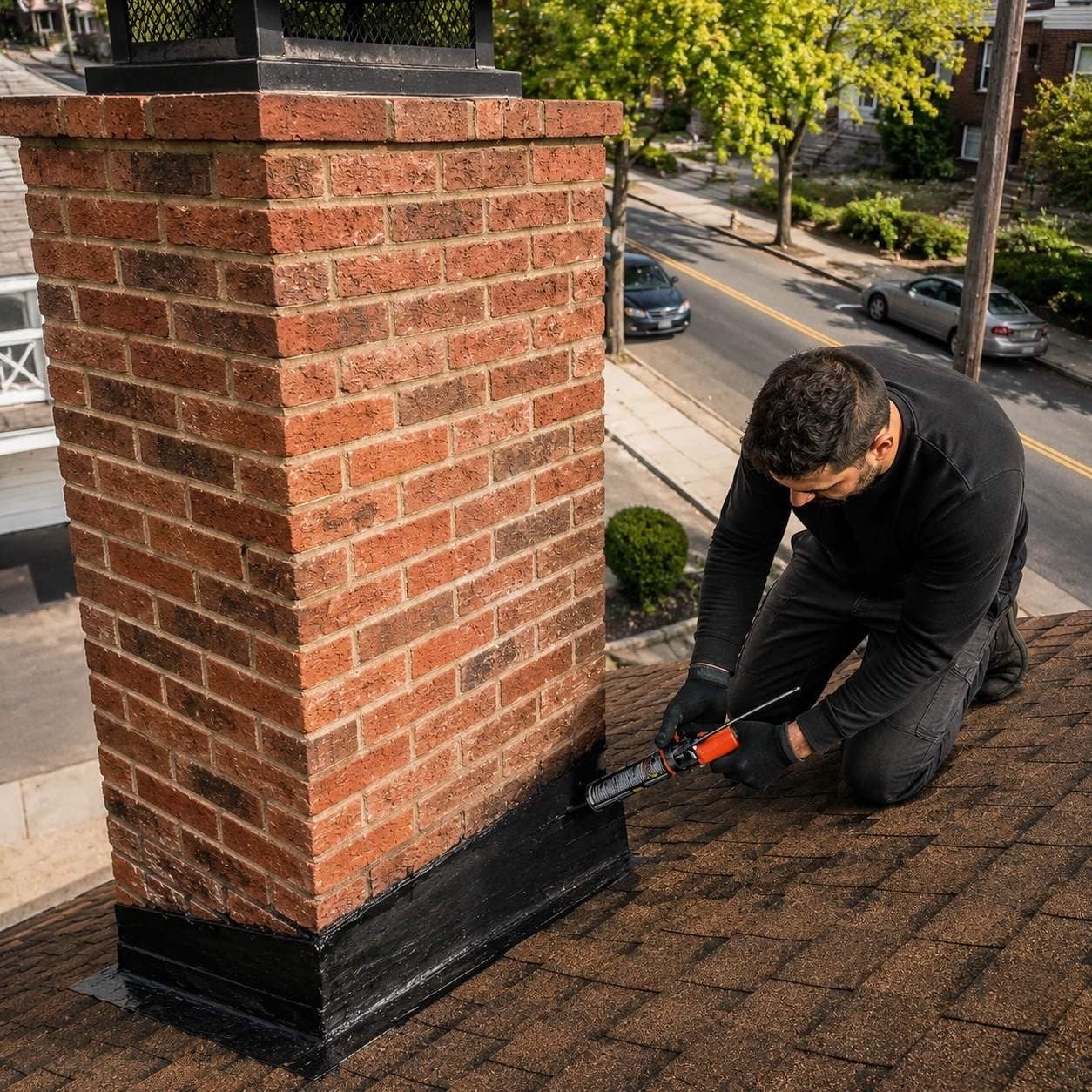
The word “waterproofing” oversells what these products do. They are water repellents, not membranes. The masonry stays porous to vapor, which is the point: water that gets in through a joint or from inside the house has to be able to dry out through the face of the brick.
Breathable repellent vs film-forming sealer
Clear masonry coatings fall into two families, and the difference matters more than the brand.
| Feature | Penetrating repellent (silane / siloxane) | Film-forming sealer (acrylic, urethane, wax, paint) |
|---|---|---|
| How it works | Soaks into the surface and lines the pores so water beads off | Forms a continuous skin on the face of the brick |
| Vapor movement | Lets water vapor pass, so the masonry can dry | Restricts drying; moisture from behind can get trapped |
| Appearance | Little or no change when applied correctly | Often a sheen, darkening or “wet look”; can cloud if moisture gets behind it |
| Risk to the brick | Low on sound masonry | Trapped moisture and salts can cause clouding and spalling |
| BIA’s recommendation for exterior brick | Preferred; siloxanes recommended, catalyzed silanes also used successfully | Discouraged on exterior brick walls |
How it works
- Penetrating repellent (silane / siloxane)
- Soaks into the surface and lines the pores so water beads off
- Film-forming sealer (acrylic, urethane, wax, paint)
- Forms a continuous skin on the face of the brick
Vapor movement
- Penetrating repellent (silane / siloxane)
- Lets water vapor pass, so the masonry can dry
- Film-forming sealer (acrylic, urethane, wax, paint)
- Restricts drying; moisture from behind can get trapped
Appearance
- Penetrating repellent (silane / siloxane)
- Little or no change when applied correctly
- Film-forming sealer (acrylic, urethane, wax, paint)
- Often a sheen, darkening or “wet look”; can cloud if moisture gets behind it
Risk to the brick
- Penetrating repellent (silane / siloxane)
- Low on sound masonry
- Film-forming sealer (acrylic, urethane, wax, paint)
- Trapped moisture and salts can cause clouding and spalling
BIA’s recommendation for exterior brick
- Penetrating repellent (silane / siloxane)
- Preferred; siloxanes recommended, catalyzed silanes also used successfully
- Film-forming sealer (acrylic, urethane, wax, paint)
- Discouraged on exterior brick walls
Much of the published caution about film formers focuses on freeze-thaw damage, which Central Florida rarely sees. The other mechanism still applies here: when moisture can’t get out, dissolved salts crystallize just under the surface and can push the face off the brick. That is the same process behind white staining on chimney brick, and a coating that traps it makes things worse, not better.
When a chimney is a good candidate
Waterproofing tends to make sense when
- The brick and mortar are sound, or have just been repaired
- The crown is intact, sloped and overhanging, and the flashing is tight
- Damp interior walls or staining follow long wet spells rather than every rain
- The brick is noticeably absorbent: it darkens quickly and stays dark after rain
- Previous water entry has been traced and fixed, and you want to reduce absorption going forward
- The chimney has no existing film-forming coating, or it has been removed
Leaks waterproofing won’t fix
A repellent slows water soaking into brick and mortar. It can’t close an open flashing joint, a cracked crown, a rusted chase cover or a missing cap, and those cause most active leaks. If water is already coming in, start with finding the leak; the fix may be flashing, the crown or the chase cover.
When not to seal a chimney
- Open or crumbling joints. Repointing comes first. A repellent over eroded mortar leaves the real water path open. Our page on crumbling chimney brick and mortar explains the warning signs.
- Spalling or cracked brick. Units with broken faces need replacing, which is part of chimney brick and mortar repair.
- A failed crown or flashing. Coating the brick below a cracked crown doesn’t stop water entering from the top; repairing the crown does.
- Active efflorescence. Salts on the surface mean water is moving through the wall. Find and stop the source, clean the salts off, and see whether they come back before treating.
- Wet masonry. Most products need a dry or only slightly damp surface; follow the manufacturer’s limits.
- Painted or previously sealed brick. Penetrants generally won’t work over an existing film, and removing old coatings is its own job.
- Non-breathable products. Paint, elastomeric wall coatings, or general-purpose “waterproof” sealers are not substitutes for a masonry repellent on a chimney that needs to dry outward.
Sometimes the repairs are enough
BIA suggests waiting several months after remedial repairs before deciding on a repellent, because repointing and fixing caps and flashing often solve the moisture problem by themselves. If the brick stays dry through a wet season after the repairs, there may be no need to coat it at all.
Stucco, stone and framed chimneys
| Chimney finish | What protects it | Notes |
|---|---|---|
| Exposed brick | Sound mortar, a good crown, then an optional penetrating repellent | The classic case for masonry waterproofing |
| Natural or manufactured stone veneer | Correct flashing and drainage behind the veneer; repellent only if the stone maker allows it | Some veneers are installed over a drainage layer, which changes the approach |
| Stucco over a masonry chimney | Crack repair first, then a coating the stucco or coating manufacturer approves for that substrate | Check vapor permeability before using an elastomeric paint on a chimney that has to dry outward |
| Stucco or siding on a framed chase | Chase cover, storm collar, flashing and properly detailed cladding | Not a masonry waterproofing job; see prefab chimney and chase repair |
Stucco finishes deserve extra care. A framed chase finished in stucco can look exactly like a masonry chimney from the street, but it keeps water out through its chase cover and the weather barrier behind the stucco, not through a surface sealer. Sealing the outside of a leaking chase usually just hides where the water is getting in.
How a chimney is waterproofed
Check the whole water path
Crown, cap, flashing, joints and brick faces are checked first, and any defects are repaired before a repellent is considered.
Let repairs cure
New mortar and crown material need time to cure before they are treated; the repellent manufacturer’s waiting period applies.
Clean the masonry
Dirt, algae and efflorescence are removed with the gentlest method that works. Aggressive pressure washing can damage soft brick and old mortar.
Confirm it’s dry enough
The chimney is treated in dry weather, within the moisture limits on the product label.
Protect surrounding surfaces
Some silanes and siloxanes react with glass, and overspray can mark roofing and trim, so nearby surfaces are masked.
Apply as the label directs
The repellent is applied from the top down at the coverage rate and number of coats the manufacturer specifies. More product is not better: heavy or repeated coats can reduce breathability.
How long chimney waterproofing lasts
It varies by product and exposure, so follow the manufacturer’s guidance for yours. As a general reference, BIA notes that most masonry coatings have to be reapplied every five to 15 years, that penetrants usually last longer than film formers, and that reapplying too soon can itself reduce the brick’s vapor permeability. A simple check is to wet the brick with a spray bottle: if water beads, the repellent is still working; if it soaks in and darkens the brick, it has worn off in that area.
Humid weather affects chimneys in more ways than rain alone, including odor and rust inside the fireplace. Our guide to how Florida humidity affects chimneys and fireplaces covers the indoor side of that.
What affects the cost of chimney waterproofing
Waterproofing is usually a smaller line item than the repairs that should precede it. These are the factors that decide the scope.
- Chimney height and the surface area to be treated
- Repairs needed first: repointing, brick replacement, crown or flashing work
- Cleaning required, including efflorescence or algae removal
- Removal of an old film-forming coating or paint, if present
- Masking needs around windows, skylights and roofing
- Roof pitch and access
Waterproofing is the last step, not the first
Sealing masonry works on masonry that is otherwise sound. Applied over a cracked crown, a missing cap or failed flashing, it seals water in as effectively as it keeps water out.
So the order matters: fix the way water is getting in, then treat the masonry to stop it soaking through the face. A crown repair, a cap and sound flashing come first, and the sealer goes on afterwards.
The product also matters. A vapour-permeable siloxane or silane repellent lets the masonry breathe outward while shedding liquid water. A film-forming sealer — paint, or a general-purpose waterproofer — traps moisture inside the brick, and in a freeze-free but very humid climate that produces spalling and efflorescence rather than preventing it.
References (2)
Facts and figures on this page come from these references.