Why an idle chimney stays damp
In a cold climate, regular fires heat the flue and drive moisture out of the masonry and metal. Around Orlando, most fireplaces are lit only a handful of times a year, so that drying rarely happens. Meanwhile the air around the chimney swings through a wide range of moisture every day: average relative humidity in Orlando runs about 89% at 4 a.m. and about 55% at 1 p.m. (CurrentResults, NCEI normals). Near-saturated air every night means metal and masonry surfaces spend long hours damp, and the daily cycle of wetting and partial drying is what drives the problems below.
Humidity rarely acts alone. It makes a small leak worse and slower to dry, and a small leak makes the humidity problems worse. If there is liquid water getting in during storms, that comes first; our guide to why chimneys leak in Florida rainstorms covers those entry points.
What humidity does to each part
| Part | What you may notice | Why it happens | What helps |
|---|---|---|---|
| Damper (masonry) | Rust flakes on the smoke shelf, a damper that sticks or won’t seal | Cast iron and steel sit in damp air at the coolest point of the flue | Keeping it closed when not in use; replacement or a top-sealing damper if it no longer seals |
| Metal firebox and panels (factory-built) | Rust on the firebox floor, grate or screen; flaking paint on metal surrounds | Thin steel, damp air, and any drips from above | Finding any water entry first; keeping the fireplace closed off from outdoor air |
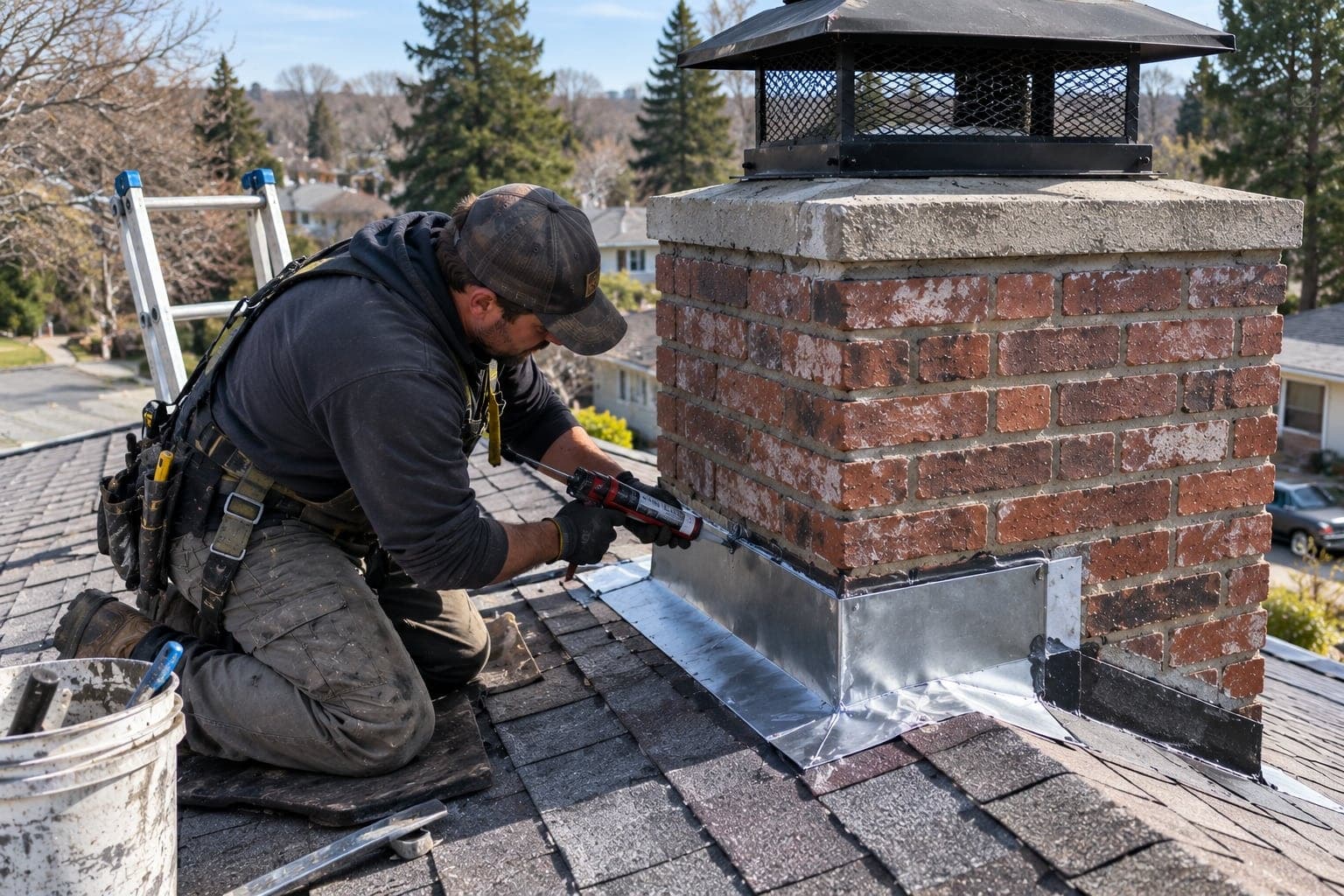
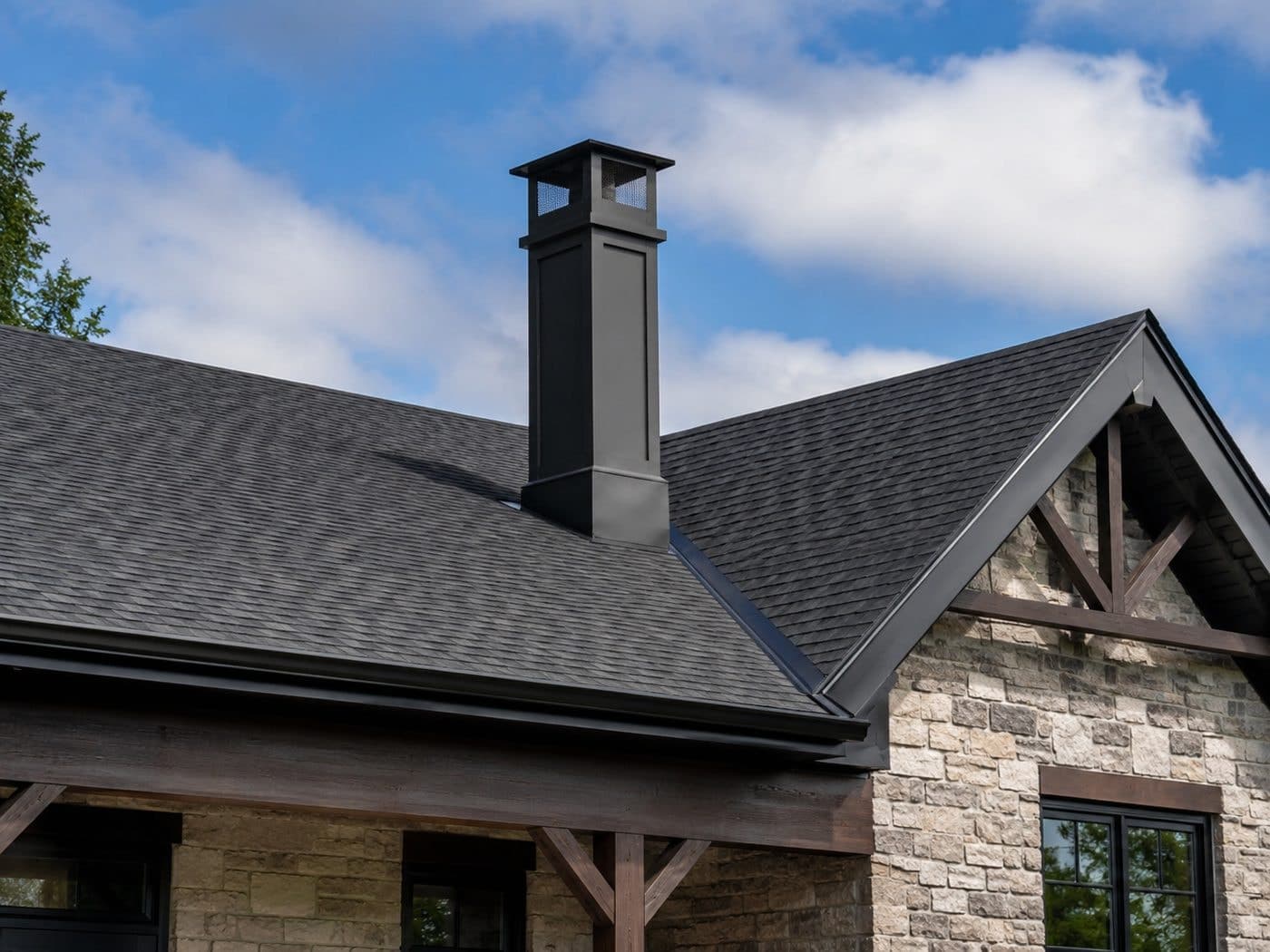
| Chase cover and termination cap | Rust streaks down the chase siding; rust around the flue collar | Galvanized coatings wear through, then damp and standing water rust the steel | A sloped stainless replacement cover; a cap matched to the system |
| Framing inside a chase | Musty smell near the fireplace, stains or soft drywall on the chase wall | Wood and insulation stay damp when moist air or water reaches them | Stopping water and air entry, then repairing damaged material |
| Brick and mortar | White powdery deposits, damp patches, flaking brick faces | Water carries salts to the surface and leaves them as it evaporates | Fixing the moisture source; a vapor-permeable repellent on sound masonry |
| Creosote in the flue | A stronger tar or campfire smell on muggy days | Deposits give off more odor when damp and when air moves through them | Sweeping; sealing the flue against air flow |
Rust on dampers, fireboxes and chase covers
Rust is the most visible sign of a chimney living in damp air. On a masonry fireplace, the cast-iron throat damper is usually the first casualty: it rusts, sticks, and stops closing tightly, which lets even more humid air into the flue. On a factory-built fireplace, the firebox, grate and screen are thinner steel, and rust there is worth a closer look, because persistent rust inside the unit can also mean water is dripping down from the top. A damper that has seized or no longer seals is a job for damper repair or replacement; a firebox with rust holes shouldn’t be used until it has been checked.
Outside, galvanized chase covers rust from the top down once their zinc coating wears through, and the orange runoff is often the first thing an owner notices. If streaks are running down your siding, rust stains on a chimney explains what each pattern usually means.
Mold in a damp chase or on masonry
A framed chase is a wooden box with insulation and drywall on the inside. If humid air or rainwater gets into it and can’t dry out, the framing and paper-faced materials inside can support mold. The EPA’s guidance is to find and fix the moisture source and to keep indoor humidity below 60%, ideally between 30% and 50% (EPA). Cleaning mold without stopping the moisture just resets the clock.
White deposits on brick (efflorescence)
Those white, chalky patches on brick are efflorescence: salts dissolved from mortar, concrete or the brick itself, carried to the surface by moisture and left behind when it evaporates. The Brick Industry Association notes that it needs both soluble salts and water in contact with them long enough to dissolve them (BIA Technical Note 23A). The deposit itself is usually harmless, but it is a moisture map. If it keeps coming back, see white stains on a chimney for what the location tells you.
Odors that get stronger in summer
Creosote, soot, damp masonry and anything nesting in the flue all smell stronger in muggy weather. The odor side of the story, with the fixes matched to each cause, is covered on our page about a fireplace that smells when it’s humid. The short version is that a smell needs two things: a source in the chimney, and air moving from the chimney into the house.
Air conditioning and the flue: why damp air comes down
A house with exhaust fans, a dryer and a closed-up, air-conditioned interior can end up at slightly lower pressure than the outdoors. Replacement air comes in wherever it can, and an unsealed flue is an easy path: a large opening that runs straight outside. The air that comes down it is warm and humid outdoor air.
When that air meets surfaces cooled by the air conditioning, such as the firebox, glass doors, a metal fireplace unit or the lower flue next to a cool room, moisture in it can condense, much like water beading on a cold glass. That is one plausible reason some fireplaces look damp or drip on humid days with no rain at all, and why an owner may feel cool air falling out of the fireplace one day and smell damp air the next. Rain entry should still be ruled out first, because the two can look alike.
The fireplace is also an energy leak
The same open path that lets humid air in lets conditioned air out. Sealing the flue when it isn’t in use is one of the few fireplace fixes that helps with odor, moisture and comfort at once.
Keeping humid air out
| Feature | Top-sealing damper | Glass fireplace doors |
|---|---|---|
| Where it seals | At the top of the flue, with a gasketed lid | At the front of the firebox |
| What it keeps out | Rain and humid air from the whole flue, and often animals | Air moving between the firebox and the room |
| Flue stays | Closed off from outside air when shut | Open to outside air above the doors |
| Best for | Masonry chimneys with a worn or rusted throat damper | Adding a second seal, or where a top damper isn’t suitable |
| Watch for | Must be fully opened before any fire; the release cable runs down into the firebox | Doors must be rated for the fireplace; not a substitute for a damper |
Where it seals
- Top-sealing damper
- At the top of the flue, with a gasketed lid
- Glass fireplace doors
- At the front of the firebox
What it keeps out
- Top-sealing damper
- Rain and humid air from the whole flue, and often animals
- Glass fireplace doors
- Air moving between the firebox and the room
Flue stays
- Top-sealing damper
- Closed off from outside air when shut
- Glass fireplace doors
- Open to outside air above the doors
Best for
- Top-sealing damper
- Masonry chimneys with a worn or rusted throat damper
- Glass fireplace doors
- Adding a second seal, or where a top damper isn’t suitable
Watch for
- Top-sealing damper
- Must be fully opened before any fire; the release cable runs down into the firebox
- Glass fireplace doors
- Doors must be rated for the fireplace; not a substitute for a damper
A top-sealing damper is often the most effective single step for a masonry chimney, and it can be fitted as part of chimney damper repair. Factory-built fireplaces are listed systems, so any damper, door or cap on them should be a part the manufacturer allows. Whatever is installed, the flue must be fully open before a fire is lit.
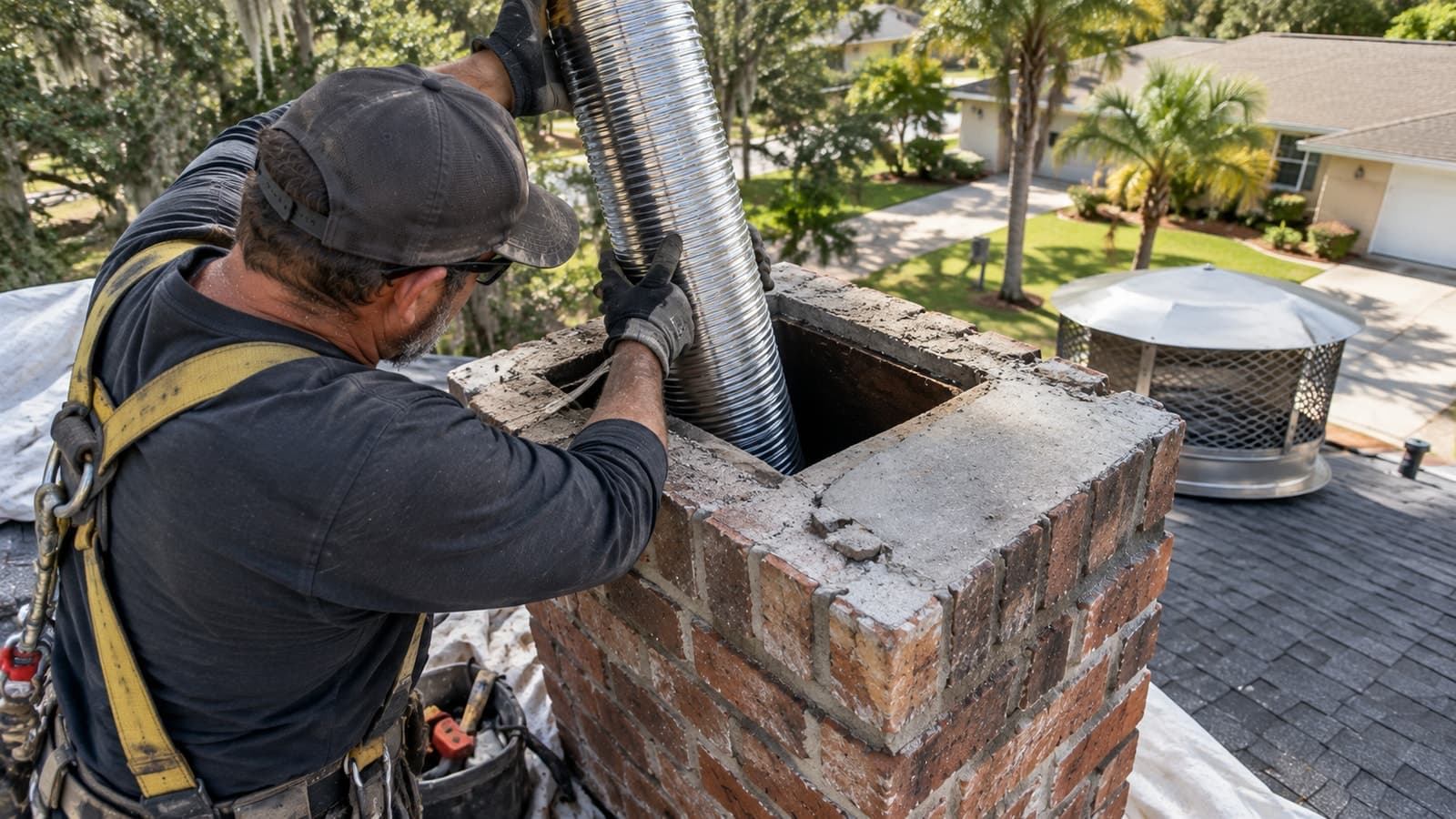
Sealing works best on a clean, dry flue. If the flue has creosote in it, sweeping first removes the odor source; if the top is letting water in, fix the cover, crown or cap before sealing, or you trap the moisture inside. On a factory-built chimney that often means replacing a rusted chase cover with a sloped stainless one.
Dehumidification and masonry protection
- Indoor humidity: keep it below 60%, as the EPA recommends, using the air conditioning and a dehumidifier where needed. A hygrometer costs little and tells you whether the room near the fireplace is running damp.
- Keep the damper closed whenever the fireplace isn’t in use, and check that it actually seals.
- Don’t block the flue with insulation, pillows or plastic as a moisture fix. They hold damp against the metal and masonry, and they are easy to forget before lighting a fire.
- Masonry repellent: on a sound brick chimney, a vapor-permeable water repellent made for masonry reduces how much rain the brick absorbs while still letting it dry. It is a finishing step after repairs, described on our chimney waterproofing page, and does nothing for a framed chase.
A mid-summer moisture check you can do yourself
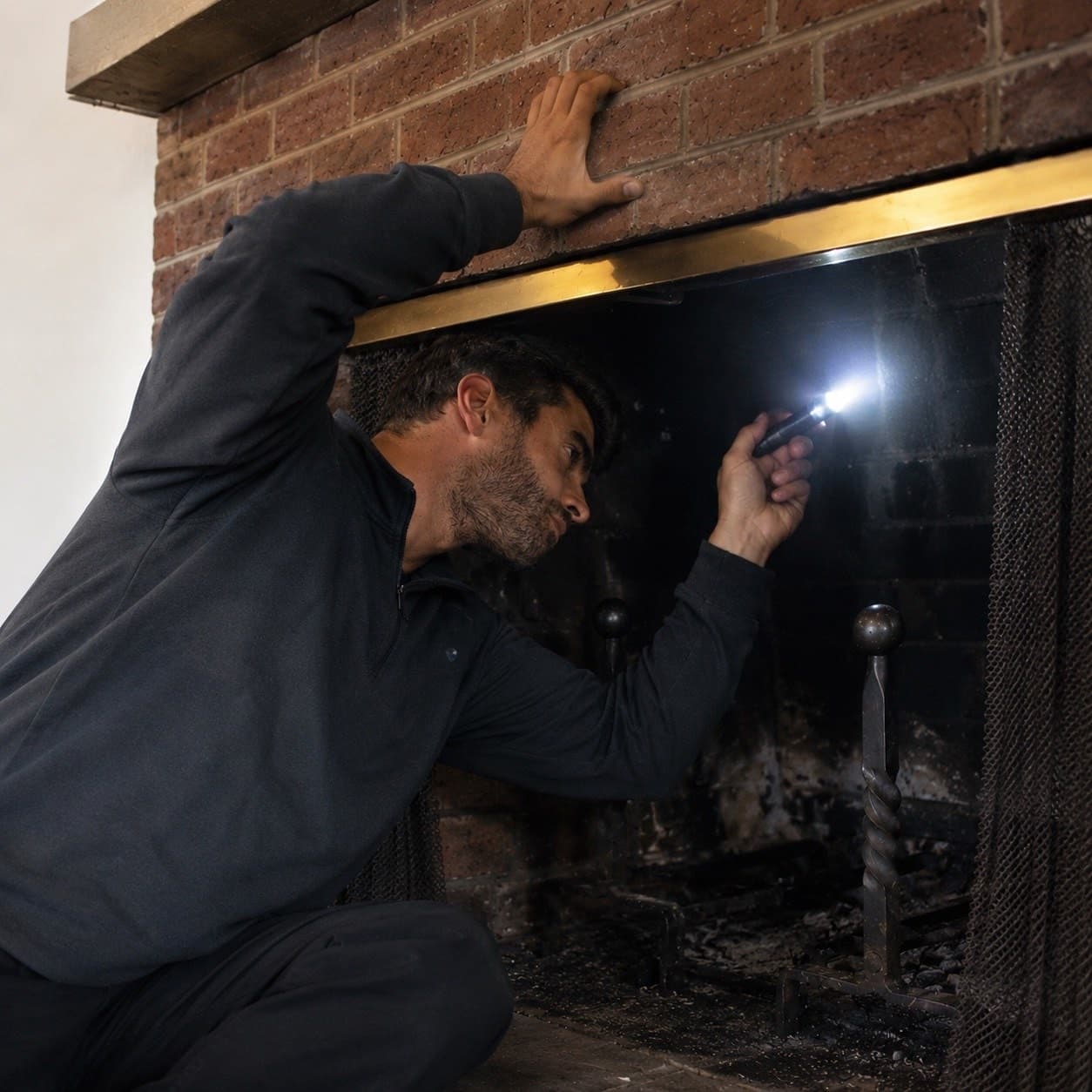
- Shine a light onto the damper and smoke shelf: look for rust flakes, water or white deposits
- On a factory-built unit, check the firebox floor and grate for new rust
- Sniff the fireplace on a humid morning with the exhaust fans off, then on
- Look at the wall and ceiling around the chimney or chase for stains, bubbling paint or soft spots
- From the yard, look for rust streaks below the chase cover and white patches on brick
- Note whether you feel air moving at the fireplace opening when the damper is closed
Anything on that list that has changed since last year is worth mentioning at your next annual inspection, which is also the best time to have the damper, cap and top of the chimney looked at together.
Each effect has its own symptom page: rust stains on a chimney or chase, white stains on brick and a draft from the fireplace. For the fix most owners ask about, top-sealing vs throat dampers explains how a tight damper keeps damp air out. Local pages such as chimney cleaning in Winter Park describe odor and sweeping visits in older homes.
References (3)
Facts and figures on this page come from these references.