On this page
Why chimneys are inspected every year
NFPA 211, the national standard for chimneys, fireplaces and vents, says they should be inspected at least once a year and cleaned or repaired when necessary (NFPA 211; summary at Chimneys.com). That applies whether you burn every weekend or haven’t lit the fireplace since you moved in.
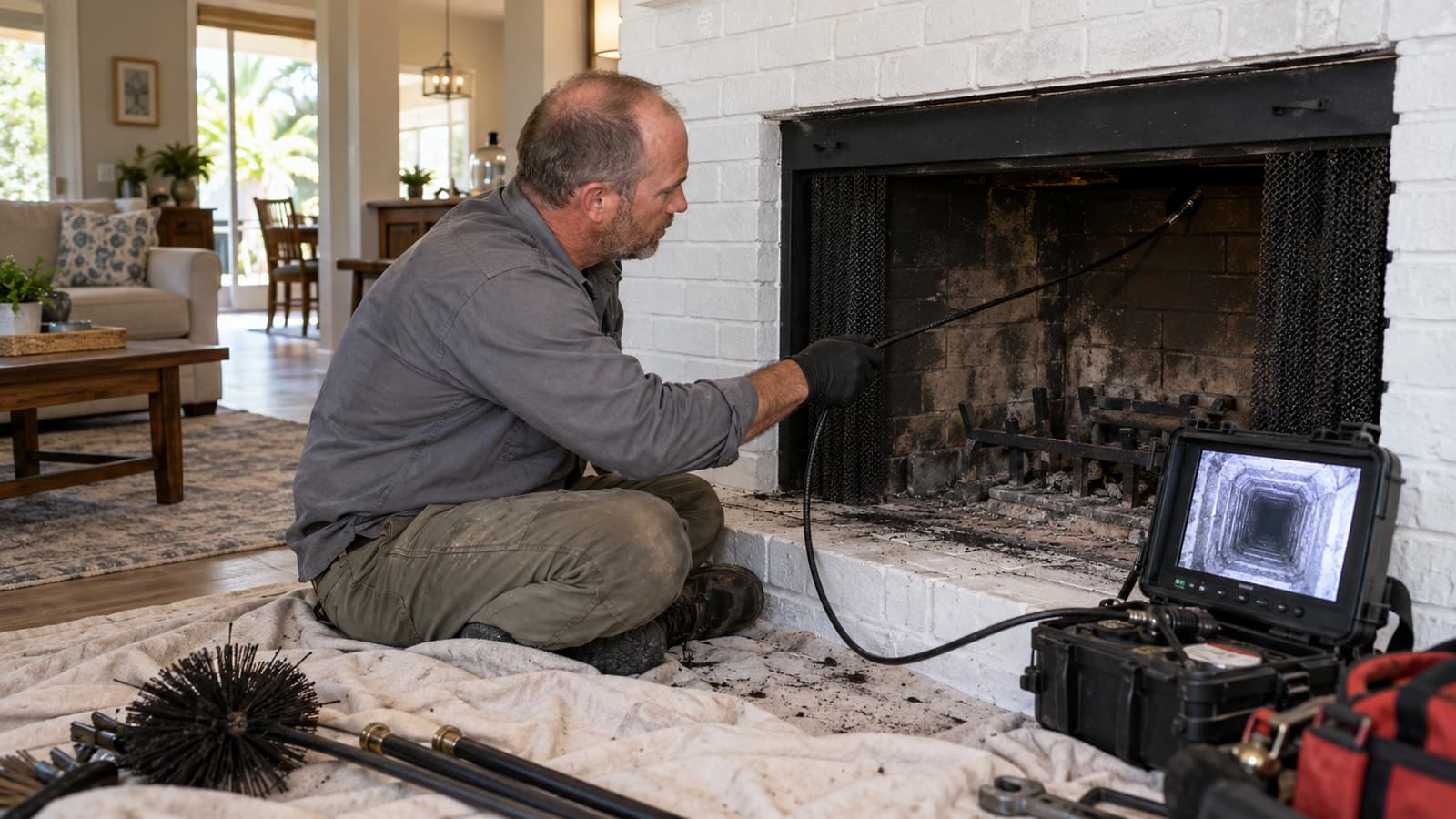
Around Orlando, the reason is usually weather more than creosote. The area averages about 51.5 inches of rain a year (CurrentResults, NCEI normals), most of it in a June–September wet season of daily thunderstorms (NWS Melbourne). A chimney is a roof penetration exposed to all of it. Rusted chase covers, failed flashing and cracked crowns let water into places you can’t see from the living room, and an inspection is how you find it early.
Inspection levels under NFPA 211
NFPA 211 describes three levels of inspection. Each one includes everything in the level below it. The right level depends on what has changed and what we’re trying to find out.
| Level | What it covers | When it applies |
|---|---|---|
| Level 1 | The readily accessible parts of the chimney interior and exterior, the fireplace or appliance, and its connection. No tools are needed to open panels or doors. | Yearly checks and sweeps when the system hasn’t changed and you plan to keep using it the same way. |
| Level 2 | Everything in Level 1, plus accessible attic and crawl-space areas along the chimney and, in industry guidance, a video scan of the flue interior. | Sale or transfer of the property, after a malfunction or an external event such as a storm, lightning or a chimney fire, and when the system changes (new appliance, new fuel type or relining). |
| Level 3 | Everything in Level 2, plus removing parts of the building or chimney, such as chase siding, drywall or a crown, to reach concealed areas. | Only when a Level 2 finds signs of a hidden hazard that can’t be evaluated any other way. |
The Level 2 triggers above come from CSIA and NFPA guidance as summarized by industry sources (Highs Chimney). A Level 3 involves opening up finished surfaces, so we only recommend one when there’s a specific reason. We’ll tell you exactly what would be opened and why before anything is touched.
What hides inside a flue
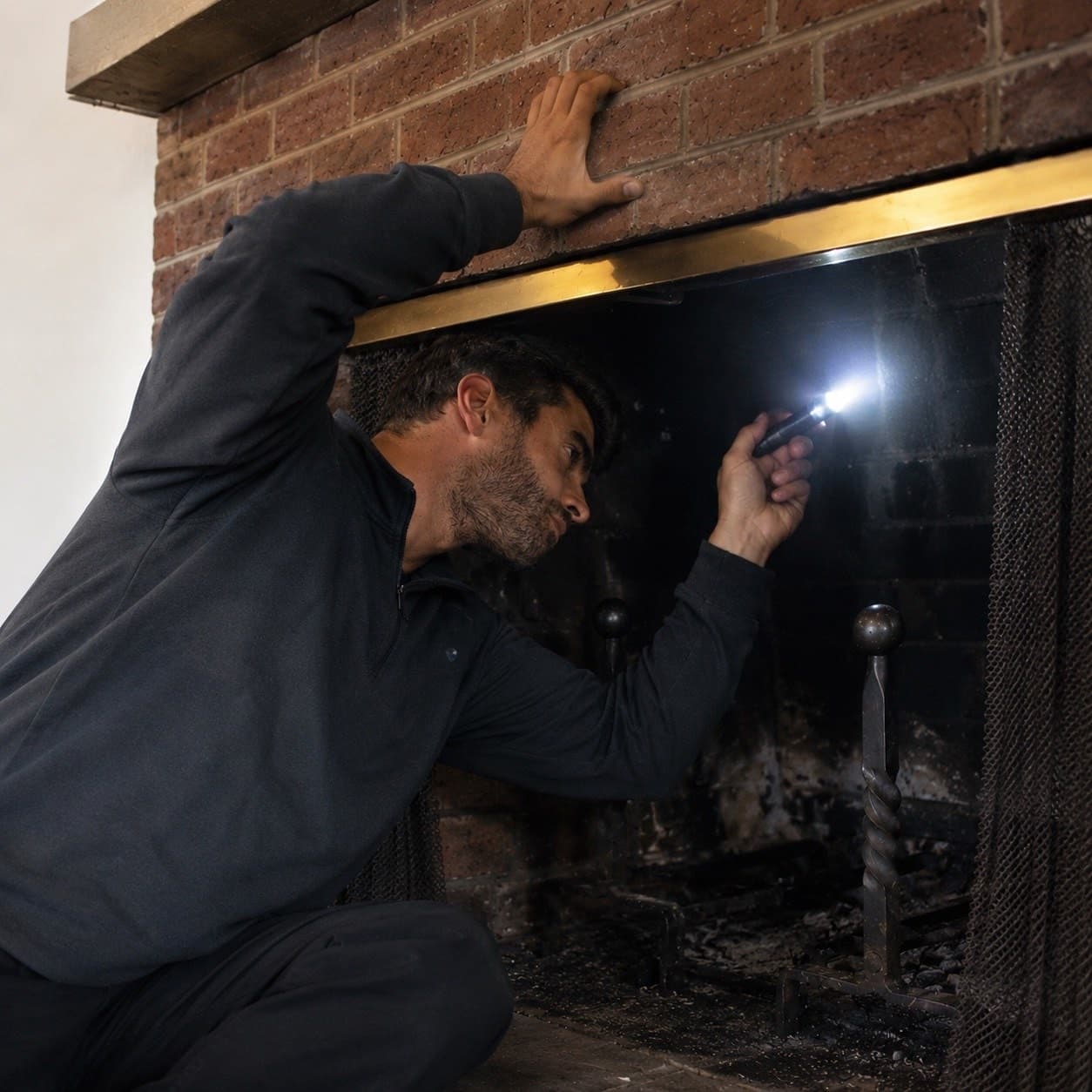
Most of a flue can’t be seen from the firebox or the roof, and that’s where these problems hide:
- Cracked, offset or missing clay flue tiles and open mortar joints
- Separated or corroded sections of a metal flue in a factory-built chimney
- Deteriorated liners, gaps and missing insulation around a stainless liner
- Glazed creosote, nests and debris lodged partway up
- Water staining and rust that show where moisture is getting in
The findings say what could be seen, what couldn’t be reached, and where in the flue each problem sits. For a specific address, the local pages cover each city, starting with chimney inspection for City of Orlando homes.
Masonry vs factory-built systems
Orlando has both, often in different neighborhoods. Census data shows how varied the housing stock is: about 39% of Winter Park’s homes were built before 1970, and central Orlando ZIP codes such as 32804 (College Park) and 32806 (Delaney Park) are over half pre-1970. Horizon West, by contrast, is about 97% built since 2000 (Census ACS 2024 via Census Reporter). Factory-built fireplaces and framed chimney chases are common in many newer Orlando-area homes, and they fail in different ways from brick.
What we look at on a masonry chimney
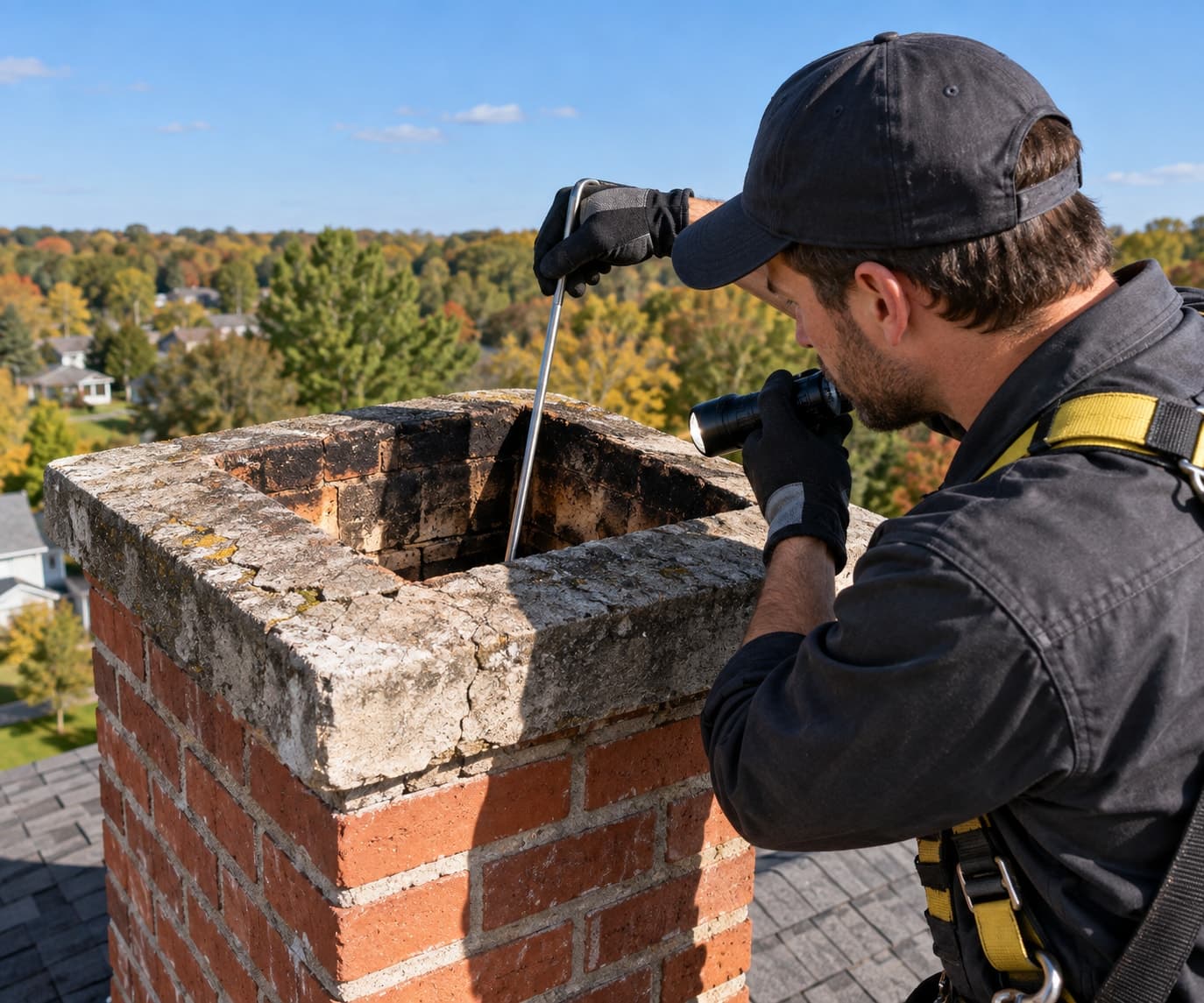
- Crown: cracks, overhang and whether it sheds water
- Brick and mortar: open joints, spalling, efflorescence
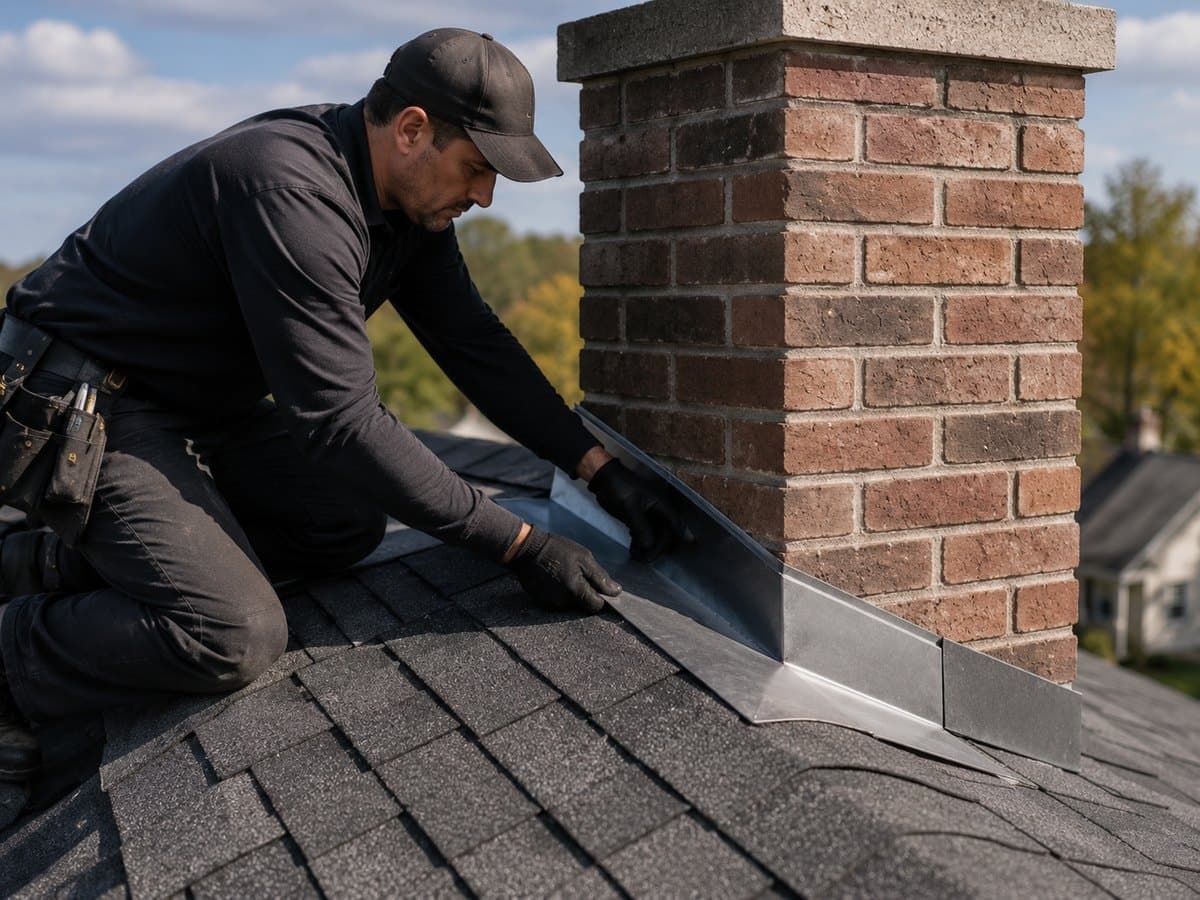
- Flashing and any cricket where the chimney meets the roof
- Clay flue tiles or liner, smoke chamber and smoke shelf
- Firebox brick and mortar joints, damper and hearth extension
What we look at on a factory-built chimney
- Chase cover: rust, sagging, standing water and the storm collar
- Termination cap: correct model for the system, secure and intact
- Metal flue sections: joints, corrosion and separation
- Chase framing and siding or stucco: soft wood, stains, gaps
- Refractory panels, screens, doors and the unit’s rating label
Factory-built units are tested and listed as complete systems, so we also check that the parts installed match the manufacturer’s system. If repairs are needed, they’re covered on our prefab chimney and chase repair page.
Gas fireplace venting
Gas fireplaces don’t build creosote, but they still need a vent that works. What we check depends on the type:
- Direct-vent units draw combustion air from outside and exhaust through a sealed pipe in the wall or roof. We check the termination for damage and blockage, the vent connections and the glass seal.
- B-vent (natural-draft) units rely on the flue drawing properly. We look for soot at the opening, which is a sign of spillage, and check the flue and cap.
- Vent-free units have no flue at all. We look at the unit’s condition and its surroundings, and note anything that affects how it should be used.
If you smell gas
A strong gas smell means leave the house now. Call your gas utility or 911 from outside and don’t operate switches on the way out. Don’t attempt gas piping work yourself; gas-line work is a separate job from appliance service, and we carry that out too.
Routine upkeep of the burner, logs and glass is part of gas fireplace service.
What the findings cover
In every set of findings
- The type of system and the inspection level performed
- The condition of each component we examined
- Which parts of the flue could and couldn’t be seen
- Each finding labeled as a safety concern, a repair to plan for, or a maintenance item
- What we could not access, and why
- Recommended next steps, explained in plain language
The findings are explained before any repair is scheduled. If the findings say the fireplace shouldn’t be used until something is fixed, we’ll tell you that on the spot.
Which inspection do you need?
| Situation | Typical level | Where it’s covered |
|---|---|---|
| Yearly check of a fireplace you use, or one that’s sat unused | Level 1 | This page |
| Adding an insert or stove, switching fuel, or relining | Level 2 | This page |
| After a chimney fire, or water, rust or odor you can’t explain | Level 2 | This page, with leak diagnosis where water is involved |
| Buying or selling a home | Level 2 | Inspection for a home sale |
| After a hurricane, tropical storm or nearby lightning | Level 2 | Hurricane and storm damage inspection |
Level 3 is rare. It means opening part of the structure, such as a chase wall or the brick around a flue, and is only recommended when a Level 2 finds a hidden problem it can’t fully assess.
An inspection doesn’t include cleaning. If the flue needs it, we can sweep the chimney at the same visit.
Looking inside the flue with a camera
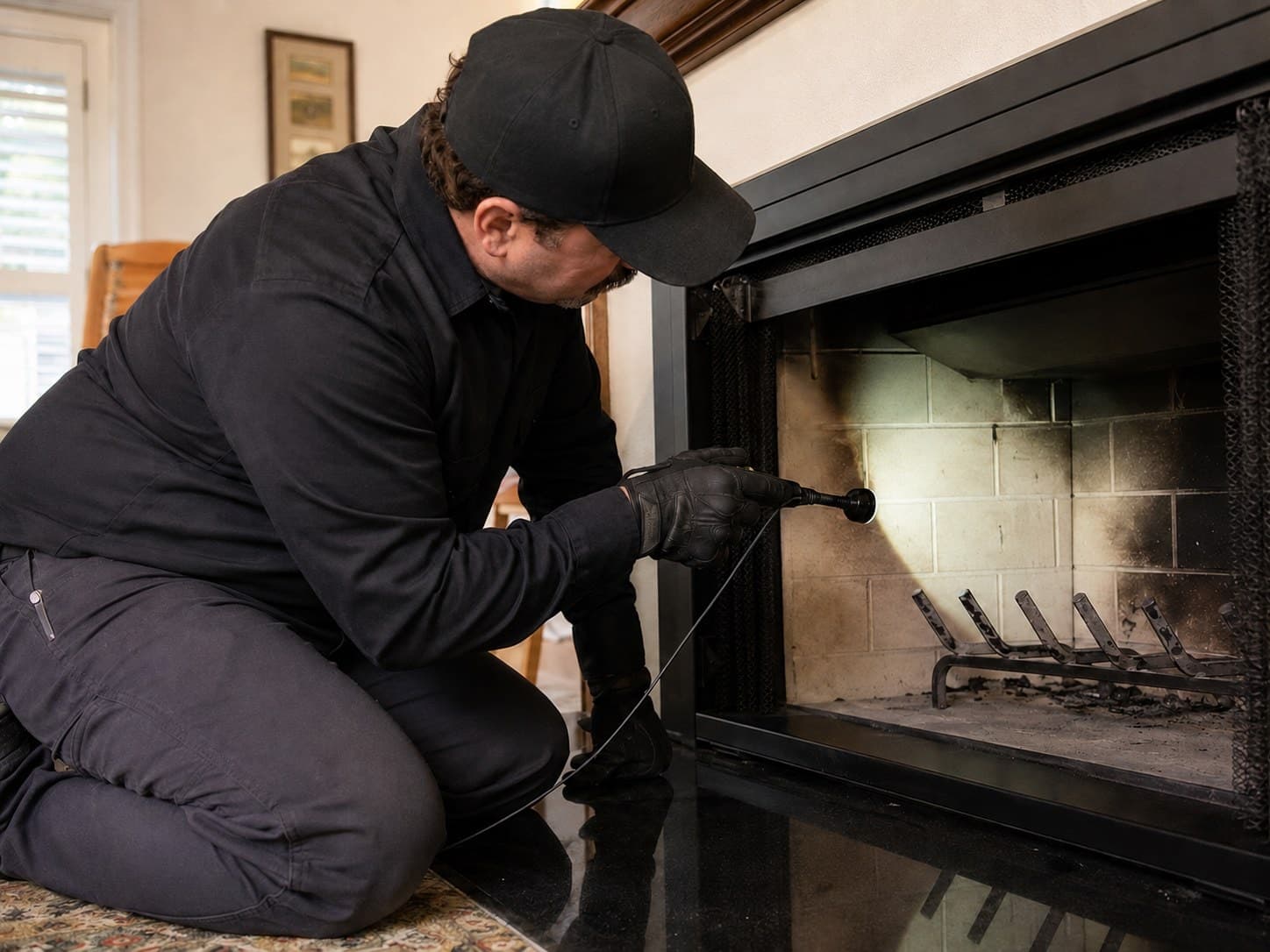
Where an inspection has to evaluate the inside of the flue, that is done with a video scan rather than guesswork. The camera is lowered from the top or raised from the firebox and travels the section nobody can see from either end — which is where cracked tiles, open joints and separated liner sections almost always are.
It is a tool inside an inspection, not a grade of its own. What it shows, when it earns its place and when it does not is set out on the camera inspection and video flue scan page.
Clean first, then look
Soot coats a camera lens and hides exactly the cracks a scan is meant to find. Where a chimney needs both, the sweep happens first and the scan follows on the same visit. That order is agreed with you rather than added quietly to the job.
Inspections booked for a reason, not a routine
A yearly check is the baseline. Most inspections we are actually called out for are triggered by an event, and each of those has its own page because the paperwork and the urgency differ.
Where to go if something specific prompted this
- Buying or selling A home inspector flagged the chimney, or a contract is running to a closing date.
- After a storm Wind, lightning or debris, and a possible insurance claim behind it.
- Something you cannot see A suspected liner problem, a blockage, or a question a visual check has not settled.
- The appliance, not the chimney A fireplace whose condition is the question, rather than the flue above it.
If a fireplace is smoking into the room right now, an inspection is not quite the right booking — the diagnosis is a draft investigation, covered on smoking fireplace and draft correction.
Estimates are free, and inspections are available across Orlando, Winter Park, Maitland, Kissimmee, Oviedo, Clermont and the rest of the Central Florida service area. Where a closing date or an insurance deadline is driving the timing, say so when you book: those get scheduled around the deadline rather than the queue, and same-day attendance is offered where a slot exists.
References (6)
Facts and figures on this page come from these references.
- 1NFPA 211: Standard for Chimneys, Fireplaces, Vents, and Solid Fuel-Burning Appliances
- 2Chimneys.com: NFPA 211 and your chimney
- 3Highs Chimney: Level 1 and Level 2 chimney inspections (summary of CSIA/NFPA guidance)
- 4CurrentResults: Orlando weather averages (NCEI normals)
- 5NWS Melbourne: The Florida Rain Machine
- 6U.S. Census ACS 2024 5-year estimates via Census Reporter