On this page
- Do I have a masonry chimney or a factory-built fireplace and chimney?
- How a factory-built chimney is put together
- What we repair on factory-built chimneys
- Water-damaged framing: what the repair involves
- When replacing the system makes more sense
- How we inspect a factory-built chimney
- Why chases take a beating in Central Florida
- What affects the cost of prefab chimney repair
- Finding out what you have
A factory-built chimney isn’t a smaller version of a brick chimney. It’s a metal flue system, designed and tested together with a specific fireplace, running up through a wood-framed box. Repairs involve carpentry, sheet metal and the manufacturer’s parts, not mortar and brick. Getting that right starts with knowing which system you have.
Factory-built fireplaces and framed chimney chases are common in many newer Orlando-area homes, and they’re easy to mistake for masonry once the chase is finished in stucco. This page is part of our chimney repair services.
Do I have a masonry chimney or a factory-built fireplace and chimney?
You can usually tell in a few minutes without climbing onto the roof. Check as many of these as you can; one sign on its own can mislead, but three or four together are reliable.
| Where to look | Masonry chimney | Factory-built (prefab) fireplace and chimney |
|---|---|---|
| Outside walls of the chimney | Brick, block or stone all the way up; mortar joints visible | A framed box finished in siding, fiber-cement panels or stucco; sometimes a thin stone veneer over framing |
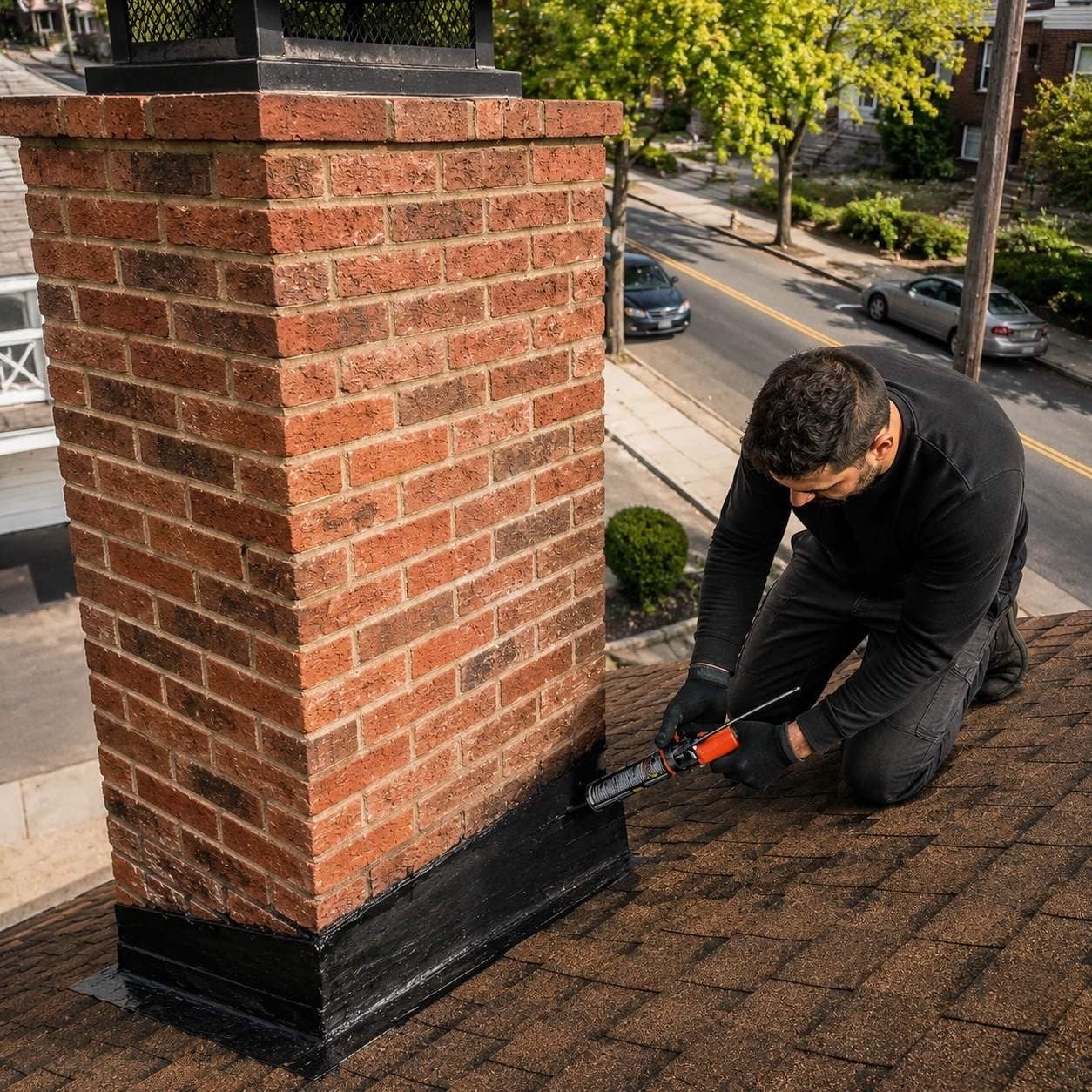
| Top of the chimney | A concrete or mortar crown with a clay flue tile (or a liner) sticking up, often with a cap on the tile | A flat or sloped sheet-metal chase cover with a round metal pipe coming through it, topped by a metal termination cap |
| Inside the firebox | Firebrick laid in mortar, often darkened; masonry smoke chamber above | Molded refractory panels, often with a brick pattern pressed in, set inside a metal box |
| Label or plate | No manufacturer label | A metal rating plate on the unit, often inside the louvers or on the side of the firebox, showing the maker, model and listing |
For every sign, including the flue and the trim around the opening, see masonry vs factory-built: how to tell which you have.
Find the label before you call
If you can find the manufacturer’s label on a factory-built unit, take a photo of it. The maker and model number tell us which flue parts, caps and panels are compatible with your fireplace, which saves time and avoids ordering the wrong parts.
How a factory-built chimney is put together
- The fireplace unit: a metal firebox lined with refractory panels, installed at the base of the chase or inside the house.
- The metal flue: listed pipe sections that lock together and run from the unit to the top, with spacers and firestops where it passes through floors and framing.
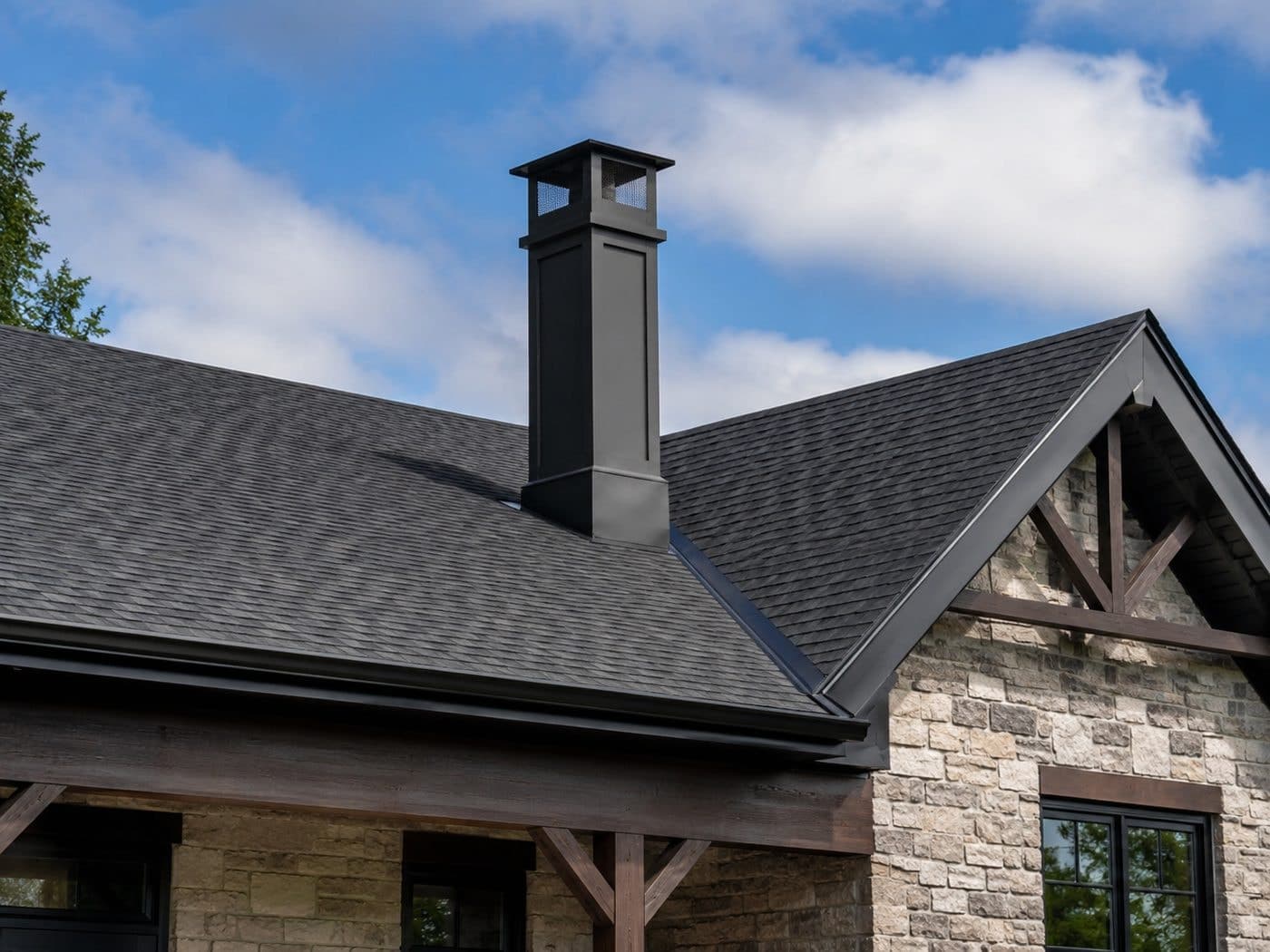
- The chase: a wood-framed enclosure with sheathing, a weather barrier and siding or stucco, built on site to enclose the flue.
- The chase cover: a sheet-metal lid over the whole chase, with a raised collar where the flue passes through.
- The storm collar: a metal band sealed around the flue just above the chase cover to shed rainwater running down the pipe.
- The termination cap: the listed cap on top of the flue that keeps rain and animals out and lets the fireplace vent correctly.
The fireplace, flue and termination cap are a tested system. The chase around them is ordinary house framing, and that’s where most of the water damage happens.
What we repair on factory-built chimneys
The chase and its framing
The chase is a tall, narrow wall exposed on three or four sides. When water gets past the cover or the cladding, it runs down the inside and soaks the top plate, studs and sheathing. Wet framing in a humid climate doesn’t dry quickly. We look for soft or stained wood at the top of the chase, at corners and at the base, where water collects, and replace rotted members before anything is closed back up.
Siding and stucco
Siding panels swell and delaminate at unsealed edges; trim boards rot where they meet the chase cover; stucco cracks and lets water behind it. We repair or replace the damaged cladding, restore the weather barrier behind it, and seal the joints that face the weather. On stucco chases, cracks and staining can be a sign of wet framing behind, so we check what’s underneath instead of just patching the surface.
The metal flue
Factory-built flue pipe is a listed component. That means replacement sections, caps, storm collars and connectors must match what the fireplace manufacturer’s listing allows. Mixing brands or using generic stovepipe can void the listing and create a fire hazard, because the clearances and joint designs were tested as a set. When a section is corroded, separated or damaged, we identify the system from the label and source compatible parts. If those parts are no longer made, we tell you so, because that often decides whether the system can be repaired at all.
Refractory panels and the fireplace itself
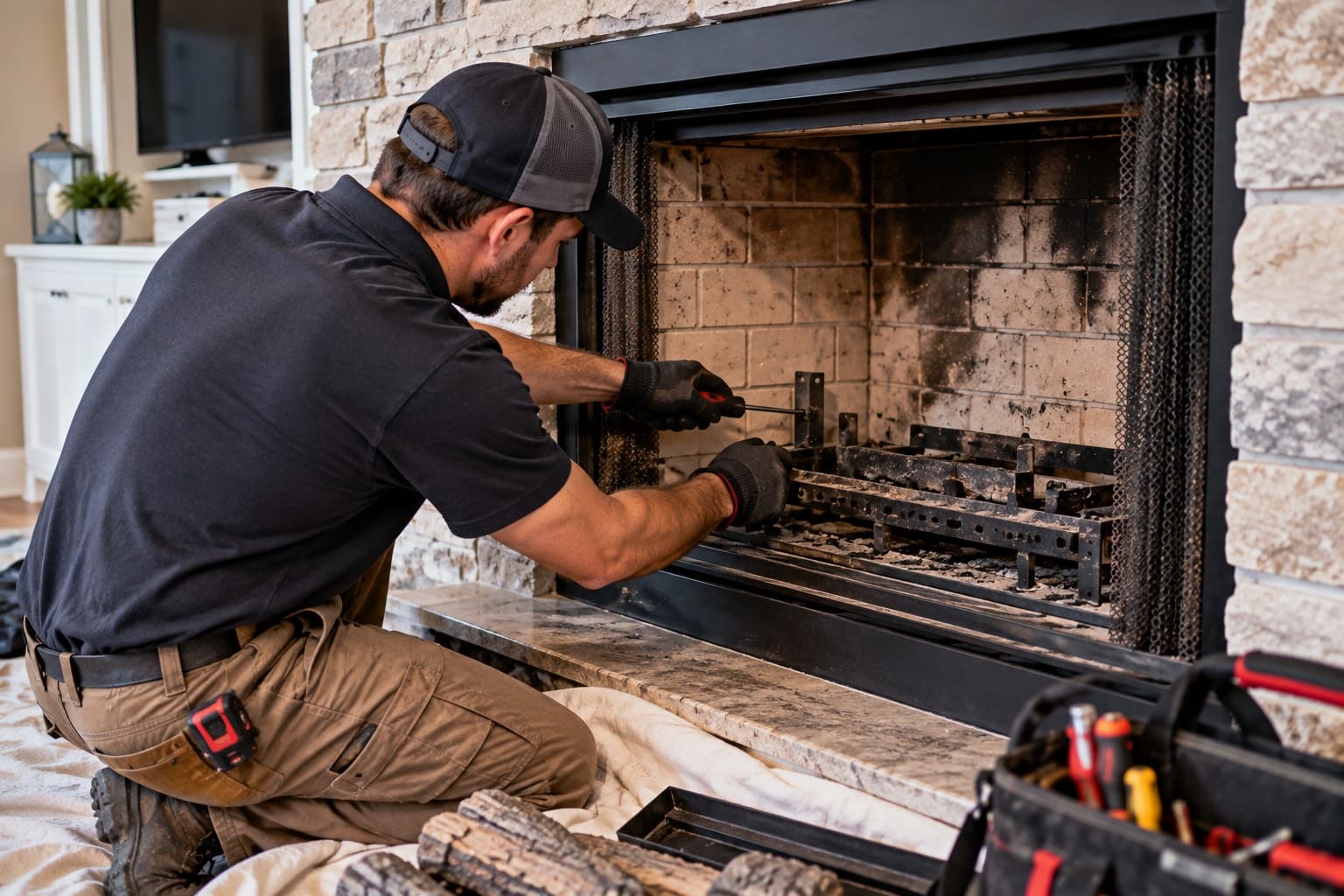
Water coming down the flue often shows up first as rust on the top of the firebox, stained or crumbling refractory panels, or a rusted damper. Panel cracks and firebox problems are covered under fireplace repair. If the firebox metal itself has rusted through or the unit is damaged beyond listed repairs, replacing the prefab fireplace is usually the safer path.
The chase cover
A flat or rusted chase cover is behind a large share of chase leaks. We fabricate custom covers with built-in slope, a raised flue collar and a proper drip edge. The full explanation, including galvanized versus stainless, is on the chase cover replacement page.
The storm collar and termination cap
A storm collar that has slipped, lost its sealant or was never installed lets rain run down the outside of the flue straight into the chase. It’s a small part that causes large leaks. The termination cap should be the correct listed cap for the flue; a damaged or wrong cap lets rain in and can affect how the fireplace vents. Our chimney caps page covers cap options.
Water-damaged framing: what the repair involves
The scope depends on how far the water has travelled. We can often estimate it from the outside, but the full extent is only certain once the cladding is opened. Here is how the work usually breaks down.
| Extent of damage | What’s usually involved |
|---|---|
| Limited to the top of the chase | Remove the chase cover, replace the rotted top plate and a short section of sheathing, install a new sloped cover |
| One side of the chase | Remove siding or stucco on that side, replace sheathing and damaged studs, restore the weather barrier, re-clad and seal |
| Several sides or full height | Open the chase extensively, replace framing and sheathing, check firestops and flue clearances, re-clad, new cover and storm collar |
| Damage reaching the house wall or roof framing | Document and coordinate with a general contractor or roofer; this goes beyond chase repair |
Whenever the chase is opened, what’s inside is shown to you. If the damage is larger than expected, we stop and review it with you before the scope changes. Structural chase work can require a building permit, so that question is settled before the job is scheduled.
When replacing the system makes more sense
Most chase problems are repairable. Replacement of the fireplace and flue becomes the better option when:
- The firebox metal has rusted through or warped, or the unit is damaged in ways the manufacturer doesn’t allow to be repaired.
- Listed replacement parts for the flue, cap or panels can no longer be sourced for your model.
- The flue has corroded along much of its length after years of water coming down it.
- The system shows signs of having overheated, such as warped panels or heat damage near the framing.
- You’re opening the chase for major framing repairs anyway and the fireplace is near the end of its life.
In those cases we explain the options, including replacing the unit or removing it, rather than patching a system that can’t be made safe.
How we inspect a factory-built chimney
Identify the system
Find the manufacturer label, confirm the fireplace and flue type, and note any aftermarket or mismatched parts.
Inside the fireplace
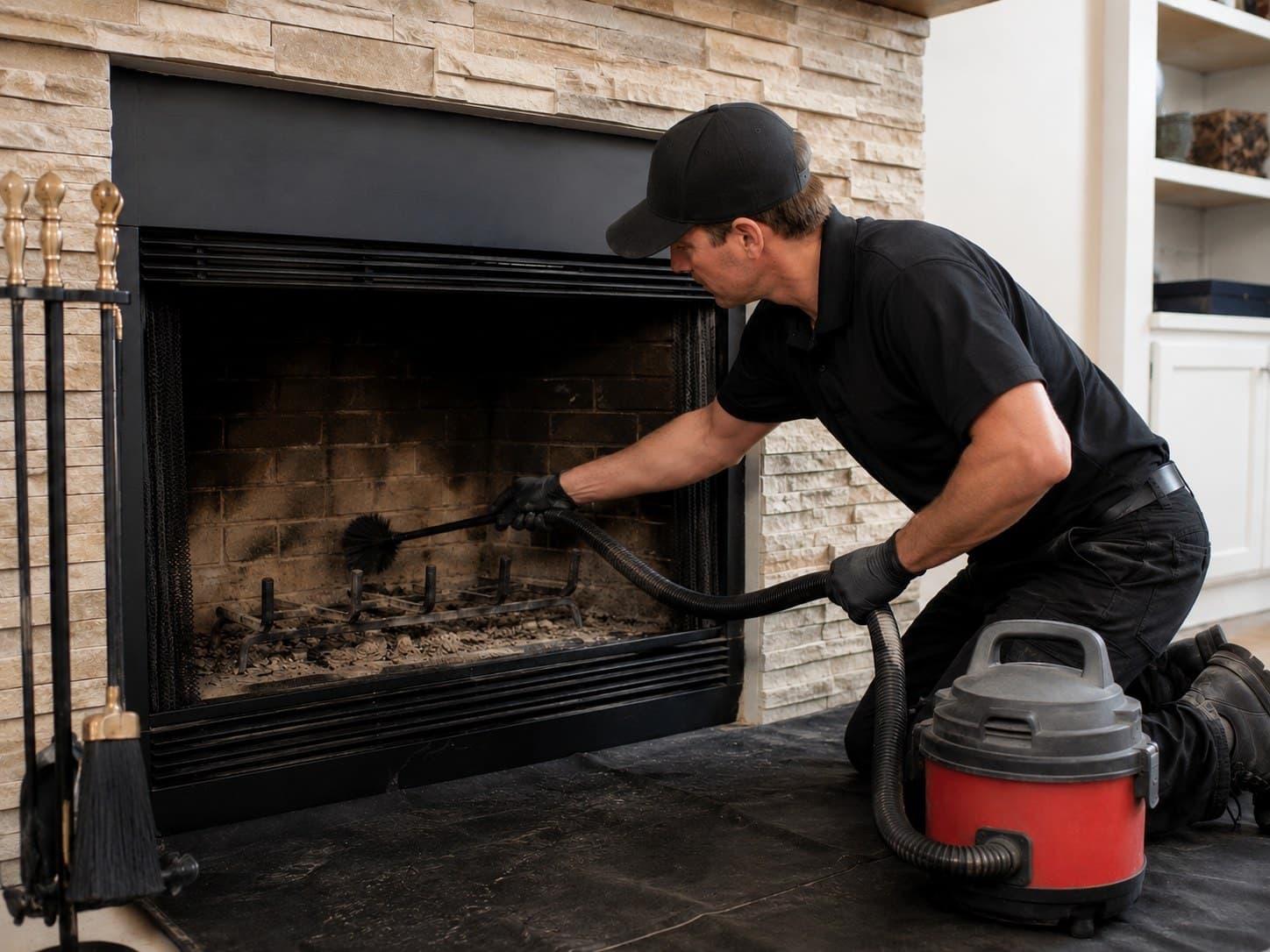
Check refractory panels, the firebox metal, the damper and the visible flue for cracks, rust, water tracks and separation.
The top of the chase
Termination cap, storm collar, chase cover, flue collar and fasteners, including whether water sits on the cover.
The chase walls
Siding or stucco on every side, trim, sealant joints and the roof-to-chase flashing, with moisture readings and probing for soft wood.
Findings and options
A summary of each problem, repair options, any parts compatibility issues, and the likely scope if the chase needs opening.
NFPA 211, the national standard for chimneys and fireplaces, calls for chimneys and vents to be inspected at least once a year (NFPA 211). A routine chimney inspection is often where chase problems are caught, before they show up as a stain indoors. If you already have water inside, the chimney leak diagnosis process traces it to its source.
When to stop using the fireplace
Don’t burn a fire if refractory panels are cracked through or missing, if the flue is separated or visibly damaged, or if non-listed parts have been added to the system. The metal box and flue rely on those parts to keep heat away from the surrounding wood framing.
Why chases take a beating in Central Florida
Orlando averages about 51.5 inches of rain a year and high humidity year-round (CurrentResults, NCEI normals), with the heaviest rain from June through September (NWS Melbourne). A framed chase is wood behind a thin skin of cladding, so small defects at the top or in the siding keep the framing damp through the whole wet season.
What affects the cost of prefab chimney repair
- Height of the chase and roof access
- Cladding type: lap siding, fiber-cement panels, stucco or veneer
- How much framing and sheathing has to be replaced
- Availability of listed flue parts, caps and panels for your model
- Chase cover material and design
- Whether the fireplace unit itself needs repair or replacement
- Permits and coordination with other trades, where needed
Finding out what you have
Factory-built systems are repaired with listed components for that specific model, which makes identification the first step rather than a detail. The rating plate is inside the firebox on a side wall, behind the lower louvre panel, or inside the control cavity.
Where the plate is gone — painted over, sooted, or removed years ago — identification comes from the firebox construction, the panel pattern, the damper design and the flue pipe diameter. Our page on identifying a factory-built fireplace covers the makes common in Central Florida homes and which ones no longer have parts available.
That last point decides a lot of these jobs. A repairable system gets repaired; a Marco or Preway unit needing several components at once is usually a replacement conversation, and it is better to know that at the first visit.
References (3)
Facts and figures on this page come from these references.