On this page
A wood stove burns hotter and more efficiently than an open fireplace, but it vents through a smaller path: a stovepipe (connector) from the stove to the chimney, then a masonry or factory-built flue to the roof. Creosote collects at every bend and joint along that path, and in the baffle area inside the stove.
Stove, insert or fireplace: which cleaning fits?
| What you have | What the cleaning focuses on |
|---|---|
| Free-standing wood stove on legs or a pedestal, with visible stovepipe | This page: stove interior, connector pipe, chimney flue and cap |
| A stove-like box set inside a fireplace opening | Insert cleaning: the liner and its connection to the insert |
| An open wood-burning fireplace | Sweeping the chimney and smoke chamber |
What a stove cleaning covers
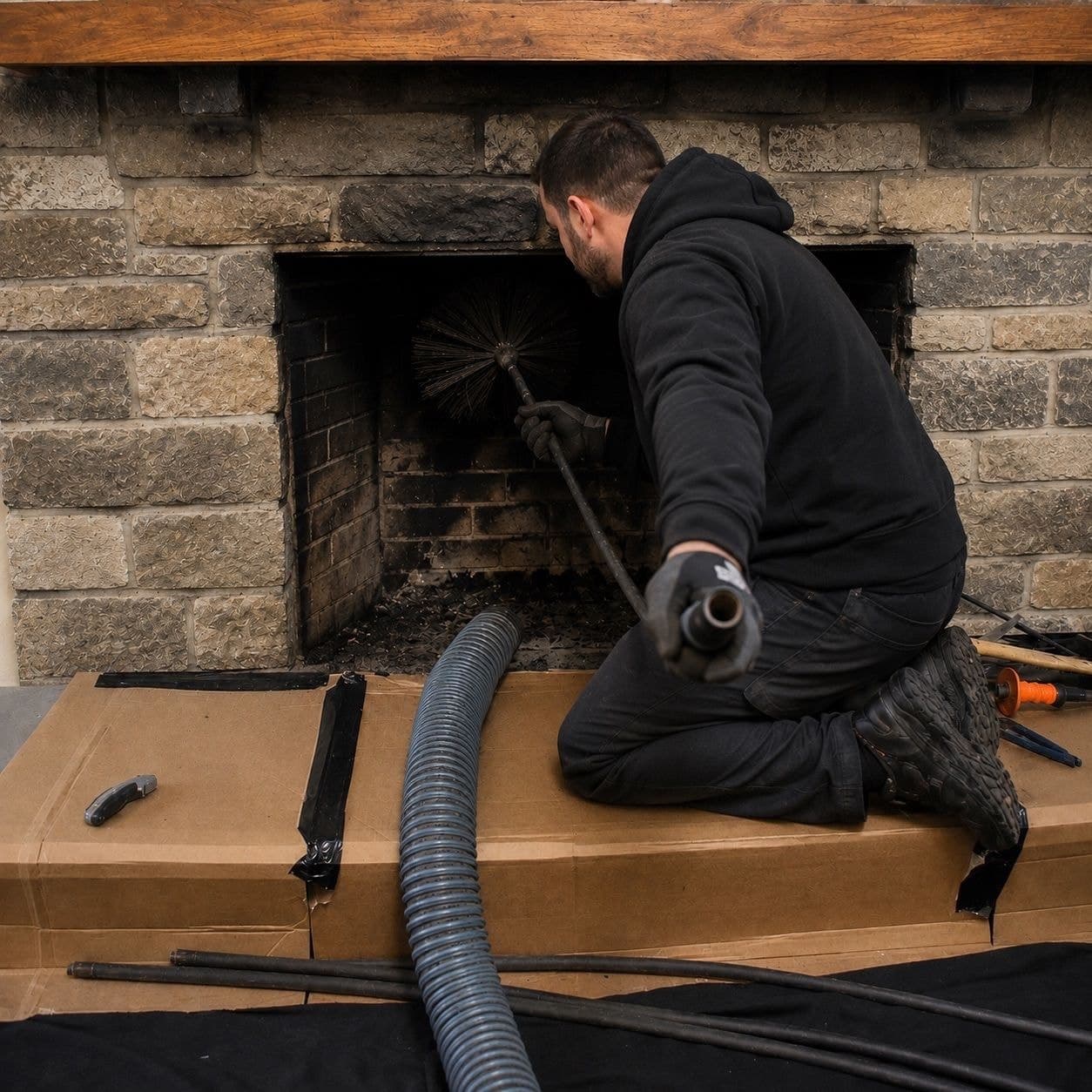
- Stovepipe (connector) cleaned, taken down where needed, and checked for rust, dents and loose joints
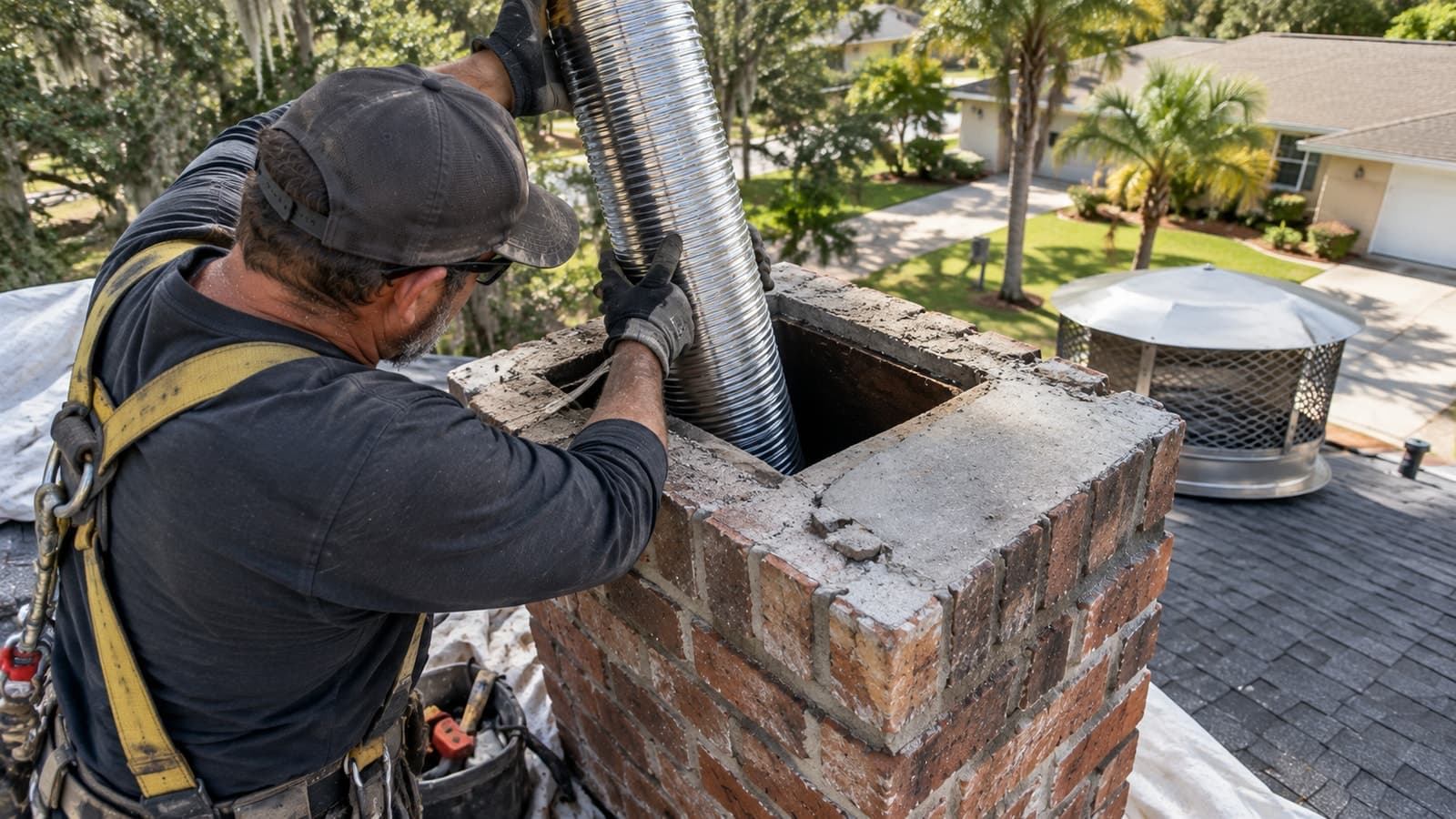
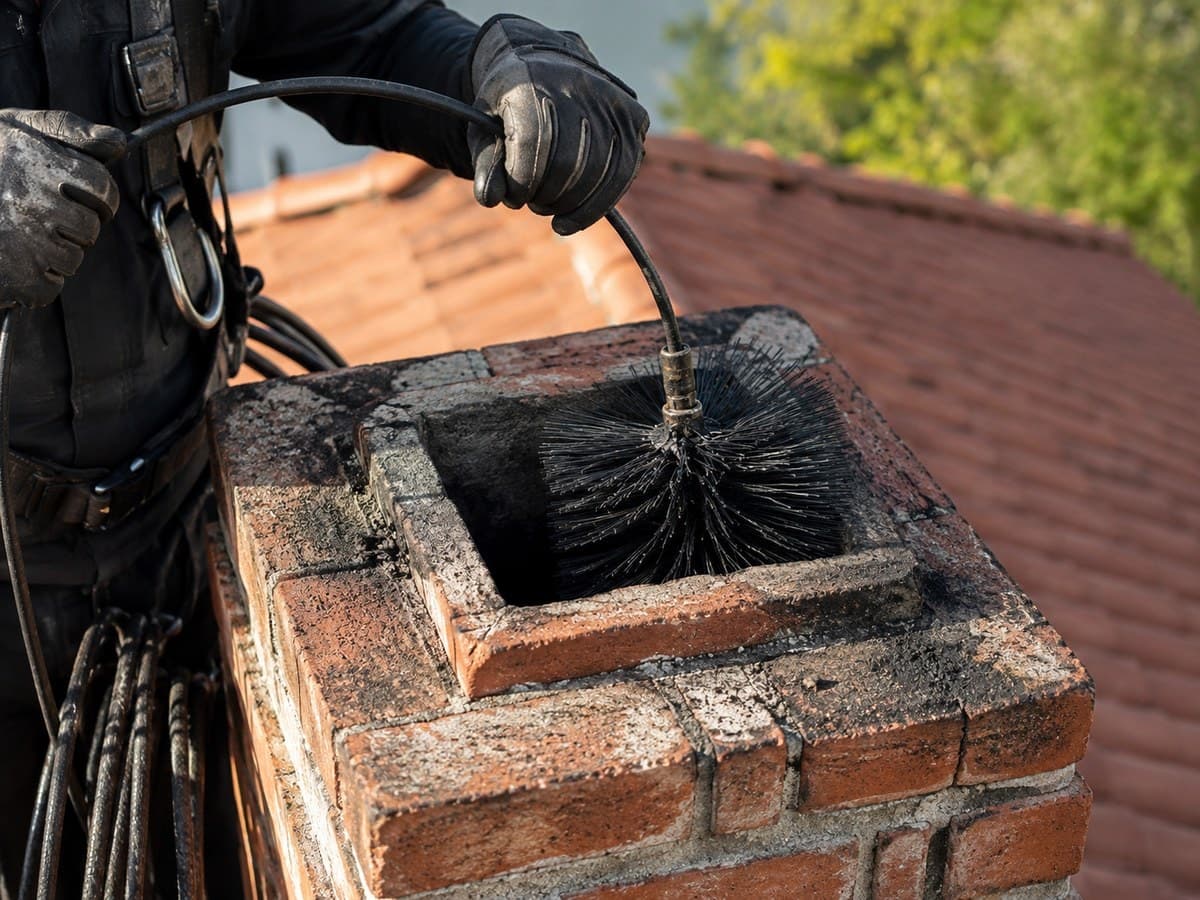
- Chimney flue swept its full length with brushes suited to the liner
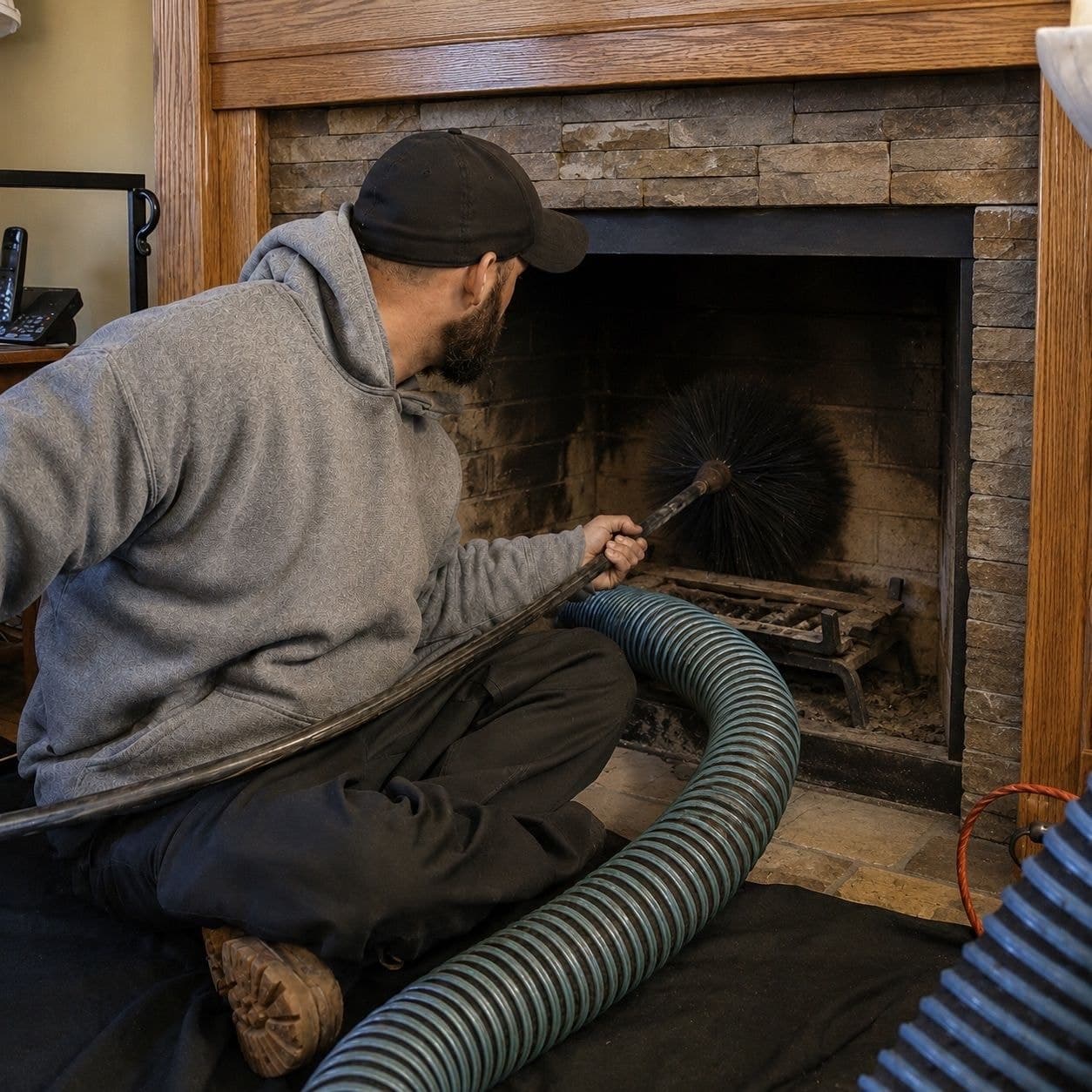
- Baffle and smoke shelf inside the stove cleared of fly ash and creosote
- Catalytic combustor, if fitted, inspected for clogging and damage
- Door and glass gaskets checked for a tight seal
- Firebrick inside the stove checked for cracks and missing pieces
- Glass cleaned with a ceramic-safe product
- Chimney cap checked for a clogged screen, nests or storm damage
Stovepipe and flue: where the creosote is
Deposits aren’t spread evenly. They build where exhaust slows and cools: the elbows in the stovepipe, the thimble where the pipe enters a masonry chimney, and the upper flue near the cap, where the gases are coolest. A single-wall stovepipe running through a cool room gathers more than a short, straight connector. Light, flaky soot brushes out easily; thick, tar-like or glazed creosote is a sign of smoldering fires and needs dedicated creosote removal rather than a standard sweep.
Pipe sections with rust-through, crushed seams or joints that no longer hold tight are noted for replacement, since they can leak smoke or separate.
Clearances and installation checks
Stoves need specific distances from walls, furniture and the floor, set by the listing label on the stove and by NFPA 211 (NFPA). Stoves that came with a house, or were moved during a remodel, sometimes sit too close to combustibles or on an unprotected floor. During the cleaning we compare what’s installed with the label and point out anything that needs correcting.
| What we look at | Why it matters |
|---|---|
| Distance to walls and furniture | Radiant heat can char wood and drywall behind a stove over time |
| Floor protection | Embers and heat need a non-combustible pad of the size the label calls for |
| Connector pipe route and joints | Long, sagging or loose pipe collects creosote and can separate |
| Chimney connection | The pipe has to seal into the flue without blocking or protruding into it |
Burning cleaner in a mild climate
Florida’s short, mild winters encourage small, smoldering fires. That habit produces more creosote than burning hot. The EPA’s Burn Wise program recommends dry, seasoned wood and hot, bright fires, and notes that EPA-certified stoves burn much cleaner than older models (EPA Burn Wise). Firewood also struggles to stay dry in Florida humidity; burning firewood in Florida covers storing and seasoning it.
Don’t try to burn creosote out
Deliberately running a very hot fire to burn off deposits, or relying on a “sweeping log” alone, can start the chimney fire you’re trying to prevent. Creosote-removal products are not a substitute for having the stovepipe and flue cleaned and inspected.
Know the signs of a chimney fire
A loud roaring sound, a hot stovepipe glowing red, or dense smoke from the chimney top can mean a chimney fire. Close the stove’s air controls, get everyone out and call 911. Afterward, the stove and chimney need a full inspection before use. See signs of a chimney fire.
How the visit works
Protect the room
Floor and hearth covered; stove cooled completely.
Clean the stove
Ash, baffle area, firebrick and glass.
Clean the pipe and flue
Connector cleaned or taken down, chimney swept from top or bottom.
Check seals and clearances
Gaskets, combustor, pipe joints and installation compared with the label.
Reassemble and test
Pipe reconnected and sealed; draft confirmed.
Servicing the stove, not just the flue
Sweeping the flue is half the visit. A stove is a sealed appliance, and the parts that make it sealed are consumables — they wear out on a schedule of their own, and a stove with a failed gasket burns badly however clean the chimney is.
What gets checked on the stove itself
- Door gasket: compressed, hardened or missing rope round the door
- Glass gasket and the glass, which clouds or cracks with heat cycling
- Baffle plate and any vermiculite or firebrick above the firebox
- Firebrick lining for cracks, gaps and pieces that have fallen out
- Air controls: primary, secondary and any air-wash, checked for free movement
- The connector pipe from the stove to the chimney, which corrodes faster than the flue
- Door catch and hinge adjustment, since a door that does not pull up tight will not seal
- Ash pan and grate where fitted
The classic symptom of a failed door gasket is glass that blackens quickly and a fire you cannot turn down. Air is getting in where it should not, so the stove burns fast and hot regardless of where the controls are set. Replacing rope gasket is one of the cheapest genuinely worthwhile repairs on any appliance.
The connector pipe
The single-wall or double-wall pipe between the stove and the chimney is the part that fails first, and it is the part people forget exists. It runs hotter than the flue above it, it is thinner, and in a humid climate it corrodes from the inside during the long months the stove is not used.
It is swept and checked as part of the visit: seams, corrosion, the joint at the stove collar and the joint into the chimney. Rust flakes in the stove or a soft spot when the pipe is tapped are the signs it is due for replacement.
Stoves in a Central Florida house
Wood stoves are uncommon here and the ones that exist are mostly in older rural properties around Lake County, or fitted by a previous owner who moved from somewhere colder. That produces a particular pattern.
A stove used a handful of times a year sits idle for nine or ten humid months. Gaskets harden, steel corrodes, and creosote left in the pipe from the last few fires absorbs moisture and starts to smell. The useful habit is a clean and check in autumn, before the first use rather than after several.
Pellet appliances are a different mechanical system — auger, hopper, exhaust blower and control board — and they are not part of our current scope. If you have a pellet stove, a specialist in those will serve you better.
Stove cleaning, service and repair is available across Orlando, Apopka, Clermont, Oviedo, Winter Garden and the rest of the Orlando service area. Tell us the make when you book so the right brushes and gasket sizes come along; our page on identifying your appliance make covers how to find the plate.
References (3)
Facts and figures on this page come from these references.