On this page
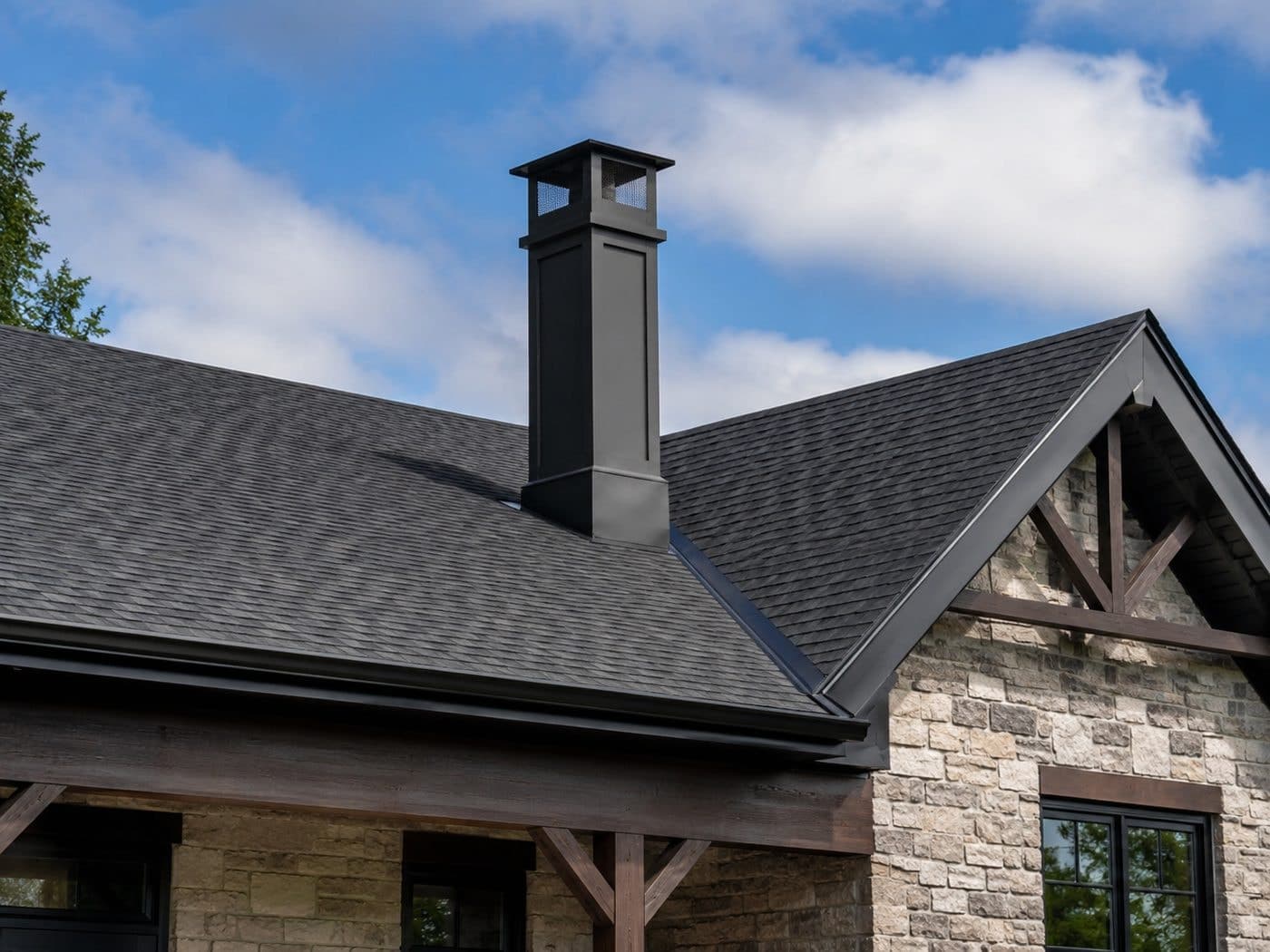
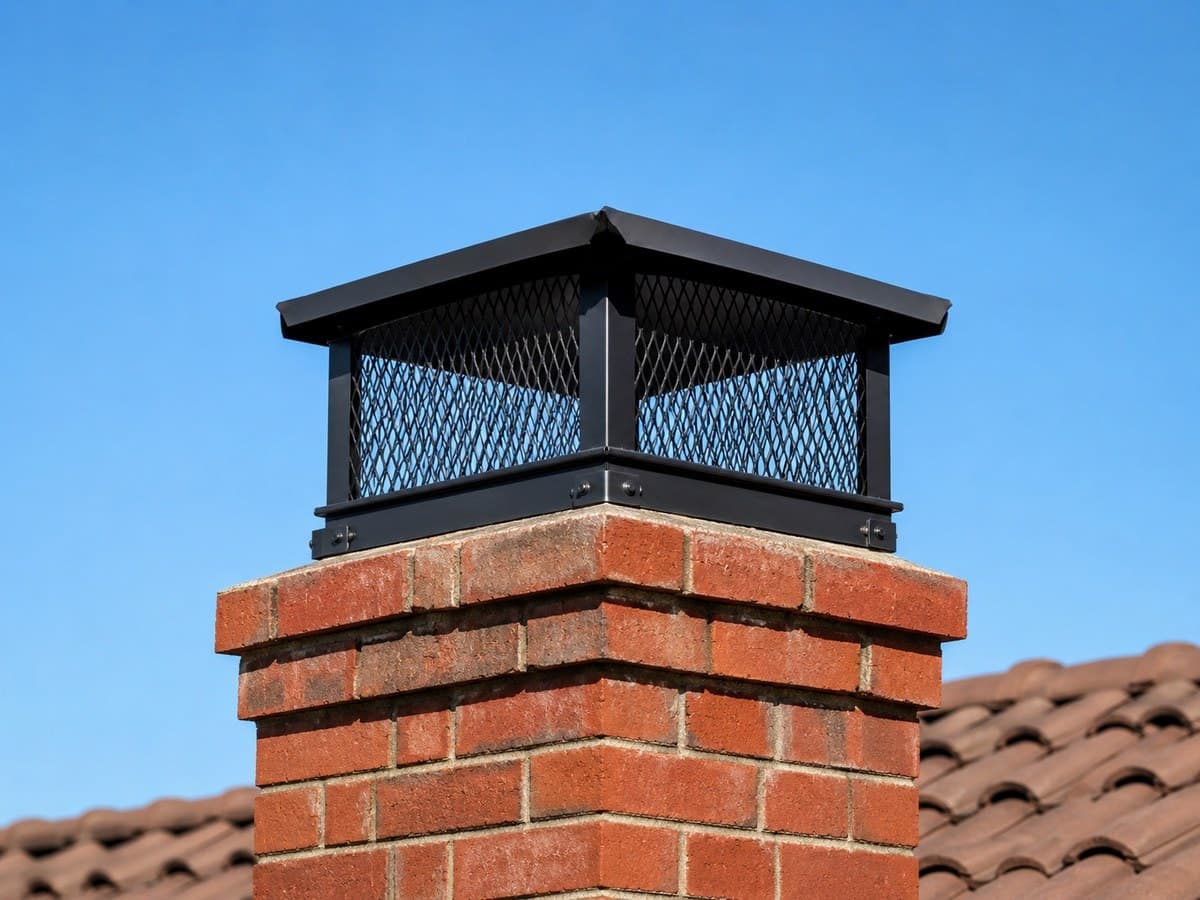
A cap spends its whole life in sun, rain and wind, and in Central Florida it gets a lot of all three. Galvanized caps rust through, mesh tears or clogs with soot, and hurricanes and summer storms pull loose caps off entirely. Replacing a failed cap is quick. The bigger question is what got into the flue while it was damaged.
If your chimney has never had a cap, start with chimney cap installation, which covers cap types and how we choose one. This page is about replacing a cap that is already there but no longer doing its job.
Signs a cap needs replacing
What to look for, from the ground and from the firebox
01Rust streaks on the chimney or crown
- What you may notice
- Orange or brown streaks running down from the top of the chimney.
- How it’s confirmed
- Cap and fasteners checked for corrosion; on factory-built chimneys, the chase cover is checked too.
02Cap missing or tilted after a storm
- What you may notice
- Nothing visible on top of the flue, or a cap leaning to one side.
- How it’s confirmed
- Roof check for the cap, loose fasteners and any damage to the crown or flue tile.
03Water or debris in the firebox
- What you may notice
- Wet ash, rusty damper, leaves or twigs on the smoke shelf.
- How it’s confirmed
- A look up the flue to see what came in and whether the liner was affected.
04Animals or noises in the flue
- What you may notice
- Chirping, scratching, or nesting material dropping onto the damper.
- How it’s confirmed
- Mesh checked for tears and gaps; animal activity identified before any removal.
05Smoke lingering or poor draft
- What you may notice
- A fire that used to draw well now smokes.
- How it’s confirmed
- Mesh checked for soot and creosote clogging, which restricts the outlet.
Choosing the replacement
| Chimney | What goes back on | Notes |
|---|---|---|
| Masonry, single flue | Stainless steel single-flue cap sized to the tile | Stainless outlasts galvanized in Florida’s humidity and salt air near the coasts |
| Masonry, several flues | Multi-flue cap covering the crown | Each flue’s use is confirmed first, especially any that vent gas appliances |
| Factory-built (prefab) chimney | The termination cap listed for that chimney system | Generic caps can change how the system drafts and may void its listing |
| Chimney with a top-sealing damper | Replacement damper-cap assembly | Handled with chimney damper repair |
Factory-built chimneys deserve extra care. The cap, pipe and firebox are tested together as one listed system, and the manufacturer’s instructions say which cap belongs on top. We match the replacement to the system’s make and model instead of fitting whatever is on the truck. If the chase cover under the cap has rusted too, the two are usually done together; see repairing the chase cover.
How a cap replacement is done
Remove the old cap
Rusted fasteners are cut or backed out and the old cap comes off in one piece where possible.
Check the flue top
With the cap off, we look at the flue tile, crown and top of the liner, the parts the cap was protecting.
Clear what fell in
Nests, leaves or debris on the damper and smoke shelf are removed so the flue drafts properly.
Measure and fit
The replacement is sized to the flue and fastened to the tile, crown or chimney walls as the design requires.
Confirm the draft
A quick smoke test from the firebox confirms the new cap isn’t restricting the flue.
After a hurricane or major storm
Caps are often the first chimney part lost in a hurricane. Recent storms such as Ian in 2022 and Milton in 2024 brought damaging winds across Central Florida (Spectrum News 13, ClickOrlando). If the cap came off, the flue has been open to rain since then. A storm damage chimney inspection checks the crown, flashing and liner along with the cap, which helps if you are filing an insurance claim.
When the cap has gone in a storm
The single most common reason a cap needs replacing here is wind. A cap is a lid on legs, sitting at the highest and most exposed point of the house, and a gust that gets under it will take it off. After a named storm it is one of the first things worth checking.
The urgency depends on the forecast rather than on the cap. An open flue during the dry season can wait a few days. An open flue with the wet season starting is taking water straight into the chimney, and a soaked flue takes a long time to dry out.
What an open flue lets in until it is replaced
- Rain directly into the flue, the smoke chamber and the firebox
- Birds and animals, particularly while a flue sits unused through the warm months
- Leaves, twigs and windblown debris that build into a blockage
- Downdraft and the smell that comes with it on humid days
- Embers going the other way, on a chimney with no spark arrestor
As a stopgap, nothing beats not lighting the fire and keeping the damper closed. Climbing onto a wet roof to improvise a cover is not worth it. If water is actively coming in, our page on urgent chimney call-outs covers what we can do quickly and what has to wait for a dry roof.
Storm damage and insurance
A cap lost to wind is frequently part of a wider claim rather than a job on its own, because the same gust tends to have lifted flashing or shifted the crown at the same time.
Where a claim is in play, the useful order is: get the damage assessed, understand what is actually wrong, then decide with your insurer. A storm damage chimney inspection covers the whole chimney rather than just the missing cap, which matters because a claim built around one visible item tends to miss the rest.
Replacing like for like, or better
A replacement is a chance to fix whatever let the old one go. Most caps that blow off were either the wrong fit, poorly fixed, or made of a material that had already given up.
| Material | Behaviour here | Worth knowing |
|---|---|---|
| Galvanised steel | The cheapest option and the one most often found rusted through | Humidity and rain shorten its life considerably; it is usually what a failed cap was made of |
| Stainless steel | The sensible default for this climate | Resists rust far better; most carry a long manufacturer guarantee on the metal |
| Copper | Very long-lived and it patinas to green | Chosen mostly on appearance; the most expensive |
| Multi-flue cap | One lid covering several flues on a shared crown | Common on older masonry stacks with more than one flue; sized to the crown rather than the flue |
Sizing is the other half. A single-flue cap can clamp inside or around the flue tile, or bolt to the crown; a multi-flue cap is sized to the crown itself. Getting the mesh right matters too — too fine and it clogs with soot, too coarse and it stops excluding animals.
If your chimney has never had a cap at all, chimney cap installation is the page for that: it covers choosing and fitting a first cap rather than swapping a failed one. On a factory-built chimney the top is usually a chase cover with a separate termination, which is a different component — see chase cover replacement.
Cap replacement is available across Orlando, Winter Park, Apopka, Kissimmee, Oviedo, Clermont and the rest of the communities we serve. Estimates are free, and the crown and flashing get looked at on the same trip — going up twice for work at the top of a chimney makes no sense for anyone.
References (3)
Facts and figures on this page come from these references.