On this page
Creosote is what smoke leaves behind. As smoke rises into the cooler flue, some of it condenses and sticks to the walls, and the residue can be black or brown, crusty and flaky, tar-like and sticky, or shiny and hard (CSIA). All of it will burn. The difference between those forms is how much fuel is packed onto the flue wall and how hard it is to get off.
A routine chimney sweep handles soot and early, flaky deposits. This page is for what comes after: creosote that a brush skates over, and the reasons it formed in the first place.
The three stages of creosote
Chimney professionals commonly describe creosote in three stages, sometimes called degrees. The stage decides the removal method more than the amount does.
| Stage | What it looks like | How it’s removed |
|---|---|---|
| Stage 1 | Dry, dusty or flaky black soot that brushes off easily | A standard sweep with the right brush for the flue |
| Stage 2 | Crunchy, porous flakes or shiny black granules that cling more firmly | Stiffer brushing, often with rotary equipment |
| Stage 3 (glazed) | A hard, shiny, tar-like coating, sometimes dripping or bubbled, bonded to the flue wall | Chemical treatment to make it brittle, then rotary cleaning; can take more than one visit |
Glazed creosote is the one that matters most. It is concentrated fuel spread as a continuous layer, it can hide cracks in the liner underneath, and it doesn’t come off with the brush that cleans the rest of the chimney.
Soot or creosote?
Soot is dry, loose carbon that wipes off on a finger. Creosote is condensed smoke: it starts crunchy, becomes sticky, and in its last stage sets into a glaze that looks like black enamel or drips of tar. A flashlight past the damper usually shows which one you have, but a fuller inspection is needed to see how far up the flue it goes. The practical line: if a brush takes it off, it’s a flue cleaning job; if the brush leaves a shine behind, it’s creosote removal.
What causes creosote buildup
CSIA names three conditions that speed up creosote: a restricted air supply, unseasoned wood and cooler-than-normal chimney temperatures. Restricted air includes closed glass doors, a damper not opened far enough, and too little make-up air in the house (CSIA). In practice, those show up as:
Habits and conditions that feed creosote
- Burning wood that hasn’t dried long enough, so energy goes into boiling off water and the smoke runs cool
- Letting fires smolder, or closing doors and dampers down to make a fire last longer
- A damper that only opens part way because it is rusted or warped
- A flue that is oversized for the fireplace or insert, so smoke slows and cools on the way up
- An exterior chimney that runs cold compared with one inside the house
- Short fires that go out before the flue has fully warmed
- A house that is tight or depressurized by exhaust fans, starving the fire of air
Why rarely used Florida fireplaces still build it
It’s easy to assume creosote is a cold-climate problem. The deposits depend on how a fire burns, though, not how many fires there are. A handful of short fires a year, often lit on a mild evening for ambiance and allowed to burn down slowly, is close to the textbook recipe for cool smoke in a cool flue. Wood stored outdoors in humid weather can also stay wetter than it looks. None of that guarantees glaze, but it means a lightly used fireplace isn’t automatically clean.
Creosote smell in the house
Creosote has a sharp, smoky, asphalt-like smell. Chimney industry sources report that it gets noticeably stronger in hot, humid weather, especially when air is being pulled down the flue into a cooled house (Valley Chimney). Removing the deposits is the main fix for that kind of odor. When the smell persists after cleaning, the air path is usually the issue, and the page on fireplace odors in humid weather covers the damper, cap and pressure side.
How creosote is removed
| Feature | Routine sweep | Creosote removal |
|---|---|---|
| Deposits it handles | Soot and stage 1 flakes | Stage 2 and stage 3 (glazed) creosote |
| Main tools | Brushes and rods sized to the flue | Rotary cleaning heads, chemical treatments, sometimes several passes |
| Visits | Usually one | Sometimes two or more when a chemical treatment needs time or repeat applications |
| Follow-up | General look at the system | A check of the liner once the glaze is gone |
Deposits it handles
- Routine sweep
- Soot and stage 1 flakes
- Creosote removal
- Stage 2 and stage 3 (glazed) creosote
Main tools
- Routine sweep
- Brushes and rods sized to the flue
- Creosote removal
- Rotary cleaning heads, chemical treatments, sometimes several passes
Visits
- Routine sweep
- Usually one
- Creosote removal
- Sometimes two or more when a chemical treatment needs time or repeat applications
Follow-up
- Routine sweep
- General look at the system
- Creosote removal
- A check of the liner once the glaze is gone
Rotary cleaning
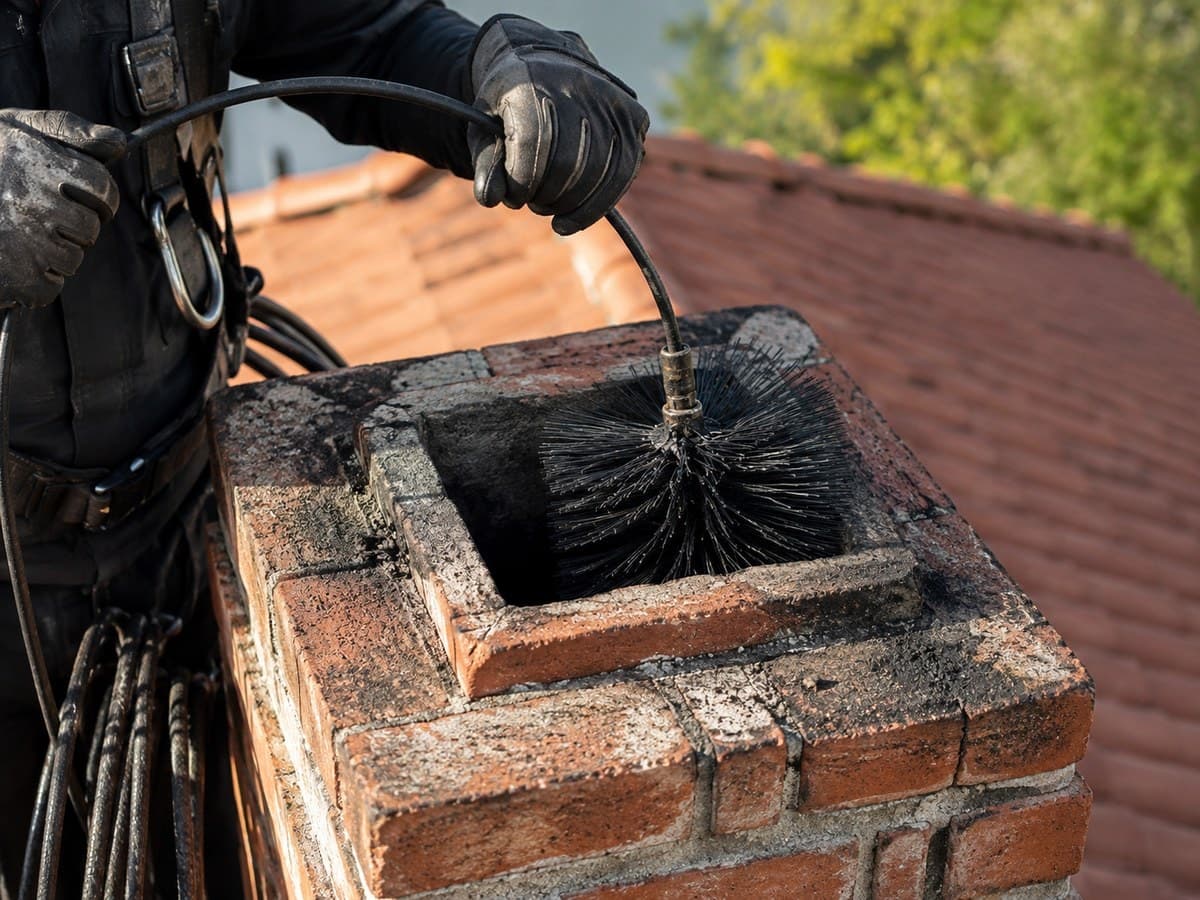
Rotary cleaning uses a flexible rod spun by a drill, with a head of whips, cables or brushes that scrubs the flue wall as it turns. It breaks up stage 2 deposits that a push-pull brush can’t. The head has to suit the flue: clay tile, stainless liner and factory-built metal pipe tolerate very different tools, and an aggressive head in the wrong flue can do damage.
Chemical creosote treatments
Glazed creosote usually needs a chemical treatment first. These products are sprayed or brushed onto the glaze, or added to a burning fire, and they change it into a drier, more brittle material that can then be swept or rotary cleaned. Some are designed to be applied, left to work and removed on a return visit. Every product has label directions and a list of the flue types it suits, and those limits apply, especially in factory-built chimneys, where the manufacturer’s instructions govern what can be used.
Creosote sweeping logs
Sweeping logs are burned in the fireplace and release chemicals meant to loosen deposits. They can reduce some creosote, but they aren’t a substitute for sweeping. What they loosen tends to fall onto the smoke shelf and damper, where it still has to be cleaned out, and a log can’t tell you whether there is glaze left, a nest, or a crack in the liner.
What a creosote removal visit looks like
Confirm the stage
The flue is examined from the firebox and, where access allows, from the roof, to see what kind of creosote is present and where.
Protect the room
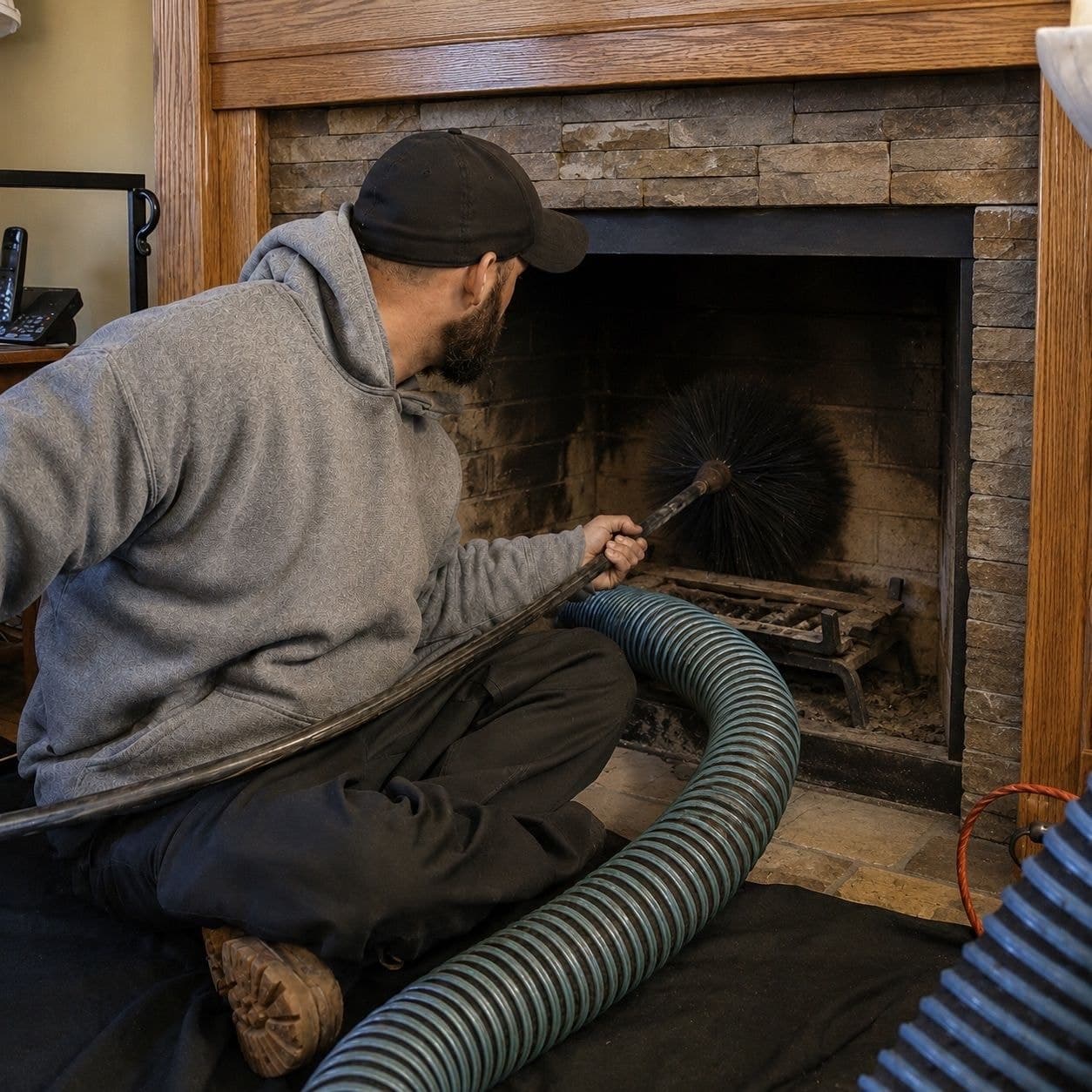
The hearth and floor are covered, the opening sealed and a vacuum run throughout, because heavy creosote work produces more debris than a routine sweep.
Treat and remove
Rotary cleaning for stage 2; chemical treatment followed by rotary cleaning for glaze, with a return visit scheduled if the product needs it.
Check the liner
Once the flue wall is visible again, it is checked for cracks, gaps or heat damage that the deposits were hiding.
Find the cause
Damper opening, flue size, wood, burning habits and air supply are reviewed so the same buildup doesn’t come back.
If the liner turns out to be cracked or heat-damaged, the next step is liner repair or relining. If you’re unsure what condition the rest of the system is in, a full inspection of the chimney answers that.
Creosote and chimney fires
Enough creosote plus a hot enough flue is how chimney fires start. CSIA notes that a chimney fire can reach around 2,000 °F, hot enough to melt mortar, crack tiles and collapse liners (CSIA). Not every chimney fire is loud and obvious. Many burn briefly inside the flue and only leave evidence behind, such as puffy, honeycombed creosote, a warped damper or flakes of creosote on the roof or ground. The guide to telling whether you’ve had a chimney fire goes through those signs.
If you think the chimney is on fire
A roaring or rumbling sound, dense smoke or flames from the top of the chimney, or a strong hot smell mean you should get everyone out of the house and call 911. Don’t try to put it out from the roof. Don’t light the fireplace again until the flue has been inspected.
Keeping creosote from coming back
- Burn wood that has been split and dried under cover; wet or green wood is the biggest single contributor.
- Build smaller, hotter fires rather than large smoldering ones, and don’t close the doors or damper down to slow a fire.
- Make sure the damper opens fully; a damper that sticks part way is worth repairing.
- If the flue is oversized for an insert or stove, a correctly sized liner keeps exhaust warmer on the way up.
- Keep up with the yearly inspection that NFPA 211 calls for, so deposits are caught at stage 1.
What affects the cost of creosote removal
Creosote removal is priced after the flue has been looked at, because the stage and extent decide the method. These are the factors specific to heavy creosote:
- Stage of the creosote and how much of the flue it covers
- Whether a chemical treatment is needed, and how many applications
- Number of visits
- Flue type: clay tile, stainless liner or factory-built pipe
- Chimney height and roof access
- Findings once the flue is clean, such as liner damage
What causes glaze in a Florida chimney
Glazed creosote forms when smoke cools before it leaves the flue and condenses on the walls. The conditions that cause it are more common here than the low usage would suggest.
- Mild outdoor temperatures. Draft depends on the difference between flue and outside air. On a 65°F evening that difference is small, so the flue runs cooler and smoke condenses rather than leaving.
- Short, smouldering fires. A fire lit for an hour on a cool evening never gets the flue up to temperature. That is most Central Florida fires.
- Damp wood. Firewood stored outdoors here absorbs humidity, and wet wood produces far more smoke at a lower temperature.
- An oversized or exterior flue. More surface area to cool the smoke, and an exterior-wall chimney runs colder still.
Which is why the answer is rarely only removal. If the conditions stay the same the glaze comes back, and the useful fixes are drier wood, hotter fires and — where the flue is genuinely oversized for the appliance — relining it to the correct size. There is more on fuel in burning firewood in Florida.
References (3)
Facts and figures on this page come from these references.