On this page
This page explains deep cleaning in detail. For a specific address, the local pages cover each city, starting with flue cleaning and soot removal in the City of Orlando.
Every fire leaves something behind in the flue. Smoke cools as it rises, and part of it condenses on the liner as soot and creosote, a tar-like residue that burns hot and fast if it ignites. Cleaning takes that layer off before it builds up far enough to narrow the flue or feed a chimney fire.
For a fireplace that’s used and looked after, a routine chimney sweep is usually all it needs. This page covers the bigger cleaning job: what gets cleaned, how the tools change with the flue, and what you get at the end.
When a routine sweep isn’t enough
- A chimney that hasn’t been cleaned in years, or one that came with a house and has no history
- A smoke shelf packed with soot and debris, which a quick brushing of the flue leaves behind
- A strong smoky or tar smell on humid days, which usually means deposits holding moisture
- Soot falling into the firebox or blowing into the room when the AC or fans run
- Before a sale or an inspection, so the inspector can actually see the liner surface
- Before relining or installing an insert, when the old flue has to be clean for the new work
Soot, creosote or debris: what’s coming out
| Feature | Soot | Creosote |
|---|---|---|
| What it looks like | Dry, powdery, black | Flaky and crunchy at first, then tarry or shiny and hard |
| Where it comes from | Fine particles carried up with the smoke | Smoke that cools and condenses on the flue walls |
| How it’s removed | Brushing and vacuuming | Brushing when flaky; rotary or chemical removal when glazed |
| Why it matters | Narrows the flue, holds odor | Fuel for chimney fires and a strong source of odor |
What it looks like
- Soot
- Dry, powdery, black
- Creosote
- Flaky and crunchy at first, then tarry or shiny and hard
Where it comes from
- Soot
- Fine particles carried up with the smoke
- Creosote
- Smoke that cools and condenses on the flue walls
How it’s removed
- Soot
- Brushing and vacuuming
- Creosote
- Brushing when flaky; rotary or chemical removal when glazed
Why it matters
- Soot
- Narrows the flue, holds odor
- Creosote
- Fuel for chimney fires and a strong source of odor
Around Orlando a lot of what comes out isn’t combustion residue at all: leaves, windblown debris, mortar crumbs and old nesting material. If debris is blocking the flue rather than coating it, the work is clearing a blocked chimney.
What a full chimney cleaning covers
Cleaned on a full cleaning visit
- The flue liner, top to bottom, including offsets where deposits collect
- The smoke chamber and smoke shelf, the sloped area above the damper where soot and debris settle
- The damper, cleared of soot so the plate seats and moves freely
- The firebox, emptied of ash and loose debris
- The cap screen, where soot and creosote can clog the mesh and choke the draft
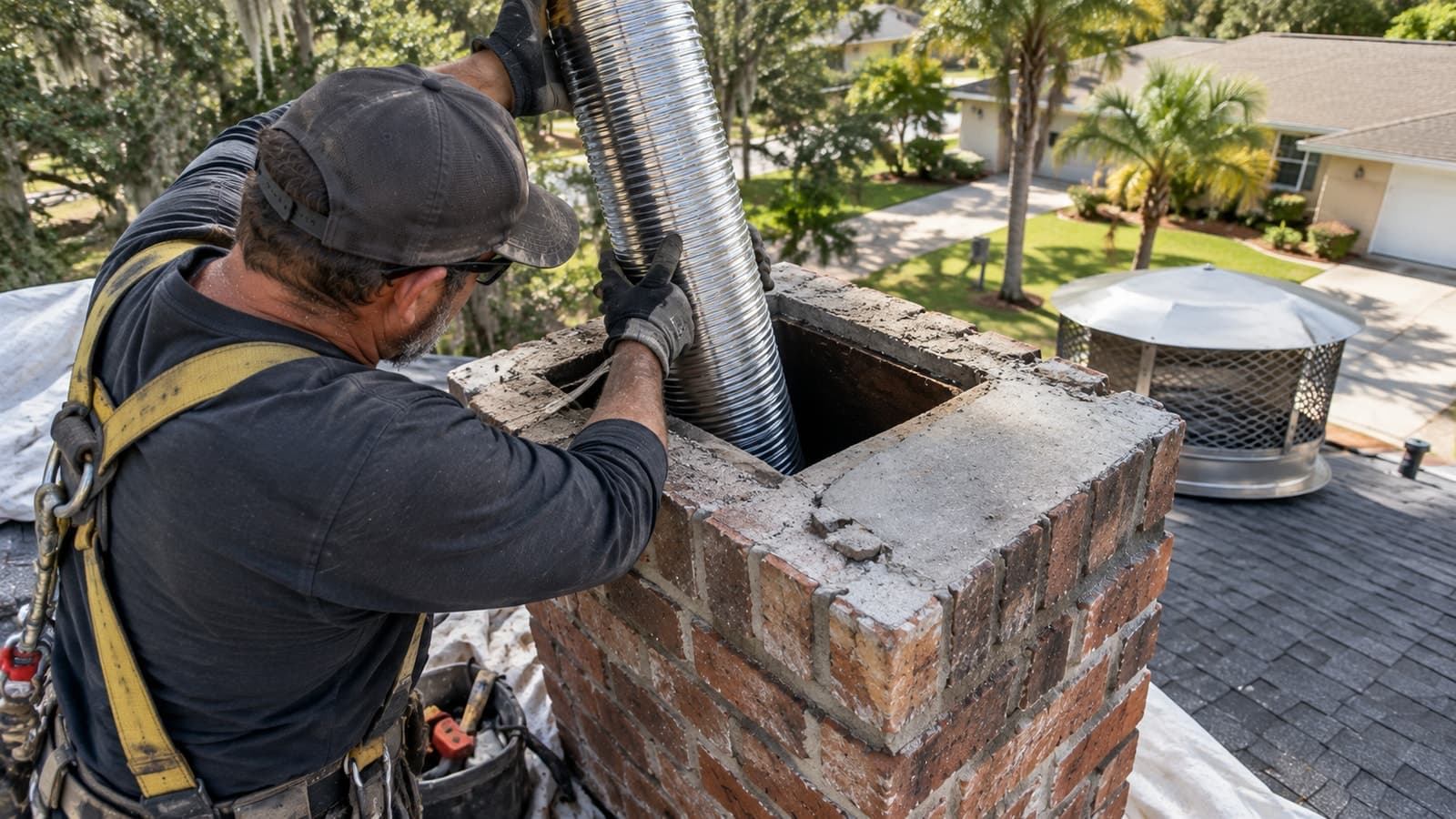
Heavy, hardened or glazed deposits need more than brushing. When creosote has baked onto the liner, the job becomes creosote removal, which uses different tools and sometimes chemical treatment over more than one visit. Associations, rental portfolios and businesses with many flues can schedule cleaning across every unit through our commercial chimney services.
Matching the tools to the flue
| Flue type | Typical in Orlando | Cleaning approach |
|---|---|---|
| Clay-tile liner in a masonry chimney | Pre-1980 homes in Winter Park, College Park, Sanford and other older neighborhoods | Stiff wire or poly brushes sized to the tile, or rotary cleaning heads, worked in both directions |
| Stainless steel liner | Relined masonry chimneys, inserts and stoves | Poly brushes only; wire can scratch the steel and shorten its life |
| Factory-built chimney pipe | Most homes built since the 1980s, inside a framed chase | Brushes approved for the system, gentle rotary heads; nothing that can dent or separate the pipe sections |
| Oversized or irregular flue | Older fireplaces and some converted flues | Rotary cleaning that reaches corners a round brush misses |
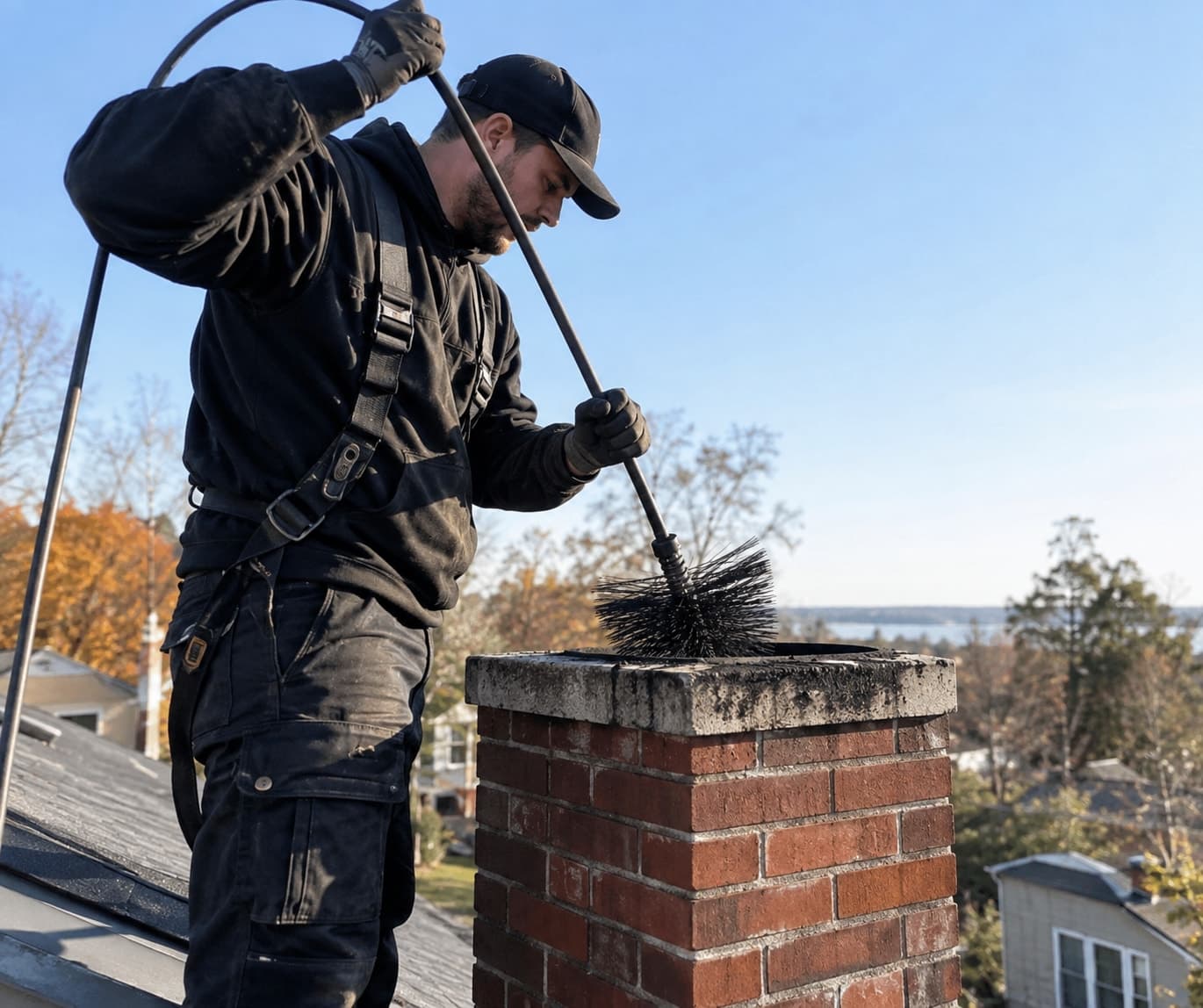
Cleaning from the bottom keeps the crew off steep or slick roofs, and it works well with rotary equipment. Cleaning from the top helps when the damper area is tight or the cap has to come off anyway. Many visits use both, depending on access and what the flue needs.
Keeping the house clean
Protect the room
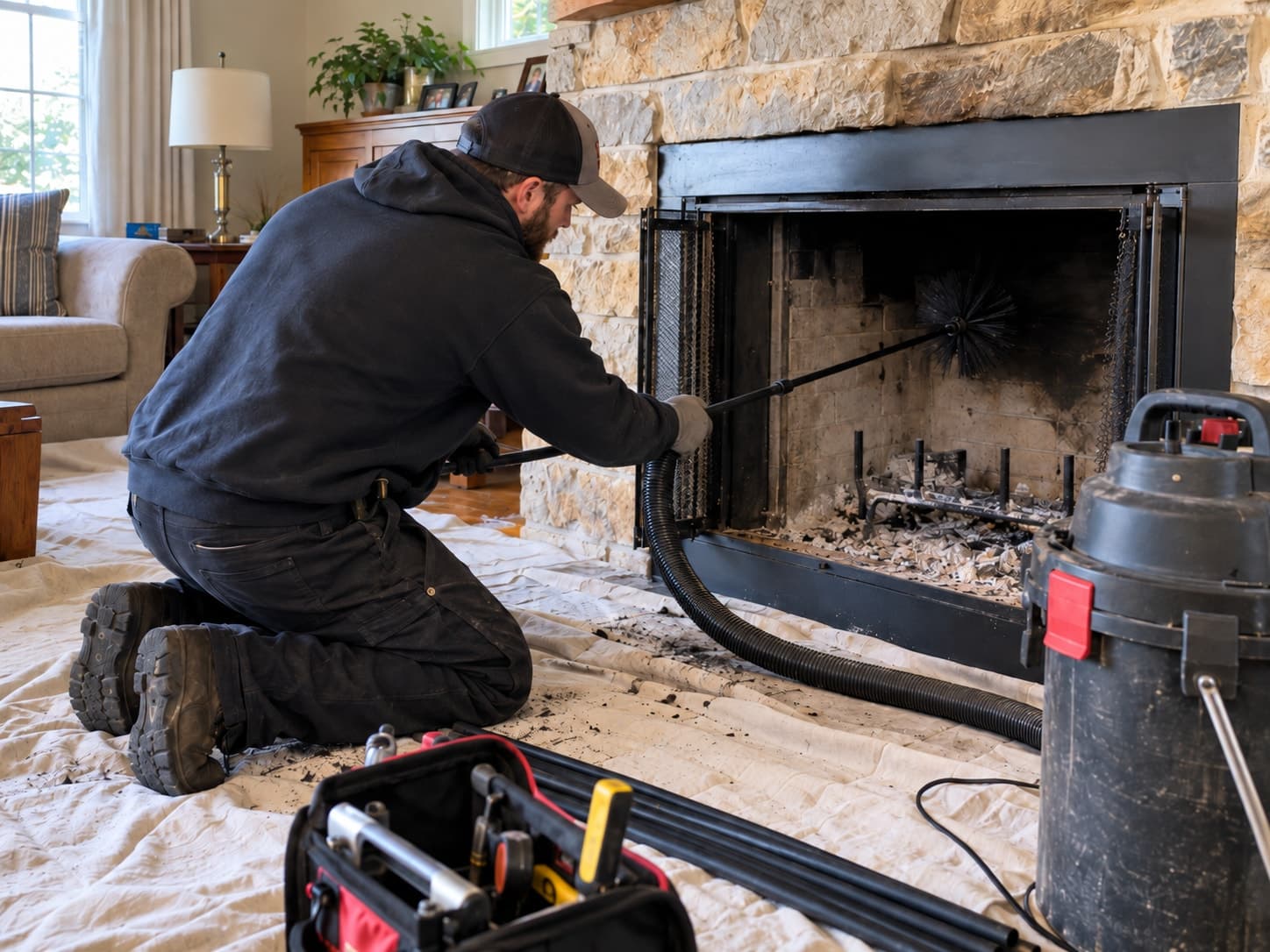
Drop cloths go down from the hearth to the door, and furniture close to the fireplace is covered or moved.
Seal the opening
The fireplace opening is sealed so soot stays inside the firebox while the flue is worked.
Run negative air
A HEPA vacuum pulls air into the fireplace during cleaning, so fine soot is captured instead of drifting into the room.
Clean and bag
Soot, creosote flakes and ash are bagged and taken away. The hearth and surround are wiped down.
How often a flue needs cleaning in Central Florida
Frequency depends on use, not the calendar. NFPA 211, the national standard for chimneys and fireplaces, calls for an inspection every year and cleaning when the inspection finds deposits that need it (NFPA 211). Many Orlando fireplaces burn only a few times a winter, so a flue can go longer between cleanings than one in a colder state.
- Before the first fire after a season or more of no use, especially if anything could have nested inside
- When the inspection shows about an eighth of an inch of soot or creosote, a common threshold sweeps use
- When the fireplace starts smoking into the room or the draft feels weak
Humidity and smell
Creosote absorbs moisture. In Central Florida’s humid summers, a dirty flue often smells strongest when the fireplace hasn’t been used for months and the AC is running. Cleaning usually fixes it; if not, see chimney odor removal.
After the cleaning
Once the flue is clear, the liner is looked over as far as it can be seen. A clean flue is the best time to spot cracked tile, gaps between sections or rust on a factory-built pipe, because nothing is hiding under soot. You’ll get a summary of what was cleaned and anything that needs attention, such as a torn cap screen, a sticking damper or cracks worth a closer chimney inspection.
How the flue is actually brushed
The brush has to match the flue, and getting that wrong does damage. A wire brush sized for a clay tile flue will score the inside of a stainless liner, and a brush too small for the flue simply polishes a channel down the middle of the deposits.
| Flue | Brush | Direction |
|---|---|---|
| Square or rectangular clay tile | Wire brush sized to the tile, not the outside of the chimney | From above, from below, or both depending on access |
| Round clay tile | Round wire brush matched to the internal diameter | Usually from above |
| Stainless steel liner | Poly brush — wire scores the liner | From above, gently |
| Factory-built metal pipe | Poly brush sized to the pipe | From above, with the firestop protected |
| Heavily glazed deposits | Rotary head, or chemical treatment first | Covered under creosote removal |
The smoke shelf behind the damper is the part that holds the most and gets brushed least. It is a horizontal ledge at the base of the flue, and on a chimney that has gone years without attention it can be packed solid with soot, fallen mortar and old nesting material.
Where soot is not the problem
Worth saying plainly, because people book a cleaning for things a cleaning will not fix. If the fireplace smokes and cleaning does not help, the cause is one of the others — damper, smoke chamber shape, opening size, flue height or house pressure — and that is diagnosed on smoking fireplace and draft correction.
Similarly, a smell that returns after cleaning usually means the deposits were only half the story and a damper that does not seal is letting humid air down the flue. Chimney odor removal covers that combination.
Flue cleaning is available across Orlando, Winter Park, Maitland, Kissimmee, Oviedo, Clermont and the rest of the Greater Orlando service area. Same-day slots are offered where the schedule allows, estimates are free, and anything the cleaning turns up is explained before a repair is scheduled.
References (2)
Facts and figures on this page come from these references.