On this page
- What a chimney sweep removes
- Routine sweep, deep cleaning or creosote removal?
- How often do you need a sweep in Florida?
- What happens during the visit
- Fireplace cleaning is part of the sweep
- Sweep or inspection: which one do you need?
- Chimney smell and humidity
- Nests, birds and animals
- Booking, timing and what we need from you
This page explains the service in depth. For a sweep at a specific address, the local pages cover each city, starting with chimney sweeping in the City of Orlando.
What a chimney sweep removes
Every fire leaves something behind. Soot is the dry, powdery black residue. Creosote forms when smoke cools on its way up the flue and condenses on the walls. Both are fuel, and both narrow the flue over time.
In Central Florida a good share of what comes out of a chimney has nothing to do with burning. Leaves, twigs and windblown debris get in past a missing or damaged cap, and birds or animals move into a flue that sits unused for most of the year.
What comes out during a sweep
- Soot and fine ash from the firebox, smoke shelf and flue walls
- Flaky, early-stage creosote
- Leaves, twigs and debris that got in at the top
- Old nesting material, removed only after the nesting season
- Loose mortar, flue-tile fragments or rust flakes (we also record these as findings)
- Ash and unburned wood left in the firebox
Glazed creosote
When fires smolder or the flue runs cool, creosote can harden into a shiny, tar-like glaze that a standard brush barely touches. If a sweep turns it up, it’s shown to you and the options are explained; the chemical and rotary methods, and how to stop the glaze from returning, are on the creosote removal page.
Routine sweep, deep cleaning or creosote removal?
Most visits are a routine sweep: light soot, a few leaves, maybe an old nest. Some chimneys need more than a brush can do in one pass, and it helps to know which job you’re booking.
| What’s in the chimney | The job | Where it’s covered |
|---|---|---|
| Light soot and flaky creosote from normal use | Routine chimney sweep | This page |
| Years of buildup, a packed smoke shelf, heavy soot or a strong smell | Full flue and smoke chamber cleaning | Chimney flue cleaning |
| Hard, shiny or tar-like glazed creosote | Rotary or chemical creosote removal | Glazed creosote treatment |
| Leaves, nests or fallen tile blocking the draft | Blockage clearing | Blocked chimney clearing |
| A live animal, or a nest that may still be active | Wildlife timing first, then cleanup | Chimney animal and nest removal |
How often do you need a sweep in Florida?
Most fireplaces around Orlando are used lightly. January lows average about 52 °F and the area typically sees around one freezing night a year (CurrentResults, NCEI normals). Many fireplaces here are lit a handful of times each winter, and some never are.
So a fixed yearly sweep isn’t always necessary. The national standard, NFPA 211, calls for chimneys, fireplaces and vents to be inspected at least once a year and cleaned or repaired when that inspection shows a need (NFPA 211). How that plays out depends on how you use the fireplace:
- You burn regularly through the cooler months: expect the yearly check to call for cleaning most years. Book it before the first cold front, not during it.
- You light a few fires a year: buildup is usually light. Cleaning may only be needed every few years, unless the check finds nests, debris or glaze.
- You never burn: the flue still needs a yearly look for nests, debris, water and odor, because the chimney is out in the weather all year.
- You just bought the home or don’t know its history: have it cleaned and checked before the first fire.
Signs that it’s due: black flakes landing in the firebox, a visible sooty layer when you shine a flashlight past the damper, fires that are hard to start or smoke into the room, or a smoky smell on hot, humid days. There’s more detail in our guide to how often to clean or inspect a chimney in Florida.
What happens during the visit
Protect the room
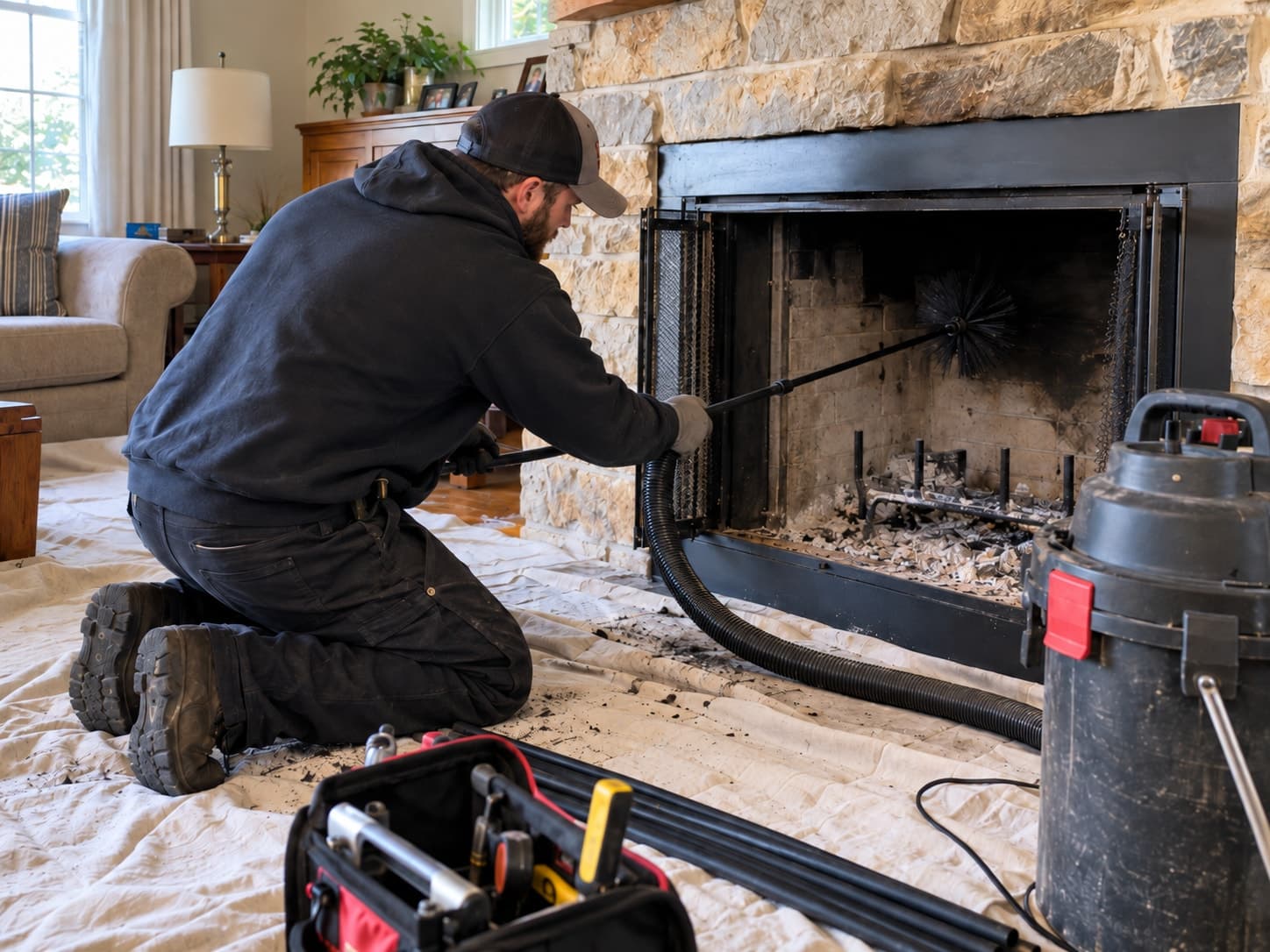
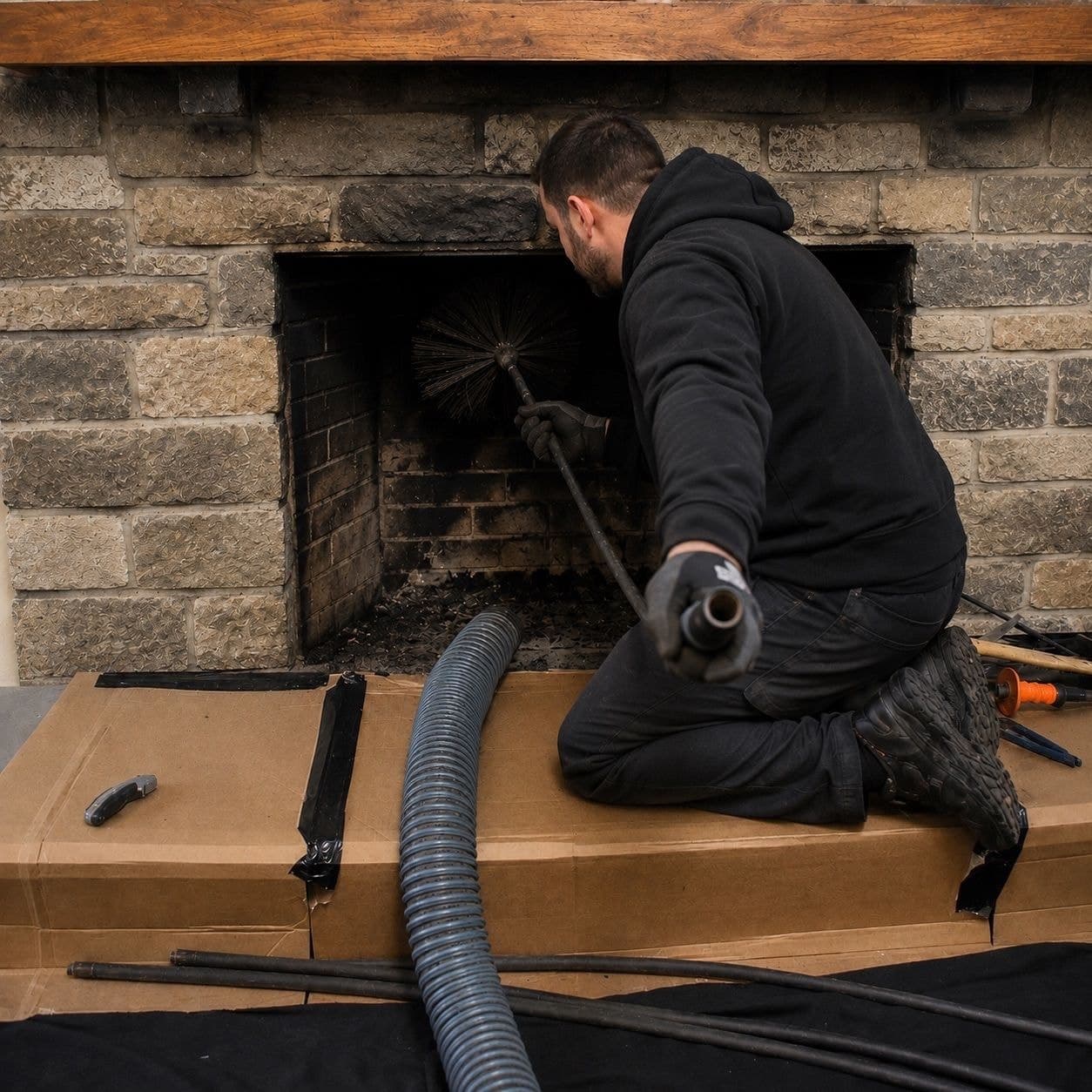
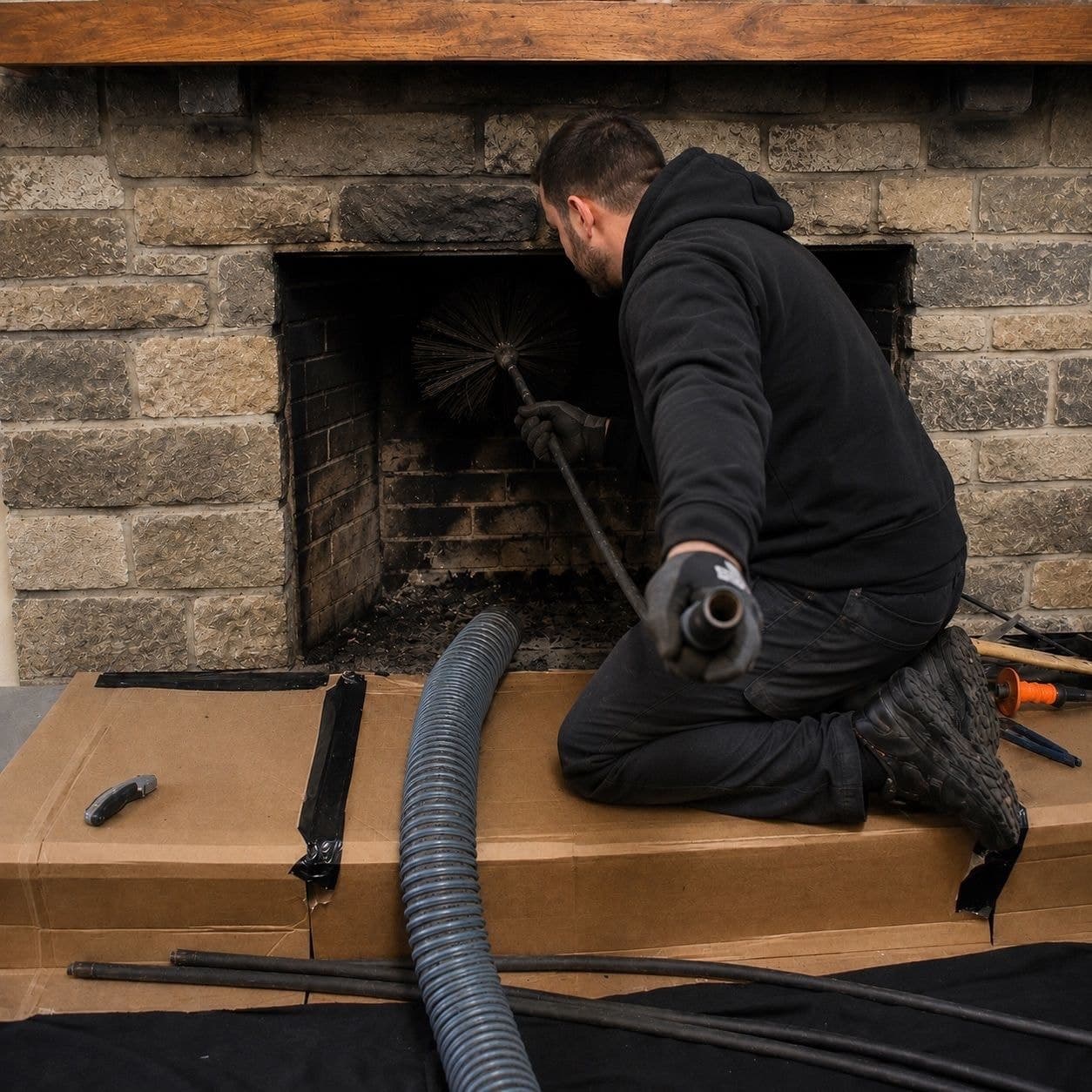
Drop cloths go down from the entry to the hearth. The fireplace opening is sealed off, and a vacuum runs for the whole sweep so soot is pulled into the machine instead of drifting into the room.
Look before brushing
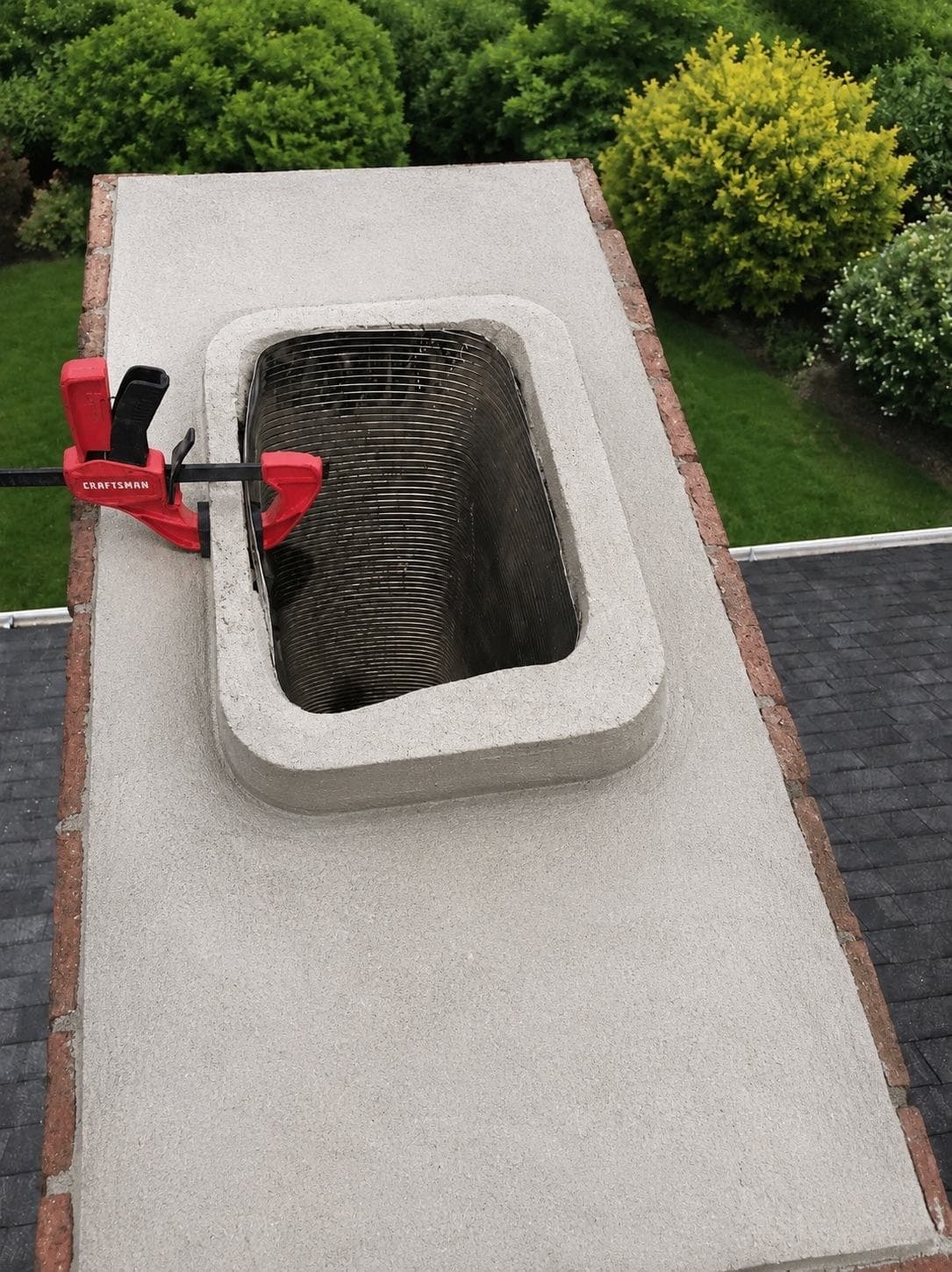
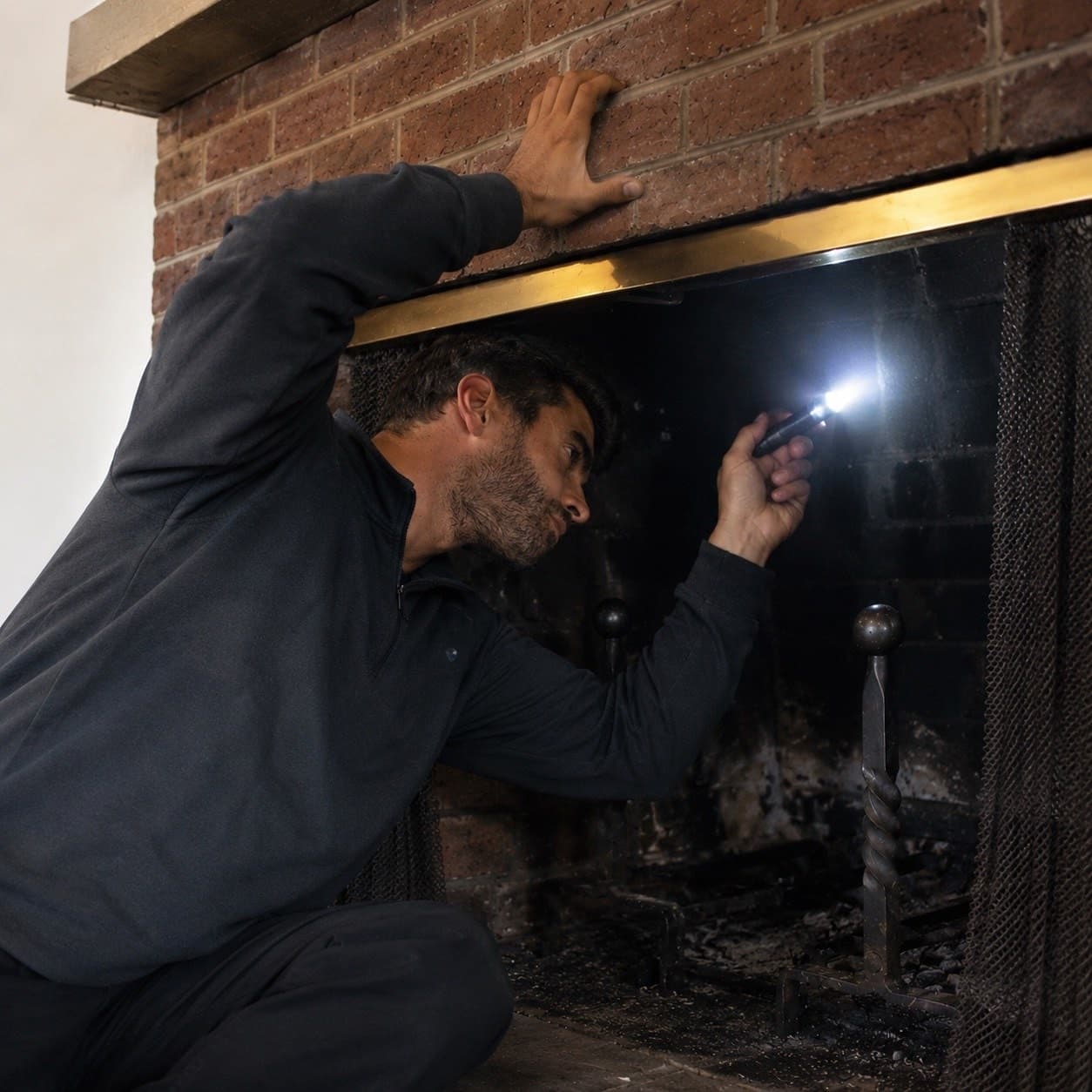
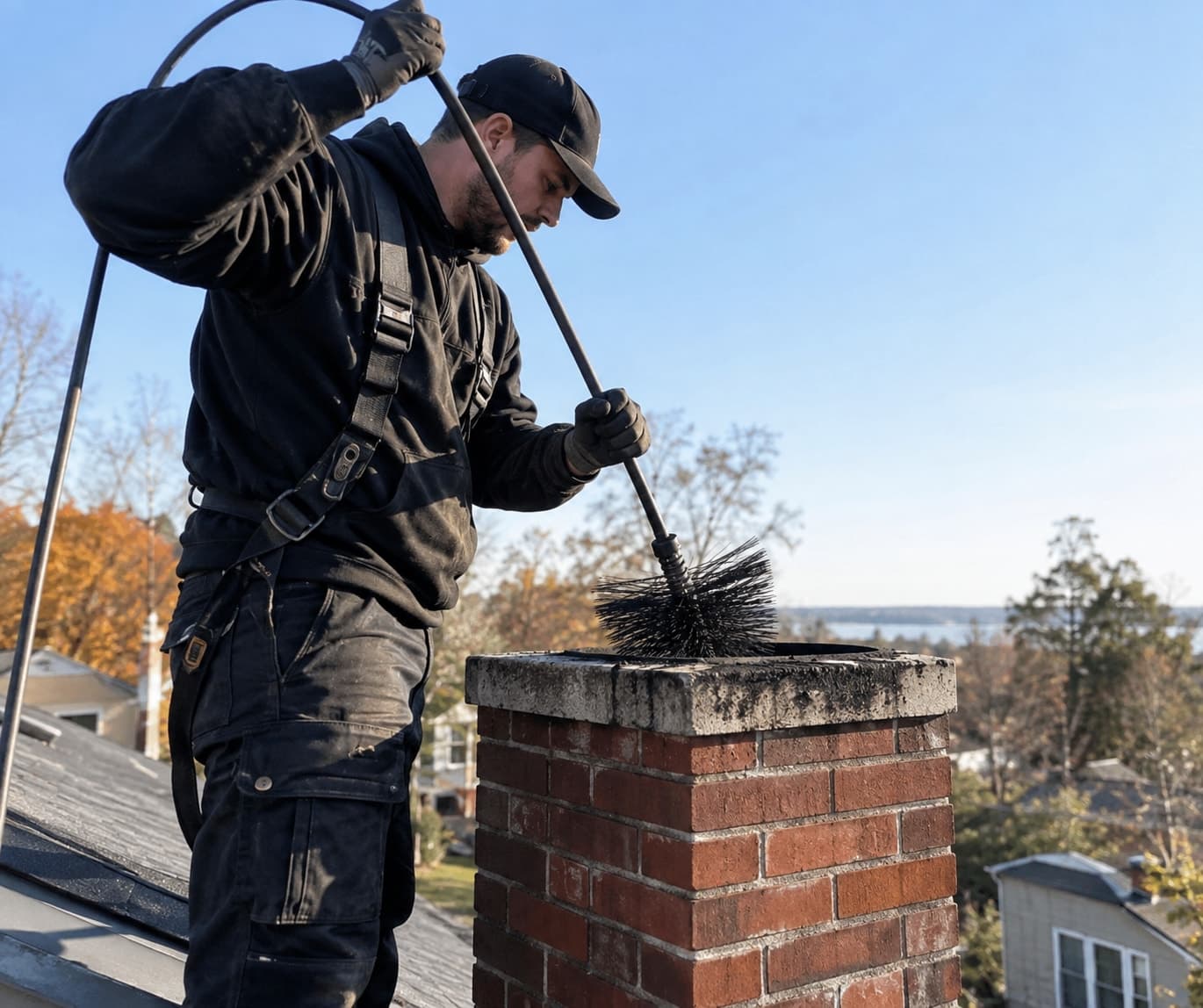
We check the firebox, damper, smoke chamber and the flue from below. Where access allows, we also check from the roof: the cap, the crown or chase cover, and the top of the flue.
Sweep
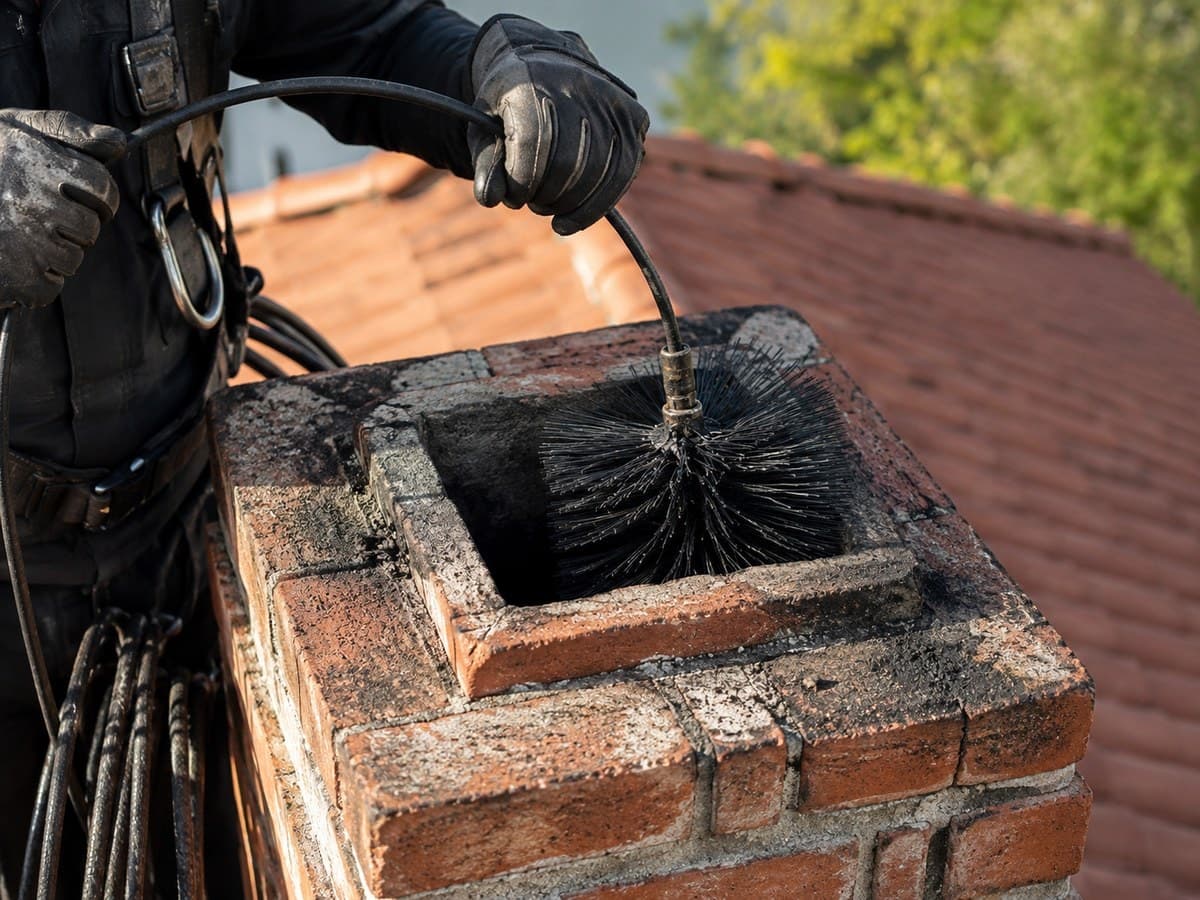
Brushes and rods are matched to the flue’s size and material. Metal flues in factory-built systems get brushes that won’t scratch them. Depending on access, we sweep from below, from above or both.
Clean up
Debris is vacuumed out of the smoke shelf and firebox, the hearth is wiped down, and everything we removed leaves with us.
Findings explained
Anything that needs attention is explained before any repair is scheduled.
How messy is it?
Done properly, very little. Soot is fine and travels on air currents, so the setup matters more than the brushing. Before we arrive, clear the mantel and hearth, keep pets in another room, and let us know if a TV or artwork is mounted above the fireplace.
Fireplace cleaning is part of the sweep
Cleaning the fireplace itself is part of every sweep, not a separate job. In a masonry fireplace we remove the ash, brush the firebrick and smoke shelf, and clean the damper blade and frame so it closes flush. A damper that doesn’t seal lets humid air and odor into the house all summer.
Factory-built fireplaces and framed chimney chases are common in many newer Orlando-area homes. You can usually recognize one by a metal firebox lined with refractory panels, a round metal flue pipe visible when you look up past the damper, and a chimney that is a boxed-in frame covered in siding or stucco rather than solid brick. In these units we brush the panels gently rather than scraping them, and we note any cracked panels, gaps or damaged screens and doors.
Gas fireplaces don’t produce creosote. Their logs, burner, glass and venting need a different kind of service, covered on our gas fireplace service page.
Wood stoves
If your home has a wood stove, its connector pipe and chimney are swept on the same principle, and we check the baffle and door gasket while we’re there.
Sweep or inspection: which one do you need?
A sweep is cleaning. We look over the accessible parts of the system as we work, but the job is removing buildup. An inspection is an evaluation of the whole system, and it ends with a documented assessment of the chimney’s condition.
| Feature | Chimney sweep | Chimney inspection |
|---|---|---|
| Main purpose | Remove soot, creosote, debris and nests | Evaluate the condition and safety of the system |
| Good for | Routine upkeep of a fireplace you use | Home purchases, after storms, when something seems wrong |
| Full-length flue check | Only if something needs a closer look | Part of a Level 2 inspection |
| What you receive | A plain-language rundown of the flue | A detailed assessment of each component |
Main purpose
- Chimney sweep
- Remove soot, creosote, debris and nests
- Chimney inspection
- Evaluate the condition and safety of the system
Good for
- Chimney sweep
- Routine upkeep of a fireplace you use
- Chimney inspection
- Home purchases, after storms, when something seems wrong
Full-length flue check
- Chimney sweep
- Only if something needs a closer look
- Chimney inspection
- Part of a Level 2 inspection
What you receive
- Chimney sweep
- A plain-language rundown of the flue
- Chimney inspection
- A detailed assessment of each component
If you’re buying a home, the chimney has been through a storm, or the fireplace hasn’t been used in years, book a chimney and fireplace inspection instead of, or together with, a sweep.
Chimney smell and humidity
A fireplace that smells like an old campfire or a damp closet in July is a common Central Florida complaint. Orlando’s average relative humidity is around 74% (CurrentResults). Moist air picks up odor from soot and creosote deposits, and when the house runs under slight negative pressure with the AC on, air can be pulled down the flue and into the room.
Sweeping removes the deposits that cause most of the smell. If odor keeps coming back, the cause is usually a damper that doesn’t seal, a missing cap or water getting in. Our page on why a fireplace smells, especially when it’s humid walks through each one.
Nests, birds and animals
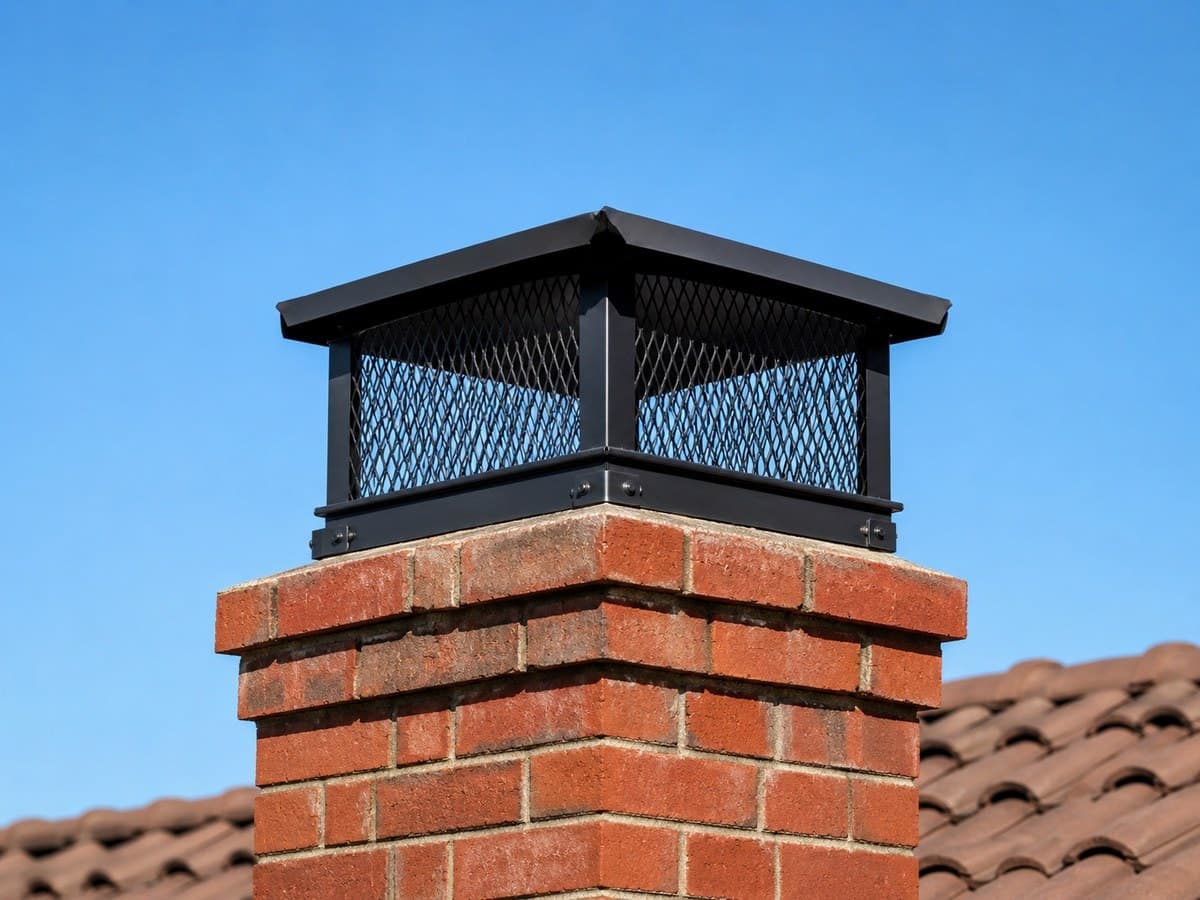
An unused flue attracts birds and small animals. Chimney swifts are protected under the federal Migratory Bird Treaty Act, so an active nest has to wait until the birds have left (USFWS); FWC sets bat maternity season at April 16 to August 14 (FWC). Live animals are a job for a nuisance wildlife trapper; once they’re out, nests and debris are cleared through chimney blockage removal and a cap keeps them from returning. What to do in the meantime is covered in birds in the chimney and animals in the chimney.
Chirping in the chimney?
Don’t light a fire or try to smoke birds out. It’s illegal for protected swifts and dangerous for you, because nesting material burns. Close the damper and call us to check what’s up there.
While you’re thinking about vents: the dryer vent is the other exhaust path in most homes that clogs without anyone noticing. We handle dryer vent cleaning as well.
Booking, timing and what we need from you
A few practical things that make the visit go better and are worth knowing before you call.
Useful to have ready
- Whether the chimney is brick and stone all the way up, or siding and stucco over a framed chase
- Roughly when the fireplace was last swept, if anyone knows
- Whether it burns wood or has a gas appliance in it
- Roof type — shingle, tile or metal — and whether it is one storey or two
- Anything you have noticed: a smell, a smoky start, black flakes in the firebox
Estimates are free, and same-day slots exist where the schedule allows, though the sensible time to book a sweep is autumn rather than the week of the first cold front. If a fire has just filled the room with smoke, that is an urgent call rather than a sweep booking — see emergency and same-day service.
References (6)
Facts and figures on this page come from these references.