The short answer
A chimney sweep cleans the inside of the chimney system: the flue, the smoke chamber above the damper, the damper itself and the firebox. The goal is to remove combustible creosote and anything restricting the flue, such as nests or fallen debris. Because the flue has to be looked at to be cleaned, a sweep usually comes with at least a basic visual inspection. NFPA 211 calls for chimneys to be inspected yearly and cleaned when needed (Chimneys.com).
Chimney cleaning vs chimney sweep vs inspection
| Term | What it means | What you get |
|---|---|---|
| Chimney sweep | The traditional name for cleaning the flue and the person who does it | Soot and creosote removed; flue cleared |
| Chimney cleaning | The same job, described by what it does; sometimes includes the firebox, doors and cap screen | The same cleaning, sometimes with a wider scope |
| Chimney inspection | An evaluation of condition; Level 1, 2 or 3 depending on depth | Findings on what is damaged or unsafe, with or without cleaning |
In practice the two cleaning terms describe the same visit. The inspection is the part that tells you whether the chimney is safe to use; see Level 1 vs Level 2 inspections for what each depth covers. Our chimney sweep and chimney inspection pages describe each service.
Step by step: what happens during a sweep
Protect the room
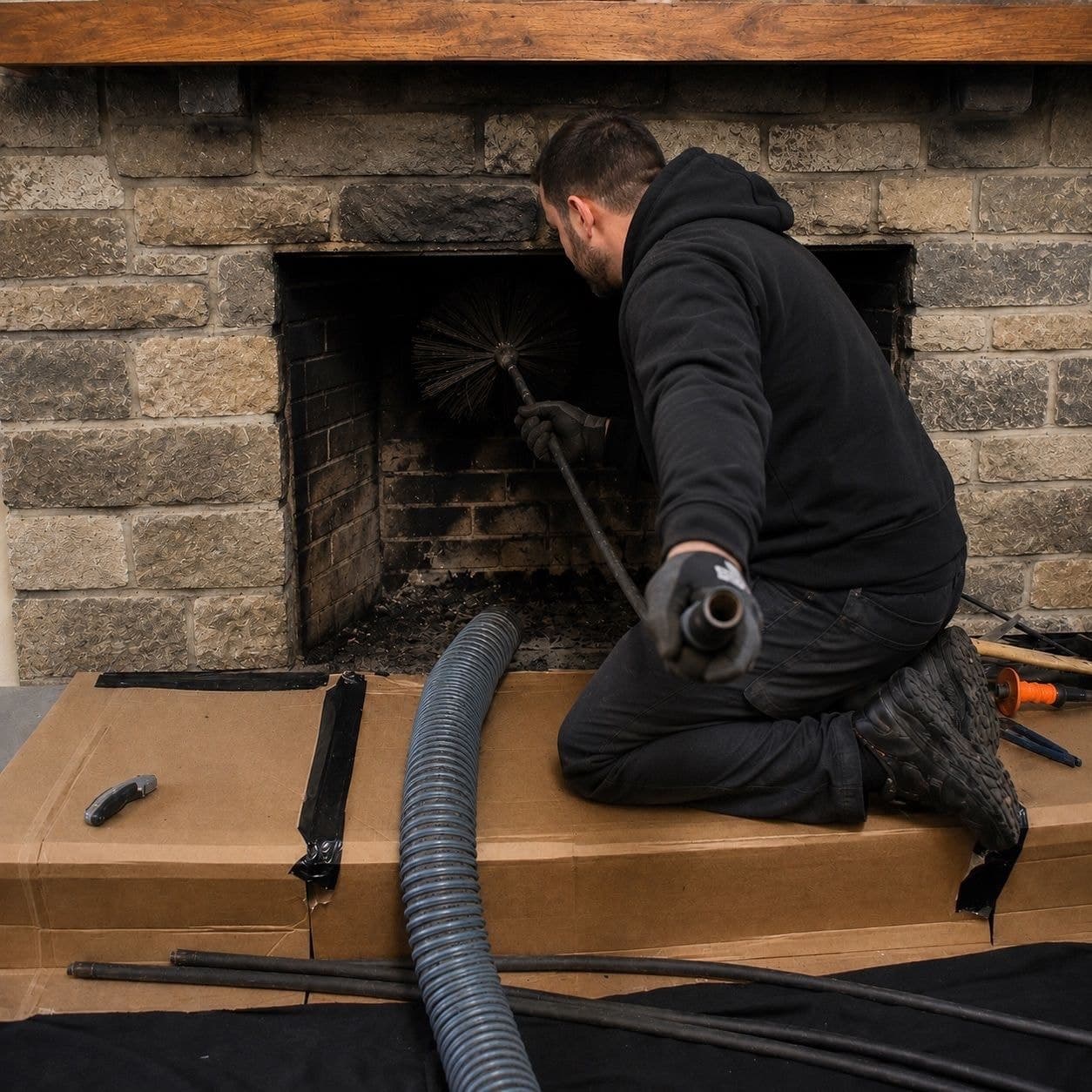
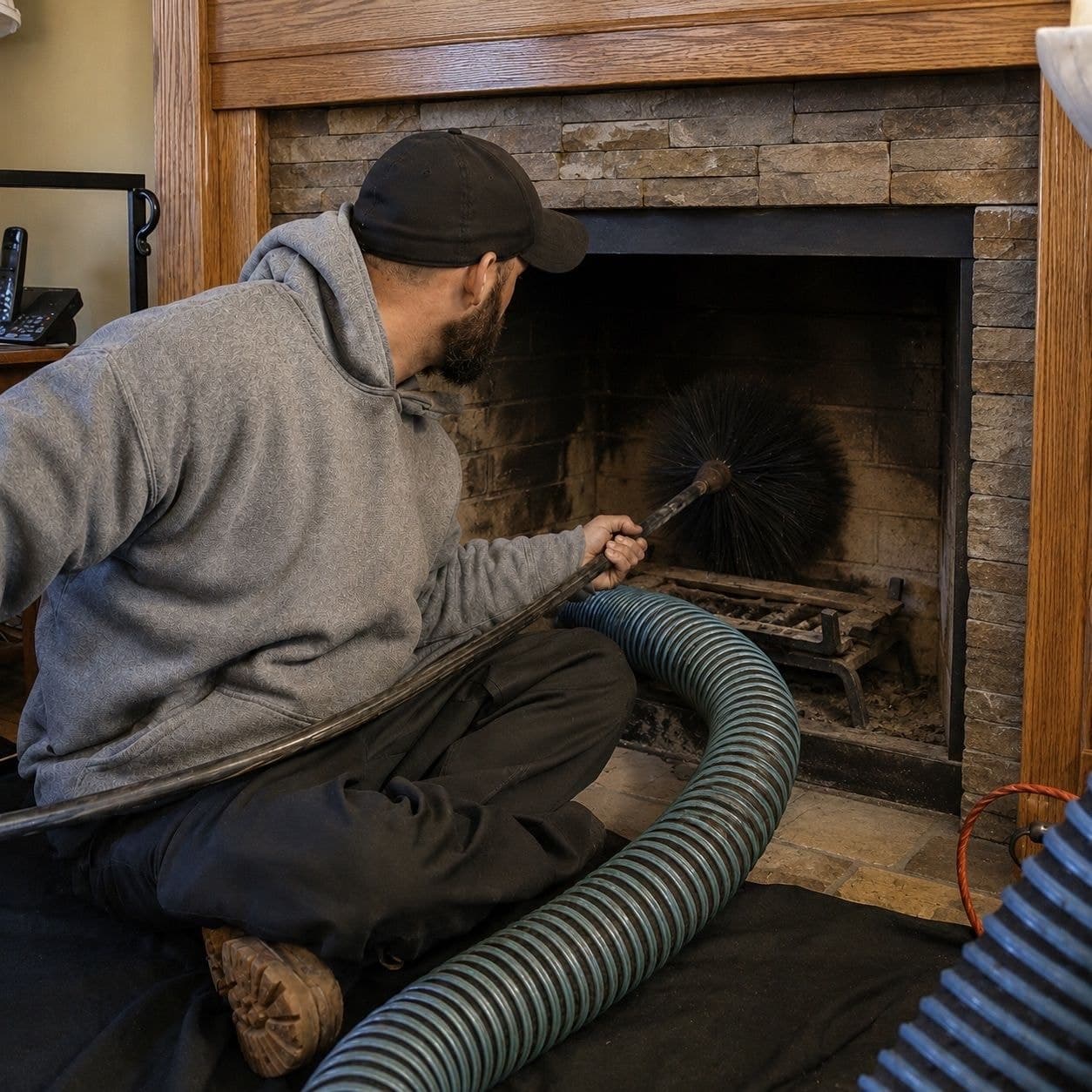
Drop cloths go down around the hearth and a path to the door, and the fireplace opening is sealed or covered so soot doesn’t escape.
Contain the dust
A high-filtration vacuum runs at the firebox throughout the cleaning to keep the room under slight suction so dust goes into the vacuum, not the house.
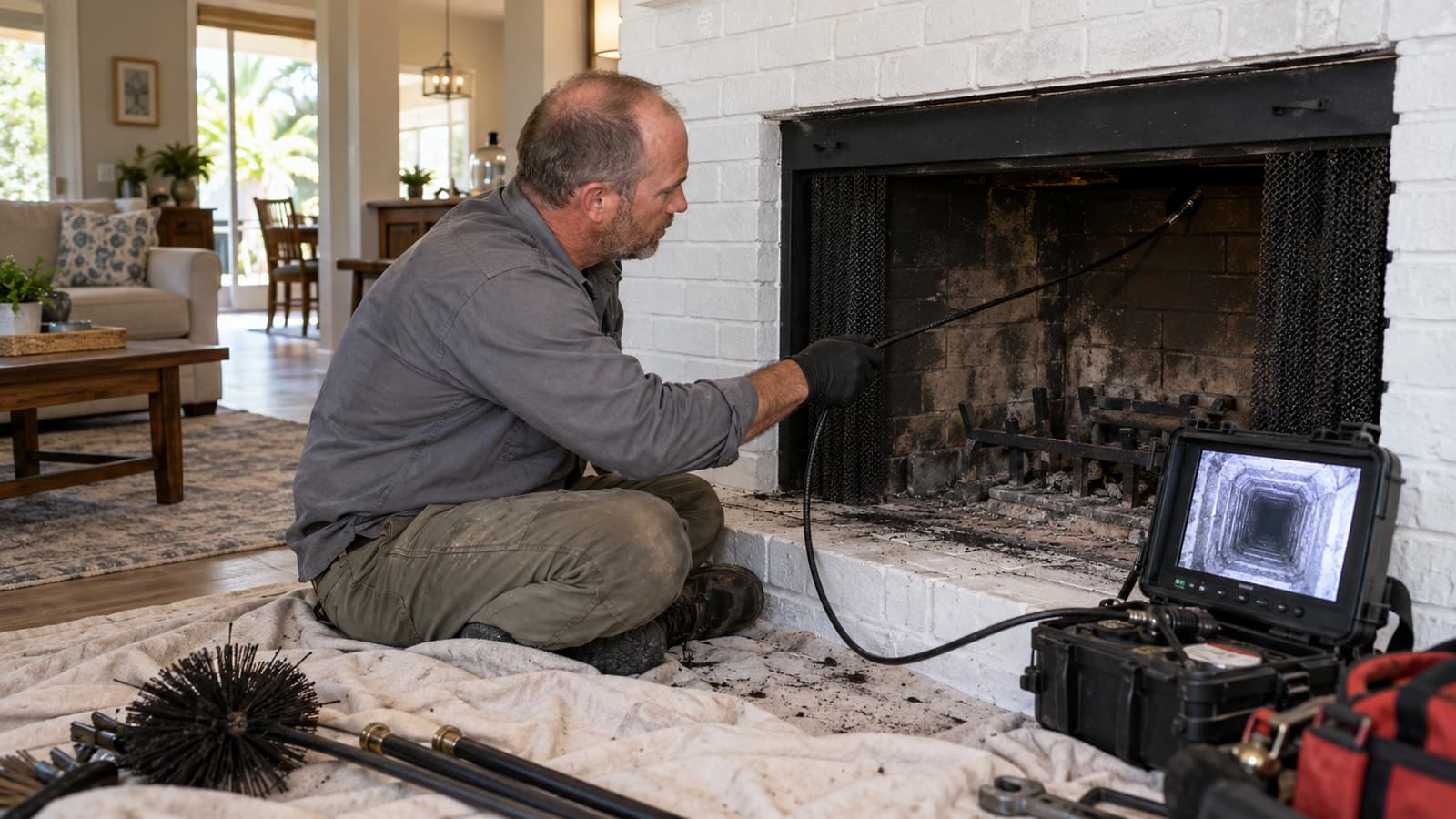
Look before cleaning
The firebox, damper and visible flue are checked first. Nests, animals or signs of a chimney fire change how the cleaning is done.
Brush the flue
Brushes sized to the flue are run from below, from the roof, or both, often on flexible rods with rotary heads. Glazed creosote needs different tools than soot.
Clean the smoke chamber and damper
The sloped smoke chamber above the damper collects heavy deposits and is cleaned by hand or with rotary tools. The damper is cleaned and worked.
Clean the firebox and cap
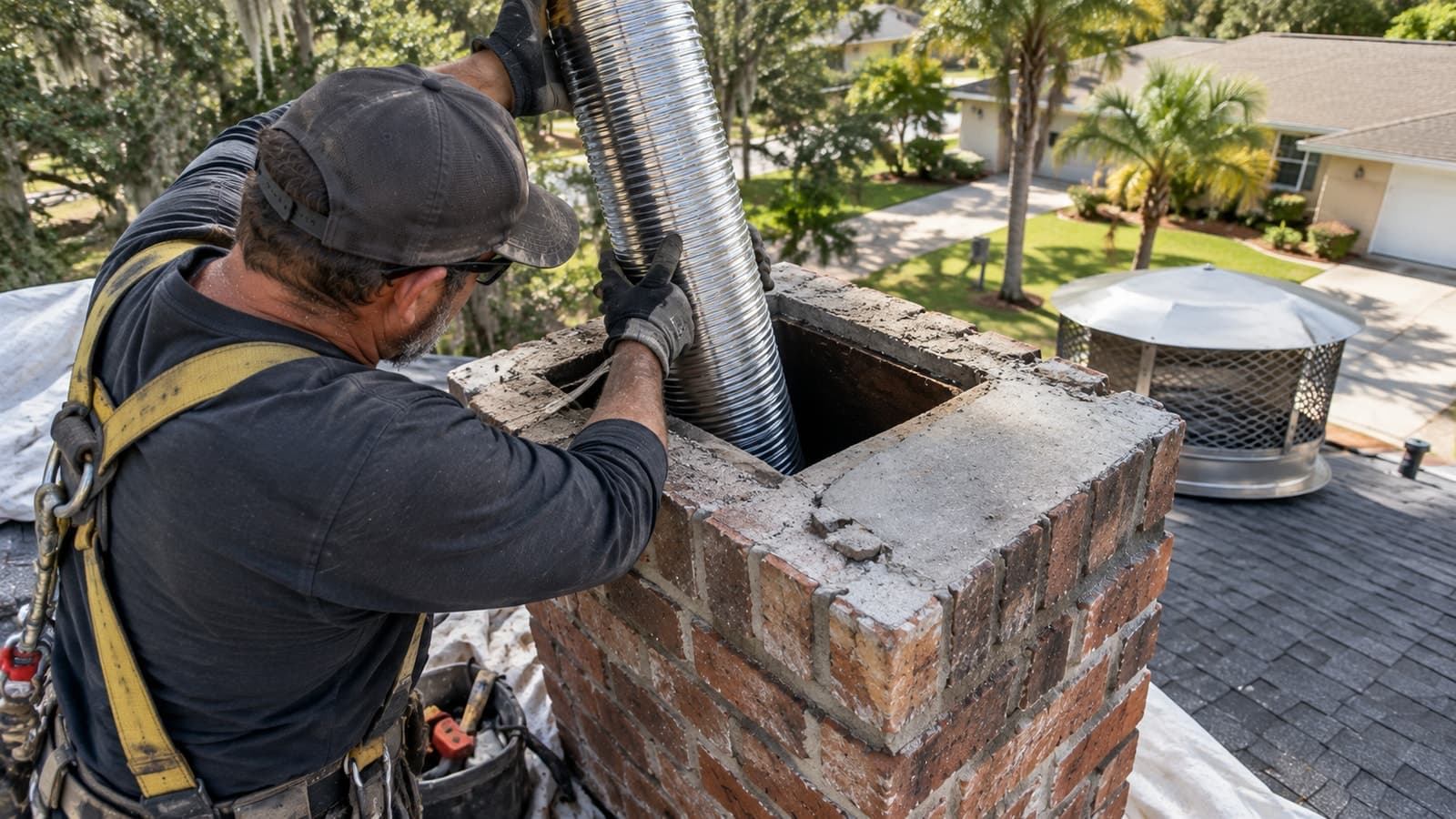
Ash and debris are removed. If the cap screen is clogged, it is cleaned from the roof.
Check the uncovered surfaces
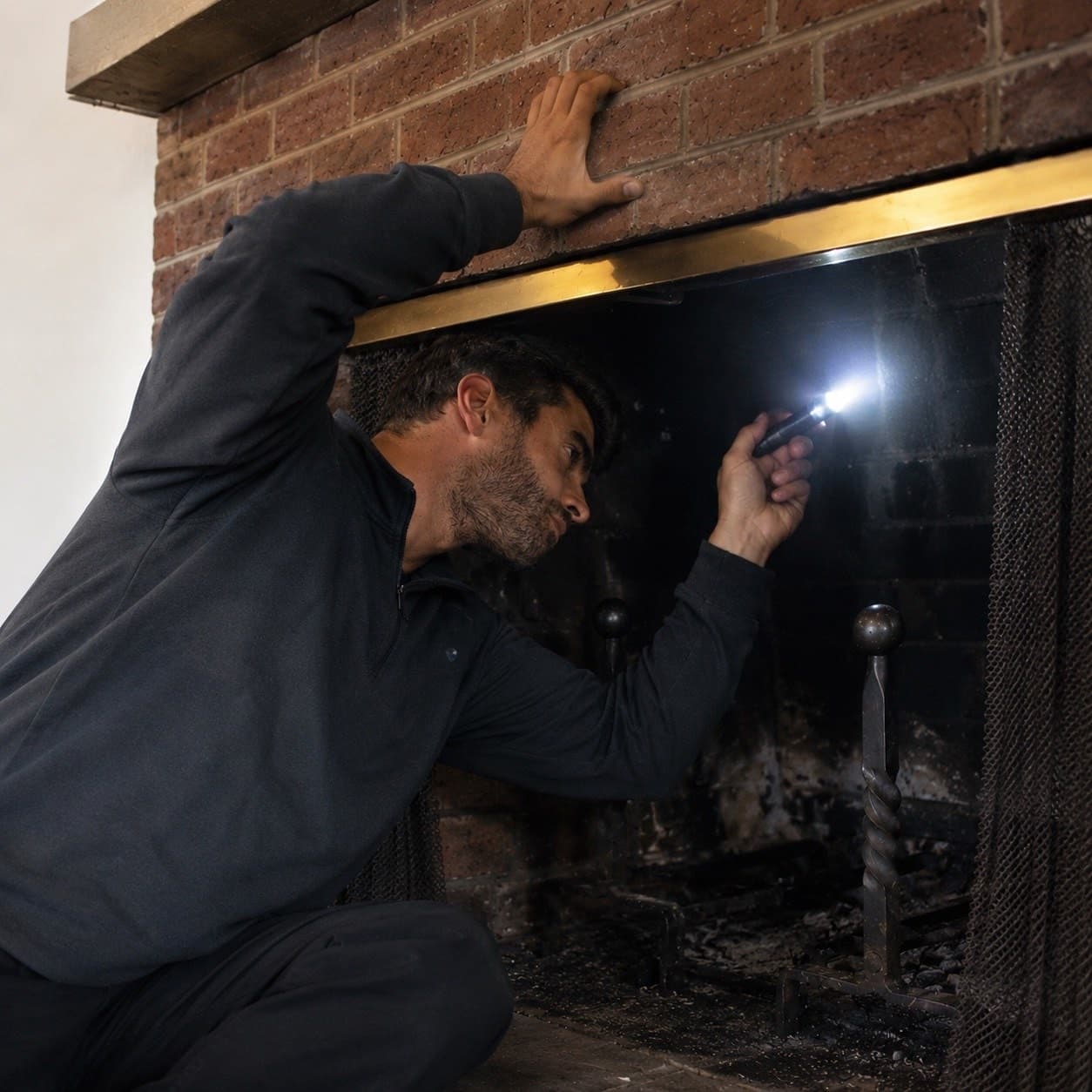
Once the deposits are off, the flue liner, smoke chamber and firebox are looked at again with a light, now that the surfaces are clean.
Explain what was found
You should hear what was removed, what condition the system is in, and whether anything needs attention before the next fire.
How long does it take?
A routine sweep of a single-flue fireplace typically takes one to two hours, including setup and cleanup. Heavy or glazed creosote, a more detailed inspection, multiple flues, animal removal or a difficult roof add time. Factory-built fireplaces are often quicker than masonry ones, but their metal flue must be cleaned with brushes suited to it.
How to prepare for the visit
The day before and the morning of
- Don’t use the fireplace for at least 24 hours so the firebox and flue are cold.
- Move furniture, rugs and decorations back from the hearth, leaving a clear path of a few feet.
- Clear a path from the door to the fireplace, and note any pets that need to be kept in another room.
- Make sure the roof can be reached: gate codes, access to the side yard, and any HOA rules about ladders.
- Turn off the pilot on gas logs or a gas insert if the manual says to, or ask the technician to do it.
- Write down anything you have noticed: smoke, smells, noises, water, or the last time the fireplace was used.
Good to know
Ask what the visit includes: the full flue, the smoke chamber, and whether the roof side will be checked. Our guide to choosing a chimney company lists more questions worth asking before you book. For a home you’ve just bought, or after a chimney fire, lightning strike or storm, the deeper Level 2 inspection is usually the right call.
What you should know when they leave
- What kind of deposits were removed, and whether any glazed creosote remains. See how much creosote is too much.
- The condition of the flue liner (see chimney liner types), damper, smoke chamber and firebox.
- Whether the cap, crown or chase cover looked sound from the roof.
- Whether the fireplace is safe to use now, or what needs repair first.
- When the next inspection is due. For light Central Florida use, the inspection-frequency guide explains the schedule.
If the report mentions heavy buildup, cracked tiles or water damage, that is when the cleaning turns into a repair conversation, for example creosote removal for glazed deposits.
For gas logs and gas fireplaces, the visit is different; gas fireplace maintenance covers what an annual service checks. If the sweep turns up something unusual, a blocked chimney and animals in the chimney explain what happens next. Area pages such as chimney sweep service in Winter Springs and a sweep in Apopka cover local timing and access.
References (2)
Facts and figures on this page come from these references.