Short answer
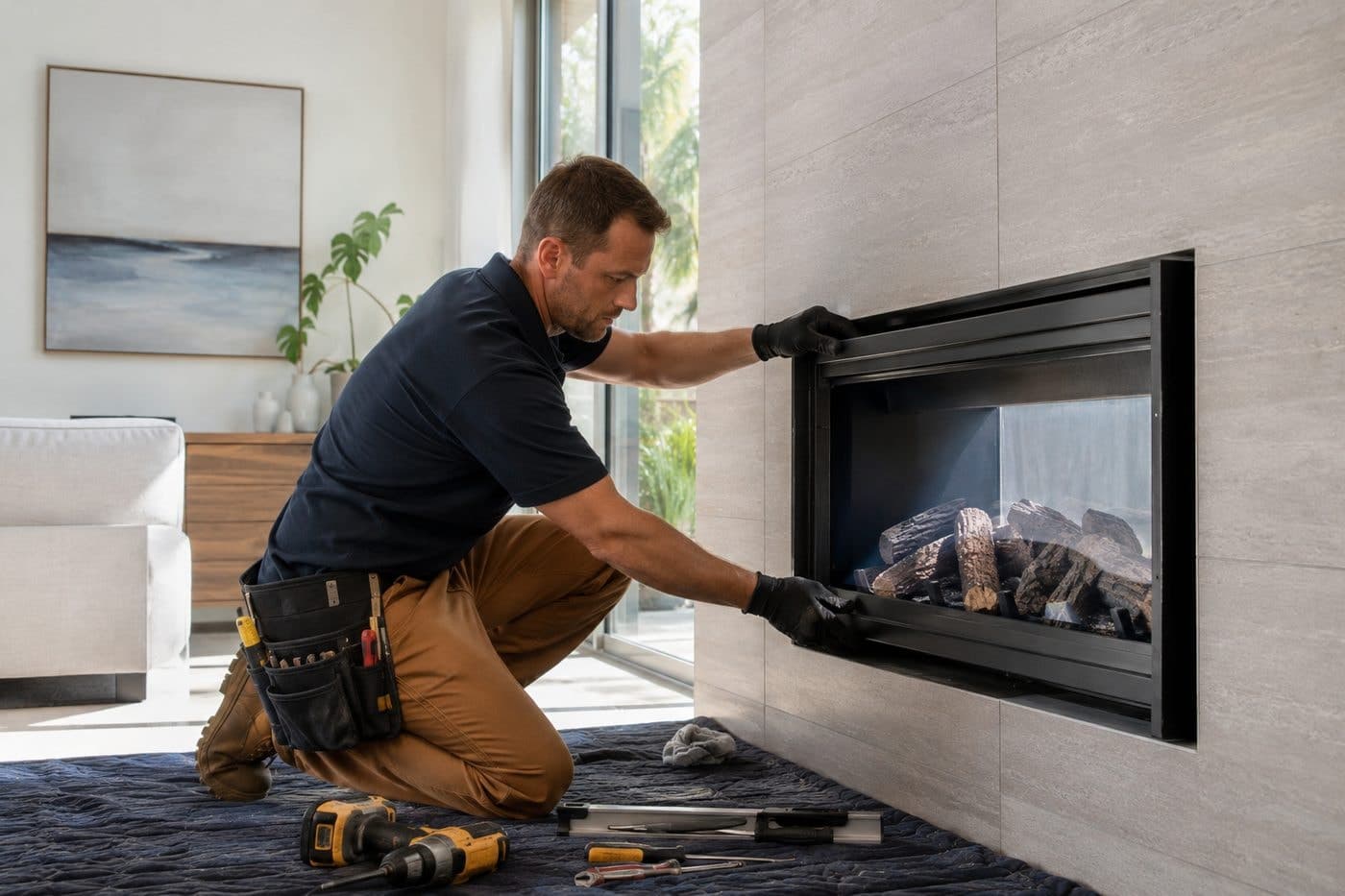
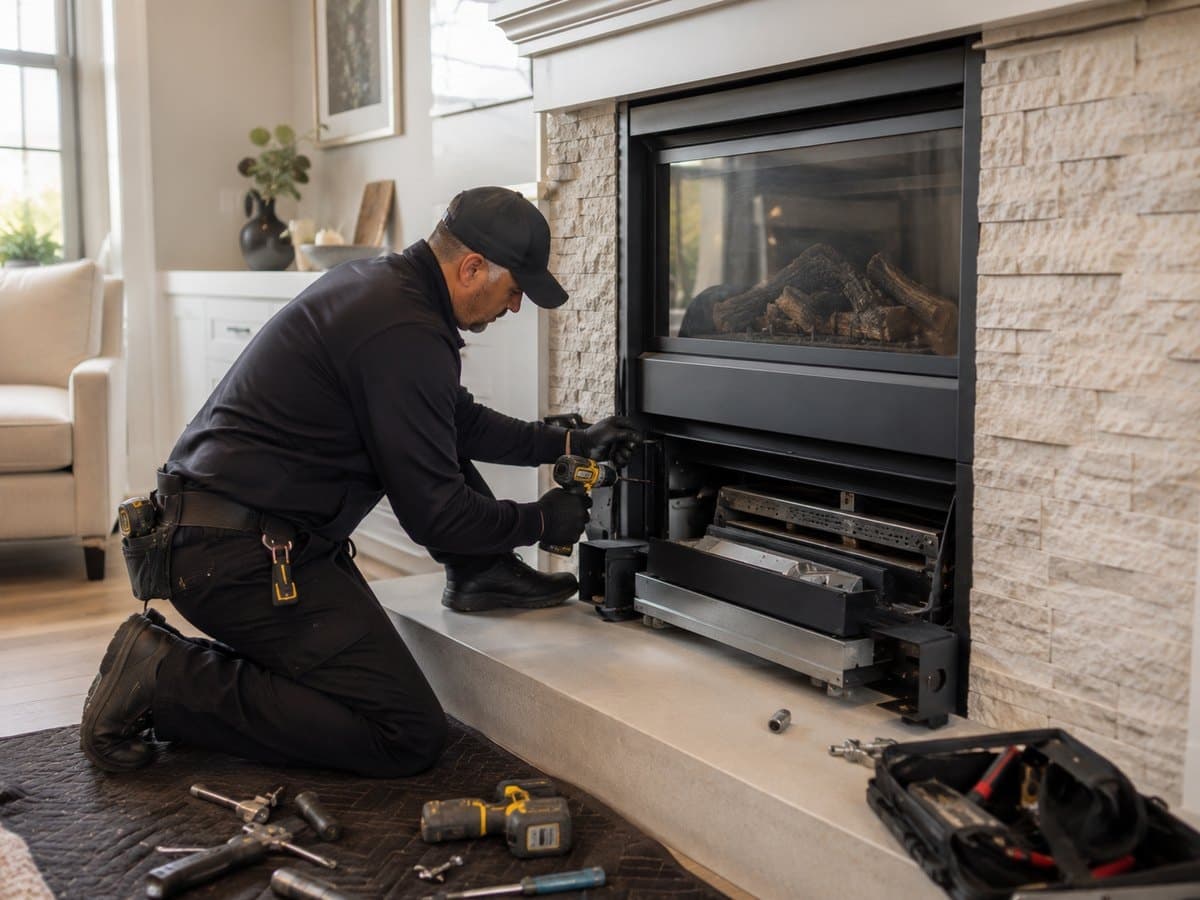
Owners handle batteries, cold-glass cleaning where the manual allows, clearances, alarm tests and a look at the outside vent cap. Once a year, a service visit cleans the burner and pilot, tests the ignition and safety controls, checks connections, glass, gasket and venting, and confirms a clean flame. In Florida, schedule it in early fall, before the first cool front.
The owner’s part
- Replace batteries in the remote, receiver and any battery backup at the start of each season.
- Clean white haze off the glass when it’s completely cold, if the manual allows glass removal. See cloudy gas fireplace glass.
- Keep the area around the unit clear to the clearances in the manual, including decorations on the mantel; see hearth and mantel clearances.
- Check the outside vent cap for plants, nests, insect screens clogged with debris, or damage after storms.
- Test carbon monoxide and smoke alarms monthly.
- Watch the flame each time you light it: compare it with the manual’s photos and note soot, noises or smells.
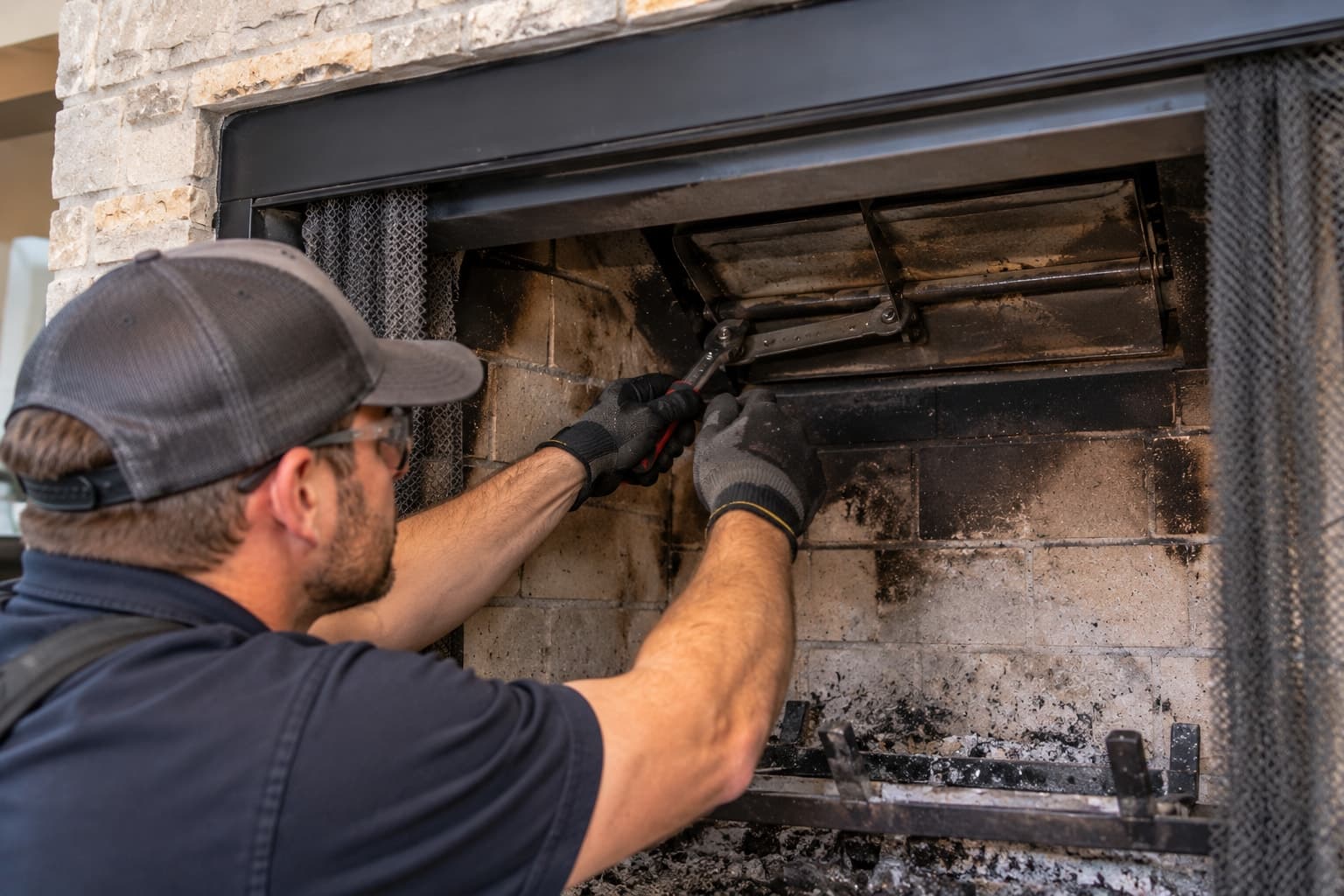
Leave the logs where they are
Logs, embers and decorative media are positioned to a diagram so the flame doesn’t strike them and make soot. If they are moved during cleaning, they need to go back exactly as shown. When in doubt, leave them for the service visit.
What an annual service should cover
| Area | What’s done |
|---|---|
| Burner and logs | Burner ports and air shutter cleaned; logs, embers and media reset to the diagram |
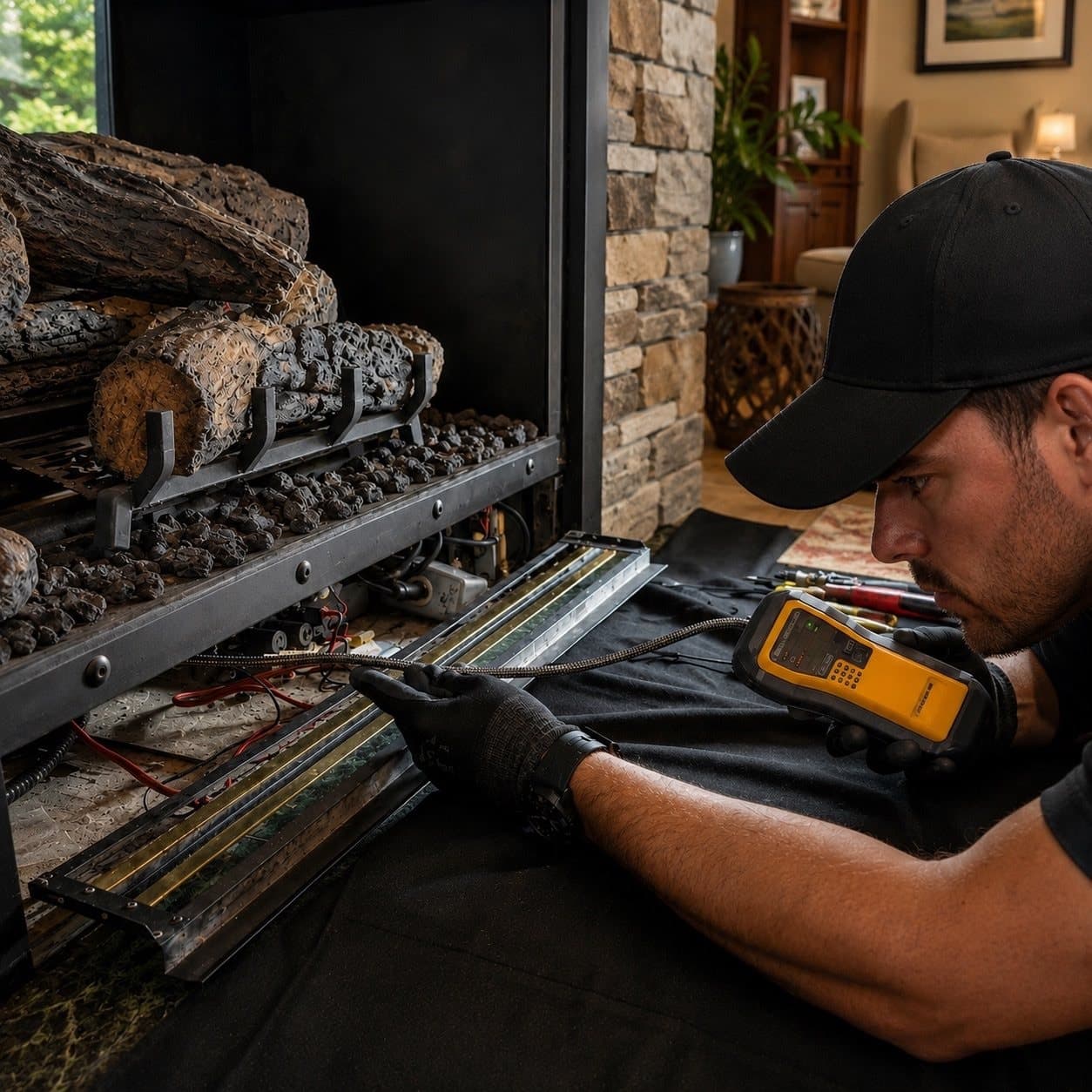
| Pilot and ignition | Pilot assembly cleaned; thermocouple, thermopile or flame sensor tested; igniter checked |
| Controls | Valve operation, remote and wall switch, and safety shutoffs tested |
| Gas | Connections checked for leaks; pressures checked against the rating plate when needed |
| Glass and gasket | Glass cleaned, checked for cracks; gasket and latches inspected |
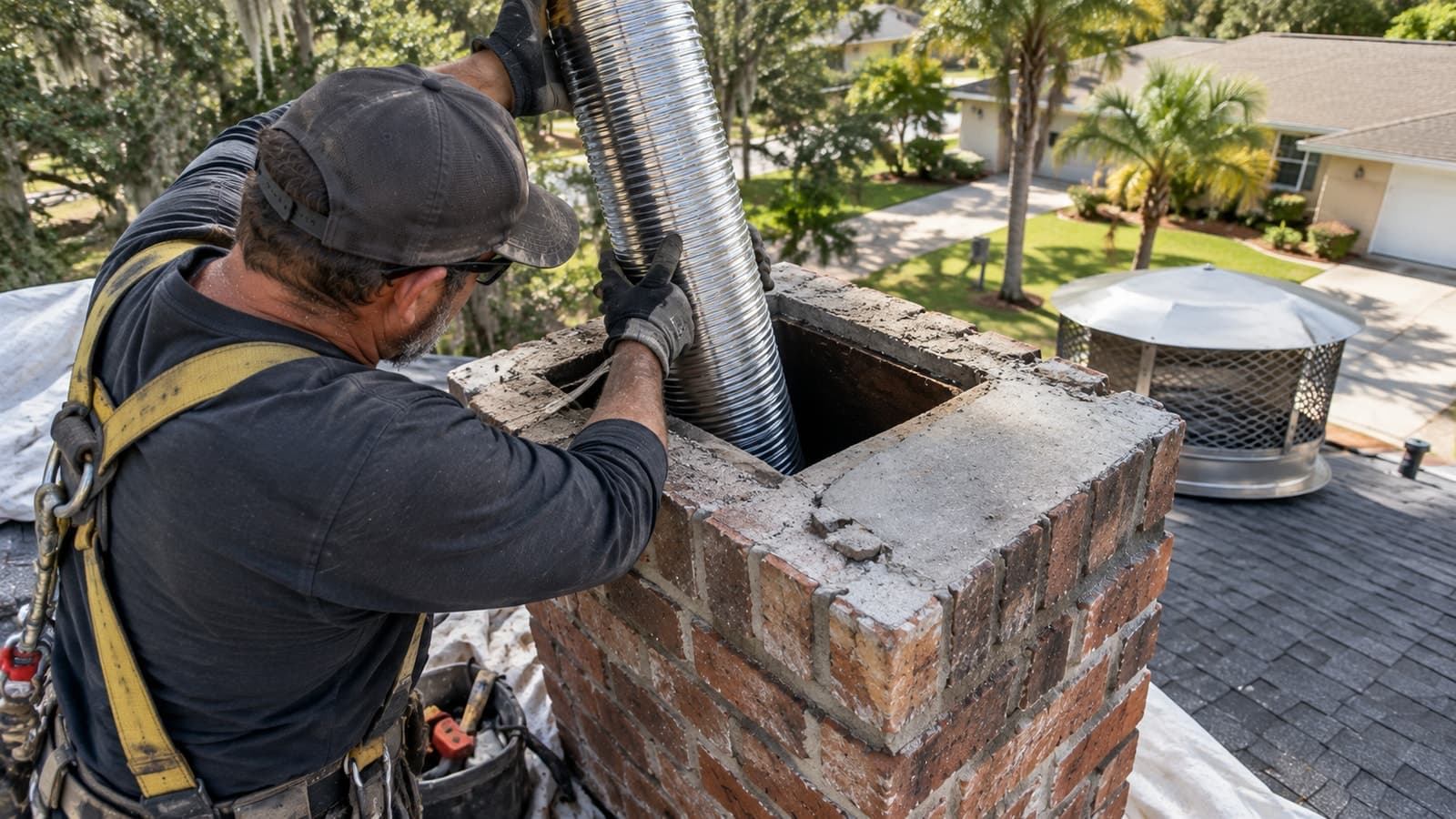
| Venting | Vent, liner or chimney checked for blockage, disconnection and damage; termination cap checked |
| Blower | Fan cleaned and checked for noise |
| Test run | Unit run through start-up to confirm clean ignition and a normal flame |
NFPA 211 calls for chimneys and vents to be inspected yearly (Chimneys.com), and that includes the vent a gas fireplace uses. For gas logs in a masonry fireplace, the chimney itself still needs the same checks as a wood-burning flue, apart from creosote.
The Florida off-season routine
Spring: shut down
Some owners turn off the pilot on standing-pilot units for the warm months to save gas and heat. Follow the label on the unit.
Summer: check after storms
After tropical weather, check the outside vent cap from the ground. See chimney damage after a storm.
Early fall: service
Book the annual service in September or October, before the first cool front and the seasonal rush.
First light: watch it
Stay with the unit for the first run, and note anything unusual.
Signs to stop and call
- A gas smell: leave the home and call the gas utility or 911 from outside.
- Soot on the glass, logs or wall: see a yellow, sooty flame.
- A bang when it lights: see gas fireplace noises.
- A burner that shuts itself off repeatedly.
- Cracked glass.
The annual visit is our gas fireplace service; faults found during it move to gas fireplace repair. For how the unit works in the first place, see how gas fireplaces work.
If something is already wrong, the gas fireplace problems hub sorts symptoms by cause, and a gas fireplace that won’t light after summer covers the most common start-of-season call. For wood fireplaces and chimneys, the chimney and fireplace maintenance checklist has the seasonal list. Gas service is arranged through the service pages rather than city pages.
References (2)
Facts and figures on this page come from these references.