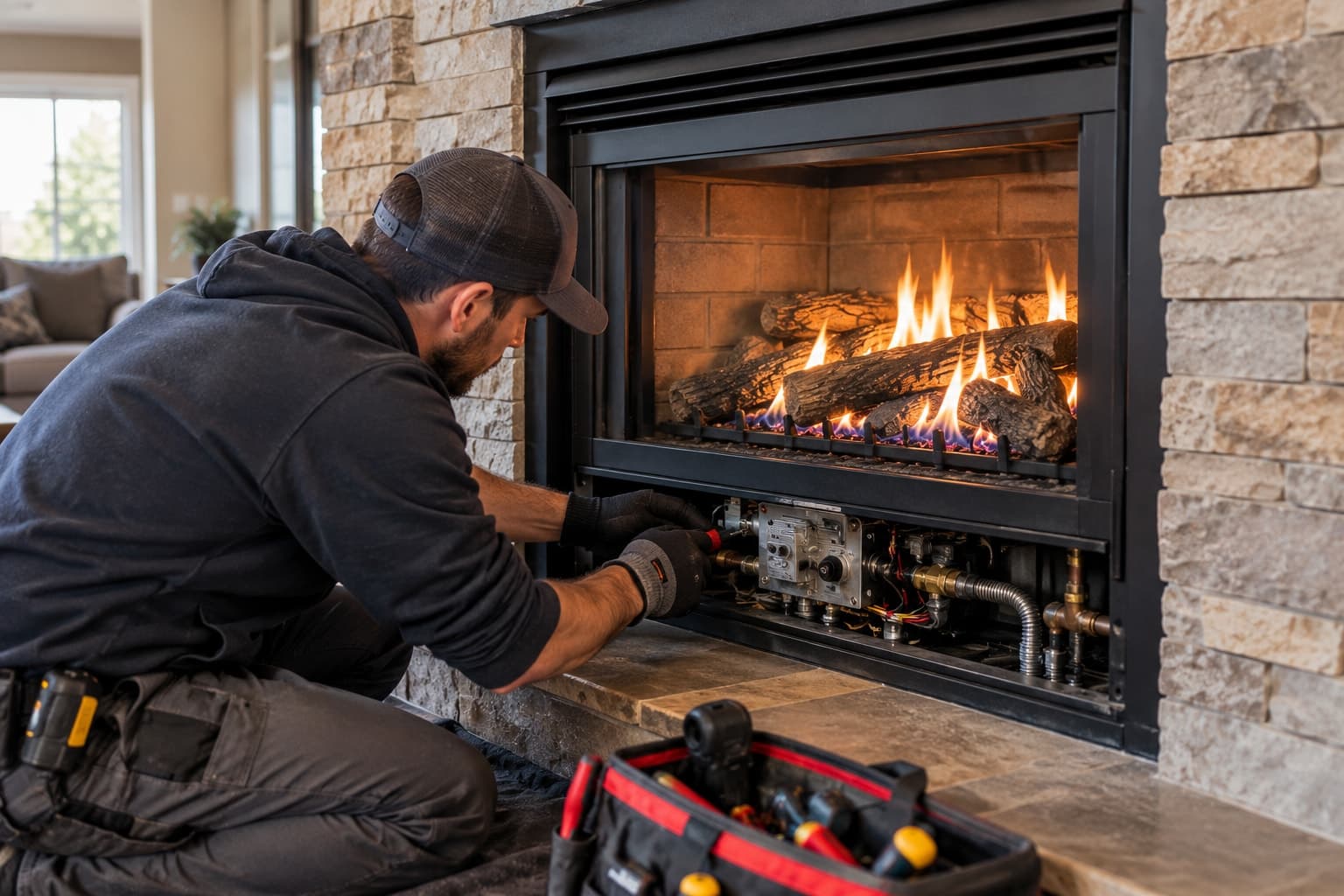
Hissing and a gas smell: leave now
A hissing sound together with a rotten-egg smell can be a gas leak. Don’t touch switches or the fireplace controls. Get everyone out and call the gas utility or 911 from outside.
Sound by sound
| Sound | When | Usually | Action |
|---|---|---|---|
| A few clicks | When lighting | Igniter sparking the pilot | Normal |
| Clicking that doesn’t stop | Trying to light | Igniter can’t light the pilot or the sensor can’t confirm flame | See won’t light |
| Soft whoosh | Burner catches | Gas lighting across the burner | Normal |
| Loud bang, pop or whoomp | Burner lights | Delayed ignition: gas built up before lighting | Turn off; service before next use |
| Ticking or pinging | Heating up and cooling down | Metal expanding and contracting | Normal |
| Steady hum | Blower running | Fan motor | Normal |
| Rattle, grinding or squeal | Blower running | Dust, loose housing or worn bearings | Service the blower |
| Roaring, whistling or a jet-like flame | Burner on | Pressure or orifice problem, or flame lifting | Turn off; service |
| Hissing | Fireplace off | Possible gas leak | Smell for gas; if present, leave and call |
| Rattling metal on windy days | Anytime | Loose vent termination cap outside | Have the cap secured |
Why delayed ignition matters
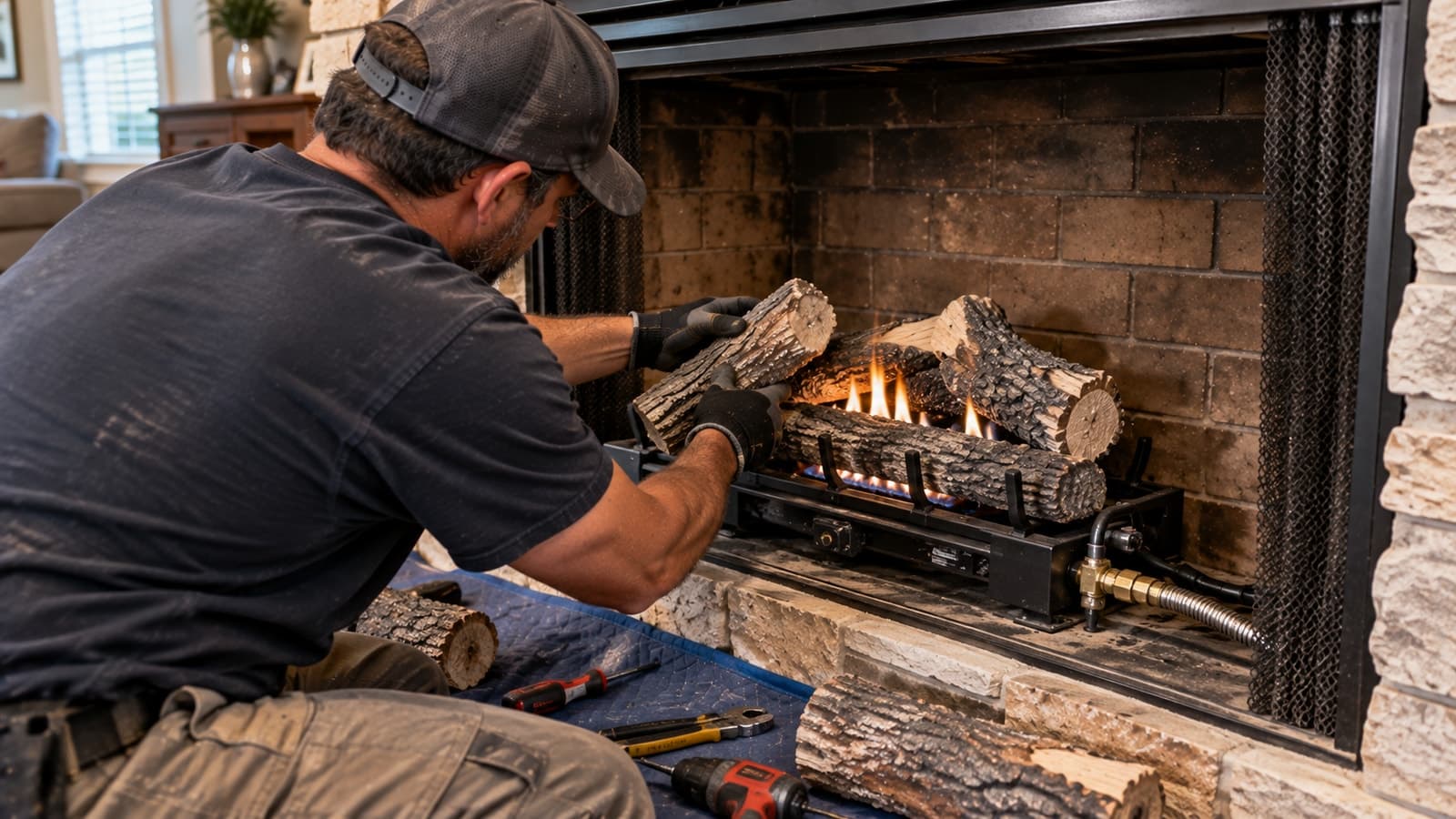
Normally the burner lights the moment gas reaches it, carried across by the pilot flame. If the pilot is weak or misaligned, or the burner ports are partly blocked, gas can flow for a second or two before it lights, then ignite all at once. That produces the bang. It can push the glass front off its seal, crack the glass, and put sudden stress on the vent. A fireplace that does it once will usually do it again.
Possible causes of abnormal noise
01Dirty or misaligned pilot
- What you may notice
- Delayed ignition, pilot looks small or lazy.
- How it’s confirmed
- Cleaning the pilot hood and orifice and checking the flame reaches the burner properly.
02Blocked burner ports
- What you may notice
- Delayed ignition on one side, uneven flames. See a weak flame.
- How it’s confirmed
- Cleaning the burner and resetting logs and media to the diagram.
03Gas pressure too high or wrong orifice
- What you may notice
- Roaring, lifting flames, whistling.
- How it’s confirmed
- Measuring pressure and confirming the orifice matches the fuel on the rating plate.
04Blower wear
- What you may notice
- Rattling, grinding or squealing that follows the fan speed.
- How it’s confirmed
- Cleaning the blower and checking bearings and mounts; replacing the motor if worn.
05Loose vent parts
- What you may notice
- Rattling or whistling in wind, even when the fireplace is off.
- How it’s confirmed
- Checking the termination cap and vent connections outside and in the chase.
Safe checks for homeowners
- Note exactly when the noise happens: lighting, running, shutting down, or with the unit off.
- Record a short video with sound; it helps a technician a lot.
- Check whether the sound follows the blower speed. If it does, it is almost certainly the fan.
- After a bang, look at the glass for cracks or a frame that has shifted, without touching hot glass.
- Test your carbon monoxide alarm.
Red flags
- Any bang or whoomp at ignition. Leave the fireplace off.
- Glass cracked or pushed out after a noise: see cracked fireplace glass.
- Hissing with the unit off, or any gas smell.
- Roaring flames or flames rolling out of the opening.
What a technician checks
Reproduce the sound
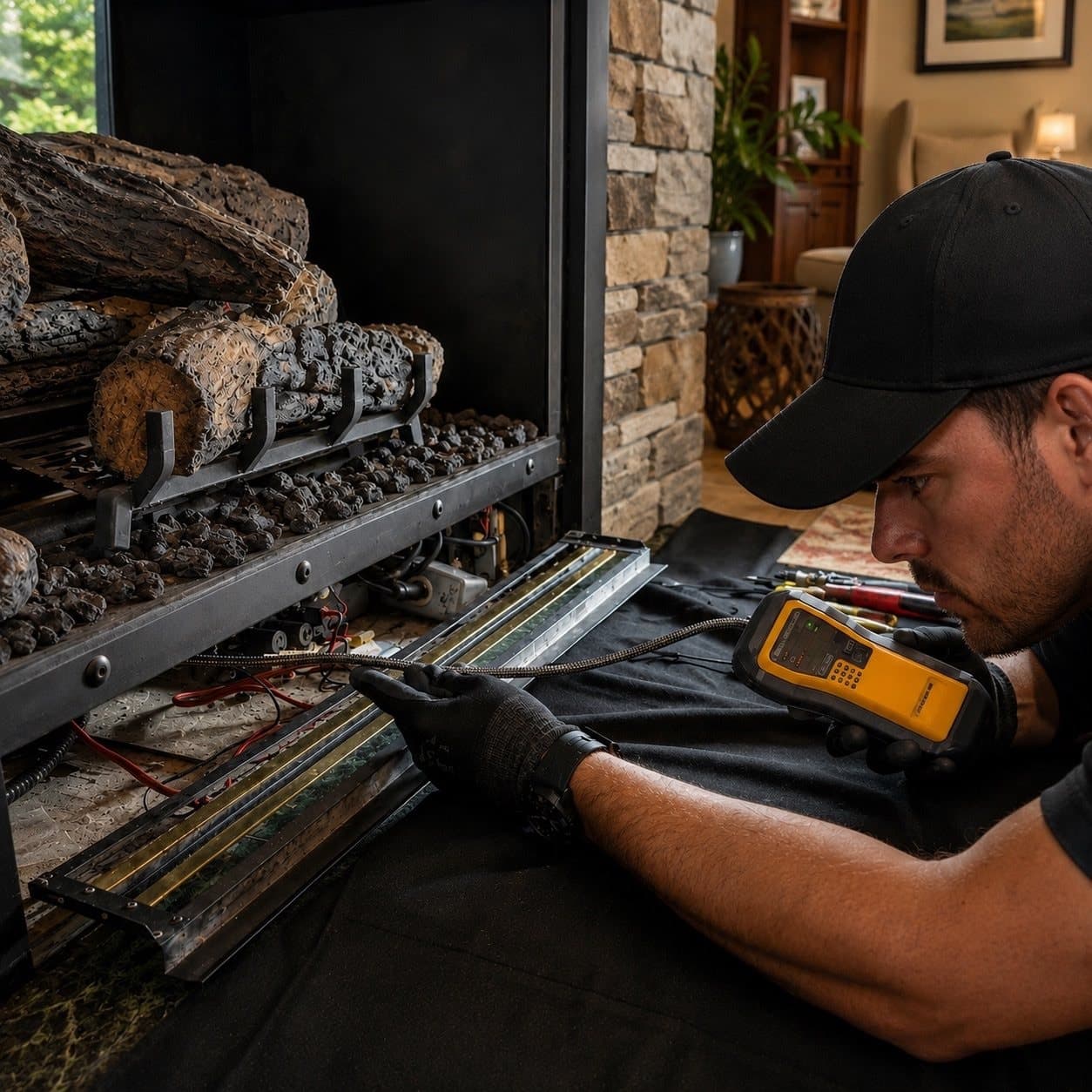
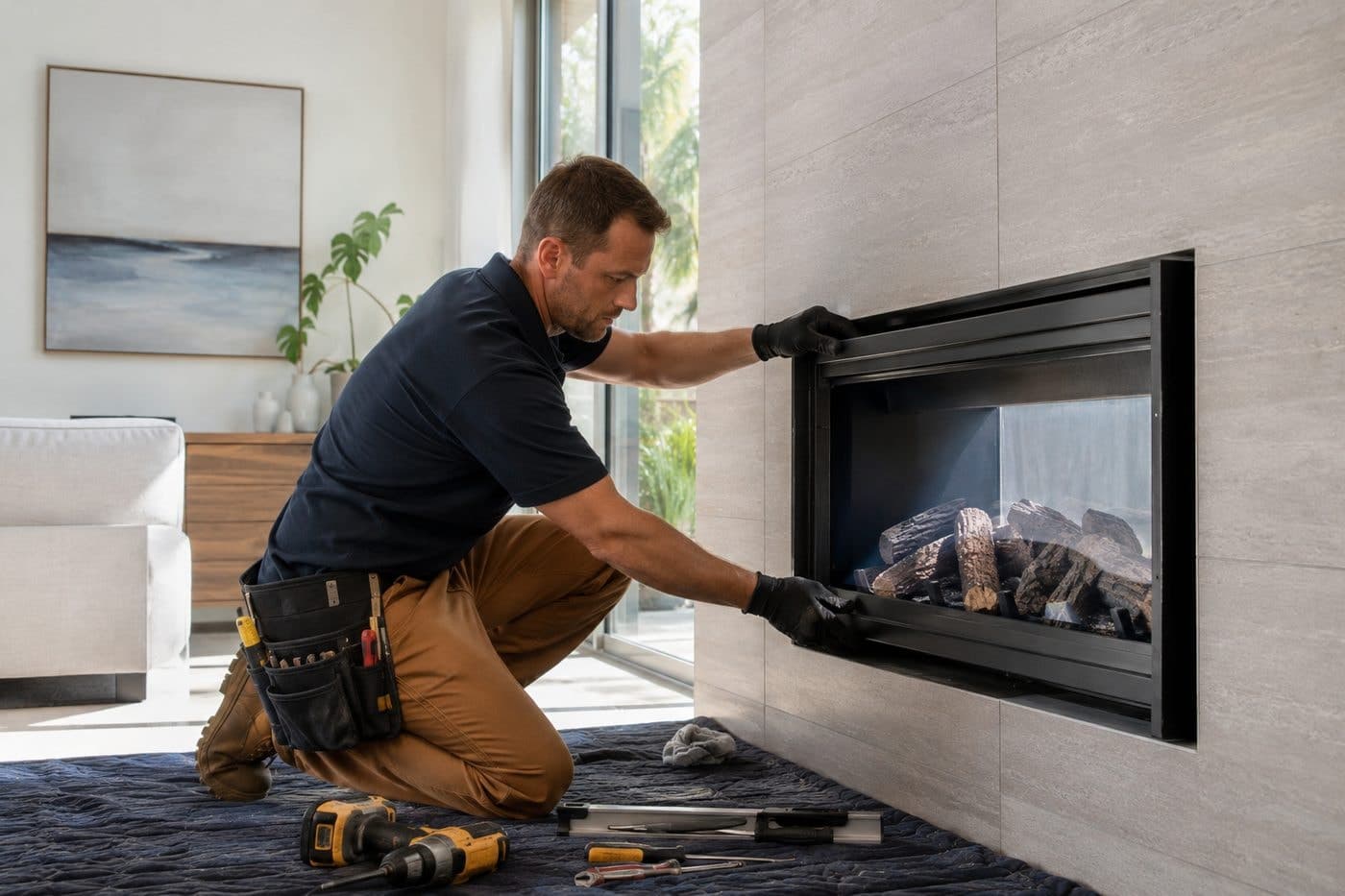
The unit is run through start-up, operation and shutdown while the technician listens and watches.
Ignition
Pilot, igniter and burner are cleaned and adjusted so the burner lights smoothly.
Pressure and orifice
Pressures are measured and the orifice checked against the fuel.
Blower and vent
The fan is cleaned or replaced and the vent and termination checked for loose parts.
Noises that need a visit
| Sound | Where it’s fixed |
|---|---|
| Loud whoosh or bang at ignition (delayed ignition) | gas fireplace repair; stop using it until checked |
| Humming or rattling blower | gas fireplace service or a blower repair |
| Whistling from the vent or cap | a vent inspection |
Clicking that never lights is an ignition problem, covered in a gas fireplace that won’t light. What each part of a gas fireplace does explains which parts make which sounds.
References (1)
Facts and figures on this page come from these references.