Gas smell? Leave first
If a low flame comes with any smell of gas, leave the home without using switches and call the gas utility or 911 from outside.
Match the pattern
| What you notice | Most likely cause |
|---|---|
| Low flame all the time, since someone adjusted something | Flame-height setting turned down |
| Low flame that got gradually worse | Burner ports or orifice slowly clogging; supply pressure dropping |
| Flame drops when the water heater, furnace or range runs | Supply line or meter can’t deliver enough gas for everything at once |
| Low flame on propane, worse in cold weather | Tank running low, or regulator problem |
| Flame weak on one side or in patches | Blocked burner ports, or embers or media covering them |
| Low flame plus soot or yellow, lazy flames | Combustion problem: see a sooty or yellow gas flame |
| Flame starts normal, shrinks, then shuts off | Pressure or sensor problem: see turns off by itself |
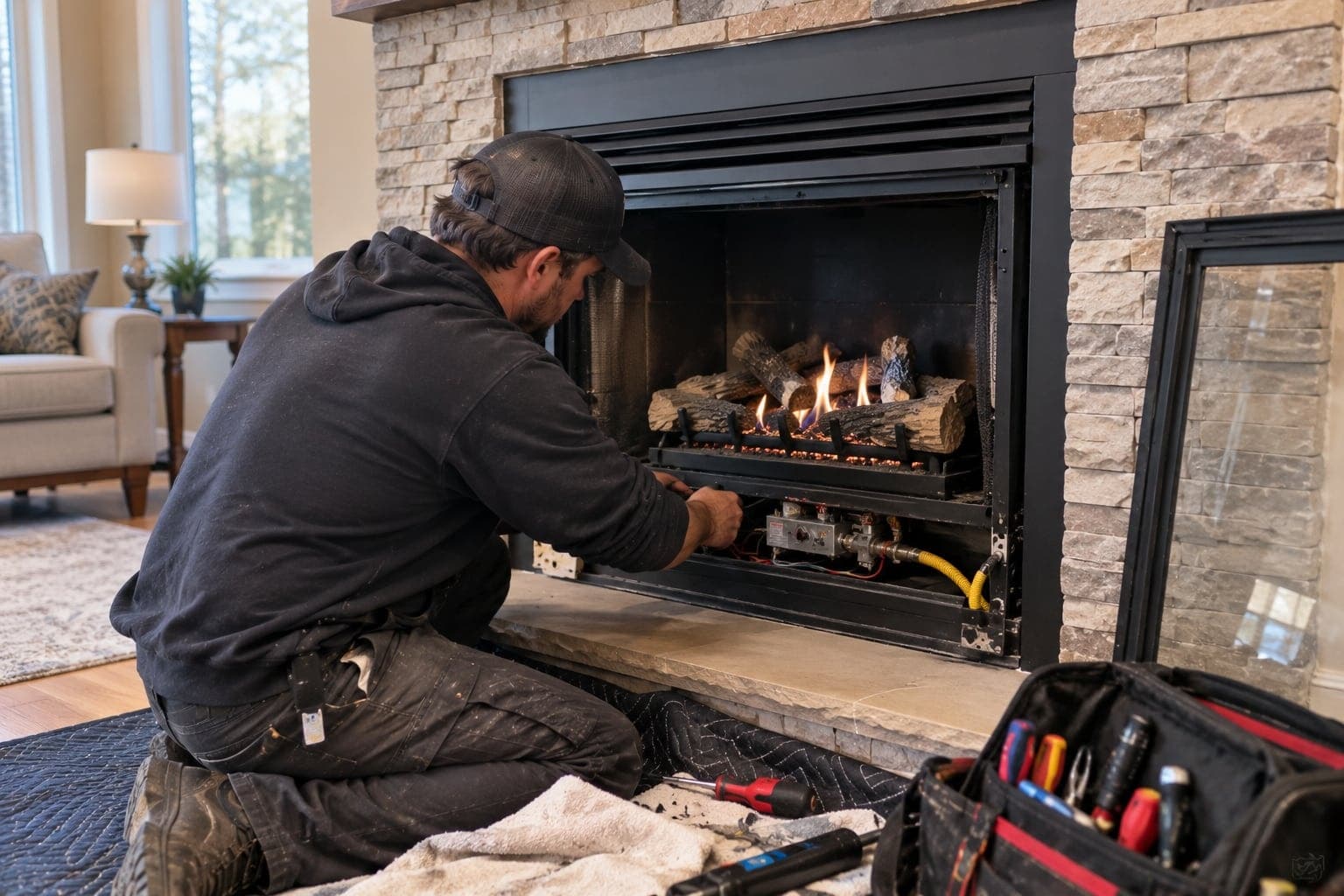
Possible causes
01Flame-height setting
- What you may notice
- A HI/LO knob on the valve set toward LO, or a flame-level setting on the remote.
- How it’s confirmed
- Checking both settings against the manual. This is one adjustment homeowners can usually make, per the manual.
02Low supply pressure
- What you may notice
- Flame weaker when other gas appliances run; propane gauge low.
- How it’s confirmed
- Measuring inlet and manifold pressure with a gauge against the rating plate.
03Clogged burner ports or orifice
- What you may notice
- Uneven flame, dead spots along the burner, dust or debris after the off-season.
- How it’s confirmed
- Cleaning the burner and orifice, which requires removing logs and media.
04Embers or media covering the burner
- What you may notice
- Flame weak where the glowing embers, sand or glass media sit thickest.
- How it’s confirmed
- Setting media back to the amount and position the manual specifies; too much smothers the burner.
05Connector or valve problem
- What you may notice
- Low flame since a move, remodel or new connector; valve that won’t reach high.
- How it’s confirmed
- Checking the flexible connector, shutoff valve and gas valve output. Gas-line work is a separate job from appliance service, and we carry that out too.
Safe checks for homeowners
- Check the flame-height knob on the valve and any flame-level setting on the remote.
- On propane, check the tank gauge.
- Note whether the flame drops when another gas appliance turns on.
- Look through the glass for dead spots along the burner and take a photo.
- Leave logs, embers and media alone; moving them changes how the fireplace burns.
Leave pressure and burner work to a technician
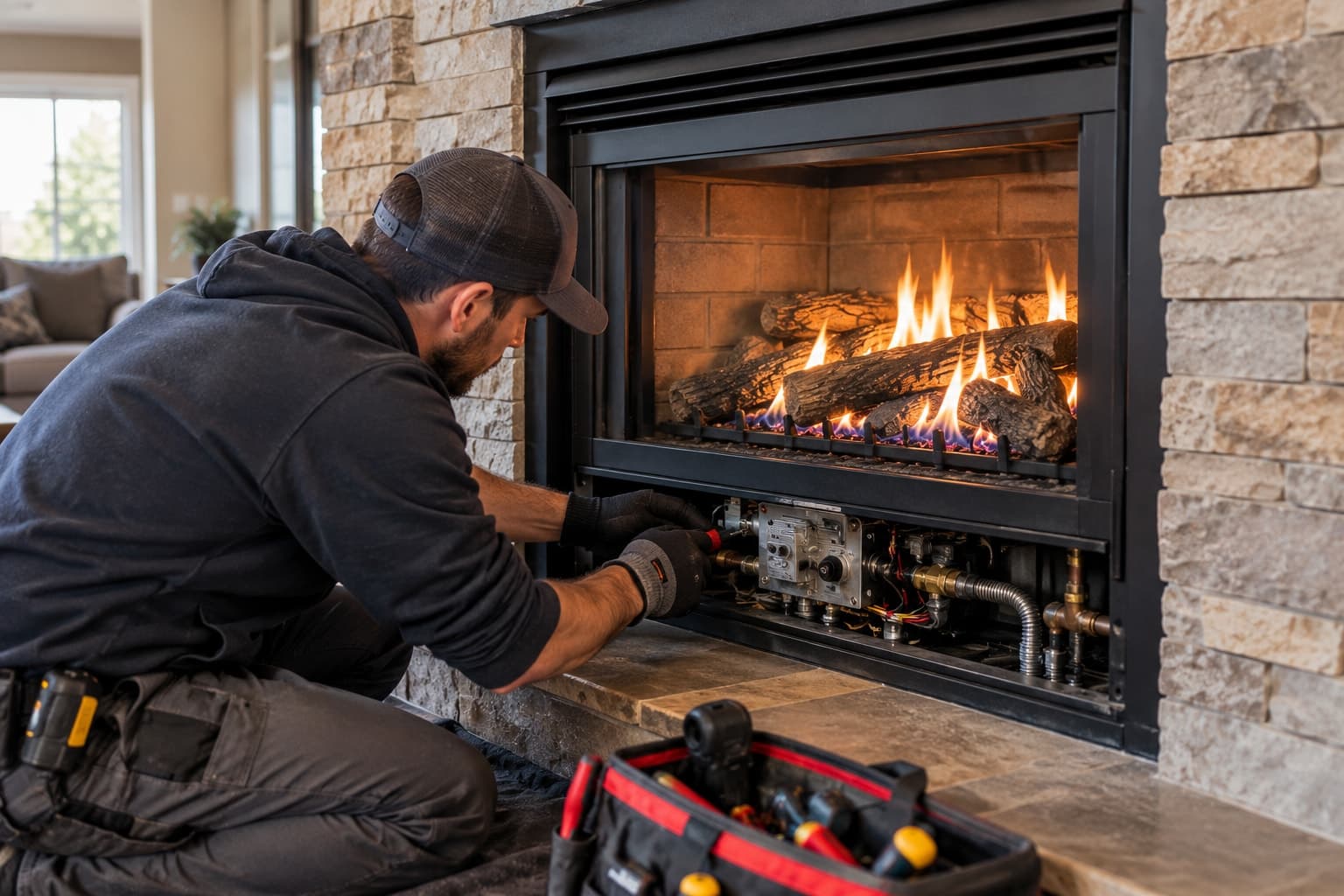
Adjusting regulators, drilling or swapping orifices, or taking the burner apart can create a gas leak or a dangerous flame. Beyond the flame-height setting and the tank gauge, have the fireplace serviced.
Red flags
- A gas smell at any time.
- Soot, or flames that lift off the burner or roll out of the opening.
- A loud bang or delayed ignition when the burner lights; see gas fireplace noises.
- A pilot that keeps going out along with the low flame: see a pilot that won’t stay lit.
What a technician checks
Settings
Valve and remote flame settings are confirmed first.
Pressure
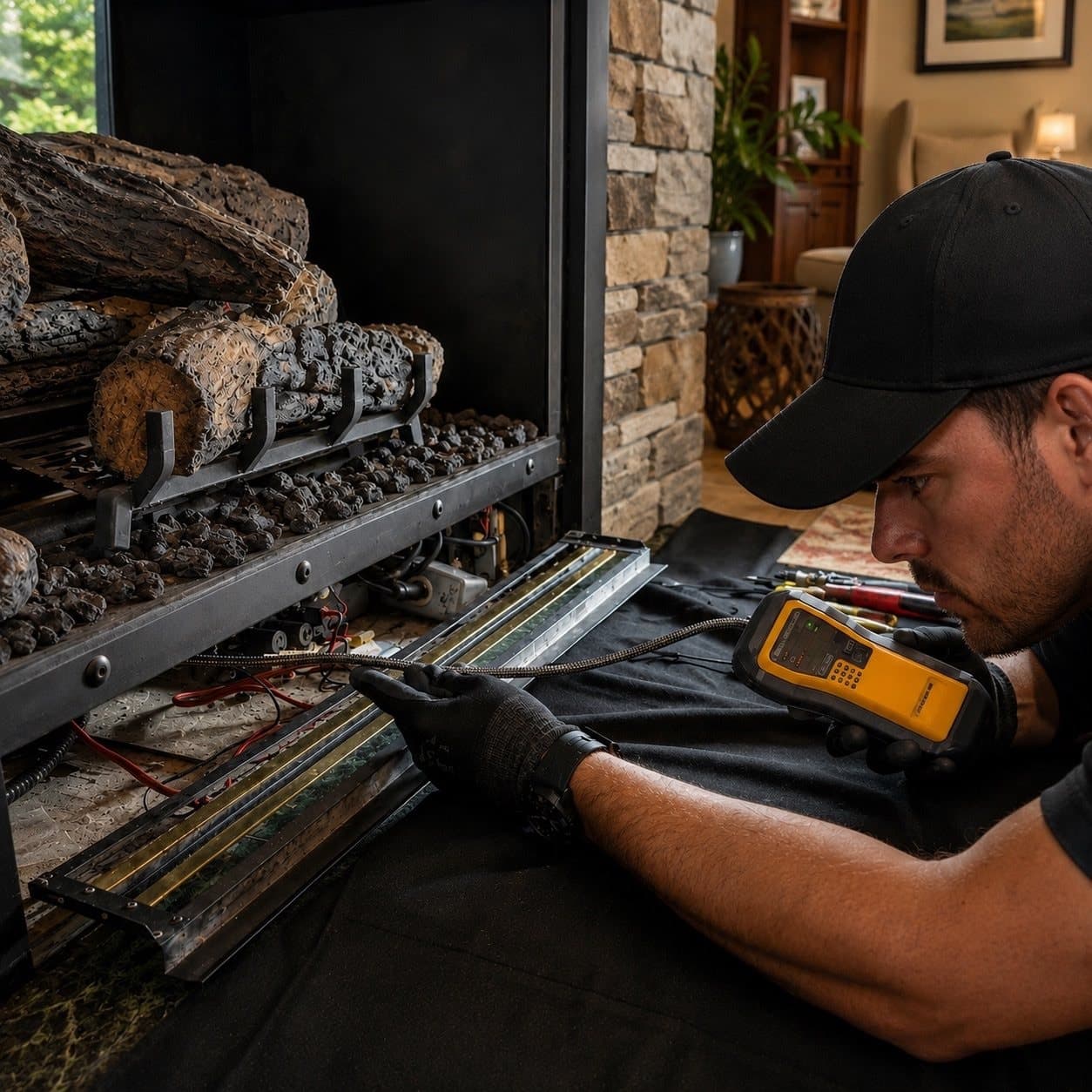
Inlet and manifold pressures are measured with a gauge and compared with the rating plate.
Burner
The burner, ports and orifice are cleaned and logs and media are set to the diagram.
Supply
If the supply can’t deliver enough gas, the gas utility, or separate gas-line work, handles the piping or meter.
Restoring a normal flame
| Cause | Where it’s fixed |
|---|---|
| Dirty burner ports or pilot after an idle season | gas fireplace service |
| Valve, regulator or connector fault | gas fireplace repair |
| Supply can’t keep up with other appliances | the gas utility, or a gas contractor where required |
Never adjust the gas valve or regulator yourself. If the flame is also yellow or sooting, see a sooty or yellow gas flame instead. Burner cleaning is part of yearly gas fireplace upkeep.
References (1)
Facts and figures on this page come from these references.