Smell gas? Stop here
If you smell gas (a rotten-egg odor), don’t try to light the fireplace or flip any switches. Leave the home and call the gas utility or 911 from outside. Our page on a gas fireplace that smells like gas explains what to do next.
Two kinds of ignition, two sets of causes
Most gas fireplaces use one of two systems. A standing pilot keeps a small flame burning all the time; a thermocouple or thermopile senses that flame and allows gas to the main burner. An electronic ignition system (often called IPI, intermittent pilot ignition) lights the pilot only when you call for heat, using a spark from a control module powered by the house current, batteries or both.
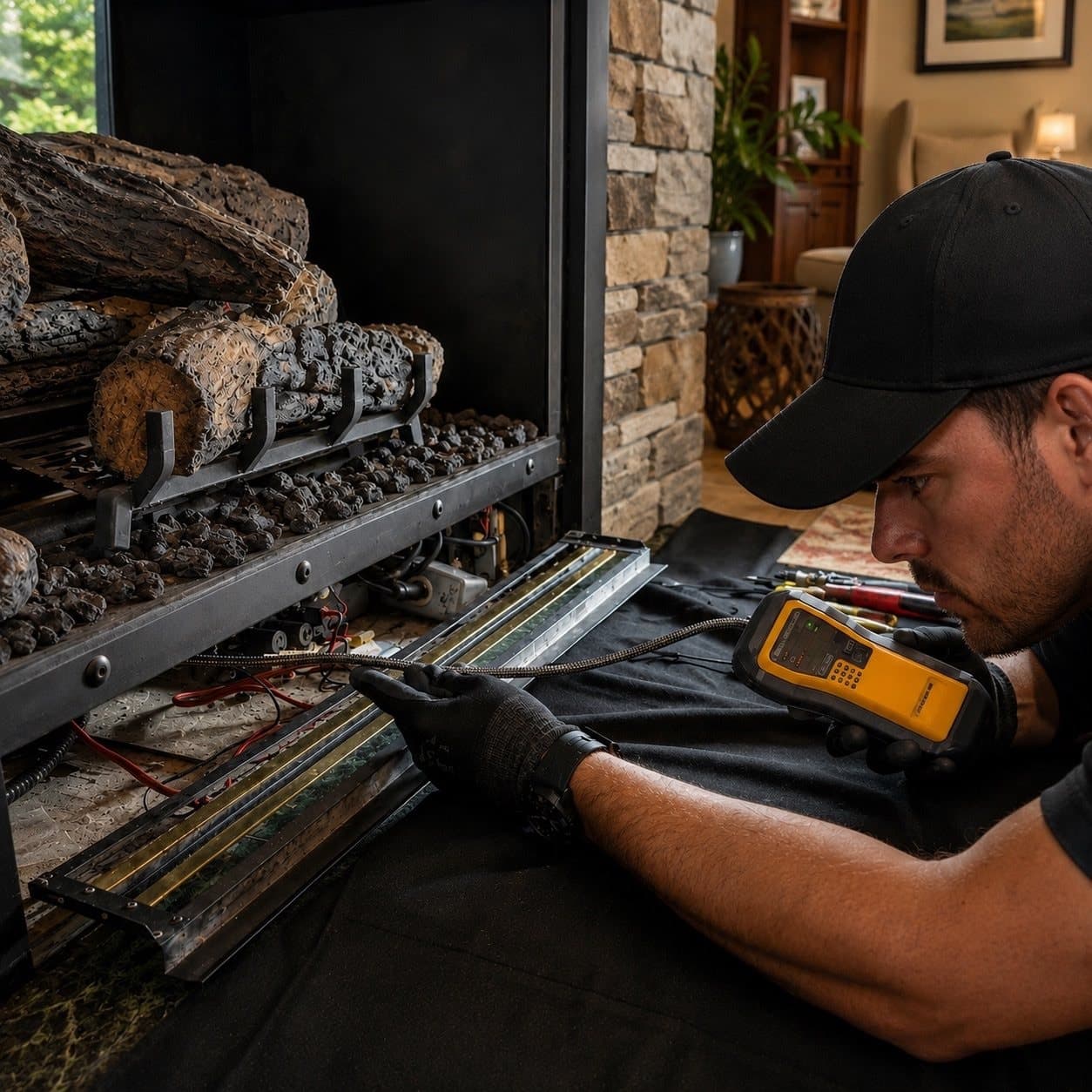
Knowing which one you have narrows the list. The rating plate, usually behind the lower grille or on a pull-out tag, lists the model and often the ignition type. The owner’s manual has the same information and the correct lighting procedure.
Possible causes
Roughly in the order we would check them on a Central Florida fireplace that has been idle for months. The explanations are to help you describe the problem, not steps to follow.
Why a gas fireplace won’t start
01Gas supply off
- What you may notice
- Nothing happens at all, or the igniter clicks with no flame. Common after a meter change, renovation or a propane tank running empty.
- How it’s confirmed
- Confirming the appliance shutoff valve is open and gas is reaching the valve at the correct pressure.
02Batteries in the remote, wall switch or receiver
- What you may notice
- The remote shows nothing or the unit responds only intermittently. Many units keep a battery backup pack that also drains over a summer.
- How it’s confirmed
- Testing battery voltage and whether the receiver responds to the remote and the manual switch.
03Pilot has gone out (standing pilot)
- What you may notice
- No small blue flame visible through the glass. Burner does nothing when switched on.
- How it’s confirmed
- Relighting per the manufacturer’s instructions and watching whether the pilot holds. If it won’t, see our page on a pilot that won’t stay lit.
04Weak thermopile
- What you may notice
- Pilot is lit but the main burner won’t come on, or comes on only with the switch held.
- How it’s confirmed
- Measuring the thermopile’s output with a meter against the manufacturer’s specification.
05Igniter or IPI control module
- What you may notice
- Repeated clicking with no pilot, no spark at all, or a flashing status light.
- How it’s confirmed
- Checking the spark, the igniter gap, the flame sensor and any error code against the manual.
06Dirty pilot assembly
- What you may notice
- Pilot lights but is small, lazy or yellow, and the burner struggles or drops out. Spider webs and dust after a long idle season are typical.
- How it’s confirmed
- Cleaning the pilot hood, orifice and sensors, which requires disassembly by a technician.
07Wall switch or remote receiver fault
- What you may notice
- Fireplace works from one control but not the other, or not at all after wiring work.
- How it’s confirmed
- Testing switch wiring, receiver settings and pairing.
08Safety lockout
- What you may notice
- Unit tries a few times and then stops responding, sometimes with a blinking light.
- How it’s confirmed
- Reading the fault code and finding why the unit locked out before resetting it. Lockouts exist for a reason.
09After a power outage or hurricane
- What you may notice
- Electronic ignition dead after an outage or surge; debris, water or a loose termination cap after a storm.
- How it’s confirmed
- Checking the module and power supply, then the vent termination and chimney top for storm damage.
The only checks we recommend for homeowners
- Make sure the gas supply valve for the fireplace is open. It is usually a small quarter-turn valve near the unit or behind the lower grille; the handle runs in line with the pipe when open.
- If the home uses propane, confirm the tank isn’t empty.
- Replace the batteries in the remote, the wall switch (if battery-powered) and any battery backup pack, then try again.
- For electronic ignition units, confirm the fireplace has power: check the breaker and any wall outlet it plugs into.
- Relight a standing pilot only by following the manufacturer’s lighting instructions printed on the rating plate or in the manual, step by step, including the waiting time.
If those don’t work, stop. Don’t remove the glass or burner, adjust or tap the gas valve, jumper a switch, bypass a safety sensor or hold a lighter to the burner. Anything past these checks belongs to a gas fireplace technician, and gas-line work is a separate job from appliance service, and we carry that out too.
Red flags: don’t keep trying
- Any smell of gas, during or after the attempts.
- A loud whoosh or bang when the burner finally lights (delayed ignition).
- Soot on the glass, yellow and lazy flames, or black marks at the top of the opening.
- Cracked or missing glass, or a gasket hanging loose on a sealed direct-vent unit.
- The vent cap outside is damaged, blocked or loose, especially after a storm.
- A carbon monoxide alarm sounding at any point: leave, get fresh air and call 911.
What professional diagnosis involves
Confirm gas supply and pressure
The technician verifies gas is reaching the valve at the pressure listed on the rating plate before touching anything else.
Test the ignition and safety circuit
Thermopile or thermocouple output, spark, flame sensor, module codes, switch and receiver are measured, not guessed.
Clean and inspect the burner and pilot
Dust, insects and debris are cleared from the pilot assembly and burner, and the logs or media are set back in the positions the manual specifies.
Check the venting
The vent pipe and termination are checked for blockage, separation or storm damage, because a good ignition system can still shut down on a bad vent.
Findings before repair
You receive an explanation of what failed and the repair options before any part is replaced.
Repairs to failed parts fall under gas fireplace repair. If the unit works but is due for its annual cleaning and safety check, see gas fireplace service. A chimney and vent inspection covers the venting and termination if a storm is the suspect.
Which service gets it lighting again
| Where it stops | Where it’s fixed |
|---|---|
| Igniter, pilot assembly, thermopile or valve | gas fireplace repair |
| Dirty pilot and burner after months unused | a yearly gas fireplace service |
| Vent or chimney blocked, or storm damage outside | a vent and chimney inspection |
The ignition chain, explained step by step, shows where each failure sits. There are no city-specific gas fireplace pages; repairs are handled through the service pages above anywhere in the service area.
References (4)
Facts and figures on this page come from these references.