On this page
- Where the water shows up is your first clue
- The entry points checked, from the top down
- How we identify the cause
- Waterproofing: what it does and what it can’t fix
- Rain and storms in Central Florida
- What to do while you wait for a repair
- What affects the cost of a leak repair
- When a leak needs someone today
Water that shows up in your fireplace or on the ceiling next to it has usually travelled some distance. It can enter at the top of the chimney and run down the flue, soak through brick halfway up, or slip behind siding and follow a framing member into the house. That’s why so many chimney leaks get “fixed” two or three times: each repair sealed a real defect, just not the one letting the water in.
This page explains how we work out the cause. If you’re still at the “what is this stain?” stage, our guide to why water comes through a chimney covers the common causes in plain terms. Leak repair is part of our wider chimney repair services. For a leak at a specific address, the local pages cover each city, starting with leak repair for City of Orlando homes.
Where the water shows up is your first clue
Before anyone climbs a ladder, the location of the water narrows the list. Here is how we read the most common patterns.
| Where you see water | What it often means | First components to check |
|---|---|---|
| Dripping or puddles in the firebox, rust on the damper or grate | Water is entering at the top and running down the flue or the inside of the chimney | Cap, chase cover or crown, flue-to-crown seal, storm collar |
| Stain on the ceiling beside the chimney, near the roof line | Water is getting in where the chimney passes through the roof | Flashing, cricket, roof covering around the chimney |
| Stain on the wall beside the fireplace, lower down, or bubbling paint | Water is moving down inside the chimney walls or the chase framing | Masonry and mortar joints, siding seams, chase cover edges |
| Damp or musty smell but no visible water | Slow wetting that dries between storms, often inside a chase or masonry wall | Chase cover, siding, crown; moisture readings needed |
| Stain on exterior siding or stucco below the chimney top | Water or rust running off the top of the chase | Chase cover (especially galvanized), drip edge, cap |
When it leaks matters as much as where
A leak in every rain usually means an open path at the top; one that shows only in downpours often means a part that holds water until it overflows; one that needs wind from a particular direction points to the weather-facing side. Why chimneys leak in Florida rainstorms explains these patterns and how to keep a simple leak log that speeds up diagnosis.
The entry points checked, from the top down
Every chimney leak comes back to one or more of the components below. We check them in order from the top, because water that enters high can show up anywhere below it. Each item notes what you might see, how the cause is confirmed, and where the repair is explained.
Chimney leak sources and how each one is confirmed
01Chimney cap
- What you may notice
- Cap missing, bent or loose after a storm; rain falling straight into the flue; rust on the damper or water in the firebox after ordinary rain.
- How it’s confirmed
- We check that the cap is present, secured and sized to cover the flue, that its lid overhangs enough to shed wind-driven rain, and whether the mesh or lid is rusting. On a factory-built chimney we confirm the termination cap matches the flue system.
02Chase cover (factory-built chimneys)
- What you may notice
- Orange or brown streaks on siding or stucco, a flat or sagging metal top that holds water, rust around the flue opening, stains that appear after every rain.
- How it’s confirmed
- We look for standing water, rust-through, open seams, a missing drip edge and loose fasteners, and probe the chase cover and the framing edge beneath it. Water tracks on the inside of the chase often lead straight back to the cover.
03Flashing at the roof line
- What you may notice
- Ceiling stain beside the chimney, leak that shows up in wind-driven rain, dried-out sealant or tar smeared over the flashing, stains in the attic around the chimney.
- How it’s confirmed
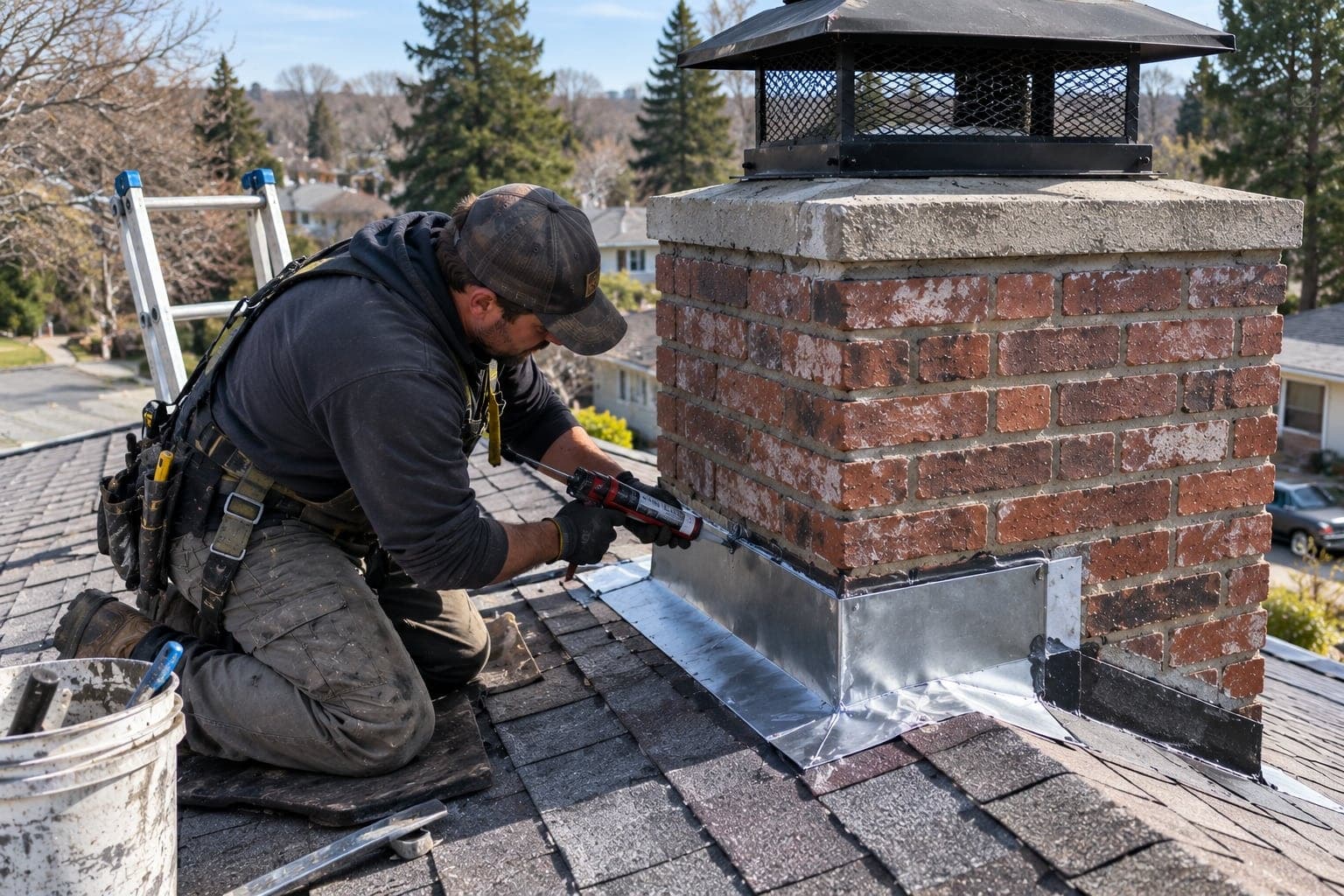
- We examine step flashing, counter-flashing and the cricket behind wider chimneys, looking for lifted metal, open reglets, failed sealant and flashing that was never tucked into the masonry. On tile roofs we check how the tile was cut and sealed around the chimney.
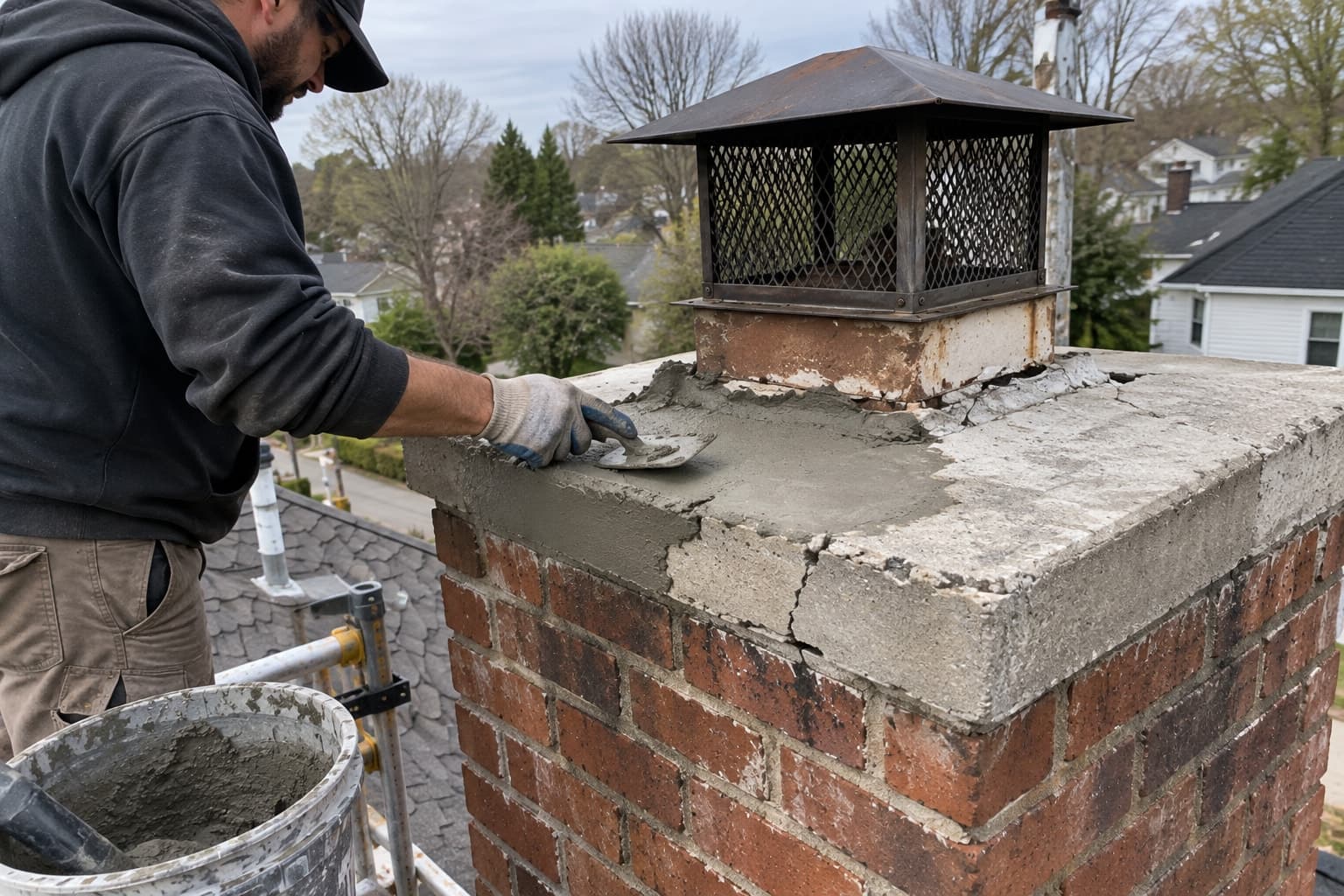
04Masonry crown
- What you may notice
- Cracks across the concrete top of a brick chimney, pieces on the roof, water in the firebox, staining just below the top courses.
- How it’s confirmed
- We check for cracks, whether the crown slopes away from the flue and overhangs the brick, and the joint between crown and flue tile. Crack width and depth decide whether sealing is enough.
05Brick and mortar
- What you may notice
- Eroded or sandy mortar joints, flaking brick faces, white mineral staining, damp patches on the interior wall that come and go with the weather.
- How it’s confirmed
- We inspect joints and brick faces on every side, compare moisture readings between sections, and look for water entering above that is simply showing up through the masonry.
06Chase siding, stucco and framing
- What you may notice
- Swollen or soft siding panels, peeling paint on the chase, cracked stucco, open seams at corners and trim, stains on the interior wall at chase height.
- How it’s confirmed
- We check siding laps, corner and trim joints, caulk lines and stucco cracks, press test for soft spots and take moisture readings on the sheathing where accessible.
07Storm collar (factory-built flue)
- What you may notice
- Water running down the outside of the metal flue pipe into the chase or fireplace, rust at the top of the fireplace unit.
- How it’s confirmed
- With the flue exposed at the top, we check that the storm collar is present, sealed to the pipe and seated over the chase cover collar, so water can’t run down the gap between pipe and cover.
08The roof around the chimney
- What you may notice
- Stains that don’t line up with the chimney itself, damage to shingles or tiles nearby, a leak that continues after the chimney checks out.
- How it’s confirmed
- We look at the roof covering and underlayment we can see near the chimney. If the source is the roof itself, we document it and tell you it’s a roofing repair rather than a chimney one.
How we identify the cause
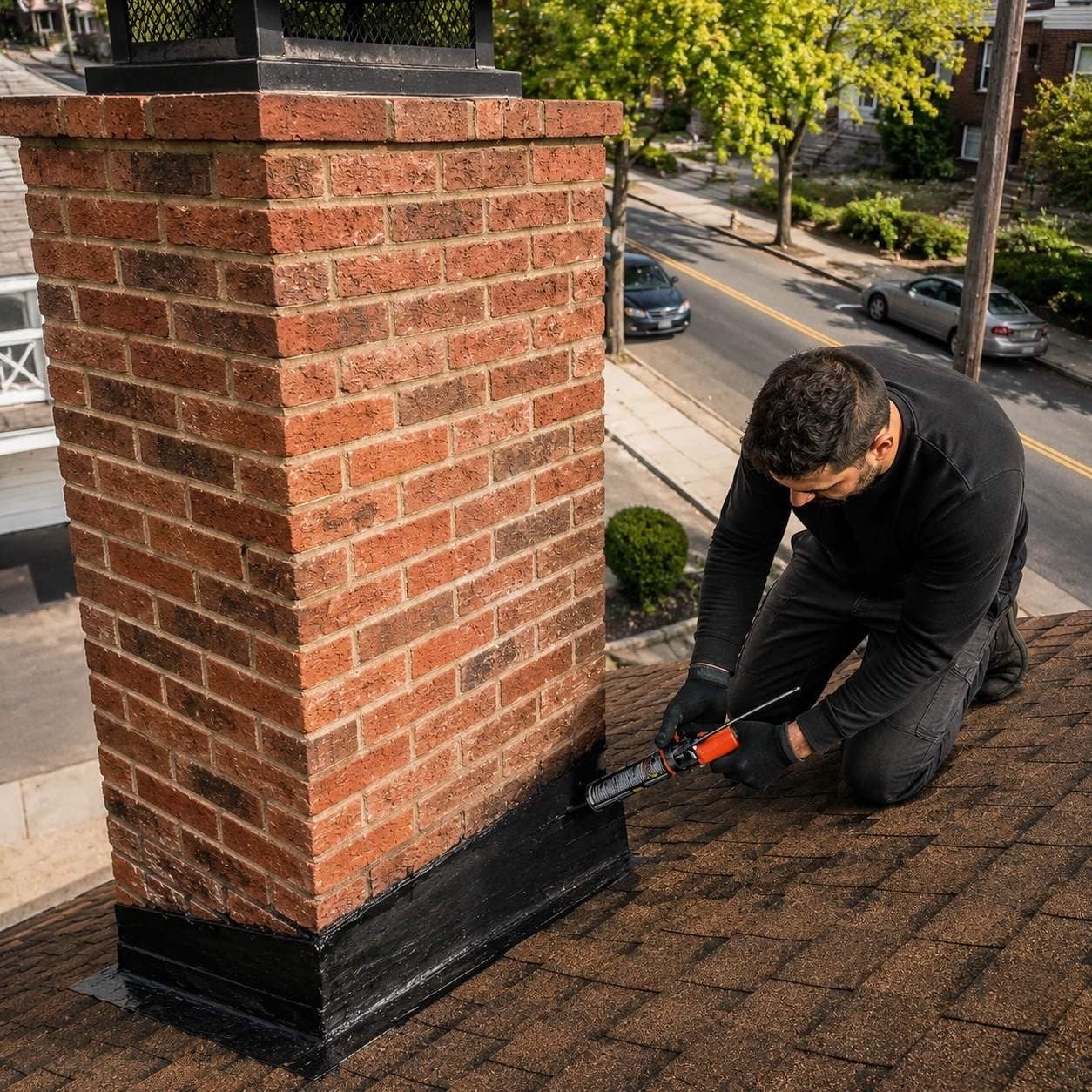
We don’t sell a single repair and hope it works. The goal of the leak visit is a clear answer about where the water enters, backed by what we saw and measured.
Leak history
Where you see water, how much, how long after rain starts, whether wind direction matters, and what’s been repaired or replaced before (a new roof, a new cap, a coat of sealer).
Inside first
We look at the firebox, damper and the visible flue, the walls and ceiling around the chimney, and the attic around the chimney if it’s reachable. Staining patterns and rust show where water has been running.
Top-down exterior inspection
Cap, chase cover or crown, flue termination, walls or cladding, then flashing and roof interface, noting each defect along the way.
Moisture tracing
Moisture readings on interior surfaces, masonry and accessible framing help separate an active leak from an old stain and show which side of the chimney is wettest.
Controlled water testing, when needed
If the source is still unclear, we can wet one section at a time, starting low and working up, while someone watches inside. Testing in that order stops water from a higher section being blamed on a lower one.
Findings and options
The entry point or points are explained, with the repair options for each, and anything that belongs to another trade, such as the roof covering.
Chimney company or roofer? At the roof line, it’s often both
Roofers and chimney technicians overlap exactly where many leaks happen. The roofer owns the roof covering and underlayment; the chimney side of the flashing, the counter-flashing, the cap, the chase cover and the crown are chimney work. If a roofer has already sealed around the base and the leak continues, the water is often coming in higher up. A diagnosis that looks at both sides of that line saves you from paying either trade to fix the wrong thing.
Waterproofing: what it does and what it can’t fix
A vapor-permeable masonry water repellent reduces how much rain sound brick soaks up, but it doesn’t fix failed flashing, a cracked crown, open joints or a rusted chase cover, and it does nothing for a framed chase. It’s the last step on a sound masonry chimney, after the entry points are repaired. When it makes sense, which products to avoid and how it’s applied are covered on the chimney waterproofing page.
Rain and storms in Central Florida
Water intrusion is one of the most important chimney problems for Central Florida homes, and the weather explains why. Orlando averages about 51.5 inches of rain a year (CurrentResults, NCEI 1991–2020 normals). According to the NWS office in Melbourne, June through September are the wettest months, with the rainy season typically starting in late May in Orlando and sea-breeze thunderstorms producing heavy afternoon downpours. A chimney that sheds a light shower can still leak when a storm dumps a lot of rain in an hour with gusty wind behind it.
Tropical systems raise the stakes. Hurricane Ian brought 22.42 inches of rain to Orlando International Airport over the event, 12.49 inches of it within 24 hours (Spectrum News 13). FEMA’s Mitigation Assessment Team documented water intrusion after Ian where roof coverings, roof vents and wall coverings were damaged, leading to wet insulation, damaged interiors and mold (FEMA recovery advisory). FEMA wasn’t writing about chimneys specifically, but a chimney is a roof penetration with its own cladding and cover, and it is exposed to the same forces. If a leak started after a named storm, a post-storm chimney inspection shows what changed.
What to do while you wait for a repair
- Put a tray or towels in the firebox and keep the damper closed so wet debris doesn’t spread into the room.
- Photograph the stain or water with the date, and note the weather. That record helps the diagnosis and any insurance conversation.
- Don’t burn a fire until the source is known, especially if water is running down the flue or there’s rust inside the firebox.
- Don’t climb onto the roof in wet weather or smear roof cement over flashing and chase covers. It makes the real defect harder to find and often has to be removed before a proper repair.
- If there’s active water near light fixtures or outlets, switch off that circuit and keep clear until an electrician has looked at it.
What affects the cost of a leak repair
The diagnosis decides the cost. A missing cap is a small job; a rusted chase cover with rotted framing underneath is a much bigger one. The main factors are:
- How many entry points are involved
- Which components need repair or replacement
- Hidden damage to framing, sheathing, drywall or the fireplace
- Roof pitch, height and roof covering (tile takes more care)
- Materials chosen, such as stainless versus galvanized sheet metal
- Whether the roofing side of the repair needs a roofer
When a leak needs someone today
Most chimney leaks have been happening quietly for months by the time anyone notices, and they can wait for a scheduled visit. A few cannot.
Water running visibly into the firebox during a storm, a ceiling starting to sag, or an electrical fixture near the chimney getting wet are all reasons to call rather than book. Our page on urgent chimney call-outs covers what can be done quickly — and honestly, what cannot, because nobody should be on a wet Orlando roof during a thunderstorm.
Where the leak followed a named storm, the assessment is usually better done as a storm damage inspection, because the same wind tends to have damaged more than the one thing that is now leaking.
References (4)
Facts and figures on this page come from these references.