Short answer
Most chimneys that leak only in storms have a weak point that ordinary rain never tests: flashing on one face, a crown or chase cover that can’t drain fast enough, a cap with a short lid, or open seams in chase siding. Florida’s storms add volume, sideways wind and hours of exposure, and each finds a different weak point.
Three kinds of Florida rain, three different tests
A chimney is a box that sticks up through the roof, covered on top and sealed where it meets the shingles or tile. Every one of those seams is designed for water that falls roughly straight down and drains away. Central Florida’s weather tests them in three distinct ways.
Summer sea-breeze thunderstorms: volume in a short burst
From late May into October, Florida’s rain comes mostly from afternoon storms that form where the Atlantic and Gulf sea breezes collide. The National Weather Service in Melbourne calls this pattern the “Florida Rain Machine” because of how regularly it repeats, and puts the median start of Orlando’s rainy season at May 27 (NWS Melbourne). These storms don’t last long, but they drop a lot of water fast. The weak points they find are the ones that can’t drain quickly enough: a flat or dished chase cover that fills and overflows its seams, a crown with no slope, or the uphill side of a wide chimney where water piles up against the brick.
Wind-driven rain: water that travels sideways and up
Gusty storms throw rain horizontally. Instead of running down over laps and flashing, water is pushed into them, and wind pressure on the windward face can drive it upward behind a lap or under a cap lid. That is why many leaks only appear in storms from one direction: the side of the chimney facing the wind is being tested in a way the other sides never are. A cap with a short lid, open siding seams on one face of a chase, or counter-flashing that has pulled out of a mortar joint on one side can all be dry for months and then leak in the first storm that hits that face.
Tropical systems: hours of wind from every direction
A hurricane or tropical storm combines both problems and adds time. Hurricane Ian brought 12.49 inches of rain to Orlando International Airport in 24 hours and 22.42 inches over the whole event (Spectrum News 13). During Hurricane Milton, Orlando recorded an 86 mph gust, and gusts over 75 mph were common across most of Central Florida (ClickOrlando). As a storm’s center passes, the wind direction swings around, so every side of the chimney takes a turn as the windward face. Brick and wood framing that normally dry out between storms stay saturated for a day or more.
| Feature | Sea-breeze thunderstorm | Tropical storm or hurricane |
|---|---|---|
| Duration | Usually an hour or two | Many hours, sometimes more than a day |
| Wind direction | Mostly one direction per storm | Shifts as the storm passes, so every side is hit |
| What it overwhelms | Drainage: covers, crowns and crickets that can’t shed water fast enough | Every seam, plus porous brick and framing that soak through |
| Typical leak timing | During or soon after the downpour | During the storm and for a day or more after |
| Damage beyond water | Rare | Loose or missing caps and covers, lifted flashing, debris |
Duration
- Sea-breeze thunderstorm
- Usually an hour or two
- Tropical storm or hurricane
- Many hours, sometimes more than a day
Wind direction
- Sea-breeze thunderstorm
- Mostly one direction per storm
- Tropical storm or hurricane
- Shifts as the storm passes, so every side is hit
What it overwhelms
- Sea-breeze thunderstorm
- Drainage: covers, crowns and crickets that can’t shed water fast enough
- Tropical storm or hurricane
- Every seam, plus porous brick and framing that soak through
Typical leak timing
- Sea-breeze thunderstorm
- During or soon after the downpour
- Tropical storm or hurricane
- During the storm and for a day or more after
Damage beyond water
- Sea-breeze thunderstorm
- Rare
- Tropical storm or hurricane
- Loose or missing caps and covers, lifted flashing, debris
Why it leaks in some storms and not others
Owners often say the leak “comes and goes,” which makes it feel random. Usually it isn’t. Three variables decide whether a given storm gets through:
- Direction. A defect on the north face only matters when rain comes from the north. Keeping a note of wind direction on leak days is one of the most useful clues you can give anyone diagnosing it.
- Rate. A cover or crown that sheds a steady shower may overflow in a cloudburst. If it leaks only in the hardest rain, drainage is the suspect.
- Duration. Brick and mortar absorb water. A short storm may be soaked up and dried out before anything reaches the inside; a long, soaking rain lets water work all the way through. Leaks that appear a day after the rain stops usually mean water moving slowly through masonry or framing.
There is also the calendar. The median start of Orlando’s dry season is around October 15 (NWS Melbourne), and a leak that stopped in November hasn’t fixed itself. It is waiting for June.
Flashing, crown, chase cover, cap or siding: how to tell them apart
Each component fails in its own pattern. The table below matches what you notice to the likely source. It is a starting point, not a diagnosis: two sources often work together, and a professional check confirms which one is actually letting water in.
| Source | Where water shows up | Which storms | What you may see from the ground | Chimney type |
|---|---|---|---|---|
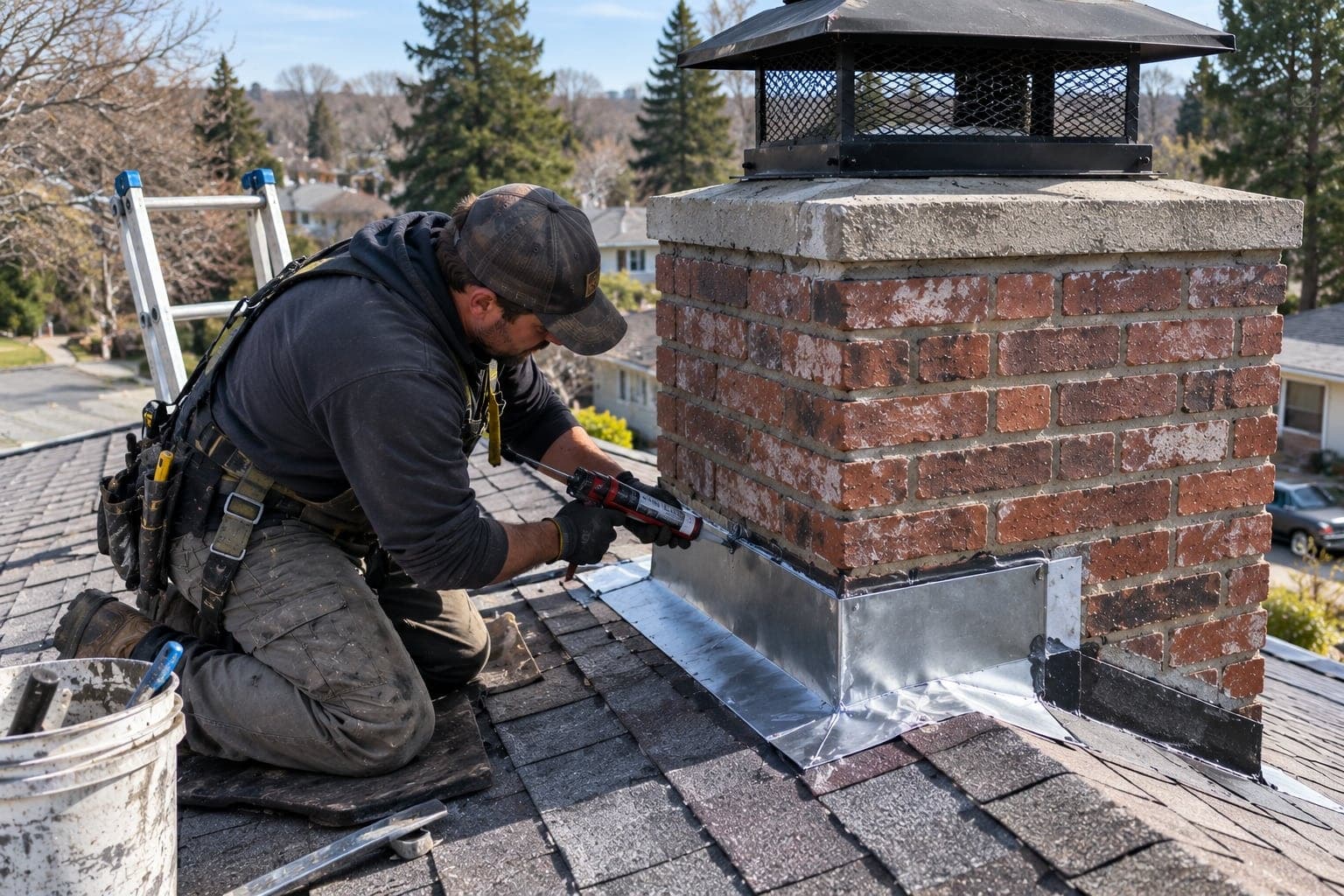
| Flashing | Ceiling or wall right beside the chimney, attic rafters next to it; not usually in the firebox | Wind-driven rain, and heavy rain that backs up behind the chimney | Lifted metal, gaps at the roof line, tar or caulk smeared over the joint | Both |
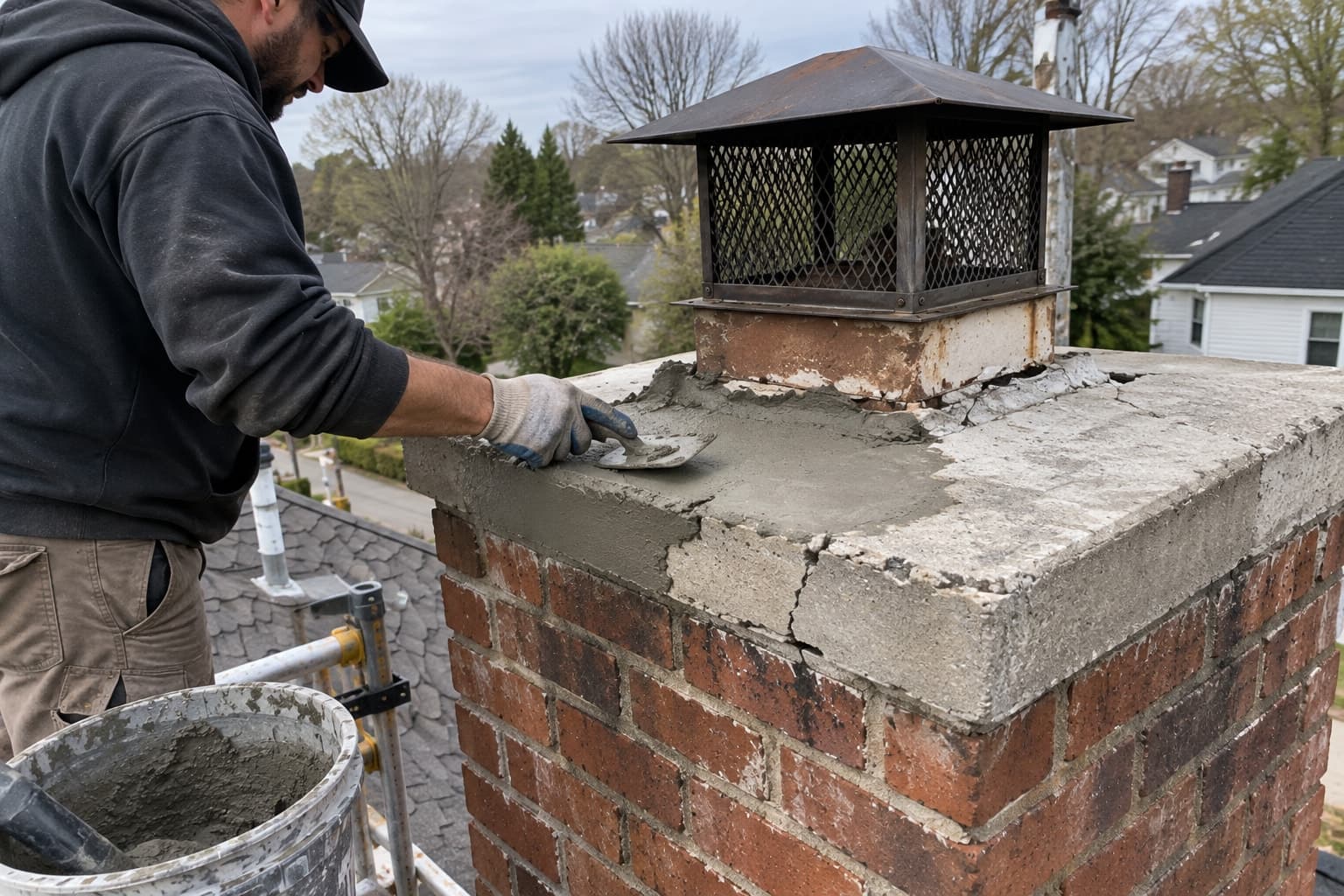
| Crown | Firebox, damper, flue; damp brick near the top of the chimney | Long or heavy rain; worse as cracks grow | Cracks or missing pieces on the concrete top, dark wet patches on the upper brick | Masonry |
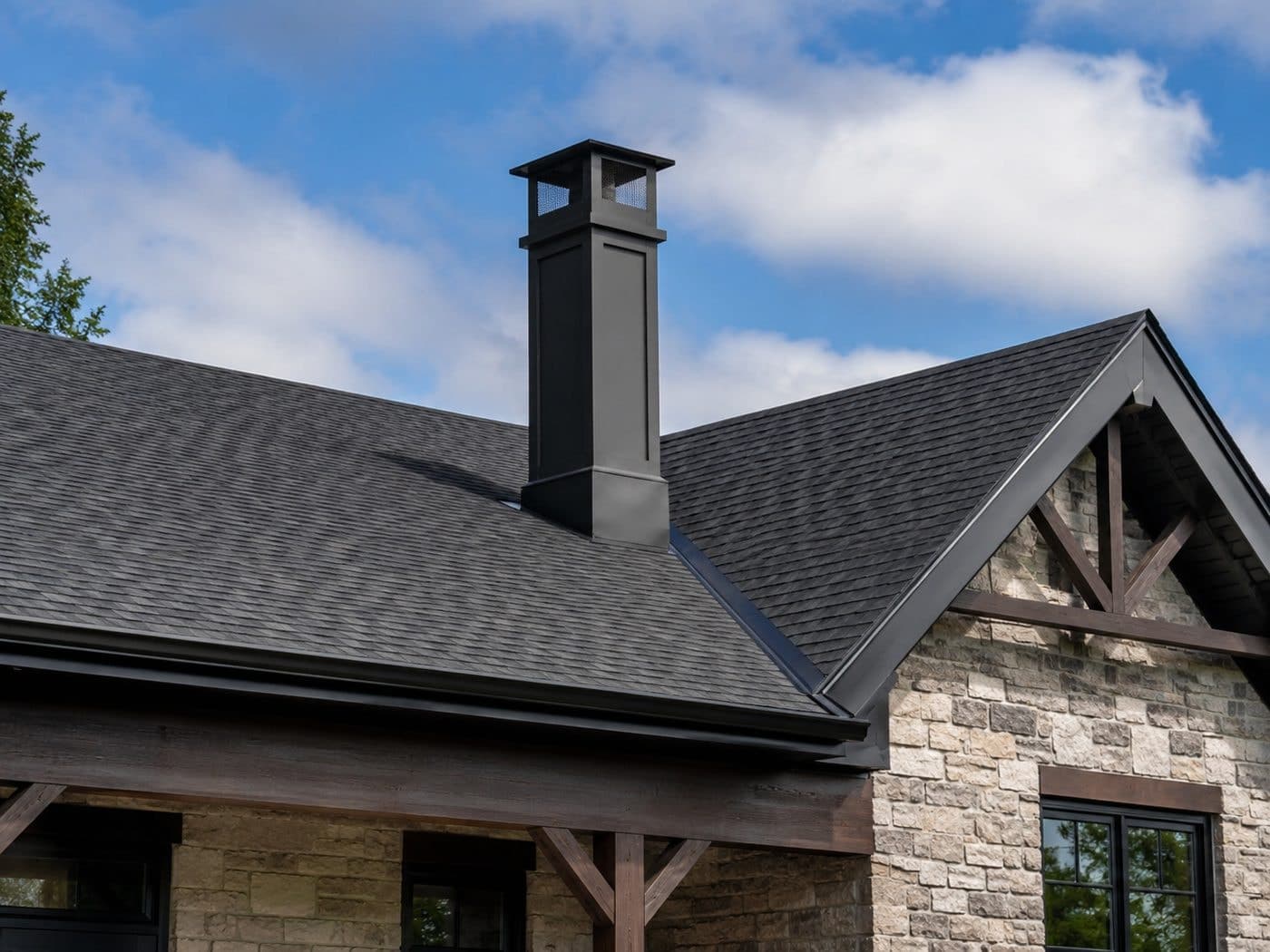
| Chase cover | Firebox, top of the fireplace unit, stains high on the wall near the chase | Almost any decent rain once rusted; heavy rain if it sags and pools | Rust streaks down the siding from the top edge, a sagging lid | Factory-built |
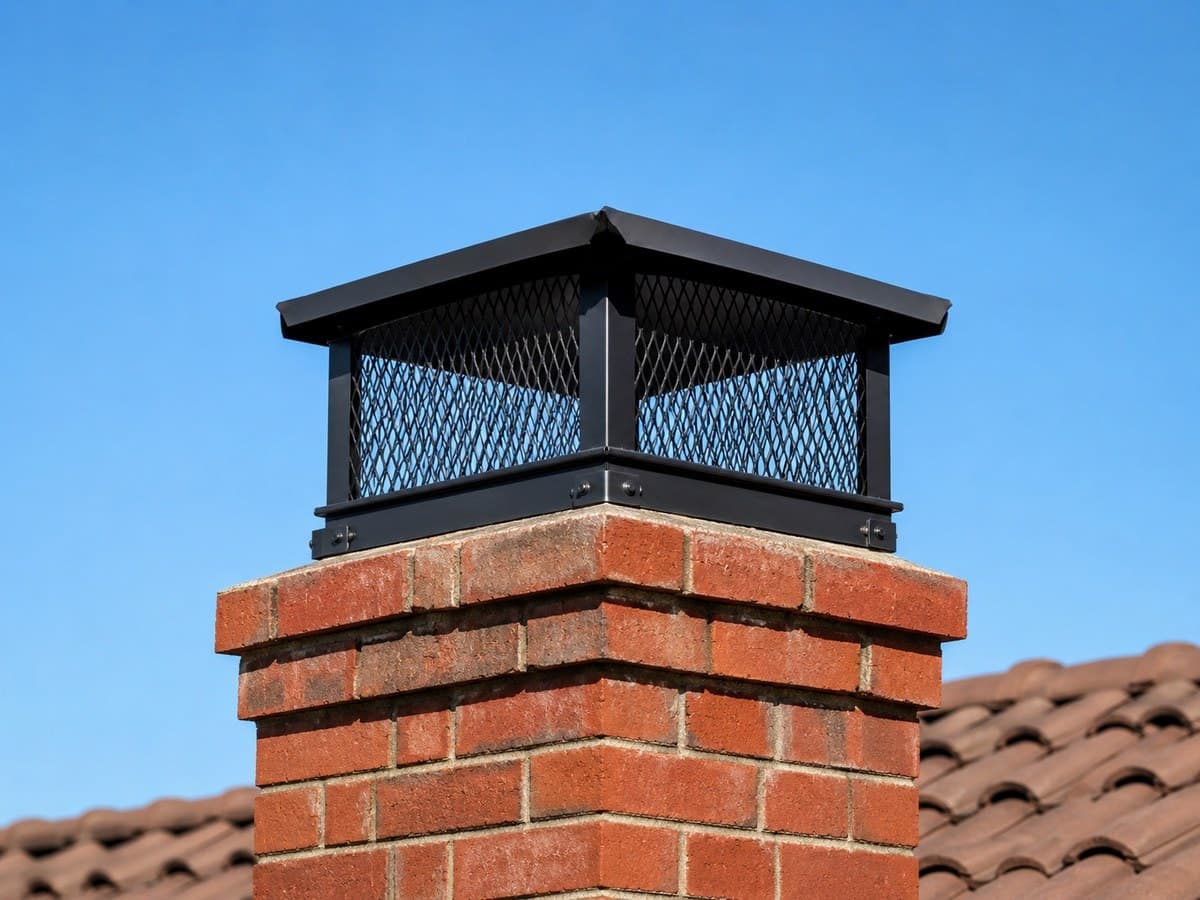
| Cap (or no cap) | Firebox and damper, sometimes with leaves or debris | Straight-down rain if missing; sideways rain if the lid is too short | Missing, tilted or rusted cap; torn screen | Both |
| Siding, stucco or trim | Wall inside the house at chase height, lower than a flashing stain | Wind-driven rain from one direction | Open seams at corners, cracked stucco, peeling paint or swollen trim on one face | Factory-built |
Some quick cross-checks help. Water in the firebox almost always started at the top of the chimney: the cap, crown, chase cover or storm collar. A stain beside the chimney at the ceiling line points to the roof interface, which is flashing repair territory. Rust streaks on a framed chase are the classic sign that the lid needs a new chase cover. Water in the firebox of a brick chimney after long rains, with no rust streaks and a cap in place, makes the crown the first suspect, and crown repair depends on how deep the cracks go.
Recently reroofed?
A leak that starts right after a new roof often traces back to how the flashing was handled during the job. See what to sort out with your chimney before a reroof for how the two trades overlap.
After the storm: build a leak log
The most useful thing you can do after a storm-related leak is record the pattern while it is fresh. A diagnosis that starts from good notes is faster and more accurate than one that starts from “it leaks sometimes.”
What to record, storm by storm
Date, time and type of storm
A short afternoon thunderstorm, a long soaking rain, or a named storm. Local weather apps and NWS reports make it easy to look up rainfall and wind afterwards.
Wind direction
Which way the rain was blowing. Over several storms this often points straight at one face of the chimney.
When the water appeared
During the downpour, near the end, or hours to a day later. Delayed water suggests absorption through brick or framing rather than an open gap.
Exactly where
Firebox floor, damper, the ceiling beside the chimney, lower down the wall, or the attic. Photograph it with the date.
What changed outside
From the ground, look for a tilted or missing cap, a lifted edge on the chase cover, loose flashing, or new rust streaks. Stay off wet roofs.
- Put a tray or towels in the firebox and close the damper if it still closes.
- Don’t use the fireplace while water is getting in; wet refractory panels and rusted metal parts shouldn’t be heated until they’ve been checked.
- Resist the urge to caulk or tar the top or the flashing. It rarely holds through a wet season, and it covers the evidence of where the water really enters.
Then bring the log to a chimney leak diagnosis. If the leak started with a named storm, or you can see that something on top has moved, a storm damage inspection looks at the cap, cover, flashing and flue together. For the full list of symptoms and possible causes, see why water comes through a chimney, and if the only sign is a mark on the ceiling or wall, water stains around a chimney covers how to read it.
For the service side, chimney leak repair starts with tracing the source, and the chimney waterproofing guide explains when soaking brick, not a gap, is the real problem. Owners of older brick chimneys can see how leak diagnosis works locally on leaking chimney repair in Winter Park and chimney leak repair around Sanford.
References (4)
Facts and figures on this page come from these references.