Why the chimney deserves a spot on your storm list
The Atlantic hurricane season runs from June 1 to November 30 (National Hurricane Center). Orlando is inland, but recent storms have shown that inland doesn’t mean untouched:
| Storm | What the Orlando area saw | Source |
|---|---|---|
| Ian (Sept 2022) | Orlando International Airport recorded more than a foot of rain in about a day and 22.42 inches for the event | Spectrum News 13 |
| Nicole (Nov 2022) | Rare November landfall near Vero Beach; the center crossed the peninsula between Orlando and Tampa. The highest reported storm rainfall, 7.11 inches, was at a station near Orlando | NHC report |
| Milton (Oct 2024) | 86 mph gust recorded in Orlando | ClickOrlando |
Wind works on the top of the chimney, where caps and chase covers are fastened. Wind-driven rain works on every seam, especially where the chimney meets the roof. After Ian, FEMA’s assessment team documented water intrusion where roof coverings, roof ventilation components and wall coverings were damaged (FEMA MAT, Hurricane Ian). FEMA wasn’t writing about chimneys specifically, but a chimney is a large opening through the roof, so the same weak points apply.
Before the season: April and May
The best time to deal with a loose cap or a rusted chase cover is before the first named storm, not after it. Most of these items can be spotted from the ground with binoculars; leave the roof work to someone with the right equipment.
Pre-season chimney checklist
- Cap is present, sitting straight, and fastened (not just resting on the flue)
- Cap screen is intact, with no rust-through or gaps
- Chase cover (factory-built chimneys) is flat to the chase, not lifted at the edges, and not rusted through
- Storm collar around the flue pipe is sealed
- Flashing along the roof line is tight, with no gaps, lifted edges or missing sealant
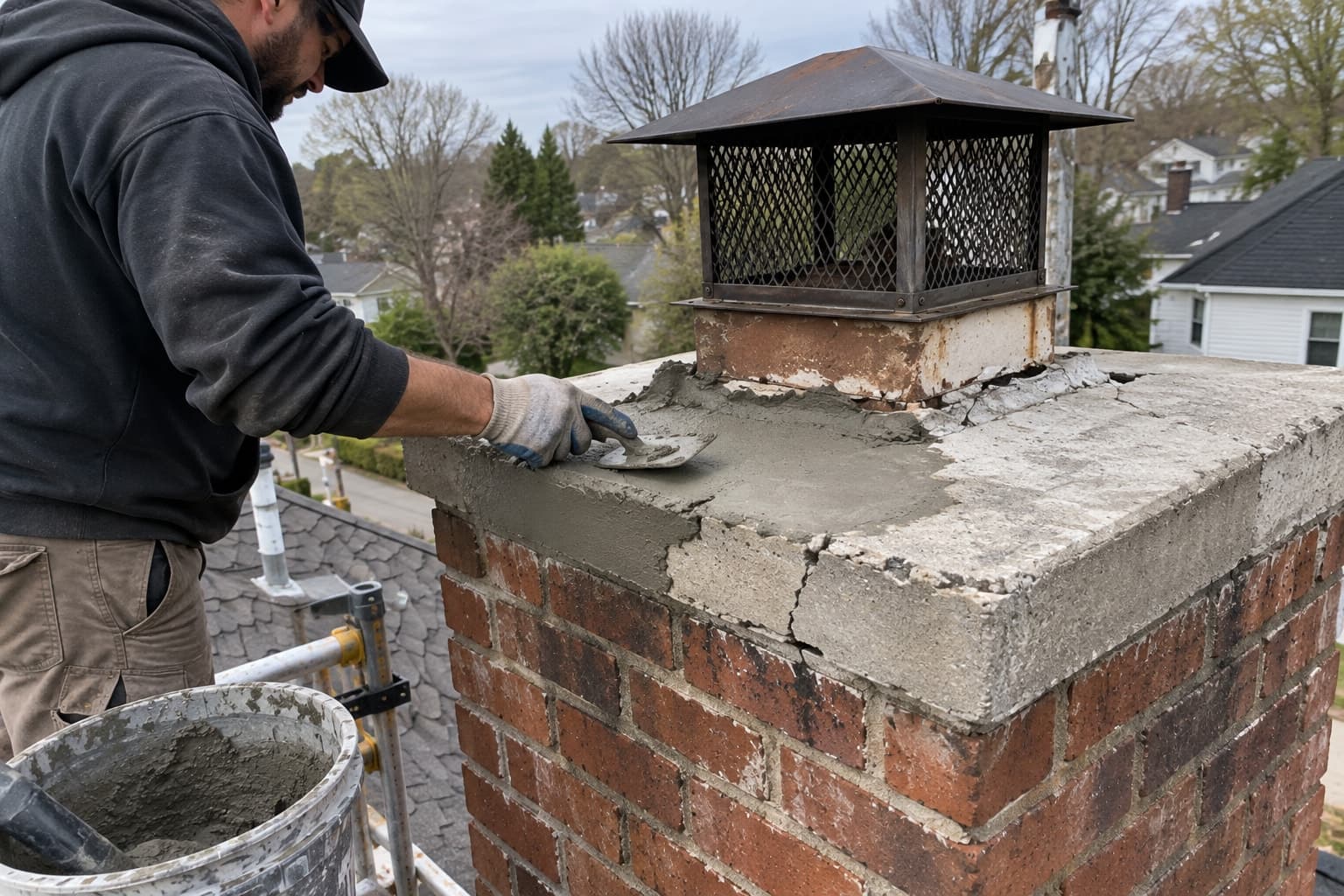
- Masonry crown has no open cracks; mortar joints near the top are intact
- No tree limbs over or within reach of the chimney
- Interior: no water stains near the fireplace, no musty smell, damper closes
Caps and chase covers
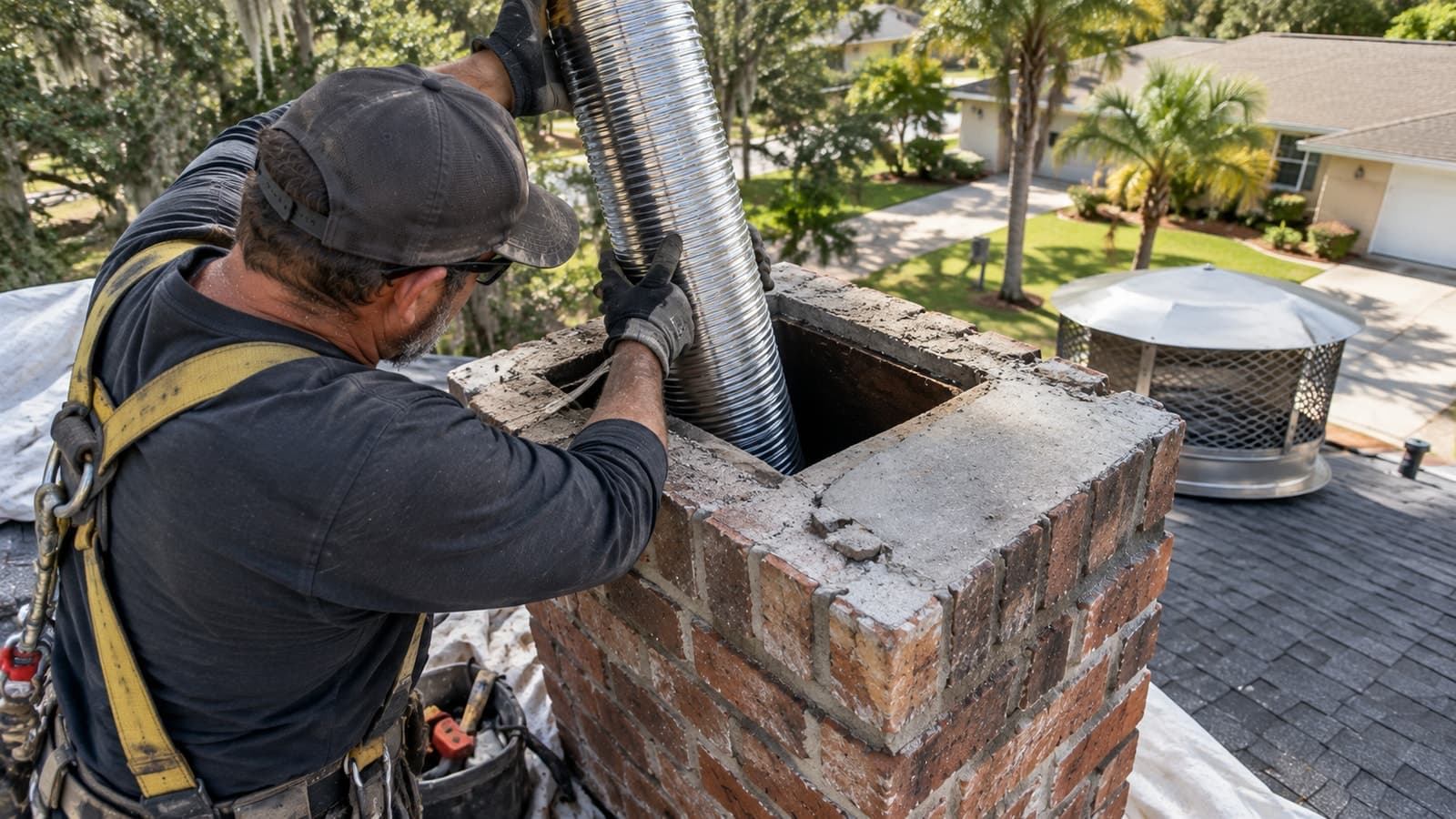
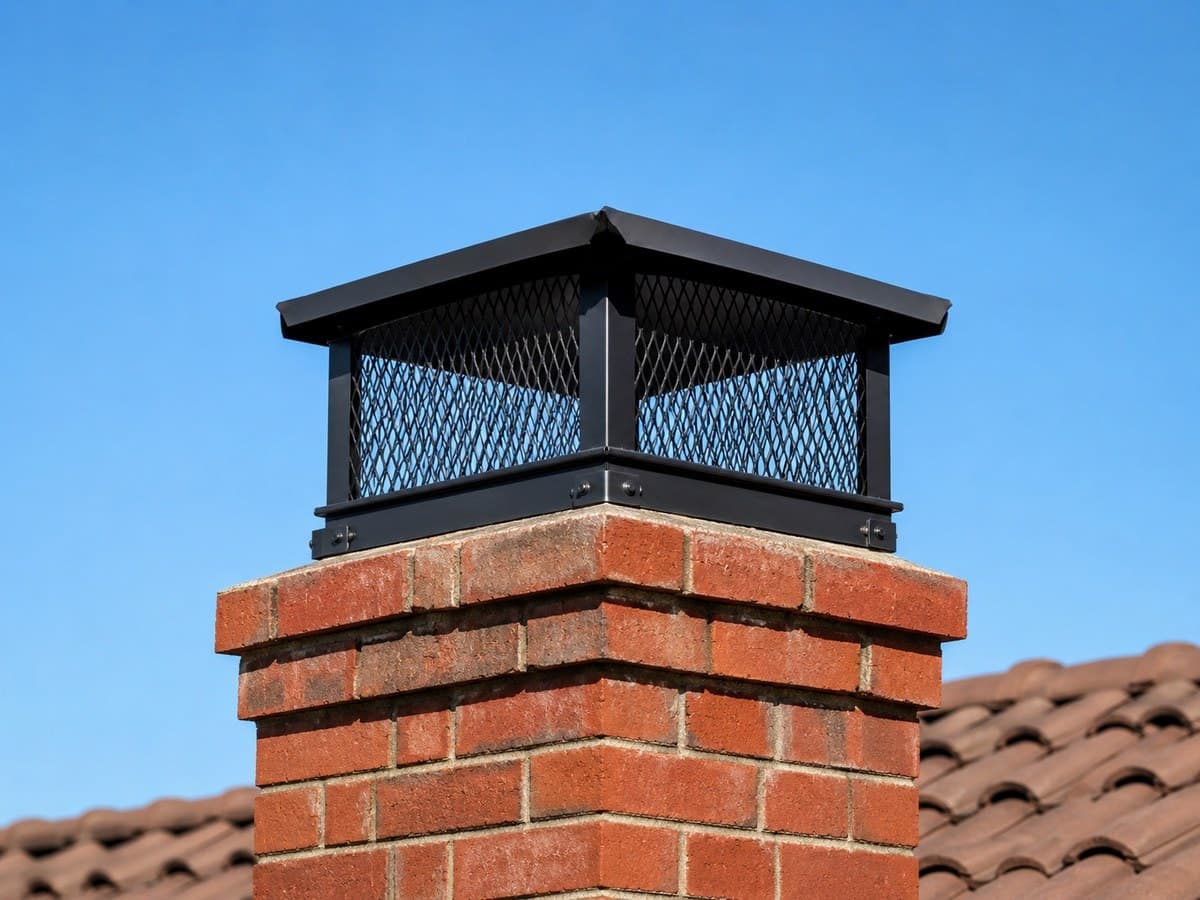
A cap that is only held by friction, or a chase cover fastened with a few rusted screws, is the part most likely to lift in high wind. Once it’s gone, rain falls straight into the flue or the chase for the rest of the storm. Secure attachment matters as much as the metal itself. If the cap is loose or rusted, have it refastened or replaced as part of chimney cap service. If a galvanized chase cover has rust streaks or sags, consider replacing the chase cover before the wet season rather than during it.
Flashing
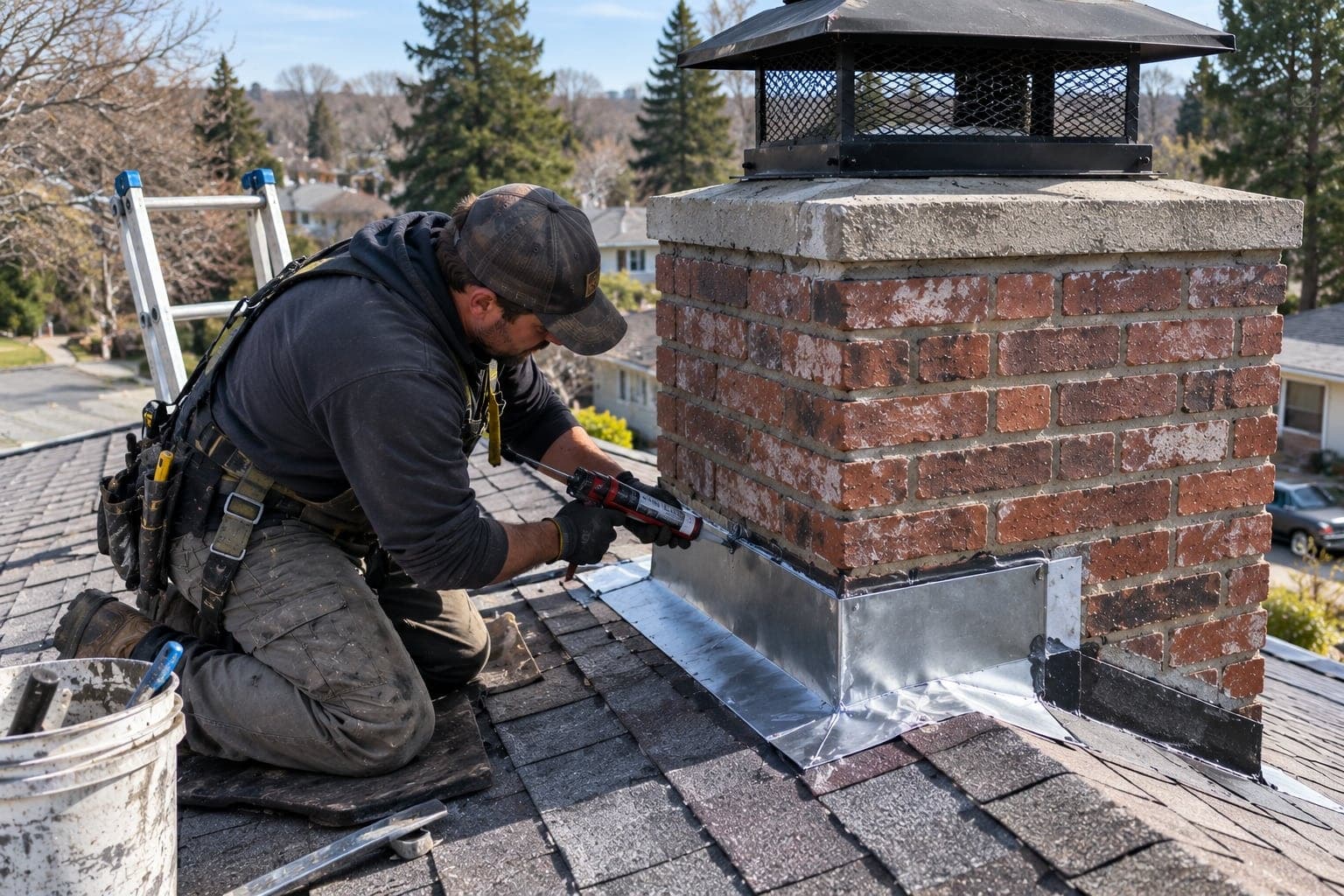
Flashing is the metal that seals the joint between the chimney and the roof. Sealant that has cracked in the sun, or counter-flashing that has pulled out of the mortar joint, can hold up in a light shower and fail in horizontal rain. It’s the most common place for a storm leak to start.
Gas fireplace vents
Direct-vent gas fireplaces usually terminate through a side wall or the roof with a manufacturer-specific cap. Check that the cap is intact and firmly attached, and that shrubs, stored furniture or storm shutters won’t block it. A blocked or damaged vent is a reason not to run the fireplace until it has been checked by a qualified technician.
Trees
Overhanging limbs can strike the chimney, knock off the cap and drop debris that blocks the flue. Have a tree professional trim limbs away from the chimney before the season. Don’t climb onto the roof to do it yourself.
After a storm: what to check, and what not to do
Don’t use the fireplace until it has been checked
A storm can crack a flue, shift a cap or chase cover, or leave debris and water in the chimney. Don’t light a wood fire or run gas logs until the chimney has been looked at. If you smell gas, leave the home and call your gas utility or 911 from outside.
Post-storm chimney check (from the ground)
Stay off the roof
Wet, storm-damaged roofs are dangerous. Everything below can be done from the yard, a window or with binoculars.
Look at the top
Is the cap still there and straight? Is the chase cover flat, or is an edge lifted? Is anything missing compared with your pre-season photos?
Look at the whole chimney
Check for leaning, cracked or missing brick or stucco, torn siding on the chase, and flashing that has lifted from the roof.
Look inside
Check the firebox for water, debris, leaves or pieces of mortar or metal. Look at ceilings and walls near the fireplace and in the attic around the chimney for new stains.
Document everything
Take dated photos of the chimney from several angles, of any debris, and of interior stains. Keep them with your other storm photos.
If anything looks different, or there’s water inside, schedule a storm damage chimney inspection. NFPA 211 guidance treats an event that may have compromised a chimney as a reason for a closer inspection (Chimneys.com). That inspection looks at the cap, crown or chase cover, the flashing and the flue, and the findings are explained before any repair is scheduled.
If water is already coming in, the source needs to be traced before anything is sealed. A storm leak can come from the cap, the crown, the chase cover, the flashing or the siding, and chimney leak repair starts with finding which one.
A note on insurance
Whether storm damage to a chimney is covered, and what documentation is needed, depends on your policy and your insurer. We don’t make coverage calls. What helps in any conversation with your insurer is the same thing that helps with repairs: dated photos from before and after the storm, and a written description of what was found. Ask your agent or carrier what they need before any permanent repair is made.
Keep a pre-season photo set
One easy habit makes both repairs and paperwork simpler: each spring, take a few clear photos of the chimney from the yard, including the top, and of the fireplace and nearby ceilings from inside. Date them and save them somewhere other than your phone. After a storm, comparing the two sets takes minutes and removes a lot of guesswork.
If the storm has already done damage, a chimney damaged in a storm covers what to do first, and a missing or damaged cap covers the most common casualty. Why chimneys leak in Florida storms explains why leaks appear in some storms and not others. Local leak pages such as chimney leak repair in Kissimmee describe how post-storm visits are arranged.
References (6)
Facts and figures on this page come from these references.
- 1National Hurricane Center: Tropical cyclone climatology
- 2Spectrum News 13: Ian, an historic storm for Central Florida
- 3NHC Tropical Cyclone Report: Hurricane Nicole (AL172022)
- 4ClickOrlando: Strongest winds in Central Florida from Hurricane Milton
- 5FEMA Mitigation Assessment Team: Hurricane Ian Recovery Advisory 3
- 6Chimneys.com: NFPA 211 and your chimney