How to use this checklist
Northern maintenance advice is built around a long burning season. Central Florida’s calendar is different. According to NWS Melbourne, Orlando’s rainy season has a median start of late May and gives way to the dry season around mid-October (NWS Melbourne), and the Atlantic hurricane season runs June 1 to November 30 (NHC). So the year has four natural checkpoints: before the storms, during the rains, before the first fire, and after any storm.
| Checkpoint | When | Main focus |
|---|---|---|
| Before hurricane season | April to May | Anything on the roof that could lift, leak or fall |
| During the rainy season | June to September, after heavy rain | Signs that water is getting in |
| Before the first cool front | October to November | Getting the fireplace ready to burn safely |
| After a storm | Whenever one passes | Damage and debris, before anyone lights a fire |
Everything marked as a homeowner task can be done from the yard, a window, the attic hatch or the hearth. None of it requires getting on the roof, and none of it should.
Before hurricane season (April–May)
This is the checkpoint with the most at stake, and it has its own guide: the hurricane-season chimney checklist covers caps, chase covers, flashing and trees in detail. The short version:
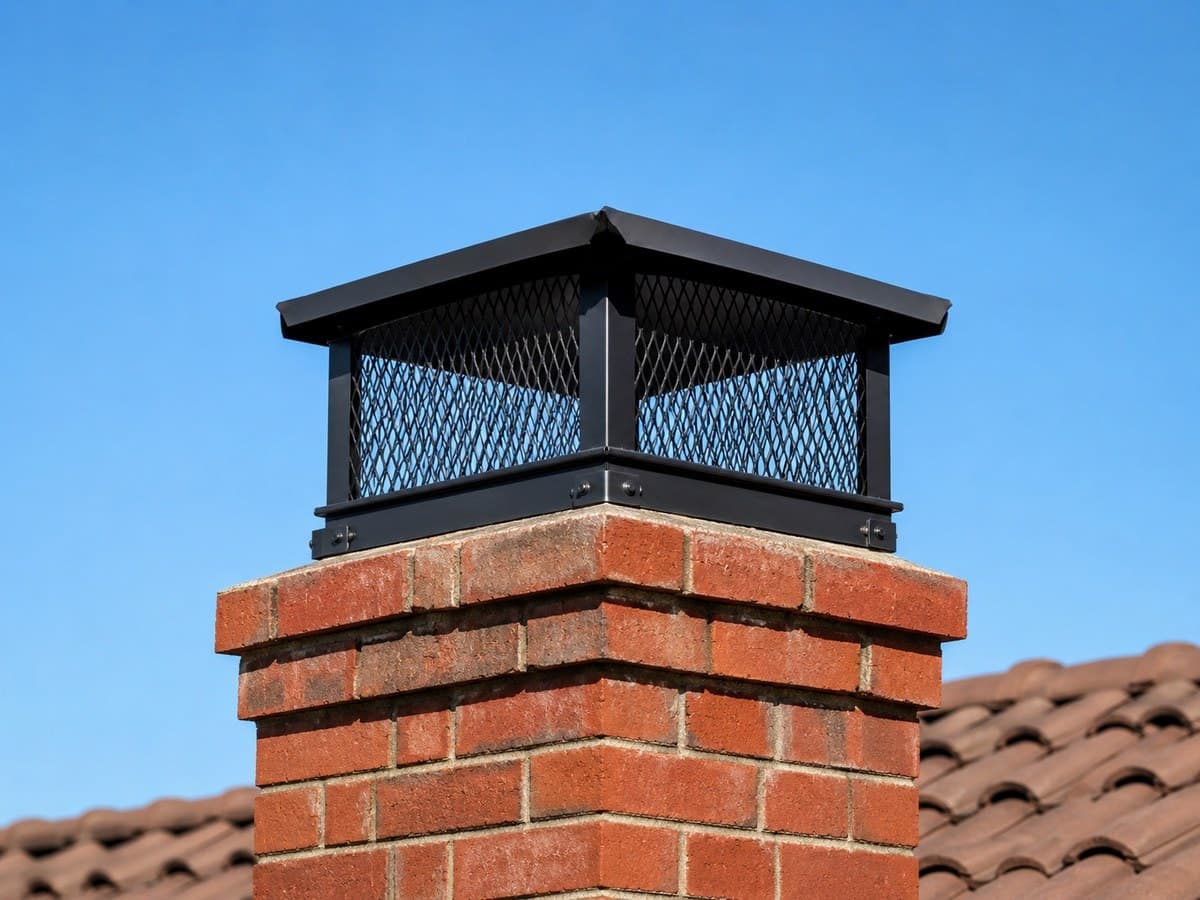
- From the ground with binoculars: cap in place and straight, chase cover flat, no lifted flashing
- Take a dated set of photos of the chimney top, the fireplace and nearby ceilings
- Book any repair to the cap, chase cover or flashing now, not after the first named storm
- Have overhanging limbs trimmed by a tree professional
During the rainy season (June–September)
Most fireplaces sit idle in summer, which is exactly why leaks go unnoticed. After a heavy afternoon storm, take two minutes for these checks:
After heavy rain
- Firebox floor: dry, or damp? Any rust flakes or dark streaks on the back wall?
- Ceiling and walls beside the chimney: new stains, bubbling paint or soft drywall?
- Outside: fresh rust streaks running down a chase, or dark wet patches on brick that stay long after the rain stops?
- Attic, where accessible: damp insulation, stained framing or daylight around the chimney?
- Smell: a musty or tar-like odor from the fireplace on humid days
- Damper closed (or glass doors shut) so humid air and odors stay out of the living space
Any “yes” is worth following up before the next storm rather than at the end of the season. Our guide to water coming through a chimney explains how the source is traced, and a persistent odor has its own page on humid-weather chimney smells.
Before the first cool front (October–November)
This is the checkpoint aimed at safe burning. If the fireplace hasn’t been inspected in the past year, this is the time to book it, so any sweeping or repair is done before the first cold evening instead of during it.
Getting ready for the first fire
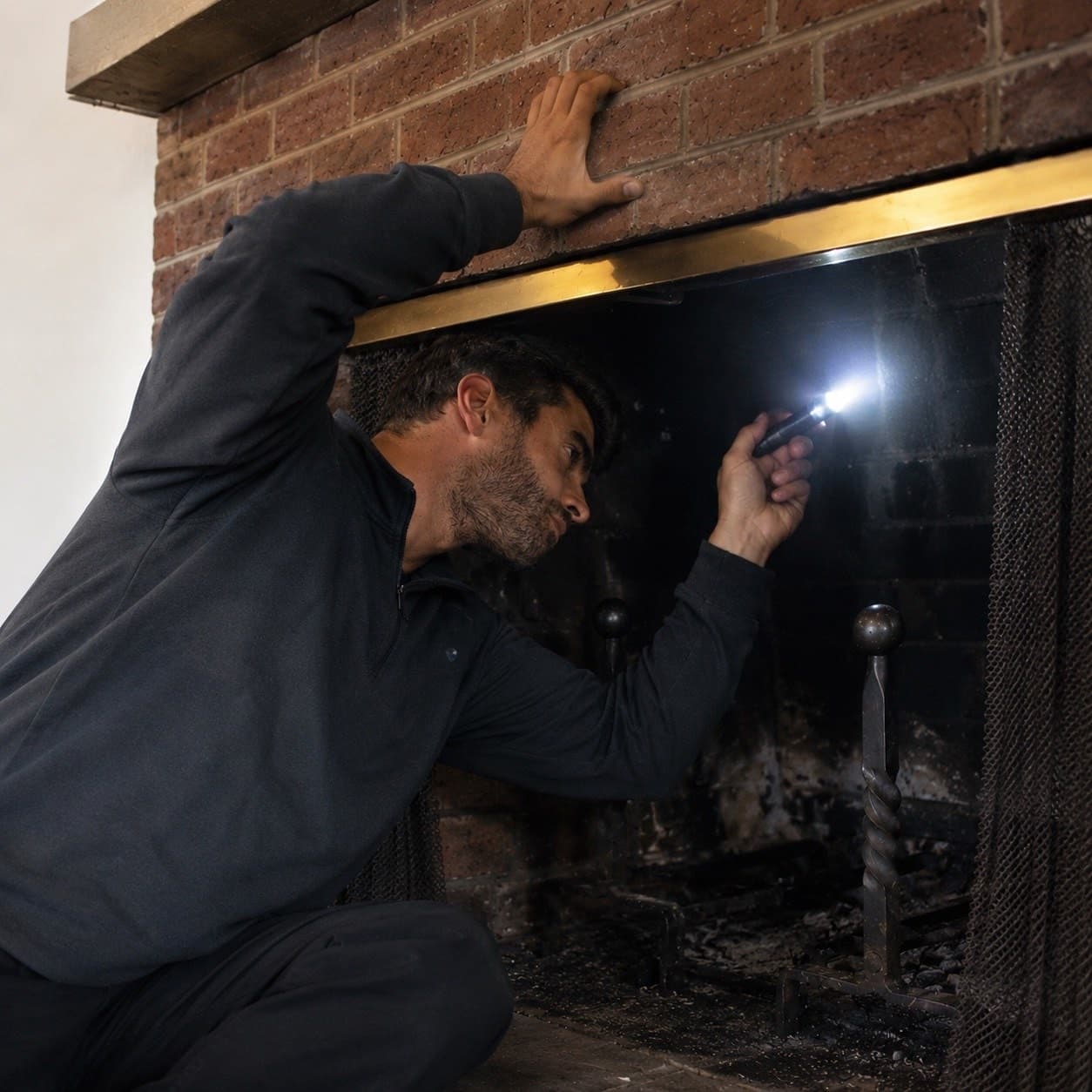
- Open the damper fully and shine a flashlight up: no nests, leaves or daylight blocked by debris
- Check the firebox: no loose firebrick or open joints (masonry), no cracked-through panels (factory-built)
- Confirm the damper opens, closes and stays put
- Test smoke and carbon monoxide alarms on every level
- Clear the hearth of stored items; keep rugs, furniture and décor a safe distance from the opening
- Stock only dry, seasoned firewood; don’t plan on burning yard waste, trash or treated lumber
- Keep a metal container with a lid for ashes, and a place to set it outside away from the house
Nesting season
If you hear chirping in the chimney in spring or summer, it may be chimney swifts, which are protected by the federal Migratory Bird Treaty Act (USFWS). Nests are dealt with after the young leave; plan capping for the fall. See birds in a chimney for what’s allowed.
After any storm
Don’t light the fireplace yet
A shifted cap or chase cover, or debris in the flue, can make the first fire unsafe.
Compare with your spring photos
From the yard, look for anything missing, bent, lifted or leaning.
Check inside
Water, debris or bits of metal or mortar in the firebox; new stains nearby or in the attic.
Get it looked at if anything changed
A post-storm chimney inspection is the right next step if the top or the flashing looks different.
Who does what
| Task | Homeowner | Professional | How often |
|---|---|---|---|
| Look at the chimney top from the ground | Yes | Close-up check during inspection | Spring and after storms |
| Check the firebox, damper and nearby ceilings | Yes | Yes, up close during an inspection | After heavy rain; before burning |
| Dated photos of the chimney and fireplace | Yes | Often part of an inspection report | Each spring |
| Test smoke and CO alarms | Yes | No | Monthly, and before burning season |
| Remove ashes (fully cooled, into a metal can) | Yes | No | After fires |
| Inspect the flue interior | No | Yes | Once a year (NFPA 211) |
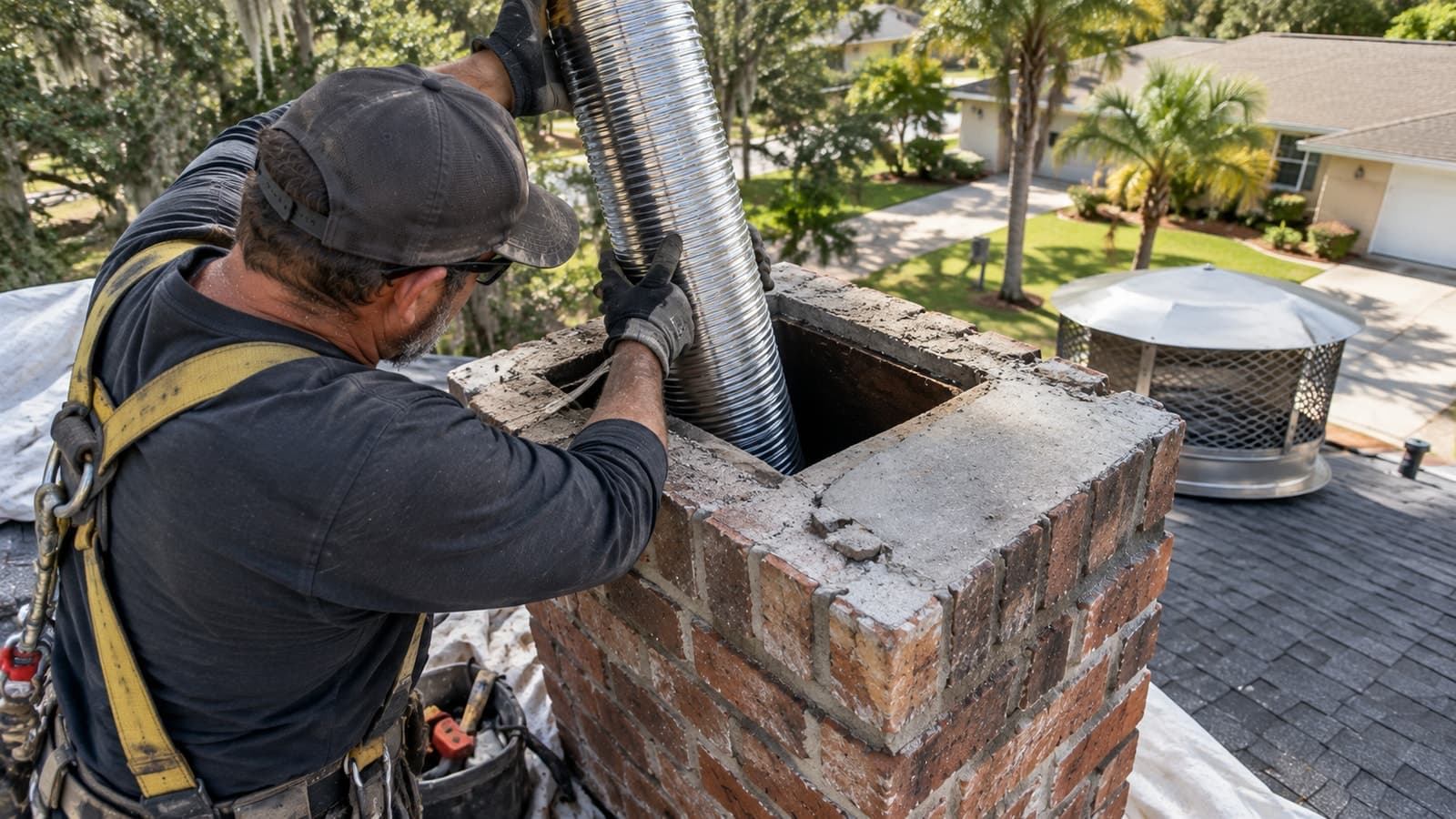
| Sweep creosote and debris from the flue | No | Yes | When the inspection finds deposits |
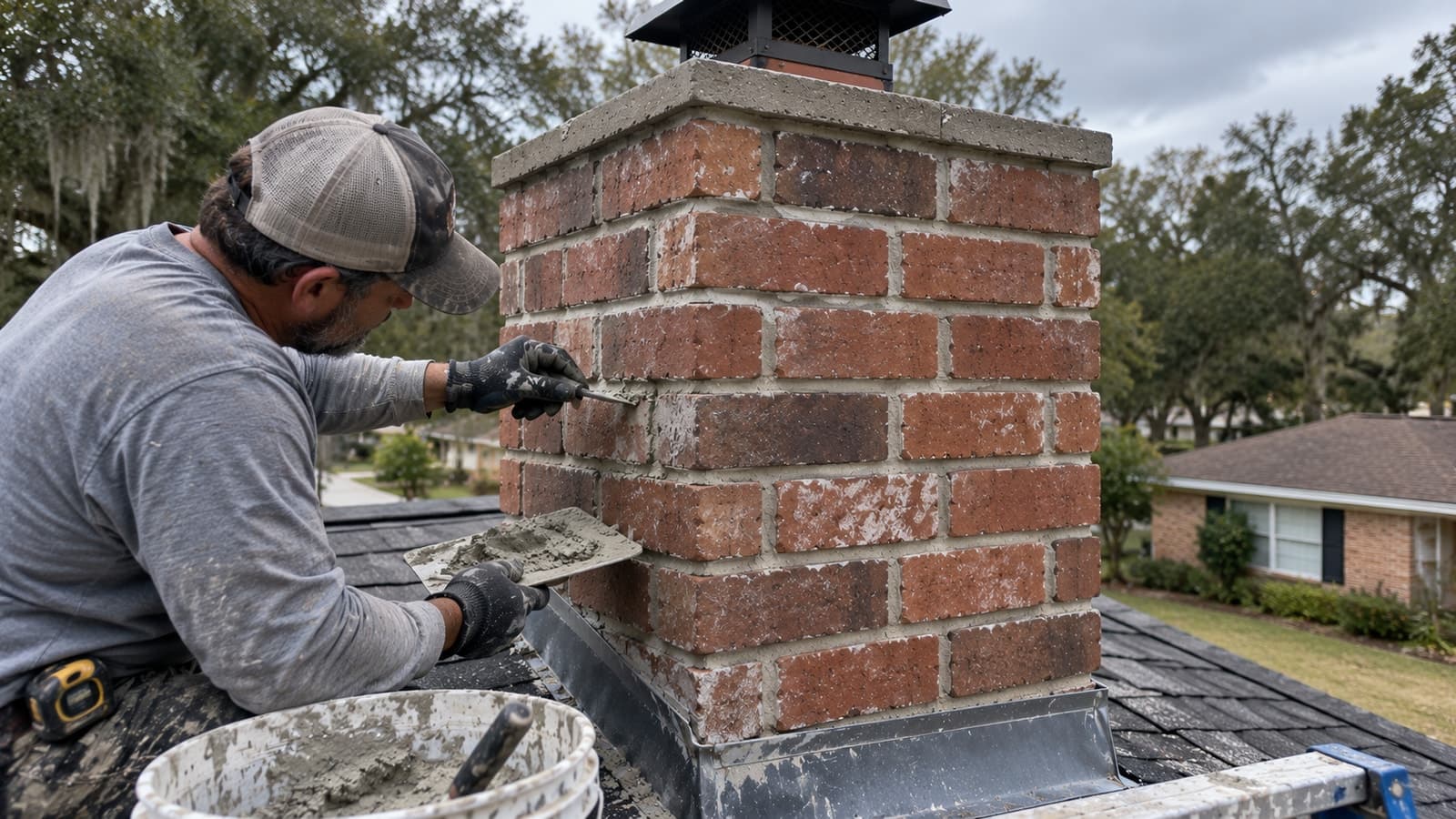
| Work on the roof: cap, crown, chase cover, flashing | No | Yes | As needed |
| Replace refractory panels or firebrick | No | Yes | As needed |
| Burner, pilot, valve or gas-line work | No | Gas fireplace technician; gas-line work quoted separately | Per the appliance manual |
The once-a-year inspection comes from NFPA 211, which calls for chimneys, fireplaces and vents to be inspected annually and cleaned when needed (Chimneys.com summary of NFPA 211). If you rarely burn, our article on inspection and cleaning frequency in Florida explains why the inspection still matters even when the sweep can wait. A yearly chimney and fireplace inspection covers the professional rows above, and a sweep is scheduled when deposits call for it.
Items that depend on your fireplace type
| Feature | Masonry chimney | Factory-built fireplace and chase |
|---|---|---|
| Top | Crown for cracks; cap and screen intact | Chase cover for rust, sagging and pooled water; storm collar sealed; termination cap secure |
| Walls | Mortar joints, spalling brick, white mineral deposits | Siding and trim edges, stucco cracks, rust streaks under the cover |
| Firebox | Loose firebrick and open joints | Cracked, shifted or missing refractory panels; rust on the metal box |
| Flue | Tile or liner condition (during inspection) | Joints and sections of the metal pipe (during inspection) |
| Paperwork | Past inspection reports and repair records | Owner’s manual and a photo of the rating plate |
Top
- Masonry chimney
- Crown for cracks; cap and screen intact
- Factory-built fireplace and chase
- Chase cover for rust, sagging and pooled water; storm collar sealed; termination cap secure
Walls
- Masonry chimney
- Mortar joints, spalling brick, white mineral deposits
- Factory-built fireplace and chase
- Siding and trim edges, stucco cracks, rust streaks under the cover
Firebox
- Masonry chimney
- Loose firebrick and open joints
- Factory-built fireplace and chase
- Cracked, shifted or missing refractory panels; rust on the metal box
Flue
- Masonry chimney
- Tile or liner condition (during inspection)
- Factory-built fireplace and chase
- Joints and sections of the metal pipe (during inspection)
Paperwork
- Masonry chimney
- Past inspection reports and repair records
- Factory-built fireplace and chase
- Owner’s manual and a photo of the rating plate
Not sure which column applies? The guide to telling masonry from factory-built takes about five minutes. On factory-built homes, the chase top is the part to watch most closely, and a rusted or sagging one is usually solved with a new stainless chase cover.
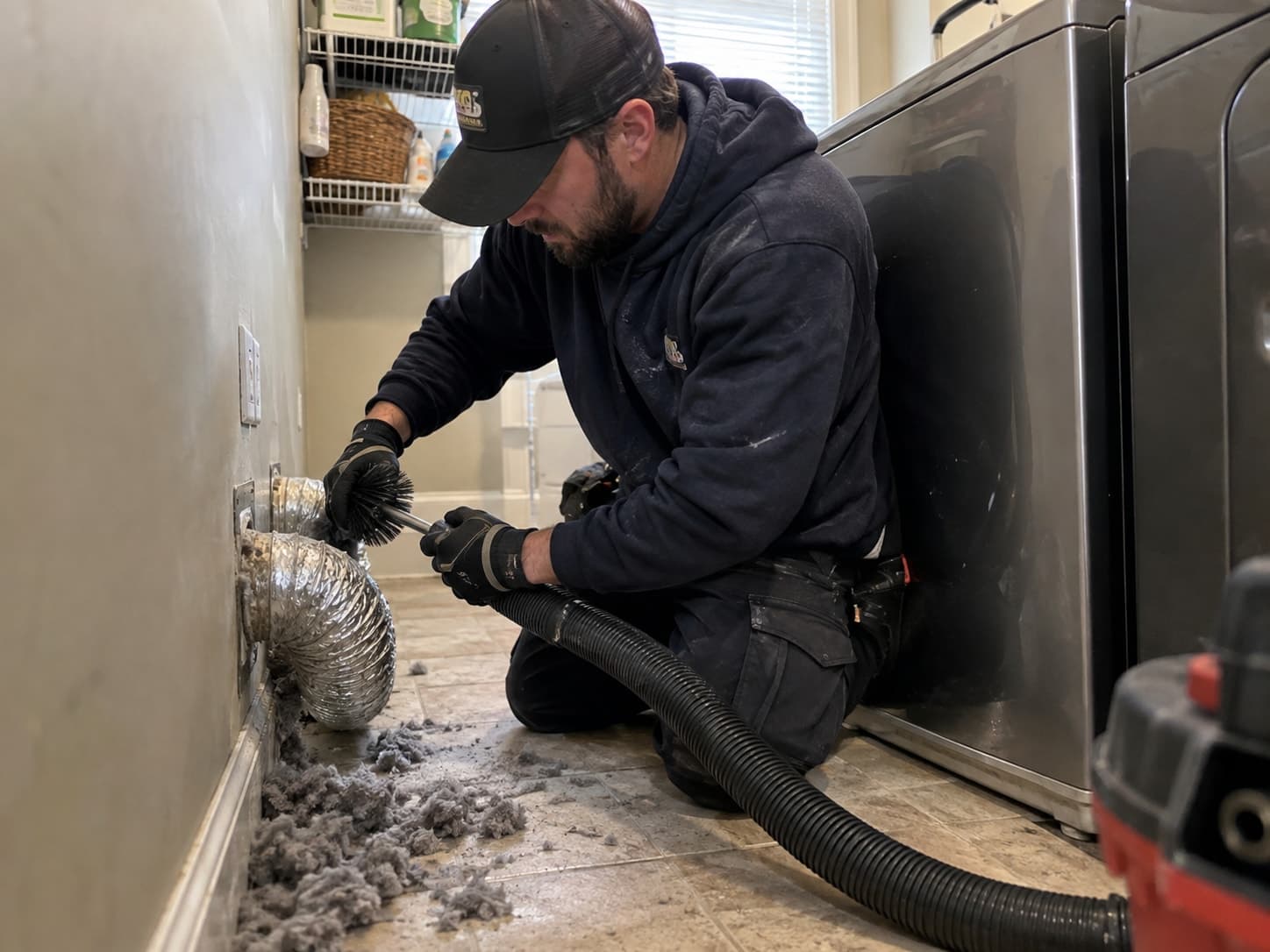
Don’t forget the dryer vent
The dryer vent isn’t part of the chimney, but it belongs on the same yearly list. The U.S. Fire Administration advises cleaning the lint filter before and after each cycle and making sure the outdoor vent covering opens when the dryer runs (USFA). Florida’s residential code also requires the exhaust termination to have a backdraft damper and no screen (FBC-R M1502, UpCodes). If loads take longer than they used to, see how often a dryer vent needs cleaning.
Gas units have their own list in gas fireplace maintenance, and the storm items are expanded in the hurricane season checklist. When a checklist item turns up a problem, the fireplace problems hub and black stains on a chimney are good places to start. For scheduling the professional rows, local pages such as chimney cleaning in Altamonte Springs describe timing in that area.
References (5)
Facts and figures on this page come from these references.