The main parts at a glance
A masonry chimney runs from the firebox and damper up through the smoke chamber and flue liner to the crown and cap, with flashing and often a cricket where it meets the roof. A factory-built chimney has a metal fireplace unit with refractory panels, a listed chimney pipe with firestops, and a chase cover, storm collar and termination cap at the top.
Two chimney systems, two parts lists
Before naming parts, it helps to know which system you have. A masonry chimney is a brick, block or stone structure built on site around a flue liner. A factory-built chimney is a listed metal pipe that runs from a manufactured fireplace up through a framed enclosure called a chase. Some parts exist on both (a damper, a firebox, a hearth), but the top of the chimney and the flue are completely different. If you aren’t sure which you have, start with masonry vs factory-built fireplaces.
Masonry chimney and fireplace, cutaway
- 1Chimney cap. Metal lid with mesh sides over the flue opening. Keeps rain, debris and animals out.
- 2Crown. The concrete or mortar top of the masonry, sloped to shed water away from the flue.
- 3Flue liner. Clay tile or metal lining that carries smoke up and protects the masonry from heat.
- 4Flashing. Metal that seals the joint between the chimney and the roof.
- 5Brick & mortar. The chimney structure. Mortar joints and brick faces absorb water when they wear.
- 6Smoke chamber. The sloped transition that funnels smoke from the firebox into the flue.
- 7Damper. Metal plate at the throat (or a sealing lid on top) that closes the flue when not in use.
- 8Firebox. Where the fire burns. Firebrick laid in heat-resistant mortar.
- 9Hearth. Non-combustible floor extension in front of the fireplace opening.
Masonry chimney parts
Chimney cap
What it does: a metal hood over the flue opening, with mesh sides. It keeps rain from falling straight down the flue, keeps birds and animals out and acts as a spark arrestor. How it fails here: galvanized caps rust at the screen first, fasteners loosen, and high winds in summer storms can lift a cap that was only friction-fitted. A missing cap is also an open invitation to nesting birds. The chimney cap service page covers materials and fit.
Crown
What it does: the sloped slab that seals the top of the brickwork around the flue and sheds water past the edges. The Florida residential code calls for masonry chimneys to have a concrete, metal or stone cap (the part usually called the crown) with a drip edge and a caulked bond break around the flue liner (FBC-R R1003.9.1, UpCodes). How it fails here: crowns built flat or with ordinary mortar crack, and repeated soaking and drying opens those cracks further. Water then goes straight into the masonry below. See crown repair and sealing.
Flue liner
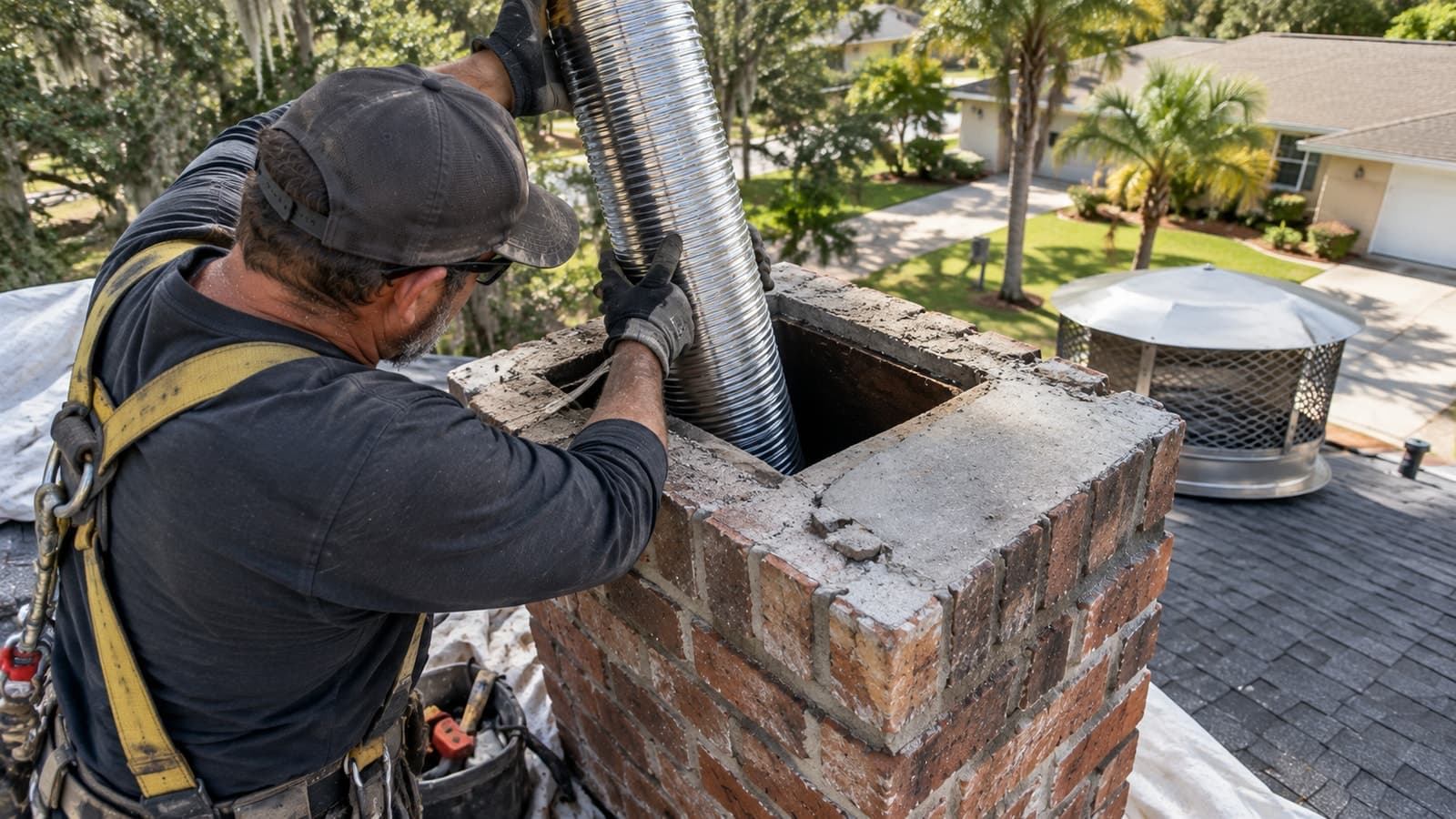
What it does: the inner passage that carries smoke and gases up and protects the surrounding masonry from heat and corrosive combustion byproducts. In most masonry chimneys it’s a column of square or rectangular clay tiles; some have been relined with stainless steel or a cast-in-place liner. How it fails: tiles crack from heat shock or a chimney fire, joints open, and water from a bad crown or missing cap speeds up the damage. Liner damage is hard to see without a full-length flue inspection. Liner repair and relining explains the options.
Flashing
What it does: sheet metal that seals the joint where the chimney passes through the roof, usually step flashing woven into the roofing and counter-flashing set into the mortar joints above it. How it fails here: sealant bakes and cracks in the sun, counter-flashing pulls out of its joint, and reroofing jobs sometimes reuse old flashing or replace it with a bead of roof cement. It’s one of the most common entry points for wind-driven rain. See flashing repair, and if a new roof is planned, reroofing around a chimney.
Cricket (saddle)
What it does: a small peaked structure on the uphill side of a wide chimney that splits water flowing down the roof so it doesn’t pond against the chimney. The code requires one where the chimney’s width parallel to the ridge is more than 30 inches and the chimney doesn’t meet the ridge (FBC-R R1003.20). How it fails: a missing or undersized cricket lets debris and water collect behind the chimney, which overloads the flashing on that side during heavy rain. Crickets are flashed as part of the same job as chimney flashing work.
Chimney masonry (brick, block, mortar)
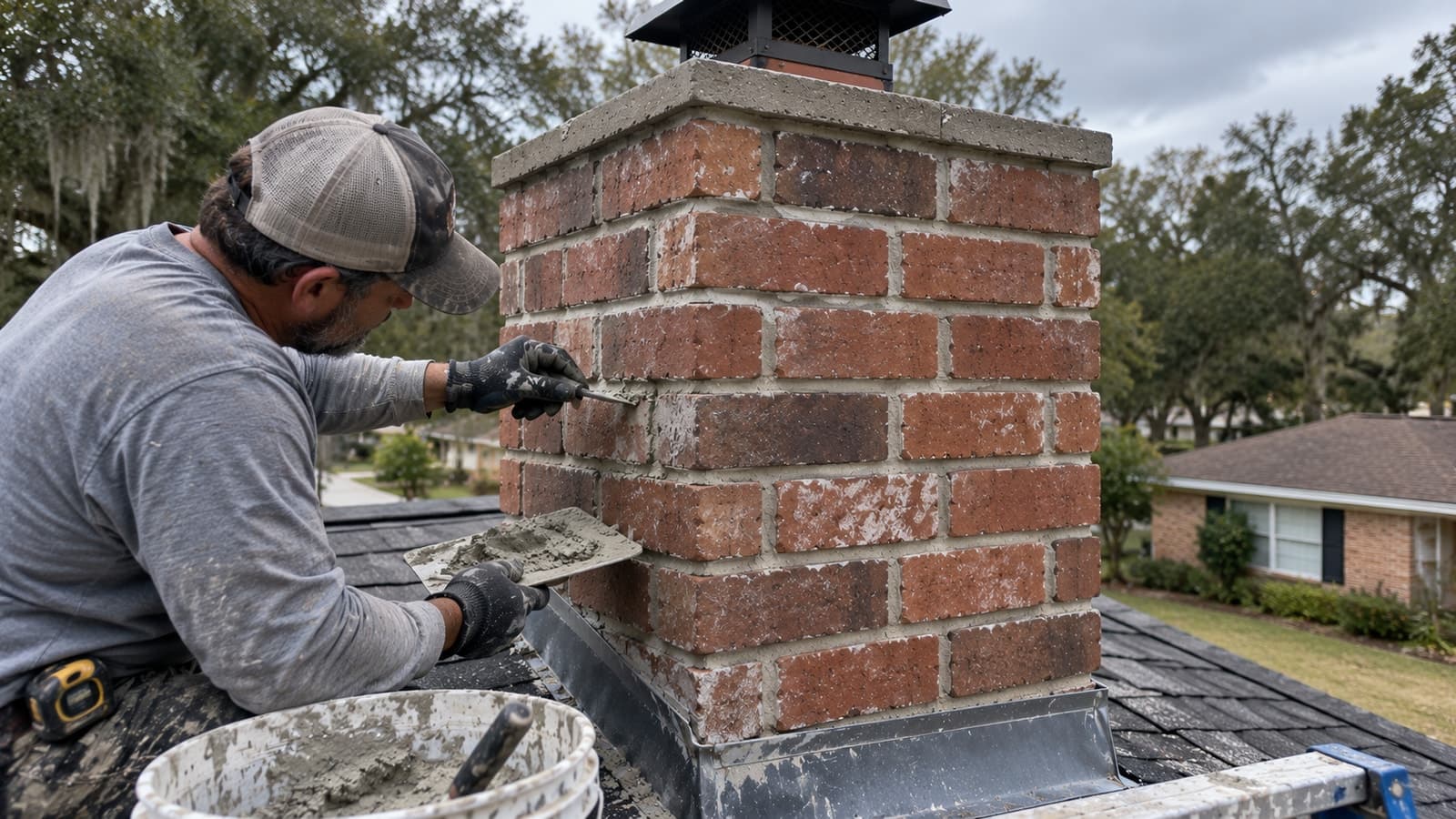
What it does: the structure itself, carrying the chimney’s weight and enclosing the liner. How it fails here: mortar joints erode, bricks absorb water and spall, and white mineral deposits appear where moisture moves through the brick. Freeze damage is rare in Central Florida, but constant wetting still wears mortar. See white stains on a chimney and masonry repair and repointing.
Smoke chamber
What it does: the funnel-shaped space above the damper that gathers smoke from the wide firebox and narrows it into the flue. The code calls for its inside surface to be parged smooth with refractory mortar (FBC-R R1001.8). How it fails: older chambers were often built with stepped brick and left rough, which collects creosote and slows draft; cracks can let heat reach nearby framing. Moisture from above loosens parging over time. Smoke chamber repair covers parging and rebuilding.
Smoke shelf
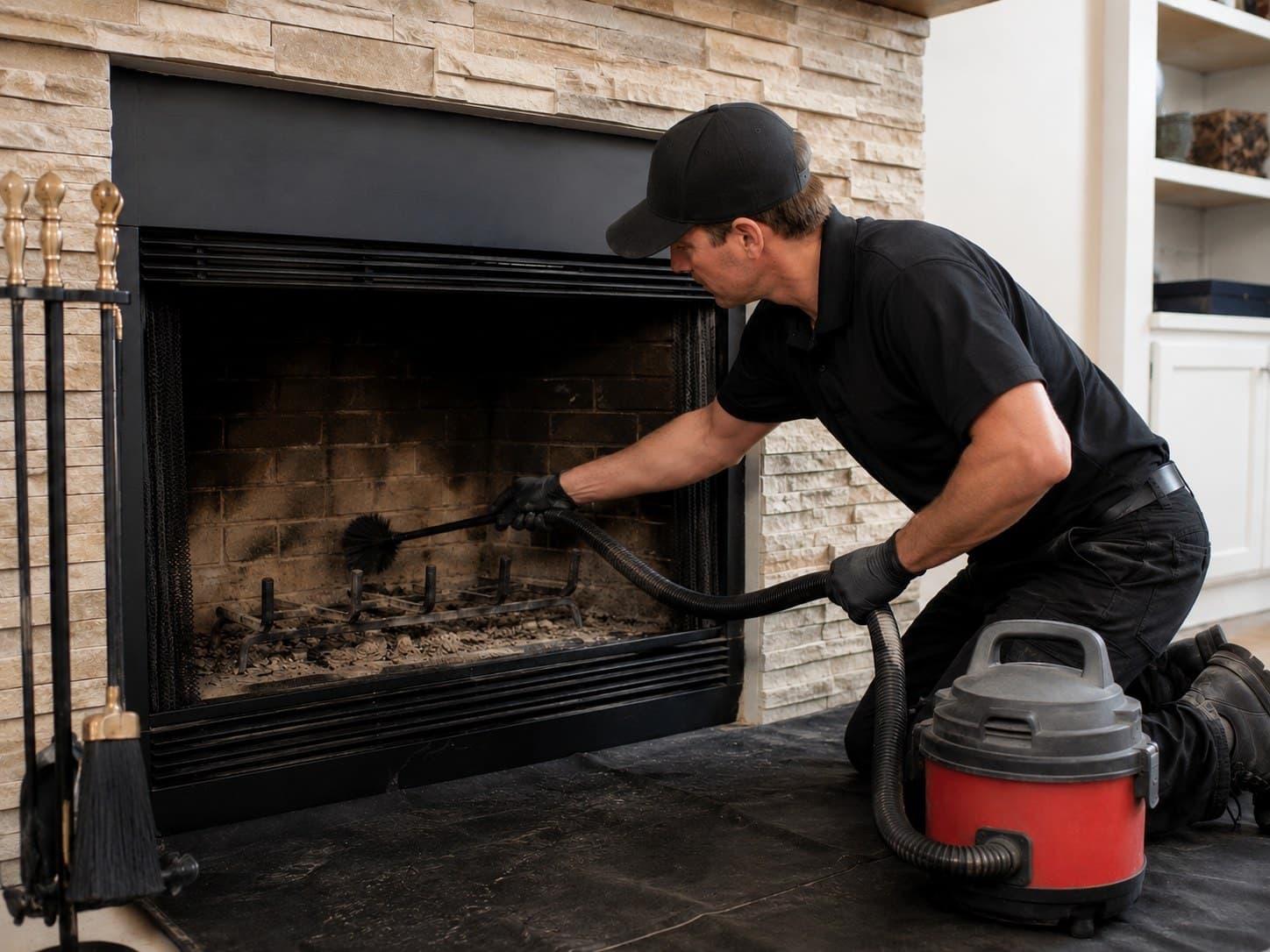
What it does: the flat ledge behind the damper at the bottom of the smoke chamber. It helps turn back downdrafts and catches debris falling down the flue. How it fails: it collects soot, leaves, nesting material and fallen pieces of tile or mortar, and water that gets past the cap pools there, rusting the damper beside it. Debris on the shelf is often the first clue to a problem higher up, which is why it’s checked during a chimney sweep.
Damper
What it does: a metal plate that closes the flue when the fireplace isn’t in use. The code requires masonry fireplaces to have a ferrous metal damper at least 8 inches above the top of the opening (FBC-R R1001.7.1); a top-sealing damper at the top of the flue is a common alternative where it’s allowed. How it fails here: cast-iron throat dampers rust, stick and warp in humid air, and a damper that no longer seals lets in odors and humid air and lets conditioned air out. See a stuck fireplace damper and damper repair and replacement.
Firebox
What it does: the chamber where the fire burns, lined with firebrick laid in refractory mortar to keep heat away from the structure behind it. How it fails: joints erode, firebrick cracks or spalls, and water from a leaking chimney softens mortar and stains the back wall. Hairline cracks are common; open joints and loose brick are not. See cracked firebox and firebox repair.
Hearth
What it does: the non-combustible floor inside the firebox and the extension in front of it that protects the floor from sparks and embers. How it fails: tiles crack, grout loosens, and older hearth extensions are sometimes smaller than the code now expects or have been covered by flooring. Hearth issues are handled under general fireplace repair.
Factory-built chimney parts
On a factory-built system, the fireplace, chimney pipe and top parts are listed together. The code requires factory-built chimneys to be listed and labeled and installed and terminated according to the manufacturer’s instructions (FBC-R R1005.1). That’s why replacement parts have to match the listing, not just the size.
Termination cap
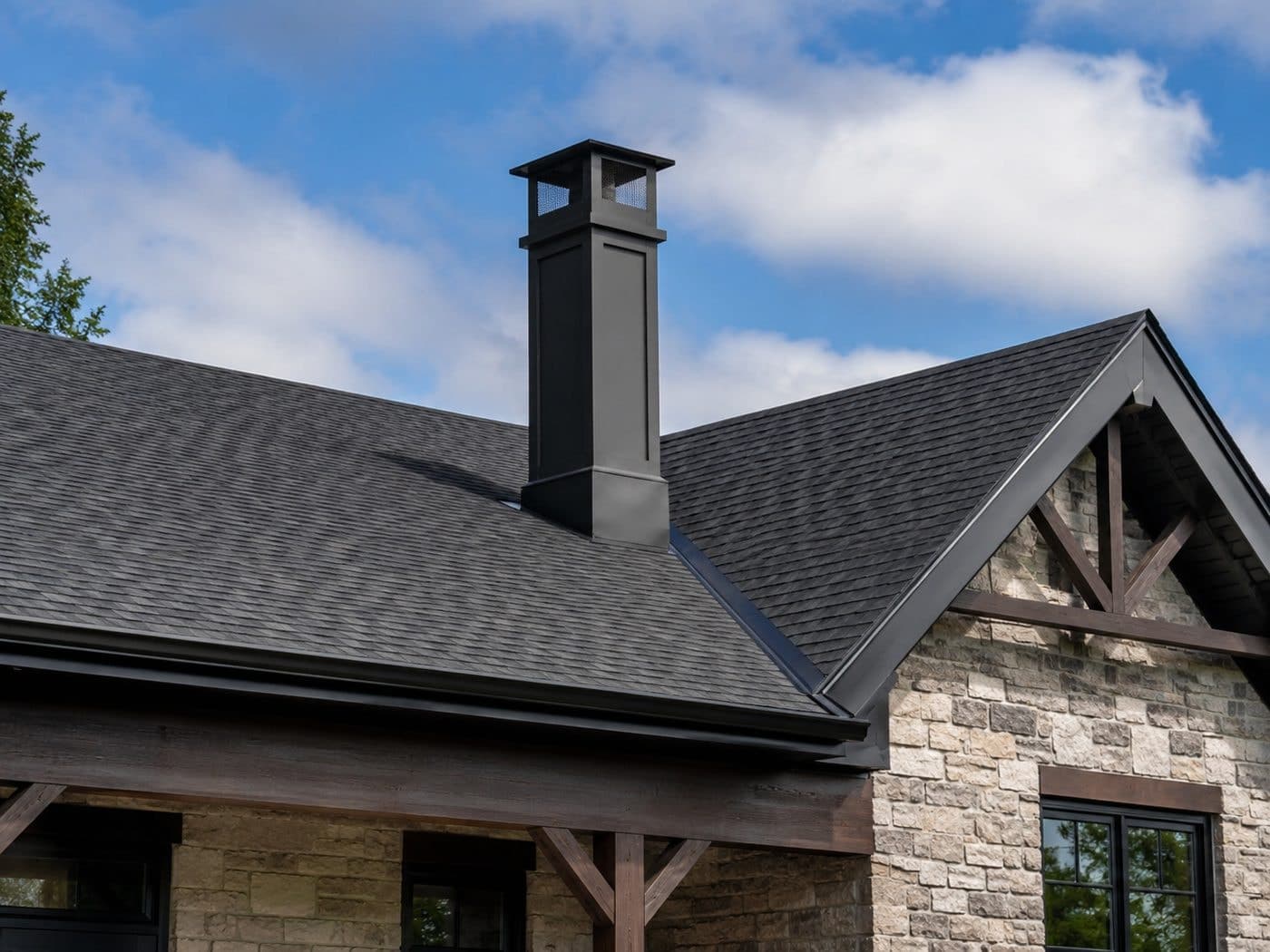
What it does: the manufacturer-specific cap on top of the metal flue that keeps rain and animals out and is part of how the system vents. How it fails here: rust, bent or clogged screens, and storm damage; a generic replacement cap can affect draft and isn’t part of the tested system. Cap options for prefab chimneys are covered on the caps page.
Storm collar
What it does: a metal band clamped and sealed around the flue pipe just above the chase cover, so water running down the pipe lands on the cover instead of dropping through the opening. How it fails here: the sealant dries and cracks in sun and heat, or the collar slips down the pipe. A failed storm collar leaks into the chase even when the chase cover is fine. It’s one of the parts covered by prefab chimney and chase repair.
Chase cover
What it does: the sheet-metal lid over the whole top of the chase, with a raised collar where the flue passes through and edges that drip clear of the siding. How it fails here: thin galvanized covers rust once their coating wears, flat covers sag and hold water, and rust streaks down the siding follow. See rust stains on a chimney and chase cover replacement. The difference between this and a cap is explained in chimney cap vs chase cover.
Chase
What it does: the framed enclosure (studs, sheathing, weather barrier and siding or stucco) that shelters the metal flue and makes it look like a chimney. How it fails here: water entering at the top or through siding joints soaks the framing, and wood in a humid climate stays wet long enough to rot. Stucco chases crack and hide damp framing behind a sound-looking surface. Framing and cladding work is covered under repairs for factory-built chases.
Chimney pipe
What it does: the listed, multi-wall metal flue sections that lock together from the fireplace to the top. The layers keep the outer wall cool enough to sit close to framing. How it fails: water from a bad chase top corrodes sections from the inside; joints can separate; a chimney fire can distort them. Only sections compatible with the fireplace’s listing may be used as replacements.
Firestops
What they do: metal plates or spacers where the chimney pipe passes through a ceiling or floor. They maintain the required clearance between the pipe and the framing and slow the spread of fire between floors. How they fail: they’re sometimes missing, cut or disturbed during renovation, attic work or insulation jobs. They’re hidden, so they’re usually only checked where the chase or attic is accessible during an inspection.
Fireplace unit
What it does: the manufactured metal firebox, with its louvers, damper and rating plate, that the whole system is built around. How it fails here: water coming down the pipe rusts the top of the box and the damper; overfiring can warp it. A unit that’s rusted through or can’t be matched to parts usually has to be replaced; see how long prefab fireplaces last.
Refractory panels
What they do: molded heat-resistant slabs lining the back, sides and sometimes floor of a factory-built firebox, protecting the metal box. How they fail: they crack with heat cycles, crumble when soaked by chimney leaks, and break when grates or logs are dropped on them. Replacements must be the manufacturer’s panels for the model; see refractory panel replacement.
Summary: part, common failure, where to go
| Part | System | Common failure in a hot, wet climate | Page |
|---|---|---|---|
| Chimney cap | Masonry | Rusted screen, loose or blown off | Chimney caps |
| Crown | Masonry | Cracks that let water into the brick | Crown repair |
| Flue liner | Masonry | Cracked tiles, open joints | Liner repair |
| Flashing and cricket | Both | Cracked sealant, lifted counter-flashing, ponding | Flashing repair |
| Brick and mortar | Masonry | Eroded joints, spalling, efflorescence | Masonry repair |
| Smoke chamber and shelf | Masonry | Rough or cracked parging, debris buildup | Smoke chamber work |
| Damper | Both | Rusted, stuck or no longer sealing | Damper repair |
| Firebox (firebrick) | Masonry | Open joints, cracked or loose brick | Firebrick repair |
| Termination cap and storm collar | Factory-built | Rust, dried sealant, slipped collar | Storm collar and cap fixes |
| Chase cover | Factory-built | Rust, sagging, pooled water | Chase covers |
| Chase framing and siding | Factory-built | Wet sheathing, rot, cracked stucco | Chase framing repair |
| Refractory panels | Factory-built | Cracked, crumbling or broken panels | Panel replacement |
| Fireplace unit | Factory-built | Rust-through, warping, discontinued parts | Prefab replacement |
Most of these parts can only be judged up close, during an inspection. NFPA 211 calls for chimneys, fireplaces and vents to be inspected at least once a year (Chimneys.com summary), and an annual chimney inspection looks at each of them in turn, and the chimney repair overview groups the repairs by what they fix.
Several parts have their own guides: the chimney crown, flashing, the smoke chamber and liner types. If a part is already failing, the chimney problems hub matches the symptom to the component.
References (2)
Facts and figures on this page come from these references.