Chimney troubleshooting: start with the symptom
The table lists the signs your chimney needs repair in the order homeowners usually notice them. The middle column is the part that most often explains the symptom, not the only possibility. Every first check can be done from inside the house or from the ground: none of them needs a ladder.
| What you notice | Most likely component | First safe check | Read more |
|---|---|---|---|
| Drips, puddles or debris in the firebox when it rains | Chimney cap, chase cover or crown at the top | Look for rust flakes on the damper and grate; check from the ground with binoculars that a cap is there | Why rain reaches the firebox |
| Brown ring or damp patch on the ceiling or wall beside the chimney | Flashing at the roofline, or siding on a framed chase | Note whether it appears during rain or a day later, and photograph it with the date | Stains next to the chimney |
| Orange streaks down the siding, stucco or inside the firebox | Rusting chase cover, cap or damper | From the ground, find where the streaks start: at the top edge or lower down | What rust streaks mean |
| White, chalky or powdery film on brick | Water moving through the masonry (efflorescence) | Brush a patch off with a dry brush and see whether it returns after the next rain | White deposits on brick |
| Flaking brick faces, sandy mortar on the roof or hearth | Brick and mortar joints, often fed by a cracked crown | Look from the ground for missing mortar and loose bricks; don’t pry or tap at them | Crumbling brick and mortar |
| A gap opening between the chimney and the wall, or a visible tilt | Footing, structure or chase framing | Mark the gap with tape and a date and check it again in a few weeks from a safe distance | A chimney that is leaning |
| Scratching, chirping, flapping or rattling in the flue | Missing or damaged cap; loose metal at the top | Keep the damper closed and listen for when it happens: daytime, dusk or only in wind | Sorting out chimney noises |
| Constant twittering in spring and summer, twigs on the damper | Birds nesting in an uncapped flue | Don’t light a fire or try to smoke them out; note the dates you hear them | Birds in the flue |
| Heavier movement, droppings or a dead-animal odor | Raccoons, squirrels or bats getting past the top | Close the damper and the glass doors so nothing gets into the room | Animals in the chimney |
| Musty, sour or campfire odor, worse on humid days or when the AC runs | Damp soot and creosote, pulled into the room by house pressure | Close the damper and note whether the smell follows rain, humidity or the AC | Where chimney odors come from |
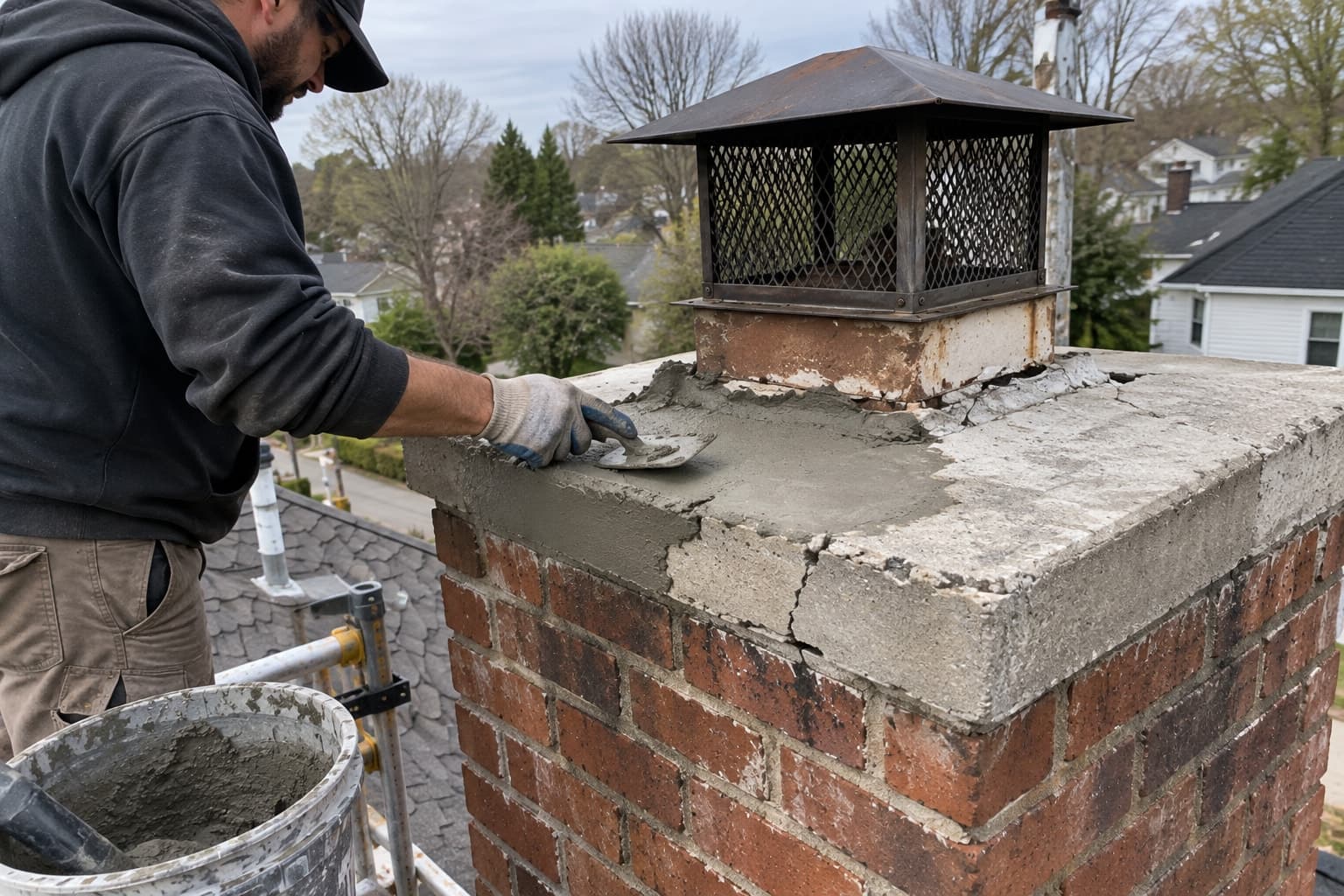
| Cracks in the concrete top of a brick chimney, or water standing on it | The crown | Look with binoculars after rain for a puddle, dark wet brick below the top, or pieces on the roof | Cracks in the chimney crown |
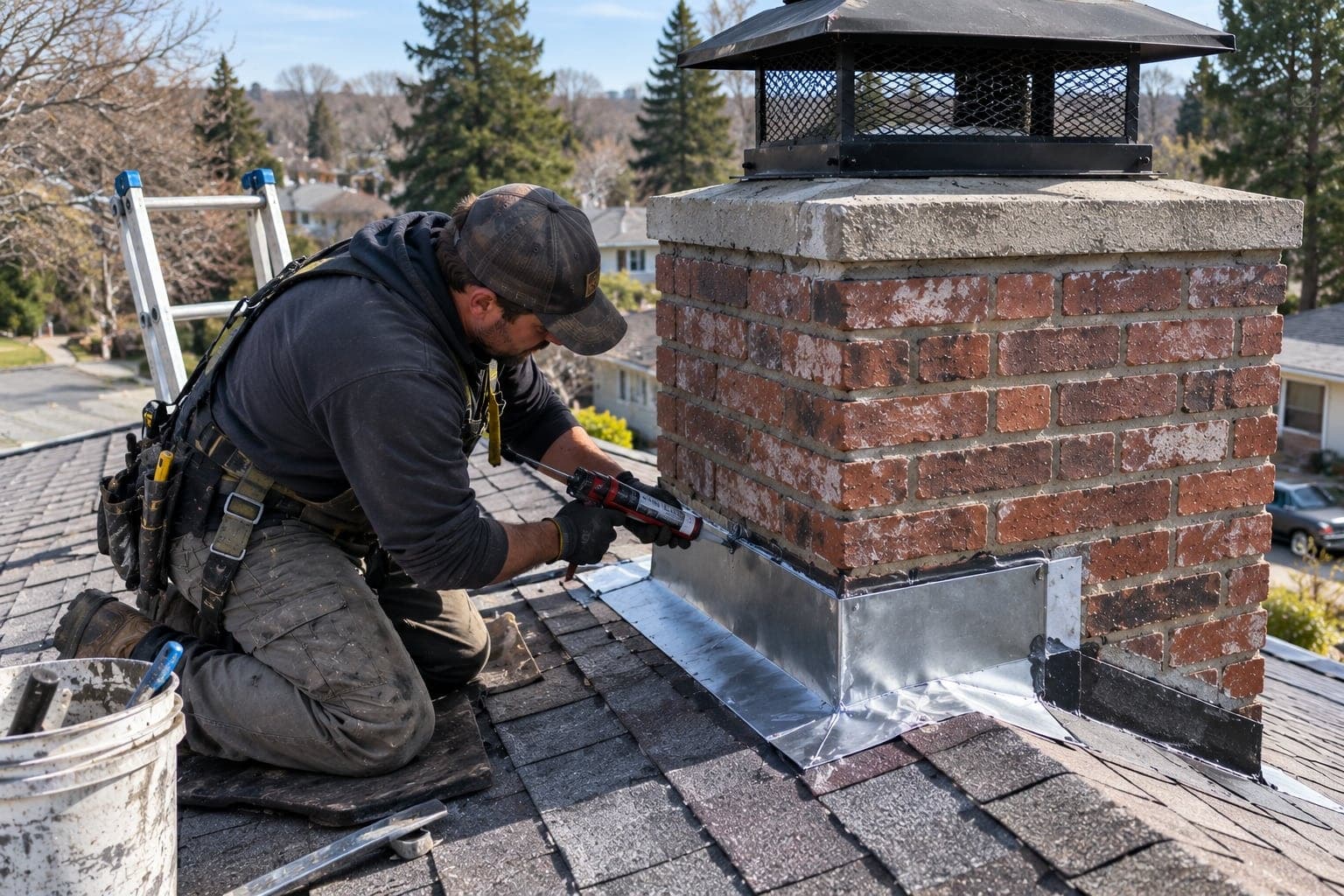
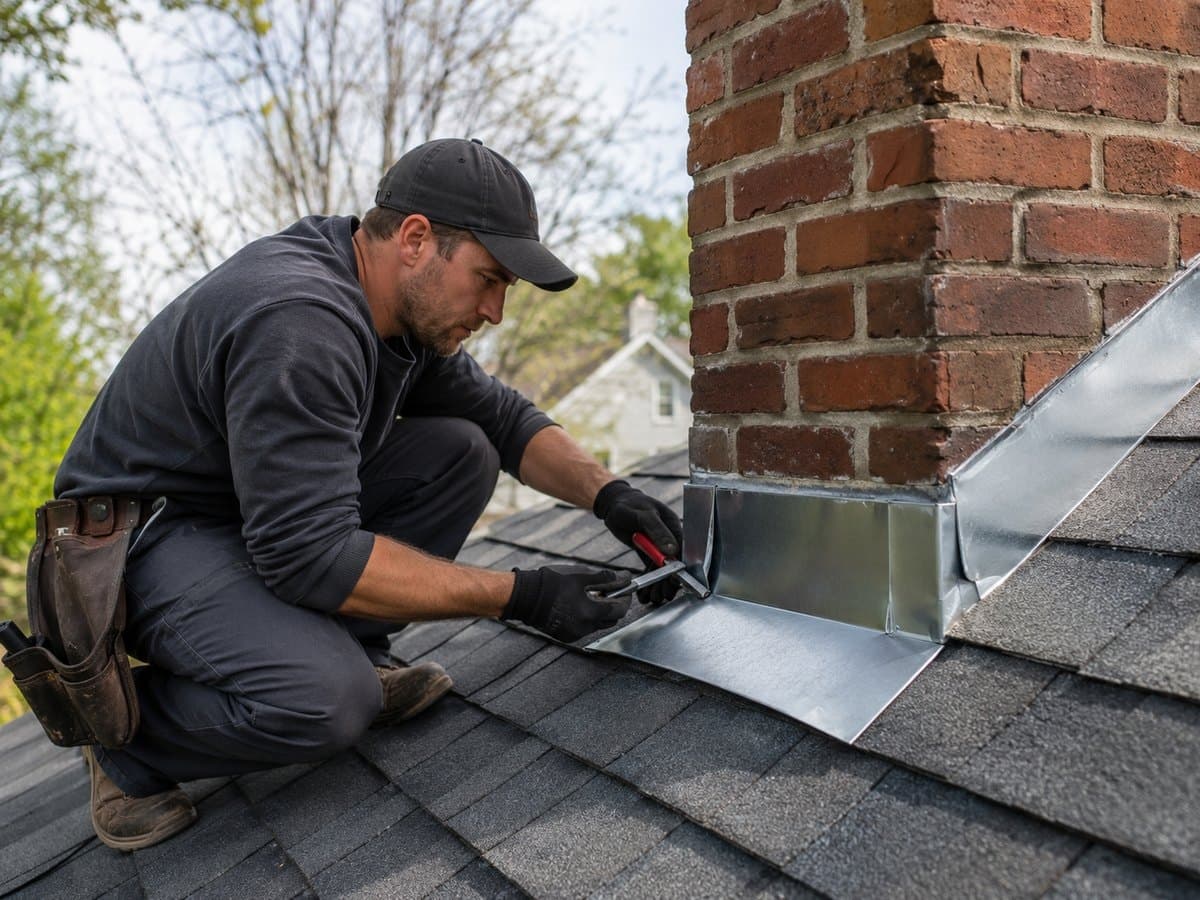
| Metal lifting where the chimney meets the roof, caulk smeared over the joint | Step flashing and counterflashing | Check the attic beside the chimney for stains or damp decking | Signs of leaking flashing |
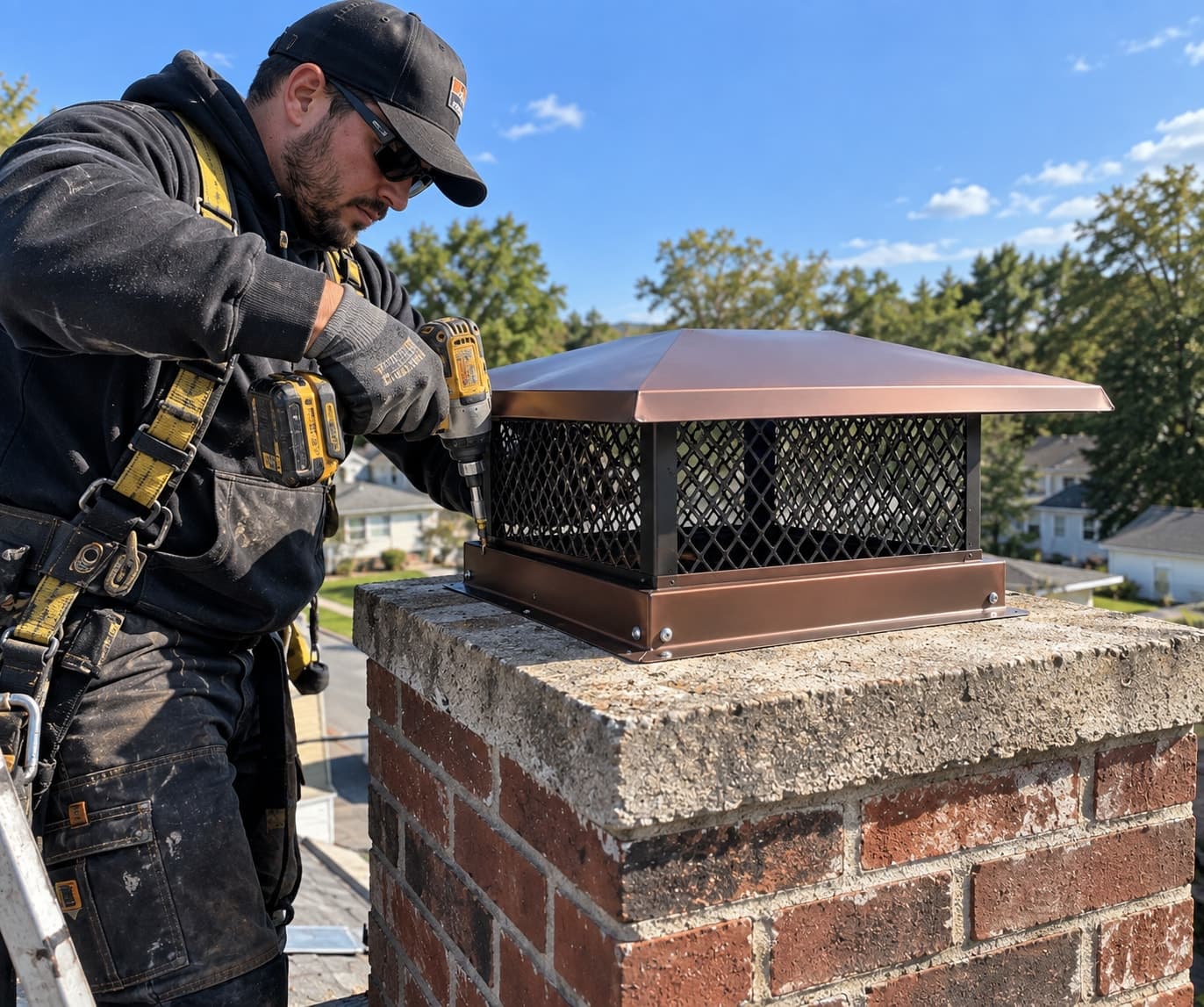
| Cap missing, tilted, rusted or packed with soot | The chimney cap or termination cap | Keep the fireplace unused and the damper closed until a cap is back on | A missing or damaged cap |
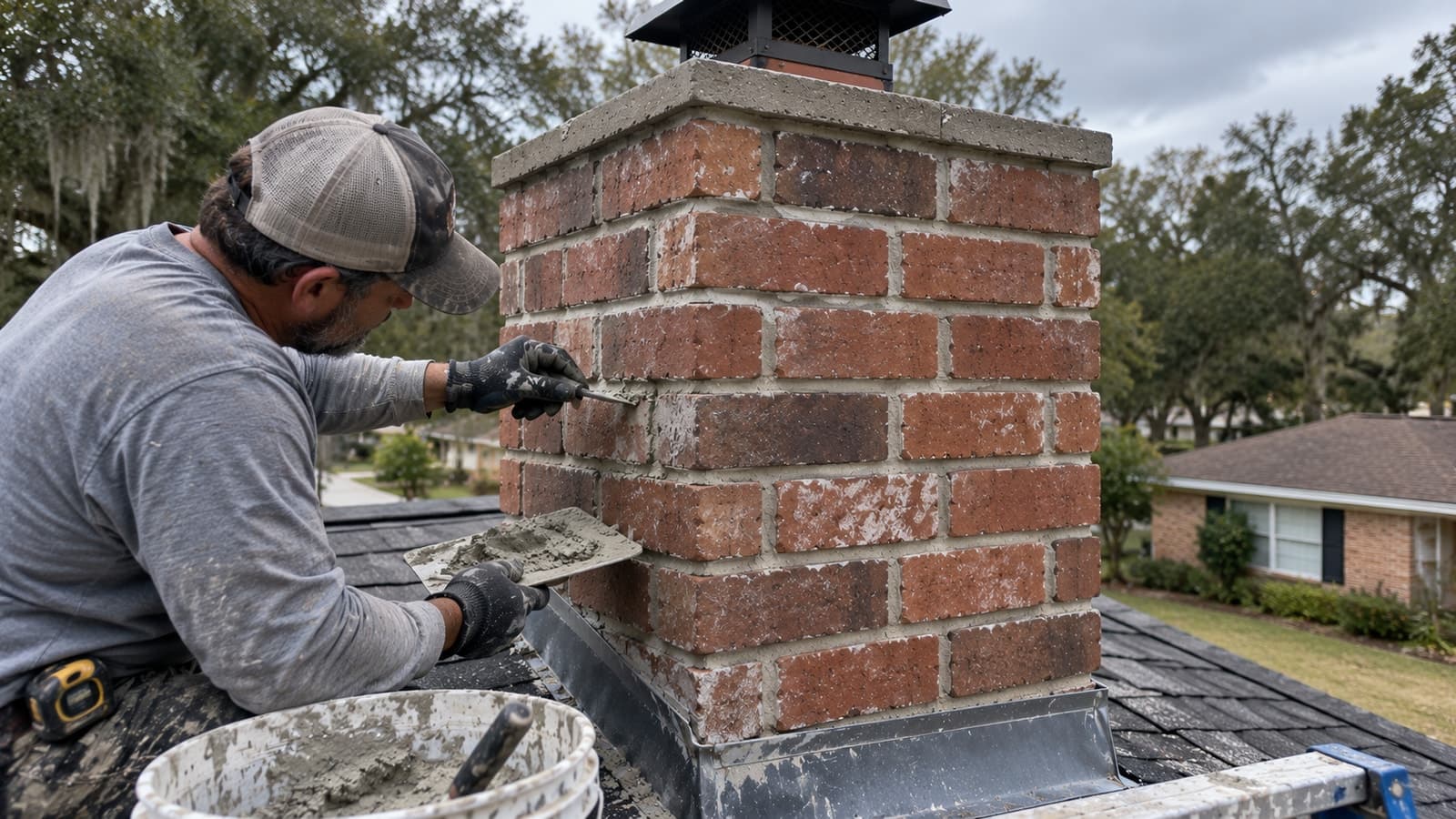
| Gaps between bricks, sandy mortar, bricks that move | Mortar joints, usually below the crown | Look for sand and chips on the roof and in the gutters; stay clear if bricks are loose | Mortar washing out of the joints |
| Soft, swollen or cracked siding or stucco on a framed chimney | Chase cover, cladding seams or flashing | Press gently on trim you can reach; soft wood means water has been inside | Damaged chase siding or stucco |
| Clay tile pieces on the smoke shelf, or an inspection that flagged the flue | The flue liner | Keep the fireplace unused; test the CO alarm | A cracked or deteriorating liner |
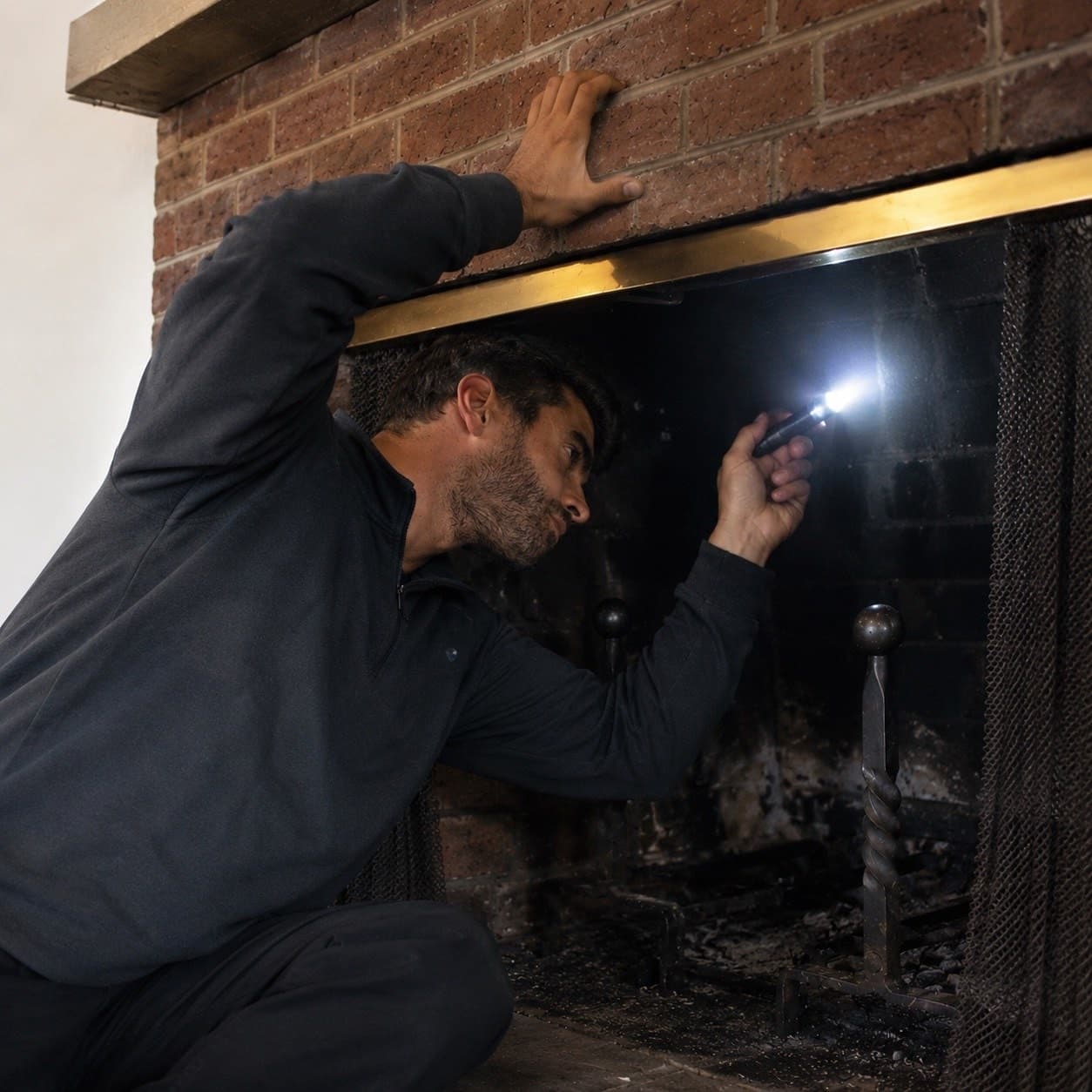
| Smoke pours in at once, no daylight up the flue, nesting on the damper | Nest, debris or fallen tile in the flue | Don’t light a fire to clear it; look up with a flashlight from the side | Is the chimney blocked? |
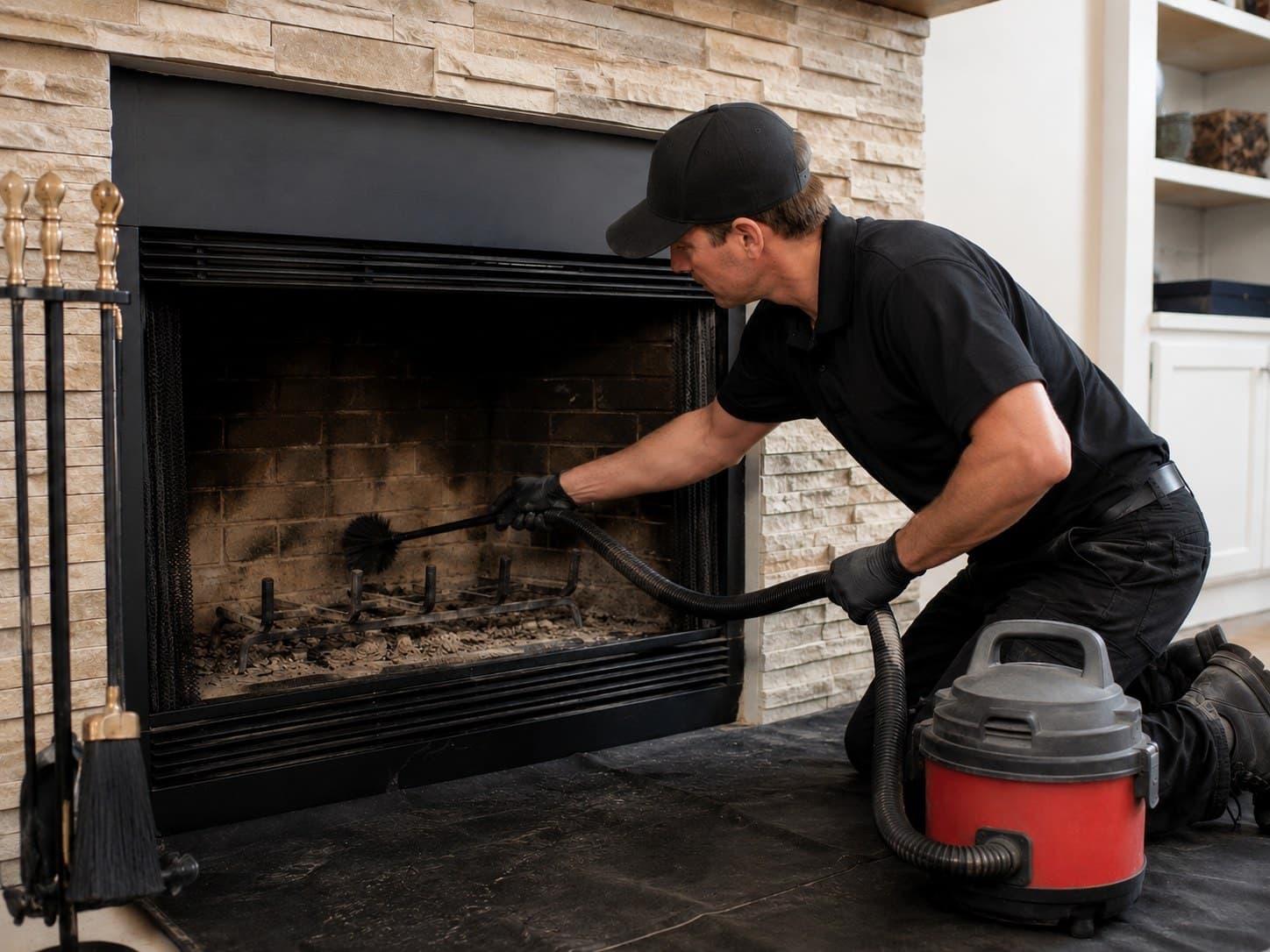
| Black, flaky or shiny tar-like deposits on the damper or in the flue | Creosote buildup | Scratch a deposit with a fireplace tool when cold; deeper than about 1/8 inch or glossy means sweep first | How much creosote is too much |
| Black streaks on the chimney top, dark growth on stucco, or soot above the opening | Soot, creosote run-off, or mildew | Wipe a patch with a dry rag: soot comes off as powder, mildew smears | Soot vs mildew on a chimney |
| Anything new after a hurricane or severe storm | Cap, chase cover, crown or flashing | Photograph every side from the ground before cleanup; stay off the roof | Chimney damage after a storm |
Stop now, or wait for an appointment?
Not every chimney problem is urgent. Some signs of chimney damage mean people should stay clear of the chimney today; others only mean the fireplace should stay unused until it is looked at; and several can simply go on the calendar.
| Urgency | Signs | What to do meanwhile |
|---|---|---|
| Keep people clear now | Visible lean or a widening gap at the wall; bricks or metal falling; a chimney hit by lightning or a falling tree | Keep people, pets and cars out of the area the chimney could fall into. Don’t use the fireplace. If there is smoke, fire or a burning smell in the walls, get out and call 911. |
| Don’t use the fireplace until checked | Water in the firebox with rust holes; mortar or brick pieces falling into the firebox; animals or nests in the flue; a chimney-fire sound or smell after a fire | Close the damper and doors. Catch drips with a tray. Don’t light a fire to drive animals out. |
| Book an appointment | White deposits on brick; light rust streaks on siding; an occasional musty smell; a small stain that isn’t growing | Photograph the sign with dates and weather. Fix the cause before the next wet season so the small problem doesn’t become one of the rows above. |
Water near wiring
If water from a chimney leak reaches an outlet, switch or light fixture, turn that circuit off at the breaker panel and call an electrician. If you think the chimney had a fire (loud roaring, popping, dense smoke, flakes of creosote on the roof or ground), read the signs of a chimney fire and don’t use it again until it has been inspected.
How chimney problems connect
Look at the table again and count how many rows are really about water: the firebox leak, the ceiling stain, rust streaks, white deposits, crumbling brick and much of the odor problem. They are the same water at different stages. That is why a chimney with two or three symptoms usually has one source at the top, and why fixing that source matters more than treating each symptom.
- Missing cap → rain straight down the flue, birds and animals moving in, noises, and a damp, smelly firebox. One part, four symptoms. See chimney cap installation and replacement.
- Rusting chase cover → orange streaks on the siding, water on the metal flue, then soft framing inside the chase. The fix starts with a new chase cover that sheds water.
- Cracked crown → water soaking into the brick, white deposits, then flaking faces and loose mortar as the brick stays wet. That is the path to crown work and masonry repair.
- Failed flashing → stains beside the chimney rather than in it, and eventually rot in the roof deck around it.
Masonry chimney and fireplace, cutaway
- 1Chimney cap. Metal lid with mesh sides over the flue opening. Keeps rain, debris and animals out.
- 2Crown. The concrete or mortar top of the masonry, sloped to shed water away from the flue.
- 3Flue liner. Clay tile or metal lining that carries smoke up and protects the masonry from heat.
- 4Flashing. Metal that seals the joint between the chimney and the roof.
- 5Brick & mortar. The chimney structure. Mortar joints and brick faces absorb water when they wear.
- 6Smoke chamber. The sloped transition that funnels smoke from the firebox into the flue.
- 7Damper. Metal plate at the throat (or a sealing lid on top) that closes the flue when not in use.
- 8Firebox. Where the fire burns. Firebrick laid in heat-resistant mortar.
- 9Hearth. Non-combustible floor extension in front of the fireplace opening.
Masonry and factory-built chimneys show problems differently
Factory-built fireplaces and framed chimney chases are common in many newer Orlando-area homes, while older homes more often have brick. If the part above the roof is covered in siding or stucco and has a flat metal lid, treat it as factory-built. The same symptom can mean different things on each; our guide to telling masonry from factory-built covers the identification in more detail.
| Feature | Masonry (brick or block) | Factory-built (framed chase) |
|---|---|---|
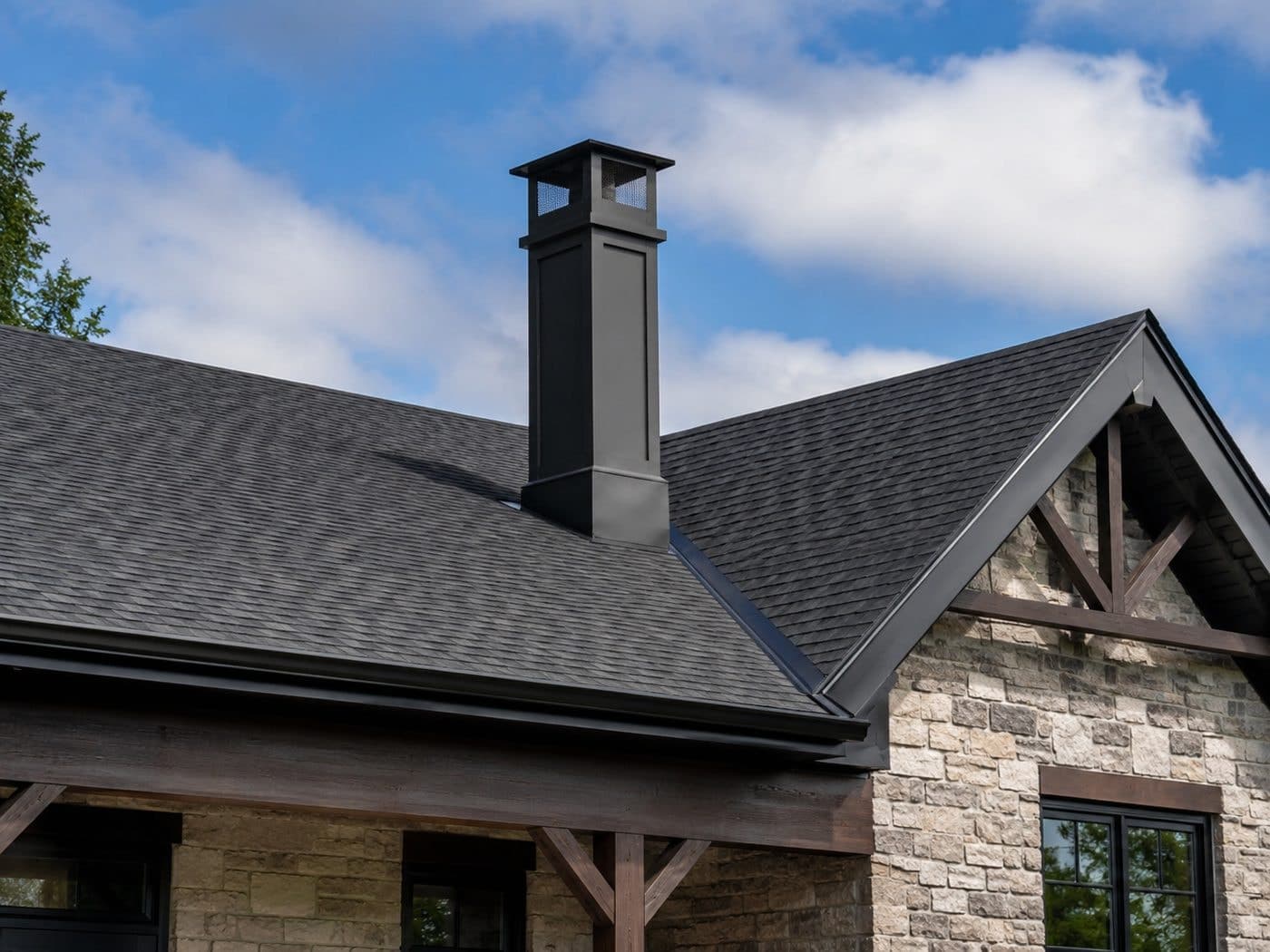
| What protects the top | A mortar or concrete crown, plus a cap over the flue | A flat metal chase cover, a termination cap and a storm collar |
| What rust usually means | Water is reaching the damper or cap from above | The chase cover itself is rusting; streaks on siding are typical |
| How structural damage shows | Flaking brick, sandy joints, cracks, a lean from the footing | Soft or swollen siding, cracked stucco, a sagging or racked chase |
| White stains | Common: salts carried out of wet brick | Rare; on stucco they suggest water behind the finish |
| Usual repair path | Masonry and mortar repair, crown work, flashing | Prefab chimney and chase repair, chase cover, flashing |
What protects the top
- Masonry (brick or block)
- A mortar or concrete crown, plus a cap over the flue
- Factory-built (framed chase)
- A flat metal chase cover, a termination cap and a storm collar
What rust usually means
- Masonry (brick or block)
- Water is reaching the damper or cap from above
- Factory-built (framed chase)
- The chase cover itself is rusting; streaks on siding are typical
How structural damage shows
- Masonry (brick or block)
- Flaking brick, sandy joints, cracks, a lean from the footing
- Factory-built (framed chase)
- Soft or swollen siding, cracked stucco, a sagging or racked chase
White stains
- Masonry (brick or block)
- Common: salts carried out of wet brick
- Factory-built (framed chase)
- Rare; on stucco they suggest water behind the finish
Usual repair path
- Masonry (brick or block)
- Masonry and mortar repair, crown work, flashing
- Factory-built (framed chase)
- Prefab chimney and chase repair, chase cover, flashing
Birds, bats and animals: what the law allows
Chimney swifts are protected under the federal Migratory Bird Treaty Act, so an active swift nest has to be left until the young have fledged (USFWS); FWC advises scheduling cleaning after nesting season (FWC). Florida bats have a maternity season from April 16 to August 14, when exclusion needs a permit (FWC). Live raccoons and squirrels are a job for a nuisance wildlife trapper (FWC doesn’t license them, but keeps a voluntary directory). Once the flue is empty, nests and debris can be cleared and the top sealed with a cap so it doesn’t happen again.
When one visit is better than guessing
If you have more than one symptom, or can’t tell whether the chimney is masonry or factory-built, an inspection of the whole chimney is the efficient first step: the top, the flashing, the flue and the firebox are checked together, so connected problems are found in one trip. For leaks specifically, leak diagnosis and repair traces water to the exact component before anything is sealed. NFPA 211 calls for chimneys to be inspected at least once a year (summary), which is also the easiest way to catch these problems early.
Symptom guide, service or local page?
Each guide above answers why a symptom happens. The fix itself lives on a service page, such as chimney leak repair for water, chimney masonry repair for brick and mortar, or a chimney sweep for deposits and debris. To book in a particular city, the local pages cover the same work with the local housing in mind, for example leak diagnosis for City of Orlando homes, chimney repair in Winter Park or chimney sweeping in Kissimmee.
References (4)
Facts and figures on this page come from these references.