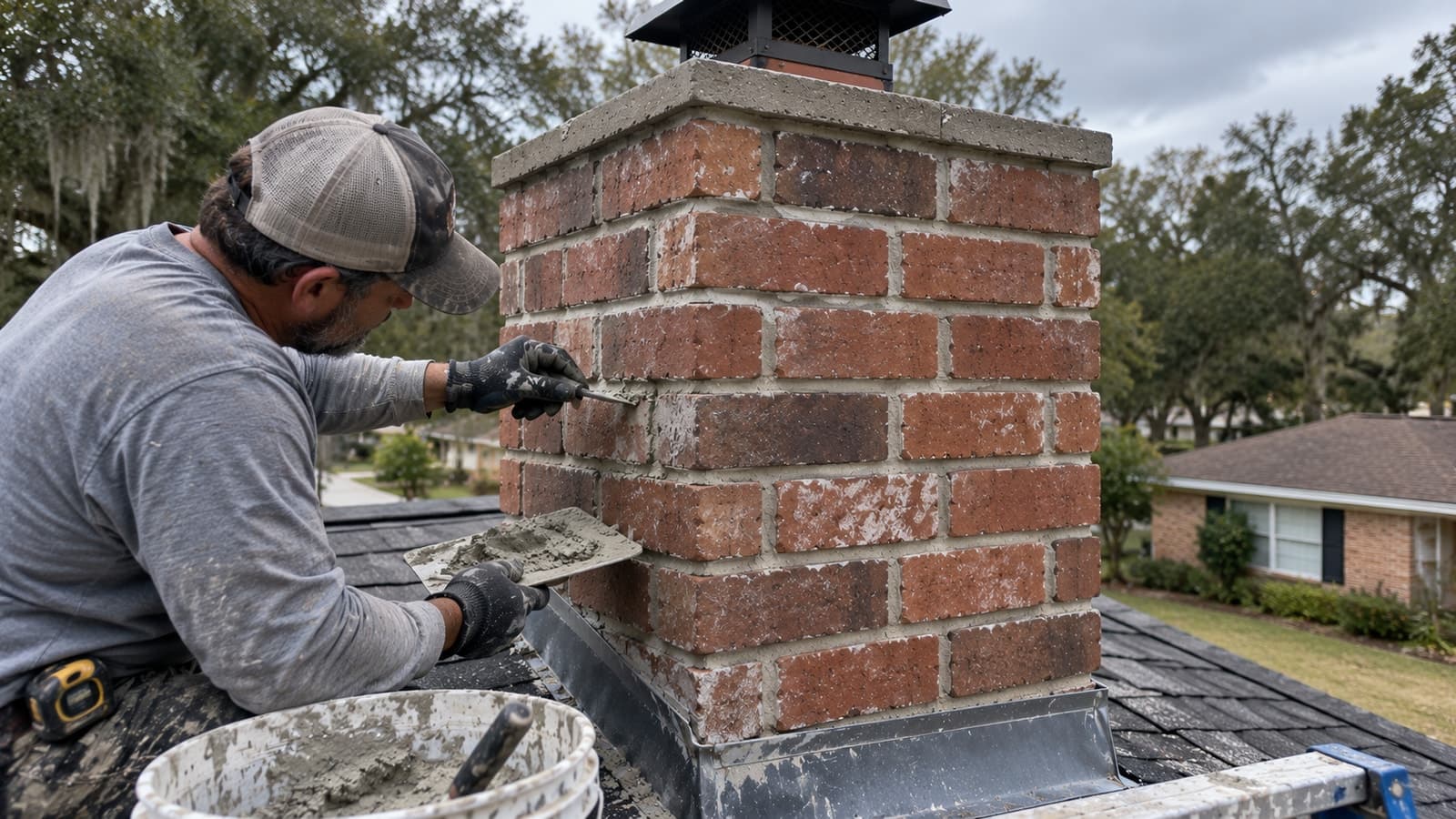
What “crumbling” usually looks like
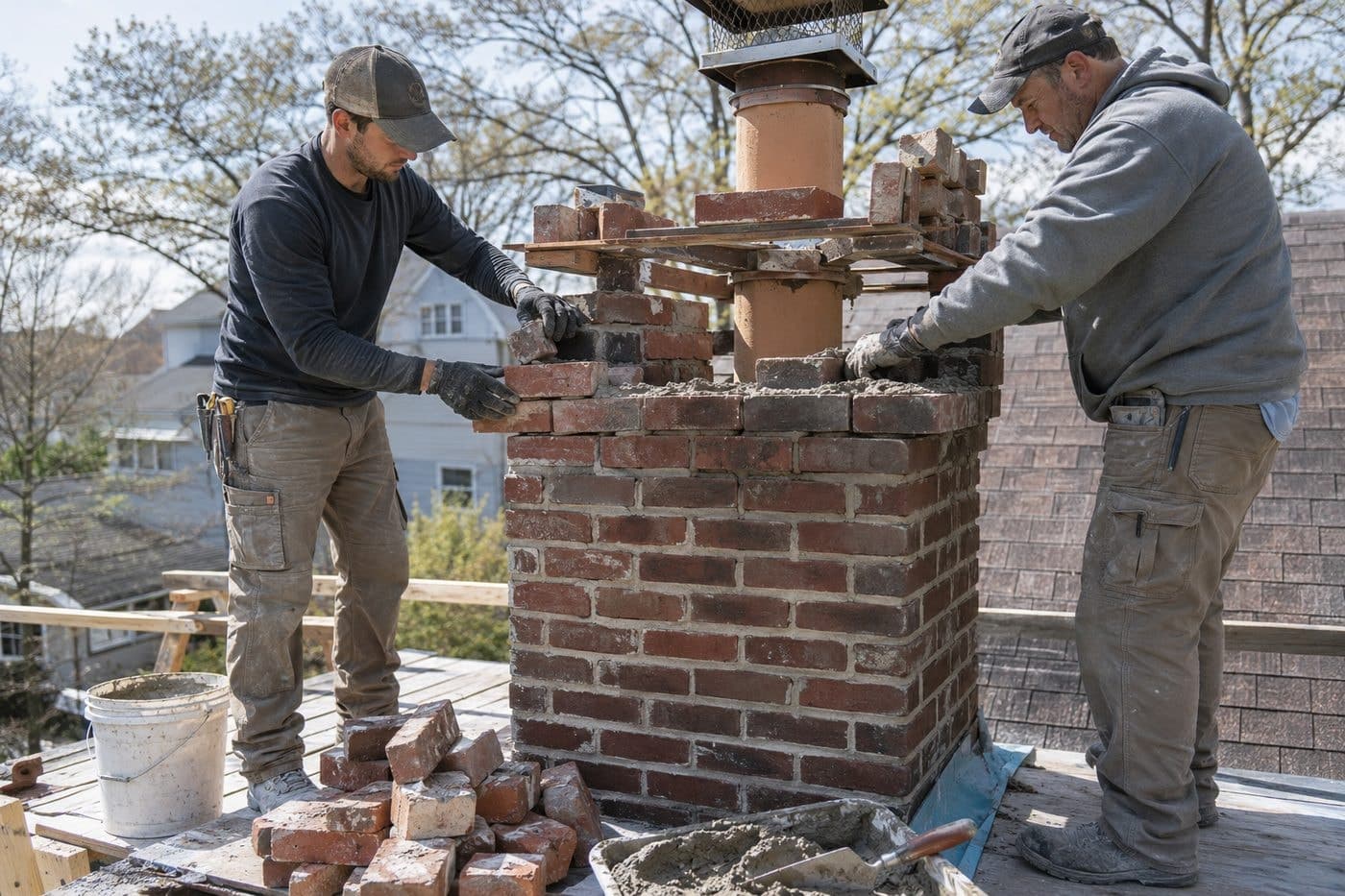
Homeowners describe the same few symptoms. Spalling is when the outer face of a brick flakes or pops off in shells, leaving a rough, recessed surface. Mortar erosion is when the joints between bricks recede, crack or rub out as loose sand. Loose courses are rows of brick near the top that rock, have open joints or have already shed a brick or two. Each one tells you something different about how long water has been involved.
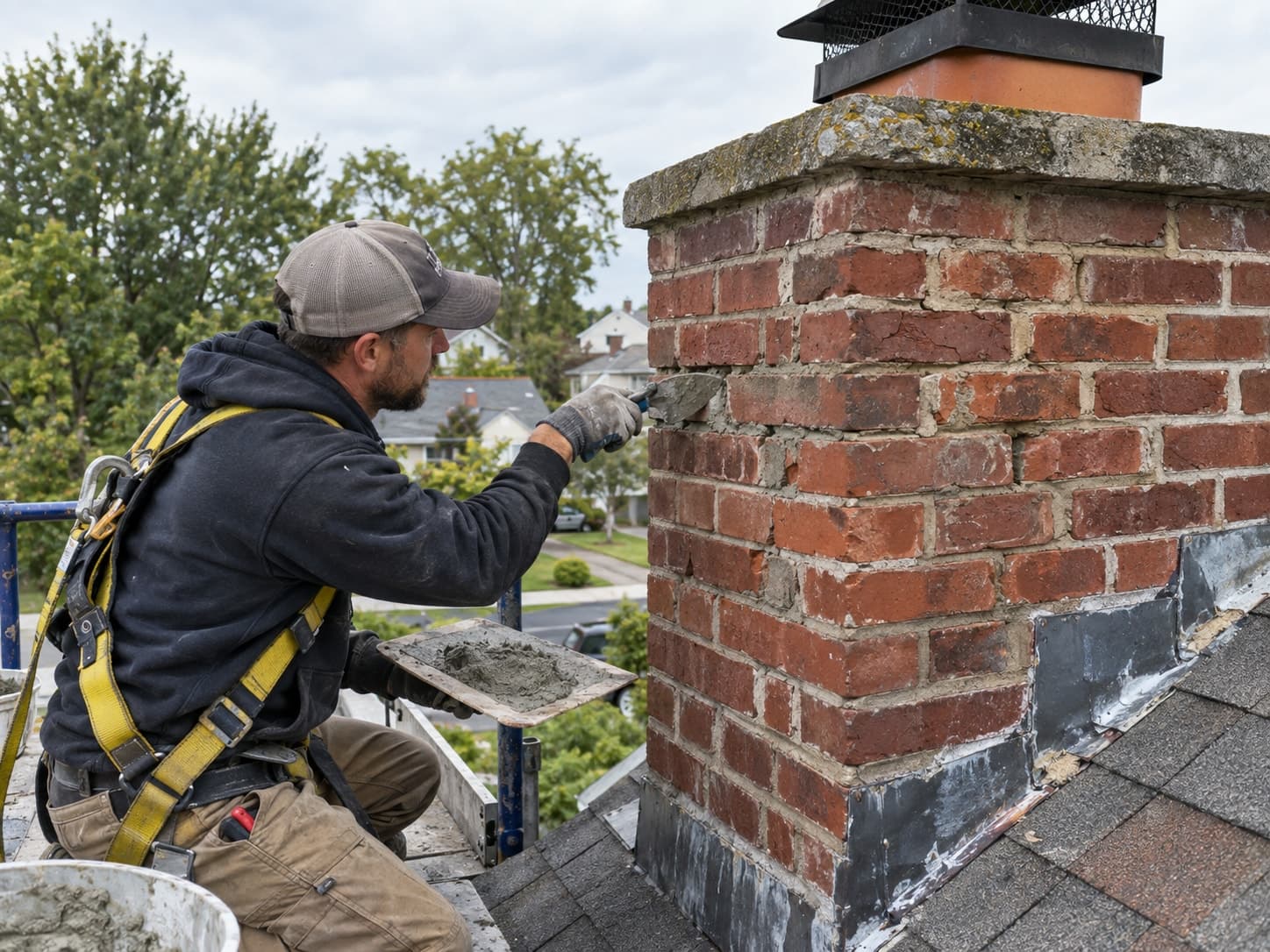
Orlando typically sees about one night a year at or below freezing (CurrentResults, NCEI normals), so the freeze-thaw cycles that break up chimneys in northern states are a minor factor here. In Central Florida the damage comes mostly from water soaking in, salts crystallizing as it dries, age, heat from the flue, and repairs that stop the masonry from drying out.
Possible causes, most likely first
What breaks chimney masonry down
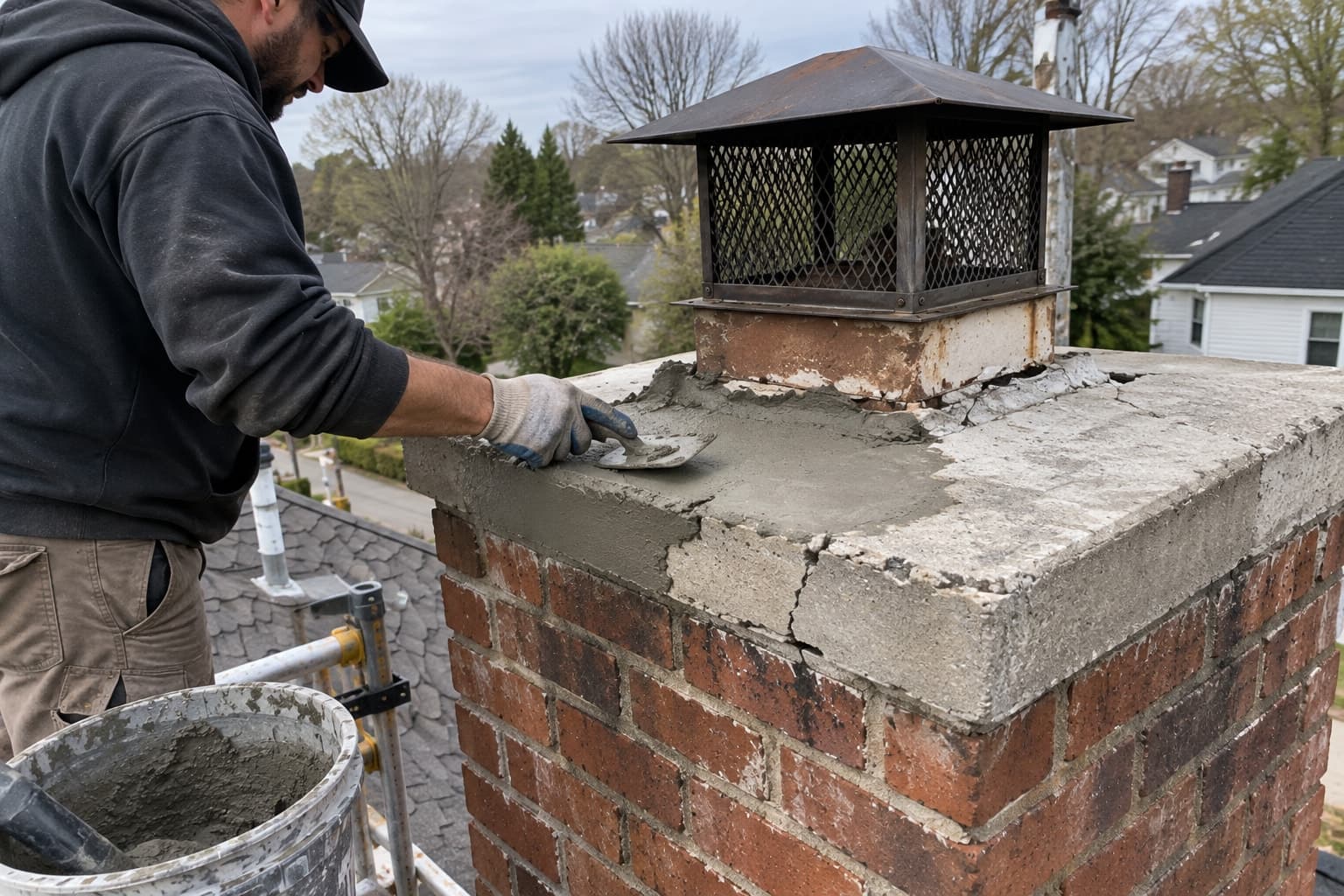
01Water entering at the top
- What you may notice
- Damage worst on the upper courses, a cracked or crumbling crown, white deposits below the crown, no cap on the flue.
- How it’s confirmed
- The crown, cap and flue tile joint are inspected; the crown is usually the first thing repaired or replaced.
02Worn or eroded mortar joints
- What you may notice
- Joints sitting noticeably behind the brick face, sandy mortar you can scrape out with a key, hairline cracks along bricks.
- How it’s confirmed
- Joints are probed and scraped to see how deep the soft mortar goes and whether repointing will restore them.
03A non-breathable sealer or paint
- What you may notice
- Peeling or blistered coating, powder or flakes behind it, spalling that started a few years after the chimney was painted or sealed.
- How it’s confirmed
- Identifying the coating and how widely the brick behind it has failed; failed coatings often need to come off before repairs.
04Hard mortar on softer, older brick
- What you may notice
- Brick edges crumbling beside joints that still look crisp and gray, often after an earlier repointing job.
- How it’s confirmed
- Comparing mortar hardness and color with the original and choosing a compatible, softer mix for repairs.
05Flashing letting water into the brick at the roofline
- What you may notice
- Damage concentrated just above the roof, stains inside next to the chimney.
- How it’s confirmed
- Step and counter-flashing are checked, including where counter-flashing is set into the mortar joints.
06Advanced deterioration at the top
- What you may notice
- Several courses loose, bricks missing, the top visibly out of line, crown broken into pieces.
- How it’s confirmed
- Deciding how far down the masonry is sound, which determines whether a partial rebuild from that point is needed.
Why the wrong repair can make it worse
Masonry is meant to get wet and dry out. Two common repairs interfere with the drying half of that.
Mortar harder than the brick
The National Park Service’s guidance on repointing says new mortar must be softer and more vapor-permeable than the masonry units. A mortar stronger than the brick won’t “give” under stress, so the stress is relieved through the brick instead, causing cracking and spalling that is hard to repair. NPS also describes hard portland-cement mortar trapping moisture in softer brick until pressure pops the faces off (NPS Preservation Brief 2). The brief is written for historic buildings, but the principle applies to any older, softer brick: the mortar joint is supposed to be the sacrificial part, not the brick.
Coatings that trap moisture
When water inside brick can’t evaporate through the surface, the salts it carries crystallize just beneath it. The Brick Industry Association notes that this “subflorescence” can develop enough pressure to spall brick, which is why it doesn’t recommend coatings as the only treatment for efflorescence problems (BIA Technical Note 23A). Paint and film-forming sealers on a chimney that still leaks at the crown are a common setup for exactly that. White powder on the brick is often the early stage, explained on the page about efflorescence and other white stains.
| Feature | Usually helps | Often backfires |
|---|---|---|
| Mortar | Repointing with a mix matched to the brick’s softness | Hard, high-cement mortar smeared over old joints |
| Surface treatment | Breathable water repellent after repairs | Paint or film sealer over wet or damaged brick |
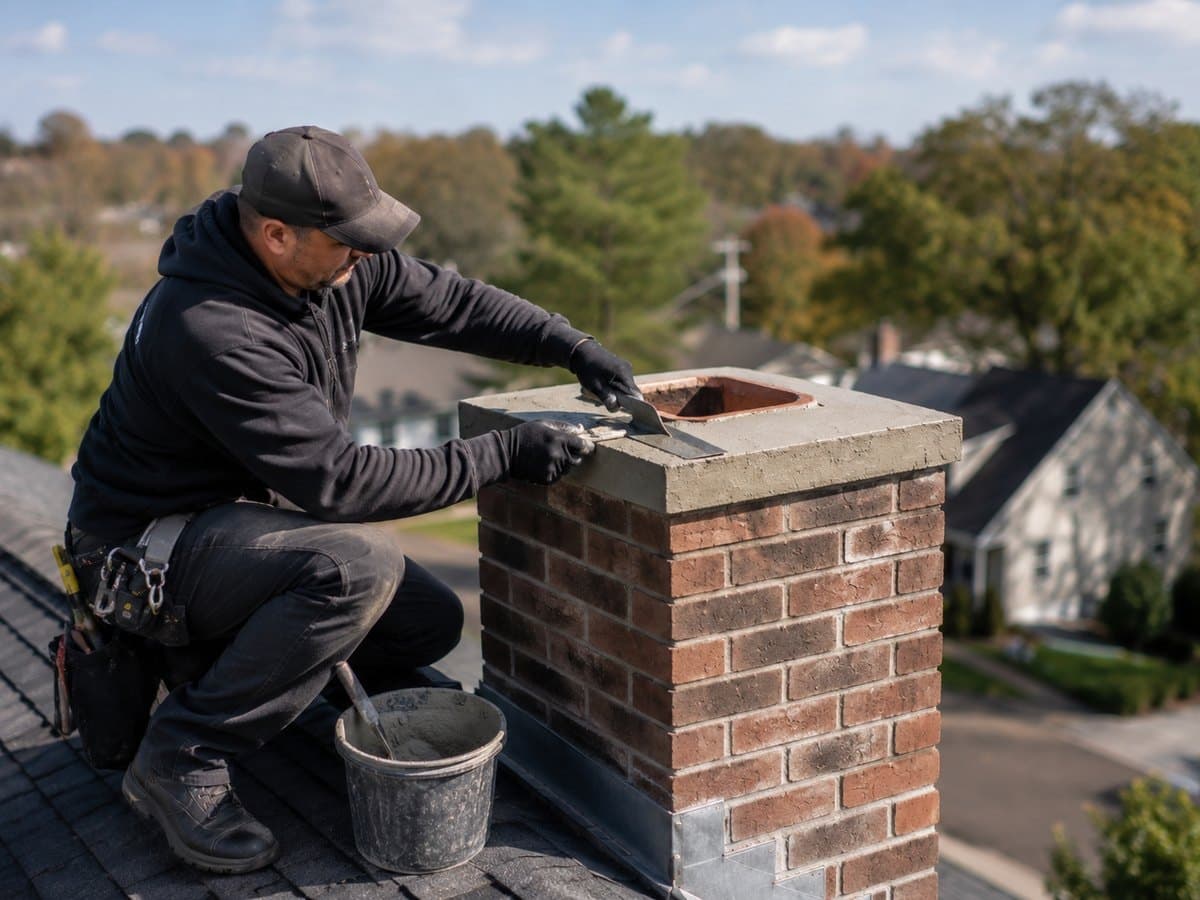
| Top of the chimney | Rebuilt or recast crown with overhang and drip edge | A skim of mortar over a cracked crown |
| Damaged bricks | Individual units cut out and replaced | Patching compound over spalled faces |
Mortar
- Usually helps
- Repointing with a mix matched to the brick’s softness
- Often backfires
- Hard, high-cement mortar smeared over old joints
Surface treatment
- Usually helps
- Breathable water repellent after repairs
- Often backfires
- Paint or film sealer over wet or damaged brick
Top of the chimney
- Usually helps
- Rebuilt or recast crown with overhang and drip edge
- Often backfires
- A skim of mortar over a cracked crown
Damaged bricks
- Usually helps
- Individual units cut out and replaced
- Often backfires
- Patching compound over spalled faces
Masonry chimney and fireplace, cutaway
- 1Chimney cap. Metal lid with mesh sides over the flue opening. Keeps rain, debris and animals out.
- 2Crown. The concrete or mortar top of the masonry, sloped to shed water away from the flue.
- 3Flue liner. Clay tile or metal lining that carries smoke up and protects the masonry from heat.
- 4Flashing. Metal that seals the joint between the chimney and the roof.
- 5Brick & mortar. The chimney structure. Mortar joints and brick faces absorb water when they wear.
- 6Smoke chamber. The sloped transition that funnels smoke from the firebox into the flue.
- 7Damper. Metal plate at the throat (or a sealing lid on top) that closes the flue when not in use.
- 8Firebox. Where the fire burns. Firebrick laid in heat-resistant mortar.
- 9Hearth. Non-combustible floor extension in front of the fireplace opening.
Safe checks you can do
From the ground and inside, not from the roof
- With binoculars, look at the top few courses for gaps, missing bricks, a leaning or uneven top and a cracked crown.
- Look on the roof around the chimney, in gutters and on the ground below for brick chips, sand or chunks of mortar.
- Where brick is within safe reach, such as in the attic or at ground level, scrape a joint lightly with a key. Mortar that crumbles to sand is worn out.
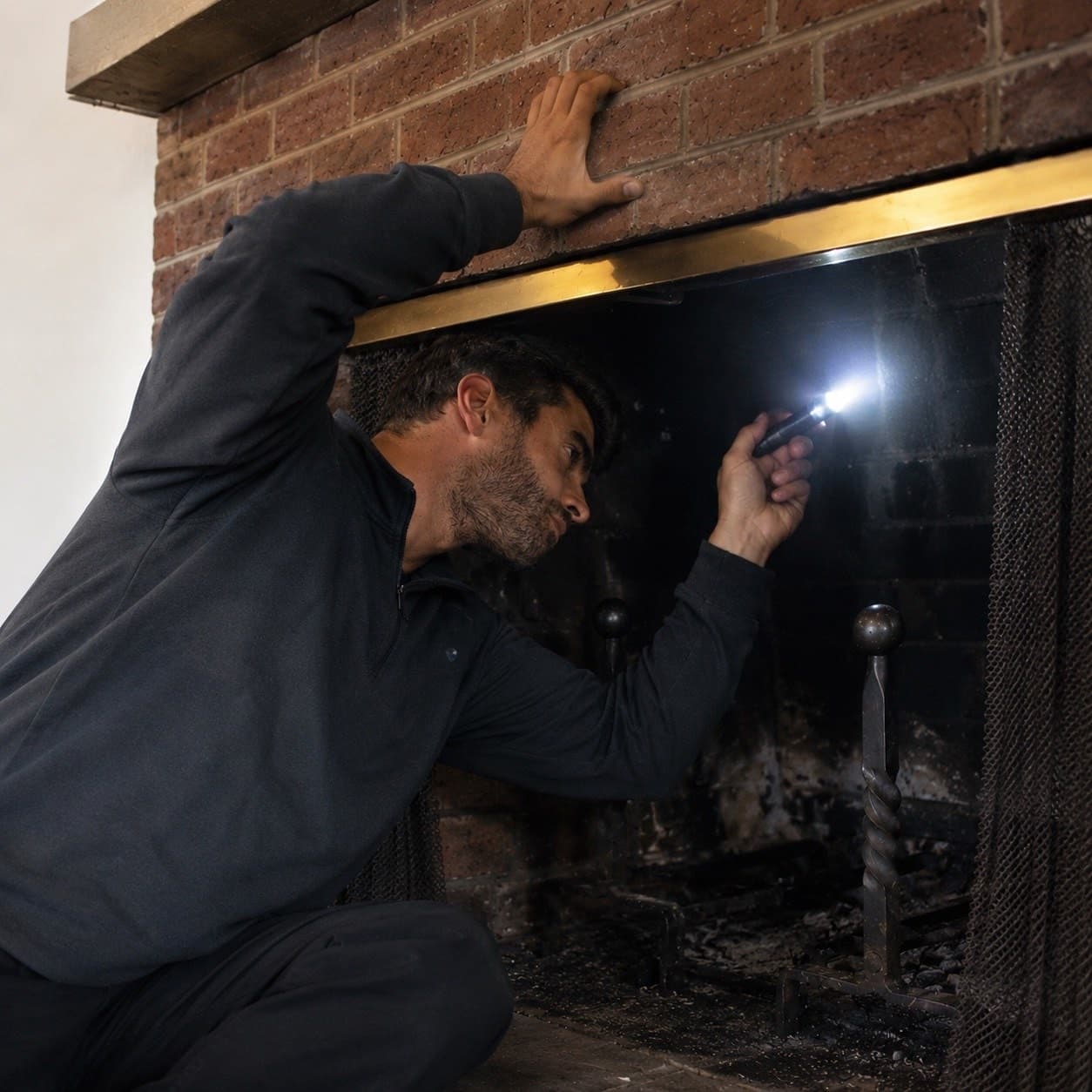
- Check the firebox floor and smoke shelf with a flashlight for mortar grit, brick fragments or flue tile pieces.
- Note whether the chimney was painted, sealed or repointed in the past, and roughly when.
- Photograph the damage now so you can see whether it is progressing.
Red flags: falling masonry
Loose brick at the top is a falling hazard
If bricks at the top are loose, missing or visibly out of line, or pieces have already landed on the roof, patio or driveway, keep people, pets and cars out of the area below the chimney and don’t use the fireplace. A loose top course can drop onto the roof or off the edge in a storm.
- Debris in the firebox that looks like tile or mortar from above: the flue liner or smoke chamber may be damaged, which is a fire-safety issue.
- A crack that runs through several courses, or a chimney that seems to be leaning. See the page on a chimney pulling away from the house.
- Crumbling brick together with stains indoors: water has been entering long enough to reach the framing.
What a professional assessment involves
Find the water path
Cap, crown, flue tile joint and flashing are checked first, because repairing brick without stopping water only resets the clock.
Map the damage
Each face is checked for spalled bricks, open joints and loose courses, and joints are probed to see how deep the failure goes.
Check inside the flue
The smoke chamber and flue are checked with a light from below and from the top, since debris in the firebox can come from inside rather than outside.
Match the repair to the extent
Scattered damage is usually repointing and replacing individual bricks. When the top courses are loose or the sound masonry starts well down the stack, a partial rebuild from that point is the more durable fix.
Repointing, brick replacement and crown work fall under chimney brick and mortar repair. If the top is too far gone, see what rebuilding a chimney from the roofline up involves. A breathable repellent can protect the finished work, as explained on the chimney waterproofing page.
Repair, repoint or rebuild
| Extent of the damage | Where it’s fixed |
|---|---|
| A few spalled bricks, open joints | chimney masonry repair |
| Mortar eroded across large areas | tuckpointing |
| Loose or leaning courses above the roof | a partial or full rebuild |
| Water getting in at the top | crown repair and water repellent |
The deciding question is how much of the stack is still sound; chimney repair vs rebuild walks through it. Local masonry visits: brick and mortar repair in Orlando or Eustis chimney repair.
References (3)
Facts and figures on this page come from these references.