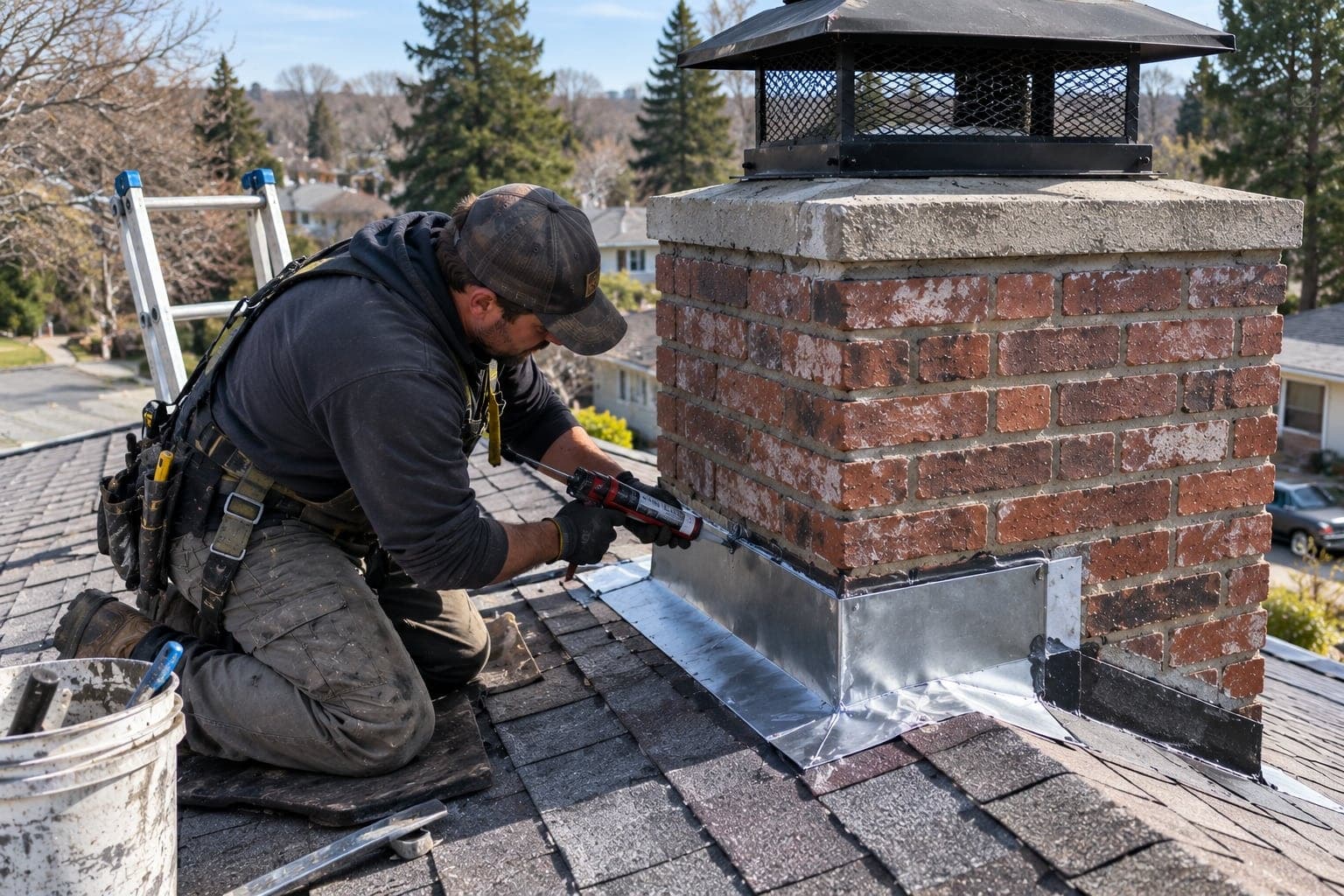
Why framed chimneys rust in the first place
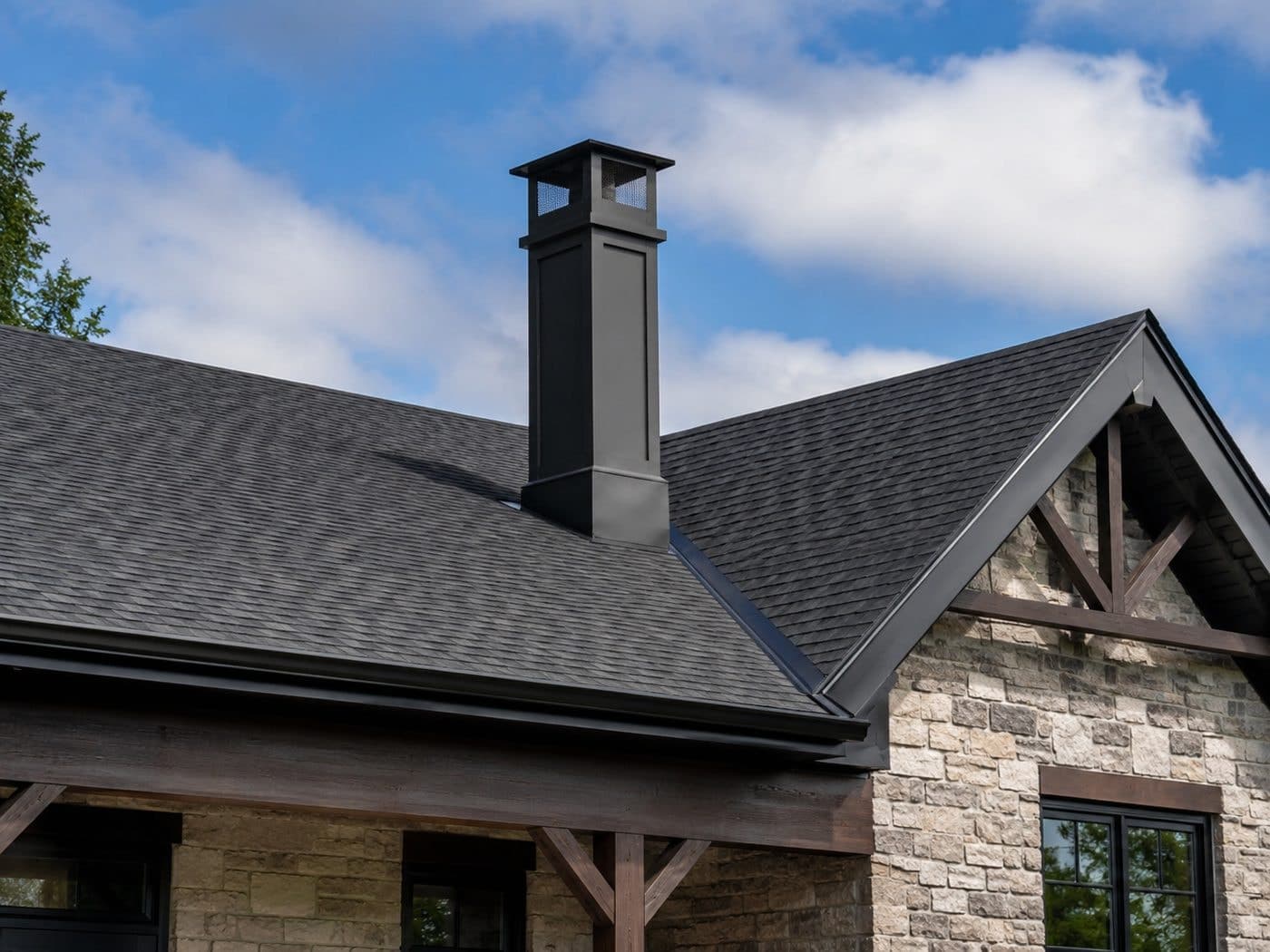
A factory-built fireplace vents through a metal pipe, and the box built around that pipe is a wood-framed chase finished in siding or stucco. Factory-built fireplaces and framed chimney chases are common in many newer Orlando-area homes. Every part at the top of that box is steel: the chase cover, the collar around the flue opening, the storm collar clamped to the pipe, the termination cap, and the screws or nails that hold them. If you’re not sure which kind of chimney you have, the guide on telling a masonry fireplace from a factory-built one walks through the clues.
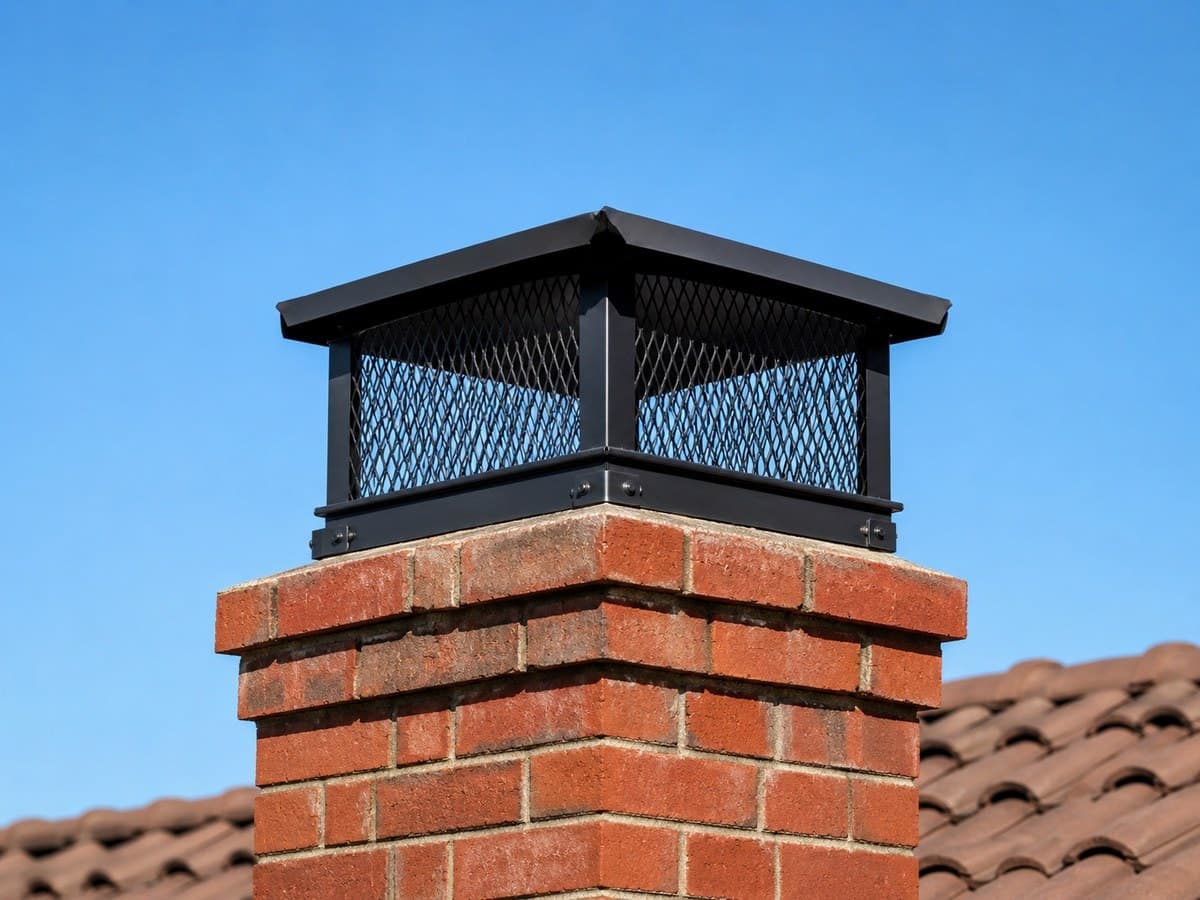
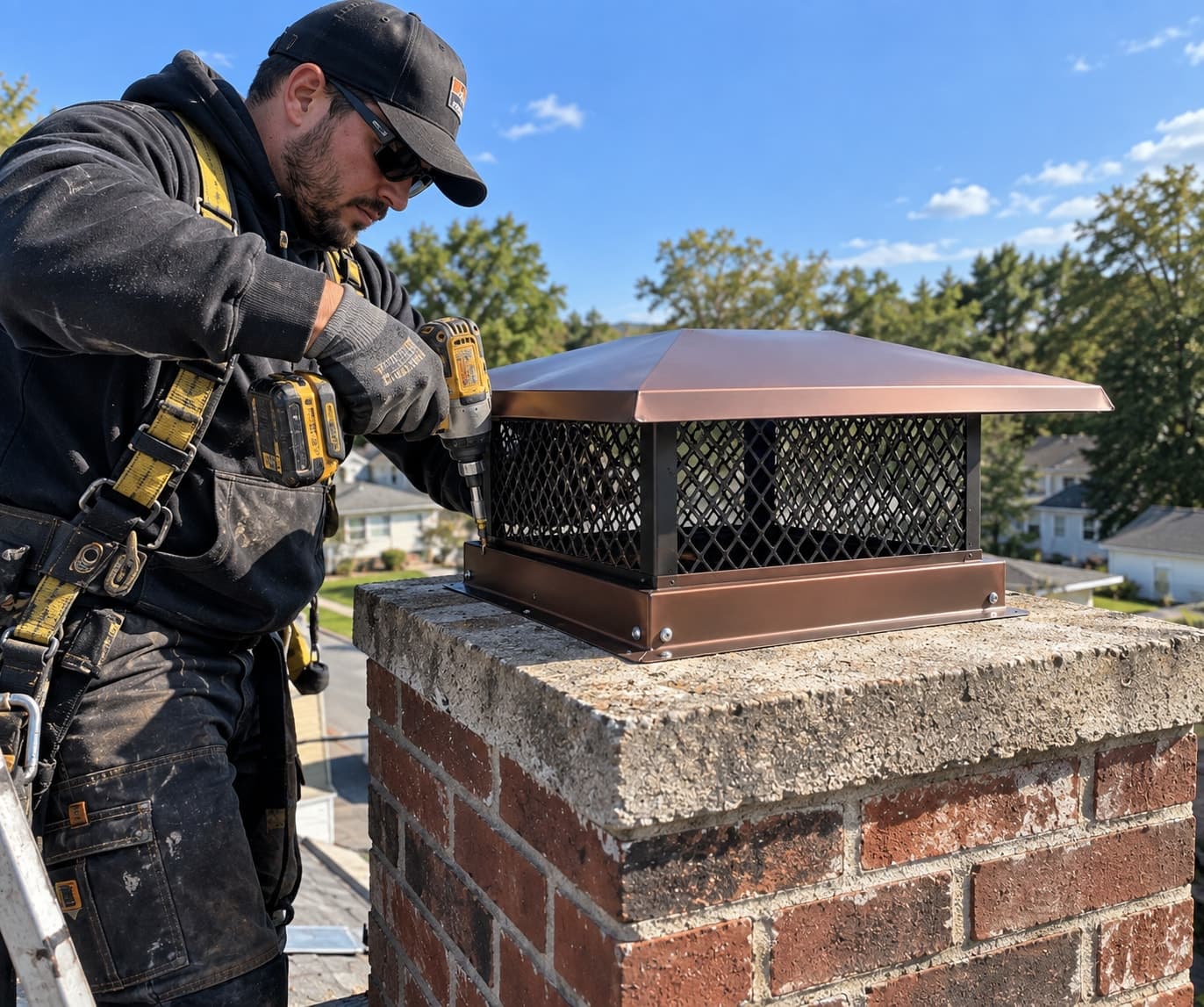
Most original chase covers are galvanized steel. The zinc coating protects the steel until standing water, trapped leaves and fastener holes wear it away. After that, rust spreads from the low spots. Manufacturer installation manuals are explicit about what the chase top should have: one widely used manual calls for a turned-down drip edge, a raised collar at least 2 inches high around the pipe opening, and a slope of at least 1/4 inch per foot away from the opening (Heatilator C40 installation manual). Many builder-grade covers were installed flat, so water sits on them after every storm.
Factory-built fireplace and chimney chase, cutaway
- 1Termination cap. The listed cap on top of the metal chimney pipe.
- 2Storm collar. Sealed band around the pipe that sheds water onto the chase cover.
- 3Chase cover. Sheet-metal top of the framed chase. Should slope, with a raised collar and drip edge.
- 4Chase. The wood-framed box, finished in siding or stucco, that encloses the chimney pipe.
- 5Chimney pipe. Listed metal flue sections made for this specific fireplace model.
- 6Fireplace unit. The factory-built metal firebox, tested and listed as one system with its chimney.
- 7Refractory panels. Molded liner panels lining the unit's firebox. Replaced only with listed parts.
Where the rust is, and what it usually means
| Where you see rust | What is usually corroding | How urgent |
|---|---|---|
| Thin orange streaks running down from the top edge of the chase | The chase cover skirt or drip edge; rusty water is spilling over the edge | Watch it: plan an inspection before the next wet season |
| A dished or sagging chase top with a puddle after rain | The cover panel itself, rusting where water stands | Soon: pooling water eventually rusts through |
| Rust concentrated around the pipe opening | The flue collar, storm collar or the cover around the hole | Soon: this is where leaks into the chase start |
| Rust or flaking on the cap at the very top of the pipe | The termination cap or the exposed pipe above the cover | Check it: a badly rusted cap can loosen or shed flakes into the flue |
| Rust flakes on the firebox floor, grate or on top of the fireplace unit | Water is getting past the top and dripping inside the chase | Stop using the fireplace until it has been checked |
| Rust-colored staining only near the bottom of the chase or wall | Often irrigation water with high iron content, not the chimney | Low: check where the sprinklers hit |
Possible causes, most likely first
What is behind rust on a chimney chase
01A flat or dished chase cover holding water
- What you may notice
- A visible dip in the middle of the top, leaves collecting on it, streaks from all four sides, water in the fireplace after long rains.
- How it’s confirmed
- From the roof, the cover is checked for standing water, slope, pinholes, rust-through and how far the skirt laps over the siding.
02No drip edge on the skirt
- What you may notice
- Streaks directly under the edge of the cover even though the top looks sound; rotted or swollen trim boards at the top of the chase.
- How it’s confirmed
- Looking at whether the skirt has a hem that kicks water away from the wall, and probing the top trim for soft wood.
03Storm collar loose, rusted or unsealed
- What you may notice
- Rust ringed around the pipe, drips running down the outside of the metal flue inside the chase.
- How it’s confirmed
- Checking that the storm collar sits tight on the pipe above the cover’s collar and that its joints are sealed the way the fireplace manufacturer specifies.
04Termination cap corroding
- What you may notice
- Rust on the cap visible from the ground, flakes on the damper or firebox floor, a cap that looks tilted after a storm.
- How it’s confirmed
- The cap is checked for rust-through, a secure fit on the pipe and whether it is a listed replacement for that chimney system.
05Fasteners through the top panel
- What you may notice
- Small rust rings around nail or screw heads on the top of the cover.
- How it’s confirmed
- Looking at how the cover is fastened. Screws belong in the skirt, not through the surface meant to shed water.
06Water already inside the chase
- What you may notice
- Rust on top of the fireplace unit or on the metal flue where it is visible, stains on the wall around the fireplace, a musty smell.
- How it’s confirmed
- Tracing the water path from the cover down, and checking the top plate and framing for rot once the cover is lifted.
07Irrigation or well-water staining
- What you may notice
- Orange staining in a spray pattern low on the chase, walls and walkway, with no streaks coming from the top.
- How it’s confirmed
- Comparing the stain pattern with sprinkler coverage. This isn’t a chimney problem and needs no chimney repair.
What rust means for the framing
Rust on the outside is the visible half. Once the cover or collar leaks, water runs into the chase and down the inside of the siding, the sheathing and the studs. A chase is framed like any other exterior wall, and wood that stays wet for months rots. The top plate that the chase cover fastens to is usually first, followed by sheathing on the weather-facing sides and the bottom of the chase where water collects.
| Feature | Probably still on the surface | Probably reached the framing |
|---|---|---|
| Streaks | Light, only after rain | Heavy, constant, with peeling paint below |
| Top of the chase | Sheds water, no puddle | Puddle, sag or visible holes |
| Siding and trim | Firm to the touch | Soft, swollen, gaps at seams or cracked stucco |
| Inside | Nothing in the fireplace | Rust flakes, drips or stains near the fireplace |
| Likely fix | Replace or repair the cover before it rusts through | Replace the cover plus the rotten wood under it |
Streaks
- Probably still on the surface
- Light, only after rain
- Probably reached the framing
- Heavy, constant, with peeling paint below
Top of the chase
- Probably still on the surface
- Sheds water, no puddle
- Probably reached the framing
- Puddle, sag or visible holes
Siding and trim
- Probably still on the surface
- Firm to the touch
- Probably reached the framing
- Soft, swollen, gaps at seams or cracked stucco
Inside
- Probably still on the surface
- Nothing in the fireplace
- Probably reached the framing
- Rust flakes, drips or stains near the fireplace
Likely fix
- Probably still on the surface
- Replace or repair the cover before it rusts through
- Probably reached the framing
- Replace the cover plus the rotten wood under it
If a new cover goes on over rotten wood, the fasteners pull loose and the leak comes back. That’s why the top plate is checked before a replacement is fastened, and why framing, siding or storm collar work continues under repair of the chase and metal flue.
Safe checks from the ground and inside
What you can look at without a ladder
- From the yard or an upstairs window, use binoculars to look at the top of the chase for a dip, standing water or rust holes.
- Note which sides of the chase have streaks. All four sides usually means the cover; one side often points to the weather-facing side or a single failed seam.
- Press gently on siding or trim you can reach safely. Soft or spongy wood means water has been inside for a while.
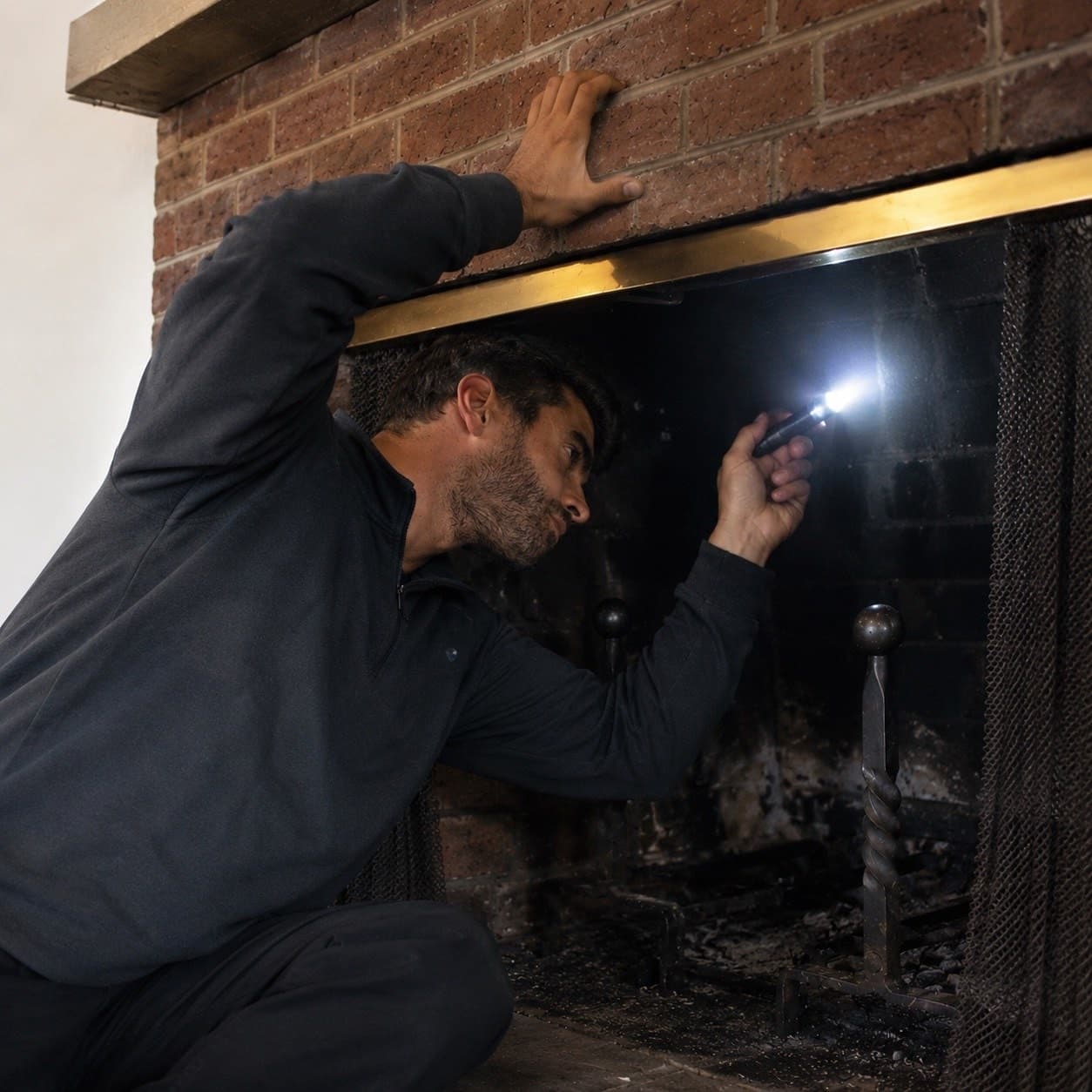
- With the fireplace cold, shine a flashlight into the firebox and up toward the top of the unit. Look for rust flakes, water lines or drip marks.
- Check where your sprinklers hit. Rust-colored stains only in the spray zone are probably from the water, not the chimney.
- Take dated photos of the streaks so you can tell whether they are growing.
Don’t caulk the flue to the chase top
It is tempting to run a bead of sealant around the pipe where it passes through the cover. The Heatilator manual cited above specifies a small gap there and flags caulking the pipe to the chase top collar as a fire risk. The same manual has the sealant go on the joints between the storm collar, the pipe and the chase top, so leave the sealing to someone working from the instructions for your fireplace.
Red flags: stop using the fireplace
- Rust holes in the firebox, the top of the fireplace unit or any visible section of flue pipe.
- Cracked or crumbling refractory panels together with rust: water has been reaching the firebox for some time.
- A termination cap that is loose, tilted or missing after a storm.
- Soft siding, cracked stucco or bulging trim on the chase, which usually means hidden rot.
- Stains on the ceiling or wall beside the chase. See stains around the chimney for how to trace them.
What a professional diagnosis involves
Inside first
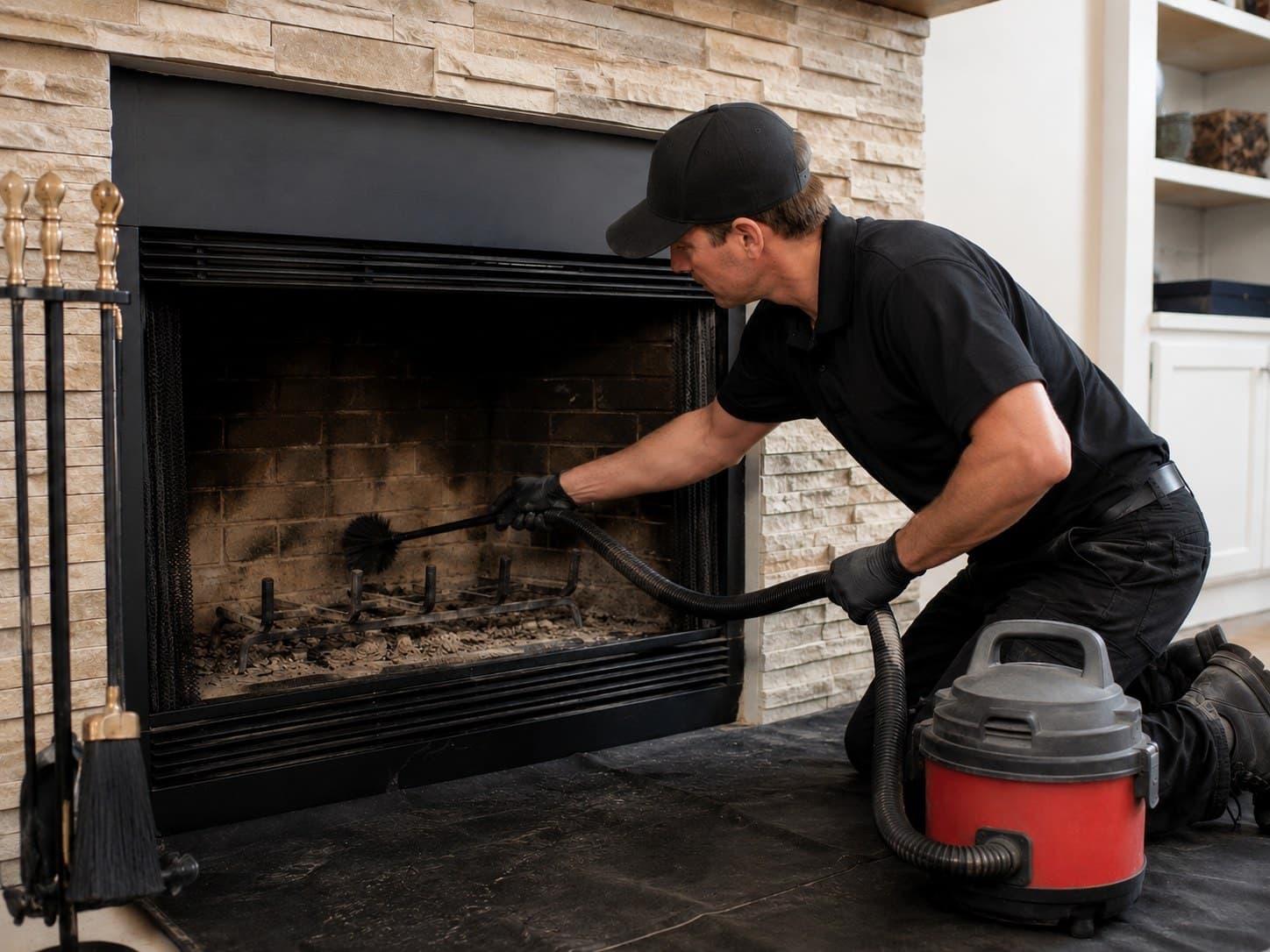
The firebox, the top of the fireplace unit and any visible flue are checked with a light for rust, water lines and panel damage, so the inside evidence is known before the roof is.
Top of the chase
The cover, flue collar, storm collar and cap are checked for pooling, pinholes, fastening and sealant, and the cover is measured if replacement looks likely.
Framing and cladding
Edges are probed for soft wood. Where the cover can be lifted safely, the top plate is looked at directly. Siding and stucco are checked on every side.
Options matched to the damage
Surface rust on a sound, sloped cover may only need treatment. Rust-through or a flat cover means a new, sloped cover, with any rotten wood repaired first.
For how replacement covers are designed and fitted, see our chase cover replacement service. If water is already showing inside the fireplace, the page on rain getting into the firebox covers the other entry points to rule out.
What stops the rust
| Where the rust starts | Where it’s fixed |
|---|---|
| Flat or rusted chase cover | a sloped stainless chase cover |
| Rusted cap or storm collar | a new cap and prefab chimney repair |
| Rust inside the fireplace unit | a leak diagnosis before the unit is judged |
Rust that has reached the firebox is a different question, covered in a rusted prefab fireplace. Materials are compared in chase cover materials. Local visits: chimney leak help in Apopka or St. Cloud chimney repair.
References (1)
Facts and figures on this page come from these references.