How to tell you have a prefab fireplace
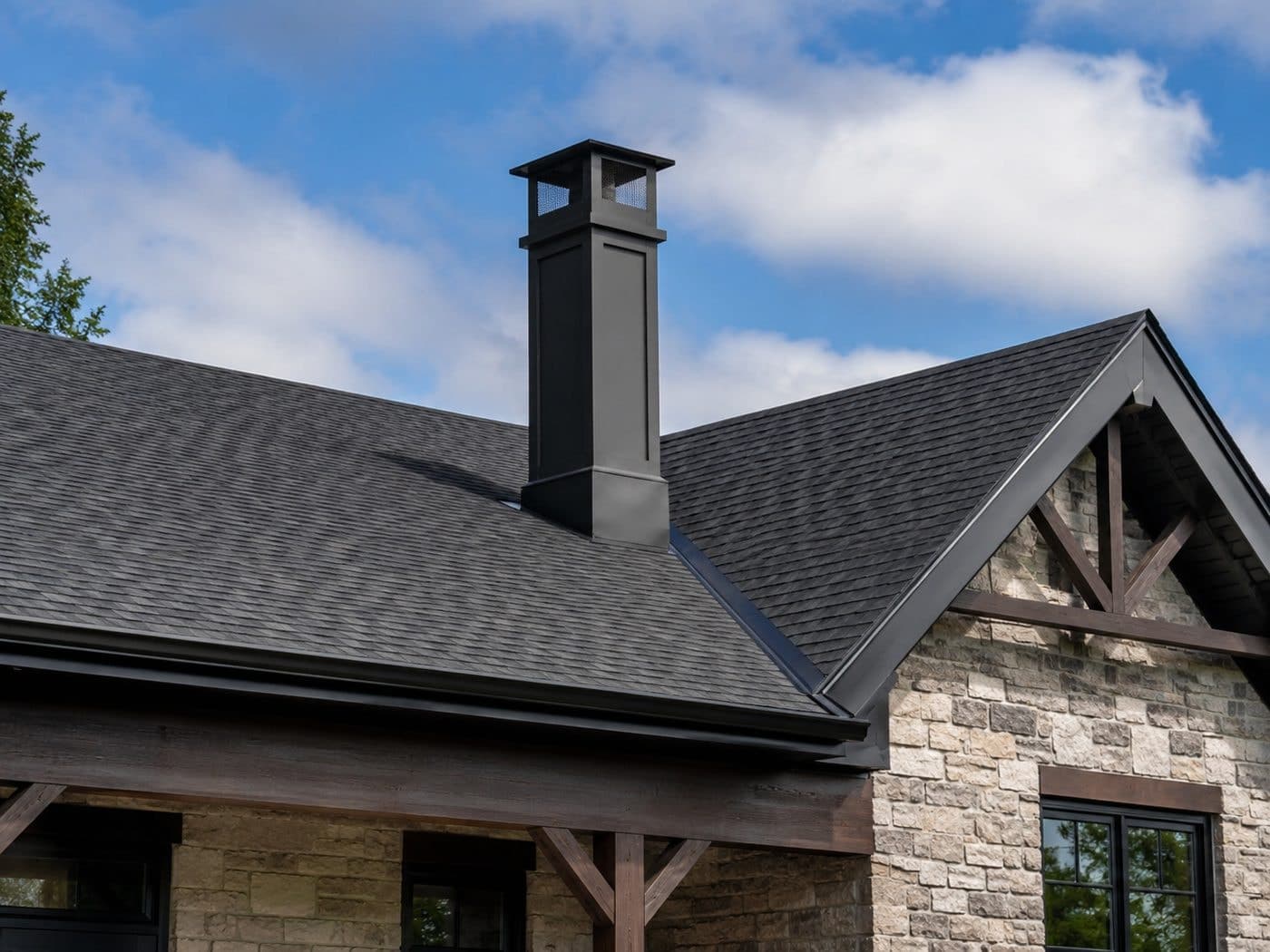
A factory-built fireplace has a metal firebox lined with panels that look like brick, a metal label or rating plate (often inside the opening or behind a grille), a round metal flue, and usually a framed chase outside rather than a brick chimney. These units are tested to the UL 127 standard as a complete system (Intertek: UL 127), which is why repairs have to use listed parts. The guide to masonry vs factory-built fireplaces has more ways to tell.
Factory-built fireplace and chimney chase, cutaway
- 1Termination cap. The listed cap on top of the metal chimney pipe.
- 2Storm collar. Sealed band around the pipe that sheds water onto the chase cover.
- 3Chase cover. Sheet-metal top of the framed chase. Should slope, with a raised collar and drip edge.
- 4Chase. The wood-framed box, finished in siding or stucco, that encloses the chimney pipe.
- 5Chimney pipe. Listed metal flue sections made for this specific fireplace model.
- 6Fireplace unit. The factory-built metal firebox, tested and listed as one system with its chimney.
- 7Refractory panels. Molded liner panels lining the unit's firebox. Replaced only with listed parts.
Repairable or time to replace?
| What you see | What it usually means | Typical direction |
|---|---|---|
| Light surface rust on the damper or top of the firebox | Some water or humidity; metal still sound | Stop the water; clean and monitor |
| Cracked, crumbling or thin refractory panels | Normal wear or water damage | Replace panels with the listed set |
| Damper rusted, stuck or its handle broken | Water from the top, age | Replace damper parts if available |
| Rust holes, flaking metal or daylight through the firebox walls or floor | The box has corroded through | Replace the fireplace |
| Warped or buckled metal inside the firebox | Overfiring or a chimney fire | Inspection; often replacement |
| Missing label, discontinued model, no parts available | Can’t be repaired to its listing | Replacement |
| Non-listed parts, gaps in the flue or mixed flue brands | Modified system | Correct or replace |
Where the rust and damage come from
01Water from the chase top
- What you may notice
- Rust concentrated at the top of the unit and around the flue collar; rust flakes in the firebox after rain.
- How it’s confirmed
- Checking the chase cover, storm collar and cap. See rust on a chimney chase.
02Humidity and condensation
- What you may notice
- Even surface rust with no obvious drips; worse on units that are rarely used.
- How it’s confirmed
- Ruling out water entry first; keeping the damper closed between uses reduces humid air flowing through.
03Overfiring
- What you may notice
- Warped panels or metal, discolored steel, a history of large, hot fires or burning trash or pallets.
- How it’s confirmed
- Inspecting the firebox, damper and flue for heat damage.
04Worn refractory panels
- What you may notice
- Panels cracked, eroded or missing pieces; metal visible behind them.
- How it’s confirmed
- Measuring cracks and wear against the manufacturer’s limits. See a cracked firebox.
05Age
- What you may notice
- An older unit with several of the above at once.
- How it’s confirmed
- Weighing parts availability and overall condition. Our article on the typical lifespan of a prefab unit covers what wears out first.
Safe checks you can do
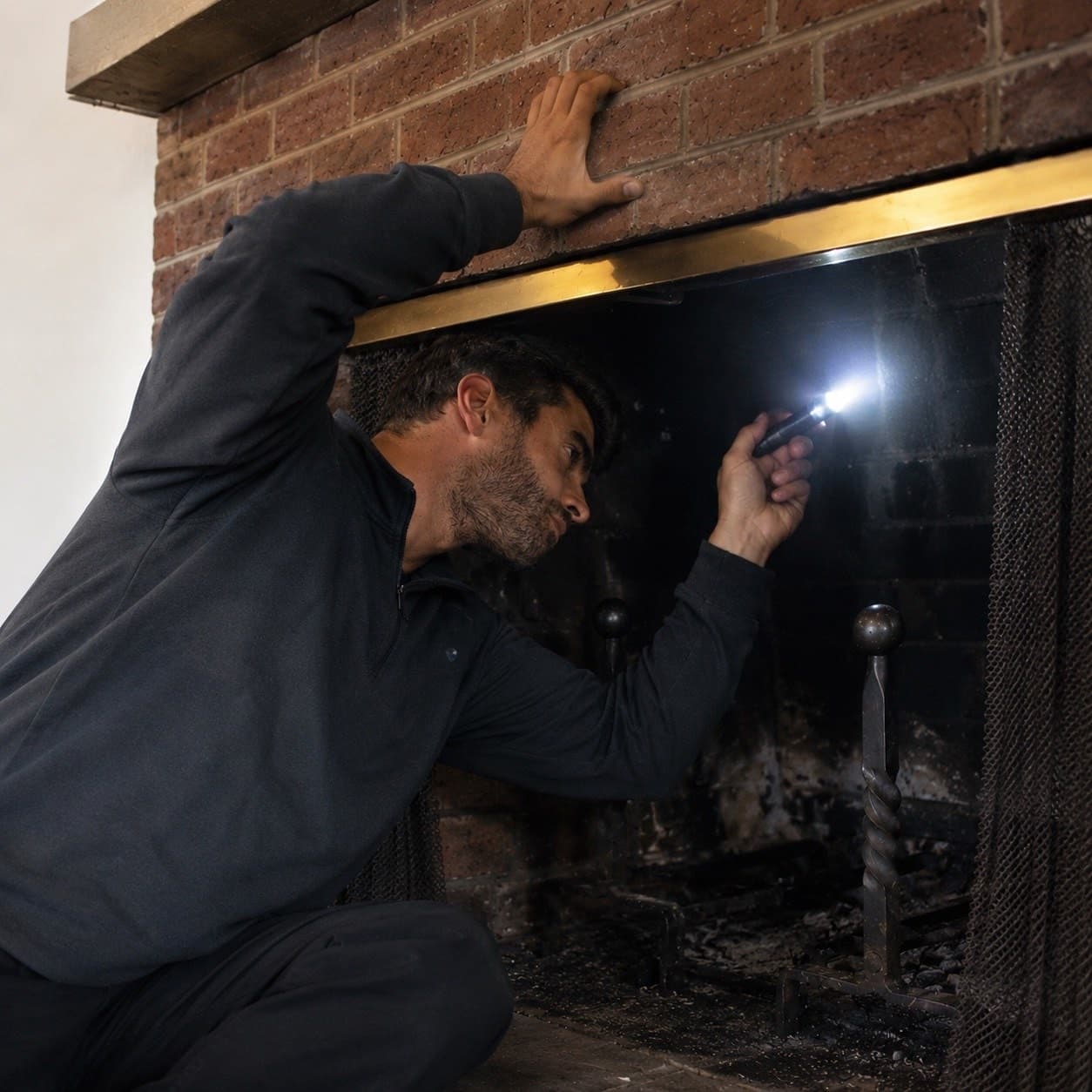
- With the fireplace cold, use a flashlight to look at the firebox floor, walls and top for rust, flaking or holes.
- Check behind any cracked panel edges for bare or rusted metal.
- Find the rating plate or label and write down the manufacturer and model. It decides which parts exist.
- Look at the top of the chase from the yard with binoculars for a rusty or dished chase cover.
- Note whether rust flakes appear after rain; that points to water, not just humidity.
Don’t use it with holes or gaps
A factory-built fireplace keeps heat away from the wood framing around it by keeping its metal box and panels intact. Rust-through, burned-through metal or large gaps behind the panels can let heat reach combustible framing. Keep it unused until it has been inspected.
What replacement involves
When a unit can’t be repaired, it is usually replaced with a new listed fireplace and the chimney system that goes with it, since a new firebox generally can’t be connected to an old, different manufacturer’s flue. Many homeowners use the opportunity to switch to a different type, such as a gas or electric unit. Our prefab fireplace replacement page explains the options, and a fireplace inspection is the way to find out which category your unit is in.
Red flags
- Holes, flaking metal or daylight visible through the firebox.
- Scorched or discolored wood around the fireplace or in the chase.
- Missing or broken panels with bare metal exposed.
- A unit with no identifiable label or model, which makes listed repairs impossible.
Repair or replacement
| Condition found | Where it’s fixed |
|---|---|
| Surface rust, panels worn | refractory panel replacement and a leak fix |
| Water getting in at the chase top | chase cover replacement |
| Rusted-through or warped firebox | prefab fireplace replacement |
| Metal chimney pipe or cap damaged | prefab chimney repair |
What shortens a factory-built fireplace’s life is covered in its own guide. Local: repairs for Apopka fireplaces or fireplace repair in St. Cloud.
References (1)
Facts and figures on this page come from these references.