The difference in one paragraph
A masonry fireplace is assembled by a mason on a concrete footing: a firebox of firebrick laid in refractory mortar, a damper, a smoke chamber and a brick, block or stone chimney with a clay tile or metal liner inside. A factory-built fireplace, also sold as prefab, zero-clearance or manufactured, arrives as a metal box lined with refractory panels. It connects to a listed metal chimney pipe, and the whole assembly was fire-tested as a set. The Florida Building Code, Residential requires factory-built fireplaces to be listed and labeled, tested to UL 127 and installed according to their listing (R1004.1).
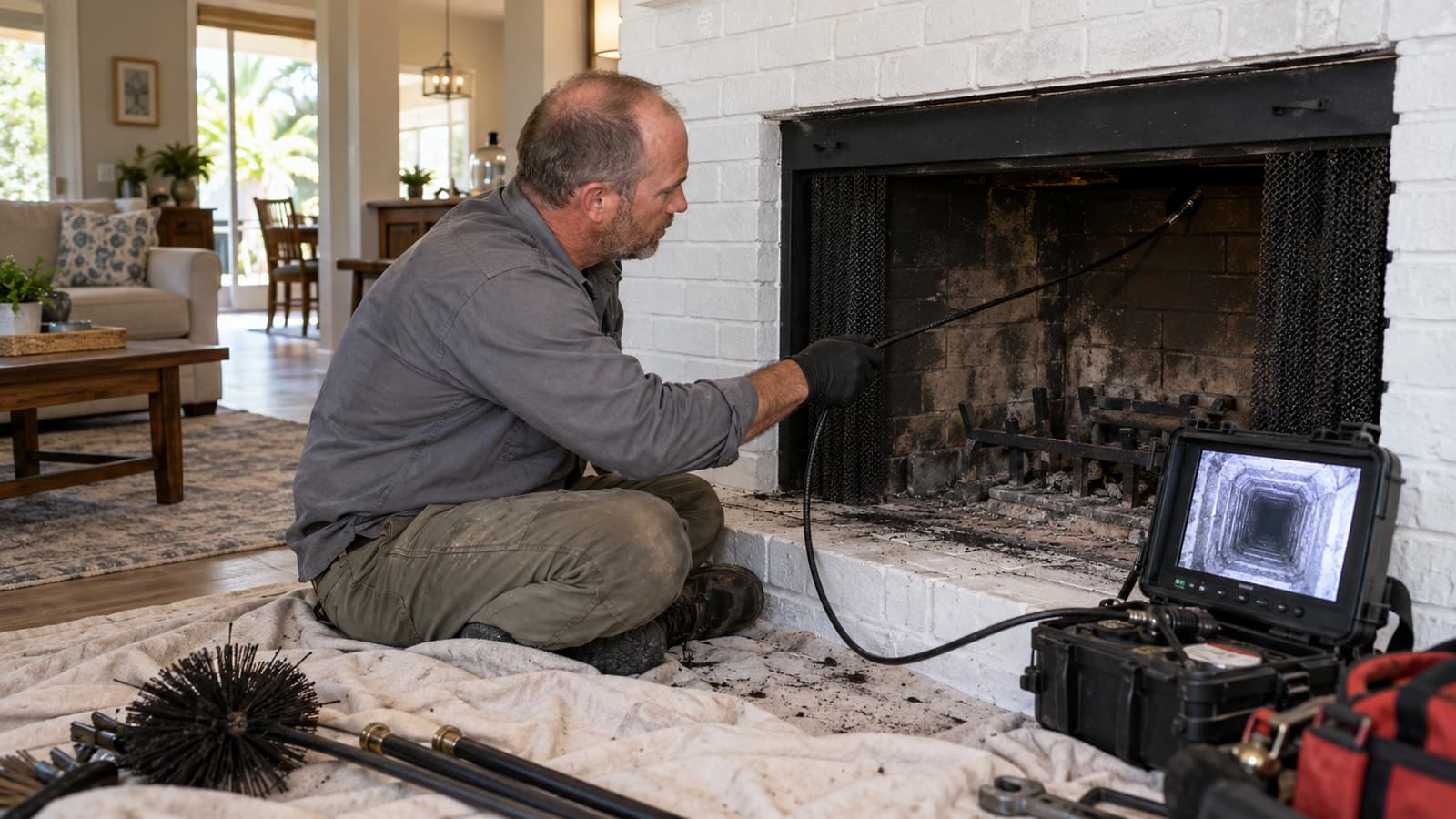
That single fact, a tested system versus a site-built structure, explains almost every practical difference between them: which parts can be used, who can repair what, and what an inspector needs to see.
Identification checklist
No single clue is conclusive, because finishes can disguise both types. Work through the list; when four or five clues agree, you have your answer.
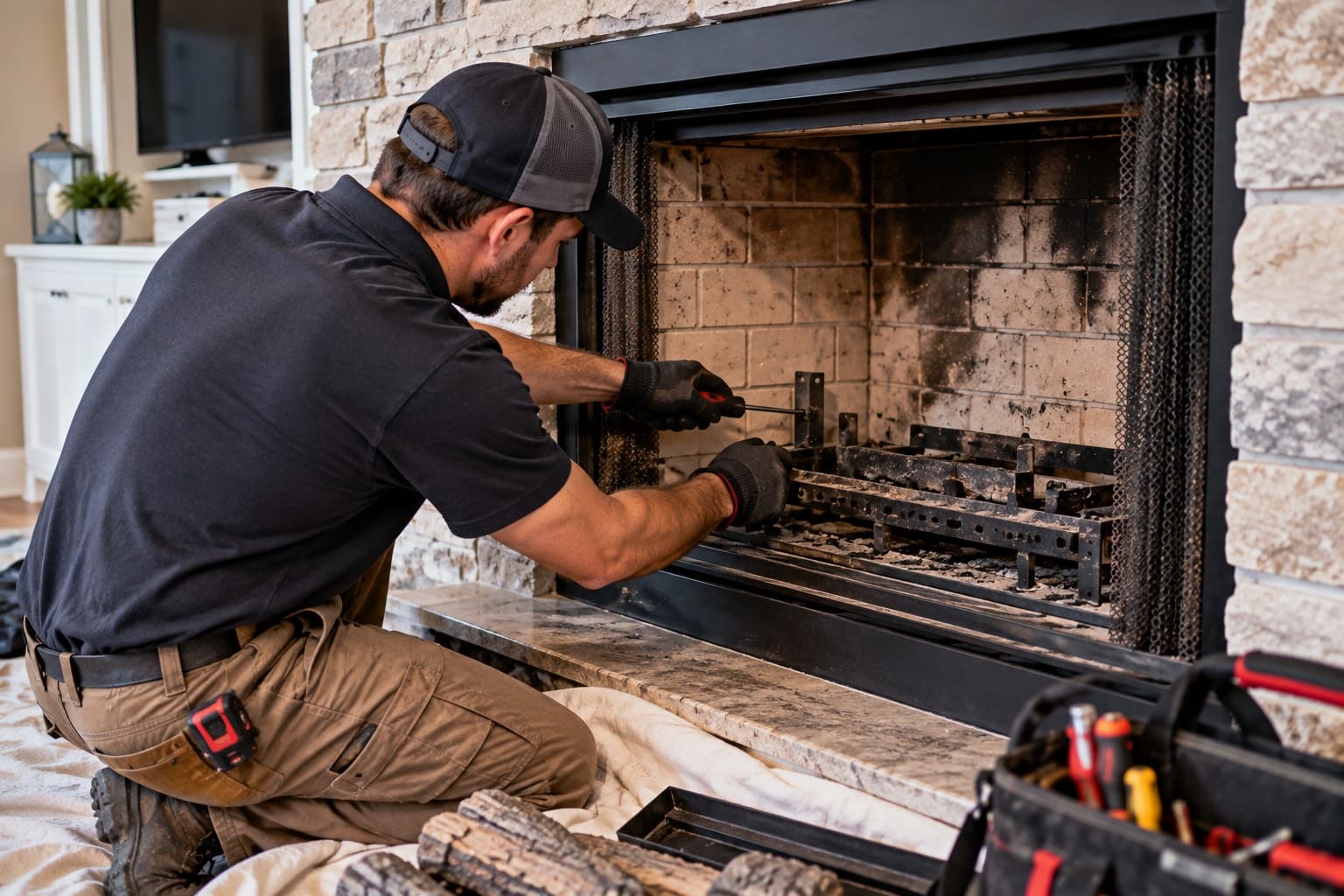
Signs you have a factory-built fireplace
- A metal rating plate or label naming a manufacturer, a model number and a listing, often UL 127
- A metal firebox visible at the edges of the opening, with a thin metal frame around it
- Refractory panels on the back and sides: large molded slabs, often stamped with a fake brick pattern, instead of individual bricks with mortar joints
- Louvers or grilles above and/or below the opening (air passages that are part of the unit’s cooling design)
- A round metal flue when you look up past the open damper with a flashlight
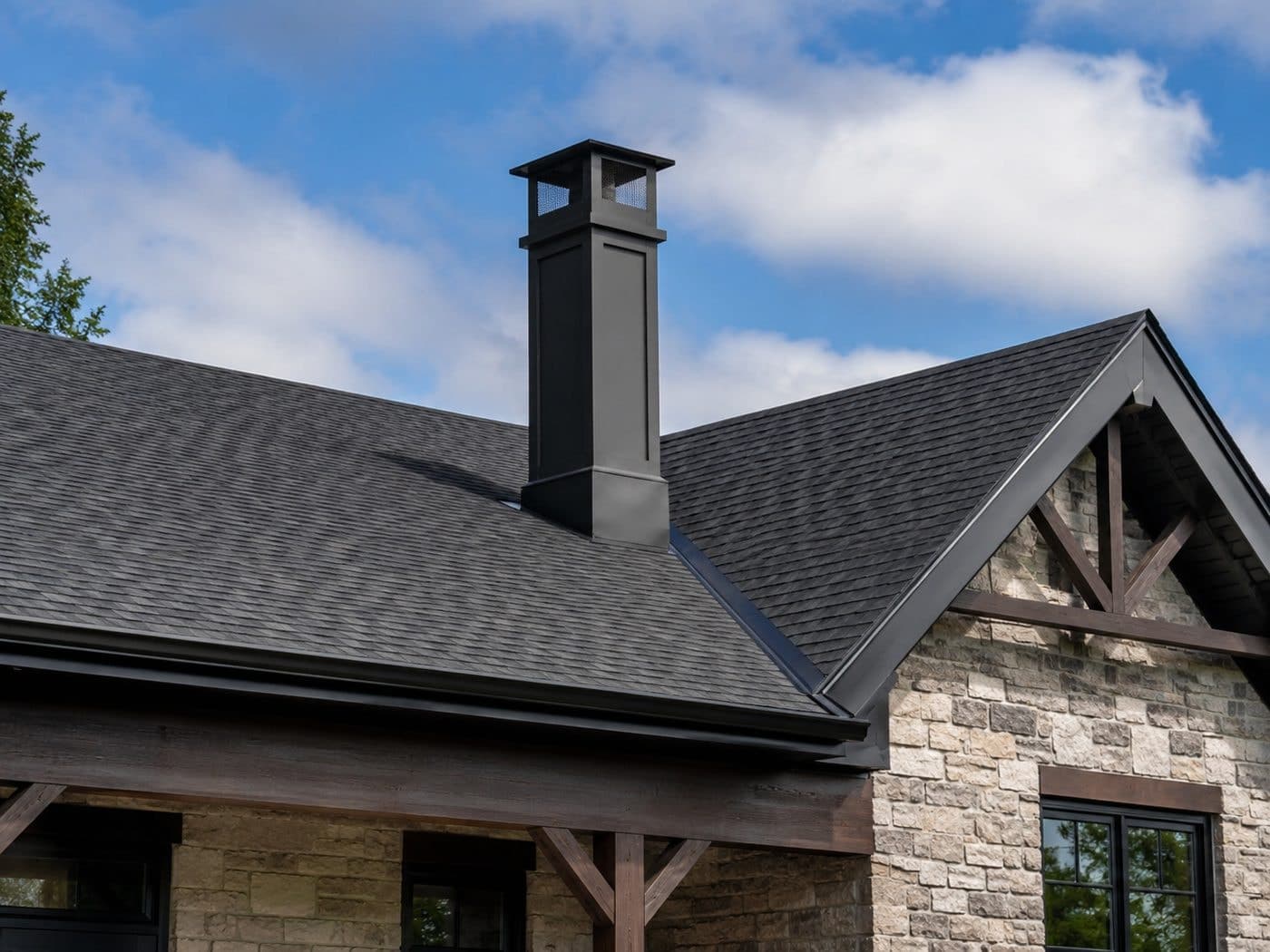
- Outside, a framed chase finished in siding, stucco or panels, topped by a sheet-metal chase cover with a round pipe and cap poking through
Signs you have a masonry fireplace
- Real firebrick with visible mortar joints on every wall of the firebox
- A heavy cast-iron damper operated by a handle, poker or rotating knob
- A square or rectangular clay flue tile visible above the damper
- A hearth of brick, stone or tile that continues into the firebox floor
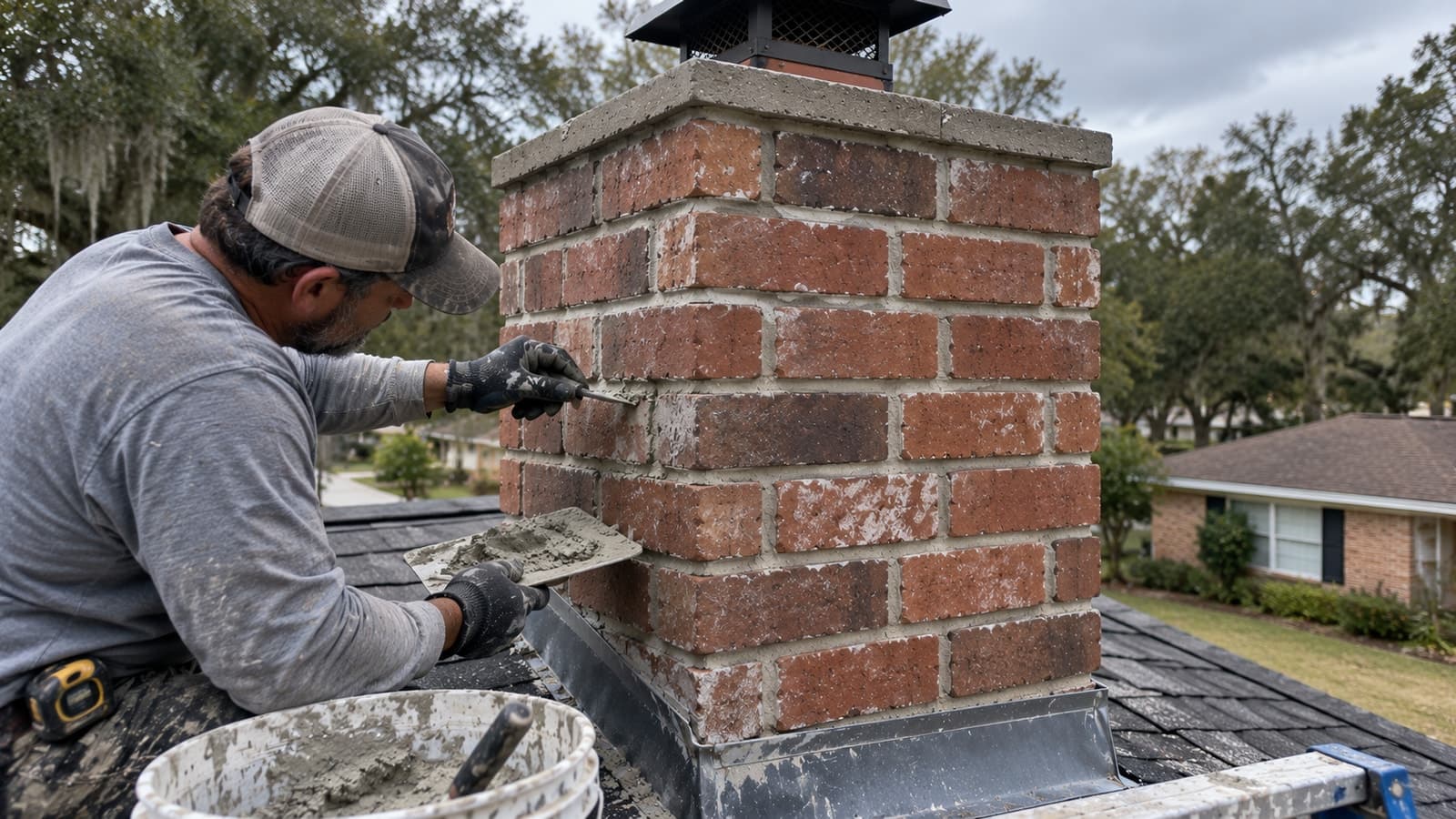
- Outside, brick, block or stone running from the ground to a concrete crown on top
- No manufacturer label anywhere on the unit
Reading the rating plate
The label is the most reliable single clue. It is usually a metal plate or foil sticker inside the opening near the front edge, behind the lower grille, or up near the damper. Look for the manufacturer’s name, a model and serial number, and a reference to the standard the unit was tested to. UL 127 is the standard for factory-built fireplaces (Intertek overview). Photograph it, even if you have no repair planned: that photo is what lets anyone match parts later. Our prefab replacement page shows the other places the plate hides.
What is a chimney chase?
A chimney chase is the tall enclosure that hides a factory-built chimney pipe on its way from the fireplace to the roof. It is ordinary wood framing (studs, sheathing and a weather barrier) finished to match the house, whether that’s lap siding, fiber-cement panels, stucco or a thin stone veneer. It carries no load from the fireplace; its job is to shelter the metal flue and make the outside look like a traditional chimney. The top is closed by a sheet-metal chase cover, and the flue pipe exits through a collar in that cover.
Because the chase is built from the same materials as an exterior wall, it can fail the way a wall does: wet sheathing, swollen siding, cracked stucco and rot at the top plate. A masonry chimney has no chase. Its walls are the chimney structure itself.
Factory-built fireplace and chimney chase, cutaway
- 1Termination cap. The listed cap on top of the metal chimney pipe.
- 2Storm collar. Sealed band around the pipe that sheds water onto the chase cover.
- 3Chase cover. Sheet-metal top of the framed chase. Should slope, with a raised collar and drip edge.
- 4Chase. The wood-framed box, finished in siding or stucco, that encloses the chimney pipe.
- 5Chimney pipe. Listed metal flue sections made for this specific fireplace model.
- 6Fireplace unit. The factory-built metal firebox, tested and listed as one system with its chimney.
- 7Refractory panels. Molded liner panels lining the unit's firebox. Replaced only with listed parts.
Stucco can fool you
A stucco-finished chimney can be either type: stucco over a wood-framed chase, or stucco applied over brick or block. Stone veneer works the same way. Check the top of the chimney and the inside of the firebox before trusting the finish.
Side-by-side comparison
| Item | Masonry fireplace | Factory-built fireplace |
|---|---|---|
| How it’s made | Built on site by a mason, on its own footing | Manufactured unit installed into a framed opening |
| Firebox lining | Firebrick laid in refractory mortar | Molded refractory panels inside a metal box |
| Flue | Clay tile liner, or a metal liner added later | Round listed metal chimney pipe, usually double- or triple-wall |
| Outside of the chimney | Brick, block or stone (sometimes stuccoed) | Framed chase with siding, stucco or veneer |
| Top of the chimney | Concrete crown plus a cap over the flue | Sheet-metal chase cover plus a termination cap |
| Rating plate | None | Manufacturer label with model and listing |
| Repair materials | Code-specified firebrick, refractory mortar, masonry | Only parts the manufacturer’s listing allows |
| Common water entry points | Crown cracks, flashing, porous brick, missing cap | Chase cover, storm collar, siding and trim joints |
| When it wears out | Rebuilt in sections | Usually replaced as a new listed system |
Why the type matters for repairs
A masonry fireplace is repaired with masonry: damaged firebrick and joints are cut out and relaid in refractory mortar, a cracked crown is patched or recast, and a damaged tile flue can be relined. Those repairs follow the building code, not a manufacturer’s manual. The pages for firebox and firebrick repair, crown repair and flue liner work cover the details.
A factory-built fireplace can only be repaired with components its listing permits: the manufacturer’s refractory panels, damper parts, chimney sections, storm collar and termination cap, or approved equivalents. Generic stovepipe, another brand’s pipe, or panels cut to fit from a sheet are not interchangeable, because the clearances to the surrounding wood framing were tested with the original parts. That is why repairs on prefab chimneys and chases start with the rating plate, and why a model with discontinued parts can reach the end of its repairable life while still looking fine. For cracked panels specifically, see refractory panel replacement.
| Feature | Masonry | Factory-built |
|---|---|---|
| Top of the chimney | Watch the crown for cracks and keep a screened cap on the flue | Watch the chase cover for rust, sagging and pooled water; keep the storm collar sealed |
| Outside walls | Mortar joints, spalling brick, white mineral stains | Siding edges, trim, stucco cracks, rust streaks below the cover |
| Inside the firebox | Open mortar joints, cracked or loose firebrick | Panel cracks, missing pieces, rust on the metal box |
| Accessories | Grates, doors and inserts sized to the opening | Only doors, grates and inserts the manual lists for the model |
| Keep on file | Past inspection reports and any liner records | The owner’s manual and a photo of the rating plate |
Top of the chimney
- Masonry
- Watch the crown for cracks and keep a screened cap on the flue
- Factory-built
- Watch the chase cover for rust, sagging and pooled water; keep the storm collar sealed
Outside walls
- Masonry
- Mortar joints, spalling brick, white mineral stains
- Factory-built
- Siding edges, trim, stucco cracks, rust streaks below the cover
Inside the firebox
- Masonry
- Open mortar joints, cracked or loose firebrick
- Factory-built
- Panel cracks, missing pieces, rust on the metal box
Accessories
- Masonry
- Grates, doors and inserts sized to the opening
- Factory-built
- Only doors, grates and inserts the manual lists for the model
Keep on file
- Masonry
- Past inspection reports and any liner records
- Factory-built
- The owner’s manual and a photo of the rating plate
Inspections, buying a home and insurance questions
Knowing the type before an inspection saves time. For a factory-built unit, the inspector checks components against what the listing expects: correct cap, intact panels, no aftermarket pipe. For masonry, the focus is on the firebrick, the smoke chamber, the tile liner and the crown. A chimney and fireplace inspection covers either type, and our guide to Level 1 and Level 2 inspections explains when a deeper, full-flue inspection is warranted.
If you’re buying, remember that a general home inspection in Florida is not required to look inside the flue, as covered in what a home inspection leaves out. Ask the seller for the fireplace’s manual or a photo of its plate.
Insurance and disclosure paperwork sometimes asks what kind of fireplace a house has. Answer from the evidence (the plate, the flue, the chase) rather than from how the fireplace looks, and keep the photo. A Florida 4-point inspection does not cover the fireplace at all (details here), so don’t assume the insurer has already recorded it.
Cases that confuse people
- A masonry fireplace with a metal liner. A round stainless liner inside a brick chimney doesn’t make it factory-built; it’s a masonry chimney that has been relined.
- An insert in a masonry fireplace. A wood or gas insert is a separate appliance sitting inside the old firebox. It has its own label, but the fireplace around it is still masonry.
- A factory-built unit with a brick or stone face. Decorative brick around the opening, or stone veneer on the chase, doesn’t change what’s inside. The panels, louvers and plate do.
- Gas fireplaces. Direct-vent gas fireplaces are also factory-built, listed appliances, but they vent differently and are covered by separate standards; gas-line work is a separate job from appliance service, and we carry that out too.
Where to go next
Once you know the type, the next guides follow naturally: how long prefab fireplaces last for factory-built units and the smoke chamber guide for masonry ones. Rust on a metal firebox is covered in a rusted prefab fireplace, and cracked firebrick in a cracked firebox. For how either type is repaired in town, see fireplace repair in the City of Orlando or fireplace repair in Oviedo.
References (3)
Facts and figures on this page come from these references.