On this page
To an animal, an uncapped chimney is a dry, sheltered hollow tree. In Central Florida the usual visitors are chimney swifts, squirrels, raccoons, bats and the occasional snake. Most homeowners find out through noise, a smell, or debris dropping onto the damper. Getting the animal out is only part of the job. Nesting material, droppings and the open entry point all have to be dealt with, or the problem returns next season.
Signs something is living in the chimney
- Chirping or twittering from spring into late summer, loudest at feeding times: usually chimney swifts
- Scratching or running in daylight (squirrels) or heavy movement at night (raccoons)
- Fluttering at dusk and droppings on the damper: often bats
- Twigs, leaves or nesting material falling onto the damper or into the firebox
- A sudden strong smell, sometimes with flies: an animal may have died in the flue
Noises can also come from a loose cap or a rattling damper, which the guide on why a chimney makes noise helps sort out.
Which animal, and what the law allows
| Animal | Signs | How it’s handled |
|---|---|---|
| Chimney swifts | Chirping and twittering in spring and summer, loud when young are fed | Federally protected. Active nests stay until the young leave; the nest is removed and the flue capped after the season |
| Bats | Scratching at dusk, droppings on the damper | FWC maternity season runs April 16 to August 14; exclusion only from August 15 to April 15, with approved methods |
| Squirrels | Daytime scratching and running; nesting material on the smoke shelf | Live animal removed by a nuisance wildlife trapper, then nest cleanup and exclusion |
| Raccoons | Heavy movement, often at night; strong odor | Live animal removed by a trapper; mothers with young need special care in timing |
| Dead animal | Sudden strong smell, flies | Removed from the smoke shelf or damper area, area cleaned and deodorized |
Chimney swifts are protected under the Migratory Bird Treaty Act, so harming the birds or disturbing active nests is illegal (USFWS). FWC recommends cleaning chimneys after the nesting season (FWC). Bats have their own protected maternity season in Florida (FWC).
Live animals go to a wildlife trapper first
We don’t trap live mammals. When a squirrel, raccoon, opossum or snake is still in the chimney, a nuisance wildlife trapper removes it under FWC’s rules (FWC), and we handle everything chimney-related around that: cleanup, repairs and exclusion. Never light a fire to drive an animal out. It can trap the animal and ignite the nest.
Who does what
| Feature | Chimney company (this service) | Nuisance wildlife trapper |
|---|---|---|
| Live squirrels, raccoons, opossums, snakes | No | Yes, under FWC rules |
| Identifying the animal and entry point | Yes, from the firebox and the top of the chimney | Often |
| Nests, droppings and remains in the flue | Yes, once legal and the animal is out | Sometimes |
| Caps, animal screens and chase-top repairs | Yes | Rarely |
| Flue cleaning and a check before the next fire | Yes | No |
Live squirrels, raccoons, opossums, snakes
- Chimney company (this service)
- No
- Nuisance wildlife trapper
- Yes, under FWC rules
Identifying the animal and entry point
- Chimney company (this service)
- Yes, from the firebox and the top of the chimney
- Nuisance wildlife trapper
- Often
Nests, droppings and remains in the flue
- Chimney company (this service)
- Yes, once legal and the animal is out
- Nuisance wildlife trapper
- Sometimes
Caps, animal screens and chase-top repairs
- Chimney company (this service)
- Yes
- Nuisance wildlife trapper
- Rarely
Flue cleaning and a check before the next fire
- Chimney company (this service)
- Yes
- Nuisance wildlife trapper
- No
How an animal removal visit works
Identify what’s there
A light up the flue from the firebox, plus a look at the top of the chimney, shows the animal or nest and how it got in.
Set the timing
Protected birds and bats set the calendar. Live mammals are removed by a trapper before any cleanup starts.
Clear nests and debris
Nesting material, droppings and any remains are removed from the smoke shelf, damper and flue, with the room protected and a HEPA vacuum running.
Clean and deodorize
The firebox and smoke chamber are cleaned. A flue deodorizer can follow once the source of the smell is gone.
Close the entry
A cap or animal screen goes on the flue, and gaps in a chase cover or siding are noted for repair.
Keeping animals out afterward
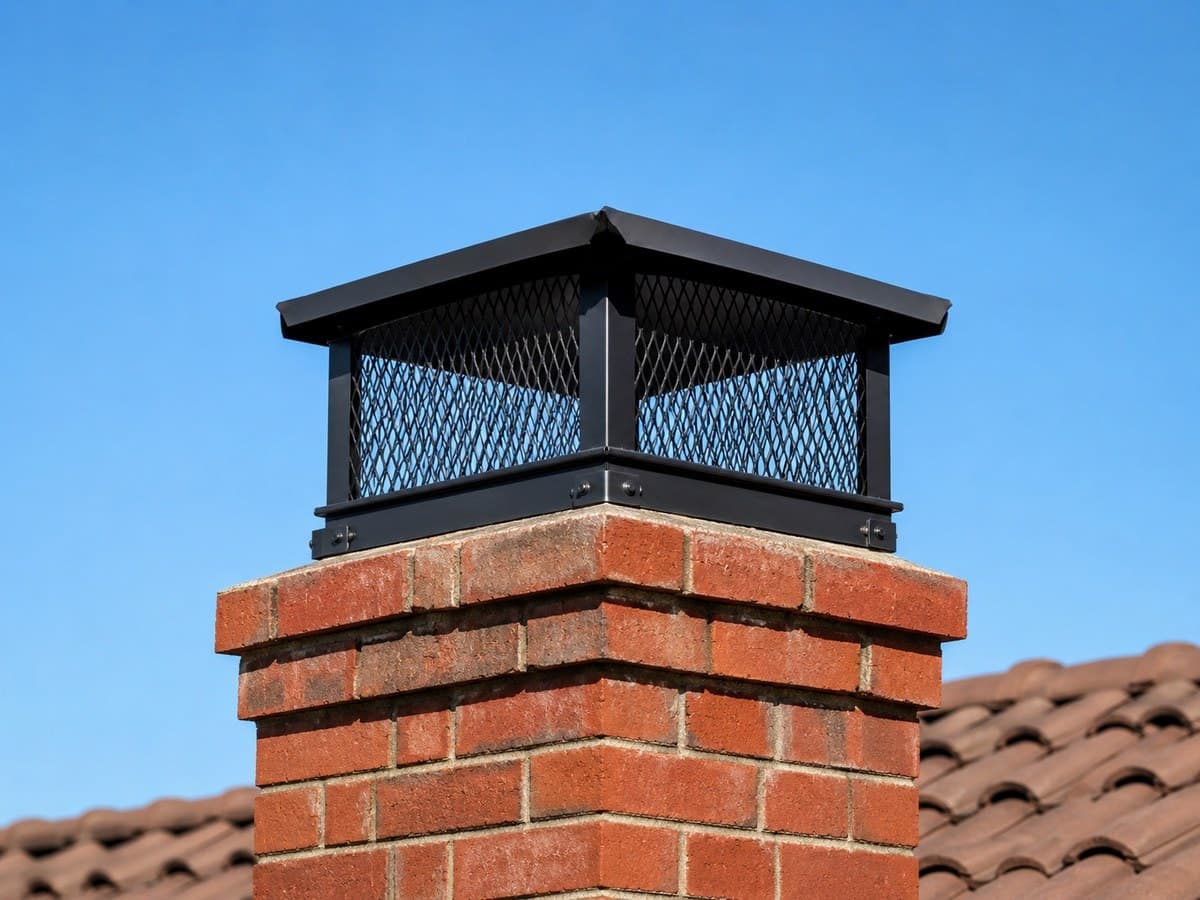
Almost every animal problem starts at an uncapped flue or a damaged cap. Animal screen installation covers the top of the flue with mesh sized to stop birds and mammals while letting smoke out. On factory-built chimneys, animals often get into the framed chase instead of the pipe, through a rusted chase cover or loose siding, so the whole top of the chase gets checked.
After the animal is out
- Keep the damper closed until the flue has been cleaned and capped
- Don’t use the fireplace if nesting material may still be in the flue
- Check the cap after storms; a cap knocked loose is an open door again
- Schedule the next cleaning outside swift nesting season
What to do tonight
If something is moving in your chimney right now, the immediate steps matter more than the booking.
Keep the damper shut
It is the only thing between the animal and your living room. If it is already open and you can close it safely without reaching past anything, do.
Close the room off
Shut the door to the room with the fireplace in it. If an animal does get into the house, a closed door is the difference between one room and the whole property.
Do not light a fire
Not to drive anything out, not for any reason. It is cruel, it is unlawful with protected species, and nesting material in a flue burns extremely well.
Leave the fireplace alone otherwise
Do not poke rods up, and do not open the damper to look. A frightened animal moves downward.
Note what you can hear and when
Chirping at dawn and dusk suggests swifts. Scratching and scrabbling during the day suggests a squirrel. Heavy movement at night suggests a raccoon. It changes who needs to come out.
Live animals are a job for a nuisance wildlife trapper rather than for us — that is a separate trade with separate rules. Once the flue is confirmed empty, the nest and debris come out and the top gets screened so it does not happen again, which is covered on chimney animal screens and proofing.
Where the animal has already got into the house or the flue is completely blocked, that is an urgent call — see same-day and overnight help. Calls are answered 24 hours Sunday through Friday.
References (4)
Facts and figures on this page come from these references.