On this page
- What is a chase cover?
- Chase cover vs chimney cap vs masonry crown
- Signs your chase cover is failing
- Why standing water is the real problem
- The details that keep water out
- Galvanized vs stainless steel chase covers
- Custom fabrication and measuring
- Prefab chimneys and water inside the framed chase
- How we inspect a chase cover
- Repair or replace?
- Why chase covers work so hard in Orlando
- What affects the cost of a chase cover
- Material and the cross-break
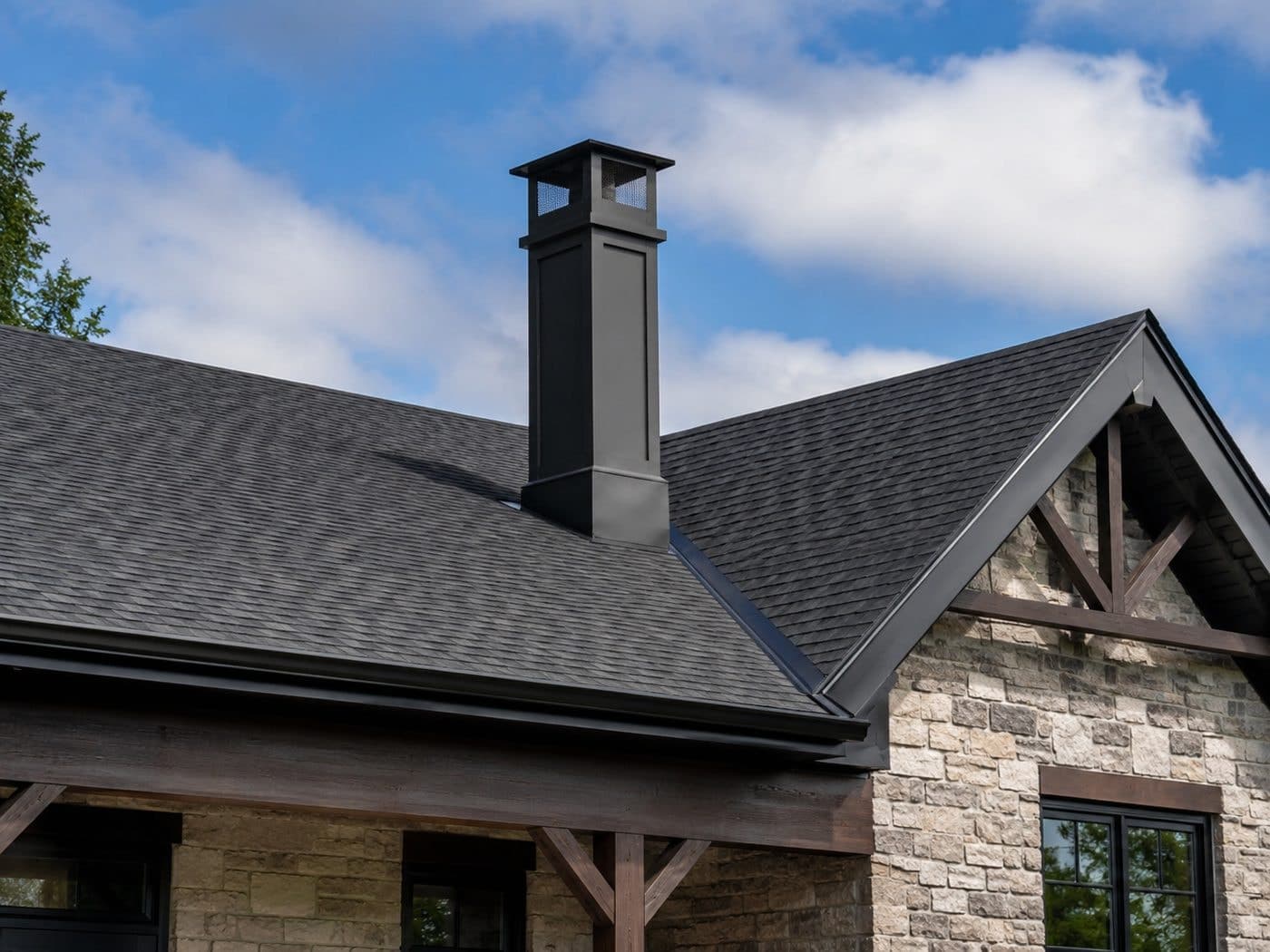
If your chimney is a box finished in siding or stucco with a metal pipe coming out of the top, the flat sheet of metal covering that box is the chase cover. It’s the roof of your chimney, and in a climate with heavy summer rain and year-round humidity it takes more punishment than almost any other part of the house. When it rusts, sags or holds water, the leak usually shows up as rust streaks outside, water in the fireplace, or damage inside the chase you can’t see.
Chase cover work is part of our chimney repair services. This page explains what a chase cover does, how it fails, how to tell whether yours can be repaired, and what a properly built replacement looks like.
What is a chase cover?
A factory-built (prefab) fireplace vents through a metal flue pipe. Builders enclose that pipe in a wood-framed box called a chase, which runs up the outside wall or through the roof and is finished to match the house. A chase cover, also called a chase top or chase pan, is the sheet-metal lid that closes the top of that box.
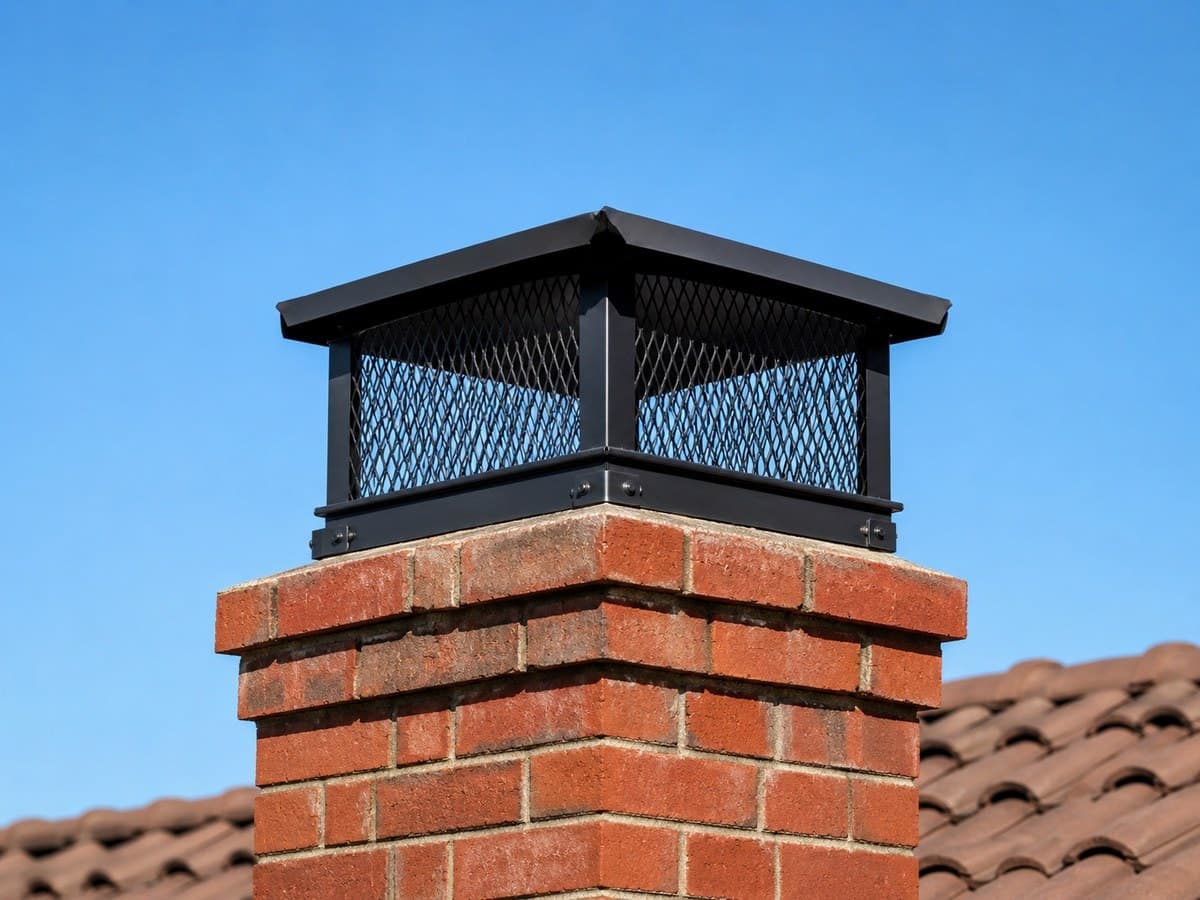
- The top panel covers the whole chase and should slope so water runs off, not toward the flue.
- The flue collar is a raised ring around the hole where the metal flue passes through. It keeps water on the panel from running down the hole.
- The skirt is the vertical edge that folds down over the top of the siding on all four sides.
- The drip edge at the bottom of the skirt kicks outward so water drops clear of the siding instead of running down its face.
Above the chase cover, the flue pipe has a storm collar sealed around it and a termination cap on top. Those parts belong to the fireplace system, but they work together with the chase cover, so we inspect all three.
Chase cover vs chimney cap vs masonry crown
People use these names loosely, and roofers, sweeps and insurance adjusters don’t always mean the same thing. Here’s the difference.
| Item | Chase cover | Chimney cap | Masonry crown |
|---|---|---|---|
| Found on | Factory-built chimneys in a framed chase | Both masonry and factory-built chimneys | Masonry (brick or block) chimneys only |
| Material | Sheet metal: galvanized, stainless, sometimes copper | Metal lid with mesh sides | Concrete or mortar, sometimes with a metal cover over it |
| What it covers | The entire top of the chase | Only the flue opening | The top of the masonry around the flue tile |
| Main job | Keep rain out of the framed chase | Keep rain, debris and animals out of the flue | Shed water off the top of the brick |
| Typical failure | Rust, pooling water, open seams, loose fasteners | Blown off, rusted mesh, wrong size | Cracks, no slope or overhang, gap at the flue tile |
A factory-built chimney has both a chase cover and a cap, and they solve different problems. The chimney cap page covers caps in detail, and the guide on chimney caps versus chase covers is useful if you’re trying to understand an inspection report or an estimate.
Signs your chase cover is failing
What to look for, from the ground and from inside
- Orange or brown streaks running down the siding or stucco from the top of the chase
- Rust visible at the edges of the cover or around the flue
- A cover that looks dished, sagging or flat from a second-story window or the yard
- Water in the firebox or rust on the top of the fireplace unit after rain
- Peeling paint, swollen siding or soft spots near the top of the chase
- Stains on the interior wall or ceiling where the chase meets the house
- A musty smell from the fireplace in humid weather
- Debris or plant growth sitting on top of the chase
Why standing water is the real problem
Many original chase covers are a flat sheet of galvanized steel cut to size and nailed on. Over time the panel bows between the framing members, and water collects in the low spots. Standing water is the start of almost every chase cover failure: it keeps the metal wet long after the rain has stopped, and in Orlando’s humidity that metal doesn’t dry out quickly.
Galvanized steel is protected by a zinc coating. Standing water, leaf debris and the fasteners driven through the top wear through that coating first at the low spots and nail holes. Once bare steel is exposed, rust spreads, pinholes form, and the water that was sitting on the cover starts dripping into the chase. On a flat cover that slopes toward the flue, pooled water also runs straight to the flue collar, which is exactly the place you least want it.
Rust stains and streaks on siding or stucco
Rust streaks running down from the top of the chase are usually the first thing homeowners notice (what rust on a chase means, and how urgent it is). They come from rusty water spilling off the cover and running down the cladding. On light-colored stucco or painted siding they’re hard to miss. The streaks tell you the cover is corroding, but not whether it has rusted through. That’s why we look at the top and the framing underneath rather than just the stain. Once the source is replaced, the staining usually needs cleaning or repainting as a separate step.
The details that keep water out
A chase cover works because of a few small features. Most chase cover failures come from one of them being missing or poorly made.
Slope: cross-break, diagonal crimp or pitched designs
A flat panel will eventually hold water. Replacement covers are formed with slope built in. The common approach is a cross-break (diagonal crimp): shallow creases bent from corner to corner that give the panel a slight pitch and stiffen it, so water runs to the edges. On larger chases, or where more fall is needed, a pitched or hipped cover gives a more pronounced slope. In both cases the high point is at the flue collar, so water moves away from the opening, not toward it.
Flue collar and storm collar
The flue collar is a raised lip around the flue hole. The storm collar clamps around the flue pipe above it and overlaps the collar so rain running down the outside of the pipe is shed onto the cover. If the storm collar is missing, loose or unsealed, water runs down the pipe and straight into the chase, even when the cover itself is sound.
Skirt, drip edge and kick-out
The skirt folds down over the top edge of the siding to stop wind-driven rain from getting behind it. At its bottom edge, a hem bent outward, the drip edge or kick-out, makes water drop clear of the wall. Without it, water clings to the metal and runs back onto the siding, which is how rust streaks and rotten top boards start.
Galvanized vs stainless steel chase covers
Both materials are used, and both can work when the cover is well designed. The difference is how long they tolerate Central Florida’s wet, humid conditions.
| Feature | Galvanized steel | Stainless steel |
|---|---|---|
| Corrosion protection | Zinc coating over steel; rusts once the coating wears through | Corrosion resistance is in the alloy itself, not a surface coating |
| Behavior with standing water | Low spots and fastener holes are where rust starts | Tolerates wet conditions far better, although good slope still matters |
| Painting | Needs periodic painting to extend its life | Doesn’t need paint; can be powder-coated for color |
| Appearance over time | Rust staining on siding once corrosion starts | Stays clean; weathers to a dull finish |
| Upfront cost | Lower | Higher |
| Best fit | Short-term fix, or a home you’re selling and just need watertight | Long-term replacement on a home you plan to keep |
Corrosion protection
- Galvanized steel
- Zinc coating over steel; rusts once the coating wears through
- Stainless steel
- Corrosion resistance is in the alloy itself, not a surface coating
Behavior with standing water
- Galvanized steel
- Low spots and fastener holes are where rust starts
- Stainless steel
- Tolerates wet conditions far better, although good slope still matters
Painting
- Galvanized steel
- Needs periodic painting to extend its life
- Stainless steel
- Doesn’t need paint; can be powder-coated for color
Appearance over time
- Galvanized steel
- Rust staining on siding once corrosion starts
- Stainless steel
- Stays clean; weathers to a dull finish
Upfront cost
- Galvanized steel
- Lower
- Stainless steel
- Higher
Best fit
- Galvanized steel
- Short-term fix, or a home you’re selling and just need watertight
- Stainless steel
- Long-term replacement on a home you plan to keep
Copper covers exist too, usually for appearance. Whatever the metal, the design details (slope, collar, skirt and drip edge) matter as much as the material. A stainless cover that’s flat and sits on the siding without a skirt will still leak.
Custom fabrication and measuring
Chases are framed on site, so they’re rarely square or a standard size. A cover that’s even slightly short leaves the top of the siding exposed, and one that’s too loose can lift in a storm. Replacement covers are made to measure.
- Measure the chase at the top, not the old cover, which may have been undersized or has warped.
- Check the chase for square by measuring the diagonals, and note any out-of-square corners.
- Record the flue pipe diameter, its exact position from two sides, and the height of the collar needed.
- Allow for the skirt length and the drip edge so the skirt laps well over the siding.
- Note the siding or stucco type so the fastening method suits it.
- Photograph the framing edge and storm collar, since both affect the install.
The cover is then fabricated with its slope, collar, skirt and drip edge, and installed with fasteners through the skirt into the chase framing rather than through the top panel, so there are no holes in the surface that’s meant to shed water.
Prefab chimneys and water inside the framed chase
Factory-built fireplaces and framed chimney chases are common in many newer Orlando-area homes. The chase is basically a small, tall wall system: framing, sheathing, a weather barrier and siding or stucco. It doesn’t tolerate water the way a solid brick chimney does. A leak at the chase cover can run down the inside of the chase for weeks before it shows up indoors.
That’s why a chase cover estimate shouldn’t ignore what’s under the cover. If the siding, storm collar or framing is involved, the work continues under prefab chimney and chase repair, and the leak itself is diagnosed as part of our chimney leak repair process.
Hidden wood damage
When a cover has leaked for a long time, the damage is usually in the parts you can’t see: the top plate and framing at the top of the chase, the sheathing behind the siding, and sometimes the framing further down where water collects. Wet wood that stays wet begins to rot. Damp, decaying wood can also attract wood-destroying insects. If there are signs of insect activity, they’re pointed out with a suggestion to have a licensed pest control company look at it, because identifying and treating insects isn’t chimney work.
Don’t install a new cover on rotten wood
A new chase cover needs solid framing to fasten to. If the top of the chase is soft, the rotten wood should be replaced first. Otherwise the new cover loosens, the fasteners pull out, and the leak returns, this time with a newer, more expensive part on top.
How we inspect a chase cover
Look inside first
We check the firebox, the top of the fireplace unit and the visible flue for rust or water tracks, and note any interior staining near the chase.
The top of the chase
We look at the cover for standing water, rust, pinholes, open seams, slope, fasteners and the condition of the flue collar, then at the storm collar and termination cap above it.
Probe the edges
Where the cover meets the framing, we check for soft wood, loose fasteners and gaps. If the cover is loose enough to lift safely, we look at the top plate underneath.
The walls of the chase
We check siding and stucco for swelling, cracks, open seams and moisture, paying extra attention to the weather-facing sides and the lower courses where water collects.
Findings and options
You get a recommendation to repair or replace, material options, and a note of any framing or siding work that is likely or possible once the old cover is off.
Repair or replace?
Not every chase cover needs replacing. The table below is how we decide.
| Condition | Sealant, patch or coating reasonable? | Replacement recommended? |
|---|---|---|
| Light surface rust, no holes, cover still sheds water | Yes: clean, treat and paint with a suitable metal coating | Not yet; recheck at the next inspection |
| A loose fastener or a single open seam | Yes: re-fasten or reseal | No, if the rest of the cover is sound |
| Storm collar loose or unsealed | Yes: reseal or replace the storm collar | Not for the cover itself |
| Water pooling on a flat or dished cover | No: sealant doesn’t fix the shape | Yes: needs slope built in |
| Rust-through, pinholes or patches of perforated metal | Only as a short-term stopgap | Yes |
| No skirt or drip edge; water running down the siding | No | Yes: the design is the problem |
| Cover undersized or lifted by wind | No | Yes: custom-measured replacement |
| Rotten framing at the top of the chase | No | Yes, after the framing is repaired |
Why chase covers work so hard in Orlando
Orlando averages about 51.5 inches of rain a year and about 74% average relative humidity (CurrentResults, NCEI normals). The National Weather Service in Melbourne notes that June through September are the wettest months, driven by afternoon sea-breeze thunderstorms. For a flat metal cover, that means frequent soakings and very little dry time between them, which is exactly what speeds up rust in low spots.
Hurricane season adds wind that can lift poorly fastened covers and drive rain under skirts that are too short. If a storm has passed through and you’re not sure what it did to the top of your chimney, a storm damage chimney inspection checks the chase cover, cap, storm collar and siding.
What affects the cost of a chase cover
Each chase cover is quoted after measuring, because size, squareness, material, the number of flues, roof access and any framing repairs found under the old cover all change the job.
Material and the cross-break
Two details decide how long a chase cover lasts, and both are usually why the one you are replacing failed.
The first is the metal. Most original covers were galvanised steel, which in Central Florida's rain and humidity rusts through in well under two decades. Stainless is the sensible replacement here; copper lasts longest and costs the most.
The second is the cross-break — a shallow ridge formed into the flat top so water runs off rather than ponding. A flat cover with no cross-break holds a puddle after every storm, and a puddle sitting on metal is what produces the rust streaks down the siding that brought you to this page.
The guide to chase cover materials compares the options. If the cover is sound and only the seams or the collar have failed, chase cover repair may be the better answer.
Chase covers are measured and fabricated to the individual chase rather than bought off a shelf, so the measuring visit comes before the quote. Estimates are free, and the work is available across the Greater Orlando service area — with storm-related losses covered under storm damage inspection where a claim is involved.
References (2)
Facts and figures on this page come from these references.