On this page
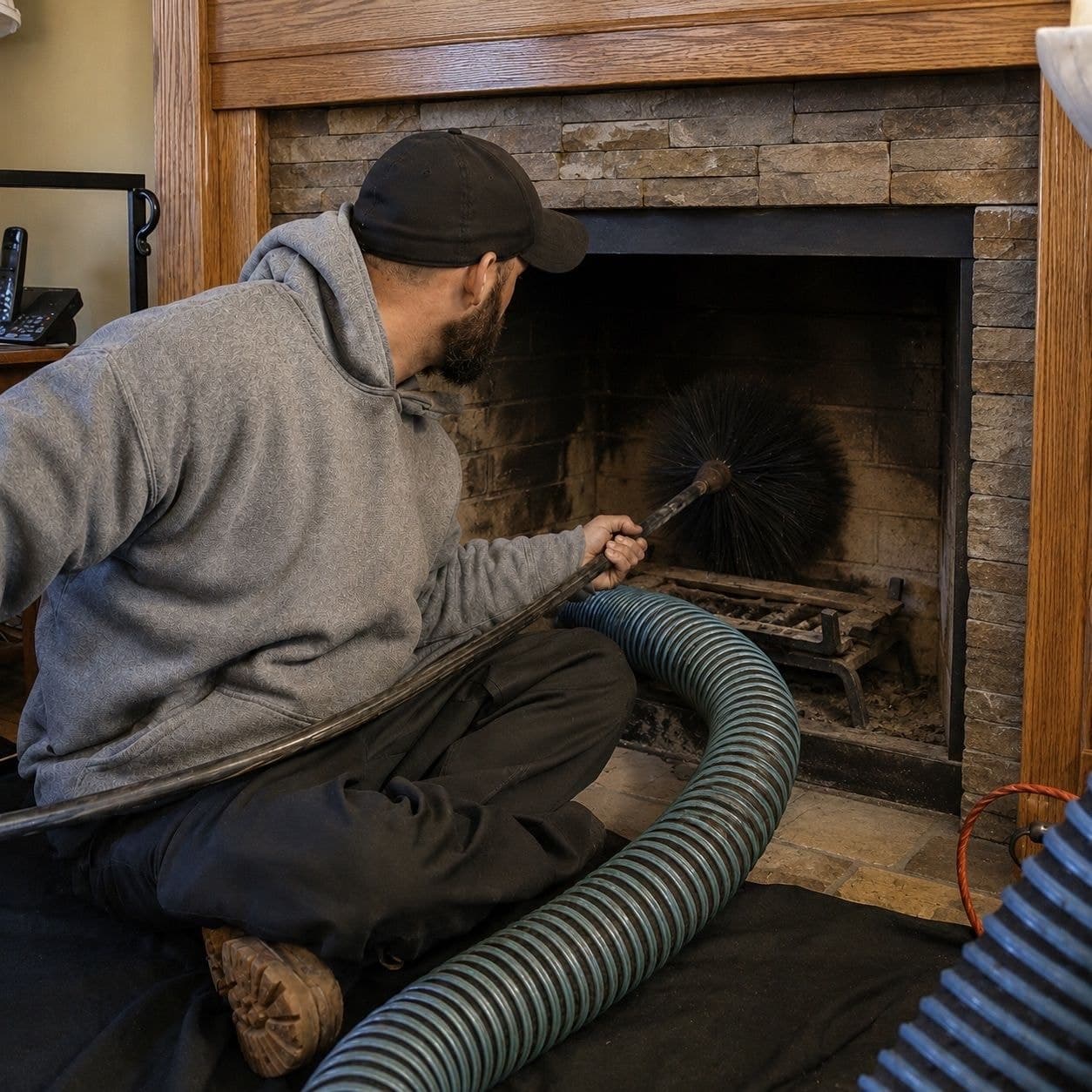
Inserts burn more efficiently than open fireplaces, but they are more sensitive to buildup. The flue is smaller, deposits collect at the baffle and liner connection, and a clogged catalytic combustor or worn door gasket changes how the whole appliance burns. A standard sweep of an open fireplace doesn’t reach most of what an insert needs.
How insert cleaning differs from a regular sweep
| Feature | Insert cleaning | Open-fireplace chimney sweep |
|---|---|---|
| Flue | A stainless liner sized to the insert, swept its full length | The original masonry or factory-built flue |
| Critical joint | The connection between the insert’s outlet and the liner | The damper, smoke shelf and smoke chamber |
| Appliance parts | Baffle, burn tubes, combustor, door and glass gaskets | Firebox, grate and any glass doors |
| Access | Some inserts must be pulled forward, as the manual directs | Reached through the fireplace opening |
Flue
- Insert cleaning
- A stainless liner sized to the insert, swept its full length
- Open-fireplace chimney sweep
- The original masonry or factory-built flue
Critical joint
- Insert cleaning
- The connection between the insert’s outlet and the liner
- Open-fireplace chimney sweep
- The damper, smoke shelf and smoke chamber
Appliance parts
- Insert cleaning
- Baffle, burn tubes, combustor, door and glass gaskets
- Open-fireplace chimney sweep
- Firebox, grate and any glass doors
Access
- Insert cleaning
- Some inserts must be pulled forward, as the manual directs
- Open-fireplace chimney sweep
- Reached through the fireplace opening
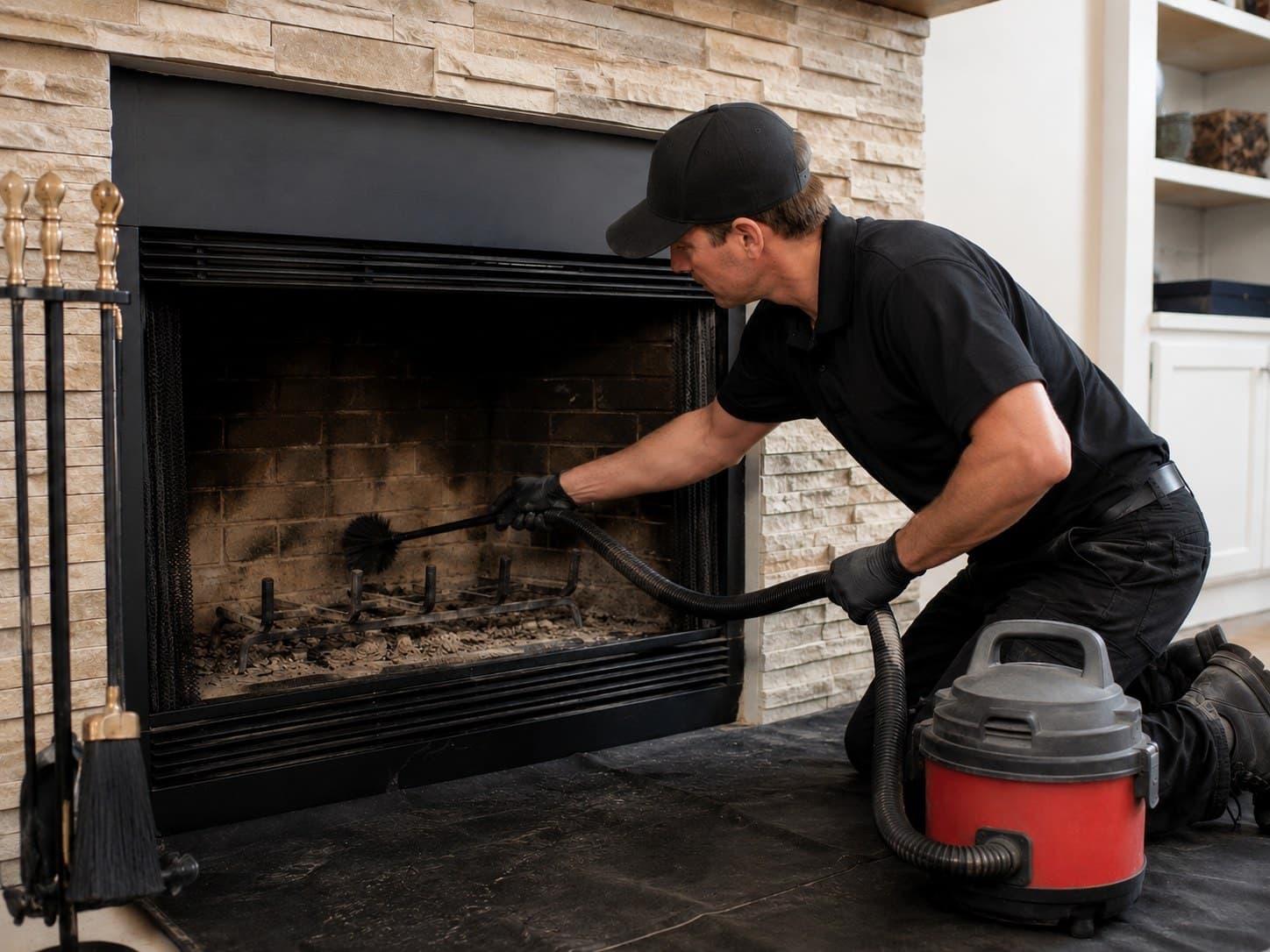
For an open wood-burning fireplace, a chimney sweep is the right service. For a free-standing stove on a stovepipe, see wood stove and stovepipe cleaning. Room-side cleaning of the firebox and glass alone is fireplace cleaning.
What wood-burning insert cleaning includes
- The liner, swept its full length from the top or bottom, with brushes suited to stainless steel
- The connection between insert and liner, where creosote and fly ash pile up
- The baffle and smoke path inside the insert, removed or accessed as the manufacturer allows
- The catalytic combustor, if the insert has one, inspected for clogging, cracking and crumbling
- Firebrick and burn tubes checked for damage
- Door and glass gaskets checked for a tight seal
- Glass cleaned with a product safe for ceramic glass
- The liner cap at the top checked for a clogged screen and damage
Why deposits build at the connection
Exhaust leaves the insert hot, then cools as it climbs the liner. The first few feet above the insert, where the liner joins the outlet collar, see the most fly ash and often the heaviest creosote, especially after low, smoldering fires. It is also the part that can’t be seen or reached from the top on many installations. That is why some inserts have to be pulled forward to clean properly, and why the manufacturer’s manual decides the method.
If the insert was installed without a proper liner connection, which still turns up in older installations, that is a safety issue we’ll explain. Chimney liner installation covers the fix, and replacing or re-venting an old insert covers the options if the insert itself is worn out. Heavy, glazed deposits that brushing won’t shift are a job for creosote removal.
Catalytic and non-catalytic inserts
Catalytic inserts pass smoke through a ceramic honeycomb that burns it at lower temperatures. The combustor is fragile: it is inspected for clogging, cracking and crumbling, cleaned only as the maker allows, and eventually replaced. Non-catalytic inserts use a baffle and secondary-air tubes instead. The baffle collects ash on top and has to be cleared, and the tubes are checked for warping or burn-through. The label or manual tells which type you have.
Signs an insert needs cleaning
- The fire is harder to start or won’t burn hot
- Smoke leaks when the door opens
- Glass blackens quickly
- A catalytic insert’s temperature gauge stays low, or the combustor looks clogged
- A smoky or sour smell from the fireplace on humid days
- It has been a year or more since the last cleaning
Smoke in the room can also have causes outside the insert. Why a fireplace smokes into the house covers draft and pressure problems.
Gas inserts
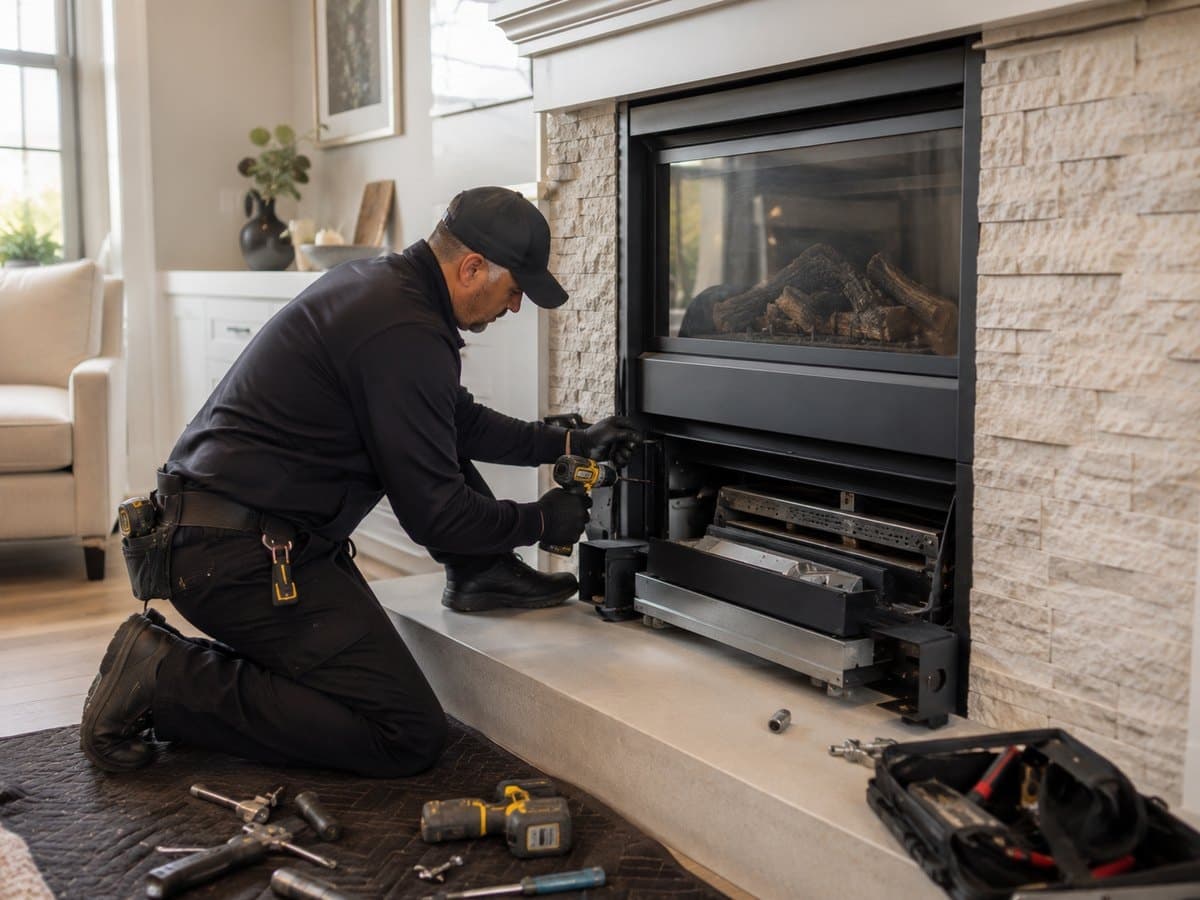
Gas inserts don’t collect creosote, but they still need regular service: the burner and pilot assembly, the logs or media, the glass seal and the vent. That work is covered under yearly gas fireplace service. A gas insert that won’t light or keeps going out needs a gas fireplace repair visit instead.
How the visit works
Identify the insert
Make, model and whether it has a catalytic combustor, from the label or manual.
Protect the room
Covers on the hearth and floor, and a vacuum rated for fine ash.
Clean the insert
Ash removal, baffle and smoke path cleaning, glass cleaning.
Clean the liner
From the top or bottom, pulling the insert if the design requires it.
Check and reset
Gaskets, combustor and connection checked, the insert reset and the door seal confirmed.
Gas inserts and wood inserts are cleaned differently
“Insert cleaning” means two quite different visits depending on what is burning, and it is worth saying which you have when you book so the right equipment comes along.
| Feature | Wood insert | Gas insert |
|---|---|---|
| Main job | Sweeping the liner, firebox and baffle | Glass, burner, media and venting |
| Deposits | Creosote and soot | No creosote; combustion film on the glass |
| Consumables | Door and glass gaskets, firebrick | Glass gasket, ember media, pilot assembly |
| The liner | Swept full length | Checked, not swept — it is a sealed vent |
| Typical finding | Baffle warped, gasket flattened | Media packed over the burner ports |
| Booked as | Insert cleaning | Gas fireplace service |
Main job
- Wood insert
- Sweeping the liner, firebox and baffle
- Gas insert
- Glass, burner, media and venting
Deposits
- Wood insert
- Creosote and soot
- Gas insert
- No creosote; combustion film on the glass
Consumables
- Wood insert
- Door and glass gaskets, firebrick
- Gas insert
- Glass gasket, ember media, pilot assembly
The liner
- Wood insert
- Swept full length
- Gas insert
- Checked, not swept — it is a sealed vent
Typical finding
- Wood insert
- Baffle warped, gasket flattened
- Gas insert
- Media packed over the burner ports
Booked as
- Wood insert
- Insert cleaning
- Gas insert
- Gas fireplace service
Pulling an insert out to reach behind it is sometimes necessary and is not a trivial part of the job — a wood insert with a full liner is heavy and connected. That is established at the visit rather than assumed.
Insert cleaning is available across Greater Orlando and Central Florida, with free estimates on anything the visit turns up.
References (2)
Facts and figures on this page come from these references.