On this page
Central Florida’s older homes, many from the 1920s through the 1950s, often have original brick fireplaces, tile surrounds and wood mantels that haven’t held a fire in decades. Restoration asks two questions: what does it take to use this fireplace safely again, and how much of the original can be kept?
Restoration, repair or replacement?
| Feature | Restoration | Repair |
|---|---|---|
| Scope | Several parts at once, in a planned order | One failed part |
| Typical fireplace | Older masonry fireplace, unused for years | A fireplace in regular use with one problem |
| Original materials | Kept and matched wherever sound | Repaired in kind |
| Starts with | A full inspection of flue and fireplace | A diagnosis of the symptom |
Scope
- Restoration
- Several parts at once, in a planned order
- Repair
- One failed part
Typical fireplace
- Restoration
- Older masonry fireplace, unused for years
- Repair
- A fireplace in regular use with one problem
Original materials
- Restoration
- Kept and matched wherever sound
- Repair
- Repaired in kind
Starts with
- Restoration
- A full inspection of flue and fireplace
- Repair
- A diagnosis of the symptom
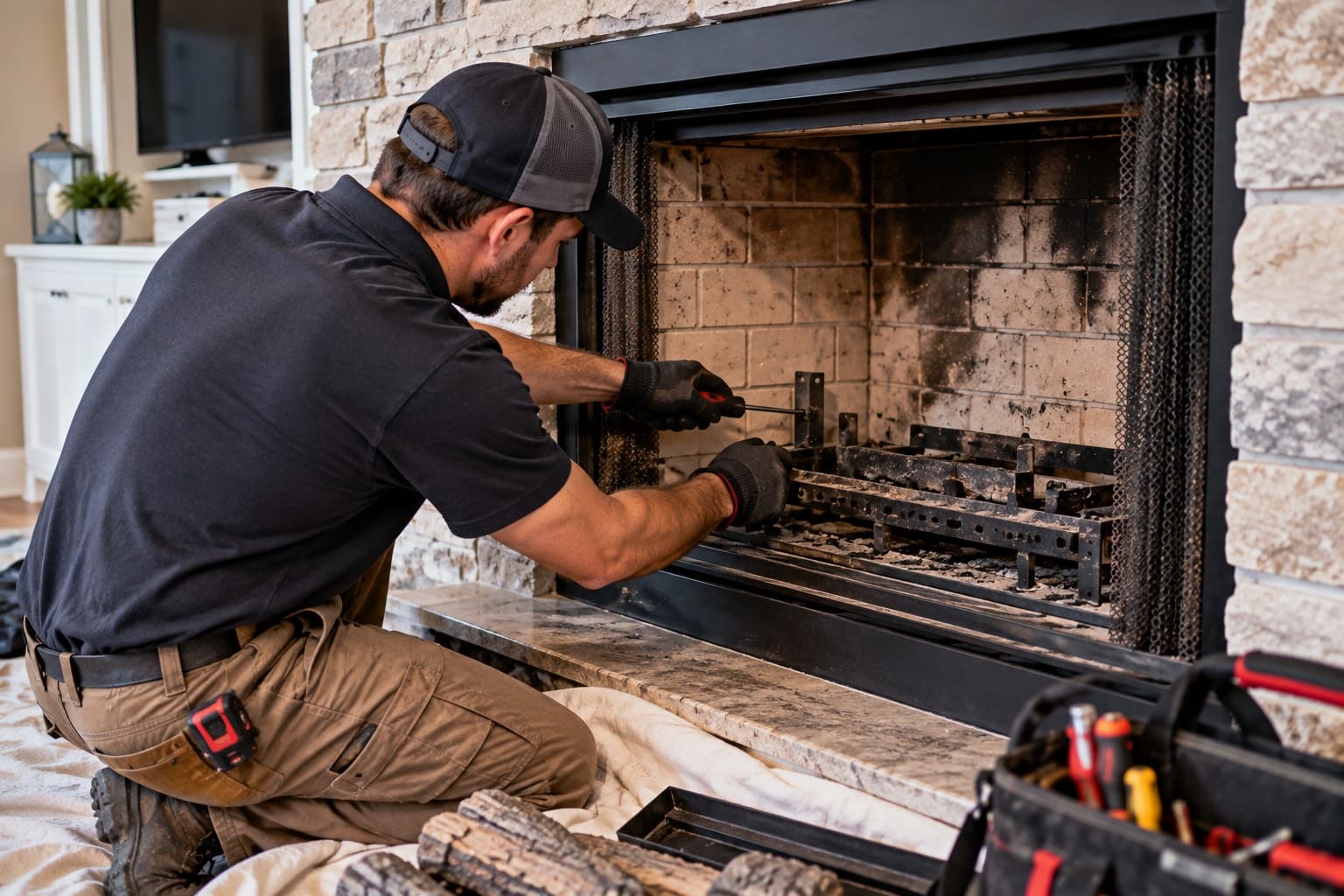
For a single problem, fireplace repair is the right starting point. Factory-built fireplaces aren’t restored in this sense; when one is worn out, the path is a new listed unit.
What restoration usually includes
| Area | Common problems | Work involved |
|---|---|---|
| Firebox | Cracked or missing firebrick, eroded mortar joints | Firebox work: replacement brick and refractory mortar |
| Damper | Rusted plate, broken handle, no seal | Damper repair or a top-sealing damper |
| Smoke chamber | Rough, stepped or crumbling masonry | Parging the smoke chamber: parging to a smooth surface |
| Flue | Cracked tile, no liner, old creosote | Cleaning, then liner repair or a new liner |
| Hearth | Cracked or loose tile, undersized extension | Reset or replaced to meet clearance requirements |
| Surround and facing | Soot staining, loose tile, open joints | Cleaning, resetting tile, repointing |
Keeping original materials
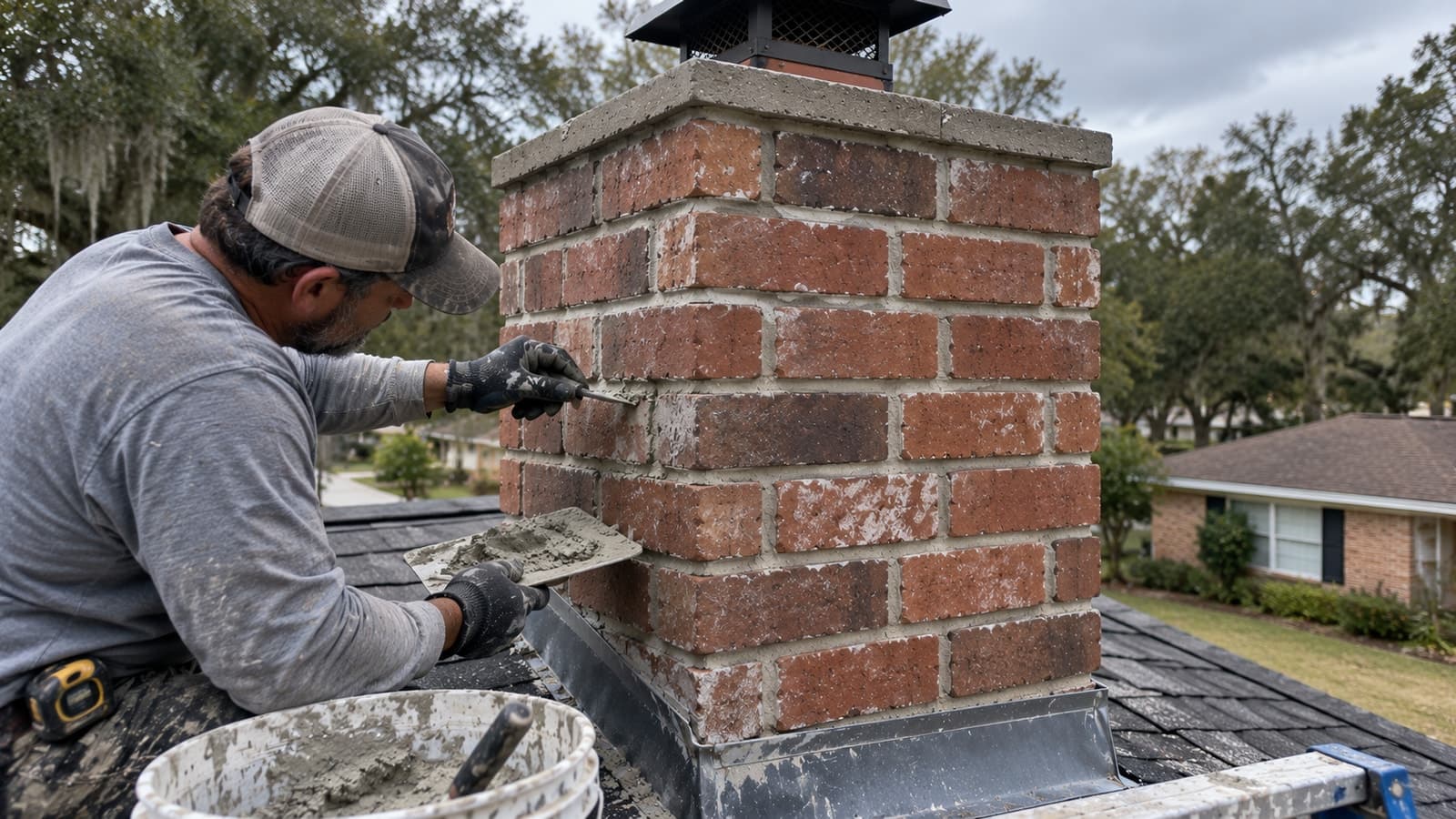
The goal is to repair rather than replace wherever the material is sound. Soft historic brick is repointed with a compatible, softer mortar, as National Park Service guidance recommends for older masonry (NPS Preservation Brief 2). Original tile is cleaned and reset, and matching pieces are sourced where possible. Some things do have to change for safety. An undersized hearth, or combustible trim too close to the opening, can’t stay as it is if the fireplace will be used.
Historic districts
Exterior chimney work on homes in a designated historic district may need review by the city’s historic preservation board. That’s identified early so the schedule allows for it.
How a restoration project runs
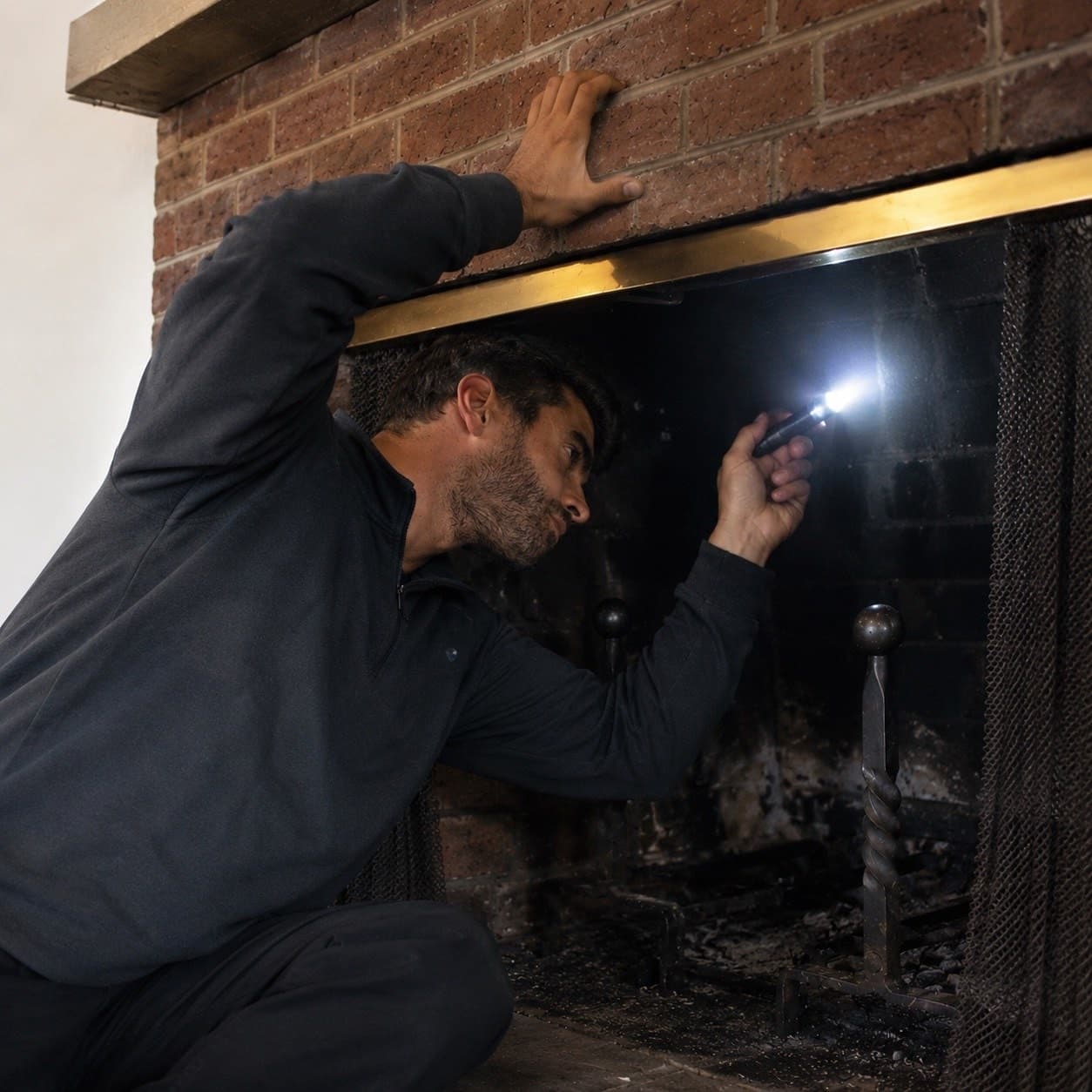
Full inspection
An inspection of the flue and a detailed look at the firebox, damper, smoke chamber, hearth and facing.
Prioritized plan
Safety repairs first, then function, then appearance, so you can phase the work if you want.
Repairs
Masonry, damper, flue and hearth work carried out in the order that makes sense structurally.
Cosmetic finish
Cleaning, tile, facing and final details.
First fire
A test burn to confirm draft, and guidance on using an older fireplace well.
Restore or convert?
Some owners want the look of the original fireplace without burning wood. Gas logs or a gas insert can go into a restored masonry fireplace, and an electric insert needs no venting at all. See fireplace insert installation for the options.
Restoration, repair or remodel?
Three words that get used interchangeably and mean quite different jobs. Being clear about which one you want saves a wasted visit.
| Item | What it means | Do we do it? |
|---|---|---|
| Repair | Fixing one failed component on a working fireplace — a damper, a panel, a door | Yes |
| Restoration | Bringing a fireplace that has stopped being used back into safe working order | Yes — this page |
| Refacing | Changing the tile, stone or surround around a working fireplace | No, that is remodelling work |
| Mantel work | Fitting or replacing a decorative mantel as a job in itself | No, though clearances are checked if someone else fits one |
| Full remodel | Rebuilding the fireplace wall as part of a room redesign | No, though we can do the fireplace and flue elements within it |
The short version: we make fireplaces work, not look different. Where the fireplace is sound and you want it to look new, a remodelling contractor is the right call and will do a better job of it than we would.
What a restoration actually involves
A fireplace that has sat unused for years in Central Florida has a predictable set of problems, and humidity causes most of them. It is not that anything dramatic happened — it is that nothing did, for a long time, in a damp climate.
Establish what it is
Masonry or factory-built, and on a factory-built unit what the rating plate says. That decides what can be repaired and what has to be replaced as an assembly.
Full clean and flue check
Years of deposits, old nesting material and debris come out. The flue is checked along its length, with a camera where the view runs out.
Deal with water first
Almost every long-disused chimney here has been taking water. Crown, cap, flashing and chase are put right before anything inside is repaired, or the new work goes the same way.
Firebox and smoke chamber
Firebrick and mortar joints repaired, refractory panels replaced where the unit is factory-built, the smoke chamber parged if it is rough.
Damper and draft
A seized damper freed or replaced, and the draft actually tested rather than assumed to be fine because everything looks clean.
Decide how it will be used
Back to wood, or converted to gas or electric. Plenty of restorations end as conversions once the owner sees what wood involves here.
That last step matters more than people expect. If a fireplace has not been lit in fifteen years, restoring it to burn wood may not be what you actually want — weighing up a change of fuel sets out the alternatives before money goes into the wrong route.
Restoration work is carried out across Orlando, College Park, Winter Park, Maitland, Apopka and the rest of the Orlando service area. Estimates are free, and a restoration is quoted in stages so you can see what is essential for safety and what is optional.
References (3)
Facts and figures on this page come from these references.