Three common situations
| Your situation | Why it matters | What to do before the first fire |
|---|---|---|
| You just bought the home | Florida home inspectors aren’t required to look inside the flue, so a clean home inspection report says little about the chimney | A Level 2 chimney inspection, ideally during the purchase |
| It hasn’t been used in years | Nests, debris, water damage and rust build up in an idle chimney, not creosote | Inspection, plus cleaning if the inspection finds debris or nests |
| You light a few fires each winter | Light use still leaves deposits, and the chimney is out in the weather all year | A yearly inspection; sweeping when it shows a need |
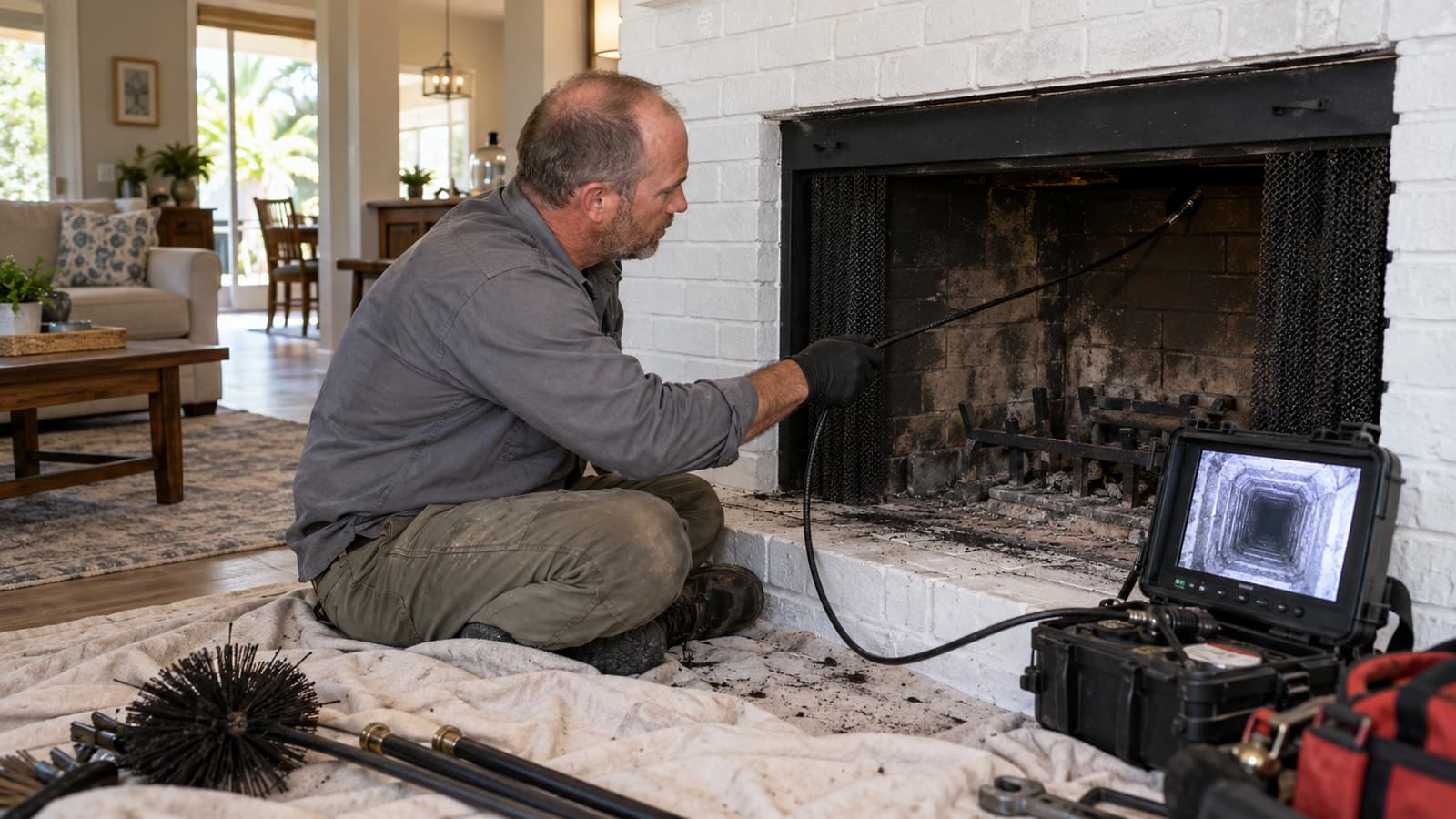
Florida’s home inspection standards require the inspector to look at visible parts such as the hearth, lintel, surround and clearance to combustibles, but not the flue or chimney interior or whether it drafts (Florida Admin. Code 61-30). Our guide to why a home inspection doesn’t check the chimney flue explains the gap and what to do about it.
Your pre-fire checklist
Do these before you strike a match
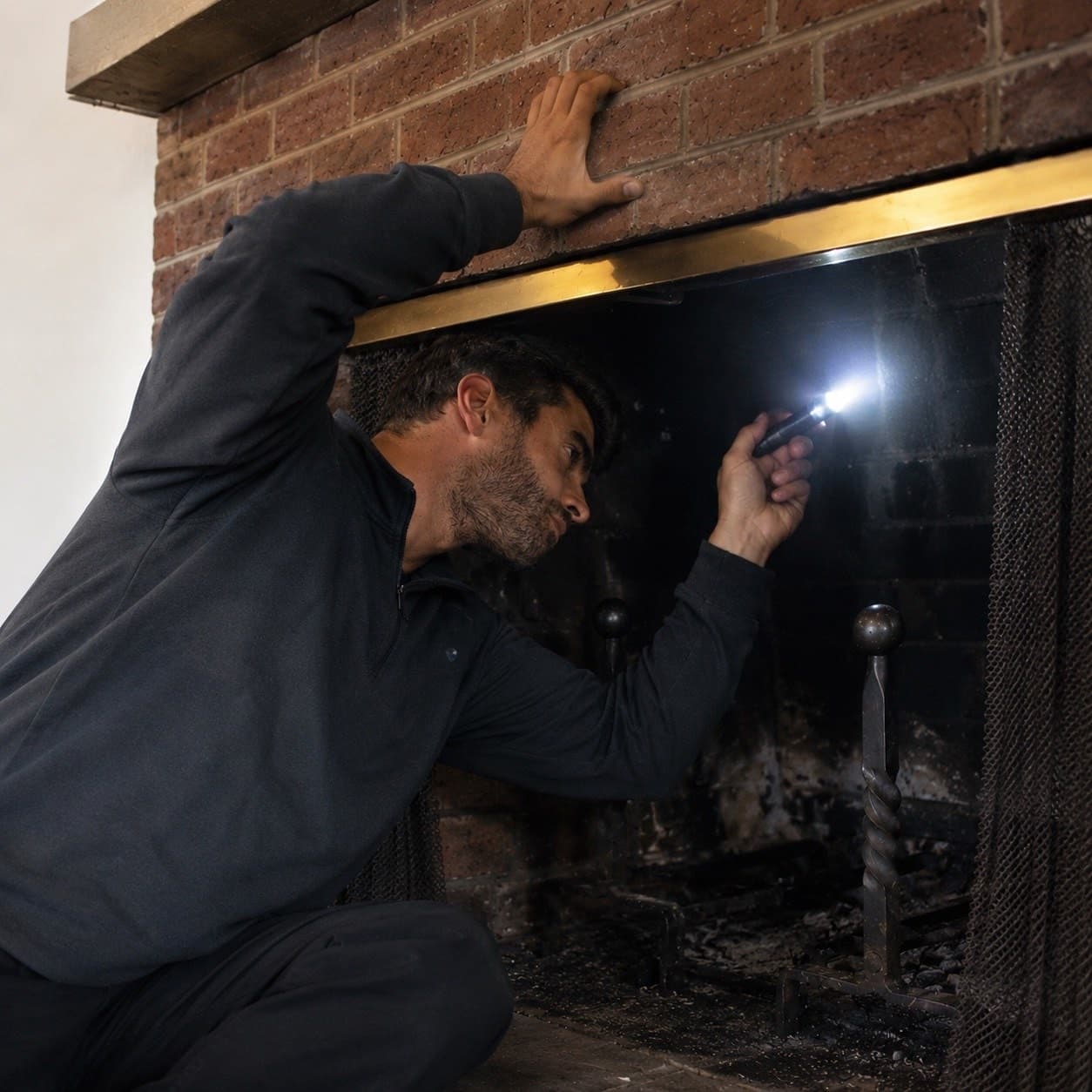
- Open the damper fully. It should move freely and stay open. Shine a light up: no hanging debris, twigs or daylight blocked by a nest.
- Look at the firebox walls and floor for cracks, gaps, loose or missing firebrick, or broken metal panels.
- Check for rust, water stains or white mineral deposits inside the firebox or on the damper.
- Look at the fireplace face and mantel for black smoke stains, which mean smoke has been escaping into the room.
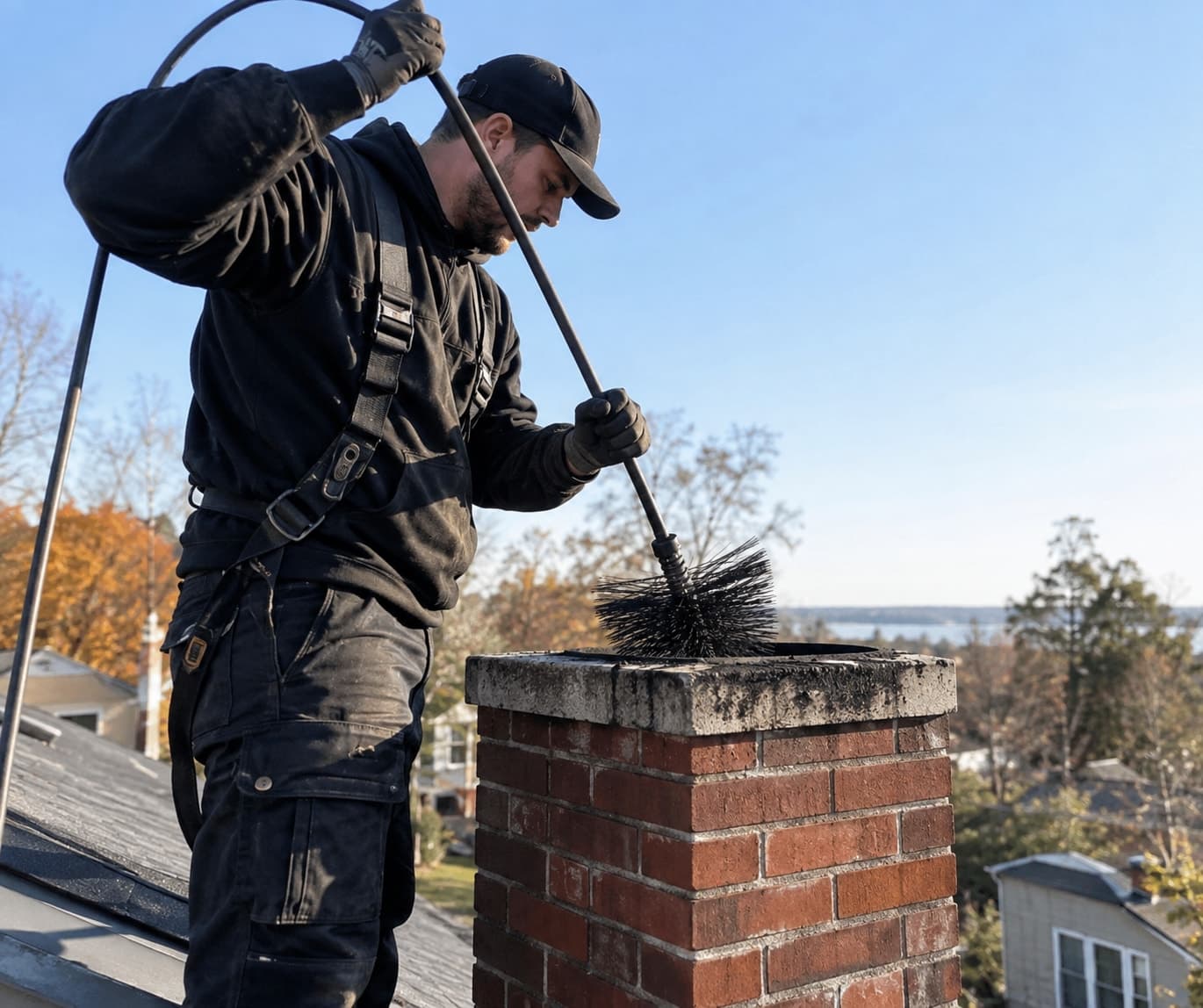
- From the yard, check the chimney top: cap present, nothing bent, no plants growing out of it, no leaning or missing brick.
- Clear the hearth and at least 3 feet in front of the fireplace of rugs, furniture and decorations.
- Test your smoke and CO alarms, and keep a fire extinguisher nearby.
- Have dry, split firewood ready. Don’t burn trash, cardboard, treated lumber or pallets.
The first fire after it passes
Start small with kindling and a couple of splits, warm the flue first so it drafts, and stay in the room. Watch for smoke spilling out of the opening, and never close the damper while embers are still glowing. If smoke rolls into the room, see why a fireplace smokes into the room.
Red flags: don’t light it yet
What each warning sign usually means
01Cracks in the firebox
- What you may notice
- Cracked firebrick, open mortar joints, or a crack in a refractory panel wide enough to see through or with pieces missing.
- How it’s confirmed
- Measuring cracks and checking whether heat could reach the framing or metal behind them.
02Missing or broken panels in a factory-built fireplace
- What you may notice
- Metal visible behind the panels, crumbling panels, or a panel lying loose in the firebox.
- How it’s confirmed
- Identifying the unit and checking its panels against the manufacturer’s replacement limits.
03Rust and water stains
- What you may notice
- Rust on the damper or firebox floor, stains on the ceiling or wall near the chimney, a musty smell.
- How it’s confirmed
- Tracing where water enters at the cap, crown, chase cover or flashing.
04Nests, debris or animals
- What you may notice
- Twigs or droppings in the firebox, chirping or scratching, a damper that won’t open fully.
- How it’s confirmed
- Light check of the flue, and removal once any wildlife timing rules allow.
05Smoke stains on the face or mantel
- What you may notice
- Black staining above the opening or on the underside of the mantel.
- How it’s confirmed
- Checking draft, damper, smoke chamber and flue size to see why smoke is escaping.
06Damage outside
- What you may notice
- Loose or missing brick, a leaning chimney, a rusted chase cover, a missing cap, or damage after a storm.
- How it’s confirmed
- Roof-level inspection of the chimney top, crown or chase cover, and flashing.
Also hold off if you can’t open the damper, if there are thick, shiny black deposits past the damper, or if you know of a past chimney fire that nobody checked afterward. Our guide to the signs of a chimney fire lists what to look for.
Which inspection to ask for
| Feature | Level 1 | Level 2 |
|---|---|---|
| When it fits | A chimney you use regularly, no changes, no known problems | A home sale, after a storm or chimney fire, or a fireplace unused for years |
| What is checked | Readily accessible parts of the chimney, fireplace and flue | Everything in Level 1, plus accessible attic and crawlspace areas and the full flue |
| The flue | The readily accessible parts | The full length, as far as it can be reached |
When it fits
- Level 1
- A chimney you use regularly, no changes, no known problems
- Level 2
- A home sale, after a storm or chimney fire, or a fireplace unused for years
What is checked
- Level 1
- Readily accessible parts of the chimney, fireplace and flue
- Level 2
- Everything in Level 1, plus accessible attic and crawlspace areas and the full flue
The flue
- Level 1
- The readily accessible parts
- Level 2
- The full length, as far as it can be reached
The inspection standard used by the chimney industry calls for a Level 2 inspection when a property is sold or transferred. If you’re buying, ask for a real estate chimney inspection during your inspection period. The guide to Level 1 vs Level 2 chimney inspections compares the two in detail, and our chimney and fireplace inspection page describes what a visit covers.
Factory-built fireplace and chimney chase, cutaway
- 1Termination cap. The listed cap on top of the metal chimney pipe.
- 2Storm collar. Sealed band around the pipe that sheds water onto the chase cover.
- 3Chase cover. Sheet-metal top of the framed chase. Should slope, with a raised collar and drip edge.
- 4Chase. The wood-framed box, finished in siding or stucco, that encloses the chimney pipe.
- 5Chimney pipe. Listed metal flue sections made for this specific fireplace model.
- 6Fireplace unit. The factory-built metal firebox, tested and listed as one system with its chimney.
- 7Refractory panels. Molded liner panels lining the unit's firebox. Replaced only with listed parts.
Gas-log fireplaces
A gas fireplace or gas logs have fewer parts to clean but still vent combustion gases, so the same basic cautions apply: the vent or flue must be clear, the glass (if any) intact, and CO alarms working. For a gas log set in a wood-burning fireplace, the damper must be open whenever the logs are lit unless the set is specifically designed and listed otherwise. Anything on the gas side, including valves, lines, pilots and burners, is work for a qualified gas technician. If you ever smell gas, leave the house and follow the steps on our page about a gas fireplace that smells like gas.
What a professional check involves
Identify the system
Masonry or factory-built, and for factory-built the make and model, since the manufacturer’s instructions set the rules for parts and clearances.
Firebox and damper
Firebrick or panels, mortar joints, hearth, damper operation and the smoke chamber are checked with a light.
The flue
The flue is checked from below and from the top for cracks, gaps, creosote, nests and debris, as far as it can be seen.
Outside and at the top
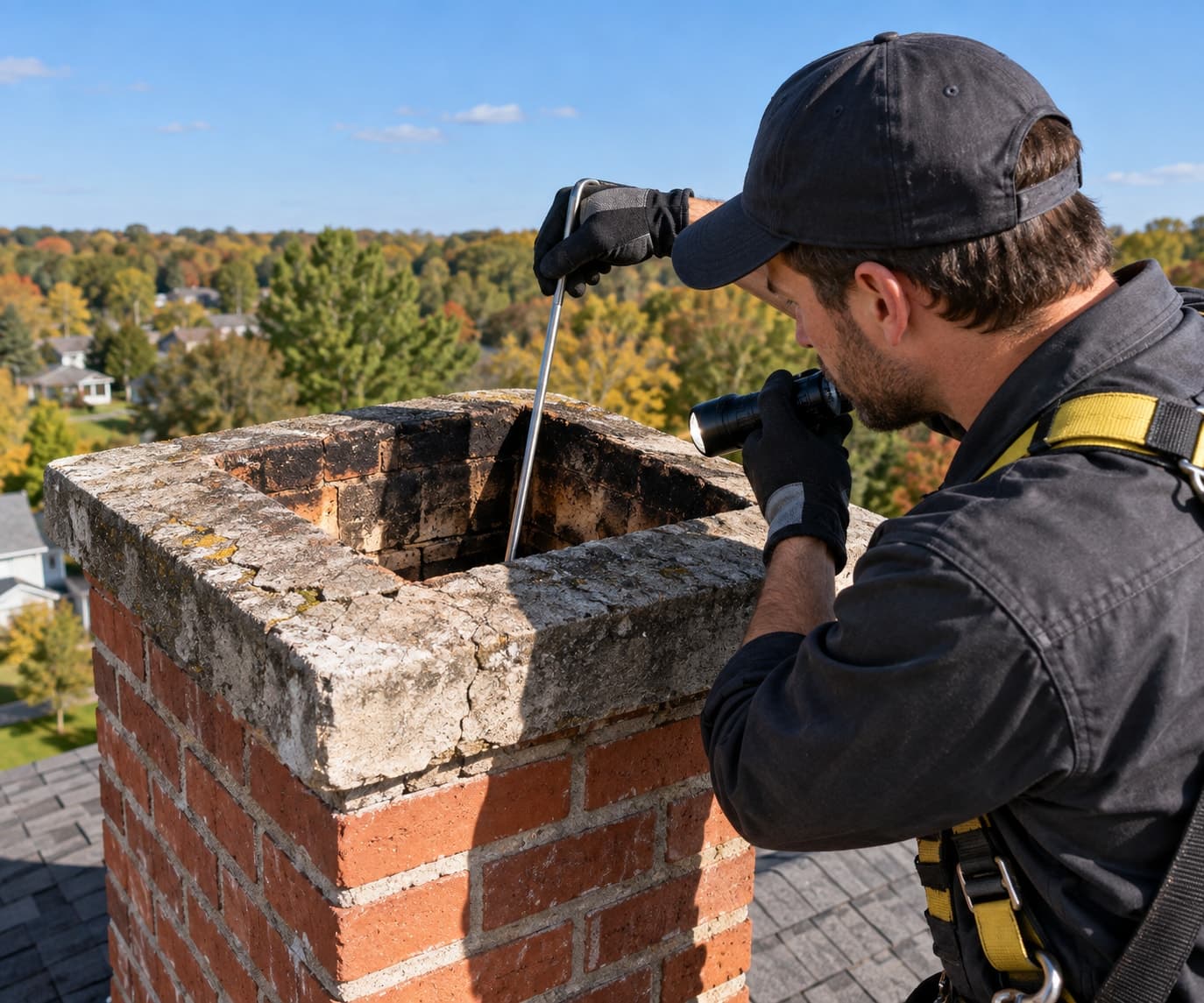
Cap, crown or chase cover, flashing and the chimney structure are checked from the roof where access allows.
Clear answer
Safe to use, safe after cleaning, or needs repair first, with the reasons explained before anything is scheduled.
If the checklist turns something up
| What you found | Where it’s fixed |
|---|---|
| No record of when it was last checked | a chimney and fireplace inspection |
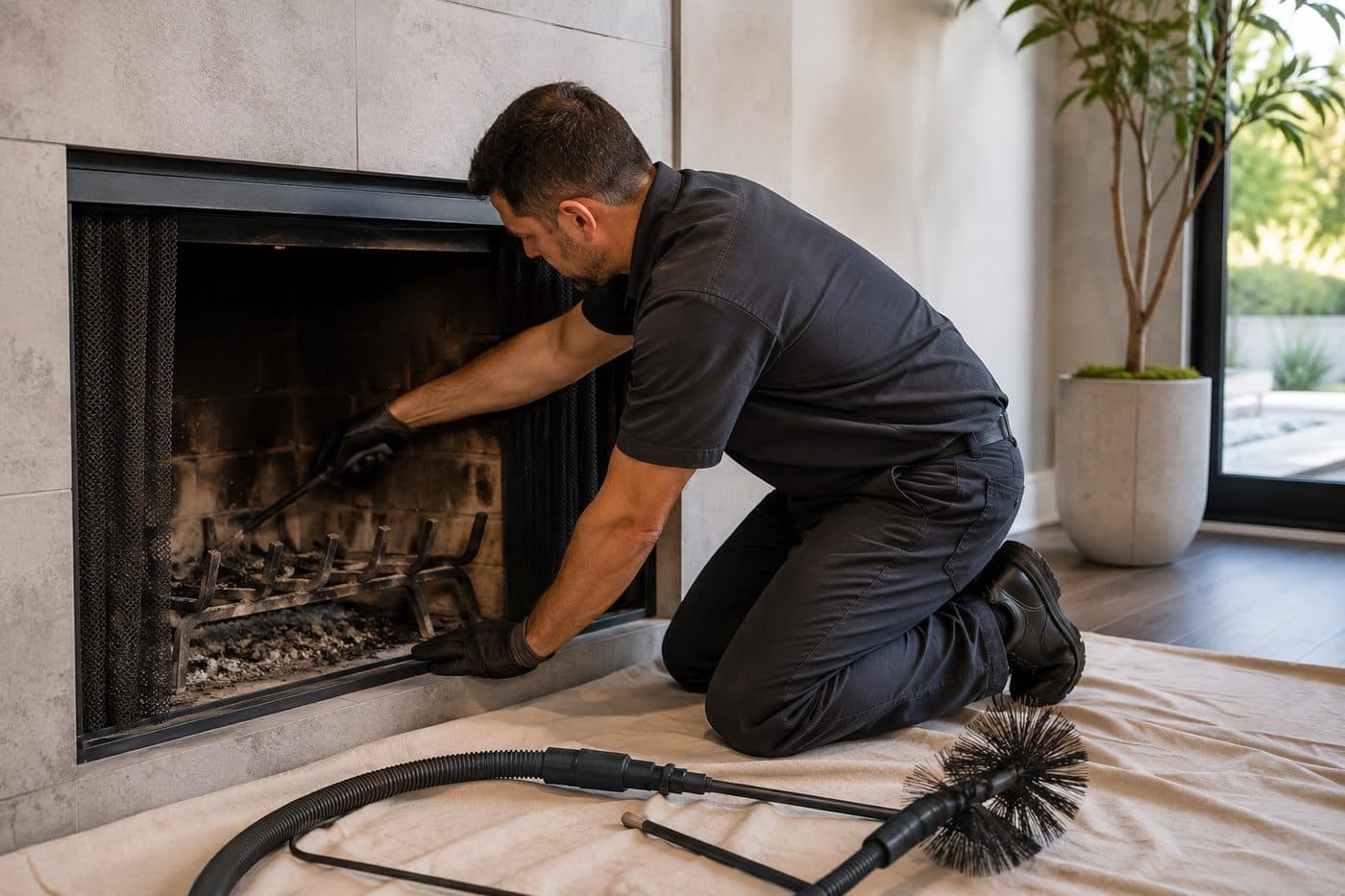
| Soot, creosote or debris | a chimney sweep |
| Cracked firebrick or panels | firebox repair |
| Buying the house | a home-sale chimney inspection |
An inspection answers the question this page asks; local visits include inspecting chimneys in Windermere and an inspection for City of Orlando homes. Keep a CO alarm near the fireplace either way.
References (5)
Facts and figures on this page come from these references.